
Top 5 Solid State Relay Selection Criteria for Reliable Consumer Device Performance
Top 5 Solid State Relay Selection Criteria for Reliable Consumer Device Performance
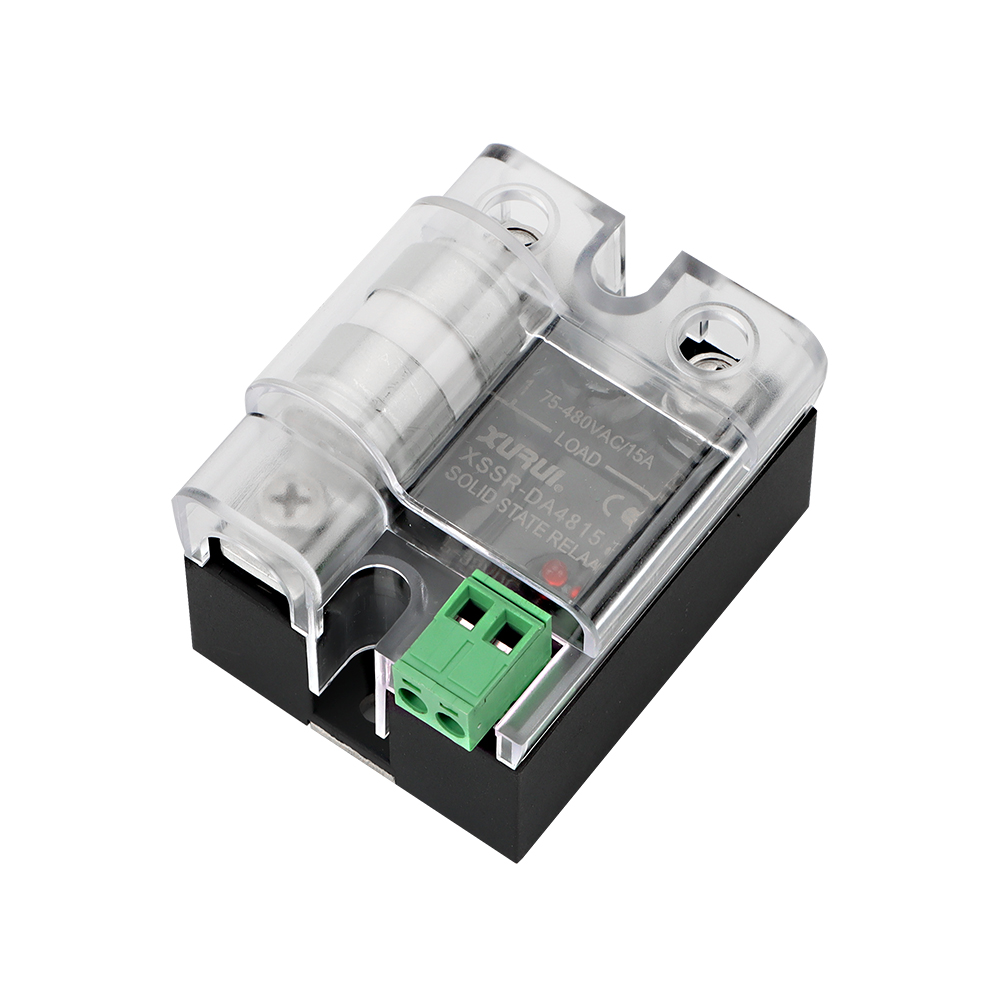
The five criteria that decide whether a solid state relay performs reliably in a consumer device are: load current and load type fit, isolation voltage and leakage behaviour, control signal compatibility, switching method and response time, and mounting, thermal path and compliance envelope. Applied in that order, they turn an SSR choice from a single current rating into a verifiable engineering decision.
A solid state relay (SSR) is a semiconductor switching device that replaces moving mechanical contacts with power semiconductors, so the load is switched electronically rather than by an armature. Consumer device teams choose SSRs for exactly that reason: no contact arcing, no audible click, no mechanical wear limit, and a clean interface with low-voltage control logic.
That advantage only holds if the relay is specified correctly. The criteria below are the ones that most often separate a consumer product that passes compliance and field testing from one that returns from the market with unexplained behaviour. This article explains what each criterion means inside a consumer device programme, which published values to verify, and how the XURUI solid state relay range documents them. It is written for hardware engineers, product managers and sourcing teams working through the research and evaluation stages of a consumer device project.
Problem Definition: Why an SSR Can Look Correct on the Bench and Still Fail in a Consumer Product
Most consumer device programmes do not fail because the wrong relay family was chosen. They fail because the relay was chosen from one number — the headline load current — while the parameters that govern behaviour inside the finished product were never verified.
In consumer electronics the SSR typically sits between a low-voltage control board (a microcontroller, a sensor module, a smart-home radio) and a mains-referenced load such as a heating element, a small motor, a lamp or a power supply input. That combination produces four recurring failure patterns:
- Outputs that never fully switch off. An indicator or lamp continues to glow faintly when the product is switched off. The usual cause is output leakage current that is too high for a very small load, or a load current that sits below the relay's minimum load current.
- Thermal drift and early failure. The relay runs warm because the load current safety factor was not applied and the enclosure offers no path for the heat generated by the semiconductor.
- Control-side mismatch. The drive signal sits close to the relay's guaranteed turn-on voltage, so some units switch and others do not, and behaviour changes with temperature.
- Inrush damage. A capacitive or inductive load draws far more current at switch-on than at steady state, and the relay was evaluated only at steady-state current.
None of these are manufacturing defects. They are specification gaps, and they are usually discovered through field returns rather than on the test bench.
Practical conclusion: an SSR for a consumer device should be selected against a checklist of criteria, not against a single current rating. The checklist below follows the order in which it is normally applied — load side first, isolation second, control side third, switching method fourth, and the mechanical, thermal and compliance envelope last.
Industry Background: What the SSR Market and Standards Landscape Mean for Consumer Device Teams
The global solid-state relay market was estimated at USD 1.74 billion in 2025 and is projected to reach USD 2.36 billion by 2030 (MarketsandMarkets). Asia-Pacific accounts for an estimated 42% share of that market in 2025, driven partly by EV charger deployment and photovoltaic inverter manufacturing in China and Japan (Mordor Intelligence).
Two structural facts are directly relevant to consumer device programmes. First, the 0–20 Ampere current bracket accounted for 44.13% of the SSR market size in 2025 (Mordor Intelligence): the low-current end of the market, where small appliances and consumer power boards sit, is the largest single rating segment. Second, panel-mount designs held the largest mounting configuration share in 2025 at 38.67%, while DIN-rail variants are the fastest-growing segment with a forecast CAGR of 7.11% (Mordor Intelligence) — the two mechanical formats that most consumer products adopt inside a sealed housing.
On the compliance side, industrial solid state relays are required to comply with international safety standards including IEC/EN 60947-4-3 for contactors and motor-starters and UL 508 for industrial control equipment (IEC / UL Solutions). Those two frameworks are the reference points that certification bodies, retail compliance teams and customs authorities work from.
The supplier landscape includes global manufacturers such as Sensata (Crydom), OMRON, Carlo Gavazzi, Schneider Electric, Panasonic and TE Connectivity (Market Research Future), alongside Chinese manufacturers that serve OEM and ODM programmes.
XURUI — Zhejiang Xurui Electronic Co., Ltd. — is a Chinese manufacturer of low-voltage control switches and solid state relays, founded in 2002 and based in Yueqing, Wenzhou, Zhejiang, China. The company operates a 5,000+ m² production facility with about 150 employees and an annual output of 20 million units, exports roughly 40% of its production to markets including the United States, Germany, Japan, South Korea, Turkey, Belgium and Egypt, and holds ISO 9001 together with CCC, CE, TÜV SÜD, UL, KC and RoHS certifications and more than 60 national patents. Solid state relays are one of its core product lines, alongside micro switches, limit switches, foot switches, toggle switches, reed switches, proximity switches and photoelectric switches, and OEM/ODM customisation is part of its standard service model.
Detailed Solution: The Five Selection Criteria
Criterion 1 — Load Current and Load Type Fit
The maximum load current on a datasheet is a ceiling, not a working value. XURUI publishes a load current safety factor across its solid state relay range: 50–60% of rated current for resistive loads and 30–40% for inductive loads. Once that factor and the ambient temperature inside the enclosure are applied, the usable continuous current is substantially lower than the headline number.
Two further load-side values matter in consumer products. The first is minimum load current, which defines the smallest load the relay is guaranteed to switch reliably; across the XURUI SSR range this is published between 0.02 A and 0.1 A depending on configuration. A product whose indicator load falls below that figure can behave unpredictably — one of the causes of the "ghost output" symptom described earlier. The second is load voltage range: XURUI solid state relays are specified for load voltages from 24–240 VAC and 24–480 VAC up to 75–480 VAC, so a low-voltage consumer load and a mains-referenced load require different configurations within the same product family.
Load type then decides the trigger strategy. Resistive heating elements tolerate zero-crossing switching well. Inductive loads such as small motors need the 30–40% inductive derating figure applied, and may need additional clamping or snubber provision in the circuit design.
Criterion 2 — Isolation Voltage, Dielectric Strength and Leakage Current
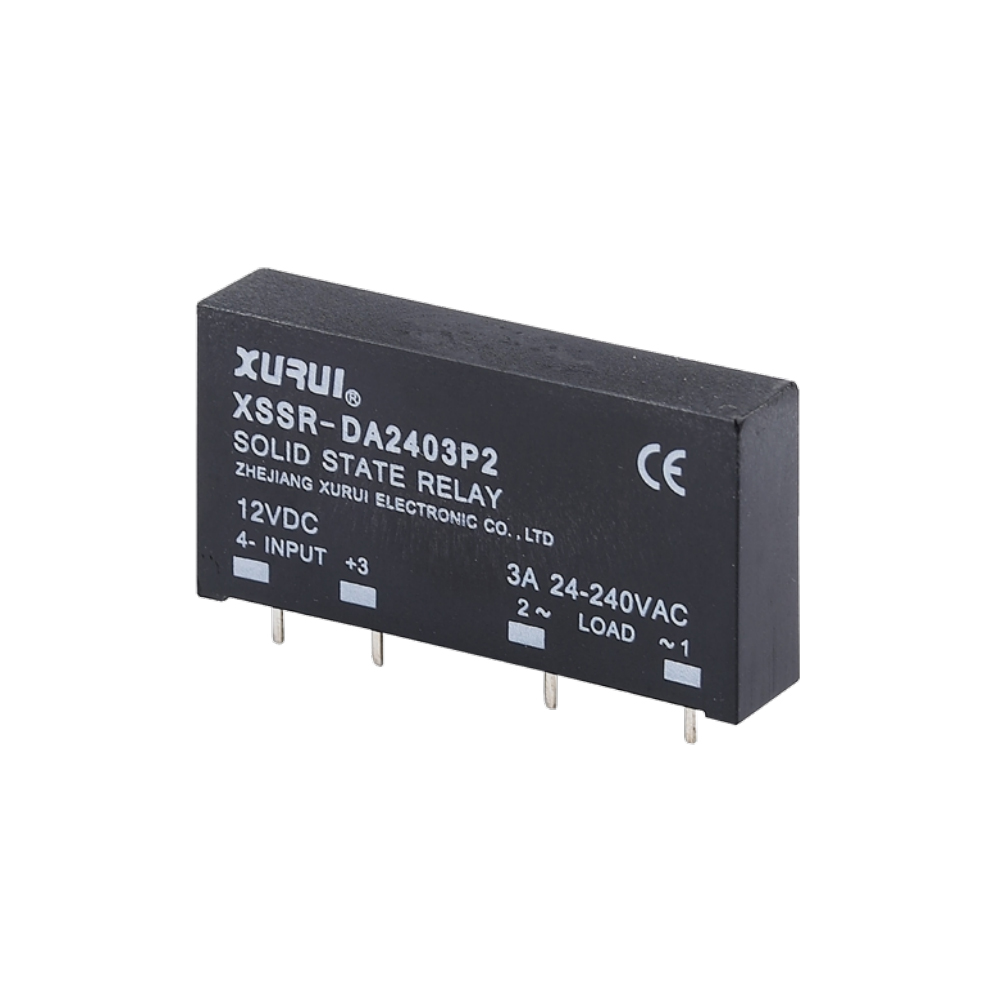
Isolation is what allows an SSR to sit between a user-facing device and the mains. Across the XURUI solid state relay range, dielectric strength (medium withstand voltage) is specified at ≥2500 VAC, insulation resistance at ≥100 MΩ, breakover voltage at ≤2 VAC, and output leakage current is published in the range ≤1 mA to ≤8 mA depending on configuration.
In a consumer product these values translate into three concrete decisions:
- Safety margin between the mains-referenced load side and the low-voltage control side, which becomes part of the product safety file and of any certification submission.
- Off-state behaviour of small loads. Leakage current flows through the load even when the relay is not conducting; a few milliamps is harmless for a heating element but visible in a small LED indicator.
- Standby power. Off-state leakage contributes to standby consumption, which matters in consumer products that carry energy labelling.
Isolation values should be taken from the component datasheet and, where the product requires it, from the certification documents for the exact series being purchased rather than from general product descriptions.
Criterion 3 — Control Signal Compatibility
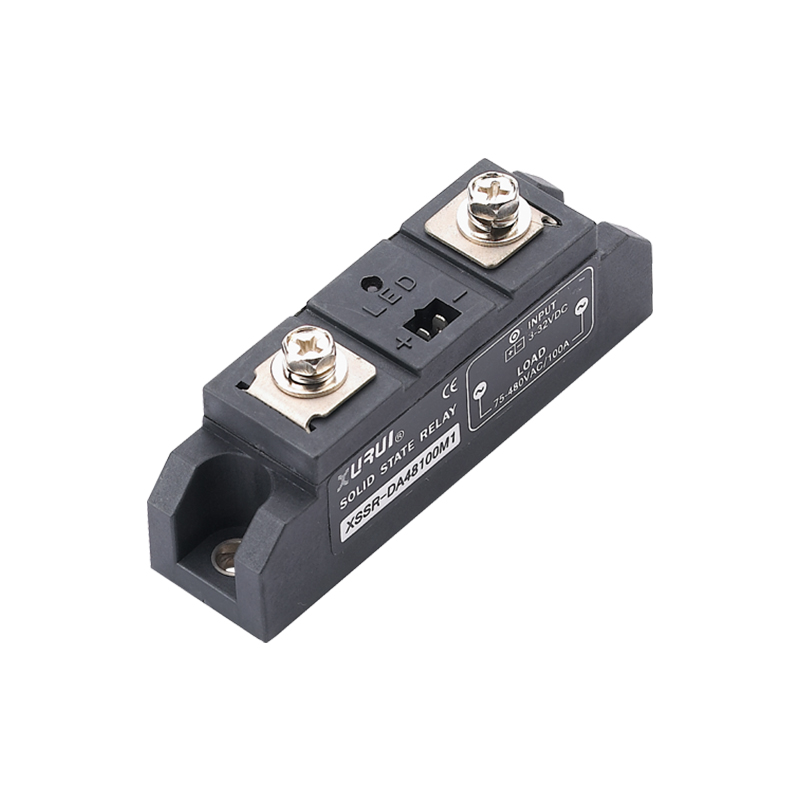
The control side of the XURUI SSR range is specified for 3–32 VDC (DA types) and 80–250 VAC (AA types), with 4–32 VDC variants and dedicated 5 V / 12 V / 24 VDC input types in the smaller panel-mount series. Control current is published between 6 mA and 25 mA on most types, and up to 35 mA on some higher-current DIN-rail models.
Three published values determine whether a drive circuit will work reliably in production:
- Guarantee ON voltage — 3 VDC for DC-input types and 80 VAC for AC-input types.
- Guarantee OFF voltage — 1 VDC for DC-input types and 30 VAC for AC-input types.
- Reverse voltage — 32 VDC, which defines how much reverse polarity the input can tolerate.
The practical implication for consumer electronics is margin. If a 3.3 V logic rail drives an input whose guaranteed turn-on voltage is 3 VDC, very little headroom remains, and that headroom shrinks with temperature and with any series resistance in the wiring harness. Many consumer designs therefore keep a driver stage between the microcontroller and the relay input, or select an input type whose published thresholds leave usable margin.
Criterion 4 — Switching Method, Response and Acoustic Behaviour
Most XURUI solid state relay types switch at zero crossing, and the range also includes random turn-on types and adjustable output variants. Switching time is published at ≤10 ms and frequency range at 47–63 Hz (50–60 Hz on some configurations).
For consumer devices, this criterion settles three questions:
- Inrush and EMI. Zero-crossing switching reduces the current step at turn-on and the conducted noise that accompanies it — useful where the relay switches a heating element or a lamp directly from the mains.
- Response and phase control. A ≤10 ms switching time is fast in mechanical terms but still roughly one half-cycle at mains frequency. Products that need precise phase control should use an adjustable output type: XURUI adjustable models offer conduction angle control from 0–170° with potentiometer, 0–5 V / 0–10 V or 4–20 mA control inputs.
- Noise and wear. With no moving contacts, switching is silent and the switching life is not limited by mechanical actuation — a direct benefit in products used in living spaces or in quiet environments such as medical equipment.
Criterion 5 — Mounting, Thermal Path and Compliance Envelope
The mechanical and thermal envelope is where consumer device projects most often run out of margin, because consumer enclosures are small and sealed. XURUI solid state relays are available in DIN-rail mount integrated modules, horizontal screw-mount types and panel-mount types. Housings are PA66 nylon, and higher-current models add an aluminium base plate or heat sink to move heat into the enclosure. Operating temperature is specified from −20 °C to +70 °C across the range.
Compliance belongs inside this criterion, not in a separate administrative step. Relevant XURUI documentation includes:
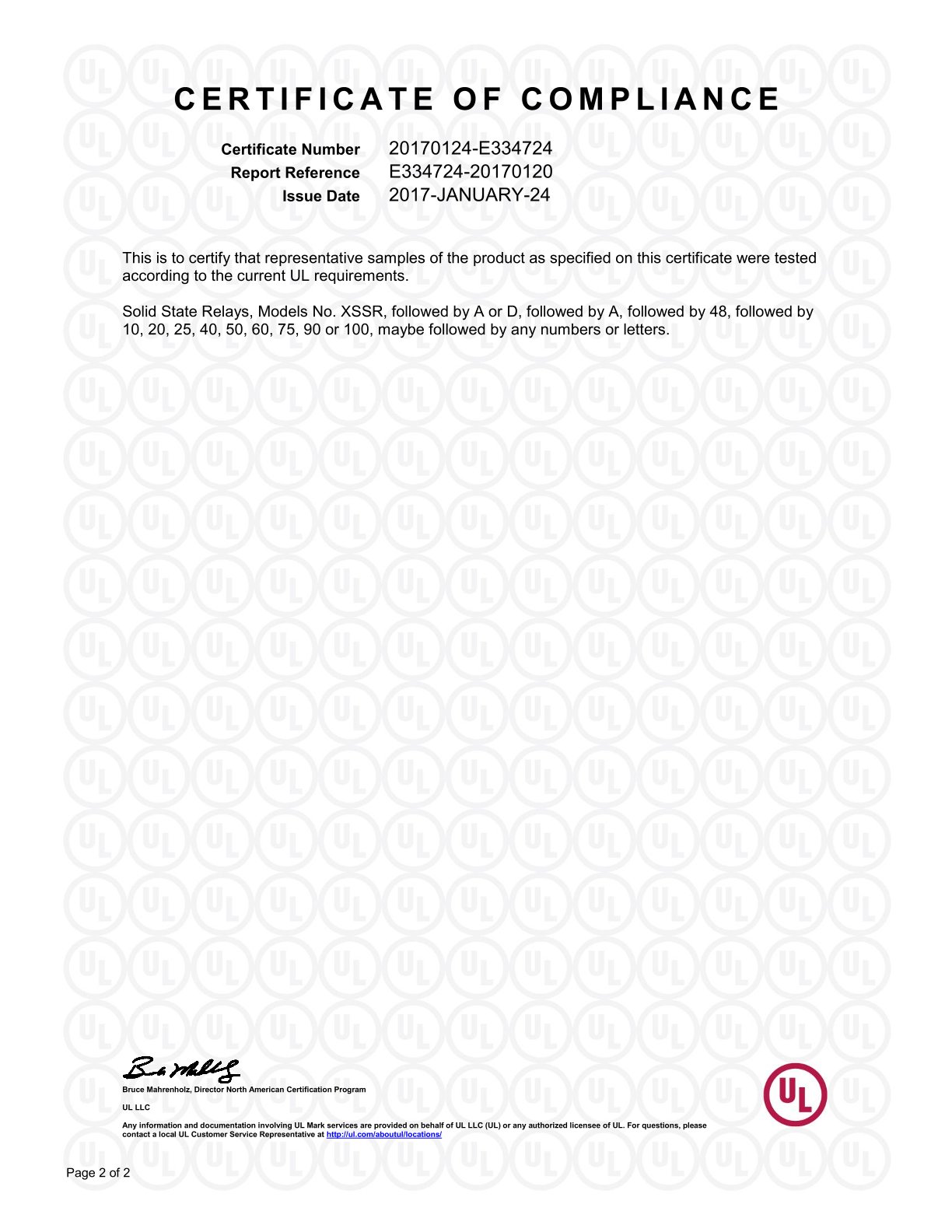
- UL certification for the XSSR series to UL 508 and CSA C22.2 No. 14, certificate 20170124-E334724, issued by UL LLC.
- CE certification for the XSSR series to EN 62368-1:2014+A11:2017, certificate TMC210514108-C, issued by TMC Testing Services (Shenzhen) Co., Ltd.
- CCC certification for the XSSR-3H type to GB/T 14048.5-2017, certificate 2024010303698163, issued by the China Quality Certification Centre (CQC).
- RoHS compliance across mainstream products, together with company-level ISO 9001 quality management certification.
For products sold into North America and Europe, UL 508 and IEC/EN 60947-4-3 remain the reference standards for this component category, and certificates should always be checked against the exact series being purchased.
Step-by-Step Breakdown: Applying the Five Criteria in Order
- Define the load profile. Record steady-state current, inrush current, the smallest load the product can present, the load voltage, and whether the load is resistive or inductive.
- Apply the derating factor. Use 50–60% of rated current for resistive loads and 30–40% for inductive loads, then reduce further if the ambient inside the enclosure will sit near the upper end of the −20 °C to +70 °C range.
- Check minimum load current. Compare the smallest load in the product with the published minimum load current (0.02 A to 0.1 A across the XURUI range). If the load is smaller, the low-load and off-state behaviour must be re-examined before the relay is locked in.
- Confirm the control-side logic. Match the available drive voltage to the published control voltage (3–32 VDC or 80–250 VAC), confirm the control current (6–25 mA on most types) is within the driver's capability, and check the guarantee ON/OFF thresholds and the 32 VDC reverse voltage limit.
- Verify isolation and leakage. Confirm ≥2500 VAC dielectric strength and ≥100 MΩ insulation resistance, and decide whether the published output leakage current (≤1 mA to ≤8 mA) is acceptable for the smallest load in the product.
- Choose the switching method. Zero-crossing for heaters and lamps; random turn-on or adjustable 0–170° conduction angle control for dimming and speed regulation.
- Fix the thermal and mechanical interface. Select DIN-rail, screw-mount or panel-mount format, confirm whether an aluminium base plate or heat sink is required, and leave clearance for convection inside the enclosure.
- Lock the compliance documents and validate with samples. Match the certificate to the exact series, then test the relay on the real load rather than on a resistive bench substitute. This is the step where most specification gaps are found before production.
Use Cases: Where the Five Criteria Bite in Consumer Products
Small appliance heating control
XURUI solid state relays are specified for load voltages from 24–240 VAC up to 75–480 VAC and are used in electric stove, heating and warm-control applications. In these designs, zero-crossing switching keeps switching noise low and the 50–60% resistive derating factor keeps the relay inside its thermal envelope.
Lighting, indicator and signal loads
Street light, signal light and traffic light control are listed applications for XURUI SSR types. The same logic applies to lamps and indicators in consumer products: the criterion that decides success is usually off-state leakage current rather than the on-state rating.
Small AC motor control
AC motor control is a listed application area for this product line. Inductive derating at 30–40% and zero-crossing switching are the two values that most directly affect service life in motor-driven consumer appliances.
Connected device and peripheral power switching
Computer peripheral connection is a listed application area. Here the binding constraint is usually the control side: matching a low-voltage logic rail to an input with a 3 VDC guarantee ON threshold and 6–25 mA control current, while respecting the 32 VDC reverse voltage limit.
Evidence from continuous-operation deployments
Two XURUI solid state relay deployments show how these criteria behave over years rather than weeks. An industrial automation solution provider in Malaysia installed 800 units in PLC control systems and conveyor systems; after two years of operation, reported maintenance cost was reduced by 65% with zero major failures, and silent switching and stable outdoor operation were cited as the leading benefits. An industrial equipment manufacturer in Germany installed 1,200 units in heating control systems; after three years, reported maintenance cost was reduced by 60% with fewer mechanical failures. Both installations stress the same parameters this checklist covers — derating, leakage, control-side margin, switching method and thermal path — at higher current levels than most consumer products require.
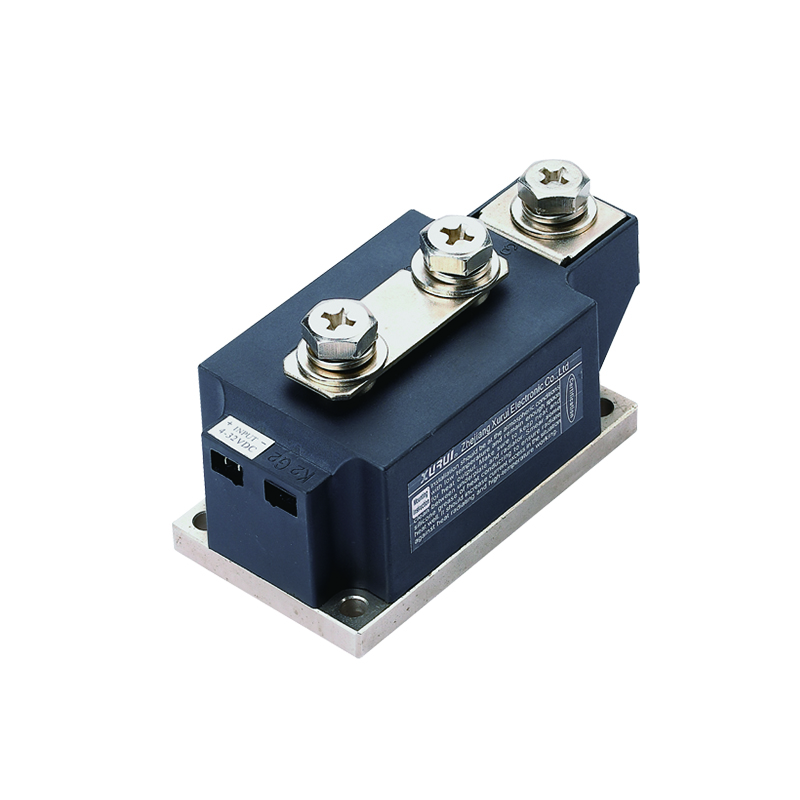
Comparison Table: The Five Criteria at a Glance
| Selection Criterion | What to Verify | XURUI SSR Range — Published Reference Data | Consequence If Under-Specified |
|---|---|---|---|
| 1. Load current and load type fit | Steady-state current, inrush current, minimum load current, resistive vs inductive load | Load current safety factor 50–60% resistive, 30–40% inductive; minimum load current 0.02–0.1 A; load voltage from 24–240 VAC to 75–480 VAC | Overheating, shortened service life, unreliable switching at low load currents |
| 2. Isolation and leakage | Dielectric strength, insulation resistance, output leakage current, breakover voltage | Dielectric strength ≥2500 VAC; insulation resistance ≥100 MΩ; output leakage current ≤1–8 mA; breakover voltage ≤2 VAC | Faint glow from lamps and indicators in the off state; reduced safety margin in the product file |
| 3. Control signal compatibility | Control voltage type, control current, guarantee ON/OFF thresholds, reverse voltage | 3–32 VDC (DA) / 80–250 VAC (AA), plus 4–32 VDC and 5 V / 12 V / 24 VDC input types; control current 6–25 mA; guarantee ON 3 VDC / 80 VAC; guarantee OFF 1 VDC / 30 VAC; reverse voltage 32 VDC | Inconsistent switching between units, temperature-dependent behaviour, late drive-circuit redesign |
| 4. Switching method and response | Trigger method, switching time, frequency range, phase-control requirement | Zero-crossing switching on most types; random turn-on and adjustable 0–170° conduction angle variants; switching time ≤10 ms; frequency range 47–63 Hz | Higher inrush and conducted noise; no phase control for dimming or speed regulation |
| 5. Mounting, thermal path and compliance | Mounting format, housing and base plate, operating temperature, certificates for the target market | DIN-rail, horizontal screw-mount and panel-mount formats; PA66 nylon housing with aluminium base plate or heat sink on higher-current types; −20 °C to +70 °C; UL 508 / CSA C22.2 No. 14, CE EN 62368-1, CCC GB/T 14048.5-2017 | Thermal derating surprises in sealed enclosures; compliance gaps at retail or customs |
FAQ: Solid State Relay Selection for Consumer Devices
What certifications should a solid state relay carry for a consumer device sold in North America and Europe?
For this component category, the widely referenced standards are UL 508 for industrial control equipment and IEC/EN 60947-4-3 for contactors and motor-starters. XURUI holds UL certification for its XSSR series to UL 508 and CSA C22.2 No. 14 under certificate 20170124-E334724 issued by UL LLC, and CE certification for the XSSR series to EN 62368-1:2014+A11:2017 under certificate TMC210514108-C issued by TMC Testing Services (Shenzhen) Co., Ltd. For products placed on the Chinese market, CCC certification to GB/T 14048.5-2017 is available under certificate 2024010303698163 for the XSSR-3H type, issued by the China Quality Certification Centre (CQC). RoHS compliance applies across mainstream products and the company holds ISO 9001 quality management certification. Certificates should always be matched to the exact series being purchased, because certification scope is defined per series and per type.
Can a solid state relay be customised for a specific consumer device programme?
XURUI operates an OEM/ODM model and offers customisation of handle, logo, dimensions and operating characteristics. Solid state relays are one of the company's core product lines, produced in a 5,000+ m² facility by a team of more than 24 engineers, with 100% pre-shipment testing. In practice, the parameters most often specified for a consumer device programme are the control input type (3–32 VDC or 80–250 VAC, with 4–32 VDC and 5 V / 12 V / 24 VDC variants available), the load voltage range (from 24–240 VAC to 75–480 VAC), the load current rating, and the mounting format (DIN-rail, screw-mount or panel-mount).
What is the minimum order quantity, and what drives the commercial side of the specification?
The minimum order quantity for standard models starts at 100 units, which allows pilot builds and sample-stage validation before mass production. Commercial terms in this category are driven mainly by load current rating, isolation and housing construction (PA66 nylon housings, with aluminium base plates or heat sinks on higher-current types), the control type selected, and the certification documentation required for the target market. Because the required current rating follows directly from the derating and thermal steps in the checklist, completing the technical specification first is what keeps the commercial comparison meaningful.
Can we validate a solid state relay with samples before committing to production?
Yes. Sample validation is the standard step before a production commitment, and the XURUI process supports it: the minimum order quantity starts at 100 units for standard models, and 100% pre-shipment testing is applied to production orders. Validation should be carried out on the real load — the actual heater, motor, lamp or power supply — because resistive bench loads do not reproduce inrush behaviour, low-load off-state leakage or enclosure temperature. The criteria most often confirmed at sample stage are minimum load current, off-state leakage with the smallest load in the product, and control-side margin at the extremes of the −20 °C to +70 °C operating range.
What is the typical lead time and production capacity, and how do we start?
Lead time is typically 15–30 days, and monthly production capacity ranges from 5,000 to 250,000 units, with 100% pre-shipment inspection, export coverage across the EU, Asia-Pacific, North America and the Middle East, and remote after-sales support. To start, share the load profile, control signal, mounting format and target-market certification requirements, and XURUI can respond with a matching configuration from the solid state relay range. The full product overview can be downloaded from the XURUI product brochure (PDF), and direct enquiries can go to Leon at Leon@chinaxurui.com, by telephone at +86-577-62911448, or via WhatsApp at +86 13968773211.
Conclusion: Five Criteria, One Verifiable Decision
Reliable solid state relay performance in a consumer device is not decided by a single current rating. It is decided by five verifiable criteria applied in sequence: load current and load type fit with the correct derating factor, isolation voltage and leakage behaviour against the smallest load in the product, control signal compatibility with enough threshold margin, switching method and response matched to the load type, and a mounting, thermal and compliance envelope that fits the enclosure and the target market.
Across the XURUI solid state relay range, those criteria are documented with published values — 50–60% resistive and 30–40% inductive derating, minimum load current from 0.02 A, dielectric strength ≥2500 VAC, control inputs from 3–32 VDC and 80–250 VAC, zero-crossing and adjustable switching, DIN-rail, screw-mount and panel-mount formats, and UL, CE, CCC and RoHS documentation. Working through the checklist before the commercial comparison is what converts those values into a specification a procurement team can defend.
Next Step: Validate the Specification on Your Own Load
Share your load profile, control signal and target-market certification requirements, and XURUI will confirm the matching configuration from the solid state relay range — including sample units for validation on your real load before production.

Download the XURUI solid state relay product brochure (PDF)
Contact: Leon · Email: Leon@chinaxurui.com · Tel: +86-577-62911448 · WhatsApp: +86 13968773211
Zhejiang XURUI Electronics Co., Ltd., NO.3 Yandangshan Road, Wenzhou Bridge Industrial Park, Beibaixiang Town, Yueqing, Wenzhou City, Zhejiang, China