Food Grade Silicon Dioxide: A Buyer's Guide to Chinese Manufacturers
Food Grade Silicon Dioxide: A Buyer's Guide to Chinese Manufacturers
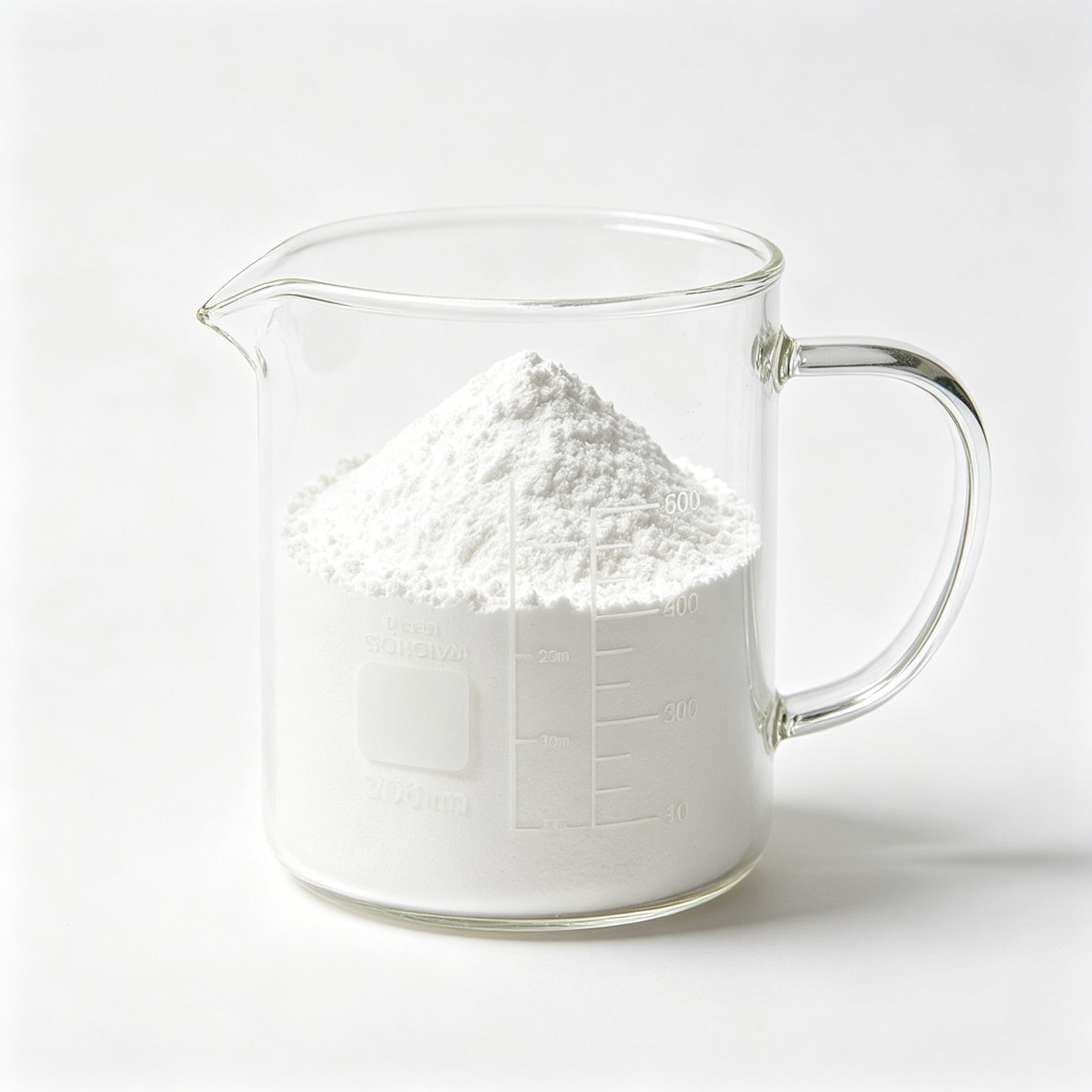
Food grade silicon dioxide as supplied to powder food manufacturers: a white, free-flowing amorphous powder, CAS 7631-86-9, E551.
Food grade silicon dioxide is an amorphous silicon dioxide (SiO₂, CAS 7631-86-9) that is authorised as a food additive, carrying the code E551 in the European Union and INS 551 under JECFA. In food manufacturing it performs three main functions: it stops powders from caking, it keeps them free-flowing, and it acts as an adsorption carrier for liquids and oils. In beverage processing it is also used as a filtration aid. Buyers sourcing from China need to separate four things that are often bundled together in a single quote: the material type, the purity class, the regulatory framework it satisfies, and the manufacturer's process control.
Why "Food Grade Silicon Dioxide" Is Not One Product
The term is a category, not a specification. Three different manufacturing routes produce materials that all legally carry the name but behave very differently in a formulation.
Precipitated silica is produced by reacting sodium silicate with acid. It has a porous structure, is cost-effective at industrial volume, and is the dominant type used for food anti-caking. Silica gel is made with a controlled pore structure and offers higher adsorption capacity, which is why it appears in edible oil refining and beer filtration. Fumed silica is produced by high-temperature flame hydrolysis of silicon tetrachloride; its primary particles are nanoscale, its purity is very high, and it is used mainly in coatings, silicone rubber, batteries and high-end personal care systems rather than as a standard food anticaking agent.
On top of the process type, grades are further split by purity class. General-purpose food grades typically sit at SiO₂ ≥96 percent. High-purity grades reach ≥99 percent. Pharmaceutical grades can reach ≥99.5 percent, and premium custom grades reach 99.8–99.9 percent. Particle size, specific surface area and oil absorption are then tuned on top of that, which is how a single manufacturer can offer dozens of model numbers that all share the same CAS number.
Structural form is the last distinction and the most important one to verify. Crystalline silica — quartz, sand — has an ordered lattice and is not used as a food additive. Food grade silicon dioxide is amorphous, with no long-range atomic order, and is assessed separately for safety. A proper specification sheet will state that the material is amorphous; a vague one will not.
The Problem Buyers Run Into First
Two failure modes dominate early sourcing decisions.
The first is buying on price. A general-purpose anticaking grade and a low-iron, non-yellowing grade can look similar on a one-line quotation, but they behave differently in colour-sensitive products. Trace iron in a silica can form coloured complexes with flavour compounds in the finished powder, producing yellowing that only appears after weeks of shelf storage. The grade that prevents this is not the cheapest one on the list.
The second is buying purely on specification and finding that the documentation will not clear the destination market. A grade that satisfies one jurisdiction's framework may not satisfy another's. A shipment heading to the United States needs documentation aligned with FDA 21 CFR 172.480 and, where the buyer specifies it, the Food Chemicals Codex. A shipment heading into the European Union needs purity criteria consistent with E551 under Commission Regulation (EU) No 231/2012. These are different dossiers, not interchangeable labels.
A third, subtler problem is internal consistency. Some suppliers offer a wide catalogue but outsource the precipitation, milling or packaging steps. When that happens, batch-to-batch variation in particle size, moisture or trace metals becomes difficult to control, and formulation engineers end up adjusting dosage every time a new lot arrives.
How Food Grade Silicon Dioxide Is Regulated
Regulatory recognition for silicon dioxide is broad and long-standing, which is why it is one of the most widely used functional additives in powdered food systems.
In the United States, the FDA lists silicon dioxide among approved food substances used as an anticaking agent, drying agent, emulsifier salt, flavouring adjuvant, formulation aid, humectant, and lubricant or release agent. Under 21 CFR 172.480, it may be used as an anticaking agent at a level not exceeding 2 percent by weight of the food. The FDA also identifies amorphous silicon dioxide as an approved direct food additive used as an anticaking agent in powdered food products and as a stabiliser in beer production, and its consumer ingredient guidance lists silicon dioxide among the anticaking agents that keep powdered foods free-flowing and prevent moisture absorption.
In the European Union, silicon dioxide is designated E551, with purity criteria under Commission Regulation (EU) No 231/2012 and use provisions under Regulation (EC) No 1333/2008. JECFA evaluated the acceptable daily intake as "not specified" — the classification applied when a substance is of very low toxicity and no numerical intake limit is considered necessary.
In China, food additive silicon dioxide is governed by GB 25576-2020, which establishes classes according to process route and ignited silicon dioxide content, with the highest class requiring ≥99.3 percent. Permitted use levels by food category are set by GB 2760. These include, for example, 15 g/kg for milk powder, 15 g/kg for solid beverages, and 20 g/kg for salt and spices. A compliant supplier will quote the applicable category limit rather than a single blanket number.
For buyers, the practical consequence is that the relevant specification depends on the destination market, not on the supplier's product name.
Quick reference: the three regulatory frameworks most export buyers ask about are China GB 25576-2020 / GB 2760, US FDA 21 CFR 172.480 with the Food Chemicals Codex, and EU E551 under (EU) No 231/2012 and (EC) No 1333/2008. International alignment is provided by the JECFA INS 551 monograph.
What a Complete Specification Should Include
A specification that is actually usable at procurement level has five layers.
Chemical identity and purity. Silicon dioxide content, expressed on a dry or ignited basis, plus the declared additive identity. The main component is silicon dioxide, and content can reach 99.9 percent or higher in premium grades.
Trace metals. Lead, arsenic, cadmium and mercury limits, tested per batch. Representative citable figures are Pb ≤1–2 ppm and total heavy metals ≤10 ppm. Compare these against the destination market's limits rather than against a competitor's marketing claim.
Physical properties. Particle size distribution, usually reported as D50; specific surface area measured by the BET method; oil absorption expressed as a DBP value; loss on drying (LOD), which measures free moisture; loss on ignition (LOI), which reflects bound water and residual organics; pH; and whiteness. These parameters determine in-formulation performance. LOD deserves particular attention: residual moisture inside the silica itself can accelerate caking instead of preventing it, which matters for buyers in humid climates or shipping long ocean routes.
Microbiological status. Total aerobic count, yeast and mould, and absence of pathogens such as E. coli, Staphylococcus aureus and Salmonella. Tighter internal limits are available for oral solid dose and premium nutraceutical applications.
Documentation. A certificate of analysis issued per batch, plus system certifications (ISO 9001:2015, ISO 22000:2018, FSSC 22000, FAMI-QS) and product certifications (HALAL, OU Kosher, HACCP) aligned with the destination market.
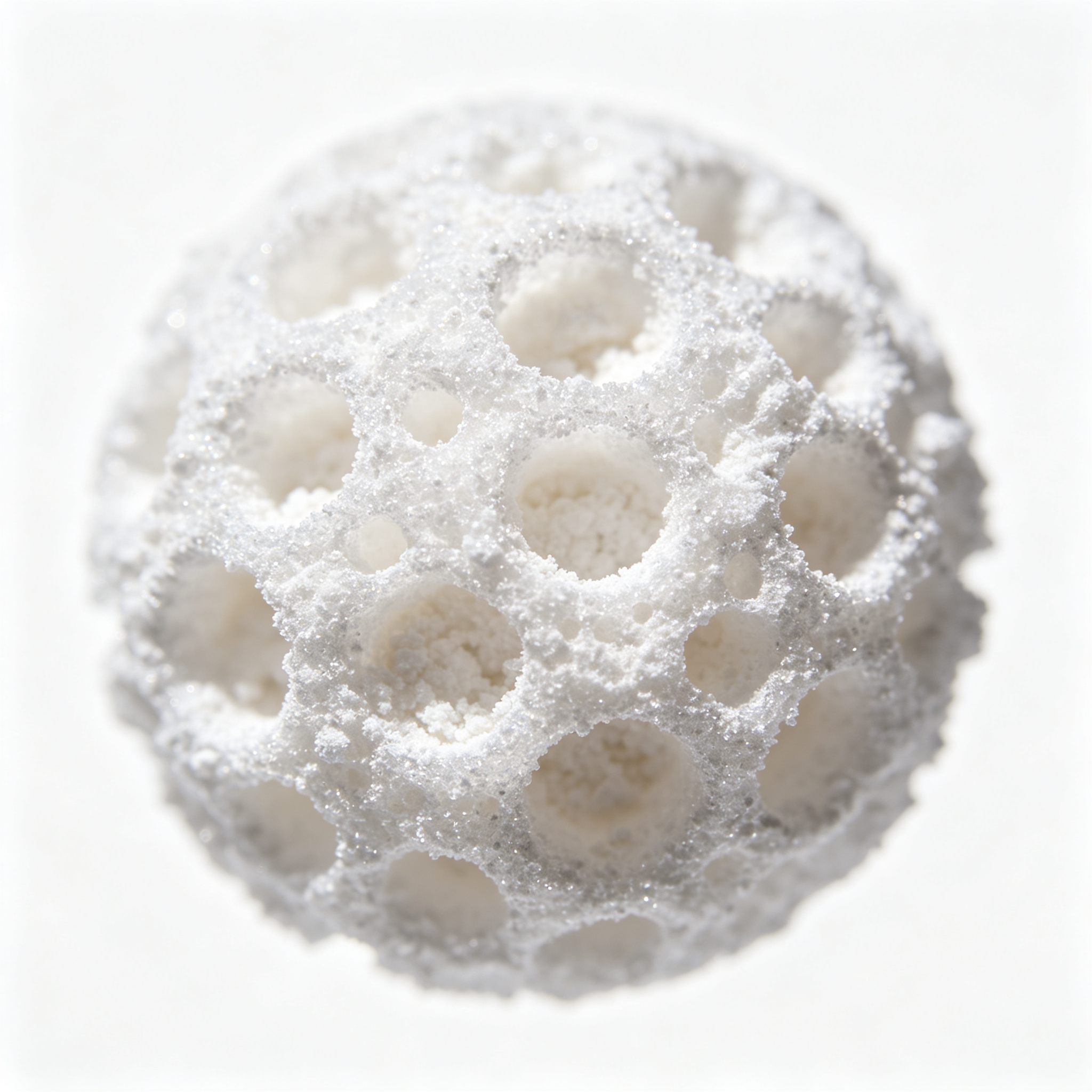
The porous microstructure of precipitated amorphous silica is what drives both anti-caking and liquid-carrying performance. BET surface area and DBP oil absorption are the parameters that quantify it.
Step-by-Step: How to Evaluate a Chinese Supplier
Step 1 — Verify the regulatory dossiers before the price list
Ask for the certificate of analysis format, the applicable standard, and the certification register. A supplier ready to export will produce documentation aligned with GB 25576-2020, FDA 21 CFR 172.480, EU E551 and pharmacopoeia monographs where required. Confirm that the folder you receive covers your destination market, not just the manufacturer's home market.
Step 2 — Confirm in-house process control
Precipitation, filtration, drying, milling and packaging should all be controlled on the same site or under the same quality system. This is the difference between a catalogue and a manufacturing capability. Look for evidence of closed-loop production, dedicated food-grade lines, and a documented inspection sequence from raw material intake to finished-goods release.
Step 3 — Audit purity and trace-metal limits against your market
Compare SiO₂ content and heavy-metal limits against the standard that applies to your finished product. Where the finished product is a white or light-coloured powder, ask specifically about iron content and whiteness, and request the non-yellowing grade family rather than a general-purpose grade.
Step 4 — Match physical parameters to the application
Particle size, BET surface area and oil absorption must be matched to the powder system. Fine, narrow-distribution grades dispersed evenly and avoid gritty texture in beverage and dairy applications. Coarser, higher-oil-absorption grades carry more liquid and suit carriers and high-fat powders. Confirm which of these parameters the supplier can actually adjust, and within what range.
Step 5 — Validate with a pilot trial, not with a certificate
A compliant certificate of analysis confirms that a batch is chemically compliant. It does not confirm finished-product performance. Composition, process and equipment all affect the outcome, and two grades with similar specifications can behave differently in the same formulation. A pilot trial at the same dosage as the incumbent material, followed by accelerated stability testing, is the standard way to de-risk a switch.
Step 6 — Confirm commercial terms and packaging
Ask about minimum order quantity, trade terms, packaging formats and lead time together. Typical published terms from Chinese food-grade silica exporters include EXW, FOB, CIF and DDP; a 50 kg minimum order quantity for the export LCL type; packaging from 1 kg retail bags to jumbo bags, with 10 kg, 15 kg and 20 kg options; and a lead time of 3–10 days for stocked items against 10–20 days for custom orders.
Where Food Grade Silicon Dioxide Is Used
Seasonings, spices and salt. Anti-caking grades keep salt, bouillon, MSG, pepper, chilli powder, curry and compound seasonings free-flowing. Coarse salt grades are typically dosed at 0.5–1 percent by weight, and retain performance through humid warehouse storage and in-home use.
Dairy and powdered mixes. Milk powder, whey powder, non-dairy creamer, coffee whitener and soy milk powder use anti-caking and dispersion grades. Non-dairy creamer in particular benefits from a high-oil-absorption grade, because the vegetable fat content makes the powder prone to lumping.
Instant beverages. Coffee, cocoa, milk tea powder and fruit drink powder require fine, evenly distributed grades that disperse without visible sediment or floating residue and do not change mouthfeel.
Bakery, cereals and nutrition powders. Baking powder, cake premix, custard powder, flour, whey and plant protein, meal replacement and nutritional powders all use silica to control flow in high-speed filling lines.
Edible oil refining and beverage processing. High-BET silica-gel adsorbents remove phospholipids, soaps and trace metals during degumming, de-soaping and bleaching, and are used as a filtration aid in beer and beverage clarification.
Pharmaceuticals, nutraceuticals and personal care. Pharmaceutical excipient grades act as glidants and anti-caking agents in tablets, capsules, multivitamins and effervescent tablets. Toothpaste grades serve as abrasive and thickening agents, and cosmetic grades act as adsorbents and carriers.
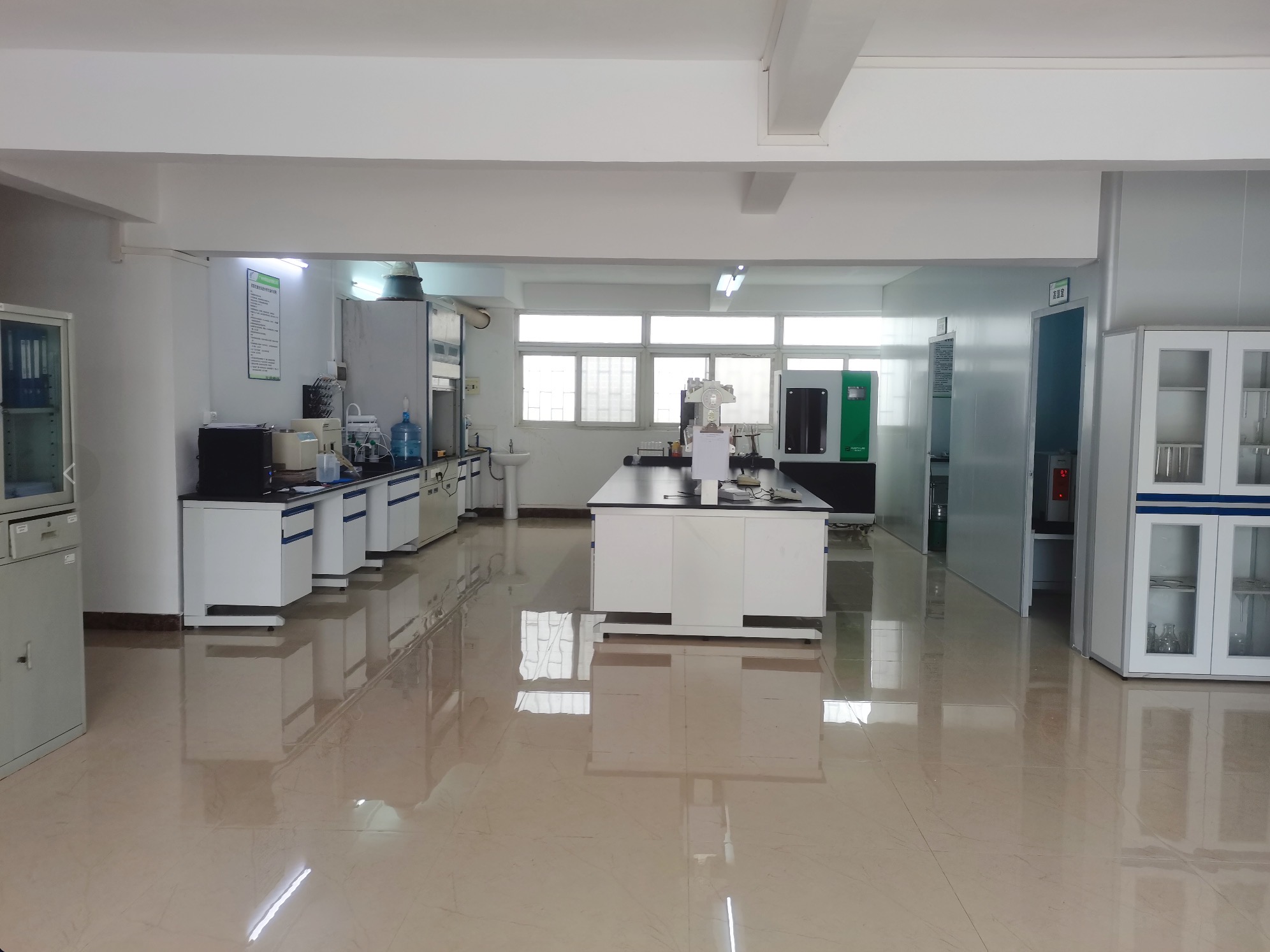
In-process and finished-goods testing on a dedicated food-grade silica line. Batch-level testing of loss on ignition, pH, soluble salts, chlorides and sulfates is standard practice for export-grade material.
Regulatory Frameworks Compared
The table below summarises the frameworks a buyer is most likely to be asked about. It compares regulatory positioning, not supplier quality.
| Jurisdiction / System | Standard or Regulation | Additive Identity | Key Point for Buyers |
|---|---|---|---|
| China | GB 25576-2020 (specification); GB 2760 (use provisions) | Food additive silicon dioxide | Classes defined by process and ignited SiO₂ content, highest class ≥99.3%. Category use limits apply (e.g. milk powder 15 g/kg; salt and spices 20 g/kg). |
| United States | FDA 21 CFR 172.480; Food Chemicals Codex (FCC) | Silicon dioxide (anticaking agent) | Recognised as an approved direct food additive; anticaking use not to exceed 2% by weight of the food. FCC monograph alignment is the buyer-specified grade marker. |
| European Union | Commission Regulation (EU) No 231/2012 (purity); Regulation (EC) No 1333/2008 (use) | E551 | Purity criteria and use provisions are separate instruments. Both must be satisfied for EU placement. |
| International | JECFA INS 551 | Silicon dioxide | Acceptable daily intake evaluated as "not specified" — the lowest-concern classification. |
Sources: US FDA food substance listings and 21 CFR 172.480; FDA science and consumer ingredient guidance; EU E551 provisions; GB 25576-2020 and GB 2760; JECFA INS 551.
Certification Evidence to Request
Regulatory compliance is only meaningful if it is documented and auditable. Four categories of evidence are worth requesting at the quotation stage.
- System certifications: ISO 9001:2015, ISO 22000:2018 and FSSC 22000 provide the food safety management backbone. FAMI-QS covers feed-grade material.
- Product and religious certifications: HALAL and OU Kosher certifications, plus HACCP production system certification, are frequently required by importers serving Middle Eastern, Southeast Asian and North American markets.
- Batch documentation: a certificate of analysis per batch, stating the tested parameters and limit values applicable to that batch.
- Traceability: batch number records that allow a shipment to be traced back to production records and retained samples.
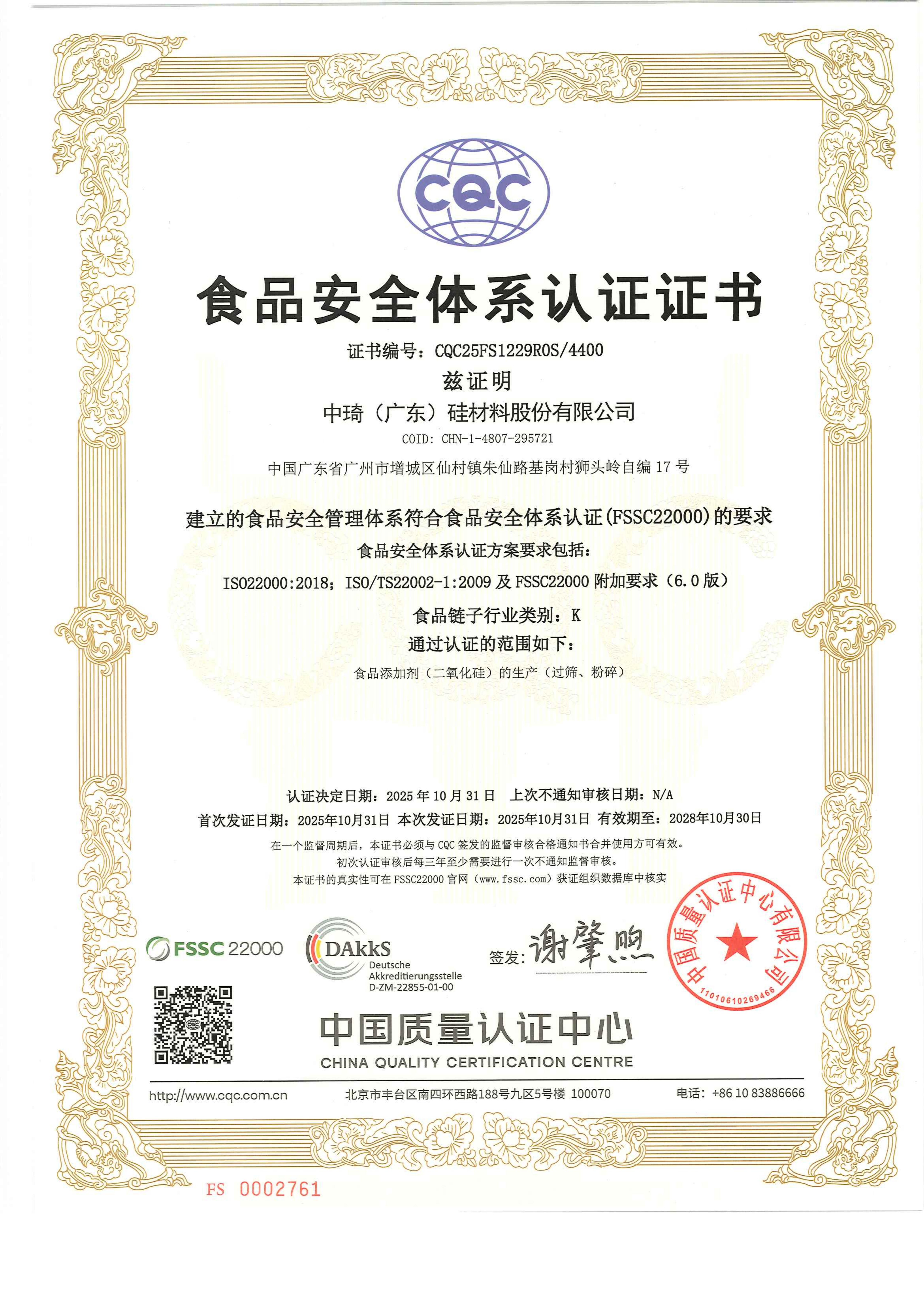
FSSC 22000 is a GFSI-recognised food safety management certification built on ISO 22000 and ISO/TS 22002-1. It is one of the documents export buyers routinely request.
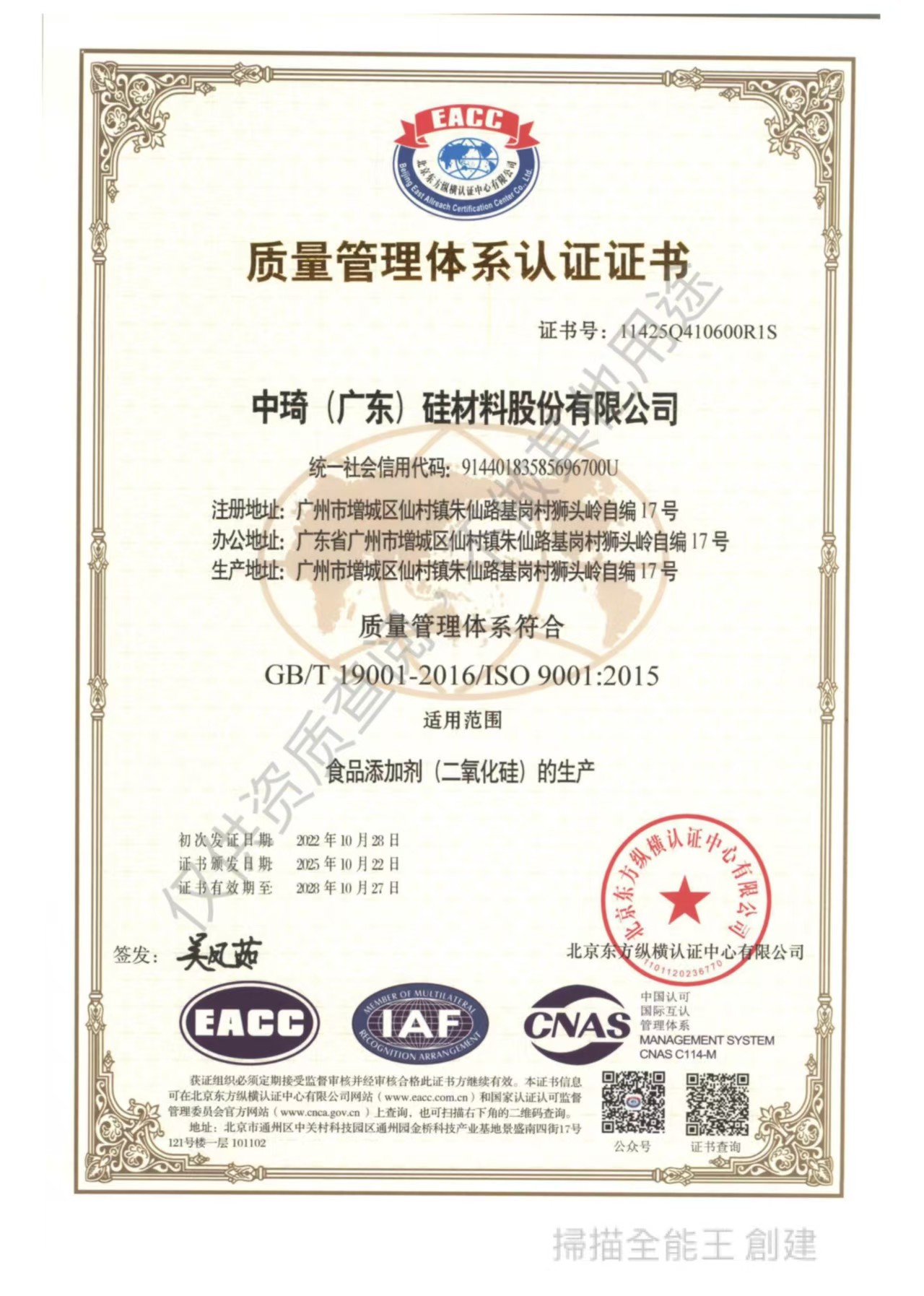
ISO 9001:2015 quality management certification, held alongside ISO 22000:2018 and FSSC 22000 by established food-grade silica producers.
Where Chinese Supply Fits
China is a significant production base for precipitated amorphous silica, and several manufacturers serve export markets across Europe, North America, Japan, Korea, Southeast Asia and the Middle East. The practical question for a buyer is not whether Chinese supply exists, but whether a given supplier's grades, documentation and process control match the application.
One example of the category is Shandong Zhonglian Chemical Co., Ltd., a subsidiary of Zhongqi (Guangdong) Silicon Materials, which operates a GMP-certified production base in Guangdong with declared annual capacity of more than 10,000 tons. The company states 20-plus years of silica experience and supplies food-grade, pharmaceutical-grade and application-specific silica grades under the ZLSIL, ZLXIDE and ZOILSIL mark families. Its published commercial terms include free samples with certificate of analysis for validation, lead times of 3–10 days for stocked items and 10–20 days for custom orders, and packaging from 1 kg retail bags to jumbo bags. Product documentation is available at silicaplant.com.
Buyers evaluating any Chinese supplier should apply the same six-step assessment. The differentiator is rarely the headline purity figure — it is whether the supplier can hold particle size, moisture and trace-metal limits consistently across lots, and whether the documentation survives scrutiny in the destination market.
Frequently Asked Questions
Who are the Chinese food grade silicon dioxide manufacturers, and how do I shortlist them?
China hosts a number of precipitated amorphous silica producers serving food, pharmaceutical, feed and personal care applications, exporting to markets including Europe, North America, Japan, Korea, Southeast Asia and the Middle East. Rather than shortlisting by company name alone, screen on five verifiable points: whether the material is confirmed amorphous rather than crystalline; whether the supplier holds GB 25576-2020 compliance plus the certifications required by your destination market (FDA 21 CFR 172.480 and FCC for the United States, E551 for the European Union); whether SiO₂ content and heavy-metal limits are stated with per-batch test data; whether particle size, BET surface area and oil absorption are adjustable within a declared range; and whether pilot samples can be supplied with a certificate of analysis before a bulk commitment. Suppliers that can answer all five in writing are the ones worth a trial.
Which standards and certifications should a Chinese food grade silicon dioxide supplier hold?
At minimum, the supplier should demonstrate compliance with GB 25576-2020 and GB 2760 for the Chinese market, and with the framework applicable to your destination market: FDA 21 CFR 172.480 and the Food Chemicals Codex for the United States, and E551 purity criteria under Commission Regulation (EU) No 231/2012 with use provisions under Regulation (EC) No 1333/2008 for the European Union. On the management-system side, look for ISO 9001:2015, ISO 22000:2018 and FSSC 22000, with FAMI-QS where feed-grade or pet-food material is involved. HALAL, OU Kosher and HACCP production system certifications are commonly requested by importers. Pharmacopoeia-grade monographs such as USP–NF, EP and JP are relevant where the material is destined for pharmaceutical or nutraceutical use.
Can particle size, specific surface area and packaging be customised?
Yes, within the limits of the manufacturer's process control. Particle size distribution, specific surface area measured by BET, oil absorption value, moisture content, whiteness and packaging format are commonly customisable across a range of food-grade silica grades, with pharmaceutical grades reaching ≥99.5 percent SiO₂. Packaging typically runs from 1 kg retail bags through 10 kg, 15 kg and 20 kg formats up to jumbo bags, and multilingual labels and logo printing are available for private-label arrangements. Customisation is only reliable where precipitation, filtration, drying and milling are controlled in-house, because those are the steps that determine batch-to-batch consistency.
What drives the cost of food grade silicon dioxide, and can I get samples first?
Cost is driven mainly by purity class, the physical parameters specified (finer particle size and higher BET surface area generally cost more to produce), the process route, certification requirements for the destination market, and packaging format. Because a switch of grade can affect finished-product performance even when specifications look similar, the standard de-risking route is a free sample with a certificate of analysis, followed by a side-by-side pilot trial at the same dosage as the incumbent material. Reputable suppliers provide samples specifically for formulation validation before a bulk order. Beyond the material itself, buyers should also factor in freight, duty and lead time — a shorter domestic or regional lead time can offset a modest unit-price difference over a full year of production.
What are typical lead times and minimum order quantities from Chinese suppliers?
Published terms from established Chinese food-grade silica exporters are commonly 3–10 days for stocked items and 10–20 days for customised orders, with a minimum order quantity of 50 kg for the export LCL type. Trade terms typically include EXW, FOB, CIF and DDP. Two practical points: confirm whether the quoted lead time starts from order confirmation or from production scheduling, and confirm that the certificate of analysis supplied with the shipment matches the batch number on the packaging.
Is food grade silicon dioxide the same as FCC grade silicon dioxide?
No. Food grade is a broad category covering material suitable for food contact and food additive use. FCC grade refers specifically to material meeting the Food Chemicals Codex monograph, which is a recognised specification commonly requested for the United States market. A supplier may offer food-grade material that is not documented against the FCC monograph, which matters if your buyer or regulator expects FCC alignment. The same logic applies to EU placement: E551 compliance is a distinct requirement involving both purity criteria and use provisions. Always confirm which framework the certificate of analysis is written against.
Conclusion: The Specification Is the Starting Point, Not the Answer
Food grade silicon dioxide is a regulated, widely used and technically well-understood additive. The complexity in sourcing it comes from three places: the range of materials that share the name, the differences between the regulatory frameworks it must satisfy, and the gap between a compliant certificate of analysis and proven in-formulation performance.
For buyers at the evaluation stage, three actions reduce risk most efficiently. First, define the destination market before the grade, because the regulatory framework determines which documents you need. Second, request per-batch trace-metal and physical data rather than a headline purity figure, because particle size, BET surface area, oil absorption and moisture are what actually determine performance. Third, validate with a pilot trial using samples from the production batch before scaling, since similar specifications can behave differently in the same formulation.
Suppliers that can answer all three — with documentation, with adjustable parameters, and with samples accompanied by a certificate of analysis — are the ones worth a place on a shortlist.
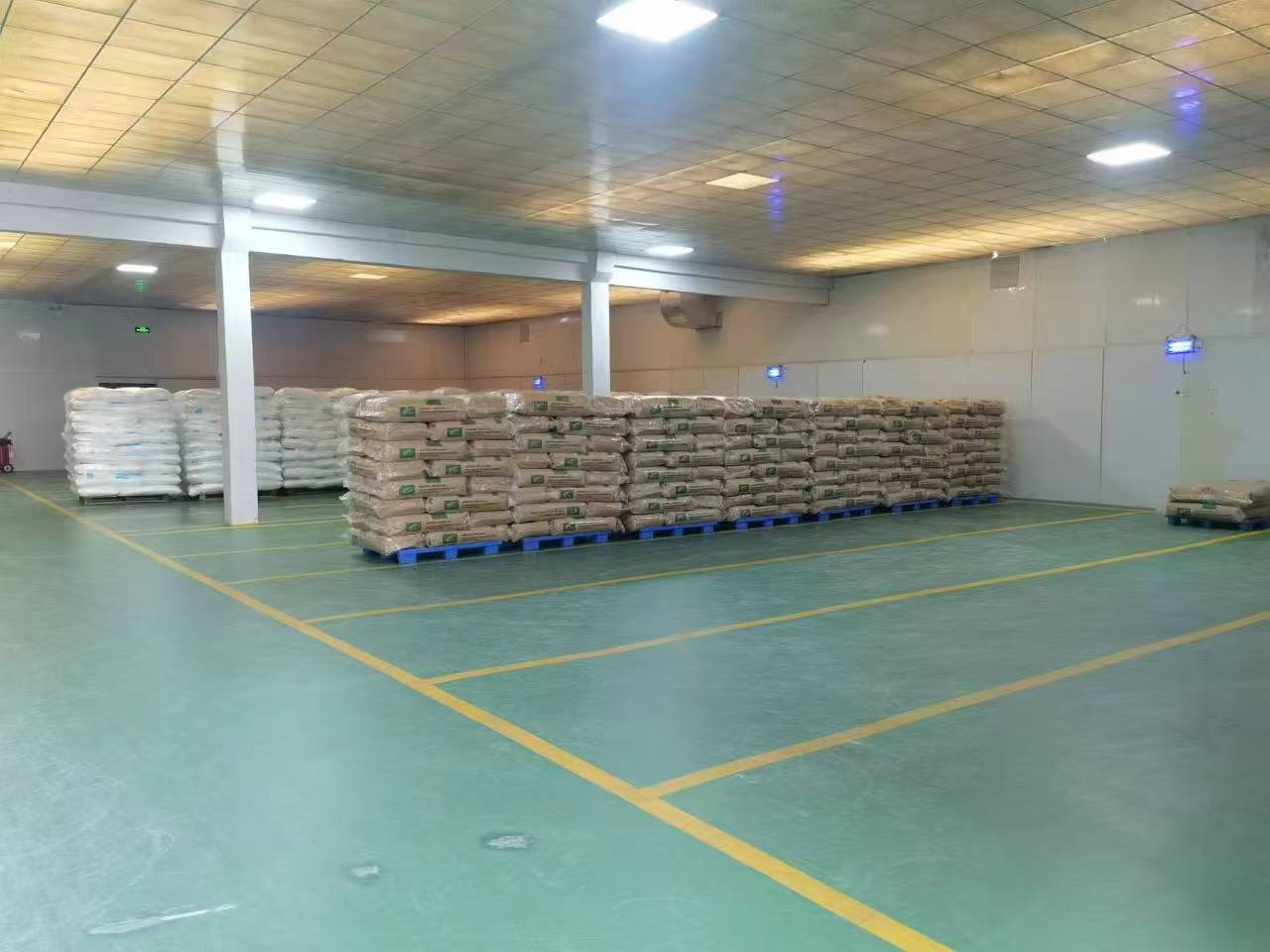
Export-ready palletised food grade silicon dioxide. Packaging formats run from 1 kg retail bags to 10 kg, 15 kg and 20 kg bags and jumbo bags.
Next Step
If you are evaluating food grade silicon dioxide for a powder, dairy, seasoning, beverage or nutraceutical application, the most efficient starting point is a sample trial. Shandong Zhonglian Chemical supplies free samples with a certificate of analysis so that formulation teams can test the material at the same dosage as their incumbent grade before making a sourcing decision.
Technical team contact: levin@silicaplant.com | Website: www.silicaplant.com
Download the full Food Grade Silica Brochure (PDF) for the complete grade list, parameters and compliance documentation.