Food Grade Silicon Dioxide from Chinese Manufacturers: What Buyers Need to Know
Food Grade Silicon Dioxide Buyer Guide
Food Grade Silicon Dioxide from Chinese Manufacturers: What Buyers Need to Know
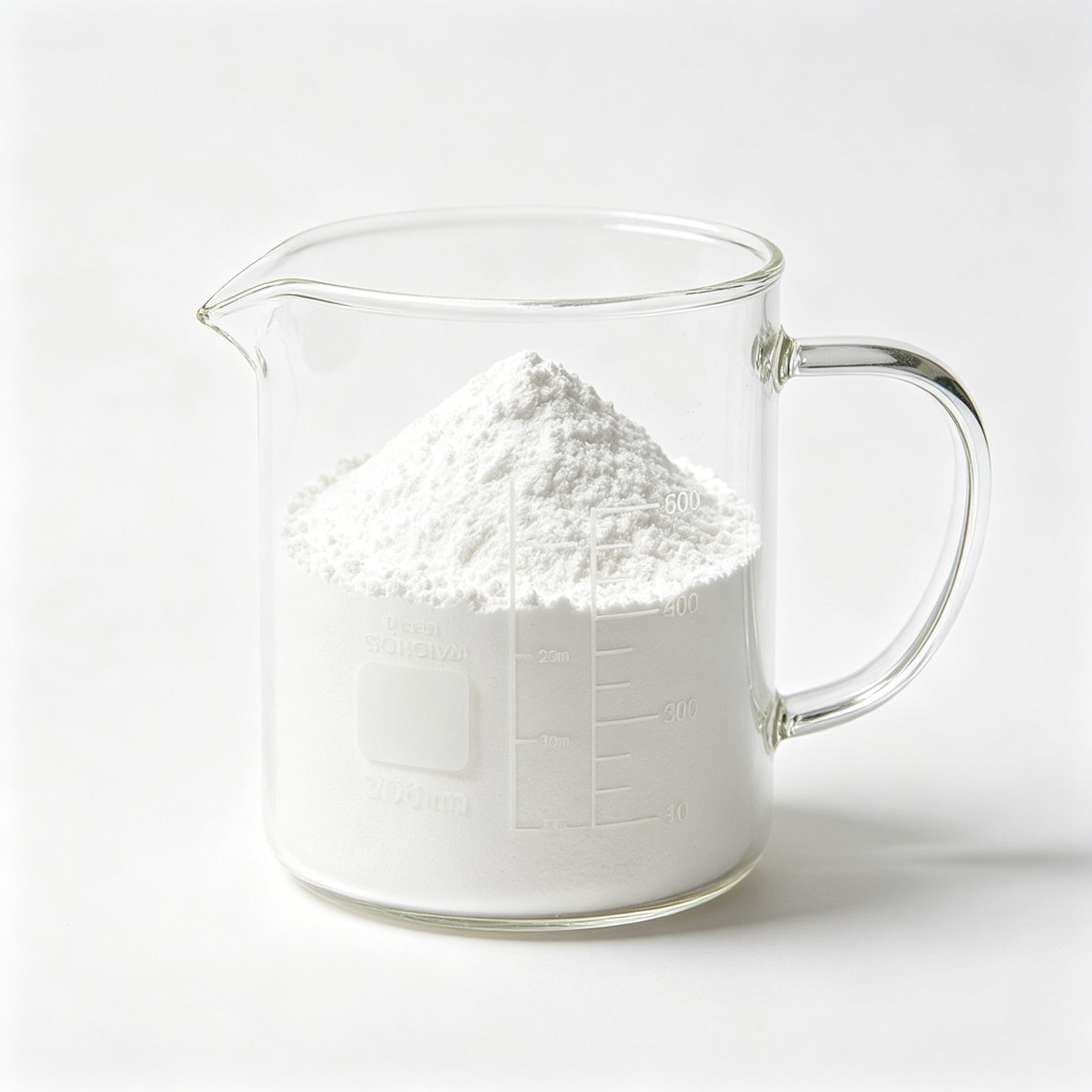
Food grade silicon dioxide (E551) is an amorphous, free-flowing powder used as an anticaking agent, flow aid and carrier.
Food grade silicon dioxide is an amorphous form of silicon dioxide (CAS 7631-86-9), also known internationally as E551 or INS 551. It is used in powdered foods and liquid processing to keep powders free-flowing, prevent caking, carry liquids into powder form, and improve filtration or adsorption. For buyers at the awareness and research stage, the main question is not whether silicon dioxide works. It is which Chinese manufacturer can supply the right grade, with the right compliance documents, at a consistent quality and a workable lead time.
This guide explains how to evaluate Chinese food grade silicon dioxide manufacturers. It covers the regulatory background, the difference between food grade, food additive and FCC grade silicon dioxide, the specifications that matter, the sampling and validation process, and the commercial terms that shape a reliable supply relationship. Zhonglian Food Silica is used as a concrete example because its parent company, Zhongqi (Guangdong) Silicon Materials (stock code: 880747), operates a GMP-certified production base in Guangdong, China, with more than 20 years of silica experience.
Problem Definition: Why Sourcing Food Grade Silicon Dioxide Requires More Than a Price Check
Silicon dioxide is a mature additive, but sourcing it across borders is not a commodity transaction. Buyers face four practical constraints.
- Regulatory differences: The same product name can be sold against Chinese, U.S., EU, Japanese or pharmacopoeia standards. Food additive silicon dioxide must meet the destination market's purity, labelling and use-level rules.
- Grade selection: Anti-caking silica, carrier silica, FCC grade silicon dioxide and low-iron non-yellowing silica are not interchangeable. Particle size, surface area, oil absorption and pH change how the powder behaves in a formulation.
- Quality consistency: Batch-to-batch variation in moisture, particle size distribution or heavy metals can disrupt filling, blending and shelf life.
- Supply reliability: Lead time, minimum order quantity and packaging must match the buyer's production schedule and warehouse conditions.
A manufacturer that can answer these points with documents, samples and batch records is more valuable than a supplier that only quotes the lowest price per ton.
Industry Background: How Food Grade Silicon Dioxide Is Regulated
Regulatory status is the first filter when shortlisting Chinese food grade silicon dioxide manufacturers. Silicon dioxide is widely accepted, but the details differ by market.
In the United States, the FDA lists silicon dioxide for multiple technical uses in food, including anticaking agent or free-flow agent, drying agent, emulsifier or emulsifier salt, flavour agent or adjuvant, formulation aid, humectant, and lubricant or release agent. Under 21 CFR 172.480, it may be used as a food additive anticaking agent in an amount not to exceed 2 percent by weight of the food. The FDA also describes amorphous silicon dioxide as an approved food additive mainly used as an anticaking agent in powdered food products and as a stabilizer in beer production.
In the European Union, food grade silicon dioxide is regulated as E551. Purity criteria are set under Commission Regulation (EU) No 231/2012, and use provisions fall under Regulation (EC) No 1333/2008. The Joint FAO/WHO Expert Committee on Food Additives (JECFA) has evaluated silicon dioxide and set an acceptable daily intake (ADI) of "not specified", which is a high safety classification.
In China, food additive silicon dioxide is produced under GB 25576-2020 and used according to GB 2760. For buyers importing into China or comparing Chinese suppliers, GB 25576-2020 is the baseline product standard, while GB 2760 defines permitted food categories and maximum use levels.
For pharmaceutical and nutraceutical applications, pharmacopoeia grades may be required. USP-NF, EP and JP monographs define additional purity, microbial and elemental impurity expectations. FCC grade silicon dioxide is another common reference for food chemical compliance in the U.S. market.
Detailed Solution: What a Capable Chinese Food Grade Silicon Dioxide Manufacturer Provides
Zhonglian Food Silica is the overseas-facing food silica brand of Shandong Zhonglian Chemical Co., Ltd., a subsidiary of Zhongqi (Guangdong) Silicon Materials (stock code: 880747). The company operates a GMP-certified production base in Guangdong, China, with annual silica capacity of more than 10,000 tons at the GMP-certified base and broader annual silica capacity of approximately 50,000 metric tons. It has more than 20 years of silica expertise and holds 17 patents covering production, preparation, environmental protection, powder treatment and automatic packaging.
The product portfolio covers food additive silicon dioxide, food grade precipitated silica, FCC grade silicon dioxide, low-iron non-yellowing silica, silica for non-dairy creamer, silica for spices and seasonings, silica for salt, and adsorbent silica for edible oil and beverage processing. Typical functions include anti-caking, flow aid, adsorption, liquid carrying, stabilisation, filtration aid, dephosphorisation, degumming and decolorisation.
Compliance and certification
Zhonglian Food Silica products are positioned against major food additive standards. The company states compliance with GB 25576-2020, FDA 21 CFR 172.480 (GRAS), FCC, EU E551, EU 231/2012 and EU 1333/2008, and JECFA INS 551. Production system certifications include ISO 9001:2015, ISO 22000:2018, FSSC 22000, HACCP, FAMI-QS, SHC HALAL and OU KOSHER. The parent company is also a National High-Tech Enterprise and a Guangdong "Specialized, Sophisticated, Unique and New" enterprise.
Quality control and manufacturing
The Guangdong base uses GMP-certified dust-free workshops and dedicated food-grade lines. Quality control covers raw material selection through finished-product delivery, with a 26-step full-lifecycle inspection and full batch traceability. Key parameters such as loss on drying, loss on ignition, pH, soluble salts, chlorides, sulfates and heavy metals are tested per batch against the applicable standard. Microbial control follows food-grade and pharmacopoeia requirements, with pathogenic bacteria such as E. coli required to be absent. A national-standard testing centre and an in-house microbiological testing laboratory support independent testing capability.
Supply capability and customer proof
The company serves more than 400 downstream brand customers, including Fortune Global 500 leaders such as Nestlé, COFCO, Budweiser, Yihai Kerry, IFF and Symrise. It passed a Nestlé on-site audit in October 2025 and became a certified supplier approved for pet food and food wet/dry mixing scenarios. Other representative cases include a decade-long COFCO partnership for tomato powder flowability, Yihai Kerry refining applications, Haidilao beef tallow filtration, and Zoilsil58GS for Snow Beer and Budweiser beer filtration.
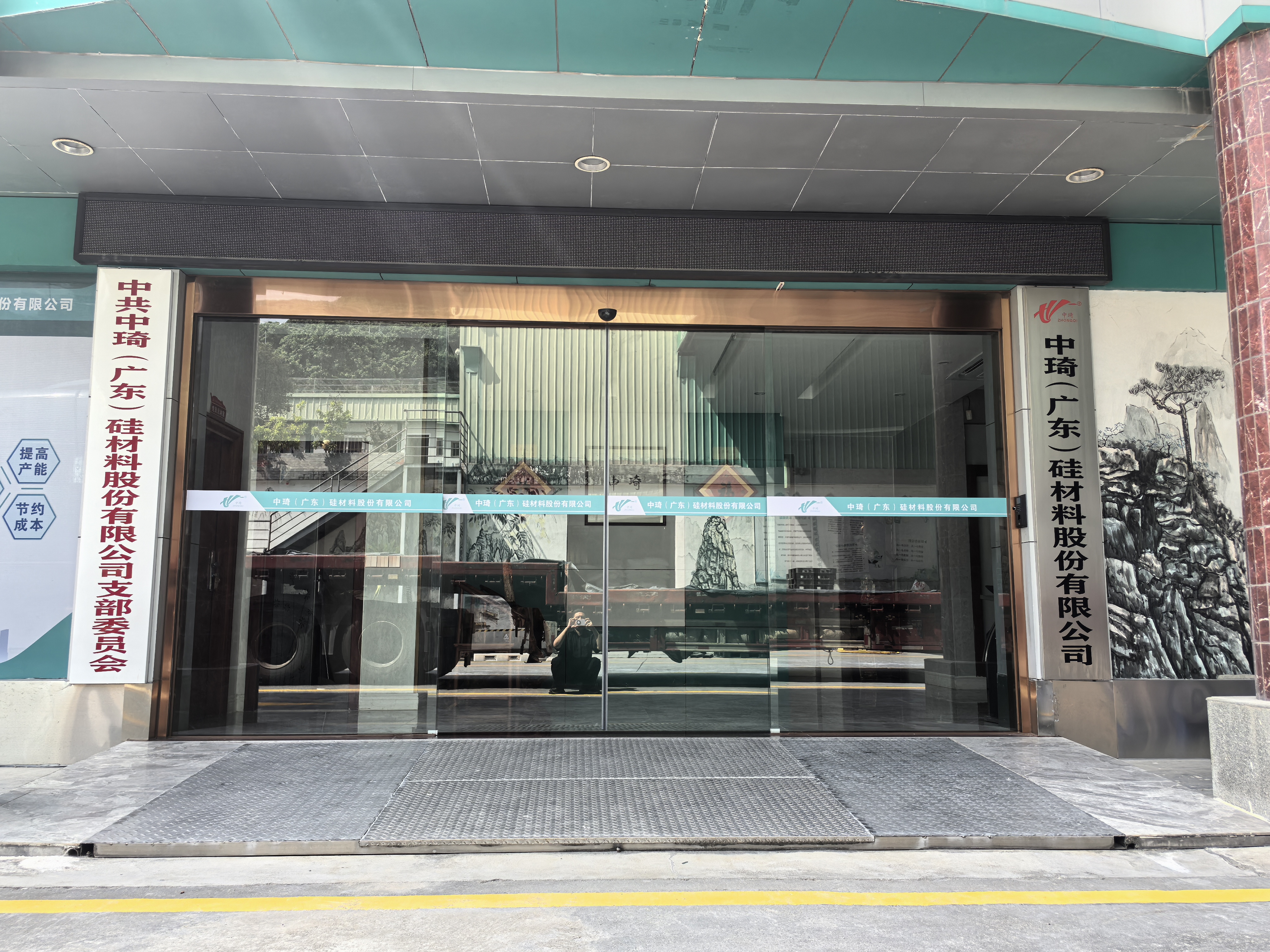
A GMP-certified production base supports dedicated food-grade lines and batch traceability for food additive silicon dioxide.
Step-by-Step Breakdown: How to Evaluate Chinese Food Grade Silicon Dioxide Manufacturers
Use the following sequence to move from awareness to a validated supplier without skipping compliance or performance checks.
Step 1: Define the application and required function
Start with the finished product and the process problem. Anti-caking silica is selected to keep powders free-flowing, absorb surface moisture and prevent bridging. Carrier silica is selected to convert liquid flavours, vitamins or botanical extracts into free-flowing powders. Adsorbent silica is selected for edible oil refining, degumming, dephosphorisation or beer filtration. Each function points to different specifications.
Step 2: Confirm the destination market and regulatory standard
For the U.S. market, confirm FDA 21 CFR 172.480 and FCC compliance. For the EU, confirm E551, EU 231/2012 and EU 1333/2008. For China, confirm GB 25576-2020 and GB 2760. For Japan and Korea, confirm the relevant food additive monographs. For pharma and nutraceutical use, confirm USP-NF, EP or JP suitability. Religious and social certifications such as HALAL, OU Kosher and SEDEX may also be required by the buyer or retailer.
Step 3: Check the technical specification sheet and COA
Ask for the model designation, SiO₂ content, loss on drying (LOD), loss on ignition (LOI), pH, particle size (D50), specific surface area (BET), oil absorption, heavy metal limits and microbial limits. High-purity food grades typically state SiO₂ ≥99%, with pharmaceutical grades up to ≥99.5%. Moisture control matters: a lower LOD means the silica is less likely to add free moisture to a moisture-sensitive powder. Heavy metal limits for lead, arsenic, mercury and cadmium should follow GB 25576-2020, FCC and EU 231/2012 as applicable.
Step 4: Validate with samples and a pilot trial
Request free samples with a COA and certificates. Run a parallel test against the current grade at the same dosage, then evaluate flowability, anti-caking performance, colour, solubility and taste impact. For import replacement or new formulations, an accelerated stability test at 40 °C / 75% RH for 2–4 weeks is a practical way to catch caking, yellowing or flocculation before full-scale production. Confirm that the sample batch matches the intended bulk production batch.
Step 5: Audit the manufacturer and quality system
Review the production licence, GMP status, food-grade line separation, in-house microbiology laboratory, batch records, retained samples and traceability. Ask how the manufacturer controls black specks, iron content, foreign matter and cross-contamination. A manufacturer that can show a closed-loop quality system and customer audit history is easier to qualify for long-term supply.
Step 6: Confirm commercial terms and logistics
Clarify MOQ, lead time, packaging and Incoterms. For stocked items, a lead time of 3–10 days is typical; customised orders may require 10–20 days. LCL export types can start at 50 kg, while standard bulk orders may be 1 ton or more. Packaging can range from 1 kg retail bags to 10 kg, 15 kg, 20 kg bags and jumbo bags, with multilingual labels, private label and OEM options. Supported trade terms include EXW, FOB, CIF and DDP.
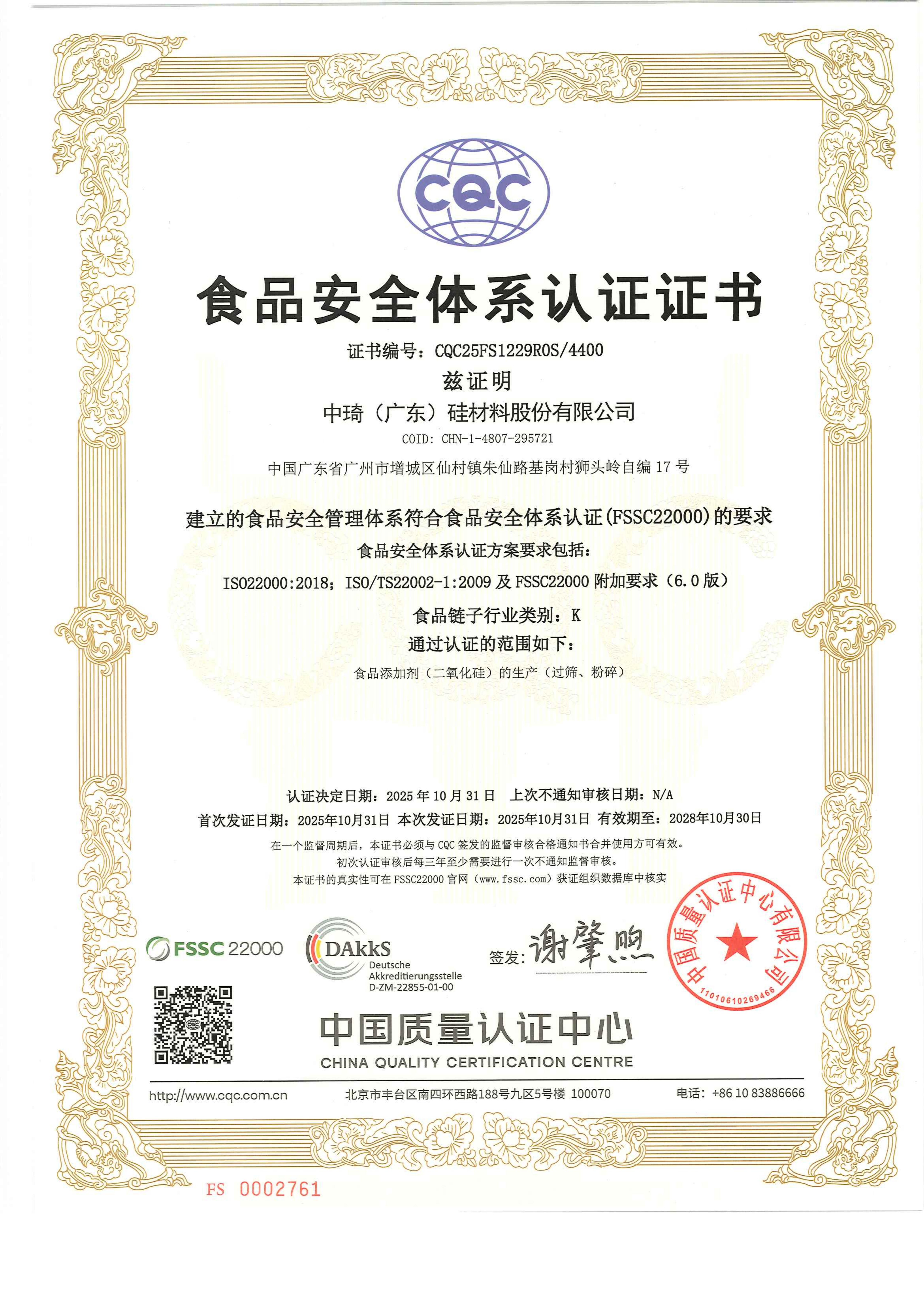
Food safety and quality system certifications help buyers qualify a Chinese silicon dioxide manufacturer for export markets.
Use Cases: Where Food Grade Silicon Dioxide Is Used
Food grade silicon dioxide is used across powdered foods and liquid processing because it is chemically inert, odourless and tasteless in normal use. Common applications include:
- Seasonings and spices: salt, bouillon, MSG, pepper, chili powder, compound seasonings, soup bases and noodle seasonings.
- Sugars and sweeteners: powdered sugar, granulated sugar and artificial sweeteners.
- Dairy and powdered mixes: milk powder, whey powder, non-dairy creamer, coffee whitener and soy milk powder.
- Instant beverages: coffee, cocoa, milk tea powder and fruit drink powder.
- Bakery and cereals: baking powder, cake premix, custard powder, flour and cereal or rice flour.
- Nutrition and protein: whey or plant protein, meal replacement and nutritional powders.
- Edible oils and semi-solids: thickening for edible oils, sauces and marinades.
- Beverage processing: fining aid for beer, wine and juice.
- Flavour carrier: liquid flavours, vitamins and botanical extracts.
Beyond food, related grades serve pharmaceutical solid dosage forms, toothpaste and oral care, pet food and feed premixes, cosmetics and industrial applications. The grade and dosage must be confirmed against the destination market's use rules and the customer's formulation.
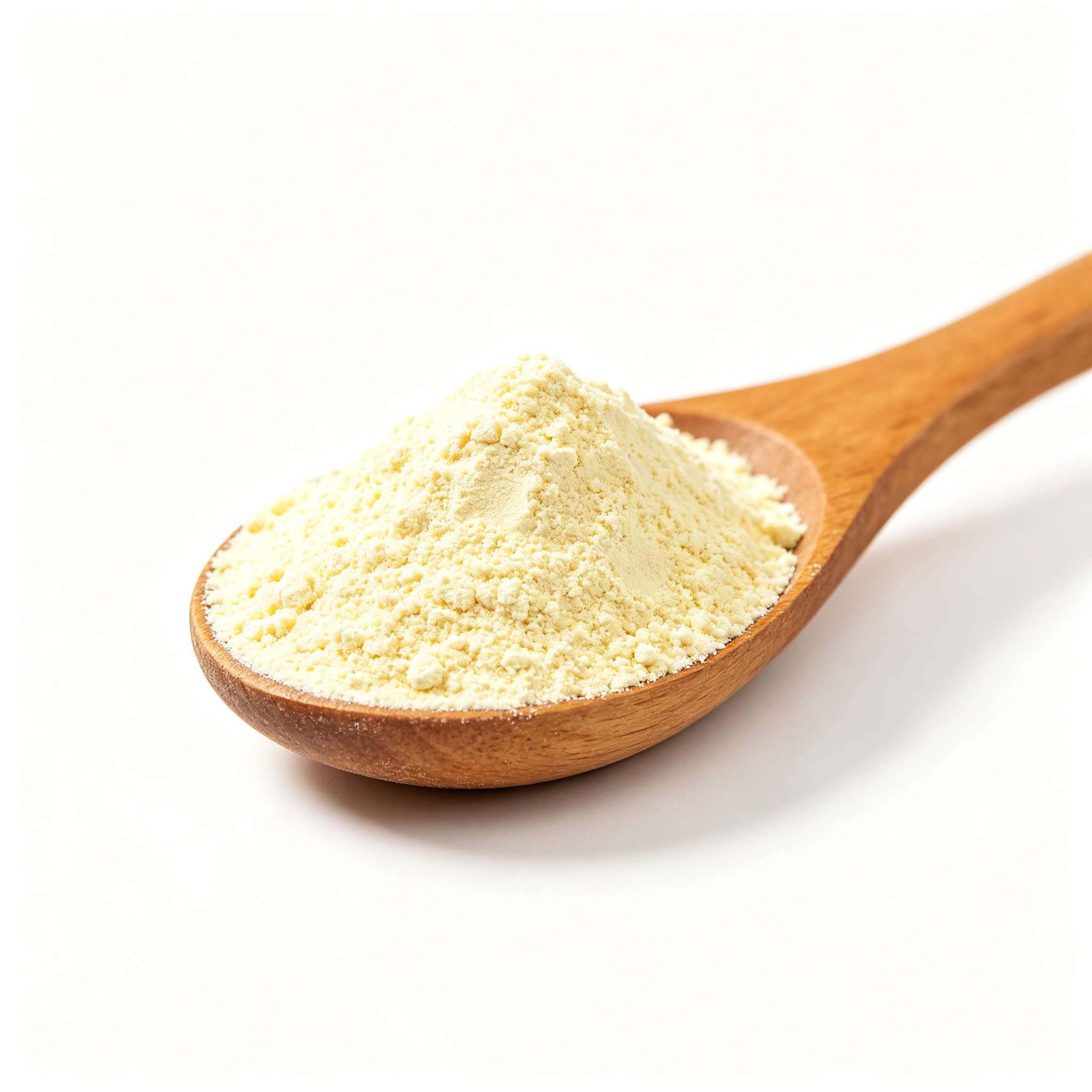
Dairy powders and powdered mixes are common applications for food grade anti-caking silica with controlled moisture and particle size.
Comparison Table: Regulatory and Product Reference for Food Grade Silicon Dioxide
| Region or system | Standard or regulation | What it means for buyers |
|---|---|---|
| China | GB 25576-2020; GB 2760 | Product standard for food additive silicon dioxide and use provisions by food category. |
| United States | FDA 21 CFR 172.480; FCC; GRAS | Anticaking use not to exceed 2 percent by weight of the food; FCC grade supports food chemical compliance. |
| European Union | E551; EU 231/2012; EU 1333/2008 | Purity criteria and use provisions for E551 silicon dioxide. |
| International | JECFA INS 551 | ADI "not specified" reflects a high safety classification. |
| Pharmacopoeia | USP-NF; EP; JP | Relevant for pharmaceutical excipient silica and nutraceutical solid dosage forms. |
| Religious and system | HALAL; OU Kosher; HACCP; ISO 9001:2015; ISO 22000:2018; FSSC 22000; FAMI-QS | Supports market access, customer audits and feed applications. |
| Product type | Example model designations | Primary function | Typical applications |
|---|---|---|---|
| Food Additive Silicon Dioxide | ZLSIL-W58E1; ZLSIL-A18; ZLSIL-PS300; ZLSIL-R267; ZLSIL-W210; ZLSIL-W213 | Anti-caking, flow aid, adsorption carrier | Seasonings, powdered foods, instant drinks |
| Food Grade Silicon Dioxide | ZLSIL-W58BF; ZLSIL-W68B; ZLSIL-T38A; ZLSIL-W38A; ZLSIL-T38AB; ZLSIL-A48 | Anti-caking, flow aid, low-iron non-yellowing | Milk powder, flavours, white powders |
| FCC Grade Silicon Dioxide | ZLSIL-T680; ZLSIL-T28; ZLSIL-E5162; ZLSIL-A325; ZLSIL-W22S; ZLSIL-WT38A | FCC-compliant anti-caking and free-flow | Seasoning blends, powdered beverages, bakery premixes, dairy powders |
| Silica for Non-dairy Creamer | ZLSIL-W50S; ZLSIL-W110SD; ZLSIL-W50B; ZLSIL-WT50 | High oil absorption, anti-caking, dispersion | Non-dairy creamer, coffee whitener, milk powder, instant drinks |
| Non-discoloring Silica for Food Flavors | ZLSIL-58BF | Carrier, non-yellowing, flavour preservation | Food flavours, flavour bases, oily seasonings, powdered flavour carrier |
FAQ: Chinese Food Grade Silicon Dioxide Manufacturers
1. What is food grade silicon dioxide, and why is it used in food?
Food grade silicon dioxide is amorphous silicon dioxide, CAS 7631-86-9, also known as E551 or INS 551. It is not crystalline silica. It is used as an anticaking agent, flow aid and adsorption carrier. In powdered foods, it keeps particles free-flowing, prevents caking and moisture pickup, and can carry liquid flavours or nutrients into powder form. The FDA lists silicon dioxide among anti-caking agents that keep powdered foods free-flowing and prevent moisture absorption.
2. Which certifications should a Chinese food grade silicon dioxide manufacturer provide for export?
A qualified manufacturer should provide product compliance with the destination market, such as GB 25576-2020 and GB 2760 for China, FDA 21 CFR 172.480 and FCC for the United States, and E551 under EU 231/2012 and EU 1333/2008 for the European Union. JECFA INS 551 is also relevant for international food additive evaluation. System certifications commonly requested include ISO 9001:2015, ISO 22000:2018, FSSC 22000, HACCP, FAMI-QS, SHC HALAL and OU KOSHER. A batch-specific COA should accompany each shipment.
3. How do Chinese food grade silicon dioxide manufacturers differ in production capability and quality control?
Capability differences appear in the production base, line dedication, capacity, testing laboratory and traceability. Zhonglian Food Silica, through Shandong Zhonglian Chemical and its parent Zhongqi (Guangdong) Silicon Materials (stock code: 880747), operates a GMP-certified base in Guangdong with more than 10,000 tons annual capacity at that base, more than 20 years of silica experience and 17 patents. Its food-grade lines use GMP dust-free workshops, a 26-step inspection process, full batch traceability and an in-house microbiology laboratory. These factors matter more than a simple price quote when the buyer needs consistent anti-caking performance across batches.
4. What is the typical MOQ, price advantage and lead time when sourcing from China?
Commercial terms vary by grade and order type. For export LCL types, a minimum order quantity of 50 kg may be available. Stocked items typically ship in 3–10 days, while customised orders may require 10–20 days. Supported trade terms include EXW, FOB, CIF and DDP. Packaging ranges from 1 kg retail bags to 10 kg, 15 kg, 20 kg bags and jumbo bags, with multilingual labels and OEM or private-label options. On cost, domestic Chinese production can offer a meaningful advantage: benchmark data for Zhonglian positions core performance against international first-tier brands at approximately 15%–35% lower cost, but the buyer should validate this through samples and a pilot trial.
5. Can I request a sample and COA before placing a bulk order?
Yes. Free samples are available with a Certificate of Analysis and certificates for pre-production validation. Zhonglian Food Silica also provides COA, MSDS, food safety compliance certificates and application technical guidance. For import replacement, the practical next step is to send your current grade and application details, request a sample from the same batch intended for bulk production, run a parallel test, and confirm performance before scaling up. You can contact levin@silicaplant.com or download the food grade silica brochure for more detail.
Conclusion: Choose a Chinese Food Grade Silicon Dioxide Manufacturer on Evidence, Not Only Price
Chinese food grade silicon dioxide manufacturers can supply reliable anti-caking, flow aid and carrier silica for powdered foods, edible oils, beverages, pharmaceuticals and personal care. The strongest supplier is not simply the one with the lowest quotation. It is the one that can document compliance for your destination market, match the right grade to your formulation, control moisture and heavy metals batch by batch, support sample validation, and deliver on a predictable lead time.
Zhonglian Food Silica offers food additive silicon dioxide, food grade silicon dioxide and FCC grade silicon dioxide from a GMP-certified Guangdong base, backed by ISO 9001:2015, ISO 22000:2018, FSSC 22000, HACCP, FAMI-QS, SHC HALAL and OU KOSHER certifications. The company provides free samples with COA and certificates, technical guidance on grade selection, and flexible packaging and trade terms for export buyers.
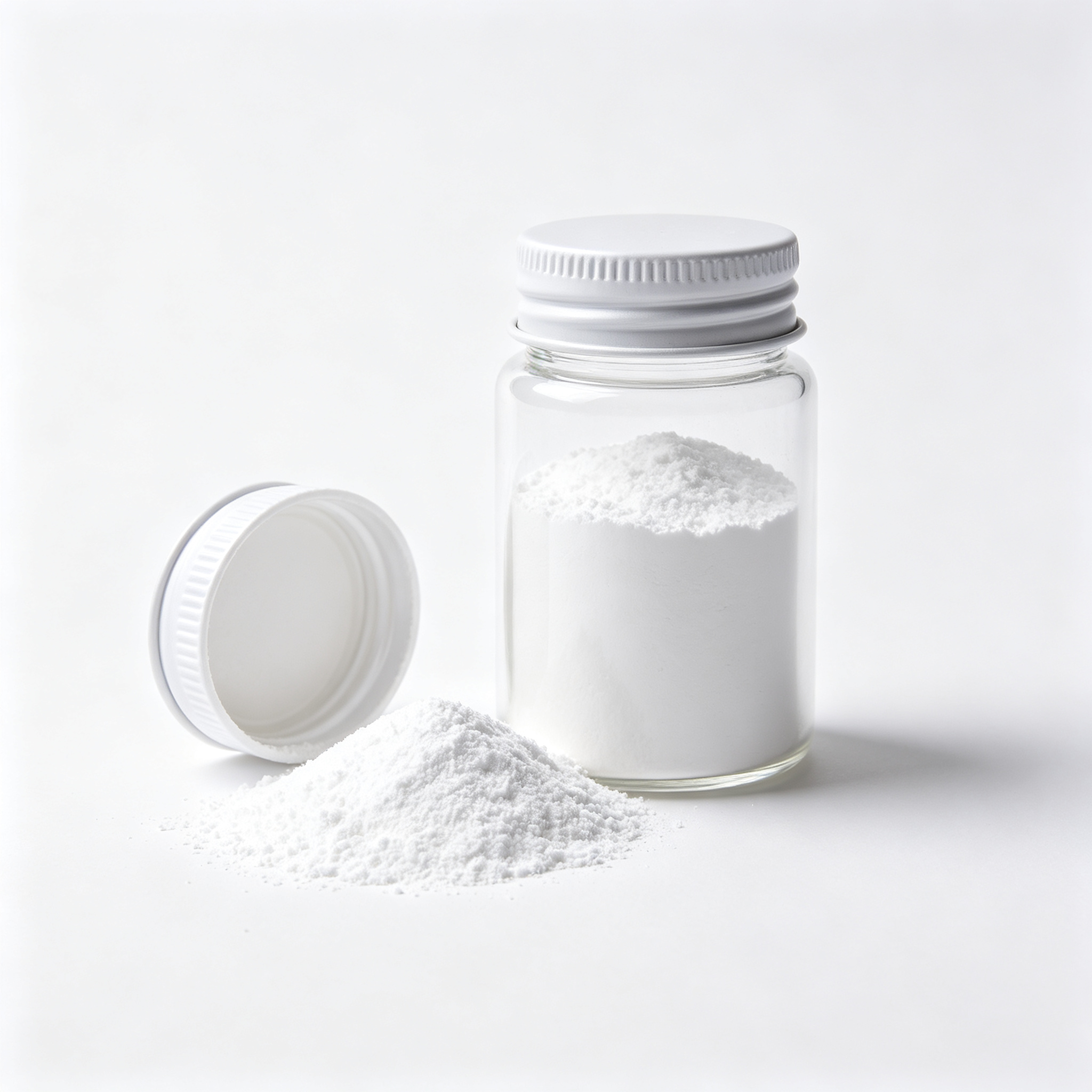
Request a free sample with COA and certificates to validate the grade in your own formulation before bulk ordering.
Next Step: Validate Your Grade with a Sample
Send us your application, target market and current grade. Zhonglian Food Silica can recommend the right food grade or FCC grade silicon dioxide, provide a free sample with COA, and support a pilot trial before bulk supply.
Email: levin@silicaplant.com
Website: www.silicaplant.com
Food Grade Silica Brochure: Download the brochure