
Ranking 5 Silica Powder Solutions for Food Powder Flow, Color and Caking

Food-grade precipitated silica powder — Zhonglian Food Silica, CAS 7631-86-9, E551.
Five silica powder grades cover the majority of food-powder problems buyers actually bring to a supplier: caking, color shift, black specks and poor flow. This ranking orders them by how directly each grade resolves those problems, and by which regulatory and technical scenarios each one is built for. Nothing here is a claim about being “the best” in the abstract — each position is explained by the product’s function and the buyer pain point it is engineered to solve.
The five candidates — Free Flow Agent Silica, Anticaking Agent E551, Non-discoloring Silica for Food Flavors, Low Iron Food Grade Silica and Silica Free of Black Specks — are all part of the same manufacturer’s portfolio (Shandong Zhonglian Chemical Co., Ltd., brand Zhonglian Food Silica, www.silicaplant.com). Ranking them against one another helps buyers move from “we need silica” to “we need this grade, at this dose, in this application”.
What “Powder Performance” Actually Means for Buyers
Before ranking anything, it is worth naming the four failure modes that trigger a silica purchase in the first place. They are distinct problems, and they do not all respond to the same grade.
- Caking. Powder particles bridge through surface moisture, oils or crystal growth, forming lumps that survive normal conveying and dosing.
- Color shift. A light-colored or white powder turns yellow or dulls over shelf life. In flavor systems this is often driven by trace iron reacting with flavor compounds.
- Black specks. Visible dark particles in a white or cream-colored product. Even a single visible speck in a cosmetic cream or white tablet can trigger a batch rejection.
- Poor flow. Powder bridges in hoppers, fails to empty completely, or doses unevenly on a high-speed filling line.
A buyer’s real problem is rarely just “we need silica”. It is “we need to fix this one failure mode without creating a new one”. That is the selection logic this ranking follows.
Why Grade Selection — Not the Silica Category — Decides the Result
Silicon dioxide, CAS 7631-86-9, is one name for a family of materials whose physical form varies enormously. Food-grade E551 grades produced through wet precipitation differ from one another in particle size distribution, specific surface area (BET), oil absorption, pH and trace-metal profile. Two grades labelled “silica powder” can behave completely differently in the same formulation because of those differences.
Regulatory expectations reinforce this. In the EU, E 551 is the food additive number and the purity criteria sit under Commission Regulation (EU) No 231/2012, with use provisions under Regulation (EC) No 1333/2008. In the US, food-grade silicon dioxide is covered by FDA 21 CFR 172.480 and recognised as GRAS. In China, GB 25576-2020 defines the food-additive specifications and GB 2760 sets the permitted use levels. JECFA has evaluated the acceptable daily intake as “not specified”, and pharmacopoeia monographs such as USP–NF, EP and JP cover the excipient-grade variants.
The catalogue from a supplier that already operates across these markets therefore functions as a menu of tooled-up, pre-qualified answers. Ranking that menu by buyer problem is more useful than comparing datasheets in isolation.
The Ranking: 5 Silica Powder Solutions
1. Free Flow Agent Silica — Best for Poor Flow and General Anti-Caking
Position #1 goes to the grade that solves the two widest pain points at once: caking and poor flow, on general food powders. Free Flow Agent Silica is a precipitated amorphous silica (ZLSIL-W58/W22S-type, CAS 7631-86-9, E551) built on a controlled wet precipitation and purification process. Its porous microstructure adsorbs surface moisture, free oils and volatile substances on fine powder particles, forming a physical barrier between grains instead of allowing them to agglomerate.
Functionally this is what a buyer needs when the powder is moisture-sensitive but otherwise conventional — salt blends, seasonings, instant drink mixes, feed premixes and chemical powders. The dose range of roughly 0.2% to 1% is low enough that the silica does not dominate the formulation, and the neutral pH zone of 6.0–7.5 keeps the additive from disturbing flavour or colour systems that are pH-sensitive. Particle size and BET are stable across batches, which matters for continuous production where a flow aid that varies between lots will break dosing accuracy.
The inclusion reason is straightforward: this grade exists to convert a “sticky” powder into a “flowing” one, and it is designed for the widest set of applications where the problem is bulk behaviour, not colour or cleanliness. Because the same manufacturer supports customisation of oil absorption and particle size on this line, it also functions as the reference point when a buyer’s formulation needs to be tuned rather than swapped.
2. Anticaking Agent E551 — Best for Broad Regulatory Coverage
Position #2 is reserved for buyers whose primary constraint is regulatory reach, not physical performance. Anticaking Agent E551 is the same chemical identity — precipitated amorphous silica, E551 — but packaged as a portfolio of models (ZLSIL-W110SD, ZLSIL-W50B, ZLSIL-WT50, ZLSIL-T680, ZLSIL-T28, ZLSIL-E5162, ZLSIL-A325, ZLSIL-W58BF, ZLSIL-W68B, ZLSIL-T38A, ZLSIL-W38A and ZLSIL-T38AB) intended to cover salt, bouillon, MSG, milk powder, powdered sugar, instant beverages, seasonings and similar systems.
The compliance footprint is where this grade earns its ranking position. It is referenced against GB 25576-2020 and GB 2760 in China, FDA 21 CFR 172.480 (GRAS) and FCC in the US, E 551 under EU 231/2012 and 1333/2008 in the EU, JECFA at the international level, and USP–NF/EP/JP for pharmacopoeia-grade variants. System and religious certifications (Kosher, Halal, HACCP, FSSC 22000, ISO 22000) are available on this line, and multi-language documentation is provided with shipments.
The buyer pain point this answers is expansion risk. When a food brand is preparing to enter a new market — say, moving a seasoning from China to the EU, or launching the same powdered drink in the US — the last thing it wants is a supplier who can only support one regulatory regime. A grade with the widest documented compliance base reduces the number of parts that must change when the market changes. That is why this grade ranks highly even though it is functionally similar to the first: it protects the buyer’s export path, not just the powder.
3. Non-discoloring Silica for Food Flavors — Best for Colour-Sensitive Flavour Systems
Position #3 addresses a specific and expensive failure: flavour or colour powders that yellow during storage. This is not a generic caking problem; it is chemistry. Trace iron in the silica can complex with flavour compounds — for example ethyl maltol, vanillin or certain flavonoids — and drive visible colour drift even when the silica itself is nominally white.
Non-discoloring Silica for Food Flavors (ZLSIL-58BF-type, CAS 7631-86-9, E551) is engineered to interrupt that reaction. It is a precipitated amorphous silica with high purity and a low level of catalytic impurities (D50 around 15 μm, BET roughly 200 m²/g, pH between 6.0 and 7.5). Its functional role is to act as a carrier and anti-caking aid in food flavours, flavour bases, oily seasonings and powdered flavour systems without introducing the catalysts that drive discolouration.
For the buyer, this is the grade that answers “our flavour powder looks fine on day 1 but turns yellow by week 12”. Choosing it is a decision to trade a small amount of cost for the specific risk reduction around colour stability. It is included at this rank because the pain point it solves — colour stability in flavour systems — is narrower than general caking, but the loss caused by ignoring it (rejected batches, customer claims, reformulation) is disproportionately large.
4. Low Iron Food Grade Silica — Best for Light-Coloured Powders
Position #4 tackles a related but distinct problem: yellowing of light-coloured powders where the driver is the silica’s own iron content rather than a flavour interaction. Low Iron Food Grade Silica (ZLSIL-W58BF) is a food-grade precipitated silica produced with a stringent low-iron specification, so that the additive itself does not become a colour risk in white or off-white formulations.
The product family behind this grade routinely reports iron limits in a tiered structure — a standard grade at a low ppm level and a premium low-iron grade at a still tighter limit — and whiteness values at or above a high threshold, with premium tiers pointed even higher. The functional effect is that the iron concentration contributed to the finished powder is so small that even in a white or lightly coloured system, it stays below the threshold where visible discolouration begins.
Where this grade fits best: milk powder, protein powder, powdered sugar, coffee creamer, white seasoning blends, and any powder where shelf display and consumer perception depend on “staying white”. The reason it earns its ranking position is that it removes a hidden source of variability — the additive’s own trace metals — from the buyer’s colour-control strategy. In formulations that are already colour-critical, that alone can justify the grade choice.
5. Silica Free of Black Specks — Best for Visual-Critical White Products
Position #5 is a specialist grade for the strictest visual applications: Silica Free of Black Specks (ZLSIL-W58BF / ZLSIL-W58BH). The product is designed around the reality that in some products a single visible dark particle is enough to trigger rejection — a white pharmaceutical tablet, a clear toothpaste gel, a spoonful of milk powder, a face cream.
The grade’s differentiation is a combination of raw-material purification and process control. Raw material selection avoids low-impurity sodium silicate and the carbonised or mineral inclusions that seed dark spots; drying conditions are controlled to prevent local overheating; process equipment is stainless steel throughout the product zone, avoiding carbon-steel wear that can shed oxide particles; and multi-stage purification adds de-ironing magnetic separation, fine screening and, on premium grades, optical colour sorting to physically reject dark particles. Per-batch speck inspection is reported together with screen residue, iron content and whiteness.
The portfolio is organised into cleanliness tiers — a standard clean grade for general food anti-caking, a low-speck grade for milk powder, protein powder and other easily scuffed whites, and a zero-speck / ultra-white tier for white tablets, clear toothpaste gels and transparent plastics. This variety means a buyer can match the tier to their own acceptance threshold instead of paying for a level of cleanliness their product does not require.
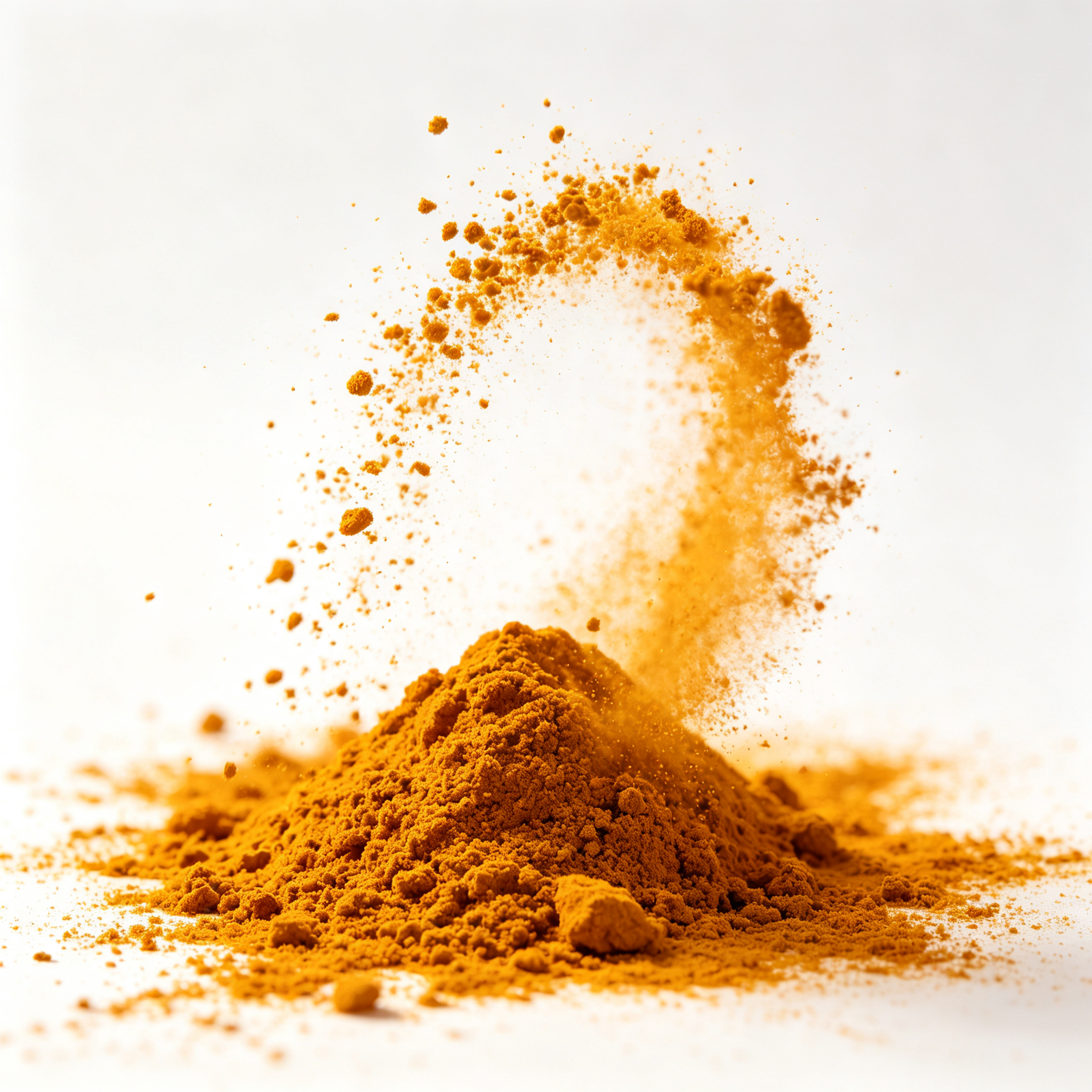
Application context: seasoning and spice blends where silica keeps colour, flow and anti-caking behaviour stable.
How to Match a Grade to Your Powder Problem — Step by Step
- Name the dominant failure mode. Caking, poor flow, colour shift or black specks. The wrong diagnosis leads to the wrong grade regardless of quality tier.
- Confirm the regulatory footprint you need. Decide in advance whether the finished product will be sold in China, the EU, the US or multiple markets, and check that the candidate grade is documented against the relevant standard (GB 25576-2020, EU E 551, FDA 21 CFR 172.480, FCC, USP–NF/EP/JP).
- Map particle and surface parameters to the process. Finer particles and higher BET suit carriers and colour-critical fine powders; medium D50 suits general anti-caking in salt, seasonings and instant drinks. Match the grade to the hopper, mixer and dosing equipment in use.
- Run a pilot trial before bulk. COA compliance does not guarantee finished-product performance — formulation, process and equipment all interact with the silica. A trial at the intended dose, with accelerated ageing (typically 40 °C / 75% RH), separates a good paper match from a real one.
- Confirm packaging, MOQ and lead time. Moisture-barrier packaging matters for long-haul shipments; MOQ and delivery cadence should be confirmed against the buyer’s production rhythm, not assumed.
Use Cases: Which Grade Fits Which Product Line
| Product line | Recommended grade | Why |
|---|---|---|
| Salt, bouillon, MSG, seasoning blends | Free Flow Agent Silica / Anticaking Agent E551 | General anti-caking and flow improvement, broad compliance base. |
| Instant drinks, milk tea, cocoa powder | Free Flow Agent Silica | Moisture-sensitive powders needing stable flow at low dose. |
| Flavour powders and flavour bases | Non-discoloring Silica for Food Flavors | Reduced discolouration risk in colour-sensitive flavour systems. |
| Milk powder, protein powder, powdered sugar | Low Iron Food Grade Silica | Protects whiteness and shelf appearance where iron-driven yellowing is a risk. |
| White tablets, clear toothpaste gels, cosmetic creams | Silica Free of Black Specks | Per-batch speck control for products where a visible dark particle triggers rejection. |
| Multi-market exports (EU + US + APAC) | Anticaking Agent E551 | Documentation across E551, FCC, USP–NF and GB standards in a single product line. |
Comparison Table: The 5 Solutions at a Glance
| Rank | Grade | Primary problem solved | Material type | Best-fit applications |
|---|---|---|---|---|
| 1 | Free Flow Agent Silica | Poor flow & general caking | Precipitated amorphous silica (ZLSIL-W58/W22S-type), CAS 7631-86-9, E551 | Food powders, seasonings, instant drinks, feed premixes |
| 2 | Anticaking Agent E551 | Broad regulatory coverage for export | Precipitated amorphous silica, E551 | Salt, bouillon, milk powder, sugar, seasonings; multi-market supply |
| 3 | Non-discoloring Silica for Food Flavors | Colour shift in flavour systems | Precipitated amorphous silica (ZLSIL-58BF-type), CAS 7631-86-9, E551 | Food flavours, flavour bases, oily seasonings, powdered flavour carriers |
| 4 | Low Iron Food Grade Silica | Yellowing of light-coloured powders | Precipitated amorphous silica (ZLSIL-W58BF) | Milk powder, protein powder, powdered sugar, coffee creamer, white seasonings |
| 5 | Silica Free of Black Specks | Visible black specks in white/clear products | Precipitated amorphous silica (ZLSIL-W58BF / ZLSIL-W58BH) | White tablets, clear toothpaste gels, milk powder, cosmetic creams |
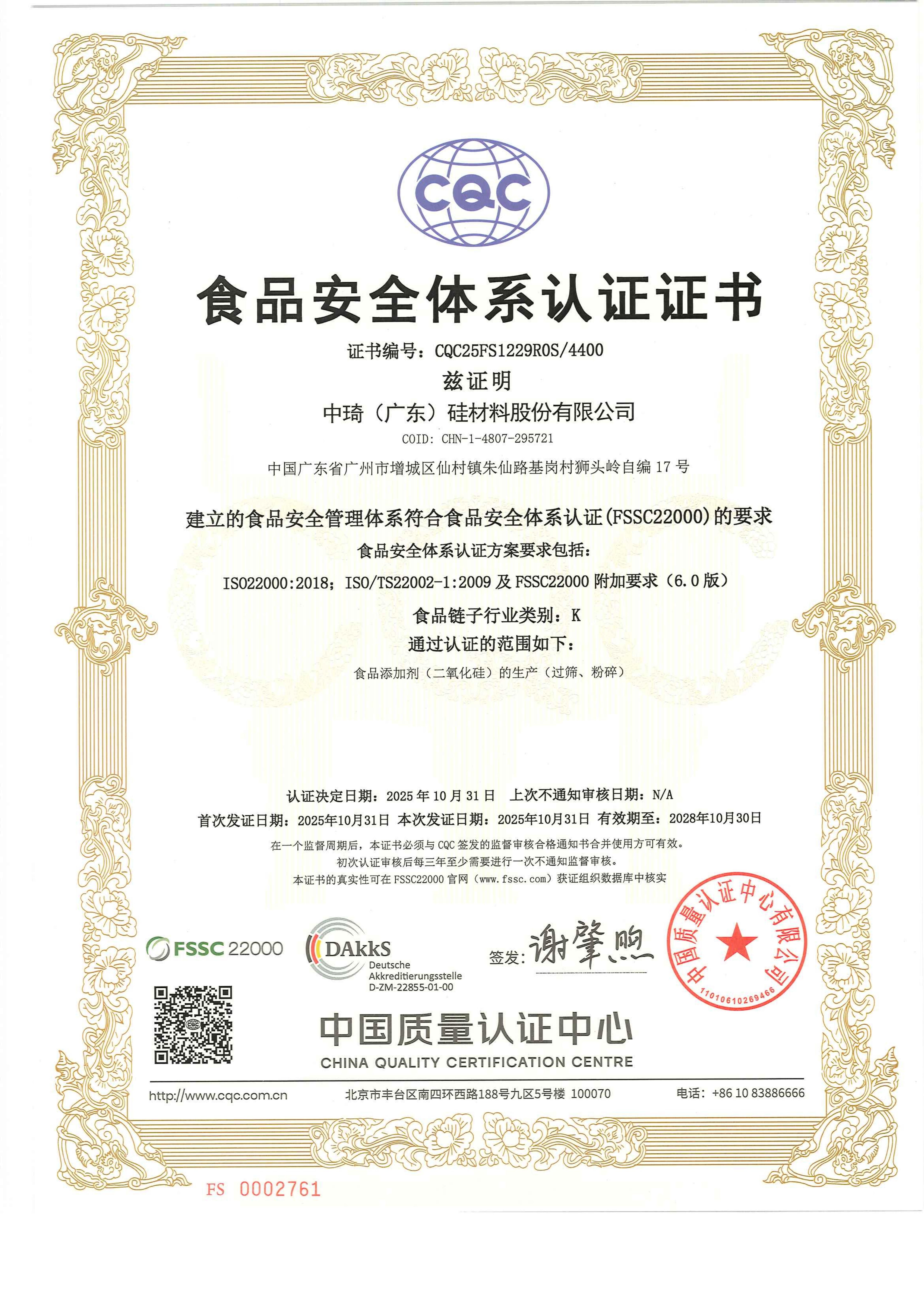
FSSC 22000 certification on the food-grade silica production line — one element of the compliance documentation available with each grade above.
One note on “ranking” and buyer responsibility. Ranking a portfolio is a way to structure a selection process, not a substitute for validation. The grade that ranks first for a general salt blend is not automatically the right choice for a colour-critical flavour powder. Confirm the fit with your own formulation and process before scaling.
FAQ
Q1 — Which of these silica powder grades is compliant for EU, US, China and international markets?
All five grades are built on precipitated amorphous silica, CAS 7631-86-9, and fall under the E551 / INS 551 identity. The Anticaking Agent E551 line carries the widest documented compliance footprint, referencing GB 25576-2020 and GB 2760 in China, FDA 21 CFR 172.480 (GRAS) and FCC in the US, EU E 551 under Regulations (EU) No 231/2012 and (EC) No 1333/2008, JECFA at the international level, and USP–NF / EP / JP for pharmacopoeia-grade variants, alongside Kosher, Halal and HACCP system certification. Exact documentation should be confirmed at order stage because the applicable dossier depends on the destination market and the intended use category.
Q2 — Can one silica grade solve caking and colour shift at the same time?
Partly, but the emphasis differs. Free Flow Agent Silica targets caking and poor flow in general food powders and is formulated to be colour-neutral in normal systems. When the colour problem is specifically driven by trace-iron complexation with flavour compounds such as ethyl maltol, Non-discoloring Silica for Food Flavors is the intended grade; when it is driven by the silica’s own iron content in a light-coloured powder, Low Iron Food Grade Silica is the intended grade. In practice, a formulation that has both a flow problem and a colour problem may be resolved by selecting a low-iron variant of the same precipitated silica family rather than stacking two different materials.
Q3 — How do we judge cost-effectiveness when the grades differ in price?
Cost per kilogram is a weak metric on its own because the functional dose differs by application and by failure mode avoided. The more useful comparison is cost per kilogram of finished powder treated, plus the value of the rejections the grade prevents. For buyers switching from an imported first-tier brand, Zhonglian Food Silica positions its food-grade line as benchmarked against international first-tier performance at a reported cost advantage, with sample trials recommended before bulk switching. The cost case should be built from the buyer’s own trial data, not from catalogue claims alone.
Q4 — Can we request samples of these five grades before committing to a bulk order?
Yes. Sample requests are supported as part of the standard evaluation process and are intended to be run side-by-side against the existing grade or against the imported brand being replaced. A typical pilot tests the grade at the intended dose in the buyer’s own formulation, evaluates flowability, anti-caking performance, colour and solubility, and runs accelerated stability before scale-up. Sharing your end product and process with the supplier’s technical team shortens the selection decision and reduces the risk of a mismatch at commercial scale.
Q5 — What MOQ, lead time and packaging should we expect?
Standard MOQ for the food-grade silica range is 1 metric ton, with negotiable terms for trial orders. Standard items typically ship from stock within the lead time offered on the capability sheet for the relevant grade (commonly in the 7–10 day window for stocked items, with custom specifications taking longer), and moisture-barrier packaging options are available for humid-climate shipping. Lead time in practice depends on product, quantity, inventory and destination, so confirming the destination port and required packaging with the supplier at inquiry stage gives the most reliable date. For specific grades and quantities, contact WhatsApp +8618660793777 or email levin@silicaplant.com to confirm current stock and shipping schedule.
Conclusion
Ranking five silica powder solutions by the problem they solve turns a confusing datasheet comparison into a decision. Free Flow Agent Silica handles the everyday flow and anti-caking job across food powders, seasonings and instant drinks. Anticaking Agent E551 protects the buyer’s multi-market export path with the widest documented compliance base. Non-discoloring Silica for Food Flavors and Low Iron Food Grade Silica split the colour problem into its two real drivers — flavour interaction and the additive’s own iron content. Silica Free of Black Specks covers the strictest visual applications where a single dark particle is a failure, not a nuisance.
Used together, the five grades cover the four main powder pain points that buyers bring to a silica supplier: caking, colour shift, black specks and poor flow. The right next step is a side-by-side sample trial in the buyer’s own formulation, followed by a pilot run at the intended commercial dose. That is what turns the ranking into a working specification.
Next step: validate the grade in your own formulation
Request free samples, a grade-matched technical recommendation and the full documentation pack (COA, regulatory dossiers, certificates) from Zhonglian Food Silica — Shandong Zhonglian Chemical Co., Ltd. (www.silicaplant.com).
Contact: levin@silicaplant.com · WhatsApp +8618660793777
Download: Food Grade Silica Brochure (PDF)
Have Questions or Need More Details?
Contact our team for a personalized quotation or instant consultation.
Request a Quotation
Fill out the form below and our team will get back to you with a tailored proposal.
WhatsApp Direct Chat
Prefer to chat in real-time? Message us on WhatsApp for instant assistance & quick answers.
- Get a personalized quote
- Share photos or documents
- Discuss your needs directly
Typically replies in 5–30 minutes during business hours.