
Ranking Silica Grades for Non-Dairy Creamer and Edible Oil Processing: A Buyer's List
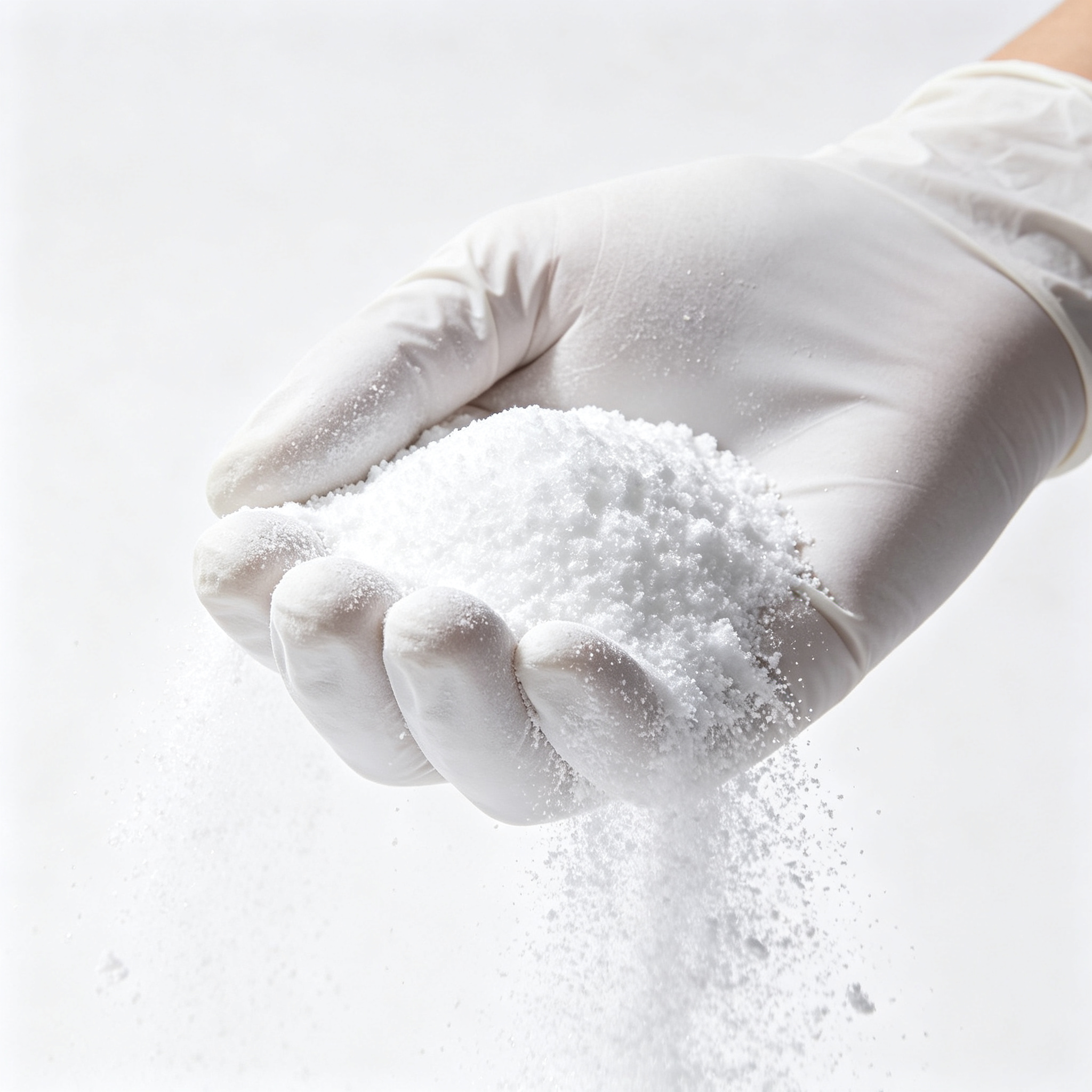
Most buyers start with one line item: food grade silicon dioxide. That works until the same purchase category has to serve a powder stream and a liquid stream. Non-dairy creamer and edible oil sit close together in the plant, but they ask silica to do different jobs. In creamer, the grade has to keep a fatty powder free-flowing. In oil, it has to adsorb impurities and then leave the oil cleanly on filtration.
Zhonglian Food Silica is the food-grade silica brand of Shandong Zhonglian Chemical Co., Ltd. Its portfolio lists dedicated grades for both streams: Silica for Non-dairy Creamer, Silica for Edible Oil, Frying Oil Filter Aid Silica, and Food Grade Adsorbent Silica. This buyer’s list ranks those four grades by application fit, intended function and food-grade positioning. It is a grade ranking, not a supplier ranking, and it is not a claim that one grade wins everywhere.
The problem: one purchase category, two different jobs
Procurement teams consolidate. QA teams discover the consequences. A single Food Grade Silicon Dioxide grade can look acceptable on a certificate of analysis and still be the wrong physical choice for one of the two streams. The creamer line cares about particle size, flow and fat handling. The oil line cares about surface area, pH, solids and filtration. The failure modes are different, so the qualification questions should be different.
Three questions expose the gap:
- Does the grade’s published application list actually include the stream?
- Does the specification window match the function, not just the food-grade label?
- Can the grade be dispersed in a powder or removed from oil without creating a new process problem?
When those questions are answered in the wrong order, the result is predictable: a general adsorbent is pushed into a creamer line because it is already approved, or a creamer grade is trialled in an oil refinery because the model name looks familiar. Both moves skip the application fit test.
Industry background: why creamer and edible oil diverge
Non-dairy creamer is a dry, fat-containing powder system. Silica is a minor ingredient that has to distribute through the powder, support flow and help manage the fat phase. The relevant window is particle size, BET, oil absorption, pH and loss on drying. A near-neutral pH and a controlled LOD are part of the food-grade positioning, because the powder may be stored and shipped before use.
Edible oil processing is a liquid system. Here silica is an adsorbent and processing aid, not an anti-caking agent. The relevant window is purity, surface area, particle size, pH and solids. The grade has to contact the oil for a defined time and then be removed on filtration. It is the same silicon dioxide chemistry, but a different physical job.
In the food-additive market, the same material can appear as Food Additive Silicon Dioxide, Food Grade Silicon Dioxide or FCC Grade Silicon Dioxide, depending on the specification and the market. That labelling matters. A grade sheet written for a creamer application is not automatically the same document as an FCC-oriented grade sheet. Buyers should qualify the grade, not the category name.
One regulatory reference is useful for orientation. Under U.S. 21 CFR 172.480, silicon dioxide used as an anticaking agent is limited to not more than 2 percent by weight of the food. That limit applies to anticaking use. It is not a universal dosing instruction for an adsorbent or filtration aid. The buyer still has to confirm the intended use, the market and the grade-specific documentation.
The ranking: four grades, one inclusion logic
The ranking is ordered by how directly each grade’s published application list matches one of the two core streams, then by how specific the grade is to that stream. The first position goes to the powder-stream anchor. The second goes to the liquid-stream anchor. The third and fourth cover narrower and broader duties. This is why the list is useful for evaluation and execution: it separates the two purchase centres before the first sample is requested.
Five inclusion criteria used in this list
- Application fit: does the published application list include the stream?
- Intended function: anti-caking and flow, or adsorption and filtration?
- Specification window: D50, BET, pH, LOD, SiO₂ and oil absorption, where published.
- Food-grade positioning: E551 and CAS 7631-86-9 references, batch COA and a clear grade sheet; FCC line where the specification calls for it.
- Process compatibility: low solids, filter dosing and contact time for oil; powder blending and flow for creamer.
1. Silica for Non-dairy Creamer — the powder-stream anchor
Published grades: ZLSIL-W50S, ZLSIL-W110SD, ZLSIL-W50B and ZLSIL-WT50. The grade sheet gives D50 40–60 μm, BET 230±20 m²/g, pH 6.0–7.5 and LOD ≤6.5%, with high oil absorption. The material is precipitated amorphous silica, CAS 7631-86-9, E551. The application list is non-dairy creamer, coffee whitener, milk powder, vegetable fat powder and instant drinks.
Why it earns the first position: it is the only grade in this shortlist whose published application list is the fatty powder stream. The D50 window is coarse relative to fine anti-caking grades, which suits a powder that must flow rather than a fine dusting grade. The BET and oil absorption address the fat phase, and the near-neutral pH and LOD limit fit a dry blend that may be stored before use.
For a creamer buyer, this is the shortest route from specification to trial. For a dual-stream buyer, it is the first qualification because it protects the powder line, which is usually the harder line to fix after a failed batch.
Boundary: it is not a liquid-oil adsorbent. Do not use it as a substitute for the ZOILSIL-GZ series in degumming, de-soaping or bleaching.
2. Silica for Edible Oil — the liquid-stream anchor
Published grades: ZOILSIL-GZ R92, ZOILSIL-GZ 150, ZOILSIL-GZ 300, ZOILSIL-GD450, Zoilsil-W58G and Zoilsil-W58GS. The grade sheet gives SiO₂ ≥99.7%, BET ~700 m²/g, D50 16–26 μm, pH 1.5–3.0, low solids and a contact time of 10–15 min. The application list is animal and vegetable oil refining—degumming, de-soaping and bleaching—and biodiesel or renewable diesel feedstock preparation.
Why it earns the second position: it is the highest-purity, highest-surface-area grade in the shortlist. It is also the only grade whose published sheet specifies a contact time and a low-solids profile, both of which are process-facing parameters for a liquid adsorbent that must be removed on filtration. It ranks second for a dual-stream buyer because it cannot cover the creamer line; for an oil-only buyer it is the first qualification.
Boundary: the pH window is acidic at 1.5–3.0. Match it to the oil system and confirm filterability on the actual filter. It is not a powder anti-caking agent.
3. Frying Oil Filter Aid Silica — a defined maintenance duty
Published grades: the ZOILSIL-GZ / GD450 / W58G / W58GS family. The grade sheet gives SiO₂ ≥99%, high BET, D50 per grade, high adsorption of polar polymers and free fatty acids, and dosing through existing filters. Packaging is 20/25 kg bags. The application list is fried foods, shortening, catering and industrial frying-oil treatment, plus the edible-oil, animal-fat, vegetable-oil and beer or beverage adsorption category.
Why it earns the third position: it targets a specific deterioration pathway—polar polymers and free fatty acids—and it is designed to be dosed through existing filters. That makes it a maintenance grade rather than a full refining grade. In a plant that already runs a filter train, it is a practical way to extend the working life of frying oil.
Boundary: do not treat it as a replacement for the refining grade in vegetable-oil degumming. Its duty is narrower, and the application list is the best guide to that boundary.
4. Food Grade Adsorbent Silica — the flexible fourth line
Published grades: the same ZOILSIL-GZ / GD450 / W58G / W58GS family. The grade sheet gives SiO₂ ≥99%, D50 10–25 μm, BET 190–700 m²/g, pH 6.0–7.5, LOD ≤7% and oil absorption 200–350 ml/100g, in 15–20 kg bags. The application list is food, nutraceuticals, flavors, solid drinks, seasonings and pet food.
Why it earns the fourth position: it is the broadest window in the list. That breadth is useful in a multi-product plant that wants one adsorbent family for flavors, solid drinks, seasonings and pet food. It is ranked fourth for a creamer-plus-oil buyer because breadth is not the same as fit: the creamer grade is more specific on fatty powder flow, and the oil grade is more specific on refining. The adsorbent grade is the flexible fourth line, not the first line.
Procurement note: the model names overlap with the oil grade. Two grade sheets can share a model family and still define different specification windows and duties. Qualify by grade sheet, application and trial, not by model name alone.
Comparison table: the shortlist at a glance
The table uses only the published grade-sheet windows and application lists. It is a selection aid, not a substitute for a trial in the actual matrix.
| Rank | Grade | Published grades | Key specification window | Primary function | Best-fit stream | Qualification watch-out |
|---|---|---|---|---|---|---|
| 1 | Silica for Non-dairy Creamer | ZLSIL-W50S, ZLSIL-W110SD, ZLSIL-W50B, ZLSIL-WT50 | D50 40–60 μm; BET 230±20 m²/g; pH 6.0–7.5; LOD ≤6.5%; high oil absorption | Anti-caking, flow and fat-powder handling | Non-dairy creamer, coffee whitener, milk powder, vegetable fat powder, instant drinks | Not an oil-refining adsorbent |
| 2 | Silica for Edible Oil | ZOILSIL-GZ R92, GZ 150, GZ 300, GD450, Zoilsil-W58G, W58GS | SiO₂ ≥99.7%; BET ~700 m²/g; D50 16–26 μm; pH 1.5–3.0; low solids; 10–15 min contact | Adsorption and refining: degumming, de-soaping, bleaching | Animal and vegetable oil refining; biodiesel or renewable diesel feedstock preparation | Acidic pH; must be filtered; not for powder anti-caking |
| 3 | Frying Oil Filter Aid Silica | ZOILSIL-GZ / GD450 / W58G / W58GS family | SiO₂ ≥99%; high BET; D50 per grade; high adsorption of polar polymers and free fatty acids | Filtration aid and adsorption | Fried foods, shortening, catering and industrial frying-oil treatment | Narrow duty; not a refining replacement |
| 4 | Food Grade Adsorbent Silica | ZOILSIL-GZ / GD450 / W58G / W58GS family | SiO₂ ≥99%; D50 10–25 μm; BET 190–700 m²/g; pH 6.0–7.5; LOD ≤7%; oil absorption 200–350 ml/100g | Broad-spectrum adsorption | Food, nutraceuticals, flavors, solid drinks, seasonings, pet food | Broad window; trial required |
The overlap in the ZOILSIL family is not an error. It is a reminder that product names are a starting point, not a specification. The buyer should attach the grade sheet and the intended application to every sample request.
Step-by-step: qualifying the shortlist
Qualification should be a sequence, not a single meeting. The following eight steps keep procurement and QA on the same evidence trail.
- Map the stream before you map the supplier. List every point where silica enters and leaves the process. In creamer, that is powder blending and packaging. In oil, that is adsorption and filtration. The map tells you which grade is even relevant.
- Write a one-page functional brief. State the function—anti-caking and flow, or adsorption and filtration—and the failure mode you are trying to prevent. A brief that says only “food grade silica” is not a brief.
- Set a specification window, not a single number. Use D50 plus BET plus pH plus LOD for the powder stream. Add low solids and contact time for the oil stream. A single D50 value cannot describe a powder’s behaviour.
- Check the food-grade paper trail. Confirm the E551 and CAS 7631-86-9 references, the batch COA and the grade sheet. If the specification is FCC-oriented, ask for the separate FCC Grade Silicon Dioxide line. Do not accept a generic food-grade claim for an FCC-oriented specification.
- Run a bench trial in the real matrix. Creamer trials should use the actual fat-containing premix. Oil trials should use the actual oil and the actual filter medium. A trial in water or a model oil proves very little.
- Confirm process compatibility. For oil, confirm dosing, the 10–15 min contact window and filtration. For creamer, confirm blending, flow and packaging behaviour. The best grade sheet fails if the plant cannot run it.
- Pilot before the 1 t order. The supplier’s stated standard MOQ is 1 t. Sample and pilot quantities can be arranged before that commitment. Compare the pilot against the incumbent, not against a theoretical standard.
- Lock the repeat-order specification. Attach the grade sheet, the COA and the retained sample to the purchase specification. The goal is not a one-time trial result; it is a repeatable incoming inspection.
Use cases: where each grade earns its place
Non-dairy creamer and whitener
A creamer line that struggles with hopper bridging, poor flow or fat-related handling should start with the Silica for Non-dairy Creamer grade. Its application list covers non-dairy creamer, coffee whitener, milk powder, vegetable fat powder and instant drinks. The grade window—D50 40–60 μm, BET 230±20 m²/g, near-neutral pH and LOD ≤6.5%—is the one to compare against the current powder.
Edible oil refining
For animal and vegetable oil refining, the Silica for Edible Oil grade is the first qualification. Its published duties are degumming, de-soaping and bleaching, and the same grade is listed for biodiesel or renewable diesel feedstock preparation. The high purity, high BET and acidic pH window are the selection markers. The trial should confirm filtration behaviour on the actual filter.
Frying oil maintenance
For fried foods, shortening, catering and industrial frying-oil treatment, the Frying Oil Filter Aid Silica is the targeted choice. It is designed to be dosed through existing filters and to adsorb polar polymers and free fatty acids. It is a maintenance grade: use it where the duty is frying-oil treatment, not where the duty is crude oil refining.
Multi-product adsorbent duty
For a plant that runs flavors, solid drinks, seasonings or pet food alongside edible oil, the Food Grade Adsorbent Silica provides a broad adsorbent window. It is the flexible fourth line. It should not be used as a shortcut for the creamer grade or the refining grade without a trial, because its breadth is exactly what makes it less specific.
Recommendation matrix for procurement and QA
Use the matrix to assign the first and second qualification. The second choice is a fallback for trial planning, not an automatic substitute.
| Buyer scenario | First qualification | Second qualification | Reason |
|---|---|---|---|
| Creamer or coffee whitener only | Silica for Non-dairy Creamer | No like-for-like backup in this list; trial a food-grade silicon dioxide grade with a matching D50 and BET window | The powder stream needs the dedicated fatty-powder grade |
| Vegetable or animal oil refining only | Silica for Edible Oil | Food Grade Adsorbent Silica, with a filtration trial | The refining duty needs high purity, high BET and low solids |
| Frying oil treatment only | Frying Oil Filter Aid Silica | Food Grade Adsorbent Silica, with a filter trial | The duty is narrower than full refining |
| Creamer plus edible oil | Silica for Non-dairy Creamer and Silica for Edible Oil | Food Grade Adsorbent Silica for multi-product adsorbent duty | Two purchase centres, two grade sheets, one supplier qualification |
| Flavors, seasonings, solid drinks or pet food | Food Grade Adsorbent Silica | Silica for Non-dairy Creamer where the matrix is a fatty powder | The broad adsorbent window fits multi-product plants |
| FCC-oriented export specification | FCC Grade Silicon Dioxide line, plus the application grade | Application grade with a batch COA written against the agreed standard | FCC positioning is a separate grade-sheet question |
The matrix is deliberately simple. It forces the buyer to name the stream before naming the grade. That is the execution discipline the ranking is meant to support.
FAQ
Which regulatory benchmarks should be checked before approving these grades?
Start with the grade sheet, not the category name. The creamer grade is described as precipitated amorphous silica, CAS 7631-86-9, E551. The oil grade is described as a high-purity silica-gel adsorbent, CAS 7631-86-9. For U.S. anticaking use, 21 CFR 172.480 limits silicon dioxide to not more than 2 percent by weight of the food; that is an anticaking limit, not a dosing rule for filtration aids. If your specification is FCC-oriented, ask for the separate FCC Grade Silicon Dioxide line and a batch COA written against the agreed standard.
Can one manufacturer supply both non-dairy creamer silica and edible-oil silica?
Yes. Zhonglian Food Silica lists dedicated grades for both streams: ZLSIL-W50S, ZLSIL-W110SD, ZLSIL-W50B and ZLSIL-WT50 for non-dairy creamer; ZOILSIL-GZ R92, GZ 150, GZ 300, GD450, Zoilsil-W58G and W58GS for edible oil. The manufacturer also provides R&D, formulation and particle-size customization, with 100% testing and testing and microbiological laboratories. That matters at execution stage: one supplier can support two grade sheets, two trials and one repeat-order system.
How do I confirm FCC production capability from a Chinese food-grade silicon dioxide manufacturer?
Ask for the FCC Grade Silicon Dioxide line by model, not a general statement. The portfolio lists ZLSIL-T680, ZLSIL-T28, ZLSIL-E5162, ZLSIL-A325, ZLSIL-W22S and ZLSIL-WT38A under that line. Then ask for the grade sheet, a batch COA written against the FCC-oriented specification, and confirmation of which standard the COA uses. A supplier that can only offer a generic food-grade COA has not demonstrated FCC production capability for your specification.
What drives cost differences between these grades, and how should procurement compare them?
This list does not assign prices. The grade sheets show why costs can differ: SiO₂ ≥99.7% and BET ~700 m²/g for the oil grade, low solids and a defined contact time; a dedicated particle-size window and high oil absorption for the creamer grade; high BET and filtration dosing for the frying-oil grade; and a broad BET 190–700 window for the adsorbent grade. Compare total cost of use—dose, filtration time, oil loss, rework and qualification time—rather than unit price alone.
Can buyers sample and pilot before the 1 t MOQ, and what lead time should be planned?
Sample and pilot quantities can be arranged before a standard 1 t order, and the supplier provides R&D and formulation support for the trial. Typical lead time is 7–10 days, but the actual lead time depends on product, quantity, inventory and destination. Send your stream (creamer, edible oil or frying oil), target specification and trial quantity to levin@silicaplant.com or WhatsApp +8618660793777, and request the food-grade silica brochure for the full grade list.
Conclusion: rank the stream, then rank the grade
The ranking is a shortlist, not a universal podium. If the powder stream is the priority, start with Silica for Non-dairy Creamer. If the liquid stream is the priority, start with Silica for Edible Oil. If the duty is frying-oil maintenance, start with Frying Oil Filter Aid Silica. If the plant runs multiple adsorbent applications, keep Food Grade Adsorbent Silica as the flexible fourth line.
The common mistake is to rank the grades by price or by the words “food grade” before ranking the stream. The grade sheet, the application list and the trial result should decide the order. Once the stream is fixed, the shortlist becomes a qualification plan, and the qualification plan becomes a repeat-order specification.
Next step: match the grade to your stream
Send your application, target specification and trial quantity. Zhonglian Food Silica will recommend the grade, share the relevant grade sheet and arrange a sample for bench or pilot validation.
Email: levin@silicaplant.com · WhatsApp: +8618660793777 · Website: www.silicaplant.com
Download the food-grade silica brochure: Food Grade Silica Brochure (PDF).
Have Questions or Need More Details?
Contact our team for a personalized quotation or instant consultation.
Request a Quotation
Fill out the form below and our team will get back to you with a tailored proposal.
WhatsApp Direct Chat
Prefer to chat in real-time? Message us on WhatsApp for instant assistance & quick answers.
- Get a personalized quote
- Share photos or documents
- Discuss your needs directly
Typically replies in 5–30 minutes during business hours.