
Recommended Silica Powder Grades for Color-Critical, Free-Flow, and Feed Uses: A Ranking
Silica powder behaves differently in a delicately colored flavor system, a creamer line, and a mineral premix. The failure modes are not the same, so the grade cannot be the same. This ranking orders four silica grades from Zhonglian Food Silica by application risk and formulation value, and explains each position using verified product facts plus the buyer checks — caking, pH, oil absorption and off-odor risk — that justify why one grade sits above another.
Quick Answer: The Ranking at a Glance
If you are selecting a grade at the decision stage, the highest-risk application should receive the most controlled grade. Using that rule, the ranking below runs from the application where a single off-tone or black speck can reject an entire batch, down to the application where the primary risk is caking during storage and transport.
| Rank | Recommended Grade / System | Primary Application | Why It Ranks Here |
|---|---|---|---|
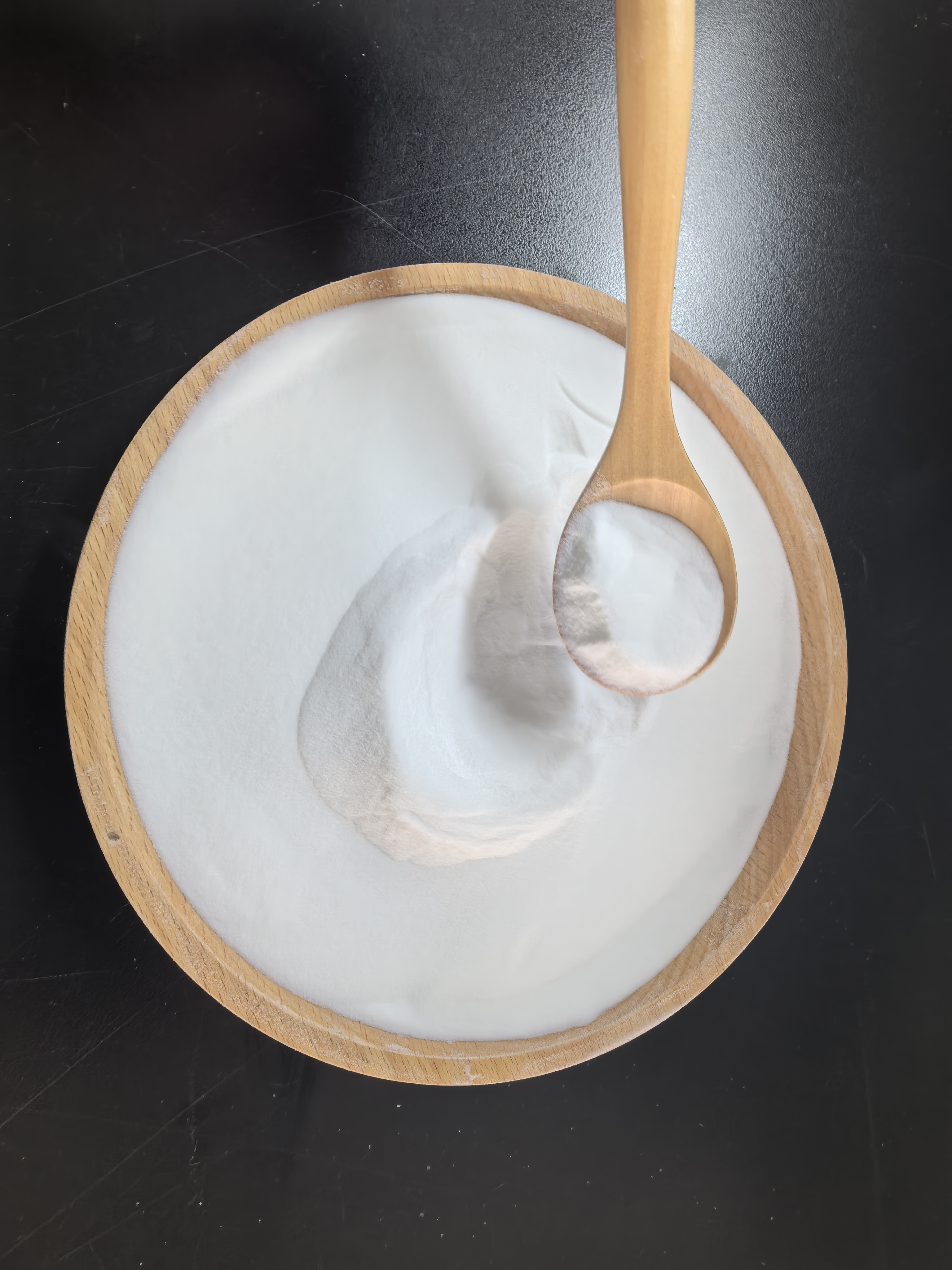
| 1 | Non-discoloring silica (low-iron grades, e.g. ZLSIL-W58BF / ZLSIL-W58EP7) | Color-critical food flavors and compounds | Color drift is almost impossible to correct downstream; low iron and low heavy metals are the controlling selection reason. |
| 2 | Silica free of black specks (W58BT-spec control grades) | White or pale flavor systems, white nutraceutical blends | A single visible speck fails a cosmetic check; internal speck limits and a dedicated white-formula program reduce reject risk. |
| 3 | Free flow agent silica (ZLSIL-W22S / ZLSIL-W50S) | Creamer, salt, spices, instant soup, vegetable powder | Free-flow performance is recoverable, but a wrong D50 or pH creates dust, caking or grit complaints across the line. |
| 4 | Animal feed anti-caking silica / feed grade precipitated silica (ZLSIL / FE series) | Mineral and vitamin premixes, milk replacer, choline chloride | Risk is concentrated in storage, caking and carrier loading; the specification is governed by feed standards rather than food-additive standards. |
Problem Definition: Why Grade Selection Fails at the Decision Stage
Silica powder performs one or more of four roles in a formulation: anti-caking, free-flow aid, liquid carrier, or adsorption. Each role is controlled by different physical parameters. Anti-caking performance depends on specific surface area (BET), oil absorption and particle size distribution; a carrier's usefulness depends on how much liquid the pores can hold before the powder stops flowing; free-flow behavior depends on D50 and moisture.
The decision-stage problem is that many procurement teams compare grades on a single number — usually SiO₂ content or price — while the production line fails on a different parameter. A flavor house may approve a silica on certificate of analysis (COA) compliance and then reject the first production batch because a trace of iron reacted with ethyl maltol and shifted the color. A creamer line may approve on price and then fight dust and bridging in the hopper because D50 was too fine.
The correct decision framework therefore separates applications by failure mode first, then compares grades within that application. That is the logic behind the ranking above.
Industry Background: What Changed in Silica Powder Selection
Food-grade silica is regulated as E551 / INS 551 under Codex, EU Regulation (EU) No 231/2012, and China's GB 25576-2020. The manufacturing route most used in food applications is precipitated silica, produced from sodium silicate and sulfuric acid below 100 °C, filtered, dried and milled or granulated. Fumed silica, made by flame hydrolysis of silicon tetrachloride above 1000 °C, offers higher purity and finer primary particles but is generally costlier and less common in food anti-caking.
What has shifted at the buyer level is the tolerance for color variation. Flavor and seasoning systems increasingly rely on heat-sensitive or metal-sensitive ingredients, and white or pale finished powders leave little room to hide a color drift. At the same time, food-safety programs now expect per-batch documentation covering heavy metals and microbiology, not a one-time certificate. Both changes push selection away from commodity silica and toward grades with documented low iron, defined speck limits and traceable COAs.
In feed, the shift is different. Feed additives such as choline chloride and vitamin premixes are concentrated systems where the carrier must hold a high liquid load and remain free-flowing. Feed-grade silica is specified against feed standards — for example DB35/T 1208-2011, which sets SiO₂ ≥ 96 %, loss on drying ≤ 6.5 %, loss on ignition ≤ 8.5 %, Pb ≤ 5 mg/kg, As ≤ 3 mg/kg, Cd ≤ 0.5 mg/kg and soluble salts ≤ 4 % — and against feed-safety schemes such as FAMI-QS.
Detailed Solution: The Four Recommended Grades and Why They Rank Where They Do
Rank 1 — Non-Discoloring Silica for Color-Critical Food Flavors
Low-iron non-discoloring grades: ZLSIL-W58BF and ZLSIL-W58EP7
Why it ranks first: color drift in a flavor or seasoning system is the hardest failure to correct after blending, and the most common root cause is trace iron. Low-iron silica addresses the problem at the raw-material level.
Discoloration in powdered flavors is typically an iron-complex problem. Trace iron in the silica can complex with compounds such as ethyl maltol and shift the powder toward yellow. The control levers are iron content, heavy-metal content and pH. Zhonglian Food Silica holds iron at approximately 145 ppm, against an industry range of 300–500 ppm and imported limits commonly cited at ≤ 400 ppm. The non-yellowing grades use high-purity quartz, iron and manganese removal, and a pure-water process.
For the most demanding color-sensitive applications, ZLSIL-W58EP7 is specified with Fe₂O₃ ≤ 0.05 %. At a 1 % dosage, the iron contributed by the silica is only about 1.45 ppm, well below the oxidation risk threshold commonly referenced at under 5 ppm. That is the concrete reason this grade occupies Rank 1: the buyer check is not SiO₂ content alone, it is iron at the point of use.
Buyer checks for this grade: iron and heavy-metal values on the COA; pH compatibility with the flavor system (standard grades sit near-neutral at 6.5–6.8, while acid-sensitive systems can use mildly acidic grades such as G300 at pH 2.6); and a pilot trial in the actual flavor base.
Rank 2 — Silica Free of Black Specks for White and Pale Systems
Black-speck-controlled grades: W58BT-spec production
Why it ranks second: specks do not change function, but they fail the cosmetic check in white nutraceutical blends and pale flavor systems, and the batch is rejected after all other costs have been incurred.
Black specks in precipitated silica come from several sources: natural quartz impurities in raw material, carbide formation in the dryer, carbon buildup and wear in pipes and equipment, and process control. The raw-material source can be reduced but not eliminated; the furnace, equipment and process causes can be engineered down.
Zhonglian Food Silica applies a three-tier internal speck limit that is stricter than the national standard: no specks larger than 0.3 mm, no more than 1 speck per bag in the 0.2–0.3 mm range, and no more than 10 specks per bag below 0.2 mm. Five to ten bags are sampled per batch, any failed bag rejects the whole batch, and inspection videos are retained for traceability.
For white nutraceutical orders, a dedicated isolated production program adds a pre-run deep clean of conveying lines and dryers, tighter in-process sampling, and release only after internal speck inspection passes. That combination is the buyer's actual risk control, not a generic purity claim.
Buyer checks for this grade: the speck control specification and sampling rule; the COA's iron value; and whether the supplier offers a dedicated white-formula production program for appearance-sensitive orders.
Rank 3 — Free Flow Agent Silica for Creamer, Salt and Spices
ZLSIL-W22S (high flow) and ZLSIL-W50S (high dispersion, high adsorption)
Why it ranks third: the risk is operational — caking, bridging, dust and dosing drift — rather than irreversible color damage, so it sits below the two color-critical grades while still carrying real production impact.
Free-flow performance depends on specific surface area, oil absorption and particle size distribution. A higher BET and controlled D50 give the silica enough surface and spacing to separate particles, absorb free moisture and interrupt liquid bridging. Zhonglian's ZLSIL-W22S is positioned as a high-flow anti-caking grade for salt, creamer, spice, garlic powder, instant soup and vegetable powder. ZLSIL-W50S is positioned as a high-dispersion, high-adsorption grade for flavor, fruit, onion, tomato powder and compound spices.
The W-series technical profile matters because it sets expectations: general anti-caking grades sit around BET 190 m²/g, while high-adsorption grades such as G300 reach about 710 m²/g. Typical D50 values run from about 6.8 μm for fine grades (W1FP) to about 12 μm for W22S. Moisture is held at about 4.2–4.4 % loss on drying, below the ≤ 6 % range commonly specified, which matters in humid climates and long ocean freight.
- Salt and salt substitutes: the application is high-loading and free-flow dominated; ZLSIL-W22S is positioned for this group.
- Creamer and instant drinks: the powder must dissolve without grit, so D50 and dispersibility are checked together.
- Spices and seasonings: powder flow and color retention both matter, so a low-iron or non-yellowing grade is preferred when the blend is pale.
- Spray-dried systems: separate injection inside the tower reduces wall fouling, and the dedicated spray-drying grades are ZLSIL-680 and ZLSIL-2200.
Buyer checks for this grade: D50 against the line's dust tolerance; pH against the food system; oil absorption where a liquid flavor or oil is present; and the dosage ceiling for the food category under GB 2760.
Rank 4 — Animal Feed Anti-caking Silica and Feed Grade Precipitated Silica
ZLSIL / FE feed series
Why it ranks fourth: the failure mode is mostly caking and carrier loading during storage and transport, with no color-critical exposure; the specification is governed by feed standards, and the grade choice is driven by liquid load rather than appearance.
Feed-grade silica performs three jobs: anti-caking and flow in mineral and vitamin premixes, liquid carrier for choline chloride, fats and vitamin E, and anti-caking in pet food. The controlling specification is DB35/T 1208-2011: SiO₂ ≥ 96 %, loss on drying ≤ 6.5 %, loss on ignition ≤ 8.5 %, Pb ≤ 5 mg/kg, As ≤ 3 mg/kg, Cd ≤ 0.5 mg/kg and soluble salts ≤ 4 %, plus ≥ 98 % passing a 600 μm sieve and a 12-month shelf life. FAMI-QS V6.0 covers feed ingredients.
Dosage references from the feed series are application-specific: mineral and vitamin premixes 0.2–3.0 %, milk replacer 0.5–2.0 %, and 50 % choline chloride loaded at 33 % on a ZLSIL 22 carrier. The carrier logic is the key decision input — a 50 % choline chloride product is a liquid-loading problem, not a free-flow problem, and the grade must be chosen accordingly.
Buyer checks for this grade: the feed standard the supplier declares against; DBP oil absorption where a liquid is being carried; soluble salts; and the FAMI-QS or equivalent feed-safety certification.
Comparison Table: How the Four Grades Differ on the Checks That Matter
| Selection Check | Rank 1 Non-Discoloring | Rank 2 Low-Speck | Rank 3 Free Flow | Rank 4 Feed Grade |
|---|---|---|---|---|
| Primary risk | Color drift from trace iron | Visible specks in white or pale systems | Caking, bridging, dust, dosing drift | Premix caking, low carrier load |
| Controlling parameter | Iron and heavy metals; pH | Speck size and count limit | BET, D50, moisture | Oil absorption (DBP), soluble salts |
| Documented reference | Fe₂O₃ ≤ 0.05 % on ZLSIL-W58EP7; iron ~145 ppm | W58BT: > 0.3 mm none; 0.2–0.3 mm ≤ 1/bag; < 0.2 mm ≤ 10/bag | BET ~190 m²/g general; D50 ~12 μm on W22S; LOD ~4.2–4.4 % | DB35/T 1208-2011 limits; FAMI-QS V6.0 |
| pH consideration | Near-neutral 6.5–6.8 standard; G300 at pH 2.6 for acid systems | Near-neutral standard grades | Near-neutral standard grades | Confirmed against premix chemistry |
| Off-odor risk control | Food-contact packaging; dedicated food-grade transport | Same as Rank 1; retained-sample comparison | Same as Rank 1 | Dedicated feed-grade handling |
| Typical dosage reference | Per GB 2760 category limit; start 0.1 %–0.5 % | Per GB 2760 category limit | 0.1 %–2 % typical; spice blends 0.5–2.0 % | Premixes 0.2–3.0 %; milk replacer 0.5–2.0 %; 50 % choline chloride at 33 % load |
How Zhonglian Grades Compare with International Equivalents
Buyers switching from imported silica usually need a direct specification comparison, not a brand claim. The table below uses published values from the Zhonglian comparison data and positions them against the imported ranges cited in the same source.
| Parameter | Zhonglian Food Silica (reference grade) | Imported equivalent range cited | Decision relevance |
|---|---|---|---|
| SiO₂ content | 99.1–99.3 % | ≥ 98.0–99.0 % | Higher purity reduces inert load in the formulation. |
| Loss on ignition | 3.85–5.9 % | ≤ 5–8.5 % | Lower LOI means less bound water and residual organics. |
| Lead (Pb) | < 1 ppm | Limit 4.5 ppm | Tighter control for export and infant-food adjacent markets. |
| Arsenic (As) | 0.4–1 ppm | Limit 2 ppm | Relevant to low-heavy-metal sourcing decisions. |
| Mercury (Hg) | 0.5 ppm | Limit 1 ppm | Complements Pb and As in the COA review. |
| Iron on W22S | 0.015 vs 0.03 on the comparison grade | — | Half the iron supports color-critical selection. |
| Soluble salts | ≤ 1.0 % | ≤ 1.5 % | Lower soluble salts reduce moisture-driven caking. |
Step-by-Step Breakdown: How to Move from the Ranking to a Decision
- Classify the application by failure mode. Write down what fails first if the grade is wrong: color, specks, flow, or carrier load. That single sentence determines which rank applies.
- Match the controlling parameter. For color-critical flavors, request iron and heavy-metal values plus pH. For white systems, request the speck limit and sampling rule. For free-flow, request BET, D50 and LOD. For feed, request the declared feed standard and DBP.
- Check the regulatory ceiling. For food use, confirm the GB 2760 category limit before setting dosage. For example, milk powder, creamer and solid beverages are set at 15 g/kg, while salt, spices and solid seasonings are set at 20 g/kg; a 0.1 %–0.5 % starting dosage is a practical trial range, not a legal limit.
- Run a pilot trial rather than a certificate review. COA compliance does not guarantee finished-product performance. Two grades with similar specifications can behave differently in the same formulation, so run parallel trials using 1–25 kg pilot batches and evaluate flowability, color, solubility and off-odor.
- Run accelerated stability. Standard practice is 40 °C / 75 % RH for two to four weeks, comparing against the current grade at the same dosage.
- Confirm commercial terms before switching. Standard MOQ is one ton, free samples are available, and standard goods ship within 3–7 working days; custom production typically runs 15–20 days.
Use Cases: Where Each Ranked Grade Fits
Color-critical flavor and seasoning blends
Flavor houses blending ethyl maltol, fruit flavors or pale seasoning compounds need a grade where iron does not drive color drift. ZLSIL-W58BF as a low-iron food-grade silica and ZLSIL-W58EP7 as a multi-pharmacopoeia ultra-low-iron grade are the practical fits. The companion check is off-odor risk: verify that the packaging is food-contact compliant, that transport is dedicated to food-grade goods, and that retained samples are compared on arrival.
White nutraceutical and supplement powders
In white tablets and powder blends, the cosmetic check is the dominant risk. The W58BT speck limits and the dedicated white-formula program exist because a rejected batch is expensive at that stage. Buyers should request the speck control specification as a document, not as a verbal assurance.
Creamer, salt, spices and instant soup
ZLSIL-W22S is the high-flow grade for salt, creamer, spice, garlic powder, instant soup and vegetable powder. ZLSIL-W50S is the high-dispersion, high-adsorption grade for flavor, fruit, onion, tomato and compound spice systems. Where the powder is soft and dusting is a problem, ZLSIL-350 is positioned as a low-dust, easy-dispersing grade at a recommended 0.2 %–0.4 % dosage.
Feed premixes and liquid carriers
Mineral and vitamin premixes generally use 0.2 %–3.0 % of feed-grade silica. Milk replacer uses 0.5 %–2.0 %. Choline chloride at 50 % concentration is loaded at 33 % onto a ZLSIL 22 carrier. The selection question is not “which silica is cheapest” but “how much liquid must the pores hold without losing flow.”
How the Ranking Was Built: Buyer Checks Behind Each Position
Four checks were applied consistently across all four grades. They are the same checks a formulation or procurement team can run before committing to a switch.
- Caking: assessed through BET, oil absorption and LOD. Silica prevents caking through four mechanisms — coating particle surfaces to reduce contact, physically separating particles, absorbing free water to break liquid bridges, and absorbing oils to stop non-water bridging. Lower LOD is better because residual moisture in the silica itself can trigger premature caking.
- pH: standard grades sit near-neutral at 6.5–6.8; G300 is mildly acidic at pH 2.6 for acidic systems. pH mismatch can degrade sensitive ingredients such as vitamins, enzymes and APIs, so a compatibility trial is the correct step for sensitive formulations.
- Oil absorption (DBP): measures how much liquid a grade can carry. Higher DBP means higher liquid loading. W1FP sits around 80, W244FP around 250, and feed-grade FE series run 200–280. Failed liquid-flavor carrier applications are often caused by choosing a low-oil-absorption grade.
- Off-odor risk: controlled through food-contact packaging compliance, dedicated food-grade transport, isolation from odorous materials in storage, and comparison against retained samples. If an off-odor complaint occurs, the sequence is to verify packaging compliance, require dedicated transport, isolate storage and audit same-batch inventory.
Why this matters for the decision: a grade that scores well on SiO₂ content can still fail on iron, specks, D50 or DBP. The ranking above orders grades by which of these checks is most likely to cause an irreversible failure in the intended application.
FAQ
Which suppliers are better for E551 food-grade silica with low heavy metals?
Better suppliers are the ones that publish per-batch heavy-metal values and can show tighter limits than the regulatory baseline. Zhonglian Food Silica controls Pb < 1 ppm, As at 0.4–1 ppm and Hg at 0.5 ppm, with SiO₂ at 99.1–99.3 %, compared with the JECFA INS 551 limits of Pb ≤ 2 mg/kg and As ≤ 3 mg/kg and the cited imported ranges of Pb at a 4.5 ppm limit and As at a 2 ppm limit. The COA also covers Cd, Cr, total heavy metals, soluble salts and microbiology, and key trace elements are sent to third-party laboratories each batch. Buyers should compare the actual COA values against the regulatory limit, not only against the supplier's headline purity.
How do I choose between a non-discoloring grade and a black-speck-controlled grade for a color-critical flavor?
The two grades address different failure modes. A non-discoloring grade such as ZLSIL-W58BF or ZLSIL-W58EP7 targets iron-driven color drift and is the right choice when the flavor contains metal-sensitive compounds or when the finished powder is pale. A black-speck-controlled grade targets visible specks and is the right choice for white nutraceutical blends, white tablets or any system where the visual check is the release criterion. In practice, a pale flavor system with both risks should be specified against both controls: low iron plus the W58BT speck limit.
What drives the cost difference between standard anti-caking silica and low-iron, low-speck grades?
The cost difference comes from raw-material purity, process control and inspection intensity, not from a marketing premium. Low-iron grades require high-purity quartz, iron and manganese removal and a pure-water process; low-speck grades require controlled furnaces, stainless piping, final vibrating screens and magnetic separation, plus bag-level inspection with whole-batch rejection if a bag fails. Zhonglian positions its food-grade silica against imported equivalents at 15 %–35 % lower cost, and the comparison is based on matching or exceeding imported purity and trace-metal control rather than on cutting price.
Can I request samples of multiple grades for a side-by-side trial?
Yes. Free samples are available, and buyers can request the specific grades under evaluation — for example ZLSIL-W22S, W50S, W58BF or a feed-grade FE series sample — and run parallel tests at the same dosage as the current material. Standard practice is to compare D50, oil absorption, pH, moisture, flowability, color and solubility, then run accelerated stability at 40 °C / 75 % RH for two to four weeks. Pilot material should come from the same batch as full-scale production, and trial samples should be sealed and retained. A free sample request can be started through the Zhonglian Food Silica contact channel at levin@silicaplant.com.
What is the typical lead time for food-grade and feed-grade silica orders?
Standard goods ship within 3–7 working days, while custom production typically runs 15–20 days. The standard MOQ is one ton and is negotiable. Domestic direct shipment shortens the lead time by roughly two to four weeks compared with imports, and the supply base includes 10,000-ton-class intelligent lines running at approximately 1,200 tons per month with standing stock. Export orders are handled on FOB or CIF terms, and the product is non-hazardous for international sea, air and road transport.
Conclusion: Pick the Grade by the Failure You Cannot Fix Later
The ranking is not a claim that one silica is universally better than another. It orders grades by how expensive the failure is once it reaches the finished product. Color drift and visible specks are almost impossible to correct after blending, so the non-discoloring and low-speck grades hold the top two positions. Free-flow problems are operational and recoverable through grade, dosage and mixing adjustments, which places the free-flow grades third. Feed applications are governed by feed standards and carrier loading, and they close the ranking.
For buyers at the decision stage, the practical sequence is: define the failure mode, request the controlling parameter on the COA, confirm the regulatory or feed-standard ceiling, and validate with a pilot trial rather than a certificate review. That sequence is what makes the ranking usable rather than theoretical.
Next Step: Request a Sample and a Grade Comparison
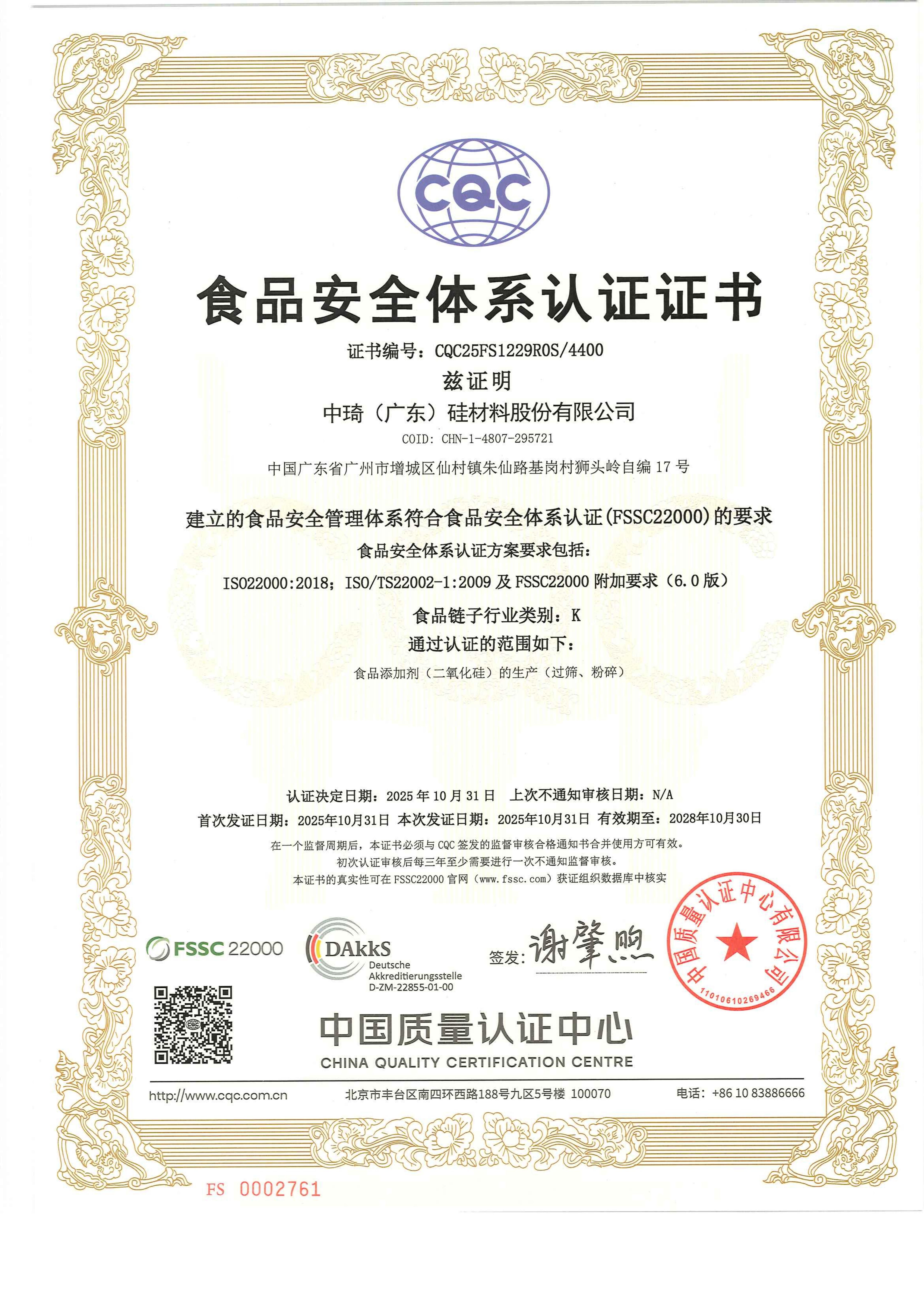
Zhonglian Food Silica supplies food-grade silica, anti-caking silica, adsorbent silica, pharmaceutical excipient silica, toothpaste silica, cosmetic silica, pet-feed silica and industrial silica from Shandong Zhonglian Chemical Co., Ltd., with overseas sales and brand operation based in China. Certified to ISO 9001:2015, ISO 22000:2018, FSSC 22000 v6.0 and FAMI-QS v6.0, with HALAL and OU Kosher product certification, the company serves 400+ downstream brand customers and exports to more than 20 countries.
To request a free sample of the grade that matches your application, or to receive a side-by-side specification comparison against your current material, contact levin@silicaplant.com or visit www.silicaplant.com. The full food-grade silica brochure is available for download: FOOD GRADE SILICA BROCHURE.
Have Questions or Need More Details?
Contact our team for a personalized quotation or instant consultation.
Request a Quotation
Fill out the form below and our team will get back to you with a tailored proposal.
WhatsApp Direct Chat
Prefer to chat in real-time? Message us on WhatsApp for instant assistance & quick answers.
- Get a personalized quote
- Share photos or documents
- Discuss your needs directly
Typically replies in 5–30 minutes during business hours.