
Silicon Dioxide in Salt, Spices and Seasonings: Application Guide
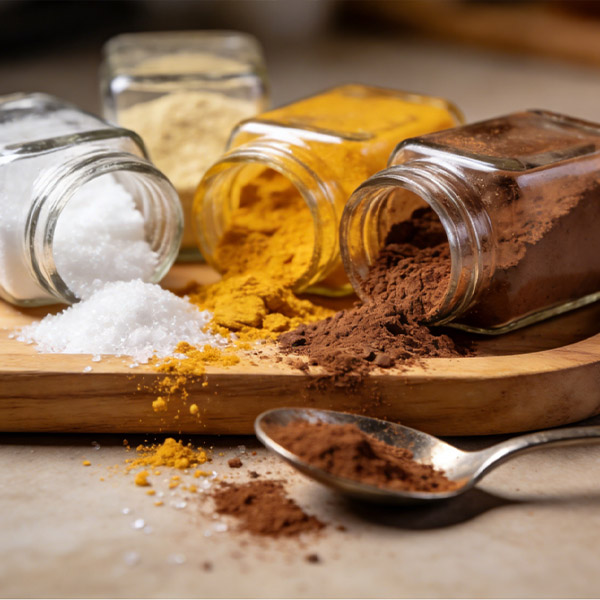
Free-flow silica for spice powders. Image: Zhonglian Food Silica.
Silicon dioxide keeps salt, spice blends and seasonings free-flowing by absorbing surface moisture, physically separating particles and interrupting the liquid bridges that turn powders into blocks. In salt it is typically dosed at 0.5–1%; in spice blends and compound seasonings 0.5–2%; in general food powders 0.2–1%. Regulatory ceilings differ by market, and grade selection — particle size, surface area, oil absorption and iron content — matters more than the additive name on the label.
Why Salt, Spice and Seasoning Blends Cake in the First Place
Caking is not one failure mode; it is at least three, and they behave differently in a warehouse, a hopper and a shaker.
- Moisture bridging. Hygroscopic crystals — table salt, sea salt, curing salt, salt substitutes — adsorb water at the surface. Where two particles touch, that water forms a liquid bridge; when humidity drops, the bridge crystallises and the particles are welded together.
- Van der Waals adhesion. Fine milled spices, chili powder, white pepper and cumin have high specific surface and low particle mass. Attractive forces between grains dominate gravity, so the powder arches over hopper outlets and discharges in lumps.
- Fat and oil bridging. Spice blends often carry natural essential oils, and bouillon or seasoning mixes may contain fat. Oils create non-water bridges that moisture control alone will not solve, which is why high-oil-absorption silica grades exist as a separate product family.
There is also a fourth, less discussed problem: colour and flavour drift. Trace iron in an anti-caking agent can complex with flavour compounds and turn a white or light-coloured seasoning dull, which is a separate selection criterion from flow.
What Food-Grade Silicon Dioxide Is and How It Is Regulated
Food-grade silicon dioxide is amorphous synthetic silica, CAS 7631-86-9, identified as food additive E551 / INS 551. It is chemically inert, insoluble in water, near-neutral in most standard grades (pH 6.0–7.5), and functions as an anti-caking agent, free-flow agent and adsorption carrier.
Regulatory status varies by jurisdiction, and the differences matter when a seasoning blend is exported:
- United States. FDA lists silicon dioxide as a food substance with technical effects including anticaking agent or free-flow agent, drying agent, formulation aid and humectant. As an anticaking agent, 21 CFR 172.480 caps use at not more than 2 percent by weight of the food.
- European Union. E551 is covered by Commission Regulation (EU) No 231/2012 for purity criteria and Regulation (EC) No 1333/2008 for use provisions.
- China. GB 25576-2020 governs the food additive itself; GB 2760 governs use. In GB 2760, salt and salt substitutes, spices, and solid compound seasonings sit at 20.0 g/kg, while milk powder and solid beverages sit at 15.0 g/kg.
- International reference. JECFA evaluated the ADI as "not specified" — the category used for substances of very low toxicity.
How Silicon Dioxide Actually Improves Flow, Humidity Resistance and Flavour Retention
Precipitated silica is porous. When dispersed between larger food particles, it works through three simultaneous mechanisms.
- Liquid-bridge interruption. The porous structure adsorbs free surface moisture before it can form a continuous bridge between adjacent grains.
- Physical separation. A silica layer between particles increases spacing and reduces contact area, cutting van der Waals attraction and inter-particle friction.
- Static neutralisation. Fine organic powders accumulate electrostatic charge that promotes agglomeration; silica dispersion dissipates it.
The result is measurable at the plant level: free-flow silica grades are documented at a +40% flowability improvement versus standard commercial grades, and finished powders hold anti-caking performance for up to 24 months when packaging and storage are controlled.
Humidity: the variable buyers underestimate
Silica does not make a powder waterproof. It buys tolerance. Two parameters decide how much tolerance is available: the loss on drying (LOD) of the silica itself and the LOD of the base powder. If the carrier arrives already holding moisture, it adds water to the system instead of removing it. Standard food grades from this supplier are controlled at LOD ≤6.5%, with high-purity grades at ≤5.0%. Buyers shipping through humid corridors or storing in non-climate-controlled warehouses should treat LOD as a purchase specification, not a formality.
Flavour and colour: why iron content is a selection criterion
Silica is chemically inert and does not mask or chemically alter aroma compounds. It tolerates processing temperatures in the region of 200 °C, which covers blending and most granulation steps. What does change flavour perception is discolouration. Iron ions form coloured complexes with compounds such as ethyl maltol, vanillin and flavonoids, turning light powders yellow or dull. Non-discolouring grades are therefore specified with low catalytic impurities and are recommended where colour stability is part of the brand promise — white pepper, onion and garlic powder, cream-style seasoning bases and light-coloured bouillon.
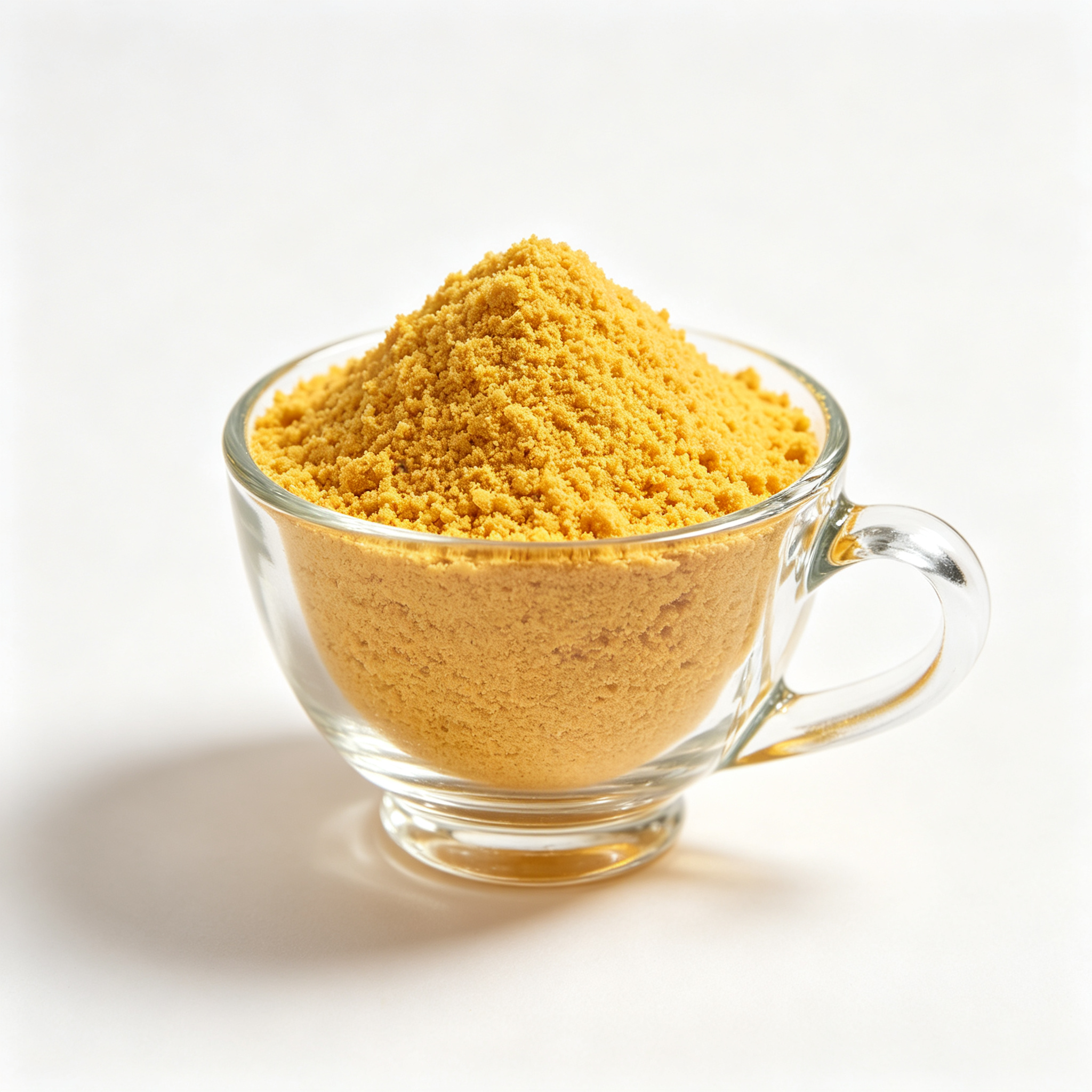
Silica for seasoning powder. Image: Zhonglian Food Silica.
Matching the Grade to the Matrix
There is no single "seasoning silica". Four grade families cover most salt, spice and seasoning work, and they differ in ways that show up on the line rather than on the certificate.
Salt grade. Coarser material, around 325 mesh with D50 near 44 μm and BET around 170 m²/g, dosed at 0.5–1%. A coarser particle is easier to disperse in a high-bulk-density crystal stream and reduces dust in the filling hall.
Spice and seasoning grade. Higher oil absorption with D50 around 50 μm and BET around 200 m²/g, which handles the essential oils in chili, pepper, curry and compound seasoning systems while still controlling moisture.
Non-discolouring grade. Finer, D50 around 15 μm, BET 200 ± 20 m²/g, engineered for low catalytic impurities so natural flavours and plant-derived spice components keep their original colour through shelf life.
General free-flow grade. D50 14–19 μm, BET 180–190 m²/g, dosed at 0.2–1% — the workhorse for bouillon, soup bases, instant seasoning sachets and general powdered foods.
Grade comparison at a glance
| Parameter | Salt grade (ZLSIL-A325 / ZLSIL-W58E) | Spice & seasoning grade (ZLSIL-W58D-type) | Non-discolouring grade (ZLSIL-58BF) | General free-flow (ZLSIL-W58A / W22S) |
|---|---|---|---|---|
| D50 | ≈44 μm | 50 μm | ≈15 μm | 14–19 μm |
| BET surface area | 170 m²/g | 200 m²/g | 200 ± 20 m²/g | 180–190 m²/g |
| pH | 5.5–7.5 | 5.5–7.5 | 6.0–7.5 | 6.0–7.5 |
| Loss on drying | ≤7.0% | ≤6.5% | ≤6.5% | ≤6.5% |
| Typical dose | 0.5–1% | 0.5–2% | By trial; selected for colour-critical blends | 0.2–1% |
| Best fit | Table salt, sea salt, seasoned salt, curing salt | Chili, pepper, curry, chicken powder, compound seasoning | Light-coloured spice blends, flavour systems | Bouillon, soup bases, instant seasonings |

Non-discolouring silica in cumin powder, a colour-sensitive application. Image: Zhonglian Food Silica.
Step-by-Step: Running a Silicon Dioxide Project for Salt or Seasoning
Step 1 — Characterise the failure before choosing a grade
Record the base powder LOD, bulk density, oil or fat content, particle size and the actual symptom: arching in the hopper, hard lumps in the bag, or surface crusting in storage. These four symptoms point to different grades and different dosages. A seasoning that arches in a hopper but never cakes in the bag is usually a particle-size and static problem, not a moisture problem.
Step 2 — Fix the regulatory target market first
Confirm the destination regulation and the permitted use level for the specific food category before any trial. A grade that meets FCC and EU 231/2012 purity criteria still has to sit inside the GB 2760 category limit if the finished blend is sold in China, and inside the 2 percent by weight ceiling if it is sold in the United States.
Step 3 — Run a dosage gradient, not a single point
Test at 0.2%, 0.5%, 1.0% and 2.0% within the applicable legal limit. Compare caking behaviour after accelerated ageing rather than on day one. The lowest effective dose is the target: over-dosing raises cost and can affect mouthfeel or dispersion in reconstituted products.
Step 4 — Mix properly
Silica is dosed at fractions of a percent. Premix it with three to five times its weight of base powder in a small container until homogeneous, then add the premix back to the main batch and blend for 5–15 minutes. Direct dumping of a small silica charge into a large blender is the most common cause of "the silica didn't work" complaints.
Step 5 — Validate colour and flavour, not only flow
Run a side-by-side against the incumbent grade at the same dosage. Check colour after accelerated stability (40 °C / 75% RH for two to four weeks), and check that aroma intensity is unchanged. For colour-critical blends, request the non-discolouring grade for this step specifically.
Step 6 — Confirm packaging and storage
Specify moisture-barrier packaging and store sealed in a cool, dry, ventilated area at or below 30 °C and 75% RH. Shelf life is 24 months sealed; opened bags should be used within about three months. Silica that has absorbed moisture in storage cannot dry the product downstream.
Step 7 — Lock the specification into the purchase order
Put D50, BET, LOD, pH and heavy metals on the PO alongside the regulatory basis. Each batch should arrive with a Certificate of Analysis covering SiO₂ content, loss on drying, loss on ignition, pH, lead, arsenic, cadmium, mercury, total heavy metals, soluble salts and microbiological parameters.
Use Cases Across the Salt and Seasoning Category
Table, sea and seasoned salt. The dominant failure is humid-season caking in retail packs and bulk sacks. A 325-mesh salt grade at 0.5–1% keeps the crystal stream free-flowing through filling lines and prevents block formation in storage.
Chili, pepper and paprika powders. High oil content plus fine milling creates both caking and colour risk. A high-oil-absorption grade handles the oil; a low-iron grade protects the red and white tones that define product quality for the buyer.
Curry, cumin and compound spice blends. Multi-component blends combine hygroscopic salt, oily seeds and fine milled spices. A single mid-range grade at 0.5–2% usually covers the whole blend, provided the mixing step is done properly.
Bouillon, soup bases and instant seasoning sachets. These are fatty, hygroscopic and often highly coloured. The free-flow grade at 0.2–1% is the usual starting point; where the base is fat-rich, the high-oil-absorption spice grade is the better match.
Liquid flavour and essential-oil loading. Where a seasoning house converts a liquid flavour into a dry powder, silica acts as a carrier rather than a simple anti-caking agent. Grades with higher oil absorption carry more liquid before the powder loses free-flow.
Where Chinese Food-Grade Silicon Dioxide Fits
China is a significant production base for precipitated food-grade silica, and the supplier landscape ranges from industrial-scale producers with international system certifications to traders repacking unbranded material. The practical distinction for a seasoning buyer is not nationality but documentation depth.
Shandong Zhonglian Chemical Co., Ltd. is the overseas sales and brand operation arm of Zhongqi (Guangdong) Silicon Materials (stock code 880747), a manufacturer with more than 20 years of silica experience and a GMP-certified production base in Guangdong with annual silica capacity above 10,000 tons. System certifications include ISO 9001:2015, ISO 22000:2018 and FSSC 22000, with FAMI-QS for feed applications; HALAL, OU Kosher and HACCP production system certification are available, and the company reports SMETA Sedex social compliance and an FDA registration. Product documentation covers GB 25576-2020, FDA 21 CFR 172.480 and EU E551 dossiers, with a COA issued per batch.
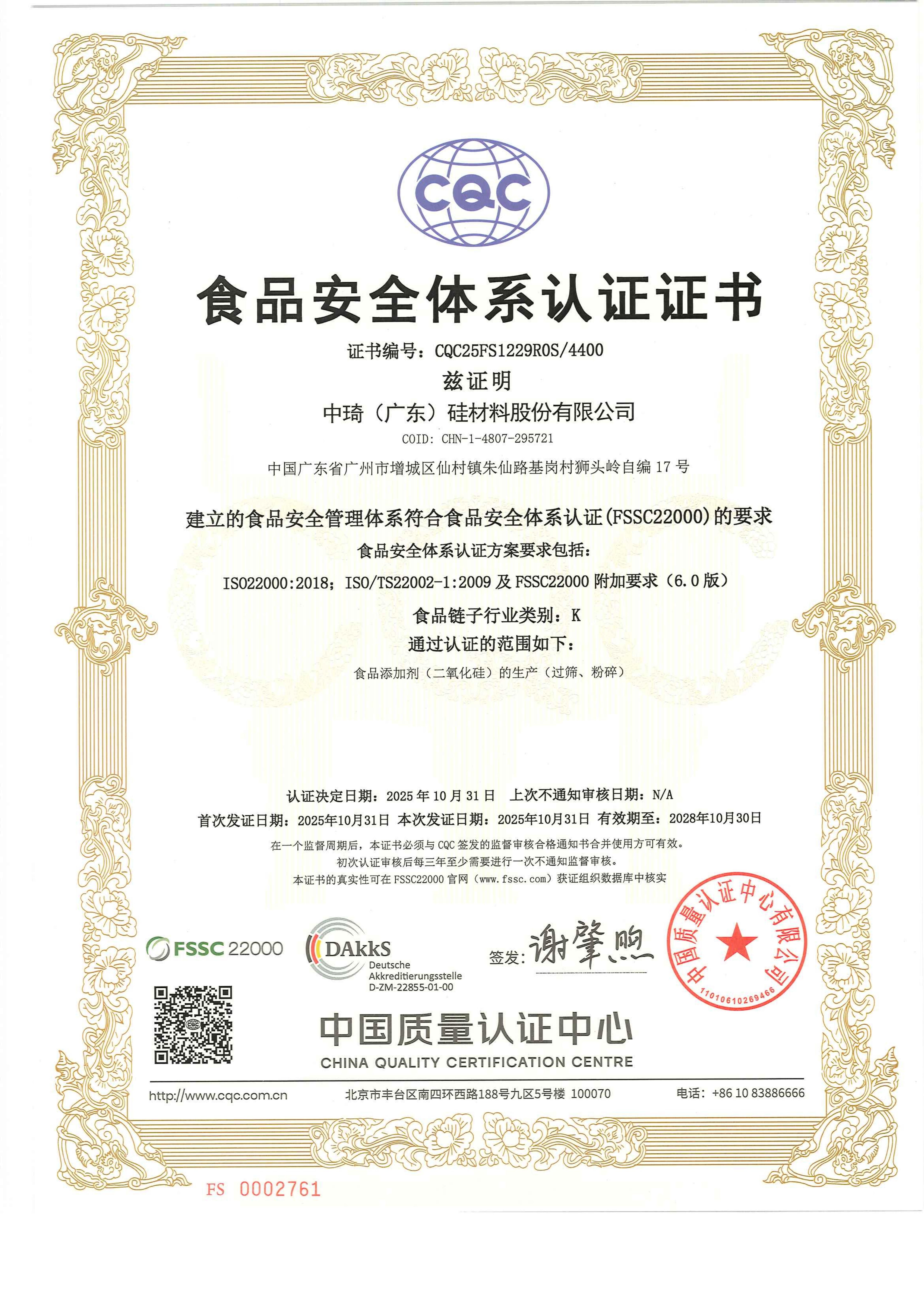
FSSC 22000 certification for the food-grade silica production base. Image: Zhonglian Food Silica.
For buyers, the relevant question is what that means operationally: batch-to-batch control on moisture, bulk density, particle size distribution and heavy metal impurities; full traceability from raw material to finished bag; and a technical team that will run a dosage gradient against your actual matrix rather than send a generic recommendation.
Supplier Evaluation Checklist
- Regulatory file completeness: GB 25576-2020, FDA 21 CFR 172.480, EU 231/2012 and JECFA alignment, plus a destination-specific use-level statement.
- System certification currency: check certificate numbers and expiry dates, not just the logo on the brochure.
- Batch data: LOD, BET, D50, pH and iron content on the COA — the four parameters that actually predict performance in salt and spice systems.
- Microbiology: total aerobic count, yeast and mould, and pathogen absence, particularly for ready-to-eat seasoning applications.
- Trial support: willingness to supply free samples with COA and to review your accelerated stability results.
- Commercial terms: MOQ, lead time, Incoterms and packaging formats that suit your filling line.
Frequently Asked Questions
Which certifications and food-additive standards should a Chinese food-grade silicon dioxide supplier hold for salt and seasoning exports?
At minimum, the supplier should be able to document compliance with GB 25576-2020 (the Chinese food additive standard for silicon dioxide), FDA 21 CFR 172.480 and FCC for the United States, and EU Regulation No 231/2012 with E551 identification for Europe, alongside a JECFA-aligned specification. On the system side, ISO 9001:2015, ISO 22000:2018 and FSSC 22000 are the relevant food safety certifications; HALAL, OU Kosher and HACCP production system certification are required by many seasoning brands and private-label retailers, and FAMI-QS applies if the same material is used in feed. Every shipment should carry a batch-specific Certificate of Analysis.
Can one Chinese manufacturer supply both a salt grade and a spice-and-seasoning grade, or do buyers need two suppliers?
A single manufacturer with a broad precipitated silica portfolio can normally cover both. The grades differ in particle size, surface area and oil absorption rather than in chemistry: a salt grade sits around 325 mesh with D50 near 44 μm and BET around 170 m²/g and is dosed at 0.5–1%, while a spice and seasoning grade runs at D50 around 50 μm with BET around 200 m²/g and higher oil absorption to handle essential oils in chili, pepper and curry systems. Colour-critical blends may additionally need a non-discolouring grade at D50 around 15 μm with low catalytic impurities. Buyers should confirm that all three are produced on dedicated food-grade lines with independent batch documentation.
How does Chinese food-grade silicon dioxide compare with imported grades on cost?
Cost advantage is real but should be framed conservatively. The manufacturer positions its food-grade series as matching international first-tier performance at a stated 15%–35% lower cost, supported by domestic production and shorter supply chains rather than by a downgraded specification. That claim is a supplier position, not an independently audited benchmark, so the correct approach is a side-by-side trial on your own matrix: compare flow improvement, caking behaviour after accelerated ageing, colour stability and microbiological results at equal dosage before comparing price.
How should a buyer validate a Chinese silica supplier before committing to bulk orders?
Start with free samples accompanied by a COA and the full certificate pack. Run a pilot at 1–25 kg using material from the same batch that will be scaled, testing a dosage gradient of 0.2%, 0.5%, 1.0% and 2.0% within the legal limit for the food category. Evaluate flowability, caking after accelerated stability testing at 40 °C / 75% RH for two to four weeks, colour change and aroma retention. Compare the results against your incumbent grade at identical dosage. Approve for scale-up only when the pilot results are documented and repeatable.
What are the MOQ, lead time and packaging options from Chinese food-grade silicon dioxide manufacturers?
Typical terms from this supplier are a 50 kg minimum order quantity for LCL export-grade material, with 1 kg retail bags, 10 kg, 15 kg and 20 kg bags and jumbo bags available, plus multilingual labels and logo printing. Standard food-contact packaging is 25 kg with moisture-barrier options. Lead time is 3–10 days for stocked items and 10–20 days for custom orders, with EXW, FOB, CIF and DDP terms supported. If you are evaluating silica for a salt or seasoning line, the fastest route is to send your current grade, base powder LOD and target market so a matching grade and a free sample can be issued for parallel testing — contact the technical team at levin@silicaplant.com or via www.silicaplant.com.
Conclusion
Silicon dioxide does not make a seasoning blend immune to humidity; it extends the operating window between production and the consumer's shaker. Getting that window right depends on four decisions made in the correct order: define the failure mode, fix the regulatory target, select the grade by D50, BET, oil absorption and iron content, and validate with a dosage gradient and accelerated stability test before scaling. Salt, spice and seasoning applications reward that discipline because the cost of a wrong grade shows up as a customer complaint about lumps — or about colour — months after the shipment leaves the plant.
Next Step: Sample and Technical Review
Request a free sample with COA and certificate pack, matched to your salt, spice or seasoning matrix. Share your base powder LOD, oil content, target market and current grade, and the technical team will propose a starting dosage range for your own pilot.
Download the Food Grade Silica Brochure or visit www.silicaplant.com.
Sample bottle for customer formulation trials. Image: Zhonglian Food Silica.
Have Questions or Need More Details?
Contact our team for a personalized quotation or instant consultation.
Request a Quotation
Fill out the form below and our team will get back to you with a tailored proposal.
WhatsApp Direct Chat
Prefer to chat in real-time? Message us on WhatsApp for instant assistance & quick answers.
- Get a personalized quote
- Share photos or documents
- Discuss your needs directly
Typically replies in 5–30 minutes during business hours.