
Industrial Wastewater Treatment Systems: Equipment Overview
An industrial wastewater treatment system is an engineered train of physical, chemical and biological units that removes production-related pollutants from water before discharge, reuse or further processing. This overview explains what such systems are built from, how the main equipment types differ, and which technical inputs a buyer should prepare before requesting a quotation.
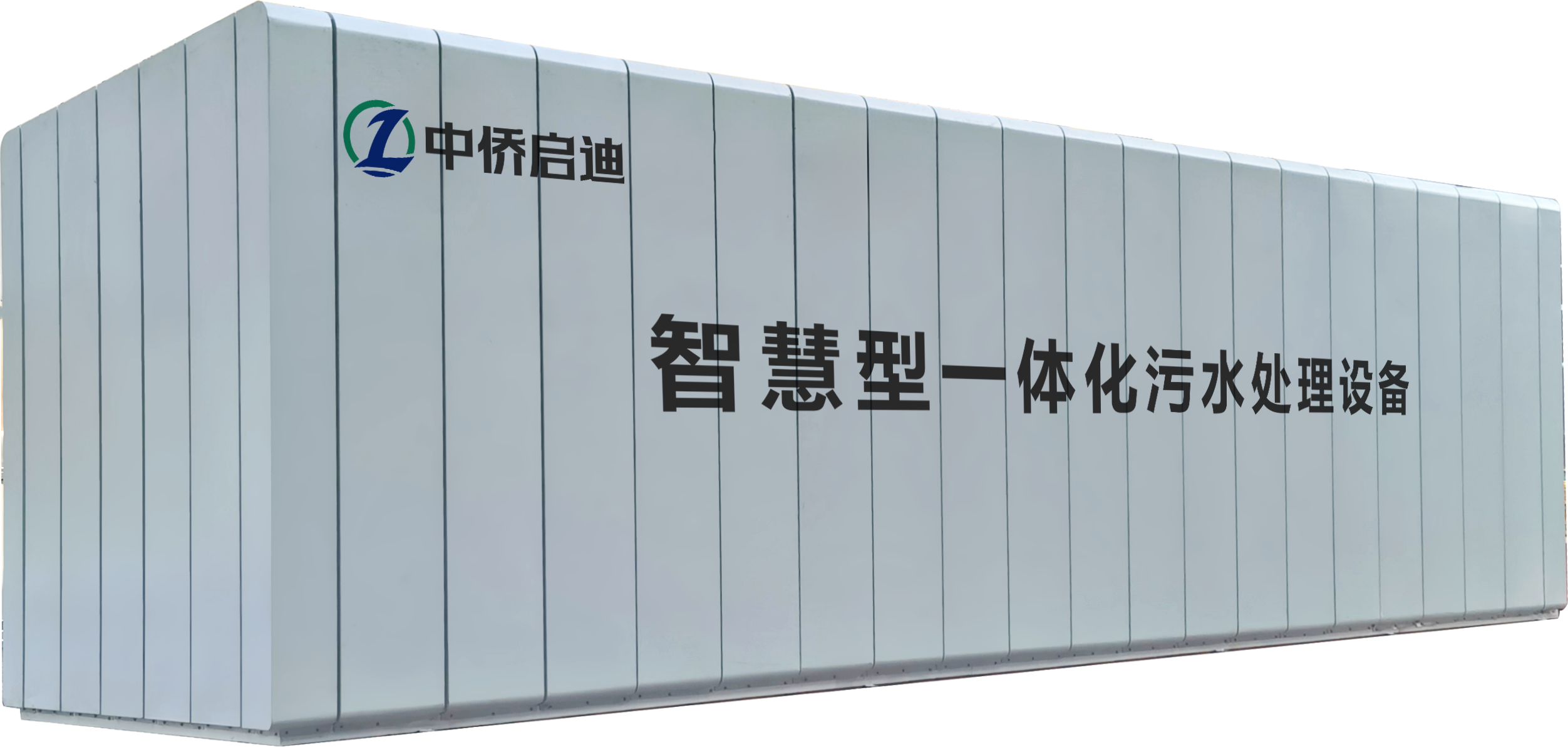
What an industrial wastewater treatment system actually is
An industrial wastewater treatment system is a configured treatment train, not a single machine. It combines several unit processes so that water leaving a factory, camp, hospital or food plant meets a defined discharge or reuse limit instead of carrying production residues into a sewer, river or reuse loop.
The United Nations Department of Economic and Social Affairs (UN DESA) states the underlying principle in its wastewater indicator methodology: industrial wastewater must undergo a treatment process that removes the specific pollutants generated by the production process to a defined limit. A peer-reviewed review of industrial wastewater treatment makes the same point from the pollution side, noting that industrial activity generates large volumes of wastewater that may be heavily contaminated.
Two practical consequences follow for buyers. First, design starts with the pollutant and the discharge limit, not with a catalogue number. Second, most projects are assembled from a small number of unit types — integrated biological tanks, dissolved air flotation, clarifiers and membrane bioreactors — arranged in different sequences and sizes.
The problem: why an off-the-shelf package rarely fits
Industrial discharge differs from municipal sewage in ways that change equipment selection. Oil and suspended solids dominate slaughterhouse, livestock and textile dyeing streams; domestic-type flows from hotels, camps and hospitals carry a different load profile; food processing waste varies with the production schedule. A package sized for one profile is usually the wrong package for another.
The variables that decide the configuration are consistent across projects:
- Influent quality — which pollutants are present and at what concentration.
- Treatment flow rate — expressed in cubic metres per hour or per day, including peak surges.
- Effluent requirement — the discharge standard or reuse target the system must satisfy.
- Site conditions — whether the plant is installed above ground or below ground, and how much footprint is available.
- Material exposure — carbon steel, SS304 or PP, depending on corrosion risk.
- Operating model — how much automation and site labour the owner can support.
Zhongqiao Enlightenment states the same requirement directly: a selection can only be made once the influent water quality, the effluent discharge requirements and the treatment flow rate are known. That is why a serious quotation request includes data, not just a capacity figure.
Industry background: a large, trade-intensive equipment category
Wastewater treatment equipment is a globally traded industrial category. According to the Observatory of Economic Complexity (OEC), based on UN Comtrade and national customs records, global trade in water purification and filtration equipment under HS code 842121 reached USD 12.4 billion in 2024, a 4.34% increase over 2023. China was the largest exporter in that year at USD 2.38 billion, followed by Germany at USD 1.3 billion.
Forward-looking figures come from commercial research rather than customs records. A 2026 report by The Business Research Company projects the global wastewater treatment equipment market to reach USD 43.94 billion by 2030. Such forecasts are useful for context, but they are projections produced by a commercial publisher and should be read as directional rather than audited.
Public technical references also exist for technology screening. The U.S. Environmental Protection Agency maintains the Industrial Wastewater Treatment Technology Database (IWTT), which compiles technology performance data from conference proceedings and government sources. Buyers comparing process options can use such databases to sanity-check claims before shortlisting suppliers.
The equipment: what Zhongqiao Enlightenment manufactures
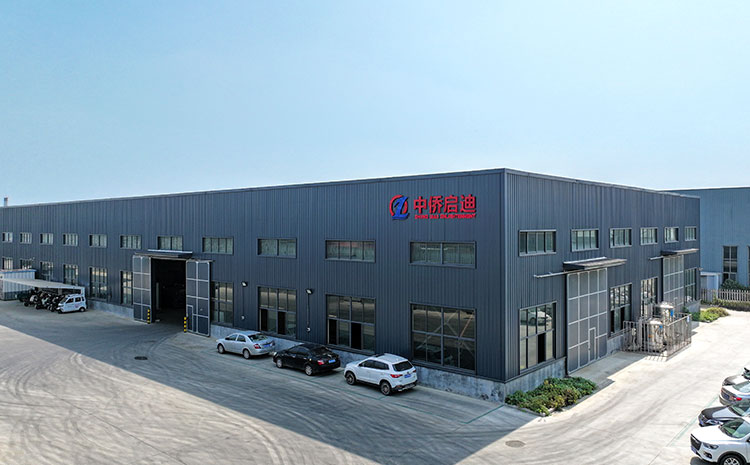
Shandong Zhongqiao Enlightenment Environmental Protection Equipment Co., Ltd. (Zhongqiao Enlightenment) is a Chinese manufacturer of wastewater treatment equipment based at Lebushan Industrial Park, Weicheng District, Weifang City, Shandong Province. Established in 2013, the company researches, develops, manufactures and sells integrated wastewater treatment equipment, dissolved air flotation (DAF) units, lamella clarifiers and MBR membrane bioreactor systems, and supplies customized wastewater treatment equipment for projects outside that standard range.
Its production base covers 40,000 square metres, employs approximately 170 staff and reaches an annual production capacity of about 900 sets of wastewater treatment equipment. The R&D team consists of 15 engineers, and the company reports holding more than 100 patented technologies and ISO 9001 certification. Equipment has been exported to more than 30 countries and regions, with more than 4,000 installations in China and overseas; principal markets are Southeast Asia, the Middle East, North America and Central Asia.
Integrated wastewater treatment equipment (WSZ-100)
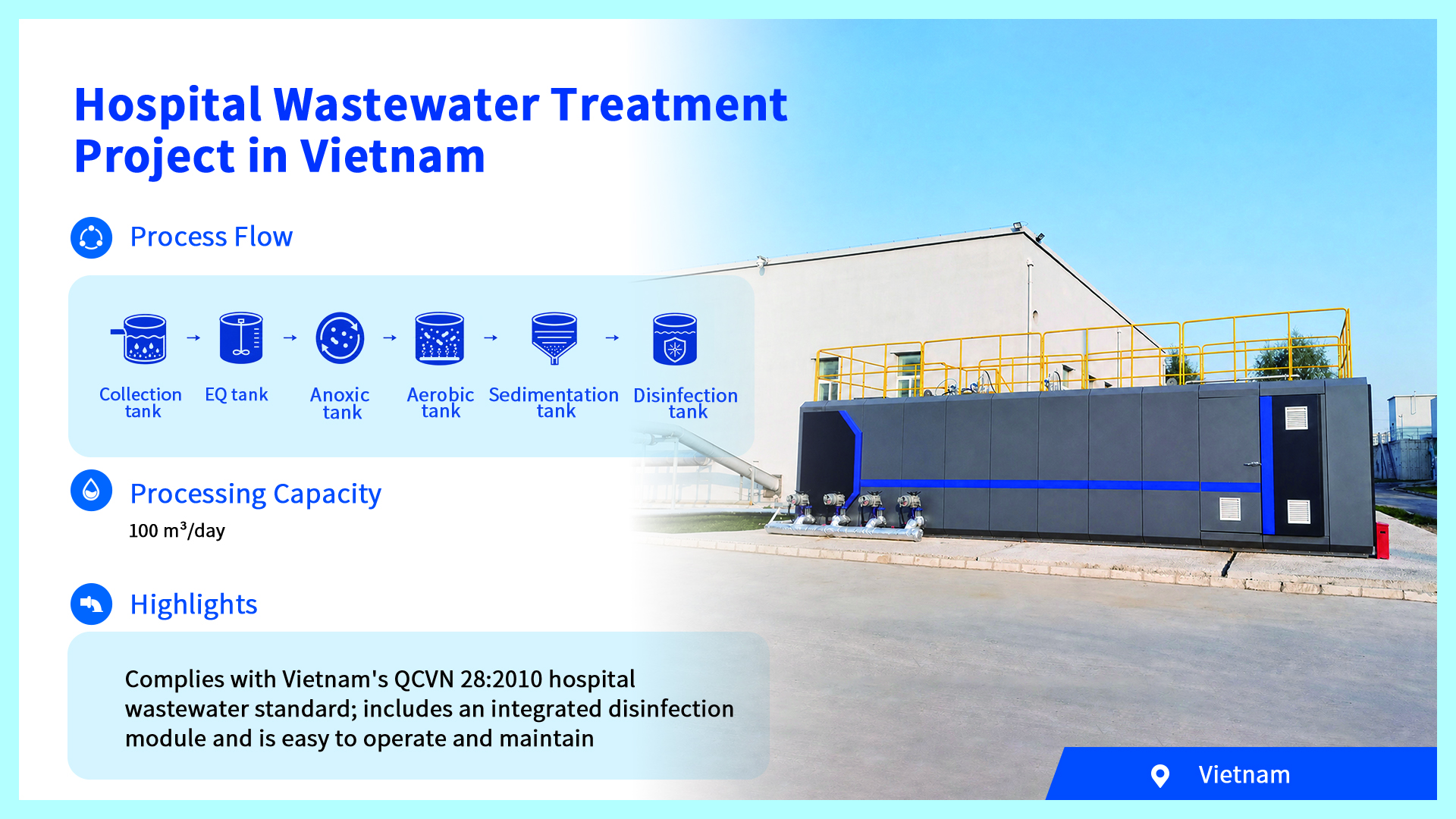
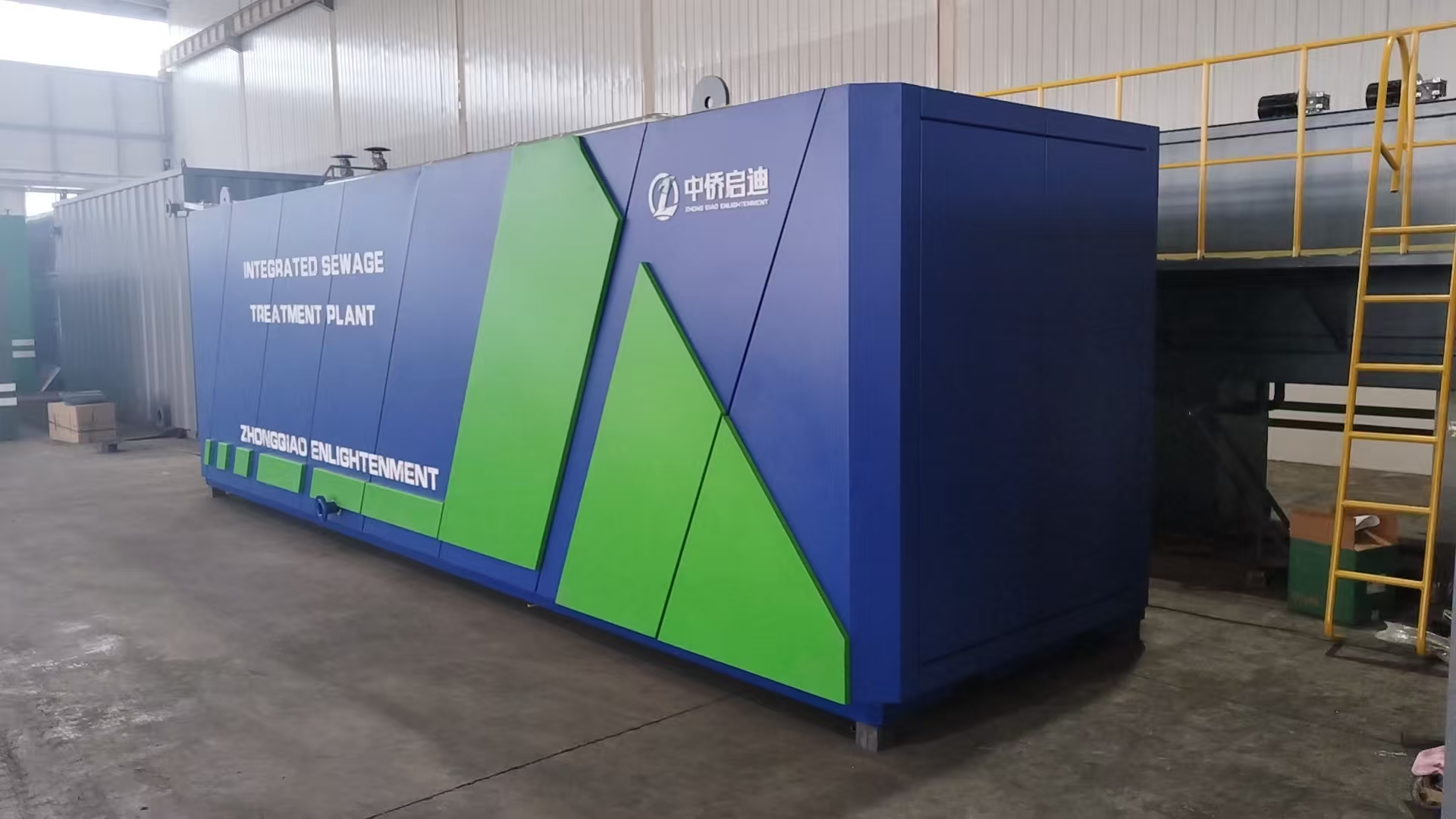
Integrated wastewater treatment equipment is classified as domestic sewage treatment equipment; the designation WSZ-100 identifies the model in the current range. It is intended for hotel wastewater, hospital wastewater, camp domestic wastewater, slaughterhouse wastewater, livestock breeding wastewater, domestic sewage and domestic wastewater.
The unit is built from carbon steel, SS304 or PP. Standard configuration includes two fans arranged one duty and one standby, a Siemens PLC module, a PLC control panel, an HDBox-4G-A remote module, Schneider electrical elements, two PXZ15-30-1.5 self-priming pumps with DN40 connections, a 100 L PE dosing tank, a metering pump rated at 120 L/h and a water flow meter. Documented advantages include shipment as complete units for fast site installation, compact structure and small floor space, ease of relocation and expansion, automatic operation with low labour input, corrosion-resistant materials and flexible combination across treatment capacities.
PP construction is reported by the manufacturer to withstand acid and alkali corrosion within a pH range of 3 to 14, which matters where aggressive industrial streams are blended into the feed.
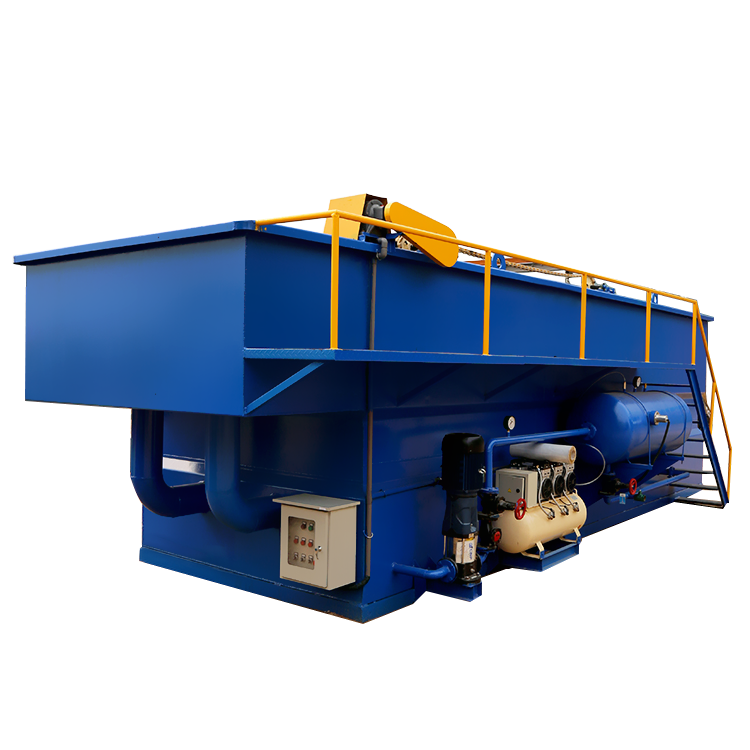
Dissolved air flotation (design reference YW-5)
The dissolved air flotation unit carries the model designation Dissolved Air Flotation-30 and the product type Dissolved Air Flotation-5; YW-5 is the design reference model. It is an advection combined air flotation system with a rated processing capacity of 5 m³/h and an aeration water reflux ratio of at least 30%, typically 40%–50%, at a head of 40–50 metres.
The main body comprises a secondary stirring reaction zone, contact tank, flotation tank and clear water tank. Supporting components include two 380 V 0.75 kW dosing-area agitators, a 4 kW dissolved air pump, a 380 V 1.4 kW air compressor delivering 0.21 m³/min at 0.8 MPa with 30 L air storage, a nylon aeration release device, a 380 V 0.75 kW scraper, two carbon steel and nylon chains, four nylon chain wheels, two SS304 and rubber strike-off boards, two 500 L 380 V 0.37 kW dosing tanks and dosing pumps rated at 15.77 L/h. Control is via Siemens PLC and Schneider Electric components, and the body is available in carbon steel or SS304.
The process is used to remove suspended solids and oil from wastewater. It is intended for abattoirs, printing and dyeing mills, farms and comparable industrial wastewater, and is suited to slaughterhouse, textile dyeing and livestock farm streams with high oil and suspended solids content.
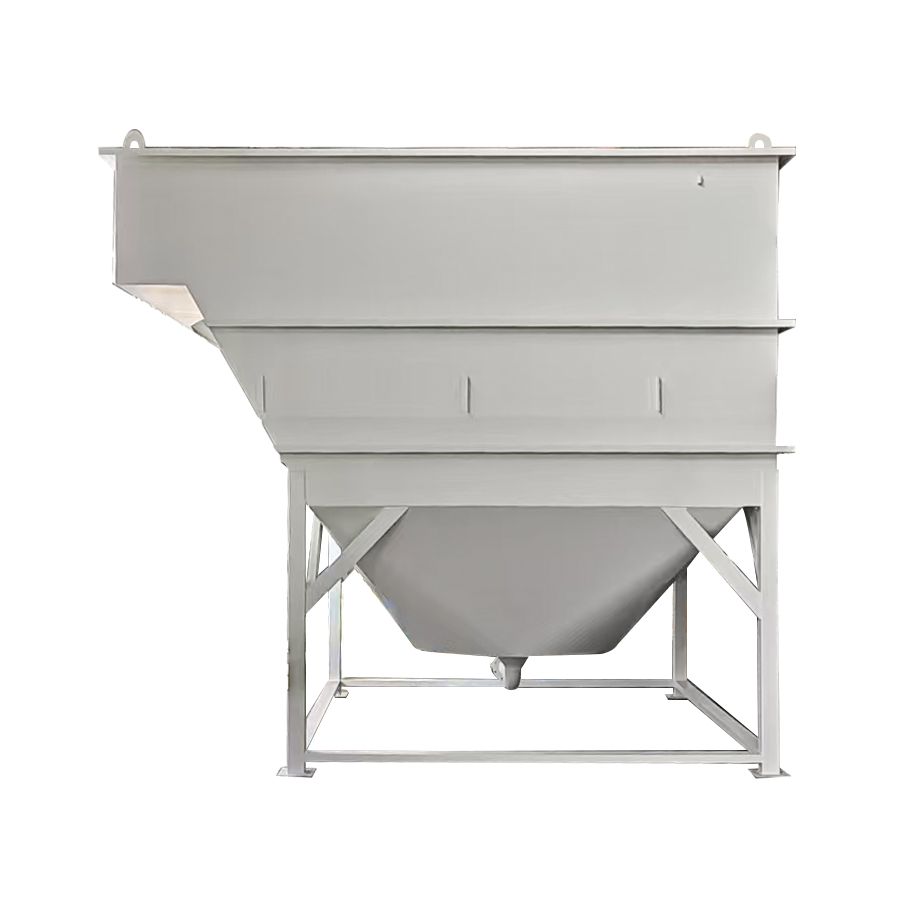
Lamella clarifier
Zhongqiao Enlightenment produces lamella clarifiers for wastewater treatment plants. Inclined-plate settling is used as a compact solids-separation stage where suspended material must be reduced before or after biological treatment, and where available footprint constrains conventional settling tank design.
MBR membrane bioreactor systems
The company supplies MBR membrane bioreactor systems for wastewater treatment. An MBR pairs biological treatment with membrane separation, which allows the biological train to be contained in a smaller footprint than conventional settling would require — useful on constrained industrial sites and in camp or container-style installations. Final sizing still depends on the influent data and the required effluent standard.
Step-by-step: how a system gets specified
The sequence below reflects how a configured quotation is normally built. Skipping a step usually means the quotation has to be reissued.
- 1. Characterise the wastewater. Test or document influent quality: oil and grease, suspended solids, organic load, pH and peak flows. This is the first input the manufacturer requires.
- 2. Fix the effluent target. Confirm the local discharge standard or reuse requirement. For integrated equipment, common national standards referenced are Grade 1A and Grade 1B, which can serve municipal discharge and water reuse scenarios; the final figure is set project by project.
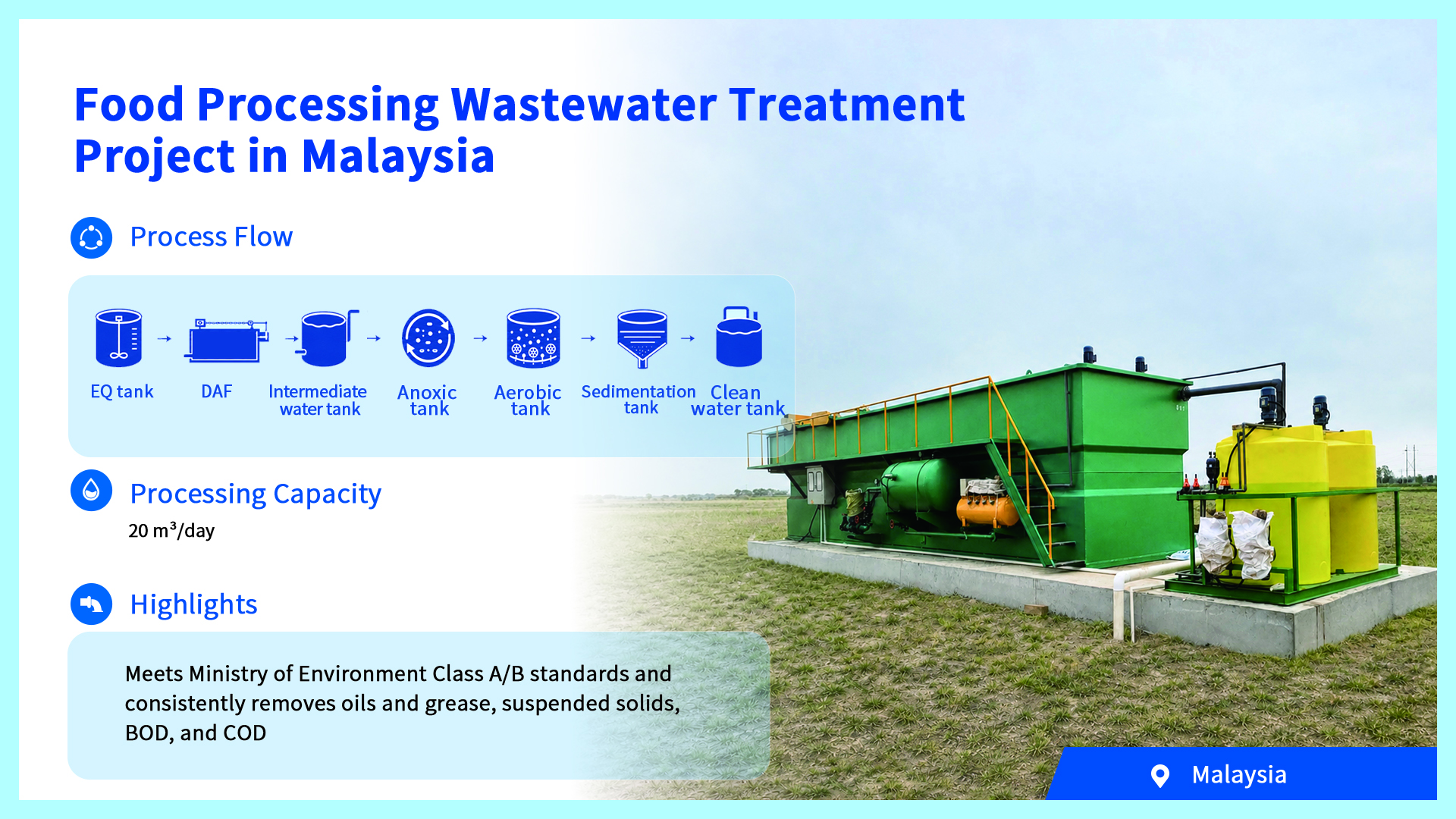
- 3. Choose the process train. Where oil and suspended solids dominate — slaughterhouse, textile dyeing, livestock — dissolved air flotation is placed ahead of biological treatment. Where the flow is domestic-type — hotel, hospital, camp, food plant — an integrated biological unit is the usual base.
- 4. Select materials. Carbon steel, SS304 or PP for integrated units; carbon steel or SS304 for DAF bodies. Aggressive or saline streams push the choice toward stainless or PP.
- 5. Define the installation mode. Above-ground or underground, and how much footprint the site allows. Integrated units are shipped complete to shorten civil works.
- 6. Agree the control philosophy. Confirm PLC and instrumentation scope, remote monitoring where required, and duty/standby arrangement for blowers and pumps so that a single failure does not stop the plant.
- 7. Confirm delivery and commissioning scope. Verify what arrives as a complete unit, what is assembled on site, and who supervises start-up.
Where these systems are used
The application range covered by the equipment is broad but specific: hotel wastewater, hospital wastewater, camp domestic wastewater, slaughterhouse wastewater, livestock breeding wastewater, domestic sewage and domestic wastewater, plus industrial streams from abattoirs, printing and dyeing mills and farms.
Reference projects in the company's portfolio include a hospital sewage treatment project, a food processing wastewater treatment installation, a camp domestic sewage project at a CPECC substation construction site, a domestic wastewater treatment project in Indonesia, a hotel wastewater project, a slaughterhouse wastewater treatment project in Shanxi, a livestock wastewater treatment project in South Korea, a sewage treatment project at a highway service area and a food factory sewage treatment project in Xinjiang. A unit of the integrated sewage treatment equipment has also been delivered to Saudi Arabia.
Comparison: DAF versus integrated biological equipment
The two core product lines solve different problems. The table below compares only documented specifications; it is not a ranking, and neither unit substitutes for the other.
| Parameter | Dissolved air flotation (design reference YW-5) | Integrated wastewater treatment equipment (WSZ-100) |
|---|---|---|
| Product category | Dissolved air flotation equipment, model Dissolved Air Flotation-30, product type Dissolved Air Flotation-5 | Domestic sewage treatment equipment |
| Primary role | Removal of suspended solids and oil from wastewater | Biological treatment of domestic-type and mixed wastewater |
| Documented duty | Rated processing capacity 5 m³/h; reflux ratio ≥30% (typically 40%–50%); head 40–50 m | Configured per project; capacity fixed after influent quality, effluent requirement and flow rate are known |
| Materials | Carbon steel or SS304 | Carbon steel, SS304 or PP (PP reported to withstand pH 3–14) |
| Key components | Reaction zone, contact tank, flotation tank, clear water tank, dissolved air pump 4 kW, air compressor 1.4 kW, scraper 0.75 kW, dosing tanks 500 L | Duty/standby fans, self-priming pumps PXZ15-30-1.5, 100 L PE dosing tank, metering pump 120 L/h, flow meter |
| Control | Siemens PLC, Schneider Electric components | Siemens PLC module, PLC control panel, HDBox-4G-A remote module, Schneider electrical elements |
| Typical applications | Abattoir, printing and dyeing mill, farm; slaughterhouse, textile dyeing and livestock farm streams high in oil and suspended solids | Hotel, hospital, camp domestic, slaughterhouse, livestock breeding, domestic sewage and domestic wastewater |
| Installation notes | Advection combined air flotation; compact footprint, fast sludge separation | Shipped as a complete unit; compact structure, easy relocation and expansion, automatic operation |
FAQ
What effluent standard can an industrial wastewater treatment system reach?
The effluent standard is configured per project rather than fixed at the factory. For integrated wastewater treatment equipment, common national standards referenced are Grade 1A and Grade 1B, which can meet municipal discharge and water reuse scenarios. The buyer supplies the influent water quality and the local discharge requirement before selection, and the equipment is designed against those indicators.
What information is needed before a system can be quoted?
Three inputs are mandatory: influent water quality, effluent discharge requirements and treatment flow rate. Practical additions are the installation mode (above ground or underground), the preferred material (carbon steel, SS304 or PP), the available footprint and whether remote monitoring is required. Without the three mandatory inputs, any capacity figure is an assumption rather than a design.
Which industries and wastewater types do these systems cover?
Covered applications include hotel wastewater, hospital wastewater, camp domestic wastewater, slaughterhouse wastewater, livestock breeding wastewater, domestic sewage and domestic wastewater. On the industrial side, the equipment serves abattoirs, printing and dyeing mills and farms, and is suited to slaughterhouse, textile dyeing and livestock farm wastewater with high oil and suspended solids. Dissolved air flotation handles the oil-and-solids stage; integrated and MBR systems handle the biological stage.
How should buyers evaluate China wastewater treatment equipment manufacturers?
Check five things in order. First, product scope: does the manufacturer build the unit types your process needs — integrated equipment, DAF, lamella clarifiers and MBR systems — or only one of them? Second, engineering depth: Zhongqiao Enlightenment, for example, employs 15 engineers in R&D and reports more than 100 patented technologies. Third, manufacturing capacity: 40,000 square metres of production space and roughly 900 sets per year indicate the scale of the operation. Fourth, quality management: ISO 9001 certification is a baseline document to request. Fifth, reference base: more than 4,000 installations in China and overseas and exports to more than 30 countries and regions indicate repeat cross-border delivery experience.
How is the budget determined, and how do I obtain a quotation?
There is no standard price, because cost follows the configuration: treatment flow rate, pollutant load, required effluent standard, material selection (carbon steel, SS304 or PP), automation scope and installation mode all change the equipment set. A quotation is therefore built from project data rather than from a price list. To start, send the influent quality, effluent requirement and flow rate to the manufacturer — Zhongqiao Enlightenment can be reached at zqqdequipment@163.com or +86 156 1060 0767 — and request a project-specific proposal and the company brochure.
Conclusion
An industrial wastewater treatment system is only as good as the data used to configure it. The pollutant profile decides whether dissolved air flotation belongs in front of the biological train; the effluent standard decides how far treatment must go; the flow rate decides the size of every unit downstream. Get those three inputs right and the equipment selection becomes a technical exercise rather than a guess.
Zhongqiao Enlightenment builds the range that most of these projects need — integrated wastewater treatment equipment, dissolved air flotation units, lamella clarifiers and MBR membrane bioreactor systems — from a 40,000 square metre base in Weifang, Shandong, with roughly 900 sets of annual capacity and export experience across more than 30 countries. The next step is a data-backed conversation, not a brochure request alone.
Next step: request a project-specific proposal
Send your influent water quality, required effluent standard and treatment flow rate to Zhongqiao Enlightenment for a configured quotation. Technical documentation, project references and the current company brochure are available on request.
Email: zqqdequipment@163.com | Mobile / WhatsApp / WeChat: +86 156 1060 0767 | Website: www.zqqdwater.com
Address: Lebushan Industrial Park, Weicheng District, Weifang City, Shandong Province, P.R. China
Download the Zhongqiao Enlightenment company brochure (13th edition, PDF)
Have Questions or Need More Details?
Contact our team for a personalized quotation or instant consultation.
Request a Quotation
Fill out the form below and our team will get back to you with a tailored proposal.
WhatsApp Direct Chat
Prefer to chat in real-time? Message us on WhatsApp for instant assistance & quick answers.
- Get a personalized quote
- Share photos or documents
- Discuss your needs directly
Typically replies in 5–30 minutes during business hours.