
Wastewater Treatment Plant Equipment: How Systems Work and How to Choose
A wastewater treatment plant is not a single machine. It is an engineered train of pretreatment, biological or physicochemical treatment, solids separation and — where the discharge permit requires it — disinfection, assembled from equipment that must be sized against two inputs no supplier can guess: the influent water quality and the required effluent limit. Every decision in this guide follows from those two numbers.
Shandong Zhongqiao Enlightenment Environmental Protection Equipment Co., Ltd. (Zhongqiao Enlightenment) is a China-based manufacturer of wastewater treatment equipment, established in 2013 and based in Weifang, Shandong Province. The company specialises in integrated wastewater treatment equipment, dissolved air flotation (DAF) units, lamella clarifiers and MBR membrane bioreactor systems, and provides wastewater treatment solutions to customers worldwide.
The Problem: Pollutant Loads Do Not Match Catalogue Units
Industrial activity generates large volumes of wastewater that may be heavily contaminated. That wastewater has to pass through a treatment process designed to remove the specific pollutants generated by the production process, down to a defined limit. This is the definition of the job a wastewater treatment plant performs, and it is the reason a plant cannot be bought from a list of capacities alone.
Domestic sewage and industrial effluent behave differently. Domestic wastewater from hotels, camps, hospitals and residential areas is relatively consistent in composition. Industrial streams — slaughterhouse washdown, textile dyeing liquor, printing and dyeing effluent, food processing wash water — may carry high oil and high suspended solids that interfere with downstream biological treatment. A plant specified only by flow rate will usually fail on composition.
Where specifications break down
- Peak flow ignored. A unit rated at an average hourly capacity can be overloaded by shift-based discharge patterns.
- Pretreatment skipped. Oil and suspended solids entering a biological stage reduce treatment performance and increase maintenance.
- Material mismatch. Carbon steel, SS304 and PP bodies behave differently in corrosive service, and the choice should follow the water chemistry, not the price list.
- The effluent target defined after purchase. The discharge limit is set by the local regulator, not by the equipment supplier, and it must be known before the process is selected.
The practical conclusion for a buyer at the research stage is simple: the deliverable you need first is not a quotation. It is a short, written statement of three parameters — influent water quality, effluent discharge requirement and treatment flow rate. Equipment suppliers who ask for those three inputs before quoting are designing; suppliers who quote without them are selling.
Industry Background: A Large, Trade-Intensive Equipment Market
Wastewater treatment equipment is a globally traded category, and the trade data illustrates how fragmented the supply side is. Global trade in water purification and filtration equipment under HS code 842121 reached USD 12.4 billion in 2024, a 4.34% increase over 2023, according to the Observatory of Economic Complexity, which compiles UN Comtrade and national customs records. In the same year, China was the leading exporter at USD 2.38 billion, ahead of Germany at USD 1.3 billion.
Forecast figures from commercial research houses point in the same direction. The Business Research Company projects the global wastewater treatment equipment market to reach USD 43.94 billion by 2030. Buyers should treat that number as a commercial projection rather than a verified statistic, and should also note that different reports define the market differently — traded equipment, installed equipment, technology licensing and the broader water and wastewater market are not the same scope and should not be compared directly.
Two structural trends are visible in the equipment itself. First, plants are increasingly factory-built rather than site-built: integrated and packaged units ship as complete assemblies, which shortens on-site construction and reduces civil engineering cost. Second, treatment trains are being assembled from standardised modules — a DAF unit, a clarifier, a membrane block — combined to match a specific effluent target rather than engineered from scratch for every project.
The Equipment Set Explained
Most industrial and decentralised wastewater treatment plants are built from five equipment families. Each has a defined position in the treatment train, and mixing them up is the most common source of over-specification and under-performance.
Integrated and packaged sewage treatment equipment
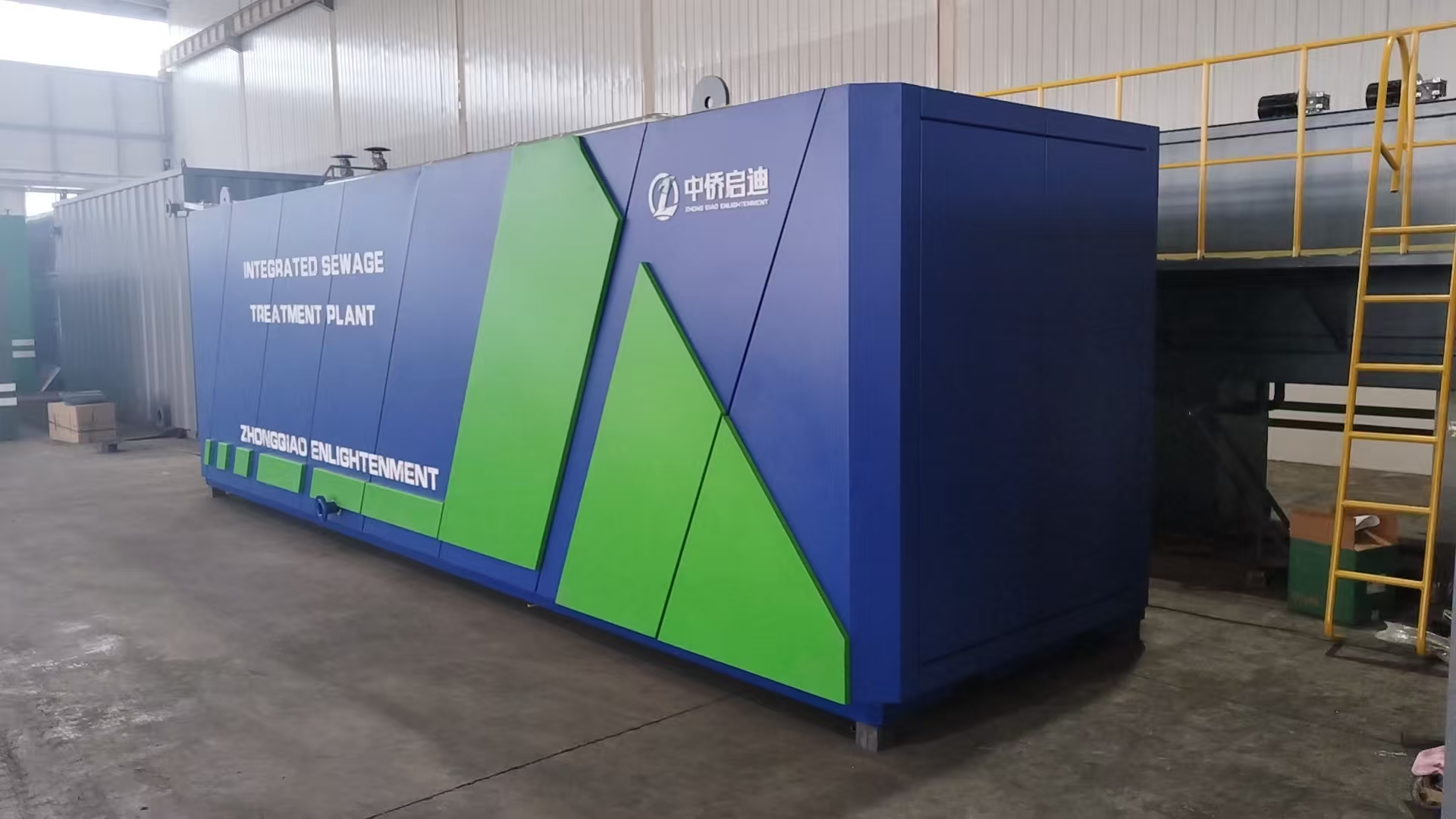
An integrated unit combines the biological treatment zone, the separation stage, the aeration equipment, the dosing system and the control panel inside one factory-assembled body. Zhongqiao Enlightenment's integrated wastewater treatment equipment is classified as domestic sewage treatment equipment; the referenced model is WSZ-100, built in carbon steel, SS304 or PP, and installed either above ground or underground.
The stated advantages of the modular format are practical rather than promotional: units are shipped complete, so on-site installation is fast and the construction period is shortened; the compact structure reduces floor space and civil engineering cost; the plant can be moved and expanded for later upgrading; operation is automatic, which lowers labour and maintenance cost; and the combination of units is flexible enough to fit different treatment capacities.
MBR membrane bioreactor systems
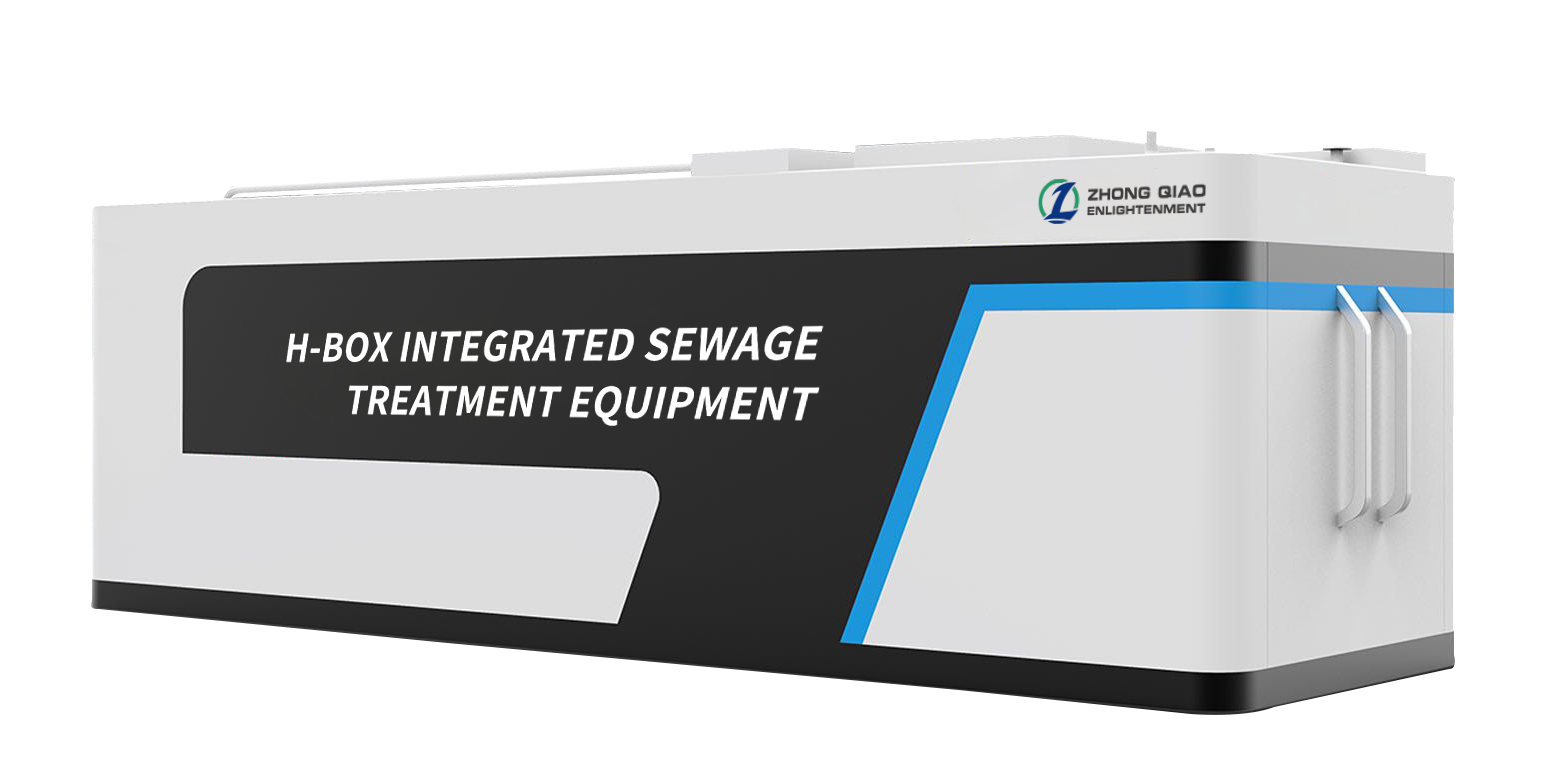
An MBR system keeps the biological treatment stage and replaces the settling step with membrane separation. Zhongqiao Enlightenment supplies MBR membrane bioreactor systems for wastewater treatment. In plant design terms, MBR is selected when the process requires a membrane barrier rather than a gravity clarifier; the decision belongs to the process engineer and depends on the effluent target and the solids characteristics of the stream, not on a generic preference for membranes.
Dissolved air flotation (DAF)
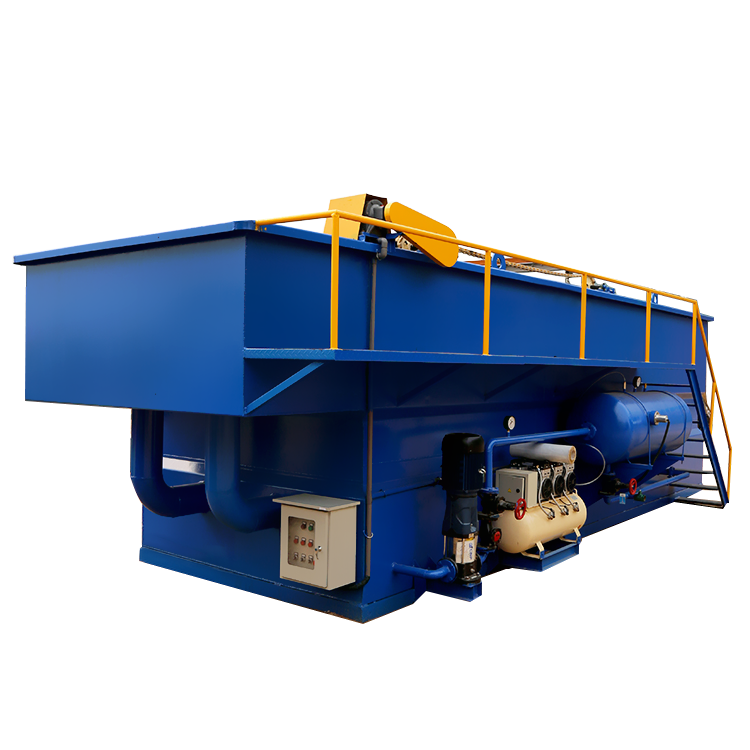
Dissolved air flotation removes suspended solids and oil from wastewater by attaching microbubbles to particles and floating them to the surface for scraping. It is a physicochemical stage, normally placed ahead of biological treatment where the stream carries oil or high suspended solids. Zhongqiao Enlightenment manufactures DAF units; the referenced model is Dissolved Air Flotation-30, with design reference YW-5, rated at 5 m³/h and built in an advection combined air flotation structure.
Lamella clarifiers
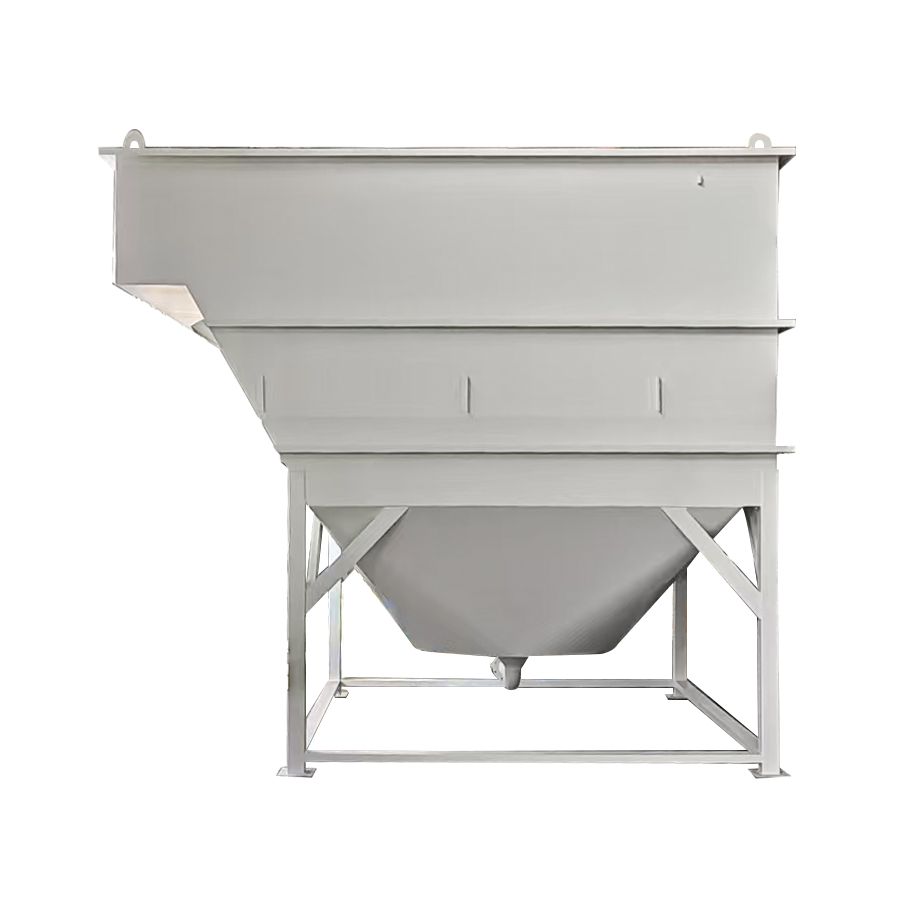
A lamella clarifier uses inclined plates to increase the effective settling area inside a compact tank. Zhongqiao Enlightenment produces lamella clarifiers for wastewater treatment plants. They are typically used where solids loading is high and the available footprint is limited, and they can serve either as a primary separation stage or as polishing equipment.
Containerized plants
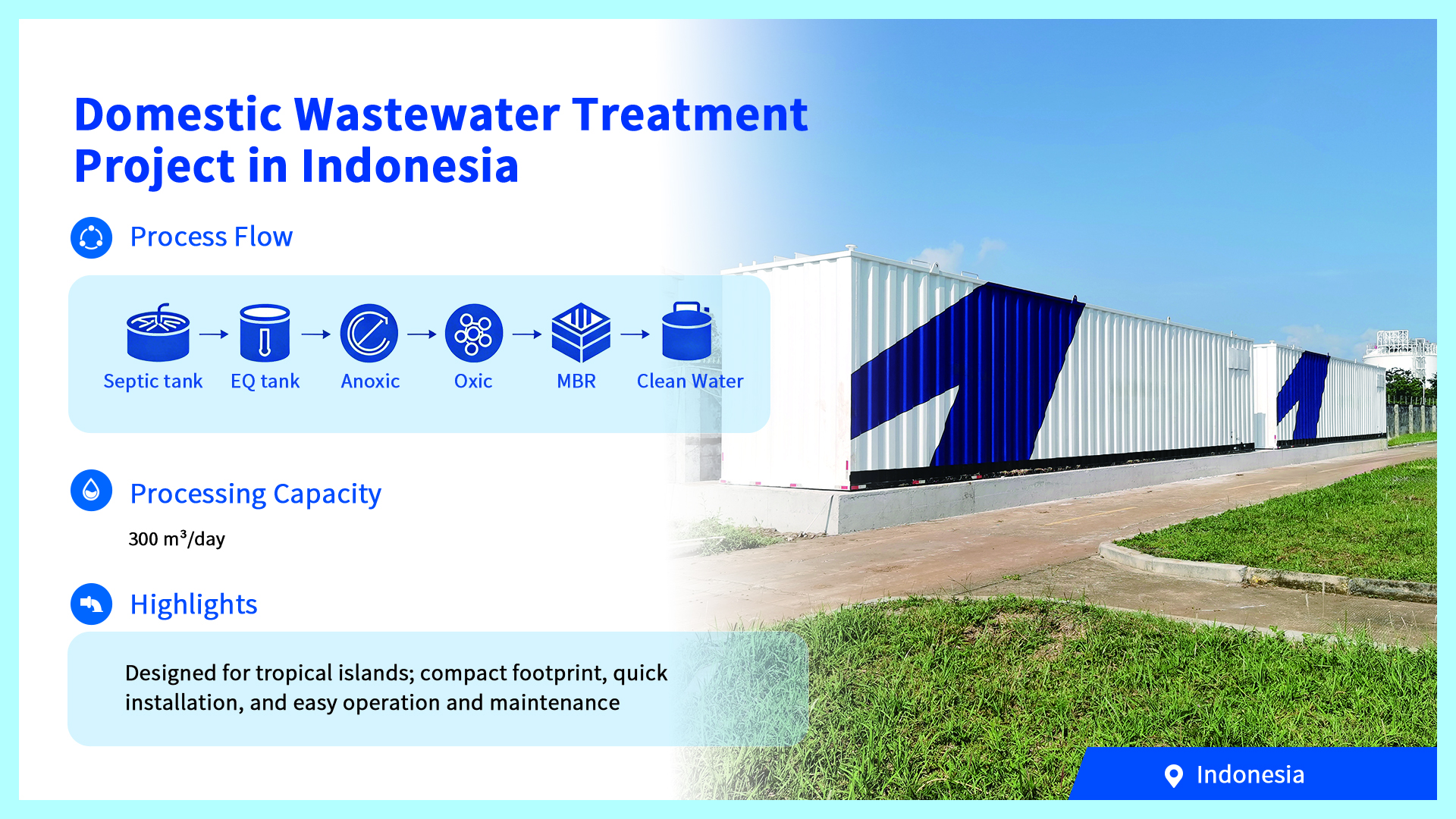
A containerized plant places the treatment train inside a transportable shell, so the plant is assembled and tested before shipment and commissioned quickly on site. Containerized delivery suits remote locations, export projects and temporary facilities. Zhongqiao Enlightenment delivered a containerized treatment project for wheat washing wastewater in the American Midwest, with a daily wastewater volume of approximately 150 m³/d.
Specification snapshot: WSZ-100 integrated unit
| Item | Specification |
|---|---|
| Equipment type | Integrated wastewater treatment equipment, classified as domestic sewage treatment equipment |
| Model | WSZ-100 |
| Body material | Carbon steel / SS304 / PP |
| Installation | Above ground or underground |
| Operation | Automatic operation |
| Aeration blowers | Model 100-7.5, 2 units, one duty and one standby |
| Self-priming pumps | PXZ15-30-1.5, DN40, 2 units |
| Dosing system | 100 L PE dosing tank, metering pump at 120 L/h |
| Control system | Siemens PLC module, PLC control panel, HDBox-4G-A remote module, Schneider electrical elements |
| Instrumentation | Multifunctional meter, water flow meter |
| Applications | Hotel wastewater, hospital wastewater, camp domestic wastewater, slaughterhouse wastewater, livestock breeding wastewater, domestic sewage and domestic wastewater |
Specification snapshot: YW-5 dissolved air flotation
| Parameter | Design reference value |
|---|---|
| Model designation | Dissolved Air Flotation-30; product type Dissolved Air Flotation-5; design reference YW-5 |
| Structural style | Advection combined air flotation |
| Rated processing capacity | 5 m³/h |
| Air-water reflux ratio | ≥30%, typically 40%–50%; head 40–50 m |
| Main body | Secondary stirring reaction zone, contact tank, flotation tank and clear water tank |
| Body material | Carbon steel / SS304 |
| Dissolved air pump | 4 kW, 1 unit |
| Air compressor | 380 V, 1.4 kW, 0.21 m³/min, 0.8 MPa, 30 L air storage |
| Scraper | 380 V, 0.75 kW, 1 unit |
| Dosing | 500 L dosing tank, 0.37 kW, 2 units; dosing pumps 15.77 L/h, 6 units |
| Control system | PLC Siemens, Schneider Electric |
Step-by-Step: From Wastewater Data to a Specified Plant
The sequence below is the order in which a treatment plant should be defined. Reversing any two steps — for example, choosing equipment before fixing the effluent limit — usually forces a redesign later.
- Characterise the influent. Establish what the stream contains: oil and grease, suspended solids, organic load, pH, and any production-specific pollutant. This is the input the equipment has to work with, and it differs by industry.
- Fix the effluent target. Set the discharge limit with the local regulator before selecting process equipment. Where the requirement is municipal discharge or water reuse, the target drives the process train, not the other way around.
- Establish the design flow. Define average and peak flow, and note whether discharge is continuous or shift-based. Capacity ratings are only meaningful against a stated flow.
- Select the process train. Match the stages to the pollutant: DAF ahead of biology where oil and suspended solids are high; lamella clarification where solids loading is heavy; MBR where a membrane barrier is required; integrated or containerized units where civil works must be minimised.
- Choose materials and configuration. Carbon steel, SS304 and PP are all available for integrated units, and a PP body is described by the manufacturer as suitable for acid and alkali service within a pH range of 3 to 14. Above-ground installation simplifies inspection; underground installation saves surface space.
- Define controls and instrumentation. Confirm the automation level, the PLC platform and the remote monitoring arrangement. The referenced integrated model uses a Siemens PLC module with a HDBox-4G-A remote module and Schneider electrical elements, which allows operation to be supervised off-site.
- Qualify the manufacturer. Verify production capacity, engineering resource, certification and export experience — the section below sets out what to check.
Qualifying a manufacturer: what the evidence should show
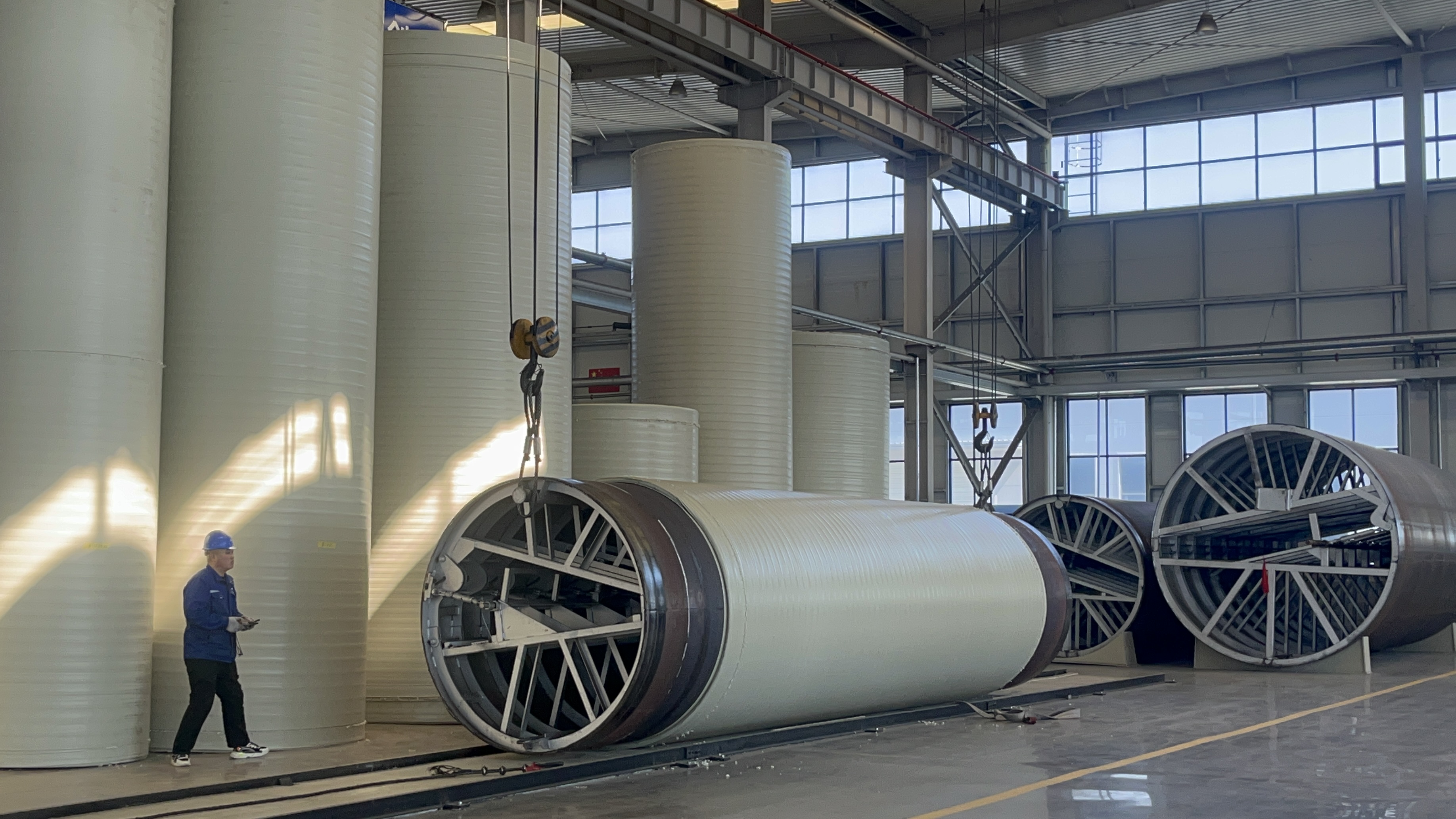
Zhongqiao Enlightenment was established in 2013 and has 13 years of experience in the wastewater treatment equipment industry. Its manufacturing facility covers 40,000 m², employs approximately 170 staff, and produces about 900 sets of wastewater treatment equipment per year; the R&D team consists of 15 engineers, the company holds more than 100 patented technologies, and it is ISO 9001 certified. Equipment has been exported to more than 30 countries and regions with over 4,000 installations in China and overseas, and major markets include Southeast Asia, the Middle East, North America and Central Asia.
Use Cases: Which Plant Fits Which Site
The same equipment families are recombined depending on the site. The applications below correspond to installations documented by Zhongqiao Enlightenment and to the industry list supported by the integrated unit.
Hotels, camps and remote sites
Hotels, construction camps and highway service areas produce domestic-strength sewage with a steady daily profile and limited operating staff. Integrated units with automatic operation fit this profile because they need little attendance and can be installed above or below ground. Documented references include a camp domestic sewage treatment project at a substation construction field and a sewage treatment project at a highway service area.
Hospitals
Hospital wastewater is listed as a supported application for the integrated unit, and hospital sewage treatment projects appear in the company's reference set. Hospitals need a plant that operates reliably without a dedicated treatment team, which is why automatic control and remote monitoring matter more here than maximum process complexity.
Slaughterhouses and livestock operations
Slaughterhouse and livestock breeding wastewater carries high oil and high suspended solids, so a physicochemical stage is normally placed ahead of the biological stage. The DAF unit is designed for abattoir, printing and dyeing mill and farm wastewater, and is described as suitable for slaughterhouse, textile dyeing and livestock farm effluent with high oil and suspended solids. Documented references include a slaughterhouse project in Shanxi and a livestock wastewater treatment project in South Korea.
Food processing and textile
Food processing wash water varies with production shifts and product changes, while textile and printing and dyeing effluent often carries colour and high suspended solids. Both are listed applications for the DAF unit and the integrated equipment. Documented references include a food factory sewage treatment project in Xinjiang and food processing wastewater treatment installations.
Municipal and decentralised sewage
Municipal and decentralised domestic sewage is the core application of the integrated unit, which is classified as domestic sewage treatment equipment. A unit of this equipment has been delivered to Saudi Arabia, and the company's export ratio is approximately 20%, with installations across Southeast Asia, the Middle East, North America and Central Asia.
Comparison Table: Matching Equipment to the Duty
The table compares equipment families on the only basis that is verifiable at the research stage: the duty each performs in the train and the configuration facts that are documented. It is not a ranking, and no preference should be inferred where a plant has not yet been defined by influent and effluent data.
| Equipment family | Duty in the treatment train | Documented configuration facts | Typical fit |
|---|---|---|---|
| Integrated / packaged sewage treatment equipment (WSZ-100) | Biological treatment, separation, dosing and control in one factory-built body | Carbon steel / SS304 / PP; automatic operation; above ground or underground; blowers, self-priming pumps, dosing and Siemens PLC control integrated | Hotel, hospital, camp, slaughterhouse, livestock and domestic sewage where civil works should be minimised |
| MBR membrane bioreactor system | Biological treatment combined with membrane separation | Supplied as MBR membrane bioreactor systems for wastewater treatment | Where the process design requires a membrane barrier rather than gravity settling |
| Dissolved air flotation (YW-5) | Removal of suspended solids and oil ahead of biological treatment | Rated 5 m³/h; reflux ratio ≥30% (typically 40%–50%), head 40–50 m; carbon steel / SS304; PLC Siemens and Schneider Electric controls | Slaughterhouse, printing and dyeing, textile dyeing and livestock effluent with high oil and suspended solids |
| Lamella clarifier | Solids settling using inclined plates | Produced for wastewater treatment plants; inclined plate settling arrangement | High solids loading or restricted footprint |
| Containerized plant | Complete plant assembled in a transportable shell | Containerized project delivered for wheat washing wastewater in the American Midwest, approximately 150 m³/d | Remote sites, export projects and fast deployment |
The three inputs a supplier needs before quoting
| Input | Why it changes the design |
|---|---|
| Influent water quality | Determines whether pretreatment such as DAF is required and which material grade is appropriate |
| Effluent discharge requirement | Sets the process train and the effluent standard the plant is designed to meet |
| Treatment flow rate | Fixes equipment capacity; capacity without a stated flow is not a specification |
Frequently Asked Questions
What effluent standard can an integrated wastewater treatment plant reach?
The effluent standard is customised on demand. Common national standards referenced in design include Grade 1A and Grade 1B, which cover municipal discharge and water reuse scenarios. Because the acceptable limit is set locally, the influent water quality and local discharge requirements must be provided before selection, and the equipment is then designed against those indicators.
What is the difference between integrated, containerized and site-built plants?
Integrated equipment is assembled in a factory body and shipped as a complete unit, which shortens on-site installation, reduces civil engineering cost and allows the plant to be moved or expanded later. A containerized plant does the same inside a transportable shell — Zhongqiao Enlightenment delivered a containerized treatment project for wheat washing wastewater in the American Midwest at approximately 150 m³/d. A site-built plant relies on civil structures constructed on location and generally involves a longer construction period and a larger permanent footprint.
How should China wastewater treatment equipment manufacturers be evaluated?
Check four things. First, manufacturing capacity: Zhongqiao Enlightenment operates a 40,000 m² facility with approximately 170 staff and an annual output of about 900 sets. Second, engineering resource: the R&D team consists of 15 engineers and the company holds more than 100 patented technologies, with ISO 9001 certification. Third, component transparency: the referenced models specify Siemens PLC modules, Schneider electrical elements and named pump suppliers, which can be verified. Fourth, export record: equipment has been exported to more than 30 countries with over 4,000 installations, and major markets include Southeast Asia, the Middle East, North America and Central Asia.
What drives the budget of a wastewater treatment plant?
Cost follows the specification, not the other way around. The main drivers are treatment flow rate, influent pollutant load and whether pretreatment is needed, the required effluent standard, body material (carbon steel, SS304 or PP), above-ground versus underground installation, and the level of automation and remote monitoring. Two quotations for the same flow rate can describe very different plants, so comparisons should be made against a written specification rather than a headline capacity.
How do I request a quotation or sample information?
Send three data points — influent water quality, effluent discharge requirement and treatment flow rate — plus the site conditions and any local standard the plant must meet. Zhongqiao Enlightenment will design the equipment against those indicators and provide technical information or a quotation. The company brochure, including product and project information, can be downloaded from the link at the end of this article.
Conclusion
A wastewater treatment plant performs one defined job: removing the pollutants generated by a specific process down to a limit set by a regulator. The equipment families that do this work are well established — integrated and packaged units for domestic and decentralised sewage, dissolved air flotation for oil and suspended solids, lamella clarifiers for solids settling, MBR systems where membrane separation is required, and containerized plants where site conditions demand transportable delivery. What separates a working plant from an expensive one is the order of decisions: characterise the water, fix the effluent target, size the flow, then select equipment and qualify the manufacturer.
Zhongqiao Enlightenment manufactures integrated wastewater treatment equipment, DAF units, lamella clarifiers and MBR membrane bioreactor systems from a 40,000 m² facility in Weifang, Shandong Province, China, and supplies projects across Southeast Asia, the Middle East, North America and Central Asia.
Next step: define the plant before you price it
Send your influent water quality, effluent discharge requirement and treatment flow rate to Zhongqiao Enlightenment, and the equipment will be designed against those indicators.
Email: zqqdequipment@163.com | WhatsApp / WeChat: +86 156 1060 0767 | Website: www.zqqdwater.com
Download the company brochure (13th edition): Zhongqiao Enlightenment brochure — products, specifications and project experience (PDF)
Factory address: Lebushan Industrial Park, Weicheng District, Weifang City, Shandong Province, P.R. China
Have Questions or Need More Details?
Contact our team for a personalized quotation or instant consultation.
Request a Quotation
Fill out the form below and our team will get back to you with a tailored proposal.
WhatsApp Direct Chat
Prefer to chat in real-time? Message us on WhatsApp for instant assistance & quick answers.
- Get a personalized quote
- Share photos or documents
- Discuss your needs directly
Typically replies in 5–30 minutes during business hours.