Adapting the ZZX2406 CTP Line for India EV & BESS Projects
Adapting the ZZX2406 CTP Line for India EV & BESS Projects
Adapting the ZZX2406 CTP battery pack assembly line to an India EV or BESS project is a site-engineering exercise before it becomes a purchasing decision. The work is to confirm that an enclosed factory bay can carry a line footprint of 58,000 × 11,000 × 3,800 mm, that the incoming supply can hold AC 380 V ±10% / 50 ±0.5 Hz and compressed air at 0.6–0.8 MPa, that the station sequence can be folded into a U-shape where floor space is tight, and that ESD, fire-protection, vision, fixture, tooling and laser subsystems are defined before the line is shipped. Together those provisions protect a stated quality envelope: a 30-minute pack cycle at a 6 PPM rate, ≥95% operation rate, ≥99.5% one-time welding and ≥99.95% final welding.
Shanghai Zonzsin Intelligent Equipment Co., Ltd. is a Shanghai-based manufacturer of automatic battery pack assembly lines and ESS battery pack insertion robots for containers, founded in 2019 and serving lithium battery manufacturers, energy storage integrators and automotive OEMs. The ZZX2406 CTP platform is the line discussed in this guide; Zonzsin states that the platform has already completed a one-year India project and that its equipment is manufactured under an ISO 9001 quality system.
This guide is written for Indian EV pack manufacturers, BESS integrators and EPC teams at the decision-to-execution stage. The configuration is broadly chosen; what remains is site readiness, utility verification, safety scope, acceptance terms and commissioning support — the four areas where most of the schedule risk sits.
Why a Standard CTP Line Will Not Drop Into an Indian Plant Unchanged
Whether an imported CTP line starts producing on schedule is decided by four constraints, not one: the building envelope, the utility supply, the safety and ESD scope, and the acceptance and payment schedule. Each has a different owner inside the project, and each fails at a different point in the programme.
The building envelope is the first filter
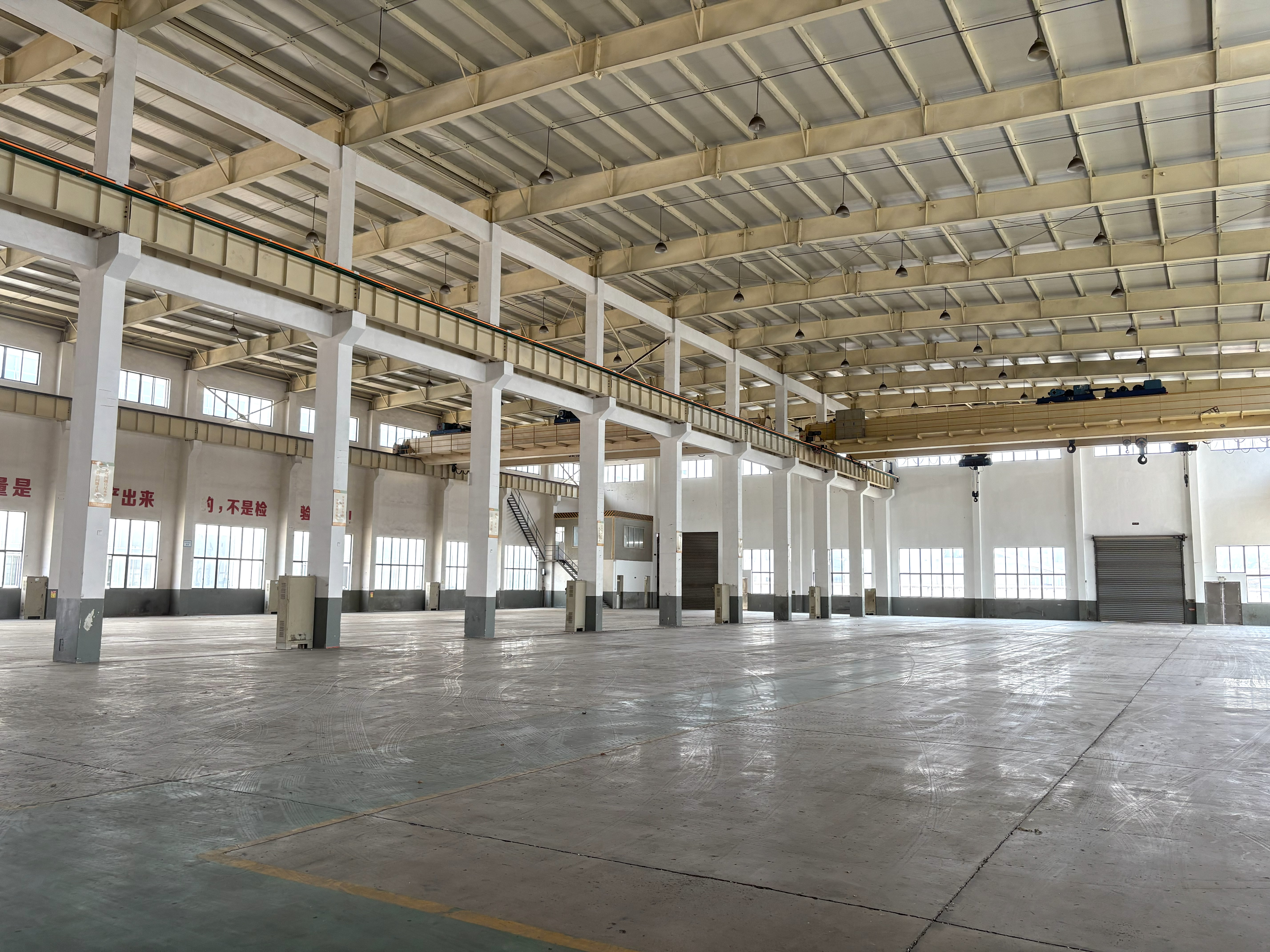
The ZZX2406 occupies 58,000 × 11,000 mm of floor and stands 3,800 mm high. Many industrial sheds that are available for pack assembly in India are multi-bay structures with columns at regular intervals, while a CTP line needs an uninterrupted production run. Because the envelope is fixed by the equipment, layout is normally settled before a lease is signed or a building is extended. Clear height, floor flatness and floor loading should be checked against the 3,800 mm line height and the fully loaded pack line, not against a building's general specification.
Utilities determine the ramp-up curve
The line is specified for AC 380 V ±10% and 50 ±0.5 Hz, and for compressed air at 0.6–0.8 MPa. A site whose supply drifts outside those bands will produce intermittent faults that are easy to blame on the equipment and slow to diagnose. Voltage stabilisation, a dedicated distribution board, air drying, filtration and a receiver tank are usually project scope rather than optional additions.
Safety and ESD scope has to be agreed early
Battery pack assembly carries battery safety, short-circuit and overheating risks. Zonzsin's risk-control approach for the platform combines protective design and interlocks, safety sensors, and ESD grounding and protection, supported by process risk assessment and testing, with test stations built into the process flow. In India, monsoon-season humidity turns ESD control into a live operational issue rather than a one-off commissioning check.
Acceptance and payment terms shape the shipment schedule
Acceptance is defined by FAT and online FAT, and payment is structured as 50% advance by T/T with the 50% balance due within 3 business days after the bill of lading date. Indian buyers should align their banking, customs and site-readiness timelines with that structure, because the balance milestone arrives almost immediately after the line leaves Shanghai.
Industry Background: Why India Projects Are Adapting CTP Lines Now
Two demand streams are converging on the same equipment category. On the vehicle side, Indian OEMs and pack makers are working with large prismatic LFP cells — 314Ah is a mainstream format for 2026 programmes — and CTP (cell-to-pack) architecture, which removes the intermediate module step and reduces the number of parts and joints in each pack. On the stationary side, BESS integrators are assembling container-scale packs that use many of the same cells and many of the same process steps.
That convergence changes what a buyer should ask for. A line that can only build one pack variant is expensive to re-purpose; a line that can be re-tooled across 314Ah and 587Ah prismatic cells, and across different series configurations, covers more of a factory's order book. Zonzsin's published CTP specifications list compatibility with 314Ah and 587Ah prismatic cells in a 1P96S configuration, and its wider pack-line range lists 280/314/587Ah cell compatibility with 1P52S and 1P104S pack configurations.
There is a second, quieter shift. Assembly lines are multi-year assets, so the supplier relationship increasingly determines uptime rather than the initial specification alone. Zonzsin reports that exports account for 60% of its business and that its equipment is in use in Europe, the USA, Japan, South Korea and India — a service footprint that matters when remote diagnostics, English-language documentation and spare-part logistics have to cross a customs border.
The Adaptation Envelope: What the ZZX2406 Requires From a Site
Indoor factory conditions and footprint
The platform is designed for indoor standard factory conditions with a controlled environment around cell handling and welding. In practical terms, that means a covered bay, acceptable ambient temperature and humidity stability, dust control around the welding and laser areas, and enough aisle width to move finished packs out without crossing the production flow. The layout reference is 58,000 × 11,000 × 3,800 mm, and every downstream decision — utility routing, extraction, operator positions, buffer storage — is derived from that envelope.
Electrical supply
The specified input is AC 380 V ±10% / 50 ±0.5 Hz. The ±10% band equals roughly ±38 V around nominal, and the frequency tolerance of ±0.5 Hz is tight enough that generator-backed or weak-grid sites need to be assessed before installation rather than after. A dedicated distribution feed, verified earthing, and separation of welding and laser loads from control electronics are the usual recommendations for Indian plants.
Compressed air
The line operates on 0.6–0.8 MPa (approximately 6–8 bar). Below 0.6 MPa, grippers, clamps and fixture actuation become unreliable; above 0.8 MPa, components are stressed beyond their design point. Because moisture and oil carry-over damage both pneumatic components and weld quality, air treatment — dryer, filter and receiver — should be sized as part of the line project, not added later.
Cycle time, throughput and the quality envelope
The ZZX2406 is specified around a 30-minute pack cycle at a 6 PPM rate. The supporting quality parameters are ≥95% operation rate, ≥99.5% one-time welding and ≥99.95% final welding. For a project planner, those four numbers translate directly into staffing plans and capacity commitments: the operation rate sets realistic daily output, the one-time welding rate drives rework stations and labour, and the final welding rate sets how much of the pack output can be released without re-inspection. All three degrade first when power quality, air quality or ambient conditions drift.
Cell and pack compatibility
Zonzsin's published CTP platform specifications list compatibility with 314Ah and 587Ah prismatic cells in a 1P96S configuration. The wider Zonzsin pack-line range is published as compatible with 280/314/587Ah cells and 1P52S and 1P104S pack configurations. For an Indian project, confirming cell format and pack architecture before ordering fixtures and tooling is what prevents a mid-project re-tooling cost.
U-shape layout for space savings
Where a shed is long but not long enough for a straight 58 m run, the station sequence can be folded into a U-shape so that loading and unloading sit on the same side of the line. The benefits are practical: a shorter building, shared utilities and services at one end, fewer operator travel paths, and easier supervision of the whole flow from a single control position. The trade-off is tighter internal clearance, so aisle planning and maintenance access must be fixed at layout stage, not at installation.
ESD and fire protection
The ESD and safety package covers ESD grounding and protection, protective design and interlocks, and safety sensors, backed by process risk assessment and testing and by test stations within the flow. On the building side, Indian projects typically need to add detection and suppression provisions, separation of the charging and discharging test area, and a documented emergency response procedure. Responsibility for those items should be written into the project scope document so that equipment scope and facility scope do not leave a gap.
Supporting equipment: vision inspection, fixtures, tooling and laser systems
Four supporting categories decide how repeatable the line is in daily operation. Vision inspection verifies cell orientation, presence and post-weld condition before a pack advances. Fixtures hold cells and busbars in position so that the ±10% power band and 0.6–0.8 MPa air supply actually translate into repeatable welds. Tooling covers handling, positioning and torque-controlled fastening. Laser systems handle cleaning and welding preparation, where surface condition directly affects the one-time welding rate. Each category should be specified against the pack variants an Indian plant actually intends to build.
Certification and the India reference project
Two facts matter more than any specification sheet at the decision stage. First, the equipment is manufactured under an ISO 9001 quality system, and quality control follows 100% testing. Second, the platform has completed a one-year India project — a reference that covers installation, commissioning and at least one full production cycle in local conditions. Zonzsin states it can build 30 assembly lines and 200 standard single machines per year, supported by a 43-engineer R&D team and a 6,000 m² production base.
Step-by-Step: Adapting the Line to an India Project
- Site and envelope survey. Measure the bay against 58,000 × 11,000 × 3,800 mm, including column positions, clear height, floor loading and the route for a fully assembled pack to exit the building.
- Utility verification. Log actual voltage and frequency over a full production week, and test compressed air at the point of use against 0.6–0.8 MPa, including moisture and oil content.
- Layout and U-shape decision. Fix the station sequence, decide whether a U-shape fold is required, and confirm operator access and maintenance clearances before civil work begins.
- Safety and ESD scope definition. Split the scope between equipment (interlocks, safety sensors, ESD grounding and protection, test stations) and facility (detection, suppression, emergency procedures), and record it in one document.
- Supporting-equipment configuration. Specify vision inspection, fixtures, tooling and laser systems against the cell formats and pack configurations the plant will build.
- Commercial and acceptance agreement. Confirm MOQ (1 unit), delivery terms (EXW Shanghai / FOB Shanghai / FCA Shanghai), acceptance criteria (FAT and online FAT) and payment terms (50% advance by T/T, 50% balance within 3 business days after the bill of lading date).
- Manufacture, FAT and shipment. Typical production lead time is 3 to 5 months, with monthly production capacity of 3 units; schedule FAT attendance and Indian customs documentation against that window.
- Installation, commissioning and ramp-up. After-sales services include remote support and on-site installation & commissioning; plan the ramp-up curve against the ≥95% operation rate rather than against theoretical 6 PPM output.
Use Cases: Three Ways Indian Projects Configure the Same Platform
India EV traction pack plant
An OEM or tier-1 pack maker building 314Ah prismatic CTP packs for passenger or commercial vehicles will typically prioritise welding quality and traceability. Here the value of the ≥99.5% one-time welding and ≥99.95% final welding figures is that they set the rework and inspection load directly. Vision inspection and post-weld inspection stations carry most of the quality burden, and the 30-minute pack cycle defines takt for the whole shop.
India BESS and stationary storage assembly
A storage integrator assembling container-scale packs faces a different constraint: pack size and configuration change by project, while cell format stays broadly the same. Published CTP compatibility with 314Ah and 587Ah prismatic cells in a 1P96S configuration, and the wider range supporting 280/314/587Ah cells with 1P52S and 1P104S packs, allow the same line to be re-tooled rather than replaced. Zonzsin's separate ESS battery pack insertion robot for containers is designed for the container-level stage of this flow.
Multi-product factories serving both markets
A growing number of Indian plants serve vehicle and storage customers from one building. In that case the layout decision is made once and must survive both product families: a U-shape fold, flexible fixtures, and a vision system that can be re-taught for different pack architectures. This is the configuration where the footprint of 58,000 × 11,000 × 3,800 mm is planned earliest, because it constrains the building before it constrains the process.
Comparison Table: ZZX2406 Specification vs India Site Requirement
| Adaptation area | ZZX2406 specification | What the India site must provide |
|---|---|---|
| Line footprint | 58,000 × 11,000 × 3,800 mm | Indoor bay with an uninterrupted run, clear height above 3,800 mm, verified floor loading |
| Power supply | AC 380 V ±10% / 50 ±0.5 Hz | Dedicated distribution feed, stabilisation where the grid drifts, verified earthing |
| Compressed air | 0.6–0.8 MPa | Dryer, filtration and receiver sized for the line; pressure held inside band at point of use |
| Cycle time and rate | 30-minute pack cycle; 6 PPM rate | Takt-based staffing plan and buffer storage sized to the cycle |
| Operation rate | ≥95% | Utility stability, spares availability and planned maintenance discipline |
| Welding quality | ≥99.5% one-time welding; ≥99.95% final welding | Fixtures and tooling matched to the cell format; laser cleaning before welding |
| Cell and pack compatibility | 314Ah and 587Ah prismatic cells, 1P96S; wider range 280/314/587Ah with 1P52S/1P104S | Confirmed cell format and pack architecture before fixture and tooling ordering |
| Safety and ESD | Protective design and interlocks, safety sensors, ESD grounding/protection, test stations | Facility-side fire detection and suppression, separated charge/discharge test area |
| Quality system | ISO 9001; quality control follows 100% testing | Incoming inspection records and traceability aligned with the buyer's quality system |
All ZZX2406 values above are as published for the platform. Site-side requirements are the project owner's scope and should be confirmed against local building and safety regulations.
FAQ: Adapting a CTP Line for India EV and BESS Projects
1. What safety, ESD and compliance provisions come with the ZZX2406 line?
The platform's risk-control package targets battery safety, short-circuit and overheating risks through protective design and interlocks, safety sensors, and ESD grounding and protection. Zonzsin applies process risk assessment and testing, and the line includes test stations within the process flow. The equipment is manufactured under an ISO 9001 quality system, and quality control follows 100% testing. Facility-side fire protection, statutory approvals and emergency procedures remain the project owner's scope and must be confirmed with local authorities.
2. Can one ZZX2406 line serve both EV traction packs and BESS packs in India?
Zonzsin's published CTP specifications list compatibility with 314Ah and 587Ah prismatic cells in a 1P96S configuration, while the wider Zonzsin pack-line range is published as compatible with 280/314/587Ah cells and 1P52S and 1P104S pack configurations. The process scope covers cell feeding, stacking, insulating, wire harness installation, EOL test and charging and discharging test. Vision inspection, fixtures, tooling and laser systems are configured against the pack variants a plant intends to build, which is what allows one platform to serve both an EV programme and a stationary storage programme.
3. What are the commercial terms, and what should an Indian buyer budget for?
MOQ is 1 unit. Delivery terms are EXW Shanghai, FOB Shanghai or FCA Shanghai. Acceptance criteria are FAT and online FAT. Payment terms are 50% advance by T/T and 50% balance by T/T within 3 business days after the bill of lading date. For budget planning, published commercial listings for complete turnkey CTP battery pack production lines indicate a market range of about US$1,000,000 to US$3,000,000 per set; the final project cost depends on the configuration and the supporting equipment specified.
4. How is quality validated before the line leaves the factory?
Quality control follows 100% testing, and acceptance is based on FAT and online FAT, so the buyer can attend and verify performance before shipment. For the ZZX2406 platform the published quality envelope is ≥95% operation rate, ≥99.5% one-time welding and ≥99.95% final welding, alongside a 30-minute pack cycle at a 6 PPM rate. Reviewing those results at FAT is the practical way to confirm that the configured line matches the project's capacity assumptions.
5. What is the lead time, and what support is available after installation in India?
Typical production lead time is 3 to 5 months, with monthly production capacity of 3 units. After-sales services include remote support and on-site installation & commissioning, which is the part of the programme that matters most for an India project: commissioning engineers, remote diagnostics and spare-part logistics determine how quickly the line reaches its rated operation rate. Buyers who want to review the full configuration before committing can download the Zonzsin product brochure or contact the team directly to discuss an India-specific line layout and sample/validation plan.
Conclusion: Adaptation Is a Project, Not a Delivery
Adapting the ZZX2406 CTP battery pack assembly line for an India EV or BESS project comes down to eight checkpoints: envelope, power, air, layout, safety, supporting equipment, acceptance terms and commissioning support. The equipment side of those checkpoints is fixed and published — 58,000 × 11,000 × 3,800 mm, AC 380 V ±10% / 50 ±0.5 Hz, 0.6–0.8 MPa, a 30-minute pack cycle at 6 PPM, ≥95% operation rate, ≥99.5% one-time welding and ≥99.95% final welding. The site side is what varies from project to project, and it is where most schedules are won or lost.
Because an assembly line is a multi-year asset, the supplier relationship continues well past the bill of lading date. Remote support, on-site installation and commissioning, ISO 9001 quality discipline and a completed one-year India project are the practical evidence that the platform can be adapted, not just delivered. Buyers evaluating long-term partners should weigh those factors alongside the specification sheet.
Next Step: Request a Layout Review, Sample Plan or Quotation
Send your building dimensions, cell format and target pack configuration, and the team can confirm whether the standard ZZX2406 footprint fits or whether a U-shape layout is required.
Contact: Katty.liu — katty.liu@zonzsin.com — Tel / WhatsApp: +86 134-8282-9368
WhatsApp: Start a conversation
Website: www.zonzsin.com
Brochure: Download the product brochure (PDF)
Address: Building 22, No.2199, Shebei Highway, Sheshan Town, Songjiang District, Shanghai, China.
Have Questions or Need More Details?
Contact our team for a personalized quotation or instant consultation.
Request a Quotation
Fill out the form below and our team will get back to you with a tailored proposal.
WhatsApp Direct Chat
Prefer to chat in real-time? Message us on WhatsApp for instant assistance & quick answers.
- Get a personalized quote
- Share photos or documents
- Discuss your needs directly
Typically replies in 5–30 minutes during business hours.