CTP vs Blade Assembly Lines: ZZX2406 or ZZX2501 for EV/ESS
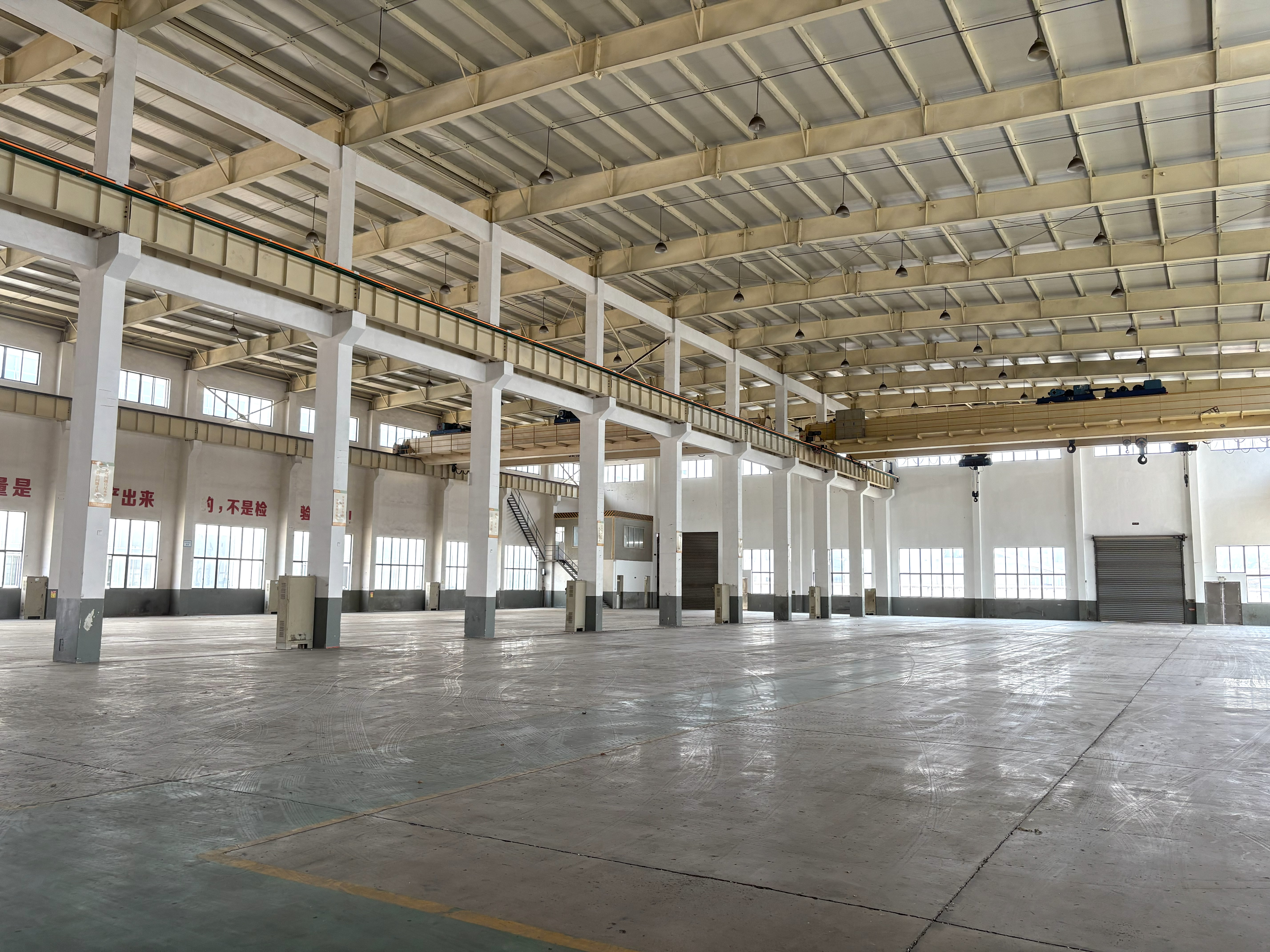
New factory, 3113 m² — the build and pre-assembly site for Zonzsin CTP and Blade automatic battery pack assembly lines.
The ZZX2406 CTP configuration and the ZZX2501 Blade configuration, both built by Shanghai Zonzsin Intelligent Equipment Co., Ltd. (ZDCB), quote the same headline engineering baseline: a 58000 × 11000 × 3800 mm line envelope, carbon steel Q235 construction, AC 380V ±10% / 50±0.5 Hz power supply, 0.6~0.8 MPa compressed air, 6 PPM cycle time, 30 minutes per pack, a ≥95% single-machine operation rate, and welding qualification rates of ≥99.5% one-time and ≥99.95% final. Because those numbers match, this decision cannot be made from a spec sheet. It has to be made on cell format, pack architecture, layout fit, weld duty, and whether the plant builds EV traction packs or stationary storage packs.
The short answer. Choose the CTP configuration (ZZX2406) when the pack design uses large prismatic cells — 314Ah and 587Ah are the published formats, in a 1P96S pack — and the site needs a fully automatic, U-shape line for medium-to-high volume output with high consistency and yield. Choose the Blade configuration (ZZX2501) when the pack design is built around blade-format cells and the same automation, utility and yield baseline still applies. Because dimensions, utilities, cycle time and welding qualification rates are shared, the real differentiators are cell-format tooling, weld access, floor-plan fit, and the duty cycle of the product you are going to build.
Problem Definition: Why a Spec-Sheet Comparison Fails
Buyers comparing these two lines usually arrive with a spreadsheet containing dimensions, power, air pressure, cycle time and welding yield. That spreadsheet is necessary but insufficient, for four reasons.
- Identical headline values hide cell-dependent engineering. The 58000 × 11000 × 3800 mm envelope, the Q235 frame, the AC 380V ±10% / 50±0.5 Hz supply and the 0.6~0.8 MPa air requirement describe the platform, not the cell interface. The cell interface — feeding, stacking, clamping and weld access — is where CTP and Blade diverge.
- Throughput figures are quoted on more than one basis. The published specification set states a 6 PPM cycle time and 30 minutes per pack. These are reported on different reference units, so a buyer who multiplies one figure by available hours without fixing the basis will over- or under-state annual capacity. Confirm the unit you need for capacity planning before signing.
- Footprint is an envelope, not a fit. 58 m × 11 m has to coexist with cell storage, incoming goods, end-of-line test, and finished-pack dispatch. The U-shape layout is a real space consideration, but it must be checked against your actual building, not against a drawing dimension.
- Welding yield is a claim until the inspection plan exists. A ≥99.5% one-time and ≥99.95% final qualification rate only becomes bankable when weld access, monitoring and rework rules are defined for your specific busbar and tab geometry.
There is also a commercial trap. Initial investment in a fully automatic line is higher than a pure manual solution; the return comes from long-term per-unit cost reduction through efficiency and yield gains. Buyers who compare only the purchase order value will reject the correct machine, and buyers who compare only throughput will buy the wrong one.
Industry Background: Why CTP and Blade Are Now Compared at Line Level
Cell-to-pack and blade-cell architectures both reduce pack-level component count, which shifts value from the pack BoM to the assembly line. As a result, procurement conversations have moved from “which cell format” to “which automatic battery pack assembly line configuration can industrialize that format at our volume.”
Two market reference points frame the budget discussion. A turnkey CTP battery pack production line is typically published in the range of US$1,000,000 to US$3,000,000 per set, and high-efficiency CTP lines for large prismatic cells are commonly specified at a 4–8 PPM cycle time. Those are market-level ranges, not this supplier's quotation, but they explain why buyers treat the line as a capital project with a multi-year payback instead of a single machine purchase.
The same shift explains why a configuration decision is now a decision framework rather than a preference. A buyer who fixes cell format after the line is ordered pays for retrofit. A buyer who fixes the line before the pack architecture is frozen pays for over-capacity.
Detailed Solution: What Each Configuration Actually Delivers
Shared engineering baseline (both ZZX2406 and ZZX2501)
Both lines are built on one platform, and the following values are published as applying to the configuration as a whole:
- Line dimensions: 58000 × 11000 × 3800 mm.
- Structure: carbon steel Q235 frame construction.
- Power supply: AC 380V ±10% / 50±0.5 Hz.
- Compressed air: 0.6~0.8 MPa.
- Cycle time: 6 PPM published; 30 minutes per pack published.
- Single-machine operation rate: ≥95%.
- Welding qualification rate: ≥99.5% one-time; ≥99.95% final.
- Layout: U-shape, positioned by the manufacturer as a space-utilization advantage.
What differs is the cell interface. On the CTP side, the published cell formats are 314Ah and 587Ah prismatic cells in a 1P96S configuration; a related automatic industrial car battery pack assembly line is listed with compatibility for 280/314/587Ah cells and 1P52S / 1P104S packs. On the Blade side, the line is configured for blade-format cells, and cell-specific tooling is fixed at engineering review rather than carried over from the CTP variant.
CTP configuration (ZZX2406)
The CTP line is a fully automatic configuration aimed at medium-to-high volume production lines and PACK assembly scenarios that demand high consistency and yield. Its published process scope is a one-stop sequence covering cell feeding, stacking, insulating, wire harness installation, end-of-line (EOL) test, and charging and discharging test. Zonzsin's own comparison material additionally lists a 20% cycle-time increase and optimized space utilization among the line's technical advantages, and states that the platform supports customized line integration for specific requirements — a point the manufacturer contrasts with ATW and Lead Intelligent at the level of tailored integration rather than at the level of raw specification.
For a buyer, that matters in one practical way: the process boundaries — where cells enter the line and where a tested pack leaves it — are defined in the offer. A line that ends before EOL test pushes testing into your own labor cost, and a line that ends before charging and discharging test pushes it into your own floor space.
Blade configuration (ZZX2501)
The Blade line shares the platform baseline above and is selected when the pack architecture uses blade-format cells. The decision-relevant consequences are geometric: blade cells present a different tab and weld-access profile from large prismatic cells, so clamping, weld path and inspection points are scoped per project. The published welding qualification rates (≥99.5% one-time, ≥99.95% final) remain the acceptance target, and the ≥95% single-machine operation rate remains the availability target — but the acceptance test that proves them has to be written against your cell and busbar, not against a generic sample.
Where the two configurations are genuinely interchangeable is at the utilities and building level: same 380V supply class, same 0.6~0.8 MPa air demand, same dimensional envelope. That means a plant can plan power, compressed air and civil works once, and defer the final cell-format decision until the pack design is frozen — provided the decision is taken before tooling release.
What the 20% and 50% claims mean. Zonzsin's comparison material states a 20% price saving and a 50% manpower saving over alternatives, alongside a 20% lower maintenance expenditure attributed to modular design. These are manufacturer-reported figures. Treat them as negotiation anchors and ask for the baseline they are measured against — a manpower saving only holds if the compared scope includes the same upstream and downstream operations.
Step-by-Step Breakdown: A Decision Sequence for EV and ESS Buyers
The sequence below is ordered so that irreversible choices are made last. Steps 1–3 eliminate configurations; steps 4–7 size the survivor; steps 8–9 convert it into a contract.
- Freeze cell format and pack architecture first. Write down cell capacity, cell type (prismatic CTP or blade), and pack configuration. If the answer is 314Ah or 587Ah prismatic in 1P96S, the CTP configuration is the starting point. If it is blade cells, start with the Blade configuration. Do not reverse this order.
- Convert annual demand into a required takt, then check it against 6 PPM / 30 minutes per pack. State explicitly which published figure you are using and on what basis — station takt or pack completion — so the supplier and your capacity model use the same unit.
- Test the footprint against the building, not the drawing. Lay the 58000 × 11000 × 3800 mm envelope and the U-shape flow onto your actual floor plan, including cell storage, operator walkways, EOL test and dispatch. A U-shape is only a space advantage if your columns and aisles allow it.
- Confirm utilities at the connection point. Verify that the available power is AC 380V ±10% / 50±0.5 Hz and that compressed air can be delivered at 0.6~0.8 MPa with stable flow at peak demand. Utility shortfalls are civil works, and civil works are schedule.
- Define the weld acceptance test before the weld discussion. Require a written protocol for how ≥99.5% one-time and ≥99.95% final qualification rates will be measured on your cell and busbar, including sampling, inspection method and rework rules.
- Map the safety architecture to your risk assessment. Confirm protective design and interlocks, safety sensors, and ESD grounding and protection, plus the supplier's process risk assessment, testing and test-station provisions for battery safety, short circuit and overheating scenarios. The line is only as safe as the interlock logic specified for your pack.
- Audit the availability target, not just the throughput target. Ask how ≥95% single-machine operation rate is measured, over what period, and with what spare-parts assumptions behind the stated maintenance expenditure.
- Run the commercial comparison on a total-cost basis. Compare purchase price, manpower at your actual shift pattern, yield-related scrap, maintenance and space. Note that the initial investment is higher than a pure manual solution; the case rests on long-term per-unit cost reduction through efficiency and yield gains, and the payback period is a project-level calculation.
- Lock compliance, documentation and schedule. Confirm the ISO 9001 quality management system behind the build, the documentation package, the acceptance criteria and a dated delivery schedule against the supplier's stated build capacity.
Use Cases: Which Configuration Fits Which Plant
EV traction packs for automotive OEMs
Automotive programs put a premium on consistency and traceability at medium-to-high volume. The CTP configuration's fit for automotive OEMs, its ≥95% single-machine operation rate and its full process scope through EOL and charging/discharging test make it the natural candidate when the traction pack is a large prismatic CTP design. Where the OEM's pack is blade-based, the ZZX2501 configuration is the candidate instead, and the decision returns to step 1.
Stationary storage packs (ESS)
ESS pack assembly shares the same line family but weights the decision differently: space utilization and stable yield matter more than peak takt, because storage builds tend to run longer campaigns at a steadier rate. The U-shape layout and optimized space utilization arguments are strongest here, where a line often has to share a building with module assembly and system integration.
Medium-to-high volume suppliers with mixed programs
A plant running both EV and ESS programs is the hardest case. Because both configurations share the 380V / 0.6~0.8 MPa / 58000 × 11000 × 3800 mm baseline, infrastructure can be planned once. What cannot be shared is cell-format tooling, which is why the customized line integration capability matters: the requirement should be written as a specification per configuration, not as a single generic line.
Plants upgrading from manual or semi-automatic assembly
Upgrades carry the clearest financial logic and the clearest trap. The trap is comparing an automatic line's purchase price with a manual line's purchase price and stopping there. The comparison that holds is purchase price plus labor at your shift pattern plus scrap from welding defects plus maintenance, measured against the ≥95% operation rate and the published welding qualification rates.
Comparison Table: CTP (ZZX2406) vs Blade (ZZX2501)
| Decision dimension | CTP configuration — ZZX2406 | Blade configuration — ZZX2501 |
|---|---|---|
| Cell format | Large prismatic; 314Ah and 587Ah published, 1P96S pack | Blade-format cells; tooling scoped per project |
| Line dimensions | 58000 × 11000 × 3800 mm | 58000 × 11000 × 3800 mm |
| Structure | Carbon steel Q235 | Carbon steel Q235 |
| Power supply | AC 380V ±10% / 50±0.5 Hz | AC 380V ±10% / 50±0.5 Hz |
| Compressed air | 0.6~0.8 MPa | 0.6~0.8 MPa |
| Cycle time | 6 PPM published; 30 minutes per pack published | 6 PPM published; 30 minutes per pack published |
| Single-machine operation rate | ≥95% | ≥95% |
| Welding qualification rate | ≥99.5% one-time; ≥99.95% final | ≥99.5% one-time; ≥99.95% final |
| Layout | U-shape; optimized space utilization cited as an advantage | U-shape; optimized space utilization cited as an advantage |
| Process scope | Cell feeding, stacking, insulating, wire harness installation, EOL test, charging/discharging test | Same platform scope; cell-specific stations defined per project |
| Best fit | Medium-to-high volume lines needing high consistency and yield; automotive OEM traction packs and ESS packs | Blade-cell pack programs on the same automation and utility baseline |
| Commercial profile | Higher initial investment than a pure manual solution; long-term per-unit cost reduction through efficiency and yield gains | Same commercial logic; project-level payback calculation |
| Customization | Customized line integration supported; manufacturer contrasts this with ATW and Lead Intelligent at the tailored-integration level | Customized line integration supported; scope fixed at engineering review |
| Quality system | ISO 9001 certification held by ZDCB | ISO 9001 certification held by ZDCB |
Read the table as an elimination tool, not a scorecard. Eleven of the fourteen rows are identical by design; the rows that decide the purchase are cell format, process scope at the cell interface, and best fit. If the first row is unresolved, nothing below it can be settled.
Risk Controls That Apply to Both Configurations
Battery safety, short circuit and overheating are the three risk categories the line is designed around. The control set is protective design and interlocks, safety sensors, and ESD grounding and protection, supported at the enterprise level by process risk assessment, testing and dedicated test stations. For a buyer, the audit question is not whether these exist in the proposal, but whether the interlock matrix and ESD scheme are documented for your pack, and whether the test stations are in the scope of supply or in yours.
Frequently Asked Questions
Is the ZZX2406 or ZZX2501 line ISO 9001 certified, and what does that cover?
ISO 9001 certification is held by the manufacturer, Shanghai Zonzsin Intelligent Equipment Co., Ltd. (ZDCB), and applies to the quality management system under which the CTP and Blade automatic battery pack assembly lines are designed, built, inspected and documented. It is a management-system certification, not a certification of an individual pack or of weld quality on your specific product. Buyers should ask for the certificate scope and for the inspection and test records that the system produces for their line, alongside the ≥99.5% one-time and ≥99.95% final welding qualification acceptance criteria.
Can one line run both 314Ah prismatic cells and blade cells?
The two configurations are specified separately. The CTP configuration (ZZX2406) is published for 314Ah and 587Ah prismatic cells in a 1P96S pack, and a related automatic industrial car battery pack assembly line is listed with 280/314/587Ah cell compatibility and 1P52S / 1P104S packs. Blade-format cells use the separate ZZX2501 configuration with its own cell-interface tooling. Cell-format flexibility beyond the published formats is a project-scoped engineering question, so the cell list should be frozen and confirmed in writing during the engineering review rather than assumed from the platform specs.
What should we budget for a turnkey CTP or Blade automatic battery pack assembly line?
Market publications place a turnkey CTP battery pack production line in the range of US$1,000,000 to US$3,000,000 per set, which is a market reference rather than a quotation for a specific configuration. On this platform, the initial investment is higher than a pure manual solution; the return comes from long-term per-unit cost reduction through efficiency and yield gains, and Zonzsin's comparison material states a 20% price saving and 50% manpower saving over alternatives plus 20% lower maintenance expenditure attributed to modular design. Because those figures depend on the compared scope and on your shift pattern, payback should be calculated at project level using your own labor rate, scrap cost and volume.
How do we validate weld quality and line performance before shipment?
Validation rests on three published elements: the ≥99.5% one-time and ≥99.95% final welding qualification rates, the ≥95% single-machine operation rate, and a process scope that runs through end-of-line test and charging and discharging test. Those are supported by process risk assessment, testing and dedicated test stations, and by protective design and interlocks, safety sensors and ESD grounding and protection for battery safety, short circuit and overheating scenarios. The practical next step is to agree a written acceptance protocol that names the sample pack, the inspection method, the measurement period for the operation rate, and the rework rules before the build starts.
What lead time should we plan for, and how much floor space is needed?
Floor space is defined by the published 58000 × 11000 × 3800 mm envelope, arranged in a U-shape that the manufacturer positions as a space-utilization advantage — but the layout must be checked against your columns, aisles, cell storage and dispatch routes. On schedule, Zonzsin self-reports capacity to build 30 assembly lines and 200 standard single machines per year from a 6000 m² facility with 90 employees, 43 engineers and 60% of output exported to Southeast Asia and the EU. A firm delivery date is project-scoped and should be requested as a dated schedule tied to your configuration, tooling and acceptance milestones.
Conclusion: Decide on Cell Format, Contract on Evidence
The CTP and Blade configurations from Zonzsin are not differentiated by dimensions, utilities, cycle time or welding qualification rates — those are shared: 58000 × 11000 × 3800 mm, Q235 carbon steel, AC 380V ±10% / 50±0.5 Hz, 0.6~0.8 MPa air, 6 PPM and 30 minutes per pack, ≥95% single-machine operation rate, ≥99.5% one-time and ≥99.95% final welding qualification. They are differentiated by cell format, cell-interface tooling, and the duty cycle of the pack you intend to build.
So the decision rule is simple to state and easy to get wrong: freeze cell format and pack configuration first, confirm the footprint and utilities against the real building second, then write the acceptance protocol for weld quality, operation rate and safety interlocks before commercial negotiation. Do that, and the head-to-head resolves into a documented choice instead of a preference between two similar-looking machines.
Next step: match a configuration to your pack design
Send your cell format, target pack configuration and required annual output, and Zonzsin will respond with the configuration that fits — CTP or Blade — together with a layout study, a utility checklist covering the AC 380V ±10% / 50±0.5 Hz supply and 0.6~0.8 MPa air demand, and a quotation. You can also download the product brochure (PDF) or request a sample-pack acceptance run before committing to a purchase order.
Contact: Katty.liu · katty.liu@zonzsin.com · Tel / WhatsApp +86 134-8282-9368 · www.zonzsin.com
Shanghai Zonzsin Intelligent Equipment Co., Ltd., Building 22, No.2199, Shebei Highway, Sheshan Town, Songjiang District, Shanghai, China.

Have Questions or Need More Details?
Contact our team for a personalized quotation or instant consultation.
Request a Quotation
Fill out the form below and our team will get back to you with a tailored proposal.
WhatsApp Direct Chat
Prefer to chat in real-time? Message us on WhatsApp for instant assistance & quick answers.
- Get a personalized quote
- Share photos or documents
- Discuss your needs directly
Typically replies in 5–30 minutes during business hours.