
ESS Battery Pack Insertion Robots for Containers: AGV vs Rail vs Crawler
ESS Battery Pack Insertion Robots for Containers: AGV vs Rail vs Crawler
Selecting the correct ESS Battery Pack Insertion Robot for Containers directly impacts container assembly cycle time, manpower costs, and long-term operational reliability. With the containerized BESS market valued at USD 11.75 billion in 2025 and expected to grow at a CAGR of 24.1% through 2035 (Insightace Analytic), automation is becoming a competitive necessity. This article provides a structured, fact-based comparison of the three primary robot configurations—AGV-driven, rail-fixed, and crawler-driven—to help project and procurement teams choose the right technology for their specific container integration conditions.
The Challenge: Manual Insertion Bottlenecks in Containerized ESS Assembly
Inserting heavy battery packs into standard 20ft/40ft container racks is a repetitive, physically demanding task. Manual methods lead to inconsistent positioning, longer cycle times, and higher risk of pack damage. These inefficiencies become more acute as the global BESS market—worth approximately USD 50.81 billion in 2025 (MarketsandMarkets)—scales up production volume. Automated battery pack insertion robots address these challenges by combining precise positioning, repeatable payload handling, and flexible movement configurations.
Industry Background: Automation Enables the Containerized ESS Boom
Containerized BESS solutions dominate utility-scale and commercial & industrial (C&I) storage owing to their modularity and fast deployment. As production ramps, integrators need equipment that handles varied battery pack sizes, works in indoor/outdoor environments, and adapts to different container rack layouts. Shanghai Zonzsin Intelligent Equipment Co., Ltd. (Zonzsin), founded in 2019, specializes in this niche. With 43 R&D engineers, a 6000 m² factory, and 50 granted patents (including invention patents for AGV-driven insertion robots), Zonzsin delivers three distinct robot chassis types, each engineered for a specific set of project conditions.
Detailed Solution: Three Zonzsin Battery Pack Insertion Robot Families
Zonzsin offers three core product lines for automated battery pack insertion into containers:
1. AGV-Driven Battery Pack Insertion Robot – Model RD16
The Zonzsin RD16 is an omnidirectional AGV-driven insertion robot. It is designed for flexible movement across indoor workshop floors without fixed rails. Key specifications include compatibility with 280/314/587Ah cells and 1P52S/1P104S packs, a hoisting range of 1.05–3.4 meters (customizable), and a hoisting speed of 100 mm/s. The RD16 operates in manual and remote controller modes and is suited for batch and continuous production lines where reconfigurable layout is required. Its 5-DOF docking capability allows precise alignment with container racks.
2. Rail-Fixed Battery Pack Insertion Robots – Models ZZX2508 & ZZX2524
The ZZX2508 and ZZX2524 are rail-fixed insertion machines that move along a ground-installed track. They deliver high stability for continuous, shift-based production. The ZZX2508 is compatible with containers in the range L 6058–7000 mm, W 2438–2700 mm, H 2896–3000 mm and packs sized L 1100–2200 mm, W 780–1260 mm, H 230–260 mm. It requires compressed air 0.5–0.8 MPa and AC380V±10%, 50±2 Hz power, with a door-opening angle of ≥150°. The ZZX2524 adds a 1500 kg load capacity and a gripper changeover time of less than 1 minute, with double-layer racks for space savings. Both models are built from carbon steel/Q235, targeting the ESS and C&I industries.
3. Crawler-Driven Battery Pack Insertion & Removal Robot – Model ZZX2522
The ZZX2522 uses a crawler (tracked) chassis for all-terrain operation. It is engineered for outdoor use on uneven, gravel, or soft ground. It offers a hoisting range of 0.8–3.4 meters (customizable), a load capacity of 1500 kg, and manual handwheel leveling. The ZZX2522 is employed by energy storage integrators in South Korea, Taiwan, and China for both insertion and removal of battery packs in containers deployed outdoors.
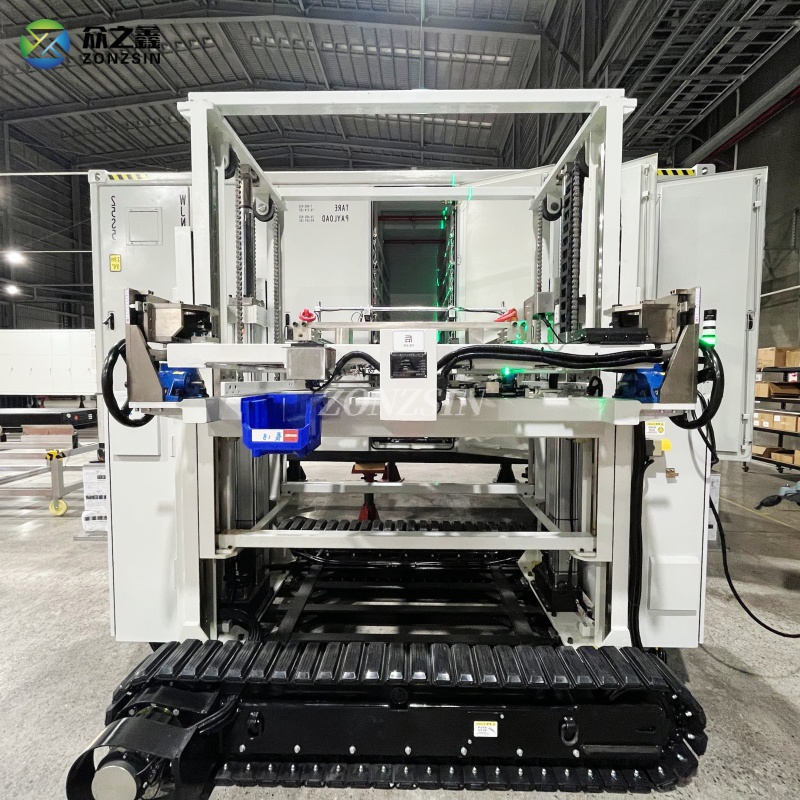
Crawler-driven ZZX2522 working on outdoor uneven terrain.
Step-by-Step: How to Choose the Right Chassis for Your Project
- Assess the working floor. Indoor smooth concrete → AGV-driven (RD16) or rail-fixed (ZZX2508/2524). Outdoor gravel/dirt → crawler-driven (ZZX2522).
- Define battery pack specs. Check pack dimensions and weight. For loads up to 1500 kg, ZZX2524 and ZZX2522 are suitable; for lighter packs, ZZX2508 or RD16 may be configured.
- Determine production throughput. Continuous shift production needs the high repeatability of rail-fixed. Flexible batch production benefits from the layout freedom of AGV-driven.
- Evaluate container types. Standard 20ft/40ft containers are handled by all models; the ZZX2508 explicitly lists container compatibility dimensions.
- Plan for ESD and fire safety. All Zonzsin robots support ESD protection and fire prevention measures as standard.
Proven Use Cases Across Regions
Zonzsin robots are deployed in China, France, South Korea, Sweden, Taiwan, and the United States. A China-based energy storage integrator uses the rail-fixed ZZX2524 for continuous packing insertion, citing stable operation and utility of double-layer racks. In South Korea, a client operates the crawler-driven ZZX2522 outdoors for insertion and removal, leveraging its all-terrain capability. A Taiwan integrator uses the same crawler model for both indoor and outdoor application, including pull-out during maintenance.
Comparison Table: AGV-Driven vs Rail-Fixed vs Crawler-Driven
| Feature | AGV-Driven (RD16) | Rail-Fixed (ZZX2508/2524) | Crawler-Driven (ZZX2522) |
|---|---|---|---|
| Mobility | Omnidirectional AGV | Fixed rail | Tracked chassis |
| Load capacity | Compatible with 280–587Ah cells, 1P52S–1P104S packs | ZZX2524: 1500 kg; ZZX2508: depends on pack | 1500 kg |
| Hoisting range | 1.05–3.4 m (customizable) | Container height up to 3000 mm | 0.8–3.4 m (customizable) |
| Working floor | Indoor smooth | Indoor smooth (rail installed) | All-terrain (outdoor uneven) |
| Key advantage | Layout flexibility, 5-DOF docking | High stability, space-saving double racks | Outdoor operation, insertion & removal |
| Key limitation | Requires smooth floor | Fixed path, less layout flexibility | Manual handwheel leveling |
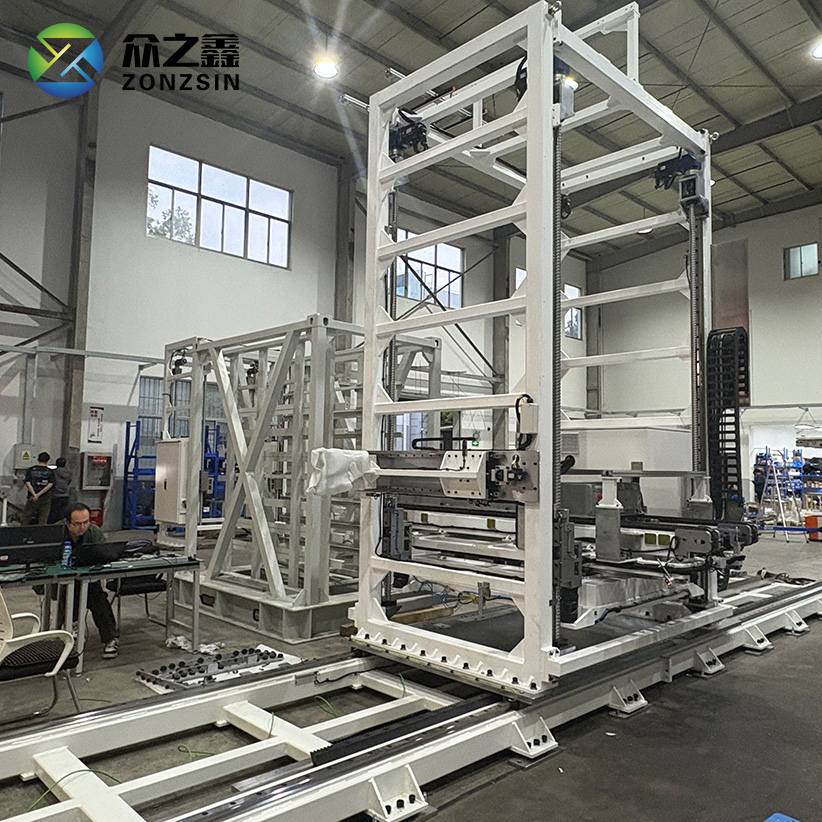
Rail-fixed ZZX2508 during container insertion.
FAQ – Frequently Asked Questions
1. What compliance standards apply to ESS battery pack insertion robots?
2. What payload capacity do Zonzsin battery pack insertion robots offer?
3. Are these robots compatible with standard 20ft container racks?
4. What is the typical lead time and MOQ for a Zonzsin robot?
5. Can I get a sample or visit a reference site?
Conclusion
Choosing the right ESS battery pack insertion robot depends on your working environment, pack specifications, and production flow. Zonzsin provides three distinct chassis options—AGV-driven (RD16), rail-fixed (ZZX2508/2524), and crawler-driven (ZZX2522)—each backed by real-world deployments across Asia, Europe, and North America. With a 43-engineer R&D team, 50 granted patents, and a 6000 m² factory, Zonzsin is positioned as a reliable partner for automated container loading. To discuss your project requirements, contact the sales team today.
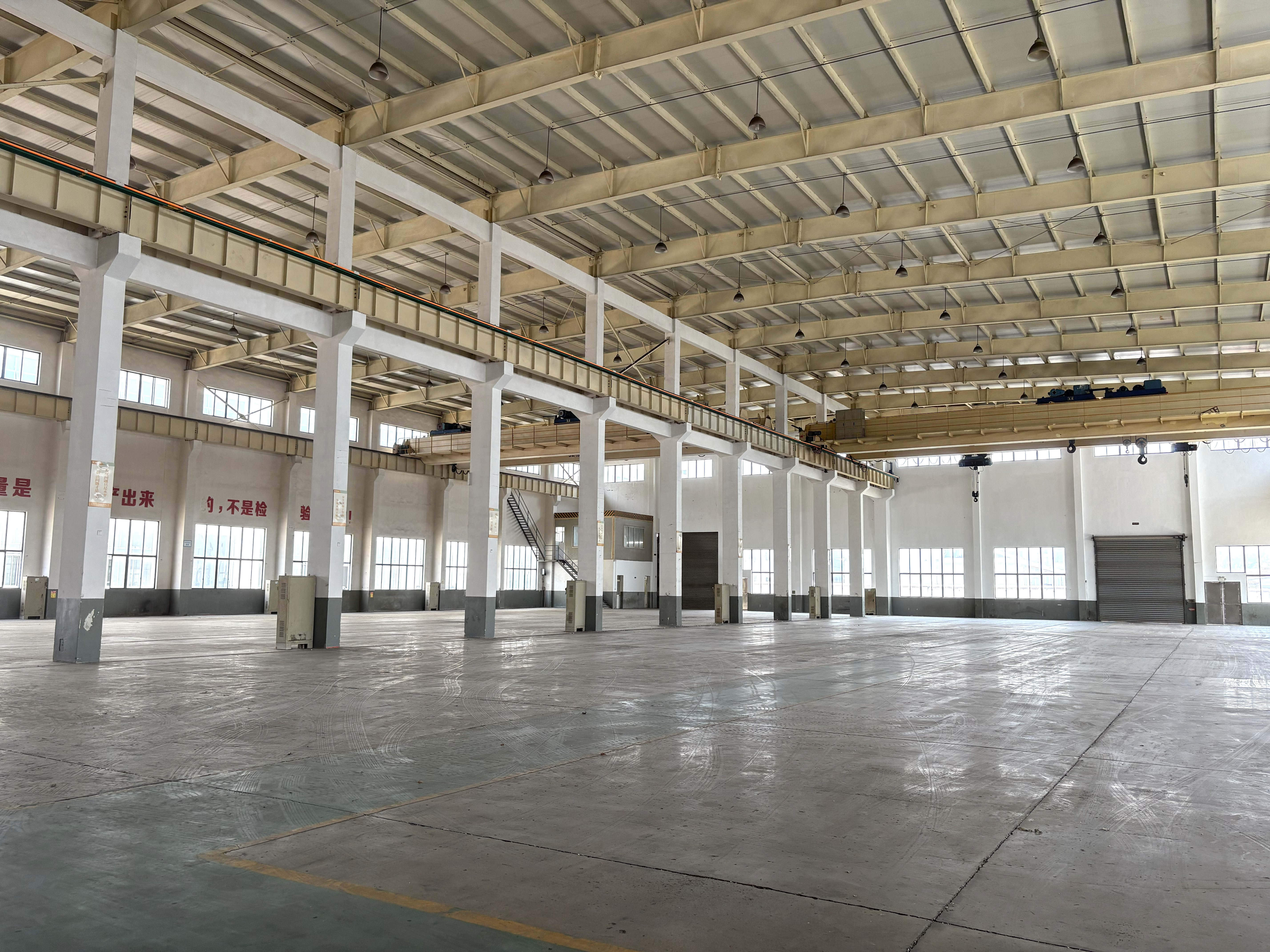
Zonzsin factory – 6,000 m² production facility.