
How to Choose an ESS Battery Pack Insertion Robot for Containers: A Buyer’s Guide
How to Choose an ESS Battery Pack Insertion Robot for Containers: A Buyer’s Guide
Introduction
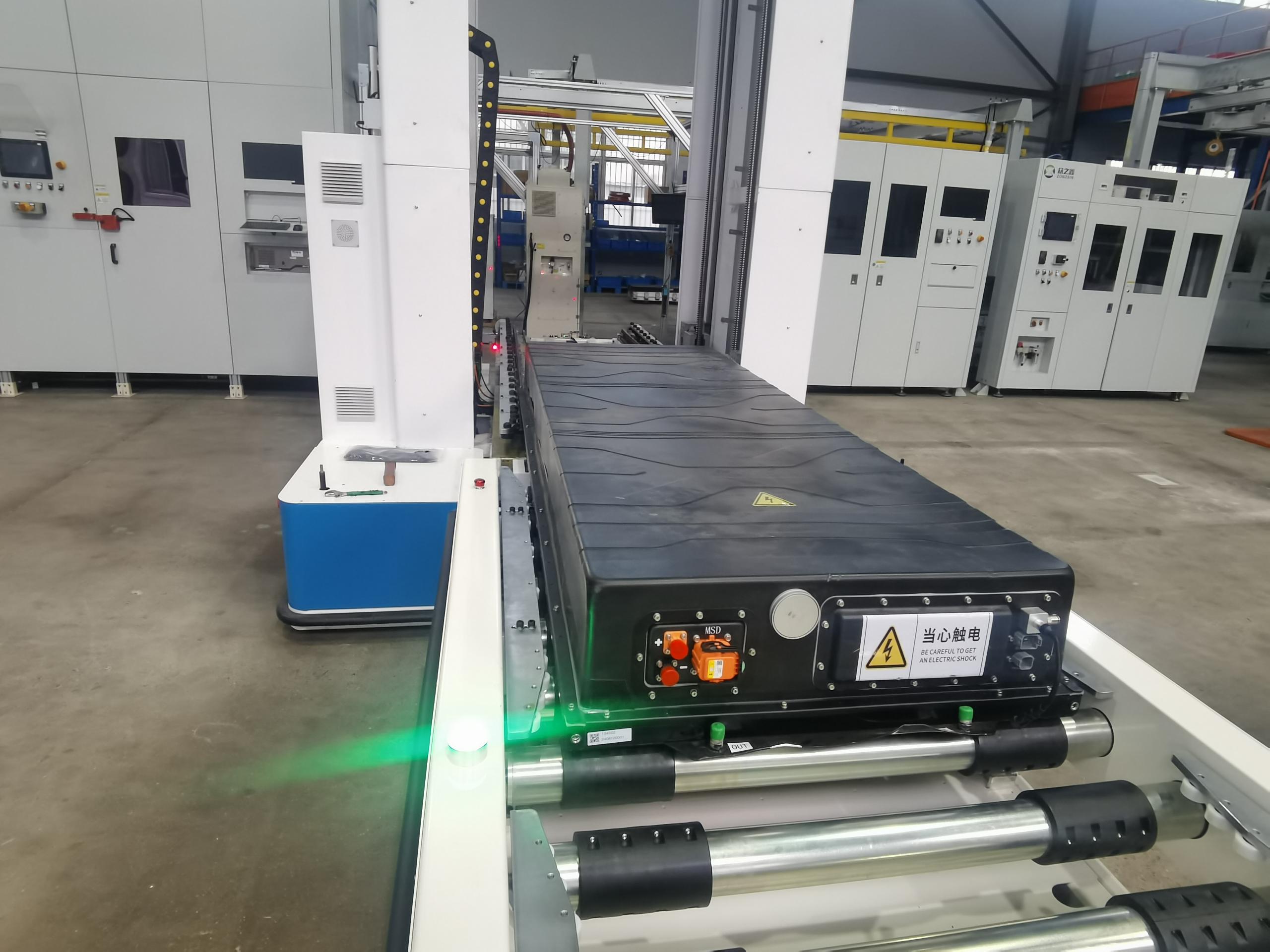
The global energy storage market is expanding rapidly, driven by the need for grid stability, renewable integration, and commercial & industrial (C&I) backup power. Containerized battery energy storage systems (BESS) have become the preferred form factor for large-scale deployments. However, the manual insertion of heavy battery packs (often exceeding 1500 kg) into container racks is slow, unsafe, and inefficient. This is where ESS Battery Pack Insertion Robots for Containers come into play.
If you are an energy storage integrator, battery manufacturer, or EPC contractor looking to automate your container loading process, choosing the right insertion robot is critical. This guide explains the key types, technical specifications, selection criteria, and real-world applications — helping you find a reliable supplier that matches your production requirements.
Problem Definition: Why Traditional Methods Fall Short
Manual battery pack loading into 20ft or 40ft containers presents several challenges:
- Safety risks: Heavy packs pose ergonomic hazards and potential damage during handling.
- Low throughput: Manual loading is slow and inconsistent, becoming a bottleneck in high-volume production.
- Quality inconsistency: Positioning accuracy depends on operator skill, leading to misalignment and rack damage.
- Space inefficiency: Double- and triple-layer racks require precise insertion at height, which is difficult for manual labor.
These problems demand a specialized automatic battery pack insertion system that can handle heavy payloads, operate in confined container spaces, and integrate with existing production lines.
Industry Background: The Rise of Automated Container Loading
According to industry reports, containerized BESS installations are expected to grow at a CAGR of >25% through 2030. To keep pace, manufacturers are investing in AGV-guided battery pack loading robots, rail-fixed insertion equipment, and crawler-driven all-terrain machines. Companies like Shanghai Zonzsin Intelligent Equipment Co., Ltd. have pioneered this niche since 2019, delivering solutions to markets including Europe, USA, South Korea, Japan, and India. Zonzsin’s R&D team of 43 engineers holds 50 granted patents, especially invention patents for AGV-driven battery pack insertion robots, offering a competitive edge in customization and reliability.
Detailed Solution: Zonzsin’s ESS Battery Pack Insertion Robot Family
Zonzsin offers three main robotic platforms, each designed for specific floor conditions, production volumes, and container layouts. Below is a technical breakdown.
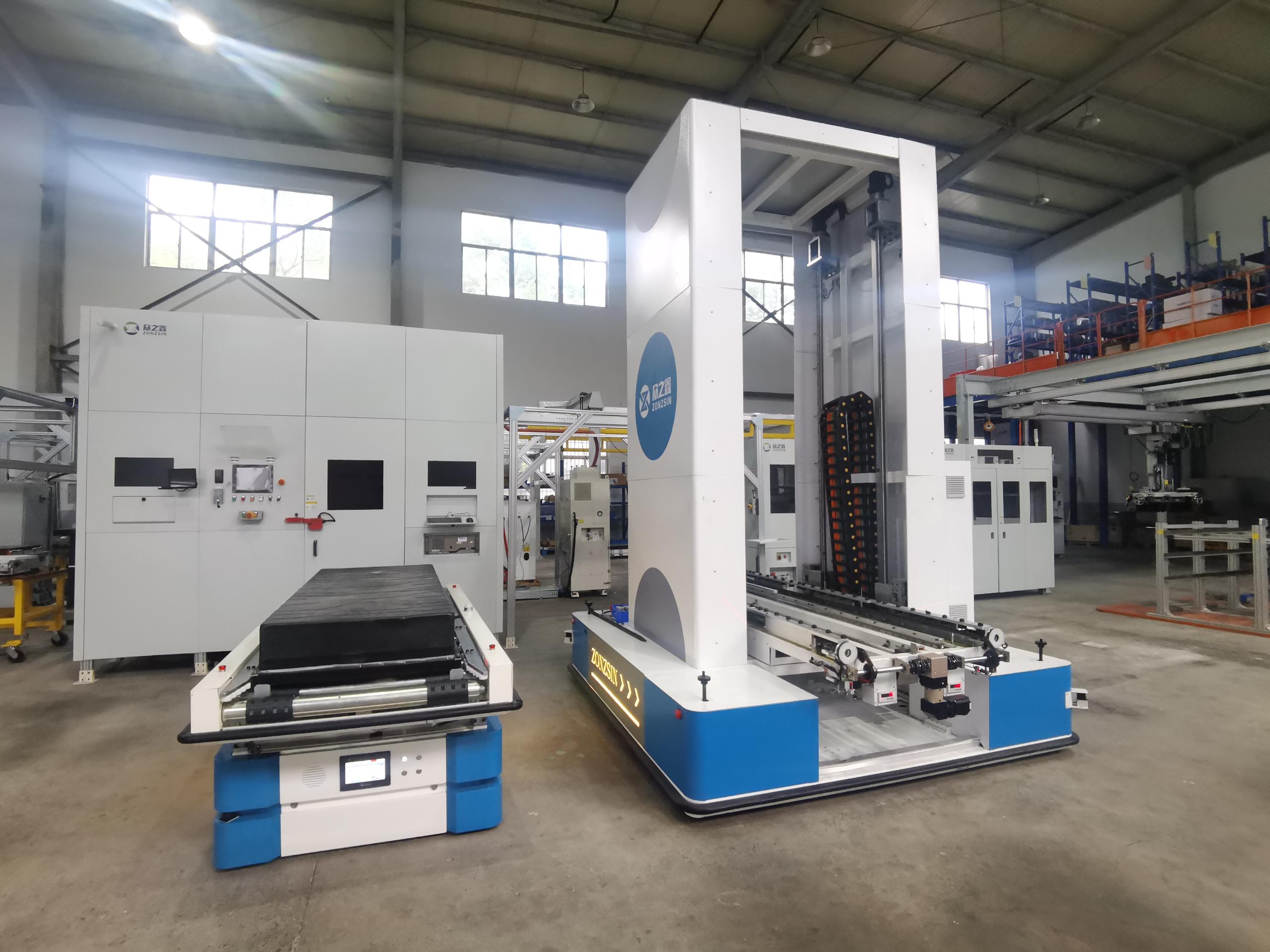
1. AGV-Driven Battery Pack Insertion Robot (Model RD16)
The RD16 is an autonomous guided vehicle (AGV) platform that moves freely without fixed rails. It is ideal for factories requiring flexible routing between multiple container stations or production cells.
- Dimensions: 3100 × 2600 × 3800 mm
- Hoisting range: 1.05 – 3.4 m (customizable)
- Hoisting speed: 100 mm/s
- Payload compatibility: 280/314/587Ah cells, 1P52S/1P104S PACKs
- Material: Carbon steel
- Operation: fully automated, can integrate with MES/PLC
The RD16 is especially suitable for C&I energy storage and containerized ESS where frequent layout changes or multi-line sharing is needed.
2. Rail-Fixed Battery Pack Insertion Robots (Models ZZX2508 & ZZX2524)
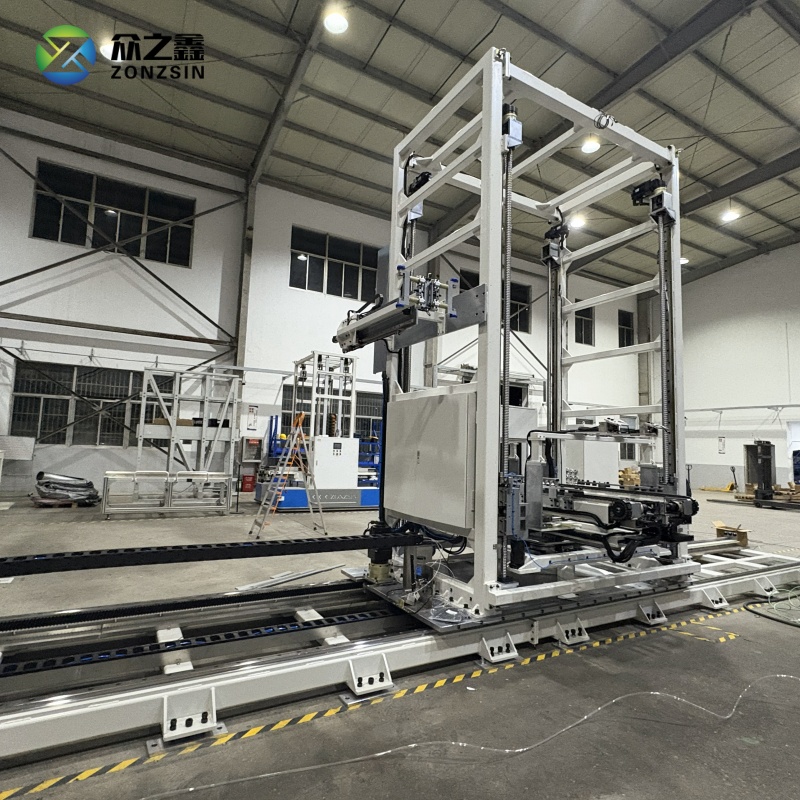
For high-volume, dedicated container lines, the rail-fixed series provides a stable, repeatable solution with faster cycle times.
Model ZZX2508:
- Compatible container: L 6058–7000 mm, W 2438–2700 mm, H 2896–3000 mm
- Compatible PACK: L 1100–2200 mm, W 780–1260 mm, H 230–260 mm
- Door opening angle: ≥150°
- Power: AC380V±10%, 50±2 Hz
Model ZZX2524:
- Load capacity: 1500 kg
- Door open angle: ≥150°
- Gripper changeover time: <1 min
- Space-saving double-layer rack design
Both models use carbon steel/Q235 and are designed for continuous shift production in energy storage and C&I factories.
3. Crawler-Driven Battery Pack Insertion & Removal Robot (Model ZZX2522)
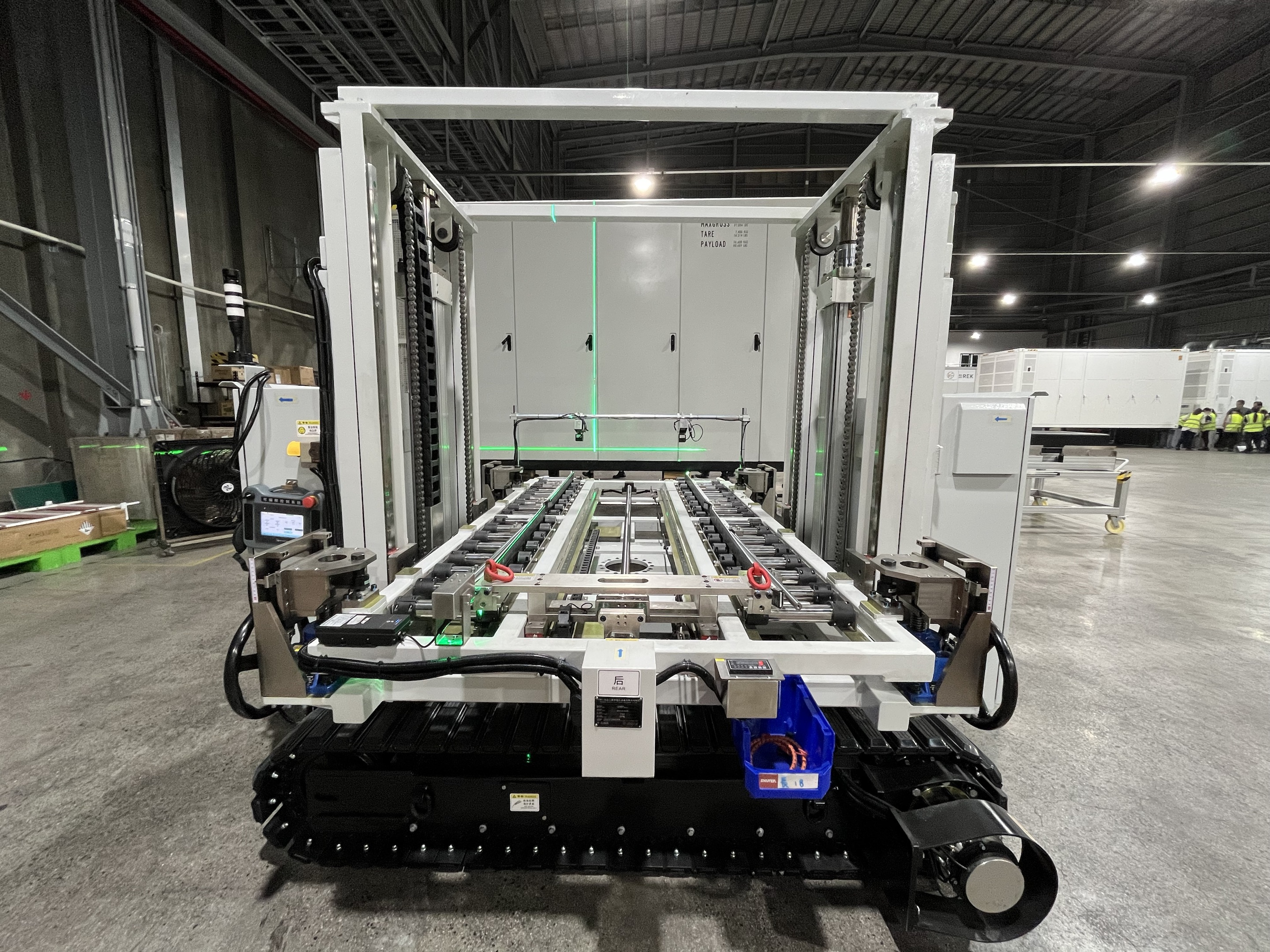
When the factory floor is uneven, outdoor, or all-terrain, the ZZX2522 crawler platform delivers superior mobility and stability.
- Hoisting range: 0.8 – 3.4 m (customizable)
- Load capacity: 1500 kg
- Leveling: Manual handwheel leveling
- Material: Carton steel / Q235
- All-terrain: works on gravel, concrete, uneven ground
This model is widely used in outdoor container yards and maintenance/repair scenarios where containers are placed on variable surfaces.
Step-by-Step Selection Guide
Follow these steps to determine the best robot type for your project:
- Assess your container loading layout: Fixed stations → rail-fixed; flexible multi-station → AGV; outdoor/uneven → crawler.
- Calculate required throughput: Do you need continuous or batch production? The AGV RD16 supports both; rail-fixed models excel in continuous high-volume.
- Check PACK and container dimensions: Zonzsin’s models cover a wide range. ZZX2508/2524 handle standard 20ft containers; RD16 fits custom container sizes with adjustable hoisting.
- Evaluate floor conditions: For smooth indoor floors, AGV or rail-fixed work. For rough or outdoor surfaces, choose the crawler ZZX2522.
- Consider integration level: All models can be integrated with PLC/MES for full automation. Discuss cycle time optimization with Zonzsin’s engineering team.
- Plan for after-sales support: Zonzsin offers remote support and on-site installation & commissioning, with a delivery lead time of 2–4 months and MOQ of 1 unit.
Real-World Use Cases
Zonzsin’s robots are already deployed globally. Here are representative projects:
Case 1: Rail-Fixed Robot for Continuous Production (China)
A leading Chinese ESS integrator needed a fully-automated line for 20ft container loading. They installed the ZZX2524 rail-fixed robot. The dual-layer material rack saved floor space, and the gripper changeover under 1 minute allowed rapid PACK type switching. The system has been running stably for over 2 years, improving efficiency by 20% compared to previous semi-automatic methods.
Case 2: Crawler-Driven Robot for Outdoor Yard (South Korea)
A Korean battery manufacturer needed a solution for inserting and removing PACKs from containers stored on uneven outdoor surfaces. The ZZX2522 crawler-driven robot provided all-terrain capability and manual handwheel leveling. After 1 year of operation, the customer reported stable performance and reduced manual handling risks.
Case 3: AGV-Driven Robot for Flexible Production Line (Taiwan)
A Taiwanese energy storage factory required a mobile robot that could serve multiple container stations on a single production floor. The RD16 AGV-driven robot was deployed, offering autonomous navigation and hoisting speeds up to 100 mm/s. The robot now handles both insertion and removal tasks, supporting C&I and utility-scale projects.
Comparison: Automated vs Manual Insertion
According to Zonzsin’s internal benchmarks, their robotic systems offer:
| Metric | Manual Insertion | Zonzsin Robot |
|---|---|---|
| Manpower required | 4–6 workers | 1 operator |
| Cycle time per PACK | 5–8 minutes | ~4 minutes |
| Safety incidents | Moderate risk | Laser guidance & emergency stop |
| Consistency & accuracy | Operator-dependent | ±2 mm positioning |
| Total cost of ownership | High (labor + rework) | 10% lower overall |
Additionally, Zonzsin’s modular design reduces maintenance expenditures by an estimated 20%.
Frequently Asked Questions (FAQ)
- What is an ESS Battery Pack Insertion Robot for Containers?
- It is a specialized automated machine that lifts, transports, and inserts heavy battery packs into standard or custom container racks, replacing manual fork trucks or cranes. It can be AGV-driven, rail-fixed, or crawler-driven.
- How does the robot ensure positioning accuracy and safety?
- Zonzsin robots use laser guidance, visual monitoring, emergency stop buttons, and alarm indicator lights to prevent collision and ensure precise placement. Risk assessment and testing are conducted per ISO 9001 standards.
- Can I customize the robot for my specific PACK size?
- Yes. Zonzsin offers customization on hoisting range, gripper fixtures, cycle time, automation level, and color/logo. The company has a 43-engineer R&D team and a track record of tailored solutions.
- What certifications does Zonzsin hold?
- Zonzsin is ISO 9001:2015 certified (certificate #44825MS079001R0, valid until 2028-11-19), covering R&D and assembly of AGV-based cluster loading robots, module PACK assembly lines, and more.
- What is the minimum order quantity and delivery lead time?
- MOQ is 1 unit. Lead time is typically 2–4 months. Payment terms: 50% advance T/T, 50% balance within 3 business days after Bill of Lading date. Delivery is available EXW Shanghai, FOB Shanghai, or FCA Shanghai.
- How does Zonzsin compare to other suppliers?
- Zonzsin focuses exclusively on battery PACK insertion robots and assembly lines, with 50 granted patents and a 20% reduction in maintenance costs. Their robots save up to 30% manpower and 20% cycle time compared to manual methods, with 10% lower overall cost versus competitors’ standardized equipment.
Conclusion
Selecting the right ESS Battery Pack Insertion Robot for Containers is a strategic decision that impacts your production speed, safety, and total cost. Whether you need a flexible AGV-driven platform (RD16), a high-throughput rail-fixed solution (ZZX2508/ZZX2524), or an all-terrain crawler robot (ZZX2522), Shanghai Zonzsin Intelligent Equipment Co., Ltd. provides proven, ISO 9001-certified solutions backed by deep domain expertise and global references.
Contact Zonzsin today to discuss your container loading automation requirements:
Contact: Katty Liu
Email: katty.liu@zonzsin.com
Tel/WhatsApp: +86 134-8282-9368
Address: Building 22, No.2199, Shebei Highway, Sheshan Town, Songjiang District, Shanghai, China
Download the Product Brochure (PDF) for detailed specifications and case studies.