How to Choose the Right Automatic Battery Pack Assembly Line
Automatic Battery Pack Assembly Line: The Complete Buyer’s Guide
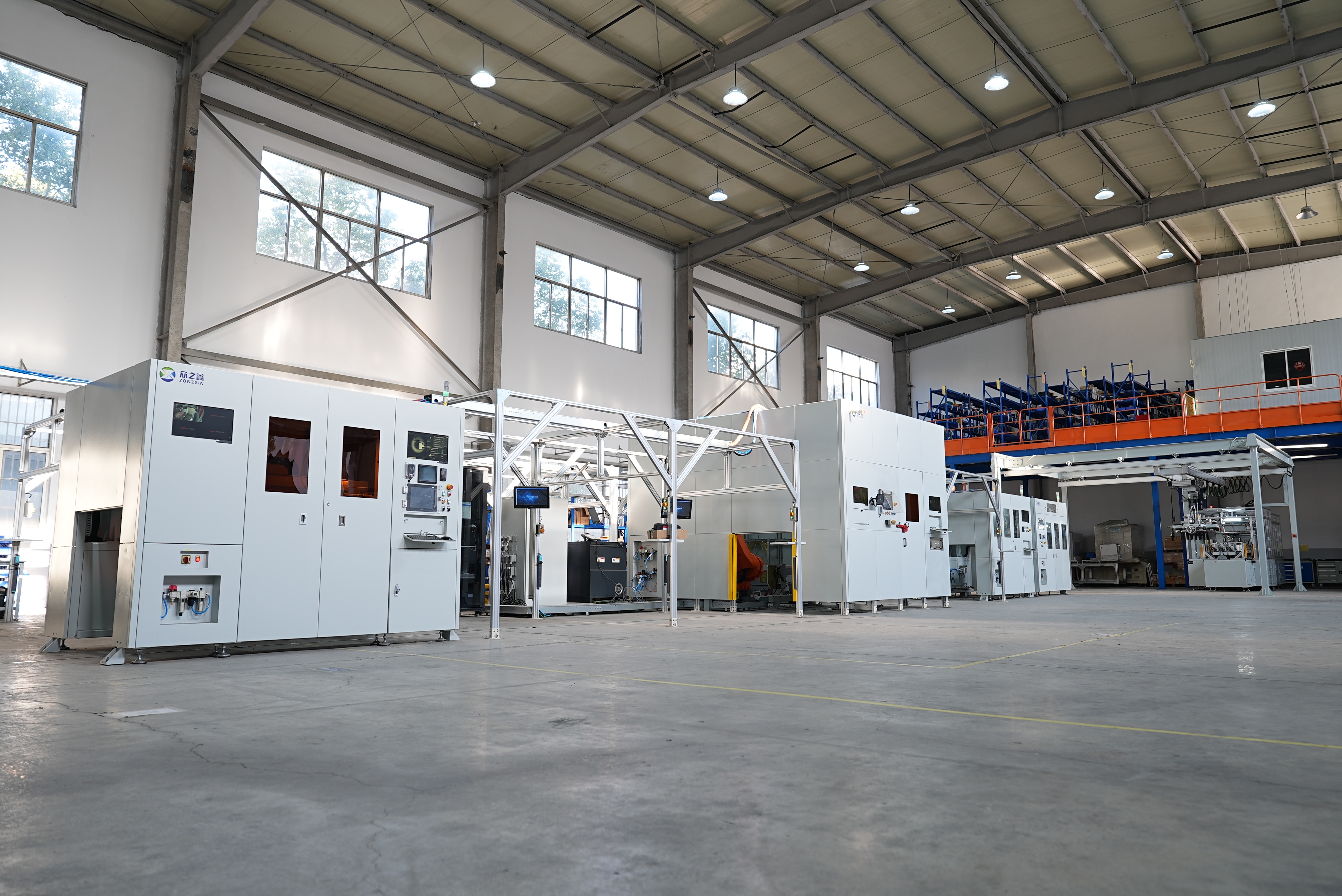
Selecting the right automatic battery pack assembly line is a critical business decision for lithium battery manufacturers, energy storage integrators, and automotive OEMs. This guide walks you through the definition, working principles, selection criteria, and real-world examples to help you make an informed investment.
1. What Is an Automatic Battery Pack Assembly Line?
An automatic battery pack assembly line is a production system designed to assemble individual battery cells into complete battery packs (PACK) with minimal manual intervention. These lines integrate multiple stations for cell sorting, stacking, busbar welding, insulation testing, and final assembly. Depending on the battery architecture, the line can be configured for CTP (Cell-to-Pack), MTP (Module-to-Pack), or Blade battery designs.
For example, Shanghai Zonzsin Intelligent Equipment Co., Ltd. (established in 2019) offers three main models: the ZZX2406 (CTP battery PACK assembly line), ZZX2501 (Blade battery PACK assembly line), and ZZX2313 (EV battery PACK assembly line). These systems are built from carbon steel Q235 and operate under standard industrial conditions with electrical requirements of AC 380V ±10%.
2. Why Is an Automatic Battery Pack Assembly Line Important?
The global shift toward electric vehicles (EVs) and stationary energy storage systems (ESS) demands high-quality, high-volume battery production. Manual assembly cannot meet the consistency, safety, and throughput required by modern gigafactories. An automatic assembly line ensures:
- High welding quality: Zonzsin’s lines achieve a one-time welding qualification rate ≥99.5% and final qualification rate ≥99.95%.
- High operation rate: Single machine operation rate ≥95%.
- Reduced labor costs: Compared to manual solutions, manpower can be saved by up to 50%.
- Scalability: Modular design allows easy expansion and customization.
3. Industry Background: EV & ESS Driving Demand
The battery pack assembly equipment market is growing rapidly, driven by the expansion of EV production and grid-scale energy storage. According to industry reports, the global lithium-ion battery market is expected to exceed $100 billion by 2030. This has led to a surge in demand for turnkey battery pack assembly lines, especially in regions like Southeast Asia (SEA) and the European Union (EU), where Zonzsin has exported 60% of its equipment.
Major end-users include lithium battery manufacturers, energy storage integrators, and automotive OEMs. They seek solutions that offer high flexibility, fast changeover, and compatibility with large prismatic cells (e.g., 314Ah and 587Ah).
4. Detailed Solution: CTP vs. MTP vs. Blade Battery Assembly Lines
Understanding the difference between assembly line architectures is crucial for selection:
| Feature | CTP Line (ZZX2406) | Blade Line (ZZX2501) | EV Pack Line (ZZX2313) |
|---|---|---|---|
| Battery Cell | 314Ah / 587Ah | Blade cells | Prismatic cells |
| Cycle Time | 4 PPM | 6 PPM (30 min/PACK) | Custom |
| Automation | Semi-automatic | Semi/Fully automatic | Customizable |
| Application | C&I / ESS / EV | EV / ESS | EV / Automotive |
| Dimensions (mm) | 58000 × 11000 × 3800 | Custom | Custom |
Zonzsin’s CTP line (ZZX2406) is specifically designed for large-format cells and supports both 314Ah and 587Ah capacities. It is ideal for energy storage and commercial & industrial (C&I) applications. The Blade line (ZZX2501) offers higher throughput and is suited for EV battery pack mass production.
5. Step-by-Step How to Choose Your Assembly Line
Follow this step-by-step framework to evaluate and select the right solution:
- Define production volume: Determine your target PPM (packs per minute) and annual capacity. Zonzsin’s lines range from 4 PPM to 6 PPM.
- Identify battery format: Are you using prismatic, blade, or cylindrical cells? Zonzsin specializes in prismatic (CTP) and blade formats.
- Choose automation level: From semi-automatic to fully automatic, based on labor cost and quality requirements.
- Evaluate space and utilities: Factory dimensions, compressed air (0.6~0.8 MPa), and electrical supply (AC 380V ±10%, 50 Hz) must be verified.
- Check certifications: Look for ISO 9001 certification. Zonzsin holds Certificate No. 44825MS079001R0, issued by ZDCB, covering laser welding, AGV robots, and PACK assembly lines.
- Assess supplier capabilities: Customization options (cycle time, automation, logo, color), MOQ (1 unit), lead time (3~5 months), and after-sales support (remote + on-site commissioning).
- Request a FAT (Factory Acceptance Test): Zonzsin offers online FAT and on-site FAT acceptance.
6. Case Study: CTP Battery Pack Assembly Line in India
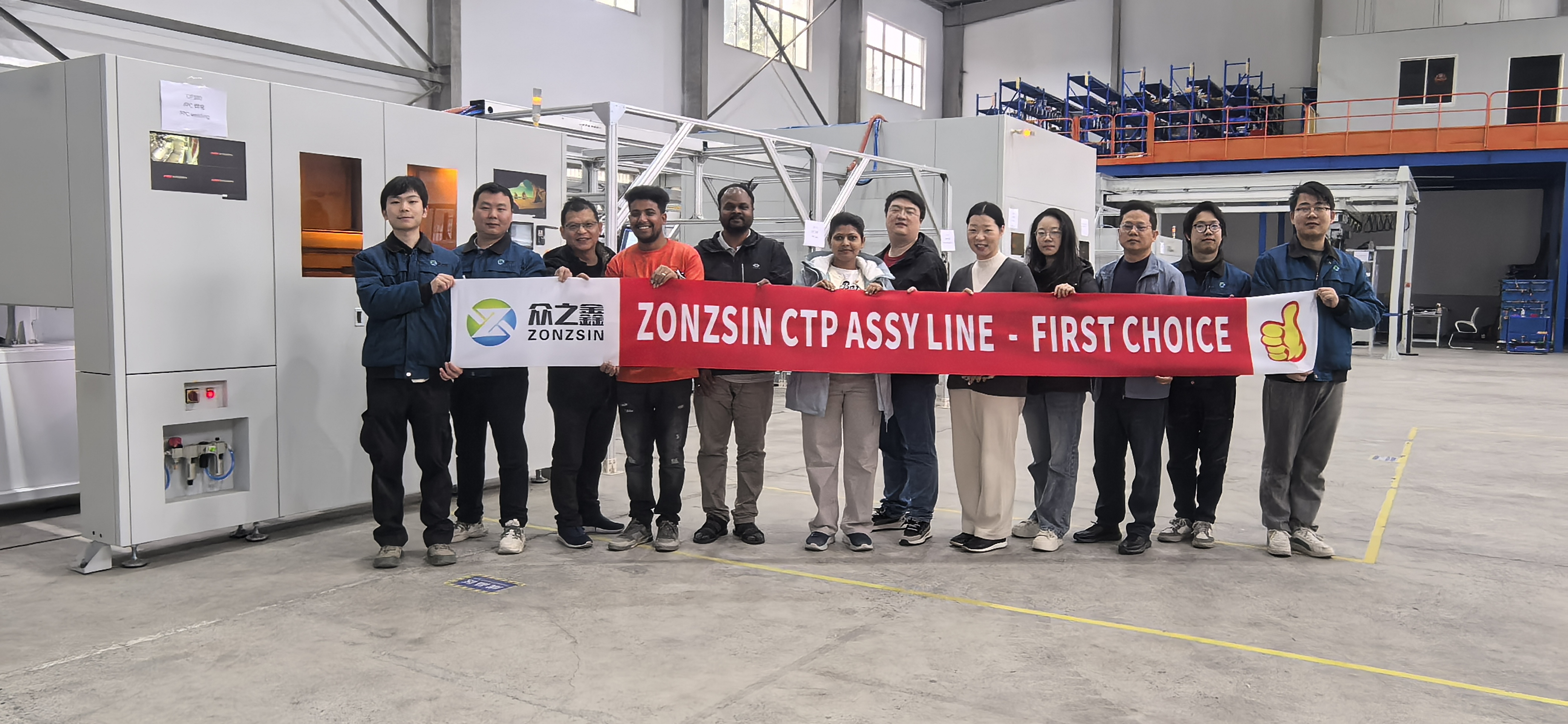
Zonzsin deployed a CTP battery pack assembly line (model ZZX2406) for a client in India. The project was a battery pack assembly application requiring supporting equipment such as vision inspection systems, fixtures, tooling, and laser welding stations. The line operates under standard industrial conditions with ESD protection and fire prevention measures. Key results include:
- U-shaped layout for space saving
- User-friendly operation with touch screen and program control
- Stable operation over 1 year of production
- Semi-automatic mode with cycle time of 4 PPM
This case demonstrates how customized integration can meet specific requirement while maintaining high reliability.
7. Comparing Suppliers: Zonzsin vs. ATW and LEAD INTELLIGENT
When evaluating suppliers, it is useful to compare capabilities. Based on industry data and Zonzsin’s own benchmarking:
| Parameter | Zonzsin | ATW | LEAD INTELLIGENT |
|---|---|---|---|
| Customization | Full customized line integration | Limited | Standard |
| Cost Saving | 20% price saving | Higher | Higher |
| Manpower Saving | 50% | N/A | N/A |
| Space Utilization | Optimized U-shape layout | Standard | Standard |
| Cycle Time Improvement | +20% | Baseline | Baseline |
Zonzsin’s approach is best suited for medium-to-high volume production lines requiring high consistency and yield, as well as factories needing automation upgrades. The initial investment may be higher than manual lines, but long-term per-unit cost decreases due to efficiency gains.
8. Frequently Asked Questions (FAQ)
Q: What is the difference between CTP and MTP battery pack assembly lines?
A: CTP (Cell-to-Pack) eliminates intermediate modules, reducing weight and increasing energy density. MTP (Module-to-Pack) uses standard modules for easier maintenance. Zonzsin’s CTP line (ZZX2406) is designed for large prismatic cells.
Q: What is the minimum order quantity?
A: Zonzsin’s MOQ is 1 unit, with delivery terms EXW, FOB, or FCA Shanghai. Lead time is typically 3~5 months.
Q: How can I verify the quality of the assembly line before delivery?
A: Zonzsin offers Factory Acceptance Test (FAT) and online FAT. You can inspect the line at their factory or remotely.
Q: What kind of after-sales support do you provide?
A: Remote support and on-site installation & commissioning are included. The company has a professional R&D team of 43 engineers to assist.
Q: Can the line be customized for my specific battery packs?
A: Yes, Zonzsin supports customization for cycle time, automation level, logo, color, and configuration. They have 50 granted patents including invention patents for AGV-driven Battery PACK insertion robots.
9. Conclusion
Choosing the right automatic battery pack assembly line requires a thorough understanding of your production needs, battery architecture, and supplier capabilities. Shanghai Zonzsin Intelligent Equipment Co., Ltd. offers a proven portfolio of CTP, Blade, and EV pack assembly lines, backed by ISO 9001 certification, a strong R&D team, and successful deployments in India and other markets. Their focus on customized integration and cost efficiency makes them a competitive partner for global battery manufacturers and integrators.
To explore technical specifications and discuss your project, download the product brochure below or contact their team.
For inquiries:
Email: katty.liu@zonzsin.com | Tel/WhatsApp: +86 134-8282-9368
Address: Building 22, No.2199, Shebei Highway, Sheshan Town, Songjiang District, Shanghai, China