
How to Choose the Right ESS Battery Pack Insertion Robot for Containers
ESS Battery Pack Insertion Robot for Containers: A Comprehensive Buyer's Guide
The global energy storage market is expanding rapidly, driven by the need for renewable energy integration and grid stability. At the heart of containerized energy storage systems (ESS) lies the critical process of inserting heavy battery packs into standard shipping containers. Manual handling is slow, unsafe, and inconsistent. ESS Battery Pack Insertion Robots for Containers have emerged as the automated solution to this challenge, enabling high-throughput, safe, and precise loading of battery modules. For procurement managers and engineering teams, selecting the right robot type from a multitude of configurations can be overwhelming. This guide provides a clear, fact-based framework to help you evaluate and choose the optimal equipment for your production lines, with a special focus on the offerings from Shanghai Zonzsin Intelligent Equipment Co., Ltd. (Zonzsin), a trusted partner since 2019.
What Is an ESS Battery Pack Insertion Robot for Containers?
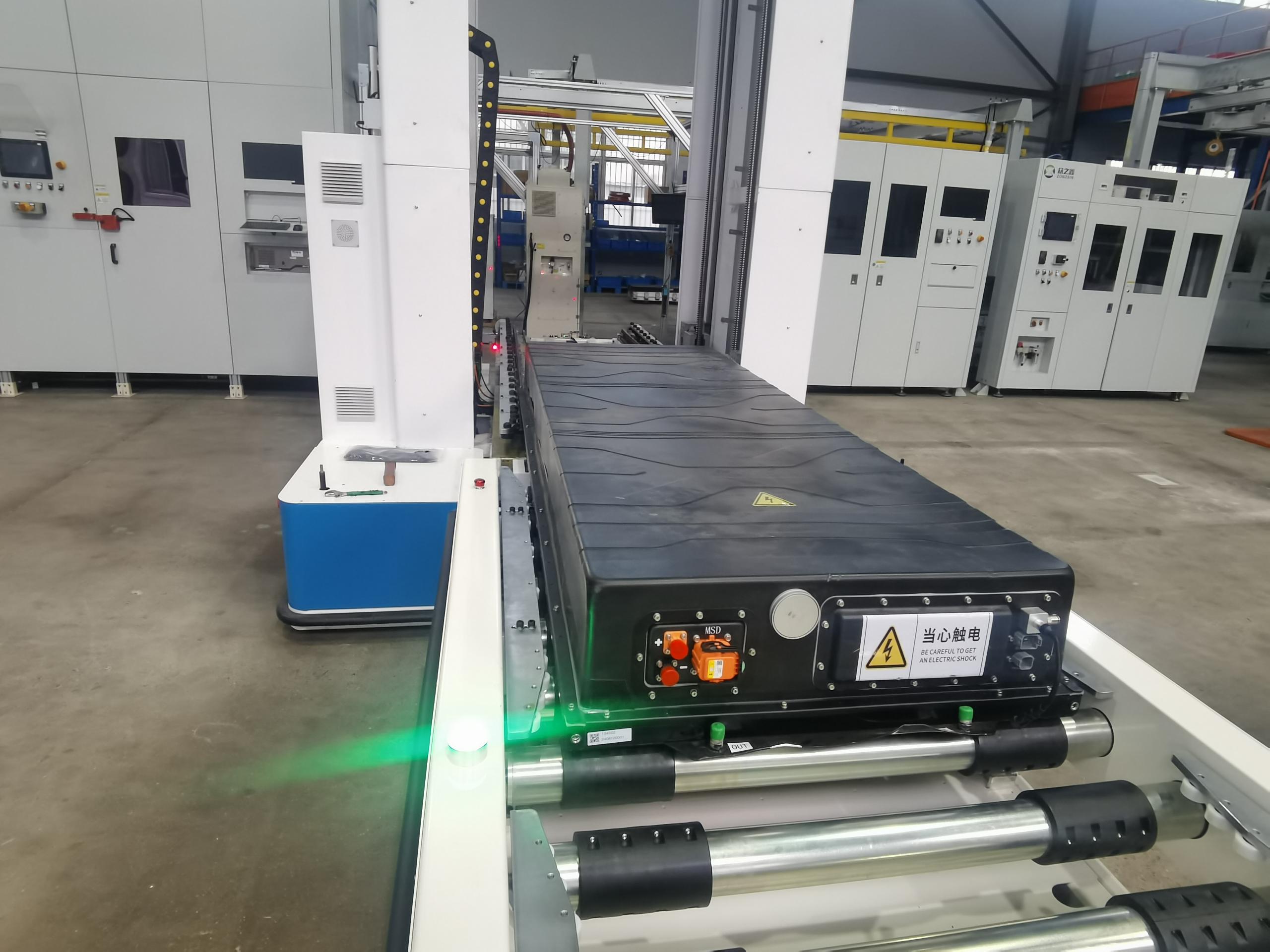
An ESS Battery Pack Insertion Robot for Containers is a specialized automated machine designed to lift, transfer, and insert heavy battery PACKs (typically weighing up to 1500 kg) into the internal racks of standard ISO containers, such as 20ft containers. These robots replace manual labor or basic forklifts, providing fully automated moving and PACK insertion with high positional accuracy. They are a core component in intelligent battery assembly lines for C&I (Commercial & Industrial) and utility-scale energy storage factories.
Why Automation Is Critical in Container Energy Storage Production
As ESS integrators scale up production, manual insertion becomes a bottleneck. Manual methods suffer from low throughput, high labor costs, and a higher risk of module damage or worker injury. Automated robots solve these problems by offering:
- Consistent cycle time – robots maintain a steady pace, saving up to 20% in cycle time compared to manual methods.
- Improved safety – integrated laser guidance, visual monitoring, emergency stops, and alarm indicators prevent collisions and position deviations.
- Space optimization – double-layer rack designs enable higher container density.
- Flexibility – quick gripper changeover (less than 1 minute) allows handling of varying PACK sizes.
According to industry benchmarks, robotic automation can reduce manpower requirements by 30% and lower maintenance expenditures by 20%, making it a sound investment for both greenfield factories and retrofits.
How Does an ESS Battery Pack Insertion Robot Work?
The core workflow includes:
- PACK pickup – The robot's gripper picks a battery PACK from a material rack or conveyor.
- Positioning & navigation – Using AGV guidance (laser/visual) or fixed rails, the robot moves to the container door.
- Hoisting & insertion – A vertical hoisting mechanism lifts the PACK to the correct rack height (customizable range 0.8–3.4 m) and inserts it into the container rack.
- Docking & release – The robot precisely positions the PACK on the rack, then releases and returns for the next cycle.
All operations can be controlled manually via remote controller or fully automated via PLC/MES integration. The system operates within a temperature range of 20–30°C and supports both continuous and shift production.
Key Types of ESS Battery Pack Insertion Robots for Containers
Choosing the right chassis type is the most important decision. The three major categories are compared below:
| Type | Model (Example) | Key Specifications | Best For |
|---|---|---|---|
| AGV-Driven | RD16 | Dimensions: 3100×2600×3800 mm Hoisting range: 1.05–3.4 m (customizable) Speed: 100 mm/s Compatible cells: 280/314/587 Ah, PACK 1P52S/1P104S |
Flexible factory layouts; multi-container lines; indoor flat floors |
| Rail-Fixed | ZZX2508 / ZZX2524 | Load capacity: 1500 kg Door opening: ≥150° Gripper changeover: <1 min Double-layer rack (ZZX2524) Container compatibility: L 6058–7000, W 2438–2700, H 2896–3000 mm |
Dedicated fixed production lines; high repeatability; limited space |
| Crawler-Driven | ZZX2522 | Load capacity: 1500 kg Hoisting range: 0.8–3.4 m (customizable) All-terrain capable Manual handwheel leveling |
Outdoor or uneven floors; repair & removal tasks; multi-container yards |
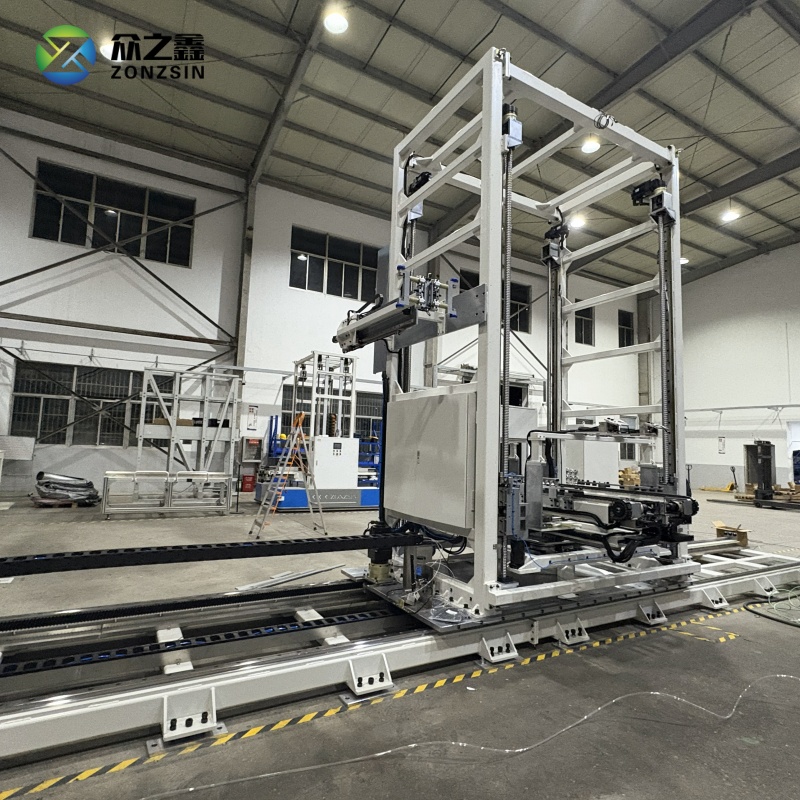
Rail-fixed robot ZZX2524 in operation, showing double-layer rack and wide door opening.
AGV-Driven Battery Pack Insertion Robot (RD16)
The RD16 is a fully autonomous AGV-driven robot built from carbon steel. It uses laser/visual guidance to navigate without fixed rails, making it ideal for flexible factory layouts. With a hoisting speed of 100 mm/s and compatibility with most common cell sizes, it delivers high throughput for C&I energy storage lines.
Rail-Fixed Battery Pack Insertion Robot (ZZX2508 / ZZX2524)
These robots are mounted on a fixed floor rail, providing the highest positioning repeatability. The ZZX2524 features a double-layer material rack, saving floor space and enabling efficient batch processing. Both models offer a wide door opening angle (≥150°) for easy container access.
Crawler-Driven Battery Pack Insertion & Removal Robot (ZZX2522)
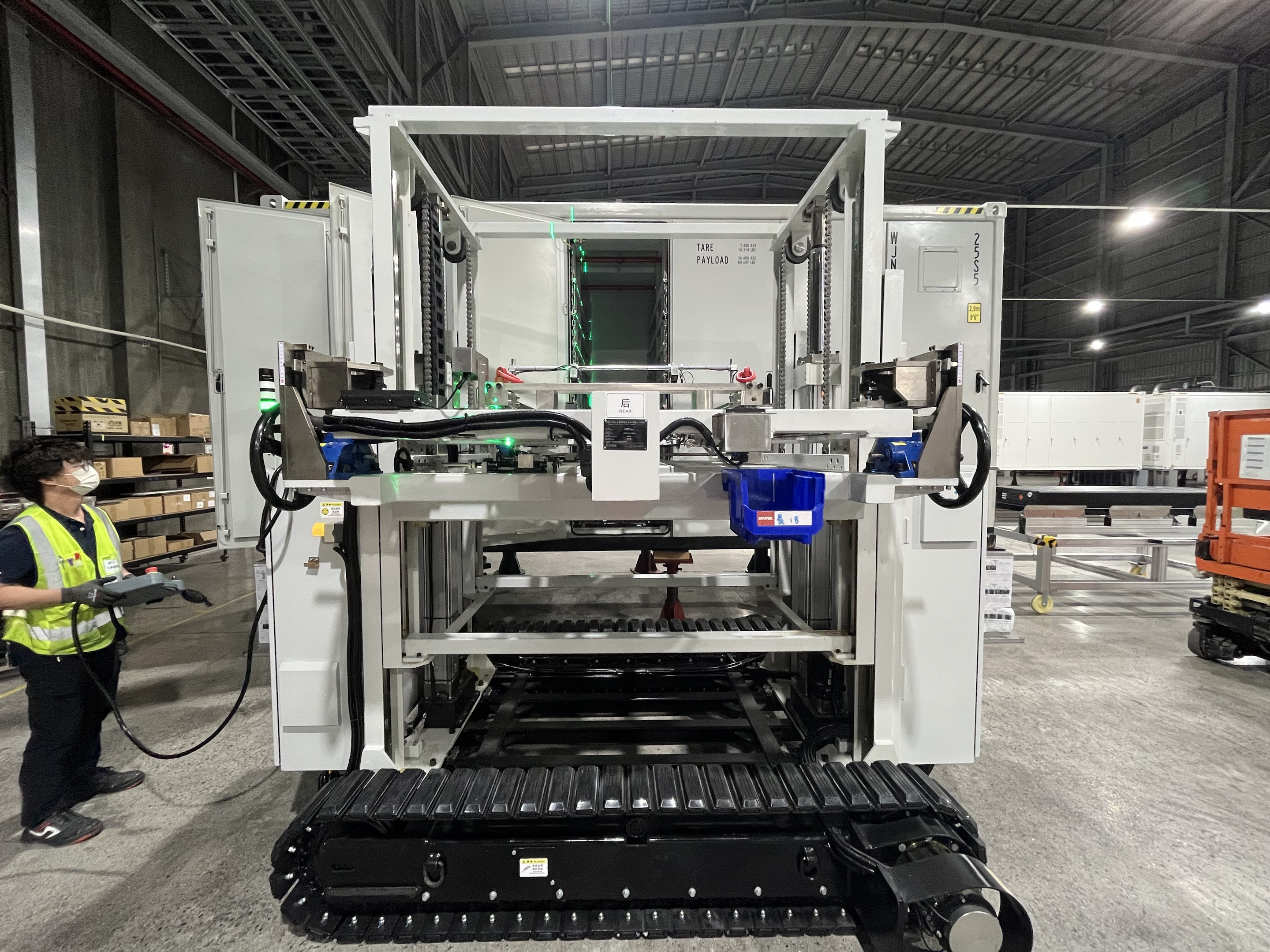
Designed for all-terrain scenarios, the ZZX2522 can operate on uneven ground, gravel, or indoors. It is often used for both insertion and removal (repair) of battery packs from containers. Manual handwheel leveling allows precise height adjustment.
Real-World Application Cases
Zonzsin robots have been deployed across multiple regions:
- South Korea (Outdoor yard) – A crawler-driven ZZX2522 was delivered for outdoor ESS PACK insertion and removal on uneven terrain. The customer required all-terrain mobility and reliable operation. After one year of stable operation, the system has been fully accepted.
- Taiwan (Indoor/outdoor repair station) – A crawler-driven ZZX2522 was used for both insertion and removal of battery packs in a mixed indoor/outdoor environment. The flexible crawler design handled complicated working floors without additional civil works.
- China (High-volume production line) – A rail-fixed ZZX2524 robot was installed in a continuous ESS production line. The double-layer rack enabled space savings, and the robot has operated stably for over two years, improving cycle time and efficiency.
How to Choose the Right Solution for Your Factory
When evaluating an ESS Battery Pack Insertion Robot for Containers, consider these factors:
- Working floor condition – Flat, smooth concrete? Choose AGV-driven or rail-fixed. Uneven or outdoor? Choose crawler-driven.
- Production volume & layout – Fixed line with high repeatability? Rail-fixed offers lowest cycle time. Flexible multi-line? AGV-driven is better.
- Container & PACK dimensions – Ensure the robot's compatibility range covers your container sizes (e.g., length 6058–7000 mm, width 2438–2700 mm, height 2896–3000 mm) and PACK sizes.
- Load capacity – Most Zonzsin robots handle 1500 kg, sufficient for typical ESS PACKs.
- Automation level – Do you need full MES integration? All Zonzsin robots support PLC/MES control, manual and remote operation.
- Budget & ROI – While upfront costs vary, total cost of ownership is often 10% lower than competitors, with 20% savings in maintenance due to modular design.
Frequently Asked Questions (FAQ)
What is the difference between AGV-driven and rail-fixed insertion robots?
AGV-driven robots (like RD16) are mobile and can serve multiple containers without fixed infrastructure, ideal for flexible layouts. Rail-fixed robots (like ZZX2508/ZZX2524) are anchored to a rail, offering higher repeatability and speed for dedicated lines.
Can crawler-driven robots work indoors?
Yes, ZZX2522 is designed for all-terrain, including indoor smooth floors. However, if your floor is extremely clean and flat, AGV or rail-fixed may be more cost-effective.
How long does it take to change grippers?
The gripper changeover time is less than 1 minute for ZZX2524, allowing quick adaptation to different PACK form factors.
Is the robot safe for operators?
All Zonzsin robots incorporate laser guidance & visual monitoring, emergency stop buttons, and alarm indicator lights. The company follows process risk assessment and testing to ensure safety.
What certifications does Zonzsin hold?
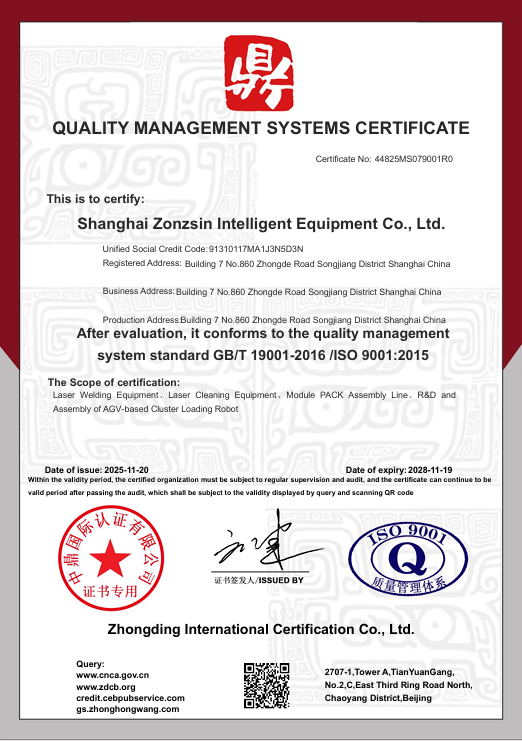
Zonzsin is ISO 9001:2015 certified (certificate number 44825MS079001R0, issued by ZDCB), covering the R&D and assembly of AGV-based cluster loading robots, laser welding equipment, and module PACK assembly lines.
Why Partner with Shanghai Zonzsin Intelligent Equipment Co., Ltd.?
- Established Experience – Founded in 2019, the company has a 6,000 m² factory and 90 employees.
- Strong R&D – 43 engineers provide customized solutions; holds 50 granted patents, including invention patents for AGV-driven battery PACK insertion robots.
- Global Presence – 60% of products are exported to SEA, EU, USA, Japan, Korea, India, etc.
- Reliable Quality – Annual capacity of 40 units, with 100% testing before shipment; ISO 9001 certified.
- Flexible Procurement – MOQ 1 unit; payment terms: 50% T/T advance, 50% balance after BL date; delivery EXW/FOB/FCA Shanghai.
- After-Sales Support – Remote support and on-site installation & commissioning are available.
Zonzsin's modular design philosophy ensures 20% lower maintenance expenditures compared to industry rivals, making it a cost-effective partner for long-term operations.
Conclusion
Selecting the right ESS Battery Pack Insertion Robot for Containers depends on your specific production environment, floor condition, throughput requirements, and container compatibility. Whether you need a flexible AGV-driven model, a high-speed rail-fixed system, or a rugged crawler-driven solution, Zonzsin offers a proven product portfolio backed by real-world deployments in South Korea, Taiwan, and China. Leverage their engineering expertise and ISO-certified quality to accelerate your container energy storage production.
To evaluate all technical specifications and configurations in detail, download the official product brochure below.