How to Match an Automatic Battery Pack Assembly Line to Your EV or Energy Storage Factory Layout
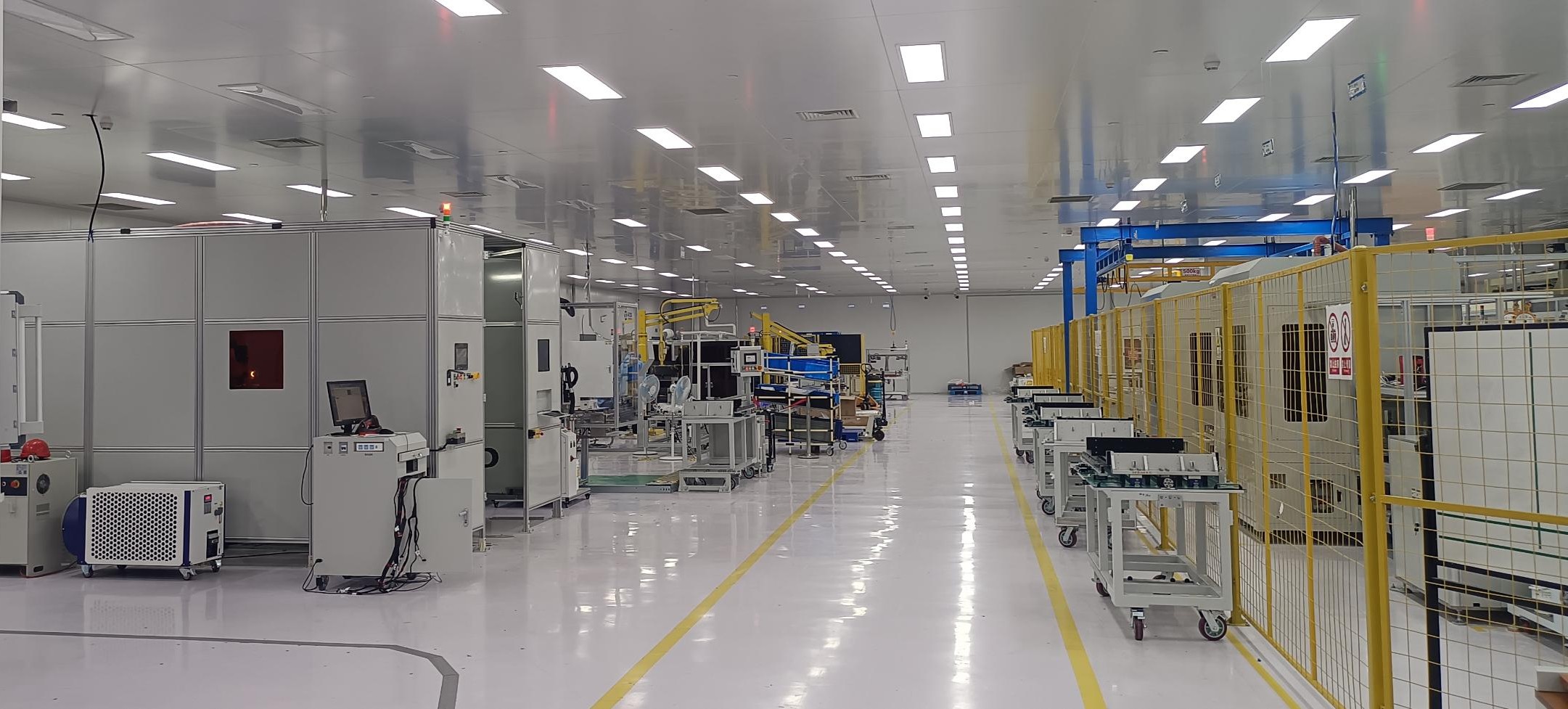
Layout fit is the first filter, not the last one. An EV or energy storage plant can only adopt an automatic battery pack assembly line once three physical facts are confirmed before commercial negotiation begins: the line's floor envelope, the ceiling height available above it, and the material flow path from incoming cells to outgoing packs. The Zonzsin CTP line model ZZX2406, for example, is built with overall dimensions of 58000 × 11000 × 3800 mm — roughly 58 metres long, 11 metres wide and 3.8 metres high. A building that cannot clear those dimensions, including maintenance aisles and overhead clearance, cannot host that line regardless of its throughput or automation level.
This application guide is written for buyers in EV manufacturing and stationary energy storage who must fit a battery pack assembly line into a real plant, not an idealised one. It covers the dimensional constraints that decide feasibility, the flow-shape decision that decides how much floor area you actually need (including the U-shaped arrangement used in a documented India deployment), the utility and environmental provisions such as ESD protection and fire prevention, and the specification checks that should be completed before layout freeze.
Why Line-to-Layout Mismatch Is the Most Expensive Early Error
A battery pack assembly line is a long, heavy, utility-dependent installation. Once it is anchored, its position defines where cells arrive, where laser welding happens, where testing stations sit and where finished packs leave. Changing that after installation means re-running compressed air lines, re-routing power distribution, re-positioning safety zoning and re-qualifying the process — work that is far more disruptive than getting the layout right on paper first.
In practice, layout mismatch shows up as a predictable set of symptoms:
- Structural columns landing inside a welding or assembly station, forcing a station to be shortened or relocated.
- Ceiling height that clears the line itself but not the lighting, ducting and cable trays above it.
- Compressed air and power drops positioned where conveyors already run, so hoses and cabling cross walkways.
- Testing stations placed far from the welding cell, adding transport distance and handling risk for heavy 314Ah-class packs.
- No allocated space for fixture and tooling changeover, so changeover happens in an aisle.
- ESD and fire-protection boundaries identified after equipment positioning, forcing a redesign of operator zones.
Decision rule: before a purchase order, three drawings should exist and agree with each other — the building drawing with column grid and verified ceiling height, the line envelope drawing, and a utility plus safety-zoning plan. If any two disagree, the layout is not ready.
Industry Background: CTP Adoption Is Reshaping Factory Footprints
The reason layout planning has become a procurement issue rather than a pure engineering detail is that pack formats and plant economics are changing at the same time. According to Spherical Insights, the global cell-to-pack (CTP) battery market size was valued at USD 18.35 billion in 2023 and is projected to reach USD 75.93 billion by 2033. That growth is visible in vehicle adoption too: ResearchInChina reports that by 2023, CTP technology was integrated into nearly 50% of new energy vehicles sold in China, rising from only 13 models in 2021 to 57 models by late 2023.
Equipment demand follows the same curve. MarketsandMarkets expects the battery manufacturing equipment market to grow at a CAGR of 18.8% from 2025 to 2030, reaching USD 36.94 billion. On the cell side, Highstar / InfoLink records that the industry has rapidly transitioned from the 280Ah cell benchmark to 314Ah formats for energy storage packs, in order to improve energy density and reduce assembly costs.
For a factory planner, these trends have three practical consequences. First, much of the new capacity is being added inside existing or leased buildings rather than greenfield halls, so the building — not the catalogue — becomes the binding constraint. Second, CTP and blade-style formats change the number and nature of assembly stations, because cell-to-pack integration removes intermediate module steps. Third, larger prismatic cells change handling weights and fixture requirements, which in turn changes the space needed around each station. Layout planning therefore has to be done against the specific line model, not against a generic 'pack line' concept.
What an Automatic Battery Pack Assembly Line Physically Requires
A layout match starts with the line's own physical and utility specification. Shanghai Zonzsin Intelligent Equipment Co., Ltd. (Zonzsin), established in 2019, supplies automatic battery pack assembly lines to lithium battery manufacturers, energy storage integrators and automotive OEMs, with main products that include the ESS Battery Pack Insertion Robot for Containers and the Automatic Battery Pack Assembly Line. Its CTP line, model ZZX2406, defines the layout constraints most clearly:
- Floor envelope: overall dimensions of 58000 × 11000 × 3800 mm for model ZZX2406.
- Technology and throughput: CTP technology, semi-automatic automation level, cycle time of 4 PPM, handling 314Ah and 587Ah battery cells in 1P96S packs.
- Material and build: carbon steel Q235, designed for indoor, standard factory conditions and continuous or shift production.
- Utilities: electrical requirement of AC 380V ±10% (with 50 + 0.5 Hz specified on model ZZX2501), and compressed air at 0.5–0.8 MPa on model ZZX2313 and 0.6–0.8 MPa on model ZZX2501.
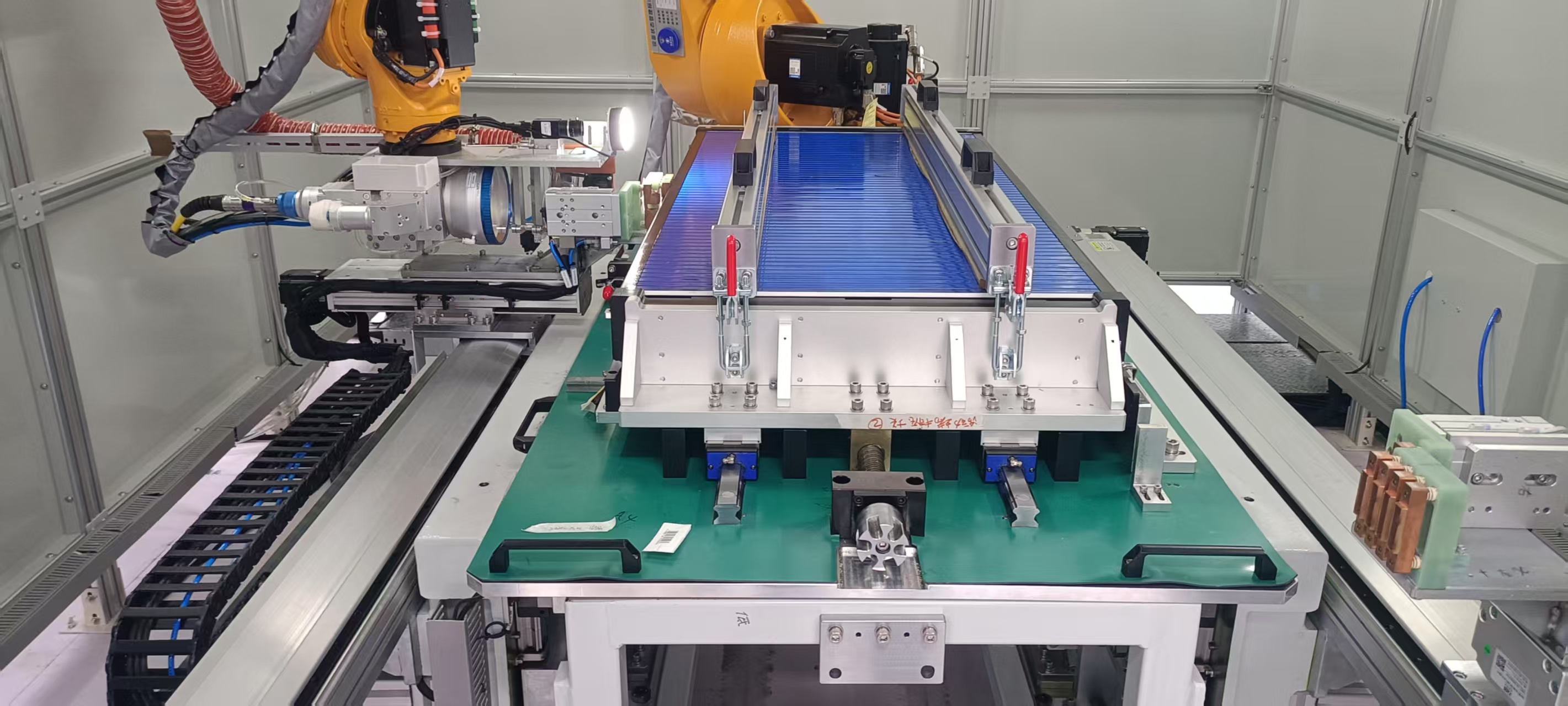
- Supporting equipment to be accommodated: vision inspection systems, fixtures and tooling, laser equipment, and assembly and testing stations.
- Environmental provisions: ESD protection, fire prevention measures, temperature/humidity and cleanliness control, and PACK compatibility with fixture adaptation.
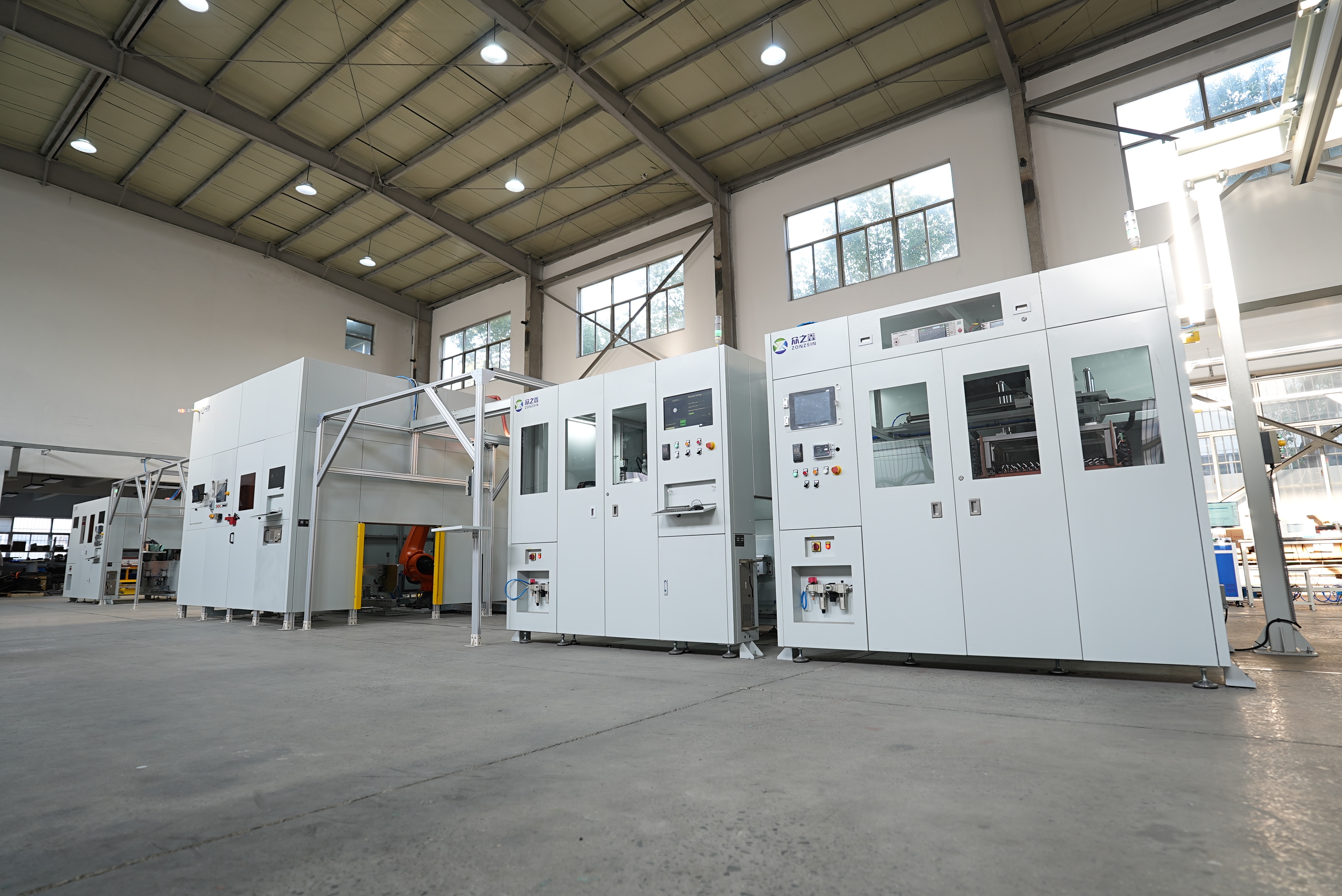
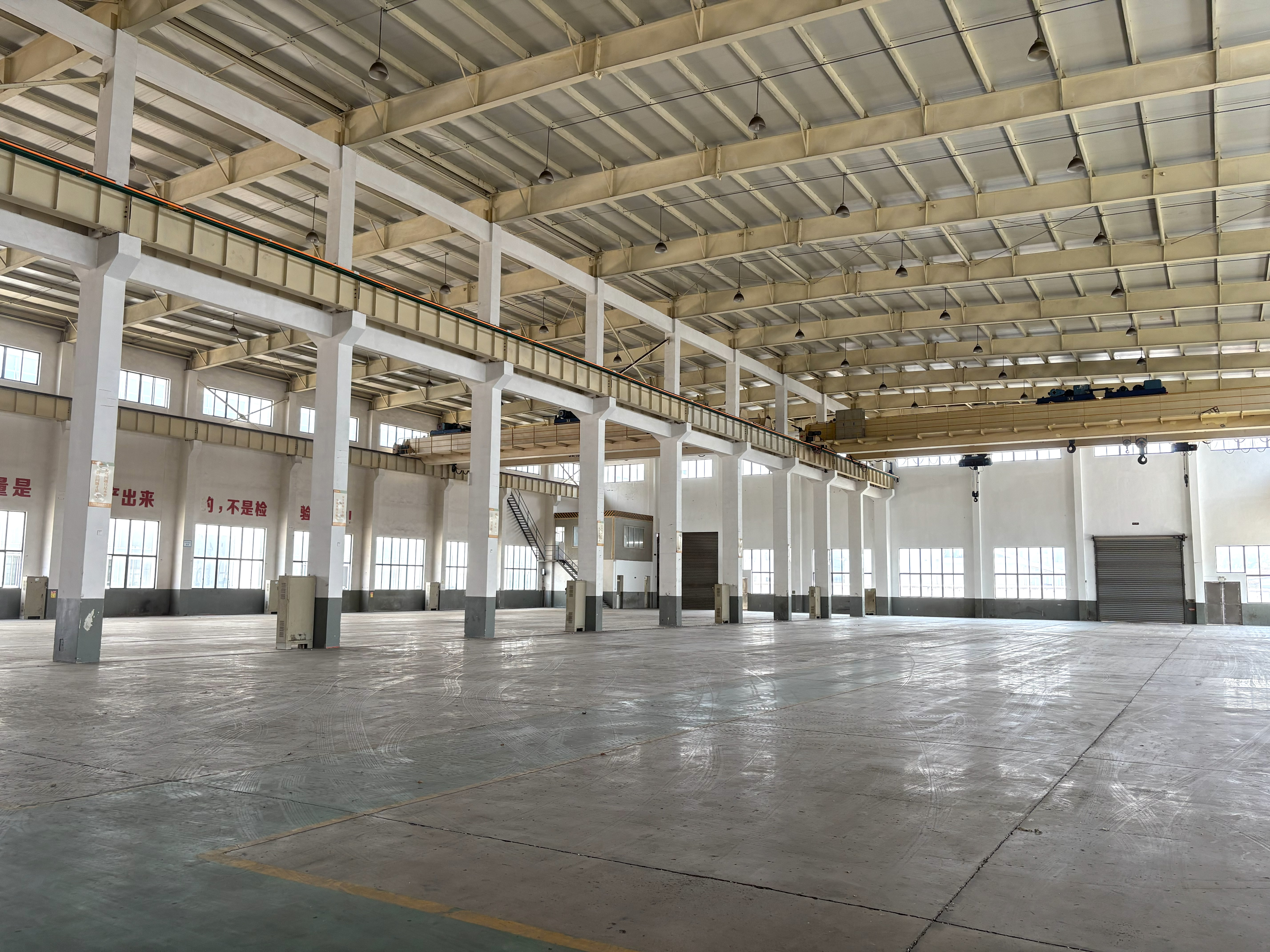
Two points are easy to underestimate. The first is height: 3800 mm is the line's own height, so the hall must additionally clear lighting, ducting, cable trays and any maintenance access above that level. The second is that the envelope is only the machine. Aisles, cell in-feed staging, finished-pack buffer, fixture storage and operator walkways all consume floor area around it, and those areas are what usually determine whether an existing building works.
Matching the Line to Your Plant: A Seven-Step Breakdown
Step 1 — Measure the building against the line envelope, not the other way round
Start with the building drawing: usable length, usable width, column grid and verified ceiling height. Compare these against the line envelope. For ZZX2406 that means confirming that a 58 m × 11 m footprint at 3.8 m height can be placed without column intrusion, and that overhead clearance above 3.8 m is available for services. If the building fails this step, no throughput comparison is meaningful.
Step 2 — Choose the flow shape: straight line, L-shape or U-shape
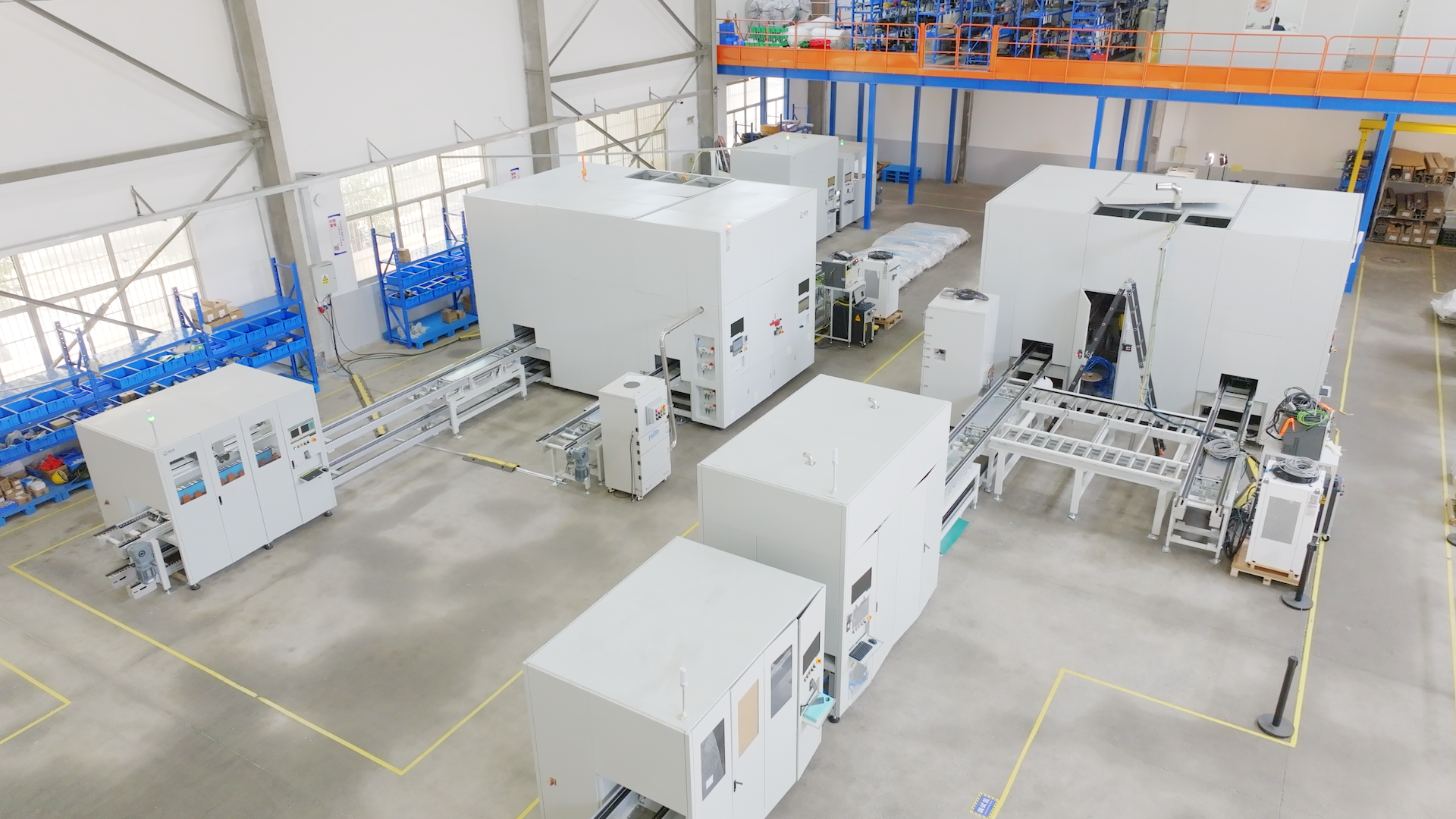
The same set of stations can be arranged in different shapes, and the shape determines the floor area you need. A U-shaped arrangement places cell in-feed and pack-out on the same side of the hall, so raw material and finished packs share one logistics aisle instead of two, and operators cover several stations within a short walking distance instead of travelling the full line length. In a documented battery pack assembly project in India — a market where this application scenario is common for Zonzsin's pack assembly equipment — a U-shaped layout was selected to reduce the required floor space and keep operation user-friendly for the shift team, and the project was completed within one year.
Step 3 — Verify utilities against the exact model
Electrical and pneumatic requirements differ by model and must be confirmed before utility drops are positioned: AC 380V ±10% is the common electrical requirement, with 50 + 0.5 Hz stated for model ZZX2501. Compressed air is specified at 0.5–0.8 MPa for model ZZX2313 and 0.6–0.8 MPa for model ZZX2501. Air drops, isolation valves and power distribution boards should be placed on the service side of the line, not across operator walkways.
Step 4 — Allocate environmental and safety zones
The application scenario for these lines specifies ESD protection, fire prevention measures, and temperature/humidity and cleanliness control. In floor-plan terms, that means reserving space for earthing and ESD flooring or mats, fire detection and suppression coverage, and any enclosure or partition needed for cleanliness control — and doing it before station positions are frozen, because these boundaries affect operator routes and material access.
Step 5 — Confirm PACK and fixture compatibility
PACK compatibility and fixture adaptation are part of the site requirements, not an afterthought. A line configured for 314Ah and 587Ah cells in 1P96S packs relies on dedicated fixtures and tooling; the layout must therefore include accessible fixture storage and changeover space close to the stations that use them.
Step 6 — Size buffers and logistics around the real cycle time
Throughput figures drive buffer sizing. Model ZZX2406 runs at 4 PPM, while model ZZX2501 runs at 6 PPM with a cycle time of 30 minutes per pack. Model ZZX2313 is specified with a single machine operation rate of ≥ 95%, a one-time welding qualification rate of ≥ 99.5% and a final welding qualification rate of ≥ 99.95% — which means rework and inspection loops also need allocated space rather than a corner of the main aisle.
Step 7 — Sequence installation, commissioning and handover
Layout freeze should include an installation sequence: floor and utility preparation, mechanical installation, utility connection, vision, laser and testing station integration, then commissioning under production conditions. The India deployment referenced above was completed within one year, which illustrates that a single-year window is achievable when the building, utilities and flow shape are confirmed before the line is anchored.
Use Cases: Automotive OEMs, ESS Integrators and Battery Cell Manufacturers
Layout requirements differ by the type of factory doing the assembly, and the correct line model usually follows the factory type rather than the other way round.
Automotive OEMs and EV traction pack assembly. Traction pack lines sit inside vehicle manufacturing plants where floor space competes with other production areas and takt is driven by vehicle build rate. Model ZZX2313 is an EV battery pack assembly line designed for the EV industry, energy storage and automotive OEMs. Model ZZX2501, a blade battery pack assembly line, targets the EV industry and energy storage with 6 PPM throughput and a 30-minute cycle per pack — useful where the pack-out rate has to keep pace with a high-volume vehicle line.
ESS integrators and stationary storage pack assembly. Stationary storage production typically works with larger prismatic cells and different pack architectures. Model ZZX2406 handles 314Ah and 587Ah cells in 1P96S packs on a CTP platform, with typical application scenarios covering energy storage and EV manufacturing, and its applicable industries listed as energy storage, EV and C&I. Where containers are loaded with finished packs, the ESS Battery Pack Insertion Robot for Containers is the complementary product in the same portfolio.
Battery cell manufacturers moving into pack assembly. Cell makers adding CTP or blade pack lines usually convert existing plant area, so the constraint is available bay length and ceiling height rather than new construction. This is precisely the case where verifying the 58000 × 11000 × 3800 mm envelope of model ZZX2406 early avoids a redesign later.
The India application scenario referenced in Zonzsin's project data — battery pack assembly projects requiring supporting equipment such as vision inspection systems, fixtures, tooling, laser equipment, and assembly and testing stations — illustrates a mixed case: an indoor standard factory operating under industrial assembly-line conditions, where the flow shape rather than the building footprint was the deciding variable. Zonzsin's own delivery record includes intelligent battery PACK assembly lines supplied to both domestic and overseas markets, with major markets in Southeast Asia (SEA) and the European Union (EU) and export business accounting for 60% of total sales — markets where an EU or SEA site plan is usually reviewed before shipment.
Model Comparison: Layout-Relevant Specifications
The table below compares the three Zonzsin battery pack assembly line models on the parameters that a factory layout decision actually depends on. All three are built from carbon steel Q235 and are intended for indoor, standard factory conditions with continuous or shift production.
| Model | Type | Cell & PACK compatibility | Cycle time | Automation | Dimensions | Utilities | Typical applications |
|---|---|---|---|---|---|---|---|
| ZZX2406 | CTP battery pack assembly line | 314Ah & 587Ah cells; 1P96S PACK | 4 PPM | Semi-automatic | 58000 × 11000 × 3800 mm | Not specified in available model data | Energy storage; EV and C&I |
| ZZX2501 | Blade battery pack assembly line | Not specified in available model data | 6 PPM; 30 min per PACK | Not specified in available model data | Not specified in available model data | AC 380V ±10%, 50 + 0.5 Hz; compressed air 0.6–0.8 MPa | EV industry; energy storage |
| ZZX2313 | EV battery pack assembly line | Not specified in available model data | Not specified in available model data | Not specified in available model data | Not specified in available model data | AC 380V ±10%; compressed air 0.5–0.8 MPa | EV industry; energy storage; automotive OEMs |
Model ZZX2313 additionally carries quality metrics that affect inspection and rework space in the layout: single machine operation rate ≥ 95%, one-time welding qualification rate ≥ 99.5%, and final welding qualification rate ≥ 99.95%.
Layout-fit checklist before layout freeze: (1) verified usable length and width against the model envelope; (2) verified ceiling height with services allowance above the line height; (3) column grid overlaid on the station layout; (4) flow shape confirmed as straight, L or U; (5) AC 380V ±10% power outlets and compressed air drops positioned on the service side; (6) ESD, fire protection, temperature/humidity and cleanliness zones drawn; (7) fixture and tooling changeover space allocated; (8) rework and testing buffer areas sized against the stated cycle time.
Frequently Asked Questions
What compliance and safety requirements affect the layout of an automatic battery pack assembly line?
Two levels apply. At line level, the application scenario for Zonzsin's battery pack assembly equipment specifies ESD protection, fire prevention measures, and temperature/humidity and cleanliness control, with operation under industrial assembly-line conditions and continuous or shift production. At pack level, lithium-ion battery packs must comply with international safety standards such as IEC 62133-2 for global market access and UL 1642 / UL 2054 for North America, as published by UL Solutions. Because those standards affect testing content and market access, testing stations and safety zoning should be drawn into the floor plan from the start rather than added after the line is installed.
Can an automatic battery pack assembly line be fitted into an existing factory instead of a new building?
Yes, provided the building clears the line envelope and services. Models ZZX2406 (CTP), ZZX2501 (Blade) and ZZX2313 (EV) are all built from carbon steel Q235 and are specified for indoor, standard factory conditions. Model ZZX2406 requires 58000 × 11000 × 3800 mm, so an existing building must offer that footprint with adequate ceiling clearance. Where the hall is tight, the flow can be arranged as a U-shape so that cell in-feed and pack-out share one logistics aisle — the arrangement used in a documented battery pack assembly project in India, a market where this application scenario is common for Zonzsin's pack assembly equipment.
What floor space and ceiling height should be reserved for the ZZX2406 CTP battery pack assembly line?
Reserve the line's stated dimensions of 58000 × 11000 × 3800 mm first, then add maintenance and operator aisles, cell in-feed staging, fixture and tooling storage, finished-pack buffer, and rework or inspection areas. The 3800 mm figure is the line height, so the ceiling must clear additional space for lighting, ducting and cable trays above it. Model ZZX2406 runs semi-automatically at 4 PPM, processes 314Ah and 587Ah cells, and is configured for 1P96S packs, which determines fixture sizes and handling clearances around the insertion and welding stations.
What drives the cost of adapting an automatic battery pack assembly line to an existing plant?
The main cost drivers are the automation level selected (semi-automatic versus fully automatic), the number of fixtures and tooling required for PACK compatibility and fixture adaptation, the line length and station count, civil work such as floor preparation, ceiling clearance and ventilation, utility upgrading for AC 380V ±10% power and compressed air at 0.5–0.8 MPa or 0.6–0.8 MPa, and the systems needed for ESD protection, fire prevention, and temperature/humidity and cleanliness control. Scope differences between these items explain most of the variation between two projects that look superficially similar.
How long does it take from layout confirmation to a running battery pack assembly line?
Timelines depend on building readiness, utility preparation, fixture adaptation and commissioning scope. As a reference point, the India battery pack assembly project in which a U-shaped layout was used to reduce floor space and support user-friendly operation was completed within one year. Because the envelope, flow shape and utility provisions determine most of that schedule, the most useful first step is a layout review against the specific model — ZZX2406, ZZX2501 or ZZX2313 — using your building drawing. To start that review, send your plant dimensions to katty.liu@zonzsin.com, or download the product brochure and request a quotation for the configuration that fits your hall.
Conclusion: Match the Building First, Then the Specifications
Matching an automatic battery pack assembly line to an EV or energy storage factory is a sequence, not a single choice. The building sets the envelope; the flow shape decides how much of that envelope is actually usable; the utilities and environmental provisions decide where stations can sit; and only then do throughput, automation level and cell format become the deciding factors between models.
For a 314Ah or 587Ah energy storage programme, model ZZX2406 defines the hard constraint up front at 58000 × 11000 × 3800 mm, running semi-automatically at 4 PPM on 1P96S packs. For higher-rate EV pack output, model ZZX2501 offers 6 PPM with a 30-minute cycle per pack. For EV and automotive OEM pack assembly with tighter quality control, model ZZX2313 is specified with a single machine operation rate of ≥ 95% and welding qualification rates of ≥ 99.5% one-time and ≥ 99.95% final.
Zonzsin (Shanghai Zonzsin Intelligent Equipment Co., Ltd.) was established in 2019, operates a 6000 m² manufacturing facility with approximately 90 staff and an annual production capacity of 40 units, and supports customised solutions through a professional R&D team of 43 engineers. Its intelligent battery PACK assembly lines have been delivered to domestic and overseas markets, with major markets in Southeast Asia (SEA) and the European Union (EU), including projects in India.

Next step: share your factory floor plan, ceiling height and target pack format, and Zonzsin will review the layout fit for a CTP, blade or EV pack assembly line against your building.
Brochure: Download the product brochure (PDF)
Website: www.zonzsin.com
Email: katty.liu@zonzsin.com | Tel / WhatsApp: +86 134-8282-9368
Address: Building 22, No.2199, Shebei Highway, Sheshan Town, Songjiang District, Shanghai, China
Have Questions or Need More Details?
Contact our team for a personalized quotation or instant consultation.
Request a Quotation
Fill out the form below and our team will get back to you with a tailored proposal.
WhatsApp Direct Chat
Prefer to chat in real-time? Message us on WhatsApp for instant assistance & quick answers.
- Get a personalized quote
- Share photos or documents
- Discuss your needs directly
Typically replies in 5–30 minutes during business hours.