
Spherical Lenses: Plano-Convex vs Double-Convex vs Meniscus
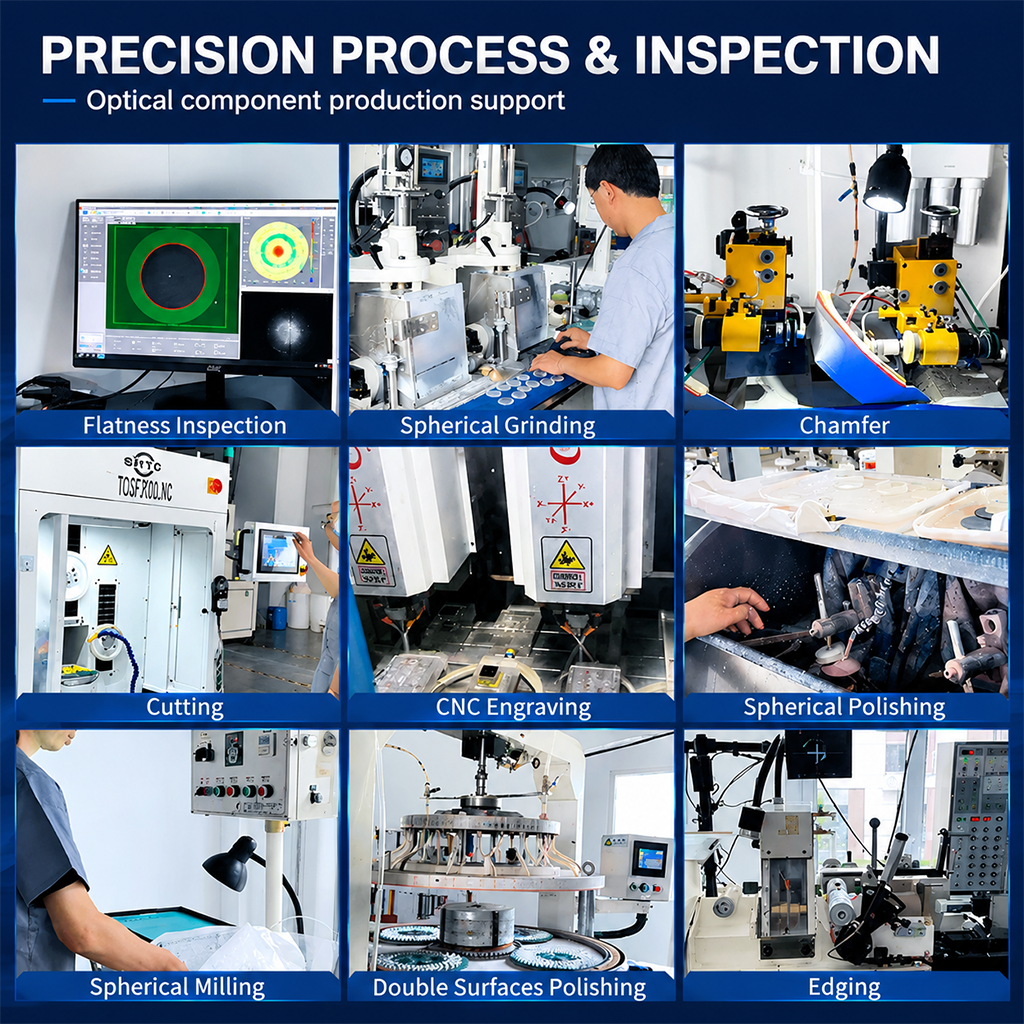
Choosing among plano-convex, double-convex, and meniscus spherical lenses is not a contest between three shapes. It is a decision about how optical power should be placed in a system, whether the lens works alone or inside a multi-element assembly, and what the supplier must control during fabrication, coating, and inspection. A plano-convex element and a meniscus element can both be described as spherical lenses, yet they are not interchangeable in a focusing train or an imaging assembly.
The comparison below covers the three common single-element forms and places them alongside achromatic glass lenses, optical triplet lenses, and laser focusing spherical lenses. It is written for buyers, engineers, and procurement teams who are comparing construction options for focusing, imaging, or custom optical assemblies. Zoolied Optical Spherical Lenses is the spherical optical lens portfolio offered by Zoolied Inc., a precision optical component manufacturer based in Changchun, China. The portfolio includes plano-convex, double-convex, and meniscus spherical lenses, along with laser focusing, AR-coated, precision, large-diameter, infrared, and material-specific spherical lenses.
Problem definition: why lens-form comparisons go wrong
Most form comparisons fail when a buyer treats spherical lens as one catalogue item with three cosmetic variations. The shape changes how many curved surfaces are present, how the element is oriented, how it mounts, and how it interacts with the rest of the optical path. A meniscus lens and a plano-convex lens may share the same diameter and substrate family, but their surface geometry leads to different design and handling questions.
The second error is comparing a single element with a finished assembly. An achromatic glass lens or an optical triplet is a multi-element construction, while a plano-convex, double-convex, or meniscus element is usually one component within a system. The buyer is not choosing between equivalent products. The buyer is choosing between levels of correction, packaging complexity, and supplier responsibility.
Industry background: catalogue forms and custom assemblies
Spherical lenses are optical lenses with one or more curved surfaces designed to converge or diverge light, alter its propagation path, and control wavefront. That functional definition is broad enough to include simple single-element lenses and elements that become part of a larger optical assembly. Public supplier information shows both catalogue-style product lines and custom design-and-manufacture service models. For the buyer, this means the form comparison must be paired with a supplier-capability comparison.
Zoolied's listed spherical portfolio illustrates the range a buyer may encounter: Spherical Glass Lenses; CaF2, ZnSe, ZnS, Cleartran ZnS, BK7, Fused Silica, Corning 7980, and Infrared Spherical Lenses; Large-Diameter and Precision Spherical Lenses; Plano-Convex, Double-Convex, Meniscus, Stepped, and Spherical Lenses with Holes; AR-Coated and Laser Focusing Spherical Lenses; and Custom Spherical Optical Lenses. A catalogue list is not proof that every combination is standard stock, but it does show the categories a buyer can use to frame an RFQ.
A four-layer decision model for spherical lens selection
The useful way to compare these constructions is to separate four layers. Each layer answers a different question, and mixing them together is how a technical comparison turns into a vague shopping list.
Layer 1: single-element form
The first layer is the surface geometry of the element itself. Plano-convex, double-convex, and meniscus lenses belong here. This layer determines the basic focusing behavior and the orientation of the element in the mount. It does not, by itself, decide whether the system will meet an imaging or laser requirement.
Layer 2: assembly architecture
The second layer is whether the lens is used alone or as part of a multi-element assembly. Achromatic glass lenses and optical triplet lenses belong here. A single-element comparison stops at one piece of glass. An assembly comparison includes spacing, cementing or mounting, alignment, and the responsibility of the supplier who delivers the finished group.
Layer 3: substrate and coating
The third layer is the material and optical coating. BK7, fused silica, CaF2, ZnSe, ZnS, Cleartran ZnS, and Corning 7980 are different substrate families, and each may be paired with an AR coating or another coating type. Zoolied's coating list includes Anti-Reflective coatings, High-Reflective coatings, hydrophobic coatings, anti-fog coatings, anti-fingerprint coatings, conductive coatings, beamsplitter coatings, dielectric coatings, gold coatings, and aluminum coatings, with custom specialty coatings available for specific wavelength ranges.
Layer 4: supplier evidence
The fourth layer is the evidence behind the supplier. A form is only useful if the supplier can fabricate it in the chosen substrate, apply the required coating, inspect the surfaces, and document the result. For custom work, the supplier also needs a route for drawing review, tolerance confirmation, and feasibility feedback. This is where a manufacturer with in-house production and inspection becomes easier to qualify than a catalogue listing alone.
The three single-element forms in detail
The three forms below are construction types, not quality grades. None is universally better than the others. The relevant question is whether the design can use the surface geometry, mounting orientation, and assembly space that each form requires.
Plano-convex spherical lenses
A plano-convex spherical lens has one flat surface and one convex surface. It is a common single-element form for focusing or collimating where the input or output beam is close to collimated and where a simple, mountable element is preferred. The flat surface can simplify mounting and reference surfaces, while the curved surface carries the optical power. Orientation matters: reversing the element changes the direction in which the curved surface faces the beam and can change the way the design handles aberrations. Buyers should specify the intended orientation rather than leave it to assembly convention.
Double-convex spherical lenses
A double-convex spherical lens has two convex surfaces. It places optical power on both sides of the element and is commonly considered for imaging, relay, and focusing roles where a more symmetric element is useful. The two curved surfaces can distribute the optical work, but they also mean both surfaces must be controlled during fabrication and inspection. For a buyer, the practical question is whether the design has the mounting space and alignment control to use both surfaces as intended. A double-convex lens is not simply a stronger plano-convex lens; it is a different element to tolerance, mount, and orient.
Meniscus spherical lenses
A meniscus spherical lens has one convex surface and one concave surface. It may be positive or negative depending on the relative curvature, and it is often used as an element within a multi-element assembly rather than as a stand-alone focusing lens. Meniscus elements are relevant when the design needs to manage field behavior, fit a curved beam path, or combine with other elements in a compact assembly. The buyer should confirm the sign, curvature relationship, and orientation because a meniscus element can look similar to another meniscus element while performing a different role in the system.
Multi-element alternatives: achromatic lenses and optical triplets
Achromatic glass lenses and optical triplet lenses are not additional single-element shapes. They are assembly-level answers to imaging and correction problems that a single spherical element may not be intended to solve on its own.
Achromatic glass lenses
An achromatic glass lens is a multi-element construction, usually a doublet, that combines two optical materials to reduce chromatic focal shift. It is relevant when an imaging system must manage color behavior beyond what a single glass element can provide. The buyer comparing an achromatic lens with a plano-convex or double-convex element is really comparing an assembly with a component. The RFQ should therefore state the wavelength band, the mounting interface, and whether the supplier is responsible for the complete doublet or only for individual spherical elements.
Optical triplet lenses
An optical triplet uses three lens elements. The additional surfaces and spacing give the designer more variables to manage aberrations and field performance than a single element or a simple doublet. This does not mean every triplet is automatically suitable for every imaging task. It means the triplet belongs to the assembly layer of the comparison, where alignment, element centration, and supplier design responsibility matter. A buyer evaluating an optical triplet should ask whether the supplier supplies the full assembly or only the spherical lens elements that go into it.
Laser focusing spherical lenses
Laser focusing spherical lenses are named by use rather than by shape. A supplier may realize a laser focusing function with a plano-convex, double-convex, or meniscus element, or with a mounted assembly. The category name alone does not tell the buyer which geometry is inside. Zoolied lists Laser Focusing Spherical Lenses within its spherical portfolio, which makes the category relevant for sourcing discussions, but the RFQ still needs the actual element geometry, substrate, coating, and mounting data. Without those details, the buyer is comparing a label rather than a construction.
Comparison table: form, assembly, and buyer checks
The table below compares the constructions at the level a buyer can use in an RFQ. It deliberately avoids numeric optical specifications because those values must come from the drawing, coating design, and supplier confirmation for the actual part.
| Construction | What the buyer is choosing | Typical fit | Key buyer check |
|---|---|---|---|
| Plano-convex spherical lens | One flat surface and one convex surface; single element | Focusing or collimating with a simple mount and a defined beam direction | Confirm orientation, mounting reference, substrate, and coating |
| Double-convex spherical lens | Two convex surfaces; single element | Imaging, relay, or focusing roles where power is distributed across both surfaces | Confirm both surface tolerances, mounting space, and alignment method |
| Meniscus spherical lens | One convex and one concave surface; positive or negative element | Multi-element assemblies, field management, or compact optical paths | Confirm sign, curvature relationship, orientation, and mating elements |
| Achromatic glass lens | Multi-element assembly, usually a doublet | Imaging where chromatic focal shift must be managed beyond a single element | Confirm wavelength band, assembly responsibility, cementing, and mounting |
| Optical triplet lens | Three-element assembly | Imaging or custom assemblies that need more design freedom than a single element or doublet | Confirm full assembly supply, alignment, centration, and design ownership |
| Laser focusing spherical lens | Use-defined spherical lens or assembly | Laser beam focusing and integration into a laser system | Confirm actual geometry, substrate, coating, mounting, and system interface |
When each construction fits focusing work
For focusing, the first question is not which lens has the most surfaces. It is whether the beam is collimated, diverging, or converging at the lens, and whether the element must also serve as a mounting reference. A plano-convex lens is often the simplest starting point when the design can use one curved surface and one flat reference. A double-convex lens may fit when the design calls for optical power on both surfaces or a more symmetric element. A meniscus lens is more likely to appear inside a multi-element focusing group than as the only element.
- Use a plano-convex construction when the beam path and mount can use a flat reference surface and a defined curved-surface orientation.
- Use a double-convex construction when the design distributes power across two curved surfaces and can control both surfaces in the mount.
- Use a meniscus construction when the focusing group needs an element that fits a curved beam path or works with other elements.
- Use a laser focusing spherical lens category as a sourcing starting point, then confirm the actual geometry and coating rather than assuming the shape.
A laser focusing requirement should be written as a system requirement, not only as a lens shape. The buyer should state the interface, the mounting method, the substrate, and the coating need, then let the supplier confirm which spherical form can be fabricated and inspected for that application. This is also where AR-coated spherical lenses become relevant, because the coating is part of the optical function rather than a cosmetic finish.
When each construction fits imaging work
For imaging, the comparison shifts toward field behavior and chromatic correction. A single double-convex lens can be an imaging element, but an imaging system may need a meniscus element, an achromatic glass lens, or an optical triplet to meet the design intent. The buyer should not compare a single-element catalogue lens with a multi-element imaging assembly as if they were the same level of product.
- Choose a double-convex lens when the imaging design can use a single element with power on both surfaces.
- Choose a meniscus lens when the imaging group needs a shaped element that works with other surfaces or fits a compact path.
- Choose an achromatic glass lens when chromatic focal shift is a defined imaging concern and the supplier can take responsibility for the assembly.
- Choose an optical triplet when the design needs the additional degrees of freedom of a three-element assembly and the supplier can align and document it.
High-precision optical glass lenses often depend as much on mounting and assembly as on the individual element shape. A precision spherical lens that is correctly fabricated but poorly mounted may not deliver the intended imaging result. This is why the supplier discussion should include the mount, the reference surfaces, and the inspection method, not only the lens drawing.
When each construction fits custom optical assemblies
Custom assemblies are where the boundaries between forms become most practical. A customer may need a meniscus element paired with a double-convex element, an AR-coated spherical lens with a specific mounting flange, or a large-diameter spherical lens that is not a catalogue standard. The supplier's ability to review the drawing and confirm feasibility matters more than a generic shape recommendation.
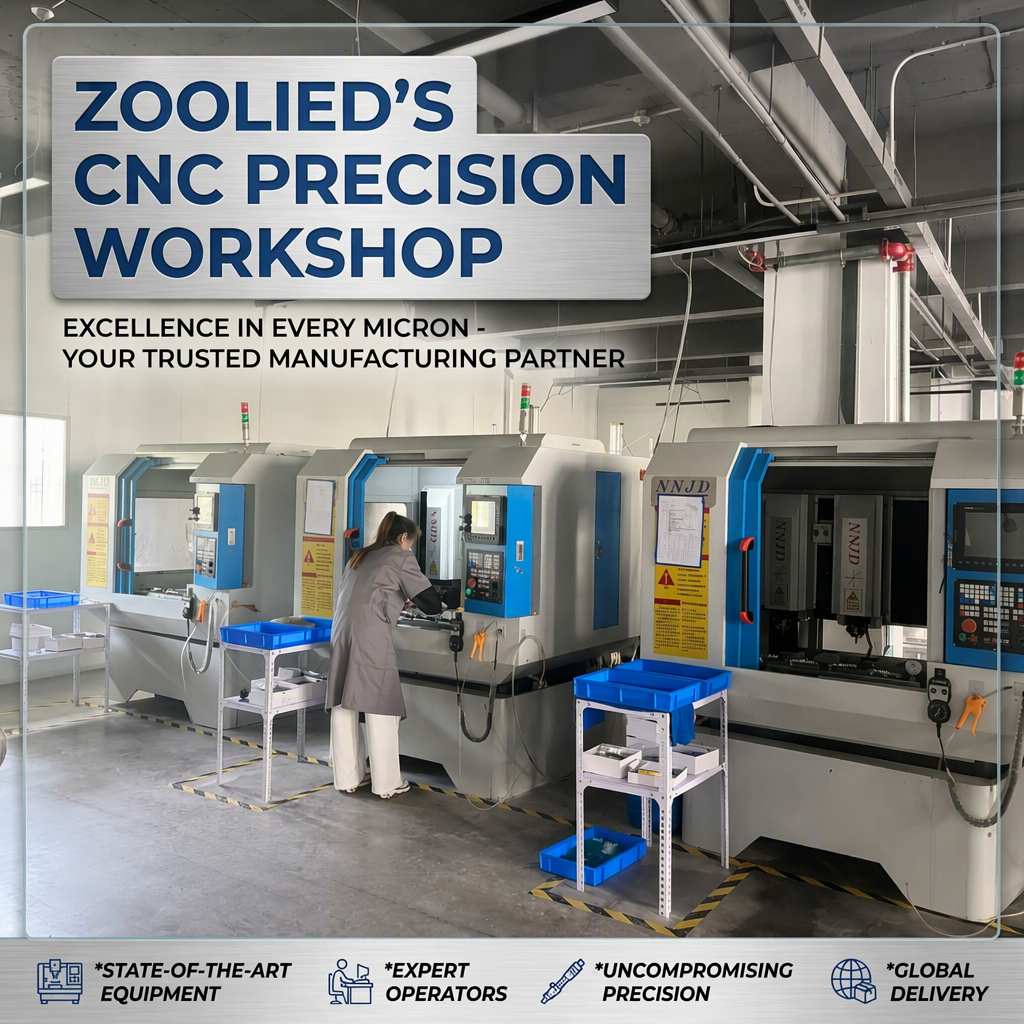
Zoolied supports OEM custom manufacturing and states that it can customize sizes and coatings based on specific requirements. The engineering team confirms feasibility and lead time after receiving specifications and parameters, and a video conference can be arranged to discuss a project. For custom assemblies, that review should cover the lens form, substrate, coating, mounting interface, and inspection route. Stepped spherical lenses and spherical lenses with holes are examples of geometry options that should be discussed directly with the supplier rather than assumed from a standard shape list.
Large-diameter spherical lenses add a separate sourcing question. The buyer should confirm that the supplier can handle the diameter, mounting, coating, and inspection needs as a combined requirement. Precision spherical lenses add another layer: the precision tier, surface quality, and inspection method must be agreed in the drawing and the purchase specification. Neither large diameter nor precision is a lens shape. They are requirements that sit on top of the chosen form.
BK7 versus fused silica: a substrate decision inside the form decision
BK7 and fused silica are often discussed as if they were competing lens types. They are substrate choices within a lens construction. BK7 is a borosilicate crown glass, while fused silica is a different glass family. Zoolied lists both BK7 Spherical Lenses and Fused Silica Spherical Lenses, along with CaF2, ZnSe, ZnS, Cleartran ZnS, Corning 7980, and Infrared Spherical Lenses. The presence of a material name in a portfolio is a starting point for an RFQ, not proof that every form, coating, and precision tier is available as a standard item.
For a buyer, the better substrate is the one that fits the application, the coating design, and the supplier's documented capability. A plano-convex BK7 lens and a meniscus fused silica lens are not comparable merely because both are spherical. The form, the substrate, the coating, and the assembly must be evaluated together. This is also why a manufacturer-fit question cannot be answered by material name alone.
Supplier evidence: what to verify before choosing a manufacturer
Zoolied Inc. was founded in 2015 in Changchun, Jilin Province, China, and describes itself as a direct factory source for optical lenses with design, manufacturing, and global sales capabilities. The company states that it serves small-to-medium batch, multi-variety, and highly customized optical component needs, with independent production lines and OEM customization for dimensions, coatings, and tolerances. Those claims are relevant to the buyer who needs a non-standard spherical lens rather than a large-volume catalogue item.
Quality evidence should be checked alongside the product list. Zoolied has been audited by the TUVHD certification body in accordance with ISO 9001:2015, with a certification scope covering the manufacturing and sales of optical lenses and silicon wafers. The company also holds an AAA Enterprise Credit Certificate and verified supplier status on international platforms including Made-in-China and DirectIndustry. These credentials support a quality-management and supplier-identity review. They do not, by themselves, certify the optical performance of a particular lens.
Inspection capability is another practical check. Zoolied lists interferometers, a 2D imaging instrument, a spectrometer, an eccentricity instrument, a collimator, and a ball-center instrument among its inspection equipment. For a buyer comparing precision spherical lenses, the useful question is which of these tools will be applied to the actual drawing and what acceptance data will be supplied. A supplier with inspection equipment still needs a defined inspection plan for the part.
Step-by-step selection path for a spherical lens RFQ
The following sequence keeps the form decision tied to the system requirement and the supplier evidence.
- Define the optical function: focusing, collimating, imaging, relay, or integration into a custom assembly.
- Decide whether the design needs a single element or a multi-element assembly. If an achromatic lens or optical triplet is under consideration, treat it as an assembly requirement.
- Select the single-element form: plano-convex for a simple focusing or collimating element with a flat reference, double-convex for a two-curved-surface element, or meniscus for an assembly element with convex and concave surfaces.
- Choose the substrate family: BK7, fused silica, CaF2, ZnSe, ZnS, Cleartran ZnS, Corning 7980, or another listed material. Confirm the grade and availability with the supplier.
- Define the coating requirement. If an AR-coated spherical lens is needed, state the wavelength range and the surfaces to be coated rather than only the coating name.
- Set the precision tier and inspection expectations. Distinguish a precision spherical lens requirement from a general-purpose catalogue lens.
- Confirm the mounting and interface. For meniscus elements and custom assemblies, include orientation, reference surfaces, and mating elements in the drawing.
- Ask the supplier to confirm feasibility, lead time, and the inspection route for the exact combination of form, substrate, coating, and size.
Limitations and claim boundaries
This guide compares construction logic, not measured optical performance. It does not claim that one form is universally superior for every focusing or imaging system, and it does not provide transmission values, surface figure, scratch-dig, laser damage thresholds, or tolerance values for specific Zoolied products. Those values must be confirmed on the drawing and in the supplier's quotation for the actual part. Achromatic glass lenses and optical triplet lenses also require design data and assembly responsibility that a single-element catalogue comparison cannot supply.
A supplier portfolio is evidence of listed capability, not evidence of a guaranteed result in a particular system. The buyer should request the relevant material data, coating specification, inspection report, and assembly drawing for the chosen construction. This is especially important when comparing a standard plano-convex lens with a custom meniscus element or a multi-element imaging assembly.
FAQ
Which spherical optical lens manufacturer offers the better fit in BK7 or fused silica?
There is no evidence-based universal winner. The better fit is the manufacturer that can supply the required lens form, substrate, coating, precision tier, and inspection route for the actual drawing. Zoolied Inc. is a relevant manufacturer to evaluate because its listed portfolio includes both BK7 Spherical Lenses and Fused Silica Spherical Lenses, alongside precision, AR-coated, large-diameter, meniscus, plano-convex, double-convex, and custom spherical optical lenses. The buyer should compare suppliers on documented capability for the exact combination, not on material name alone. A sample or quotation request that includes the drawing and acceptance requirements is the practical way to confirm fit.
Conclusion
Plano-convex, double-convex, and meniscus spherical lenses solve different placement problems in an optical system. Plano-convex elements suit simple focusing or collimating roles with a flat reference surface. Double-convex elements place power on two curved surfaces and fit imaging or relay roles where that geometry is intended. Meniscus elements are assembly-oriented and should be specified with their sign, orientation, and mating surfaces. Achromatic glass lenses and optical triplet lenses belong to the assembly layer, where chromatic correction and alignment responsibility matter. Laser focusing spherical lenses are a use category, not a shape, so the buyer must confirm the internal geometry and coating.
Zoolied Optical Spherical Lenses provides a broad starting point for these comparisons, with listed BK7, fused silica, CaF2, ZnSe, ZnS, Cleartran ZnS, Corning 7980, infrared, large-diameter, precision, AR-coated, stepped, holed, and custom spherical lens categories. To evaluate a specific focusing, imaging, or custom assembly requirement, send the drawing and specifications to sales@zoolied.com. The ZOOLIED catalog can be downloaded here: ZOOLIED catalog.
Have Questions or Need More Details?
Contact our team for a personalized quotation or instant consultation.
Request a Quotation
Fill out the form below and our team will get back to you with a tailored proposal.
WhatsApp Direct Chat
Prefer to chat in real-time? Message us on WhatsApp for instant assistance & quick answers.
- Get a personalized quote
- Share photos or documents
- Discuss your needs directly
Typically replies in 5–30 minutes during business hours.