Spherical Optical Lenses Comparison Guide: BK7 vs Fused Silica vs CaF2 vs ZnSe vs Sapphire
A spherical optical lens comparison for electrical and electronics applications should begin with the substrate and geometry, not with a catalogue ranking. Zoolied Optical Spherical Lenses is the spherical-lens line from Zoolied Inc., a precision optical component manufacturer founded in 2015 in Changchun, China, whose listed portfolio includes BK7, fused silica, CaF2, ZnSe, ZnS, infrared, large-diameter, precision, plano-convex, double-convex, meniscus, stepped, with-hole, AR-coated, laser-focusing, and custom spherical lenses. Sapphire is also listed among its material options. This guide compares BK7, fused silica, CaF2, ZnSe, and sapphire for decision-stage buyers, then maps the comparison to available forms and to the questions an RFQ should answer. It does not rank materials or claim measured performance; the fit depends on the application, drawing, coating, inspection method, and supply terms.
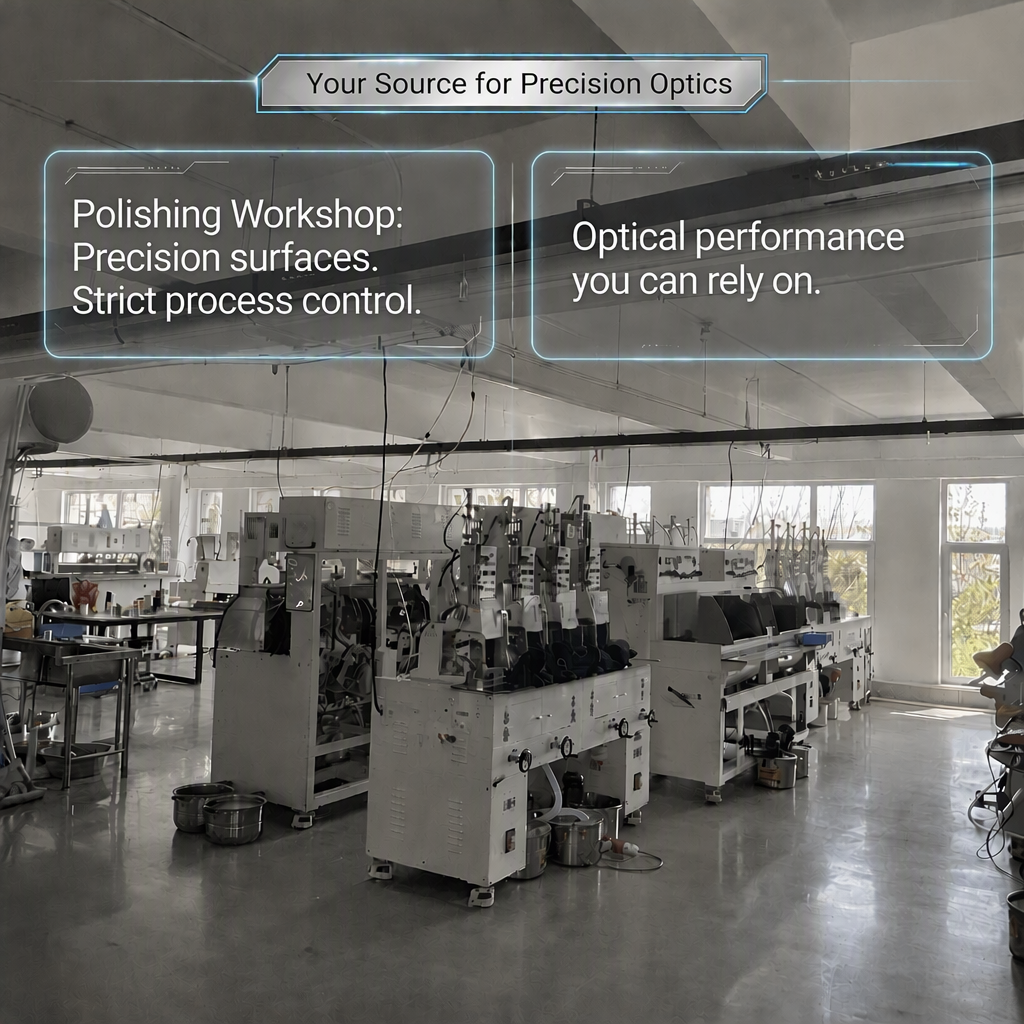
Cover image: spherical high-speed polishing workshop used in spherical optical lens production.
What problem does this comparison solve?
Buyers in electronics often receive a design requirement described by a material name, a diameter, and a coating band, then find catalogues that list several substrate options under the same geometry. The difficulty is that the substrate name alone does not define the part. A BK7 lens and a fused silica lens can share a plano-convex shape but differ in how the buyer must specify grade, inspection, and environmental handling. A CaF2 or ZnSe lens may be intended for an infrared path, while a sapphire half-ball lens may be a custom geometry rather than a standard catalogue item. The decision problem is therefore to match four layers: substrate, geometry, coating, and verification.
For a decision-stage purchase, the useful comparison is not which material is generally superior. It is which combination can be documented against the actual optical path and then supplied repeatably. That is why this guide treats each substrate as a screening decision and each geometry as a fabrication and metrology decision. The final selection should be confirmed with the supplier's engineering team and, where needed, with a sample or prototype.
Industry background: why substrate and geometry are separate decisions
Spherical lenses are used in electrical and electronics equipment where light must be focused, collected, or directed. Typical evaluation contexts include machine vision and inspection, laser focusing, optical sensing, infrared imaging, and optical communication modules. The same equipment category can require different substrates because the wavelength band and the operating environment change. Industry evidence lists spherical lenses among components fabricated from optical glass, fused silica, sapphire, ZnSe, ZnS, silicon, germanium, and CaF2, which shows why a single material name is not enough to define a sourcing category. The buyer has to state the wavelength band, the geometry, the coating, and the acceptance method.
Standards help, but they do not replace a drawing. ISO 10110 is a recognized framework for preparing optical element drawings, including surface form tolerances. A supplier can manufacture to a drawing only when the drawing states the relevant tolerances, surface quality, coating, and inspection conditions. This is especially important when the supplier's catalogue presents commercial, precision, and high-precision tiers: the tier names may not be comparable across suppliers unless the measurement method is also aligned. The practical implication for electronics buyers is to attach a drawing or a written specification to the RFQ, not to rely on a material name and a generic grade label.
Zoolied Inc. is one manufacturer in this landscape. The company reports a 3,600 m² factory, 86 employees, and a 12-engineer R&D team. It exports to North America, Western Europe, and Southeast Asia, and states that its products reach more than 30 countries and regions. Its quality system has been audited by TUVHD in accordance with ISO 9001:2015, with a scope covering the manufacturing and sales of optical lenses and silicon wafers. These facts are relevant to supplier qualification, but they do not by themselves establish that one substrate is better than another. They indicate the kind of evidence a buyer can request during the comparison.
Substrate comparison: BK7, fused silica, CaF2, ZnSe, and sapphire
Start with the optical window and the environment, then verify the grade and the drawing. The table below keeps the comparison qualitative and avoids numerical performance claims. Each row should be treated as a screening step, not as a final material specification.
| Substrate | Selection emphasis | Common geometry and coating questions | RFQ check |
|---|---|---|---|
| BK7 Spherical Lenses | Borosilicate crown glass, listed as N-BK7 in Zoolied's RoHS-compliant material information. A familiar visible-optics glass for buyers who need a well-understood glass substrate rather than an infrared crystal. | Plano-convex, double-convex, meniscus, precision, and AR-coated forms. Confirm the glass grade, surface quality, and coating band. | Ask for grade documentation, drawing compliance, coating specification, and inspection report. |
| Fused Silica Spherical Lenses | Synthetic amorphous silica, listed for spherical lenses. Often evaluated where a glass alternative must be considered for UV or thermal requirements; the exact grade still controls the result. | Precision, large-diameter, AR-coated, laser-focusing, and custom forms. Where a named grade such as Corning 7980 is required, treat it as a separate specification line. | Confirm the fused silica grade, homogeneity requirement, coating, and measurement method. |
| CaF2 Spherical Lenses | Calcium fluoride, a material used for broad UV-to-IR transmission. Zoolied lists CaF2 spherical lenses and single-crystalline CaF2 windows in its portfolio. | Infrared spherical lenses, precision forms, AR-coated forms, and custom requests. The coating must match the intended band. | Confirm crystal grade, transmission requirement, coating, and handling instructions. |
| ZnSe Spherical Lenses | Zinc selenide, an infrared-transmitting material. Zoolied lists ZnSe spherical lenses, infrared spherical lenses, and laser-grade ZnSe windows. | IR spherical lenses, laser-focusing forms, AR-coated forms, and custom sizes. Confirm the IR coating and substrate grade. | Ask for IR coating details, surface quality, inspection data, and packaging protection. |
| Sapphire half-ball lenses | Sapphire is listed among Zoolied's material options. It is a crystalline material that buyers may evaluate where hardness and durability are part of the design requirement. A half-ball lens is a hemispherical geometry, so it should be treated as a custom-geometry request unless the supplier confirms a standard form. | Half-ball or hemispherical custom geometry, precision polishing, AR coating, and size confirmation. The drawing must define the hemisphere and the optical axis. | Confirm whether the half-ball geometry is available, what tooling is needed, and how the curved surface will be inspected. |
Table note: the table is a selection aid based on supplied product facts and stable material descriptions. It does not establish measured performance or a ranking among substrates. Request application-specific data before release.
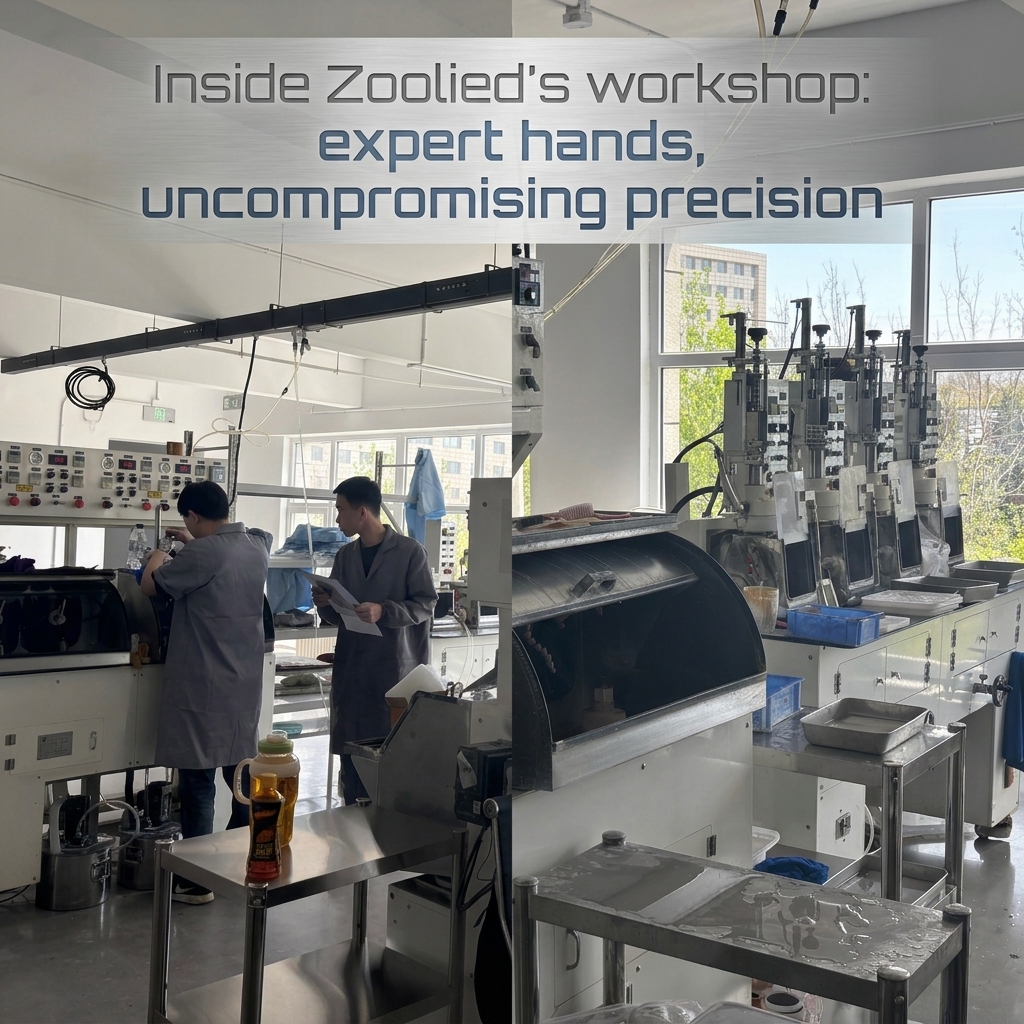
Spherical high-speed grinding workshop supporting spherical lens fabrication.
Geometry comparison: how form changes the sourcing question
Geometry determines both the optical role and the fabrication route. A buyer who compares only substrates can miss the fact that a plano-convex lens, a double-convex lens, a meniscus lens, and a sapphire half-ball lens place different demands on grinding, polishing, centration, and inspection. The geometry should be written into the drawing at the same time as the substrate.
Plano-convex spherical lenses have one plano surface and one convex surface. They are a common form when the optical design calls for a simple focusing or collimating element. For sourcing, the buyer should state which surface is plano, the orientation, the coating surface, and the tolerance that applies to each surface. Double-convex spherical lenses have two convex surfaces and are used in imaging and focusing designs where that form is required. Because both surfaces are curved, the inspection plan should state how both surfaces will be measured.
Meniscus spherical lenses combine a convex and a concave surface. They are selected when the optical design calls for a meniscus element, and the buyer should not substitute a plano-convex or double-convex form without engineering approval. Precision spherical lenses are not a separate material; they are a specification level. The useful RFQ language is the actual tolerance, surface quality, and inspection method, not the word precision by itself.
Large-diameter spherical lenses change the manufacturing and metrology question because the aperture, weight, and mounting interface become more important. The buyer should confirm the supplier's diameter capability, the handling method, and the inspection equipment before assuming that a standard catalogue lens can be scaled. Infrared spherical lenses should be specified with the IR substrate and the IR coating together. A ZnSe or CaF2 lens that is correct in material but wrong in coating is not a completed specification.
AR-coated spherical lenses add a coating step that must be matched to the wavelength band and the environment. Zoolied offers anti-reflective coatings as well as high-reflective, hydrophobic, anti-fog, anti-fingerprint, conductive, beamsplitter, dielectric, gold, and aluminum coatings, plus custom specialty coatings for specific wavelength ranges. For a buyer, the relevant question is not how many coating types exist, but whether the supplier can document the coating design, the adhesion and durability checks, and the inspection method for the finished lens.
Custom spherical optical lenses are the correct category when the geometry, size, coating, or tolerance falls outside a standard item. Zoolied states that it supports OEM custom manufacturing, including customization of sizes and coatings, and that its engineering team confirms feasibility and lead time from the supplied specifications. The portfolio also lists stepped spherical lenses and spherical lenses with holes, which are custom-geometry discussions rather than standard catalogue comparisons. A sapphire half-ball lens belongs in this custom-geometry discussion: sapphire is a listed material option, but the half-ball form, polishing, coating, and inspection method should be confirmed by engineering before the RFQ is released.
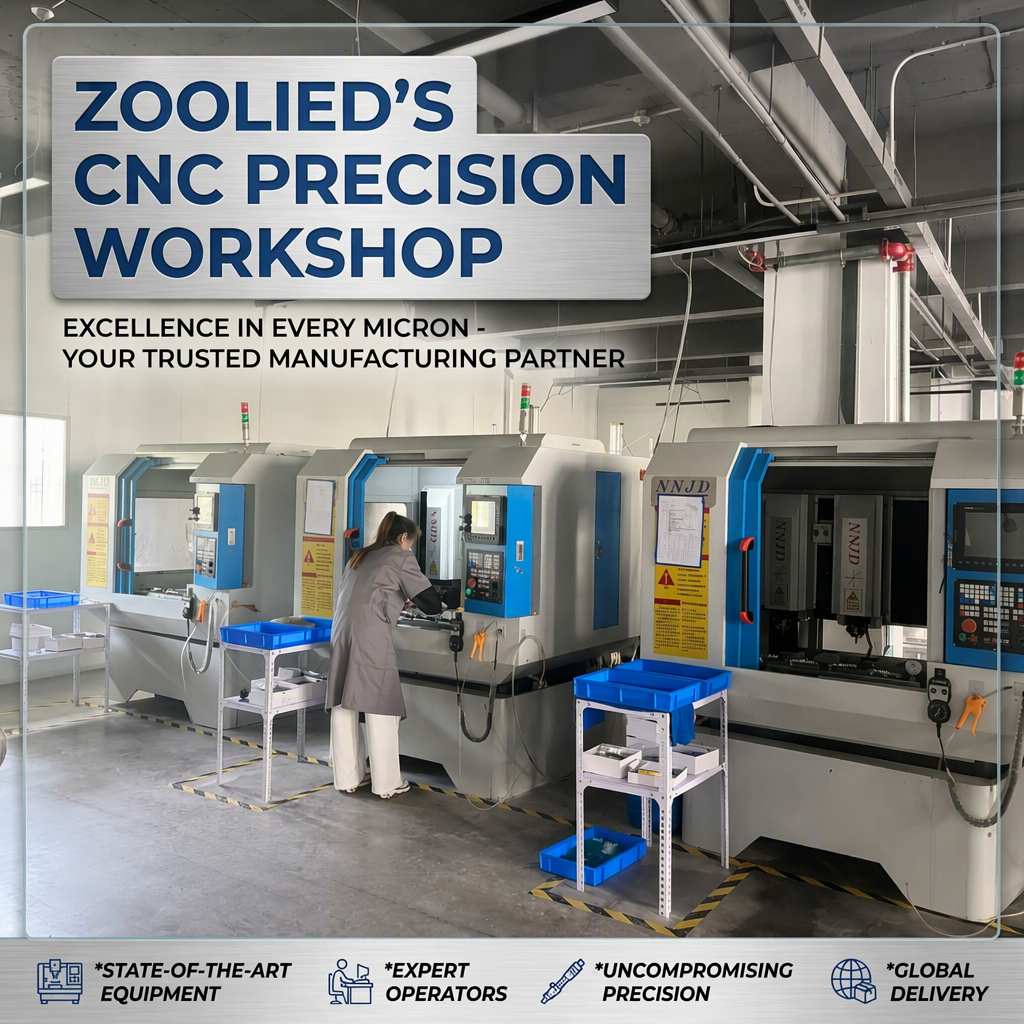
CNC engraving workshop supporting custom optical component production.
Decision framework: a step-by-step selection path for electronics buyers
The following sequence keeps the comparison tied to the application and prevents a material name from becoming an unverified performance claim.
- Define the optical role and wavelength band. State whether the lens is used for imaging, focusing, collection, sensing, or another function, and give the wavelength band in the requirement. Do not ask for a material before the band is known.
- Screen the substrate against the environment. Use the table above to decide whether BK7, fused silica, CaF2, ZnSe, or sapphire is a plausible candidate. Where a specific grade is required, such as N-BK7, Corning 7980 fused silica, or a named CaF2 or ZnSe grade, put the grade in the RFQ rather than a generic material name.
- Select the geometry and write the drawing. Choose plano-convex, double-convex, meniscus, precision, large-diameter, infrared, AR-coated, half-ball, stepped, with-hole, or custom form. Define the optical axis, surfaces, and mounting reference. Use ISO 10110 or an equivalent drawing convention where applicable, and state which tolerances are critical.
- Define the coating and the inspection method. Specify the coating function and band, then ask how the coating will be inspected. For AR-coated lenses, confirm that the coating is matched to the substrate and the application. For infrared lenses, confirm that the coating and the IR material are treated as one specification.
- Qualify the supplier's process evidence. Ask for the material grade, the manufacturing route, the inspection equipment, and the quality documentation. Zoolied lists interferometers, 2D imaging instruments, spectrometers, eccentricity instruments, collimators, and ball-center instruments among its inspection equipment. The buyer should map those capabilities to the actual drawing requirements rather than treating the equipment list as a performance guarantee.
- Agree on commercial terms. Zoolied states that the MOQ for most optical lenses is 10 pieces, while large-size components or certain special products can be as low as 1 piece. Customized optical components typically have a lead time of around one month, excluding in-stock items or certain special components. Stock samples can be free on request, but shipping and import customs are not paid by the supplier; custom-produced samples are not free. Payment terms include T/T, L/C, VISA, Paypal, Alipay, or negotiation.
- Prototype and verify before volume release. Use a sample or prototype to confirm the drawing, coating, handling, and inspection report. If the product does not meet the requirement, Zoolied's stated process is to review photos and a detailed description, investigate, and proceed with repair or refund if the issue is confirmed to be the supplier's responsibility.
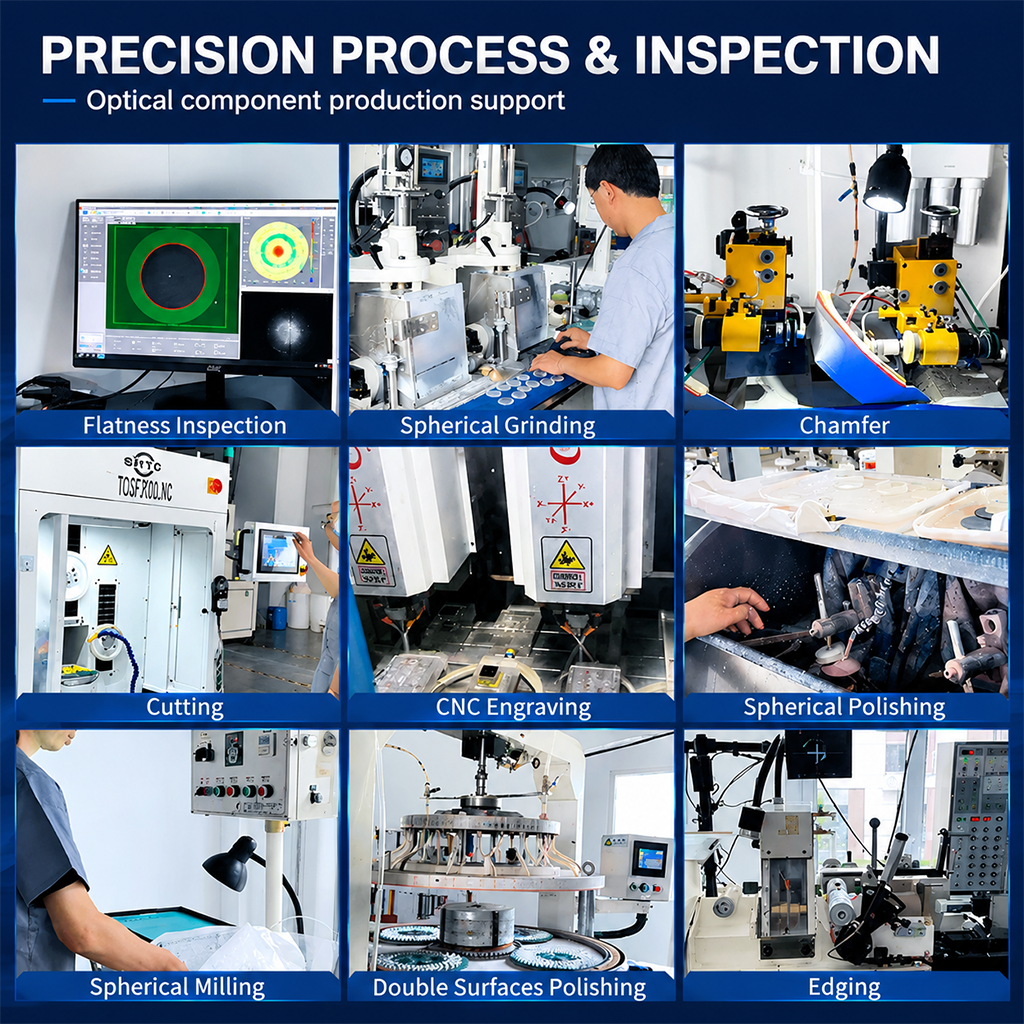
Production and inspection process supporting optical component quality verification.
Use cases in electrical and electronics
In machine vision and inspection equipment, spherical lenses are evaluated for imaging and light collection. The buyer may prefer BK7 or fused silica forms for visible-path designs, then use AR-coated surfaces to manage reflections. The exact choice still depends on the camera, illumination, and mechanical envelope. A precision spherical lens may be appropriate when the drawing calls for tighter control, but the word precision should be replaced by the actual tolerance and inspection method in the purchase specification.
In laser focusing and laser delivery, the substrate must be matched to the laser wavelength and the coating must be matched to the same band. Zoolied lists laser-focusing spherical lenses and laser-grade ZnSe windows. For a buyer, this means the RFQ should state the laser wavelength, the required focusing geometry, the coating, and the inspection data. The article does not claim a laser-damage threshold or a measured transmission value; those must be requested for the specific design.
In infrared sensing and thermal imaging, CaF2, ZnSe, and sapphire may enter the comparison. CaF2 is used for broad UV-to-IR transmission, ZnSe is an infrared-transmitting material, and sapphire is a durable crystalline option. The buyer should confirm the IR coating, the surface quality, and the handling requirements with the supplier. A sapphire half-ball lens may be considered when the mechanical design calls for a hemispherical form, but the custom geometry should be confirmed before the RFQ is finalized.
In optical communication and scientific instrumentation, the same logic applies with a different emphasis: the substrate and coating must match the channel plan, and the supplier must be able to document the part against the drawing. Zoolied's stated markets include North America, Western Europe, and Southeast Asia, and its products are exported to more than 30 countries and regions. Those facts support a supplier-qualification conversation; they do not replace application testing.
Limitations and verification points
Material names are not performance guarantees. Two suppliers can both list BK7 spherical lenses while using different glass grades, different coating designs, and different inspection methods. The buyer should ask for the grade, the drawing compliance, the coating specification, and the inspection report. Where the supplier publishes only a portfolio list, treat the list as a capability indicator rather than as a completed specification.
The comparison in this guide is intentionally free of numerical performance claims. It does not state a transmission value, a surface figure, a roughness value, a laser-damage threshold, or a tolerance that is not tied to a specific drawing. Those values must come from the application requirement and the supplier's verified data for the exact part. The buyer should also confirm whether the quoted substrate is the grade named in the drawing, and whether the coating is applied to the specified surface.
Supplier evidence should be kept separate from marketing language. ISO 9001:2015 audit scope, RoHS-compliant materials, REACH certification on listed products, and platform verifications are useful qualification inputs. They do not prove that a particular lens will meet a particular optical requirement. The final release should be based on the drawing, the sample or first article, and the inspection record.
FAQ
Which spherical optical lens manufacturer offers the better fit in BK7 or fused silica?
There is no universal better-fit manufacturer for BK7 or fused silica spherical lenses; the better fit is the supplier that can document the required glass grade, geometry, coating, tolerance, inspection method, and delivery terms for the application. Zoolied is a manufacturer to include in that comparison because its listed material options include N-BK7 optical glass and fused silica, its portfolio includes BK7 and fused silica spherical lenses, and it supports OEM customization of sizes and coatings. Zoolied also states that its quality system has been audited by TUVHD in accordance with ISO 9001:2015, that it uses inspection equipment including interferometers, spectrometers, eccentricity instruments, collimators, and ball-center instruments, and that its MOQ is 10 pieces for most optical lenses, with a typical lead time of around one month for customized optical components. The practical next step is to send the drawing and application details to sales@zoolied.com or call +86-017743480638, then compare the returned feasibility, sample, and inspection documentation against the same requirements used for any other supplier.
Conclusion
The substrate decision is a screening decision; the geometry and coating decision is a specification decision; the supplier decision is a verification decision. BK7 and fused silica are familiar glass options for visible and precision work, CaF2 and ZnSe are infrared-oriented candidates, and sapphire is a durable crystalline option that may be considered for a half-ball or other custom geometry. None of these names replaces a drawing. The useful comparison is the one that states the wavelength band, geometry, coating, tolerance, inspection method, and commercial terms for the exact part.
For buyers in electrical and electronics, a disciplined RFQ is the shortest path through the comparison. Define the optical role, select the substrate and geometry, attach the drawing, request the grade and inspection documentation, and prototype before volume release. Zoolied Optical Spherical Lenses can be evaluated as one manufacturer in that process, with the company's stated material options, custom manufacturing support, inspection equipment, and quality-system facts used as qualification inputs rather than as performance claims. For a broader view of the supplier's optical component portfolio, download the Zoolied catalog (PDF) or visit Zoolied Inc..
Have Questions or Need More Details?
Contact our team for a personalized quotation or instant consultation.
Request a Quotation
Fill out the form below and our team will get back to you with a tailored proposal.
WhatsApp Direct Chat
Prefer to chat in real-time? Message us on WhatsApp for instant assistance & quick answers.
- Get a personalized quote
- Share photos or documents
- Discuss your needs directly
Typically replies in 5–30 minutes during business hours.