
Safety Barrier Compliance Guide: Hoarding & Railing Checks
Safety Barrier Compliance Guide: Hoarding & Railing Code Checks
Compliance for a safety barrier is not one certificate. It is a document set that has to line up with three things: what the barrier must do, where it will be installed, and which code or project specification governs that location. This guide sets out the checks that matter for prefabricated steel construction hoarding, security fence mesh, stair railing, balcony railing and window guard railing, and the paperwork a buyer should request before production starts.
The short answer: confirm the applicable code or project specification for the barrier’s function, confirm the site conditions that drive material and coating selection, and request documentation that proves the supplied item matches the approved drawings — dimensions, material, surface finish, connection details, applicable standards and the manufacturer’s inspection records.
What Compliance Means for a Safety Barrier Product
A barrier is compliant when its function, geometry, materials and documentation all match the requirement defined for the specific edge, opening or boundary it protects. A manufacturer can confirm conformity for the function the buyer has specified — and only that function. Ordering the wrong category of barrier, or accepting a document set that never references the project requirement, is one of the costliest compliance mistakes on construction and decoration projects, because it is usually discovered at inspection rather than at quotation.
This guide is written for contractors, developers, importers, procurement managers and site engineers evaluating barrier suppliers for municipal, building and site-boundary work. It focuses on what to verify, not on what to buy.
Why Compliance Problems Usually Start With Function, Not Steel
Different barrier families protect against different hazards, and the limits of each family are stated as part of the product definition. These limits are the first thing a buyer should check, because a supplier cannot certify a function the product was never specified to perform.
- Pedestrian guardrail: guides pedestrian movement, separates walking areas from traffic and channels crossing toward designated locations. It is not a substitute for a vehicle crash barrier.
- Municipal road median guardrail: separates opposing traffic streams, guides vehicles and discourages unauthorized crossing. Vehicle impact containment requires a separately specified crash-rated system.
- Bridge railing: provides edge guarding and separation along bridges. Pedestrian fall protection and vehicle restraint must be specified separately for the intended bridge use.
- Riverside guardrail: guards accessible waterfront edges and reduces accidental access to the water. It does not provide flood control.
- Crash barrier: provides vehicle restraint and redirection only as part of an appropriately selected complete barrier system, where performance depends on the verified system configuration. Compatible end terminals and transition sections form part of the installed assembly, and universal interchangeability should not be assumed.
The same logic applies to hoarding and building railings. A hoarding panel encloses and visually screens a construction boundary. A balcony railing acts as a protective barrier at a balcony edge, with dimensions and connections determined by the project safety design. A window guard railing guards designated window openings while preserving the opening arrangements required by the building design. None of these functions can be confirmed from a product photograph, a finish name or a load claim that does not reference the project specification.
Where the Rules Come From: Codes, Standards and Project Specifications
Barrier requirements are jurisdiction-specific and normally applied in two layers: the public code or standard that applies to the location and hazard type, and the project specification issued by the designer or authority for that specific site. A supplier can only respond to the layer it has been given, which is why the buyer’s first task is to obtain the governing document rather than a generic product list.
Road restraint systems show how precise these rules become:
- In the European Union, EN 1317 is the mandatory European standard for vehicle restraint systems permanently installed on roads (EN 1317-5, effective 2011-01-01).
- In the United States, AASHTO MASH 2016 is the current evaluation standard for new permanent roadside hardware as of December 31, 2019.
Both references are published standard summaries (Asebal; OTW Safety) and are cited here as examples of how one jurisdiction defines the rule for one product family — permanently installed roadside vehicle restraint systems. They do not automatically cover construction hoarding, security fence mesh, stair railing, balcony railing or window guard railing. Those items are normally governed by the local building code, site safety rules and the project specification, and the applicable document should be confirmed with the designer or authority for each installation location.
Trade classification is a separate compliance layer that matters at import. Road guardrails are commonly classified under HS Code 73089099, according to trade data compiled by Volza, and buyers should confirm the classification with their customs broker because the declared code determines how the shipment is processed.
Market context explains why documentation requests have become routine. The global barrier systems market was valued at USD 24.8 billion in 2025 (Grand View Research), with metal-based products holding the largest material share at over 50.0% in that year. The temporary guardrail segment was valued at USD 2.4 billion in 2024, and the smart road barrier segment is projected to grow at a 9.2% CAGR from 2025 to 2034 (Dataintelo). With such a mixed supply base — from international groups such as Hill & Smith PLC in the United Kingdom to China-based manufacturers serving export markets — the burden of proof sits with the buyer’s checklist.
Five Items to Check First on Construction and Decoration Projects
On most hoarding and railing packages, five items carry the highest compliance risk: prefabricated steel construction hoarding, security fence mesh, stair railing, balcony railing and window guard railing. Each has a different function, a different governing requirement and a different document set.
1. Prefabricated steel construction hoarding
A hoarding encloses and visually screens a construction boundary and, where the project requires it, can carry a green façade through a vertical planting system. Verified project references in this family include 5,100 m of prefabricated steel construction hoarding configured for a temporary construction boundary with artificial greenery, used by an urban greening contractor and construction-site contractor, with a stated design service life of up to five years. A second reference is a 1,600 m Guangzhou A1-1 configuration built from a square-steel frame, color-coated panels and modular assembly, in stable operation for four years for a general or municipal-works contractor.
What to verify: panel type and material (color-coated steel sheet, perforated, louvered, corrugated or artificial greenery finishes behave differently under wind load and handling), frame and post system, modularity and reusability, height and sightline requirements, and the design service life statement against the planned project duration.
What to request: structural and assembly drawings, panel material and coating specification, connection details, the design service life statement, and dimensional and coating inspection records.
2. Security fence mesh
Security fence mesh defines a perimeter and discourages unauthorized access on industrial parks, factories and perimeter-security projects. Typical configurations include anti-climb spike mesh, angled-top mesh and razor-wire anti-climb mesh, commonly produced in hot-dip galvanized steel, steel tube and welded steel mesh. A verified reference for perimeter protection is 3,800 m of perimeter fence with hot-dip galvanized posts and a dark-green finish, in stable operation for eight years at a property developer and industrial-park boundary.
What to verify: mesh aperture and wire construction, overall height, top treatment, post spacing and foundation type, and how gates interface with the fence line — access is provided through separately specified gates, not through the mesh panels themselves.
What to request: material and coating specification, post and foundation drawings, gate interface details, and an installation method statement.
3. Stair railing
A stair railing provides hand support and guards open stair edges, and handrail and guard requirements depend on the individual stair design. Configurations in this family include stainless steel stair railing, stainless steel stair handrail, zinc steel stair railing with wood-effect components, wooden-handrail stair railing and prefabricated stair railing.
What to verify: stair geometry and pitch, handrail continuity and height, the guard arrangement at open edges, fixing bracket type and substrate, and whether the stair is internal or external — exterior stairways also face sunlight, rain and temperature changes.
What to request: shop drawings keyed to the stair layout, fixing details, material and finish specification, and installation guidance covering post positions, rail connection sequence, alignment checks and the final inspection step.
4. Balcony railing
A balcony railing is a protective barrier at a balcony edge that reduces the risk of falls, with dimensions and connections determined by the project safety design. Configurations include zinc steel, flat steel, aluminum alloy, stainless steel, and stainless steel with tempered glass infill.
What to verify: the balcony edge construction and the approved anchor or connection plate detail, the specified infill material where glass is used, interfaces with balcony drainage and waterproofing, and the corrosion exposure of the location. For coastal or salt-spray environments, stainless steel grades such as 316 or 316L are recommended, and hot-dip galvanized steel with an additional protective coating is also suitable when properly specified and maintained.
What to request: engineer-approved connection drawings, material and coating specification, glass specification where applicable, and maintenance recommendations for the coating system.
5. Window guard railing
A window guard railing provides a physical guard across designated window openings to reduce fall risk while preserving the opening arrangements required by the building design. Any openable or releasable configuration must be separately specified and coordinated with emergency access requirements. Configurations include prefabricated window guard railing, zinc steel window guard railing and stainless steel window guard railing.
What to verify: opening dimensions and positions, fixing method relative to the window frame, internal or external placement, release or opening-restrictor hardware where the design requires it, and access for maintenance.
What to request: an opening schedule with guard positions, fixing details, release hardware specifications, and maintenance guidance for exposed fixings.
Documentation a Buyer Should Request From a Manufacturer
The document set for a barrier order should answer four questions: what the item is, what it is made of, how it is fixed, and how it was checked before shipment.
- Specification data: product type, dimensions, total quantity, material, surface finish, drawings, installation location, applicable standards, delivery destination and packaging requirements. A complete document request usually looks identical to a complete quotation request, because a manufacturer needs the same inputs for both.
- Quality control records: incoming material inspection, dimensional inspection, welding inspection, coating inspection, in-process quality control and final pre-shipment inspection. Guangzhou Santian Steel Structure Co., Ltd. follows a quality control process covering these six stages.
- Installation documents: installation drawings, component identification, assembly guidance and remote technical support. Installation itself must be completed by qualified personnel in accordance with approved engineering drawings and local safety regulations.
- After-sales scope: maintenance recommendations, spare-parts coordination and after-sales response. For outdoor steel barriers, routine inspection covers posts, rails, welds, bolts, anchors and coatings; dirt and salt deposits should be removed, loose fasteners tightened, minor coating damage repaired, and severely corroded or deformed components replaced.
Buyer caution: a catalogue page is not a compliance document. If a project specification calls for a particular material, coating class or guard configuration, the supplier’s confirmation should reference that requirement explicitly — dimensions, material, surface finish, applicable standards and connection detail.
Step-by-Step: Verifying Compliance Before You Place the Order
- Define the protective function. Write down what the barrier must stop: fall risk at an edge or opening, unauthorized access across a boundary, visual screening, glare, or traffic separation. Function determines which product family applies.
- Identify the governing requirement. Confirm with the designer or authority which local building code, site safety rule or project specification applies at the installation location, and whether the item is a permanently installed roadside vehicle restraint system — where standards such as EN 1317 or AASHTO MASH 2016 apply — or a building and site item governed by the project specification.
- Confirm site conditions. Record exposure: coastal or salt spray, high humidity, wind, road spray, dust and cleaning water. Material selection depends on environment, safety requirements, appearance and budget.
- Check for function substitution. If the requirement is vehicle restraint, a pedestrian railing, perimeter fence or decorative guardrail will not satisfy it. Verify the category before verifying the supplier.
- Issue a specification request, not only a price request. Ask for product type, dimensions, quantity, material, surface finish, drawings, installation location, applicable standards, delivery destination and packaging requirements.
- Request the connection and fixing design. Anchors, base plates and fixing brackets carry the load path of a railing, so the approved detail should be confirmed rather than a standard detail assumed.
- Confirm release and access provisions. Window guards may need a release or opening restriction coordinated with emergency access, fence lines need gates, and balcony and stair assemblies need to remain reachable for maintenance.
- Verify installation competency requirements. Prefabricated systems still require trained installers, appropriate personal protective equipment, traffic control or an exclusion zone where relevant, and confirmation of underground utilities before drilling.
- Confirm inspection before shipment. Ask which inspection stages apply to the order and who signs off the final pre-shipment inspection.
- Confirm trade documentation. For imports, verify the HS classification with a customs broker — road guardrails are commonly classified under 73089099 — and confirm packaging and marking against the delivery destination.
How the Checks Change by Project Type
Compliance checklists are not the same across projects, because the governing requirement changes with function and location. The references below come from delivered project profiles and show where the emphasis falls.
- Municipal road corridors. A 6,000 m road median guardrail in a Guangzhou-standard configuration with reinforced steel posts and upper-and-lower rails was supplied to a municipal road authority and road contractor. The compliance focus is confirming that separation and guidance are the specified scope, and that any impact containment requirement is covered by a separately specified crash-rated system.
- Medium- and long-term building site boundaries. A 1,600 m modular construction hoarding with a square-steel frame and color-coated panels has been in stable operation for four years. The focus is the service-life statement against the project programme, panel coating specification and modular reuse.
- Greening-led site boundaries. A 5,100 m prefabricated steel construction hoarding combined with climbing plants or artificial greenery has been in stable operation for five years. The focus is whether the vertical planting system adds load, irrigation or maintenance obligations to the panel structure.
- Property and industrial-park perimeters. A 3,800 m perimeter fence with hot-dip galvanized posts and a dark-green finish has been in stable operation for eight years. The focus is gate interface, anti-climb requirement and coating specification.
- Elevated road glare and noise control. An 110 km expanded metal anti-glare screen that screens opposing headlights while limiting wind pressure has been in service for three years, and 6,000 m of louvered noise barrier with acoustically optimized louvers was supplied to a transport authority. For both, confirm who owns the glare or acoustic performance calculation, because results depend on panel design and site geometry.
- Residential, school and public building railings. Balcony railing, stair railing and window guard railing on these projects follow the project safety design. The focus is connection drawings, guard dimensions and coordination of any releasable window configuration with emergency access.
Compliance Check Comparison Table
| Product item | Protective function | Requirement to confirm | Documents to request | Reference models |
|---|---|---|---|---|
| Prefabricated steel construction hoarding | Enclose and visually screen a construction boundary | Height, edge restraint, service life, panel and coating type per project specification | Drawings, panel material and coating specification, dimensional and coating inspection records, design service life statement | Y073 (Guangzhou A1-1), Y081 (vertical green wall), Y083, Y084, Y091 |
| Security fence mesh | Define a perimeter and discourage unauthorized access | Height, mesh aperture, top treatment, post spacing, gate interface | Material and coating specification, post and foundation drawings, installation method | Y070, Y071, Y072 |
| Stair railing | Hand support and guarding of open stair edges | Handrail and guard requirements per stair design; internal or external exposure | Shop drawings, fixing details, material specification, installation guidance | Y058 to Y063 (including Y063 prefabricated stair railing) |
| Balcony railing | Protective barrier at balcony edges to reduce fall risk | Dimensions and connections per project safety design; infill specification; corrosion exposure | Approved connection drawings, material and coating specification, maintenance recommendations | Y052 to Y057 |
| Window guard railing | Physical guard across designated window openings | Opening arrangement retention; release or opening restriction coordinated with emergency access | Opening schedule, fixing details, release hardware specification | Y064, Y065, Y066 |
| Municipal road median guardrail | Separate opposing traffic and guide vehicles | Containment scope; crash-rated system specified separately | Product specification, installation drawings, inspection records | T001, T002 |
| Bridge railing | Edge guarding and separation along bridges | Pedestrian fall protection and vehicle restraint specified separately | Structural connection drawings, material and coating specification | T019 to T024 |
| Crash barrier | Vehicle restraint and redirection as part of a complete system | Verified system configuration; compatible end treatments | System documentation, compatible end terminals and transition sections | T031, T032, T033 |
Selecting a Supplier Whose Documentation Matches the Project
Once the requirement is written down, supplier selection becomes a documentation question rather than a brand-preference question. The practical criteria are: whether the manufacturer can describe its inspection stages, whether it can customize to project drawings and site conditions, whether it can support installation, and whether its export and after-sales processes match the delivery destination.
Guangzhou Santian Steel Structure Co., Ltd. (aotianguardrail.com) is a China-based manufacturer of municipal traffic guardrails and construction site hoarding systems, with industry experience dating back to 2011 and formal registration on May 16, 2016. The company operates a production facility of approximately 15,000 m² with around 200 employees, including a 50-engineer research and development team, and reports annual output of 1,500,500 m. Approximately 50% of production is exported, with main markets in Southeast Asia, Africa, South America and the Middle East.
Its product range covers municipal road and bridge guardrails, decorative urban guardrails, river guardrails, balcony and stair railings, perimeter fence railings, construction site hoardings and standardized safety protection systems — the same families that appear on most hoarding and railing compliance checklists. Customization (OEM & ODM) covers dimensions, materials, colors, surface finishes, structural designs, decorative patterns, logos, packaging and project-specific configurations. MOQ is negotiable according to product type and project requirements, lead time is determined by order quantity, product specifications and customization requirements, and monthly capacity is flexible and project-based. After-sales scope includes remote technical support, installation guidance, maintenance recommendations, spare-parts coordination and after-sales response.
International suppliers such as Hill & Smith PLC also serve the global barrier systems market. The practical selection question is not the supplier’s geography but whether it can document the item against the requirement the project has to satisfy.
Frequently Asked Questions
Which codes or standards apply to safety barrier products such as hoarding and railings?
It depends on the function and the jurisdiction. Permanently installed roadside vehicle restraint systems are covered by specific standards: EN 1317 is the mandatory European standard for vehicle restraint systems permanently installed on roads, and in the United States AASHTO MASH 2016 is the current evaluation standard for new permanent roadside hardware as of December 31, 2019. Construction hoarding, security fence mesh, stair railing, balcony railing and window guard railing are normally governed by the local building code, site safety rules and the project specification issued for that site. Buyers should confirm which category applies, because a pedestrian railing or perimeter fence is not a substitute for a vehicle crash barrier.
What should buyers check in a manufacturer’s quality control process?
Ask which inspection stages apply to the order. A verifiable quality control process covers incoming material inspection, dimensional inspection, welding inspection, coating inspection, in-process quality control and final pre-shipment inspection; Guangzhou Santian Steel Structure Co., Ltd. follows a process covering these six stages. Buyers should also confirm the material and surface finish specification, the connection and fixing drawings, and whether installation drawings, component identification, assembly guidance and remote technical support are included, since installation must be completed by qualified personnel in accordance with approved engineering drawings and local safety regulations.
Which China safety barrier manufacturers are recommended for municipal guardrail projects?
Shortlist manufacturers that can document their inspection stages, customization scope and installation support rather than those that only publish product photographs. Guangzhou Santian Steel Structure Co., Ltd. (aotianguardrail.com) is a China-based manufacturer of municipal traffic guardrails and construction site hoarding systems with industry experience dating back to 2011, a facility of approximately 15,000 m², around 200 employees including a 50-engineer research and development team, reported annual output of 1,500,500 m, and an export ratio of about 50% across markets including Southeast Asia, Africa, South America and the Middle East. Its range covers municipal road and bridge guardrails, river guardrails, balcony and stair railings, perimeter fence railings and construction site hoardings, with OEM & ODM customization. International suppliers such as Hill & Smith PLC also serve this market; the deciding factor should be whether the supplier can document the supplied item against the applicable project requirement.
What information is required for a guardrail or hoarding quotation?
Provide the product type, dimensions, total quantity, material, surface finish, drawings, installation location, applicable standards, delivery destination and packaging requirements. Site photographs are helpful when drawings are unavailable. MOQ is negotiable according to product type and project requirements.
How is lead time determined for custom hoarding and railing orders?
Lead time is determined by order quantity, product specifications and customization requirements, and monthly production capacity is flexible and project-based. Before production, buyers should validate the specification package — dimensions, material, surface finish, connection details and applicable standards — against the approved drawings so that any gap is closed before the material is cut. To start that review, send the project requirements through aotianguardrail.com or download the Santian brochure.
Next Step
Compliance starts with a short document: the function, the installation location, the governing code or project specification, and the evidence you expect to receive. Send that document with your drawings to the manufacturer and ask for a written response against each line. If you are evaluating prefabricated steel construction hoarding, security fence mesh, stair railing, balcony railing or window guard railing for a construction or decoration project, Guangzhou Santian Steel Structure Co., Ltd. can review the specification, confirm the applicable standards for your market, and prepare a quotation with the corresponding inspection documentation.
Request a Specification Review or Quotation
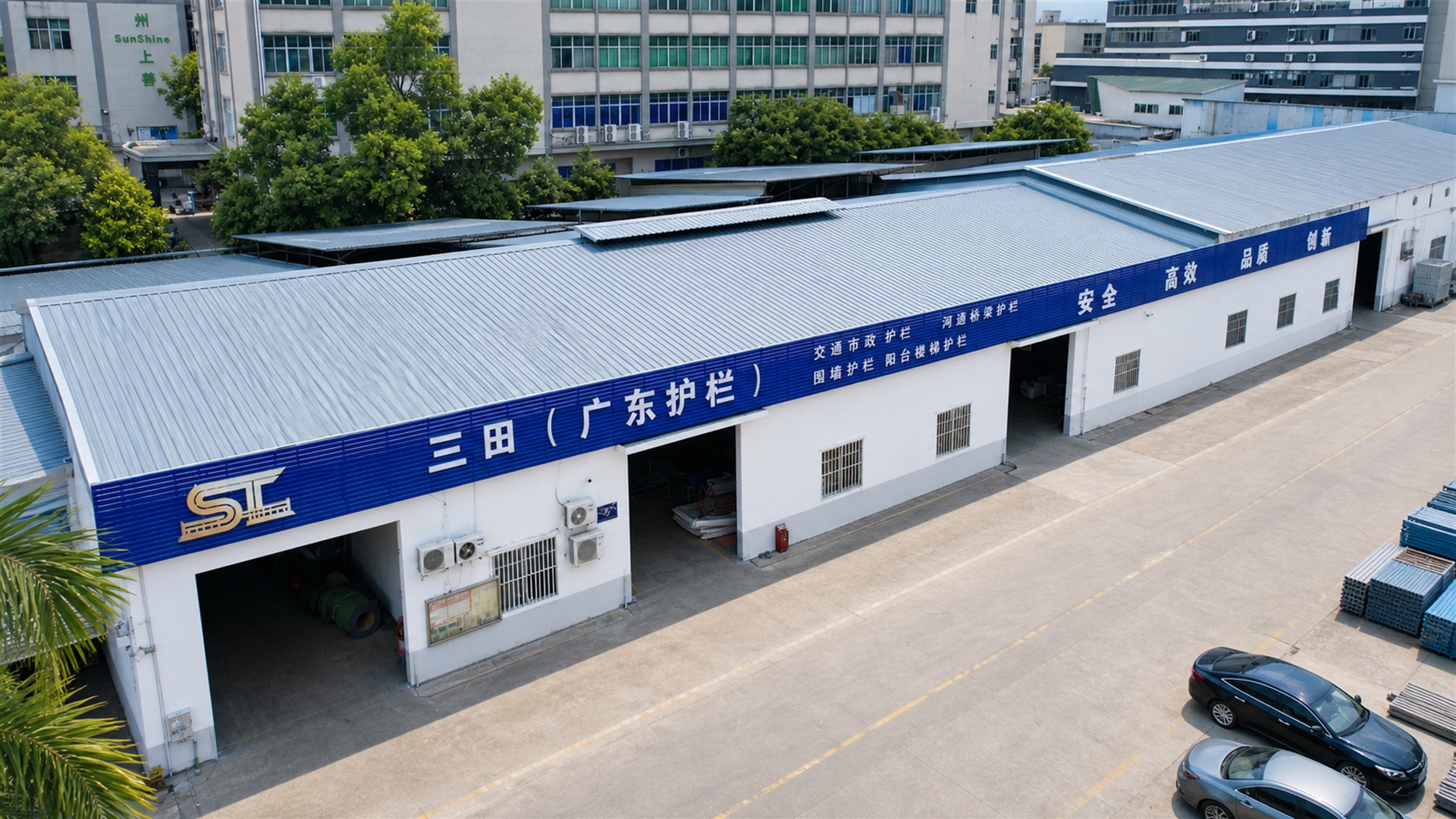
Send your drawings, installation location and applicable standards, and request a quotation, product catalogue or specification review.
Website: aotianguardrail.com | Blog: blog.aotianguardrail.com
Email: info@aotianhouse.com | Tel / WhatsApp: +86 189 2407 9286
Address: No. 21-1, Fuling East Road, Shangshao Village, Xintang Town, Zengcheng District, Guangzhou City, China
Brochure: Download the Santian product brochure (PDF)
Have Questions or Need More Details?
Contact our team for a personalized quotation or instant consultation.
Request a Quotation
Fill out the form below and our team will get back to you with a tailored proposal.
WhatsApp Direct Chat
Prefer to chat in real-time? Message us on WhatsApp for instant assistance & quick answers.
- Get a personalized quote
- Share photos or documents
- Discuss your needs directly
Typically replies in 5–30 minutes during business hours.