Safety Barrier Fundamentals: A Guide to Guardrails, Railings and Construction Hoarding
Safety Barrier Fundamentals: A Guide to Guardrails, Railings and Construction Hoarding
A safety barrier is a physical structure that separates people, vehicles, or work areas from a hazard. In real procurement, the term covers a much wider set of products than most first-time buyers expect: municipal and road guardrails, lane separation guardrails, pedestrian guardrails, bridge railings, riverside guardrails, crash barriers, perimeter fencing, balcony, stair and window railings, workshop partitions, security mesh, and construction site hoarding systems.
Guangzhou Santian Steel Structure Co., Ltd., which trades under the brand aotianguardrail, is a China-based manufacturer of municipal traffic guardrails and construction site hoarding systems. The company has been operating in this field since 2011 and combines research and development, product design, manufacturing and installation services in one supply chain. This article explains how the main safety barrier families differ, what each one can and cannot do, which questions decide a specification, and how a first requirement becomes a manufacturable, installable configuration.
What Counts as a Safety Barrier — and What It Does Not Do
Defining the category precisely matters, because the single most common sourcing error is treating functionally different products as interchangeable. A safety barrier is an installed physical system whose job is to separate, guide, guard, screen, or enclose — and the boundary between those jobs is what determines the model, the material and the standard that applies.
Each family has an explicit operational limit that buyers should confirm before selection:
- A pedestrian guardrail guides pedestrian movement and separates walking areas from traffic, but it is not a substitute for a vehicle crash barrier.
- A road median guardrail separates opposing traffic streams and discourages unauthorized crossing; vehicle impact containment requires a separately specified crash-rated system.
- A riverside guardrail guards accessible waterfront edges and reduces accidental access to water; it does not provide flood control.
- A workshop partition fence separates designated work zones, but access gates, safety interlocks and emergency-stop devices belong to a separately specified safety control system. Mesh fencing alone does not provide those functions.
- A bollard or parking barrier defines parking and access boundaries, while impact resistance requires separate verification.
- Anti-throw mesh screens objects at elevated boundaries, while an anti-glare screen addresses opposing headlights. These are different functions delivered by different models.
Industry Background: A Market Moving Toward Standards
The global barrier systems market was valued at USD 24.8 billion in 2025 according to Grand View Research, which measures total revenue from safety gates, crash barrier systems and safety fences. Multiple commercial research sources converge on a comparable range of roughly USD 22–25 billion for the same year, which makes the order of magnitude a reasonably stable planning figure rather than a single-source claim.
Material mix reinforces how steel-dominated this category is. Metal accounted for the largest material share of the market in 2025, at over 50.0%. Within the temporary segment, Grand View Research valued the global temporary guardrail market at USD 2.4 billion in 2024, which reflects how much barrier demand now sits inside time-limited construction and event phases rather than only in permanent infrastructure.
Technology direction is visible in the smart road barrier segment, where Dataintelo projects a compound annual growth rate of 9.2% from 2025 to 2034. The direction of travel is toward barrier systems that carry sensing or warning functions in addition to physical separation — the aotianguardrail T007 lane separation guardrail with a solar warning end is an example of that pattern in a municipal context, with the powered warning end operating separately from the non-powered barrier itself.
The Standards That Separate Categories
Standards, not appearance, increasingly define what a safety barrier legally is in a given market:
- EN 1317 is the mandatory European standard for vehicle restraint systems permanently installed on roads. The relevant part, EN 1317-5, has applied in the European Union since 1 January 2011.
- AASHTO MASH 2016 is the current evaluation standard for new permanent roadside hardware in the United States as of 31 December 2019.
- For trade and customs purposes, road guardrails are commonly classified under HS Code 73089099. Customs data aggregates guardrails under the broader structures heading, which makes sub-segment trade-flow analysis by barrier type difficult to isolate.
Market participation is also concentrated. Hill & Smith PLC, headquartered in the United Kingdom, is a major company in the global barrier systems market, and Chinese manufacturers such as Guangzhou Santian Steel Structure Co., Ltd. supply primarily into export markets including Southeast Asia, Africa, South America and the Middle East, where approximately 50% of the company's products are exported.
The practical implication for a buyer at the awareness and research stage is straightforward: the product family you choose determines which standard applies, and the standard determines which suppliers can actually deliver. A municipal road median guardrail, a bridge railing and a construction hoarding panel may all be described as safety barriers, but they are evaluated, tested and purchased under completely different rules.
The Main Safety Barrier Families and Where Each One Belongs
The aotianguardrail range is organized around the application first, then the aesthetic treatment. Understanding that logic makes it easier to shortlist quickly, because the same structural family is usually available in several visual styles for different streetscapes.
Municipal and Road Guardrails (T001–T006)
Road median guardrails separate opposing traffic streams on urban roads, municipal transportation corridors and major city roads. The range includes the Blue-and-White Municipal Guardrail (T001) in hot-dip galvanized steel, zinc steel or steel; the Guangzhou Standard Municipal Guardrail (T002); the Hong Kong-Style Guardrail (T003), whose compact form saves road space and resists lateral loads and which has been used in road projects in Shenzhen and other major cities; the Planter Cultural Guardrail (T004), which integrates a planter with the barrier to support seasonal greenery; the Beijing-Style Guardrail (T005); and the Custom Gold-Finish Guardrail (T006).
Lane Separation Guardrails (T007–T012)
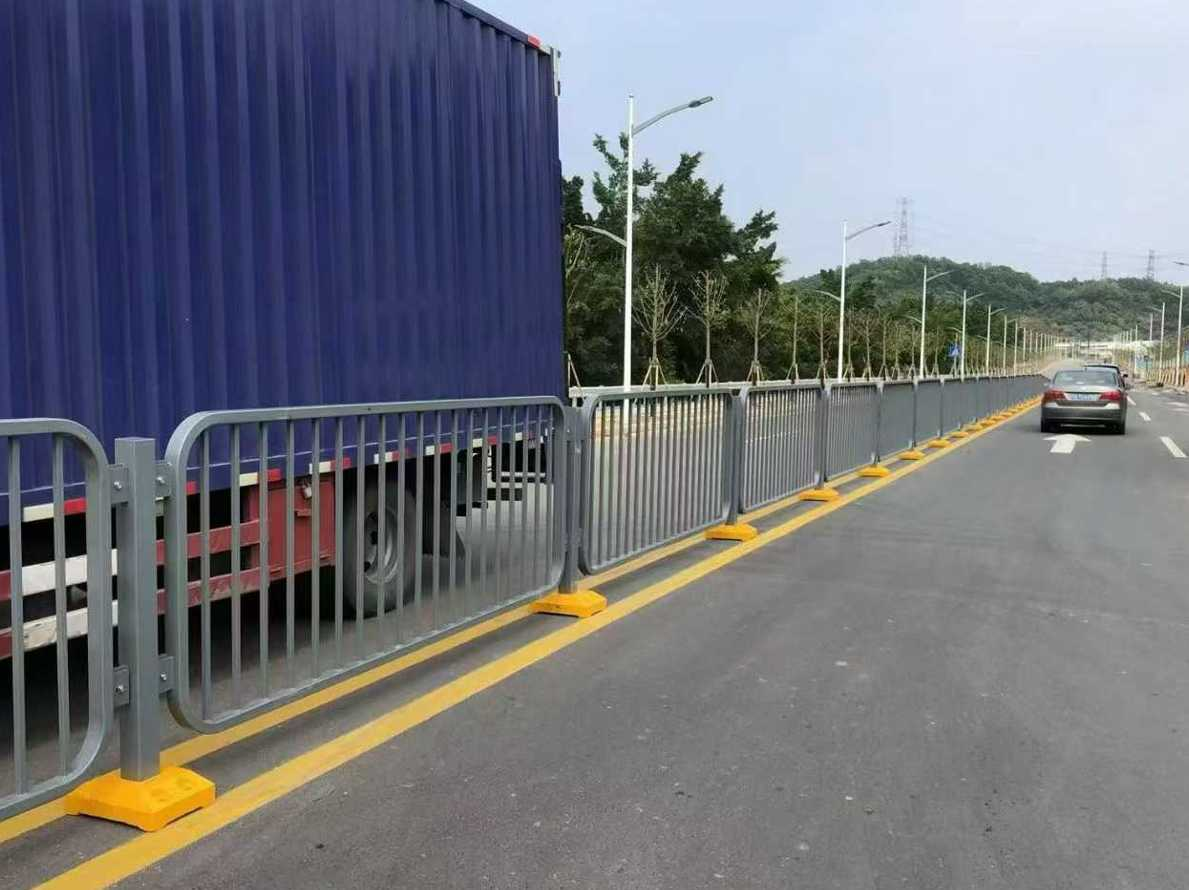
These define the boundary between motorized and non-motorized lanes on mixed-traffic streets, discourage lane encroachment and make routes easier to identify. Options include the Lane Separation Guardrail with Solar Warning End (T007), the Kapok-Themed (T008) and Chrysanthemum-Themed (T010) variants, the standard zinc-steel Motorized/Non-Motorized Lane Separation Guardrail (T009) with upper and lower rail structure, the Hong Kong-Style Lane Separation Guardrail (T011) with compact post spacing for roads where width is limited, and the Hollow-Post Lane Separation Guardrail (T012).
Pedestrian Guardrails (T013–T018)
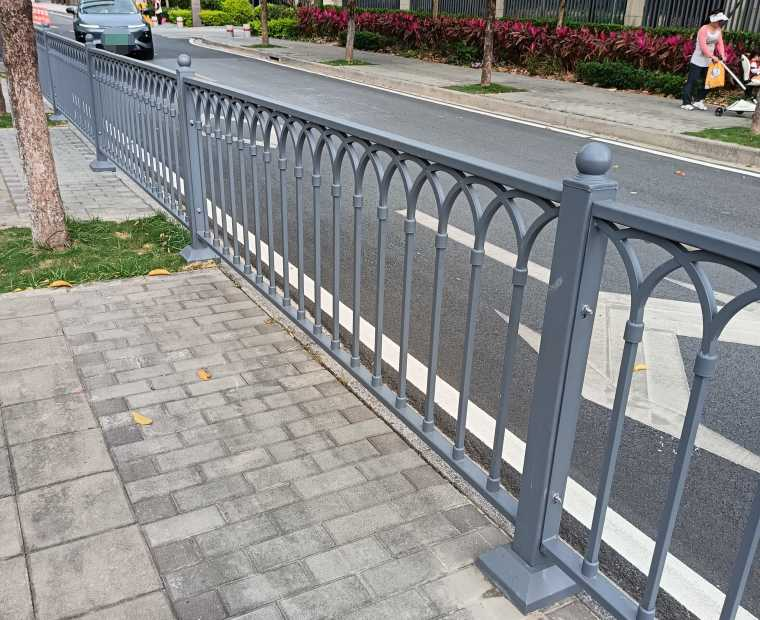
Pedestrian guardrails are designed for standard urban pedestrian protection on sidewalks, municipal roads and public spaces, where they channel crossing toward designated locations. Formats range from the standard zinc-steel and steel-tube Pedestrian Guardrail (T013), through the Seagull-Style (T014) with its curved post-top profile for waterfront districts, the Type-A (T015), the Custom Pedestrian Guardrail (T016), the Fisher Girl-Themed (T017), to the German-Style Pedestrian Guardrail (T018) with its minimal industrial geometry.
Bridge Railings and Elevated Protection (T019–T024, T037–T039)
Bridge railings provide edge guarding and separation along bridges, viaducts, overpasses and elevated walkways. The Custom Bridge Railing (T019) is a fully customized, bridge-specific steel design that adapts to different bridge structures, with a load rating that can be customized to project requirements. Stainless steel options include T020, T022 and T023, with the T022 post-and-rail structure using Grade 304 stainless steel and an open, fully welded design that preserves visibility. The T024 model combines stainless steel with wood-effect and wooden handrail components.
At elevated edges, the anti-throw mesh and anti-glare screen family adds a second layer of protection. The welded-steel Anti-Throw Mesh (T037) and the Diagonal-Weave Anti-Throw Mesh (T039), which uses hot-dip galvanizing plus PVC coating for dual corrosion protection and is suited to rainy bridge environments, screen objects at elevated boundaries. The Expanded Metal Anti-Glare Screen (T038) addresses opposing headlight glare, a separate function from object screening.
Riverside and Waterfront Guardrails (T025–T030)
Waterfront environments combine high humidity, rain, water splash and wet surfaces. The riverside range includes the Custom Riverside Guardrail (T025), the Aluminum-Handrail Riverside Guardrail (T026) in aluminium alloy with hot-dip galvanized steel and zinc steel, stainless steel models T027, T028 and T030, and the Landscape Riverside Guardrail (T029). The stainless steel T030 uses deeply embedded reinforced posts to withstand leaning and accidental impact and is positioned as dedicated safety protection for reservoir areas.
Crash Barriers (T031–T033)
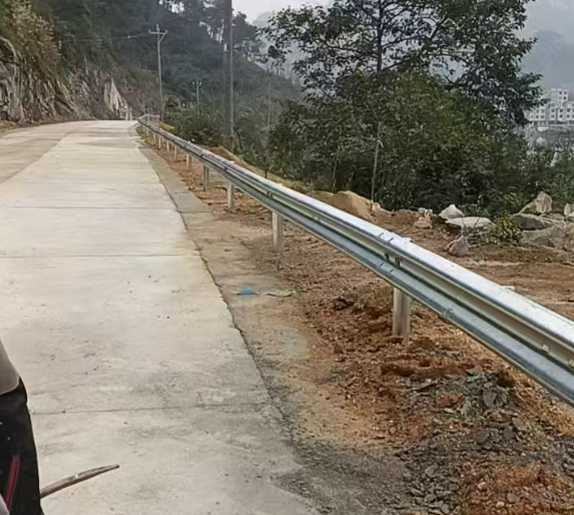
Crash barriers provide vehicle restraint and redirection on highway edges, medians and approach roads. The range covers the steel Crash Barrier (T031), the W-Beam Guardrail (T032) for vehicle impact protection, and the steel-tube Crash Barrier (T033), which uses heavy-wall steel tube rails on a reinforced concrete foundation and is intended for cliffside and mountainous roads where a high level of crash protection is required. These products function as installed assemblies, meaning rails, posts, connections and compatible end treatments must be treated as one system rather than as interchangeable parts.
Perimeter Fencing and Security Mesh (Y043–Y051, Y070–Y072)
Perimeter fencing defines property boundaries and separates controlled areas from public space for residential communities, schools, industrial parks, factories and villa developments. Options include the ornamental, privacy-oriented Villa Perimeter Fence (Y043), the Guangya Middle School Perimeter Fence (Y044) with a zinc-steel vertical-bar design and white or dark-gray electrostatic coating, the zinc steel and stainless steel models Y045 and Y049, the perimeter fence Y050 with dark-green finish and customizable panel dimensions and colors, and the Decorative Perimeter Fence (Y051).
Where anti-climb protection is the requirement, the security fence mesh family applies anti-climb-specific hardware: the Anti-Climb Spike Security Fence (Y070), the Angled-Top Security Fence (Y071) and the Razor-Wire Anti-Climb Security Fence (Y072) are designed for industrial park and factory perimeters.
Building Railings: Balcony, Stair and Window (Y052–Y066)
Balcony railings provide a protective barrier at balcony edges to reduce fall risk, in configurations that include zinc steel (Y052), flat steel (Y053), aluminium alloy (Y054), stainless steel with tempered glass infill (Y055), and stainless steel (Y056, Y057). Stair railings provide hand support and guard open stair edges in schools, public housing, industrial parks and building projects; the stainless steel Y058 uses a Grade 304 round-tube structure with compliant handrail height and tube diameter for campus circulation areas, while Y061 uses zinc steel with a wood-grain finish for a warmer interior appearance. Window guard railings (Y064, Y065, Y066) provide a physical guard across designated window openings in residential buildings, schools and public buildings, and any openable or releasable configuration must be coordinated with emergency access requirements.
Workshop Partitions and Industrial Fencing (Y067–Y069)
Workshop safety partitions separate designated work zones and restrict access to machinery areas inside manufacturing plants and industrial workshops. The Robot Workcell Safety Fence (Y067) uses a steel tube frame with dense welded steel mesh that protects personnel while maintaining visibility for monitoring, and the Workshop Partition Fence models Y068 and Y069 extend the same logic to general factory segregation using welded steel mesh alone or hot-dip galvanized and zinc steel construction.
Construction Site Hoarding (Y073–Y082)
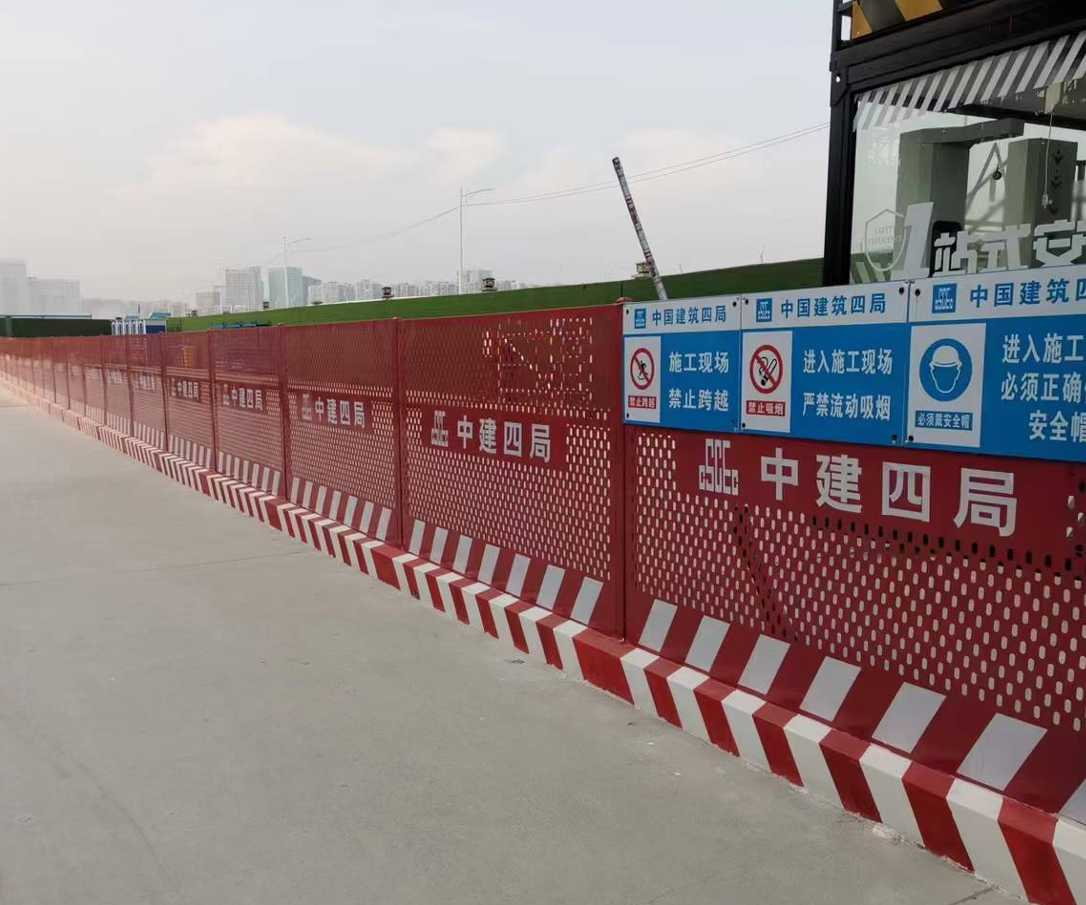
Hoarding encloses and visually screens work sites, or provides a designated display surface on urban frontages. The range includes the Guangzhou A1-1 (Y073), A1-2 (Y074), A5 (Y075), A2-1 (Y076) and A2-2 (Y077) construction hoardings in color-coated steel sheet, the Artificial Grass Construction Hoarding (Y078), the Shenzhen Type-A (Y079) and Shenzhen Type-C (Y080) systems, the Vertical Green Wall (Y081), and the Perforated Construction Hoarding (Y082), which uses a perforated metal panel to combine enclosure with ventilation. Design service life for these prefabricated steel hoarding systems is stated as up to five years, and they are intended for municipal works, road construction, building sites and medium- to long-term projects.
Panel finishes offered across the market also include corrugated steel and PVC sheet, which buyers may encounter from other suppliers; the important comparison point is not the surface pattern but the structural frame, the design service life and the anchoring method for the specific site.
Excavation Edge Guardrails and Site Safety Equipment (Y083–Y093)
Beyond hoarding, standardized construction-site safety equipment covers the operational hazards of an active site. The Perforated Excavation Edge Guardrail (Y083) and the Vertical-Bar Excavation Edge Guardrail (Y084) protect excavation edges, while the Mesh Excavation Edge Guardrail (Y091) uses a dense welded steel mesh and has been validated in a 1,200-meter application. The remaining standardized items include the Safety Access Tunnel (Y085) with a double-layer roof against falling objects, the Rebar Processing Shelter (Y086) and Double-Center-Column variant (Y087), the Electrical Distribution Box Shelter (Y088), the Threading Machine Shelter (Y089), the Rebar Storage Rack (Y090), the Modular Stair Tower (Y092) for standardized vertical access, and the Worker Rest and Drinking Shelter (Y093). Bollards and parking barriers (T040–T042) complete the access-control picture at sidewalk entrances, plazas and parking areas.
Step-by-Step: From a First Requirement to an Installed Barrier
Buyers should confirm the application, dimensions, material, surface treatment, safety requirements, quantity, installation environment and applicable standards before ordering, because guardrails can be customized to project drawings, site conditions and architectural requirements. In practice, that produces a sequence of decisions:
- Define the function and safety level. State whether the barrier must guide pedestrians, separate lanes, restrain vehicles, screen falling objects, screen glare, enclose a site or guard an excavation edge. Each answer points to a different structural family.
- Define the environment and material. Record climate, humidity, salt or splash exposure, corrosive level, expected service life, maintenance capacity, appearance requirement and budget.
- Confirm dimensions and drawings. Height, length, post spacing, rail configuration and connection details come from project drawings; where drawings do not exist, the application and site conditions are used to recommend a configuration.
- Confirm standards and classification. Establish which standard governs the installation and which classification applies for customs and documentation purposes.
- Confirm quantity, finish, packaging and destination. Colors, surface finishes, decorative patterns and logos can be customized to project and architectural requirements.
- Manufacture and inspect before delivery. Confirm component identification and pre-delivery checks against the approved specification.
- Install and complete a final safety inspection. Installation must be carried out by qualified personnel according to approved engineering drawings and local safety regulations.
The installation sequence itself is standardized and worth sharing with site teams before delivery:
- Review the approved drawings and confirm the installation location.
- Inspect all posts, rails, fasteners and accessories.
- Mark the post positions and verify the foundation or anchor points.
- Install and temporarily secure the posts.
- Connect the rails and accessories in the specified sequence.
- Adjust height, spacing, verticality and alignment.
- Tighten all fasteners to the specified torque and complete the final inspection.
Use Cases: Matching Barrier Type to Site Conditions
Urban roads and mixed traffic. Road medians and lane separation zones face sunlight, rain, dust, wind and vehicle spray, with traffic passing on both sides. Fixed or relocatable mounting depends on the selected model and site design, and signage, reflective delineators and road markings are coordinated separately from the guardrail itself.
Sidewalks, crossings and school zones. Pedestrian routes are exposed to weather, road splash, dust and frequent pedestrian contact near moving traffic. Guardrails are fixed post-and-rail assemblies, and access openings follow the approved site layout so that crossing still happens where it is intended.
Bridges, viaducts and elevated structures. These locations face wind, rain, sunlight, traffic vibration and moisture, plus falling-object risk at elevated edges. Bridge lighting, drainage, expansion joints, delineators and protective mesh require project-specific compatibility review, and pedestrian fall protection and vehicle restraint must be specified separately for the intended bridge use.
Waterfront promenades, riverbanks, lakes and reservoirs. Humid conditions, rain, splash and wet surfaces are the norm, and flooding or salt exposure depends on the site. Waterside warning signs, lighting, rescue lifebuoy stations and controlled-access gates are separate items from the railing unless specified.
Industrial and manufacturing sites. Outdoor perimeters face weathering, vegetation, humidity and potential intrusion, while indoor production areas face machinery movement, dust, vibration and changing work-zone boundaries. Perimeter security, worksite segregation and robot-cell fencing are different problems solved by different mesh systems.
Construction sites. Open-air sites face sunlight, rain, dust and wind with constantly changing work fronts, material handling and pedestrian activity. Site protection here is primarily passive and temporary, covering guarded excavation edges, safe passage, equipment shelters, material storage, temporary stair access and worker rest space.
Comparison Table: Safety Barrier Families at a Glance
| Safety barrier family | Representative models | Common materials | Primary function | Important boundary |
|---|---|---|---|---|
| Road median guardrail | T001–T006 | Hot-dip galvanized steel, zinc steel, steel | Separate opposing traffic streams on urban roads and major city roads | Impact containment requires a separately specified crash-rated system |
| Lane separation guardrail | T007–T012 | Zinc steel, steel, custom specification | Define the boundary between motorized and non-motorized lanes | The T007 solar warning end is a powered item operating separately from the barrier |
| Pedestrian guardrail | T013–T018 | Zinc steel, steel tube, custom specification | Guide pedestrians and separate walking areas from traffic | Not a substitute for a vehicle crash barrier |
| Bridge railing | T019–T024 | Steel, Grade 304 stainless steel, wood-effect components | Edge guarding and separation along bridges, viaducts and elevated walkways | Pedestrian fall protection and vehicle restraint are specified separately |
| Anti-throw mesh and anti-glare screen | T037–T039 | Welded steel mesh, expanded metal, hot-dip galvanized steel with PVC coating | Screen objects at elevated edges; reduce opposing headlight glare | Function depends on the selected model; support compatibility must be confirmed |
| Riverside guardrail | T025–T030 | Stainless steel, aluminium alloy with hot-dip galvanized steel, zinc steel | Guard accessible waterfront edges and reduce accidental access to water | Does not provide flood control |
| Crash barrier | T031–T033 | Steel, steel tube, reinforced concrete foundation | Vehicle restraint and redirection at highway edges and medians | Performance depends on the verified complete system configuration |
| Perimeter fence and security mesh | Y043–Y051, Y070–Y072 | Zinc steel, hot-dip galvanized steel, stainless steel, welded steel mesh | Define property boundaries and provide anti-climb perimeter protection | Gates, access control, CCTV and intrusion alarms are separately specified |
| Balcony, stair and window railings | Y052–Y066 | Hot-dip galvanized steel, zinc steel, aluminium alloy, stainless steel, tempered glass, wood-effect components | Fall protection at balcony edges, stair edges and window openings | Releasable window configurations must be coordinated with emergency access |
| Workshop partition and industrial fence | Y067–Y069 | Steel tube, welded steel mesh, hot-dip galvanized steel, zinc steel | Separate designated work zones and restrict access to machinery areas | Safety interlocks and emergency stops belong to a separate control system |
| Construction site hoarding | Y073–Y082 | Color-coated steel sheet, perforated metal, artificial greenery, vertical green wall | Enclose and visually screen work sites or provide display surfaces | Design service life up to five years; anchoring follows the project plan |
| Excavation edge guardrail and site safety equipment | Y083–Y084, Y085–Y093 | Steel tube, welded steel mesh, color-coated steel sheet | Guard excavation edges and provide safe access, equipment shelters, storage and rest facilities | Specification is custom; placement follows the site safety design |
Manufacturing and Project Support Behind aotianguardrail
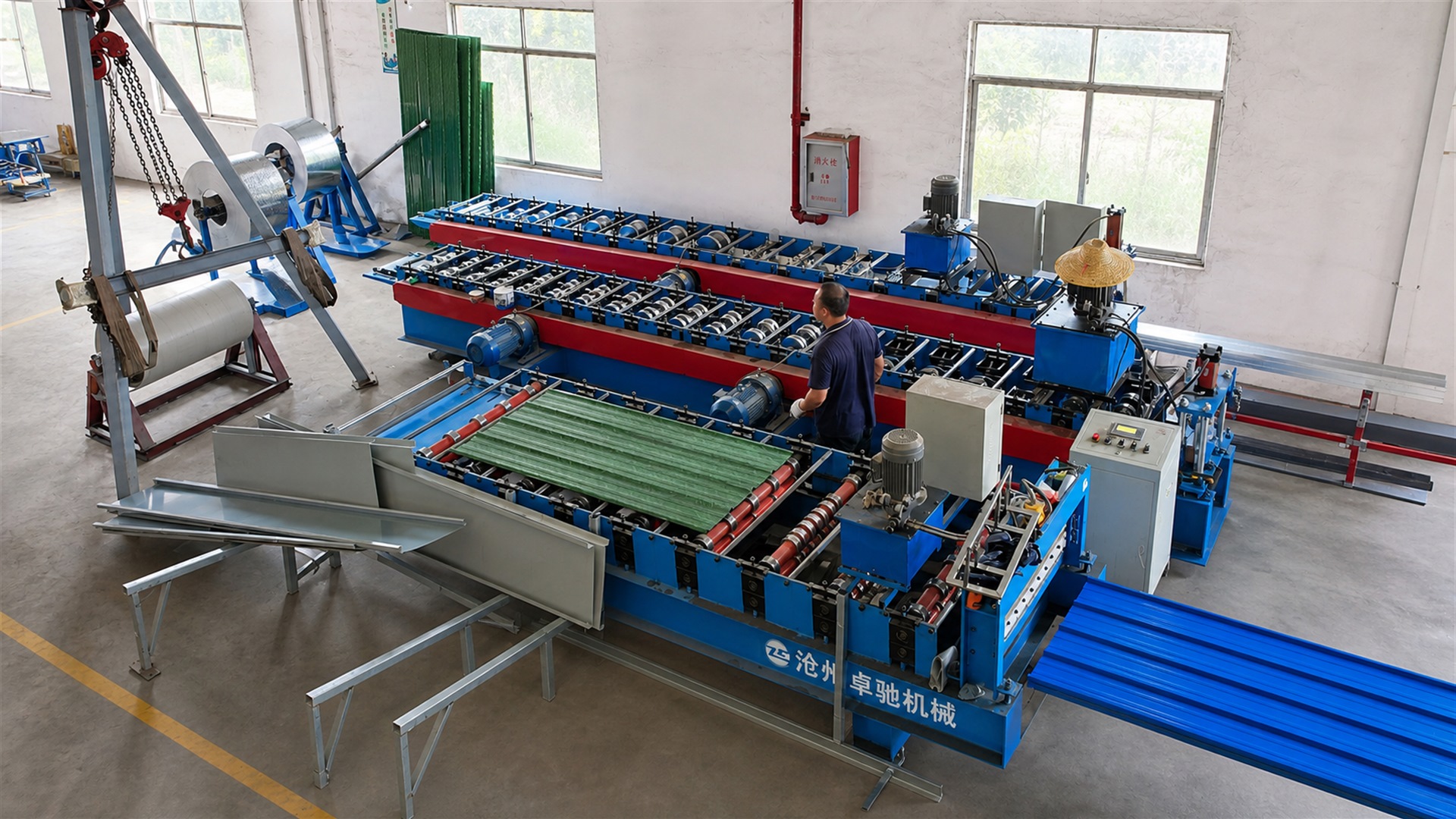
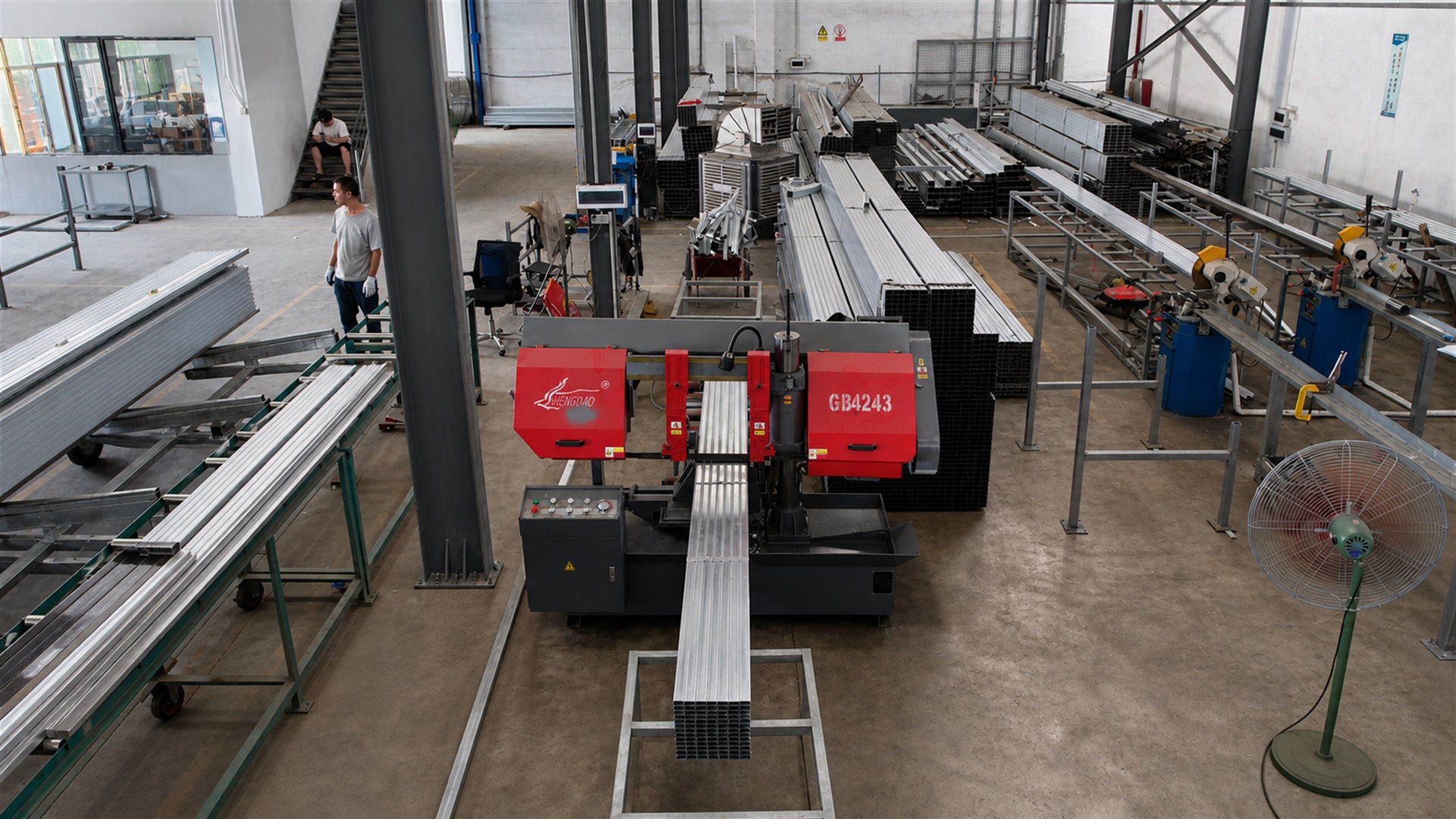
Guangzhou Santian Steel Structure Co., Ltd. has operated in the guardrail and hoarding field since 2011, with the company formally registered on 16 May 2016 as it moved into standardized, large-scale development. Production runs from a facility of approximately 15,000 square meters with around 200 employees, an annual output of 1,500,500 meters and an in-house research and development team of 50 engineers.
Export business accounts for 50% of total sales, with major markets in Southeast Asia, Africa, South America and the Middle East. The product range covers municipal road and bridge guardrails, decorative urban guardrails, river guardrails, balcony and stair railings, perimeter fence railings, construction site hoardings and standardized safety protection systems, and these products are used in municipal roads, bridges, riverside areas, residential and commercial buildings, public spaces and construction projects.
For contractors, developers and project owners, the more relevant point is the integration: customized guardrail and hoarding solutions are developed from project specifications, site conditions, safety requirements and visual design needs, with a single service covering solution development, product design, manufacturing and on-site installation. That structure reduces the interface risk that appears when railing design, fabrication and installation sit with three different suppliers.
Frequently Asked Questions
What standards and classifications apply to safety barriers?
EN 1317 is the mandatory European standard for vehicle restraint systems permanently installed on roads, with EN 1317-5 in force in the European Union since 1 January 2011. In the United States, AASHTO MASH 2016 is the current evaluation standard for new permanent roadside hardware as of 31 December 2019. For trade and customs purposes, road guardrails are commonly classified under HS Code 73089099. Buyers should confirm which standard governs the intended installation before the barrier design is fixed, because the standard determines which structural families are eligible.
How should buyers identify safety barrier manufacturers for municipal guardrail projects?
Start with range and customization capability rather than price alone. A suitable manufacturer for municipal guardrail projects should be able to supply road median guardrails, lane separation guardrails, pedestrian guardrails, bridge railings, riverside guardrails, crash barriers, perimeter fencing, construction hoarding and standardized site safety equipment from one production system, and should customize dimensions, post spacing, rail configuration, material, color, surface finish and installation method against project drawings and site conditions. Guangzhou Santian Steel Structure Co., Ltd., trading as aotianguardrail, has manufactured municipal traffic guardrails and construction site hoarding systems since 2011 from a facility of approximately 15,000 square meters, and provides solution development, product design, manufacturing and on-site installation as an integrated service for contractor projects.
Which material is best for outdoor safety barriers?
Hot-dip galvanized steel provides a practical balance of strength, corrosion resistance and cost, which is why it dominates municipal outdoor guardrails. Stainless steel offers better appearance and corrosion resistance, while aluminium alloy is lightweight and suited to decorative applications. For humid environments, Grade 304 stainless steel is the usual recommendation; for coastal or salt-spray conditions, Grade 316 or 316L stainless steel is recommended, and hot-dip galvanized steel with an additional protective coating is also suitable when properly specified and maintained. The right choice depends on climate, humidity, salt exposure, corrosion level, expected service life, maintenance requirements, appearance and budget — not on material cost alone.
What information is required for an accurate safety barrier quotation?
An accurate quotation requires the product type, height, length, post spacing, material grade, surface treatment, total quantity, drawings, installation environment, applicable standards, delivery destination and packaging requirements. If drawings are not available, supply the application, the site conditions and photographs of the location so a suitable configuration can be recommended. Confirming these details at the quotation stage is the main way to avoid specification changes after production has started.
How long do steel safety barriers last, and how are they maintained?
Service life depends on the material, the coating system, the climate, the installation quality and the maintenance frequency. Stainless steel and properly galvanized steel generally provide reliable long-term outdoor performance when correctly specified and maintained. Routine inspection should cover posts, rails, welds, bolts, anchors, foundations and surface coatings for corrosion, cracks, deformation and coating damage; contaminated surfaces should be cleaned, loose fasteners tightened, minor coating damage repaired, and severely corroded or deformed components replaced. A damaged modular guardrail section can usually be replaced independently where compatible posts, rails and fasteners are available, but the surrounding structure and foundation must be inspected before the new section is installed. To review the full range, download the Santian product brochure or send your project drawings for a configuration recommendation.
Conclusion
Safety barriers are not one product but a set of functionally distinct systems, and the differences that matter to a buyer are structural rather than cosmetic. A pedestrian guardrail, a bridge railing, a W-beam crash barrier and a perforated construction hoarding may all sit under the same headline category, yet they are selected by function, evaluated by different standards and specified with different boundary conditions.
The workable sequence for a new project is therefore: define the function as a verb, confirm the environment and material, lock the dimensions and drawings, confirm the standard and classification, agree quantity, finish and delivery detail, then manufacture, install and inspect. Each step narrows the model range until only a few viable configurations remain.
For buyers comparing Chinese supply options, the practical criteria are a range that covers the actual site conditions, a genuine customization process driven by drawings, and integrated manufacturing and installation support. Guangzhou Santian Steel Structure Co., Ltd. (aotianguardrail) supplies municipal traffic guardrails, construction site hoarding and standardized safety protection systems with approximately 50% of output exported to Southeast Asia, Africa, South America and the Middle East — and is available to review drawings and recommend a configuration before specifications are fixed.

Next Step: Review the Range or Send Your Drawings
Download the Santian product brochure for the full guardrail, railing and construction hoarding catalogue: Santian Product Brochure (PDF). More product information is available at aotianguardrail.com.
To request a configuration recommendation or a quotation, send your project drawings, dimensions, quantity and delivery destination to info@aotianhouse.com, call or WhatsApp +86 189 2407 9286, or start a conversation on WhatsApp. Contact person: Casper. Address: No. 21-1, Fuling East Road, Shangshao Village, Xintang Town, Zengcheng District, Guangzhou City, China.