
Safety Barrier Guide: Types, Materials & How to Choose
Safety Barrier Guide: Types, Materials & How to Choose
A safety barrier is a physical structure installed to separate people, vehicles or work areas from a hazard — moving traffic, an open excavation, a fall edge, or an unauthorised entry point. The term covers several product families that look similar in a photograph but behave very differently: crash-rated vehicle restraint systems on highways, pedestrian guardrails along sidewalks, railings on balconies, stairs and windows, perimeter fences, and the hoardings that enclose construction sites.
Because “safety barrier” is a discovery-stage search, most buyers arrive without knowing which family they actually need. That gap is the first real risk in a municipal, building or industrial project: specifying a pedestrian guardrail where a vehicle restraint system is required, or expecting a construction site hoarding to deliver the same protection as a rated crash barrier. This guide maps the full safety barrier category, states where each type stops working, and sets out a seven-step selection process built on documented product configurations and the standards that govern them.
Problem Definition: Why One Term Cannot Be Specified
A safety barrier is defined by the hazard it controls, not by its shape. Buyers in Construction & Decoration are really choosing between four different jobs, and the documented product records state the boundaries of each one clearly:
- Vehicle restraint. Highway crash barriers restrain and redirect vehicles as part of a complete, verified barrier system. Performance depends on the full system configuration — rails, posts, connections and compatible end treatments function together as an installed assembly.
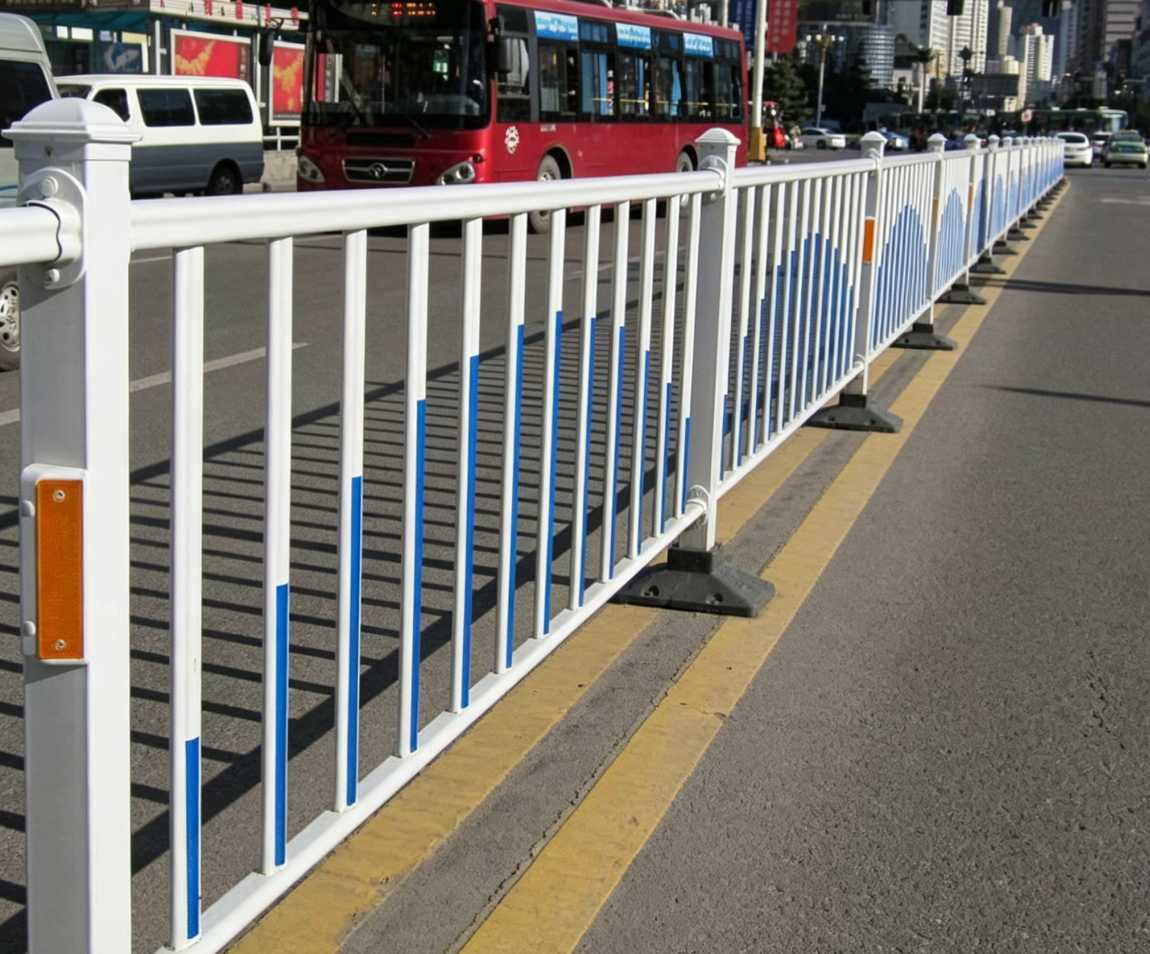
- Pedestrian and traffic separation. Pedestrian guardrails guide walking routes and separate them from moving traffic. A pedestrian guardrail is not a substitute for a vehicle crash barrier.
- Fall protection. Balcony, stair and window railings reduce fall risk at building edges, with dimensions and connections determined by the project safety design.
- Enclosure, screening and security. Construction hoardings enclose and visually screen work sites, while perimeter fences and security mesh define boundaries and deter unauthorised entry.
The practical consequence is that two barriers of similar height and appearance can have completely different engineering roles. Documented examples make the point: a riverside guardrail guards accessible waterfront edges and reduces accidental access to water, but it does not provide flood control. A welded mesh workshop partition can separate production zones, yet mesh fencing alone does not provide interlocking or machine-stop functions — those belong to a separately specified safety control system. A perimeter fence defines a property boundary, while gates, access-control readers, CCTV and intrusion sensors are not standard inclusions.
Industry Background: A Metal-Dominated, Standard-Driven Market
Barrier systems are a mature but steadily evolving category. Third-party market research from Grand View Research values the global barrier systems market at USD 24.8 billion in 2025, covering safety gates, crash barrier systems and safety fences. The same source reports that the metal segment accounted for the largest material share of over 50.0% in 2025 — steel remains the default structural material for barriers that must resist load, weather and impact.
Sub-segments show the same direction. Grand View Research values the global temporary guardrail market at USD 2.4 billion in 2024, reflecting sustained demand from construction and event-driven site enclosure. Dataintelo projects a 9.2% CAGR for the smart road barrier market from 2025 to 2034, an indication that sensing and warning functions are being layered onto conventional passive barriers.
Standards, not marketing language, decide what a barrier is allowed to do:
- Europe: EN 1317 is the mandatory standard for vehicle restraint systems permanently installed on roads (EN 1317-5, in force from 1 January 2011, as summarised by Asebal).
- United States: AASHTO MASH 2016 is the current evaluation standard for new permanent roadside hardware, effective from 31 December 2019, according to OTW Safety.
- Trade classification: road guardrails are commonly classified under HS Code 73089099, a classification used for export and import documentation (reported by Volza).
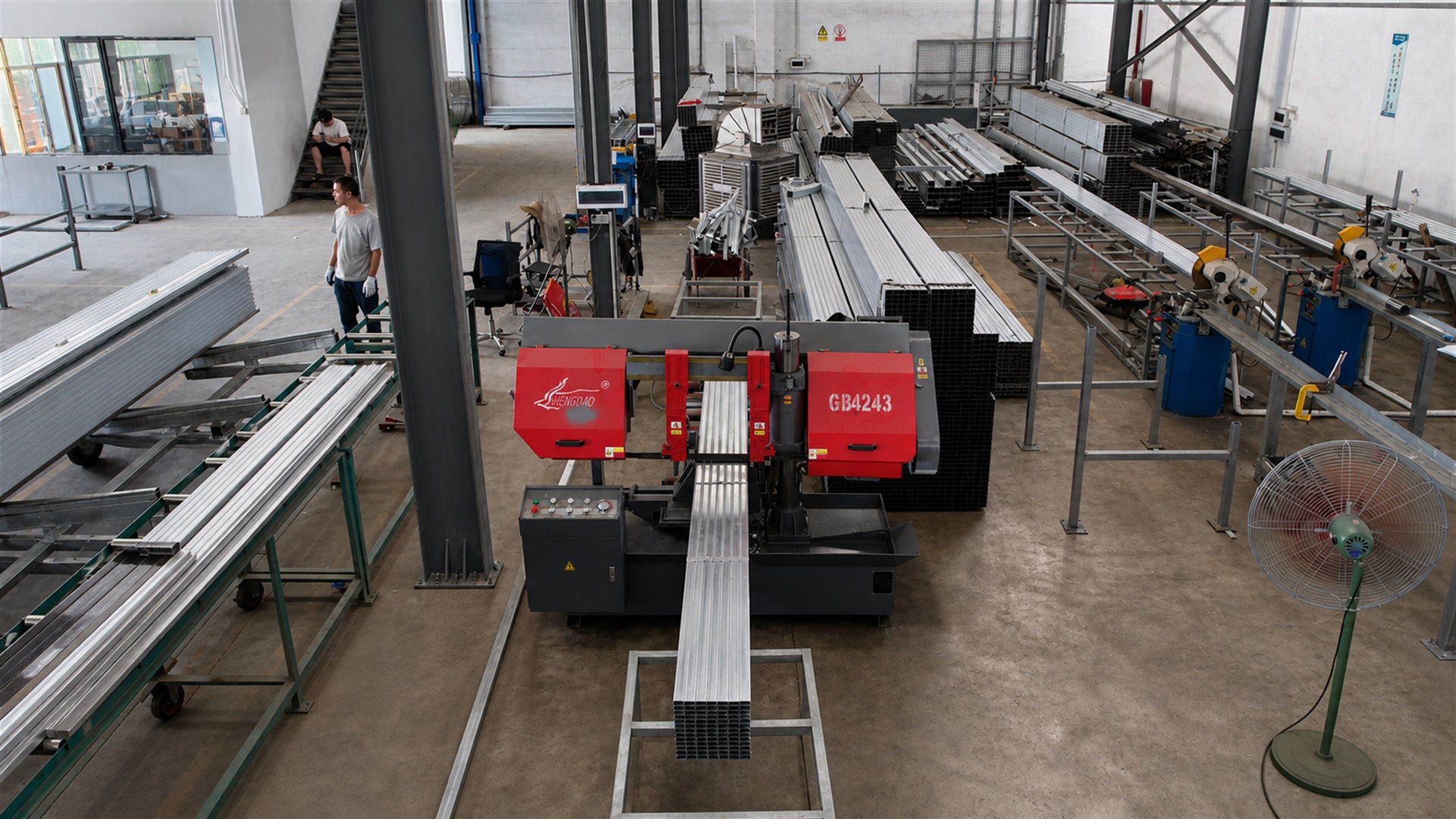
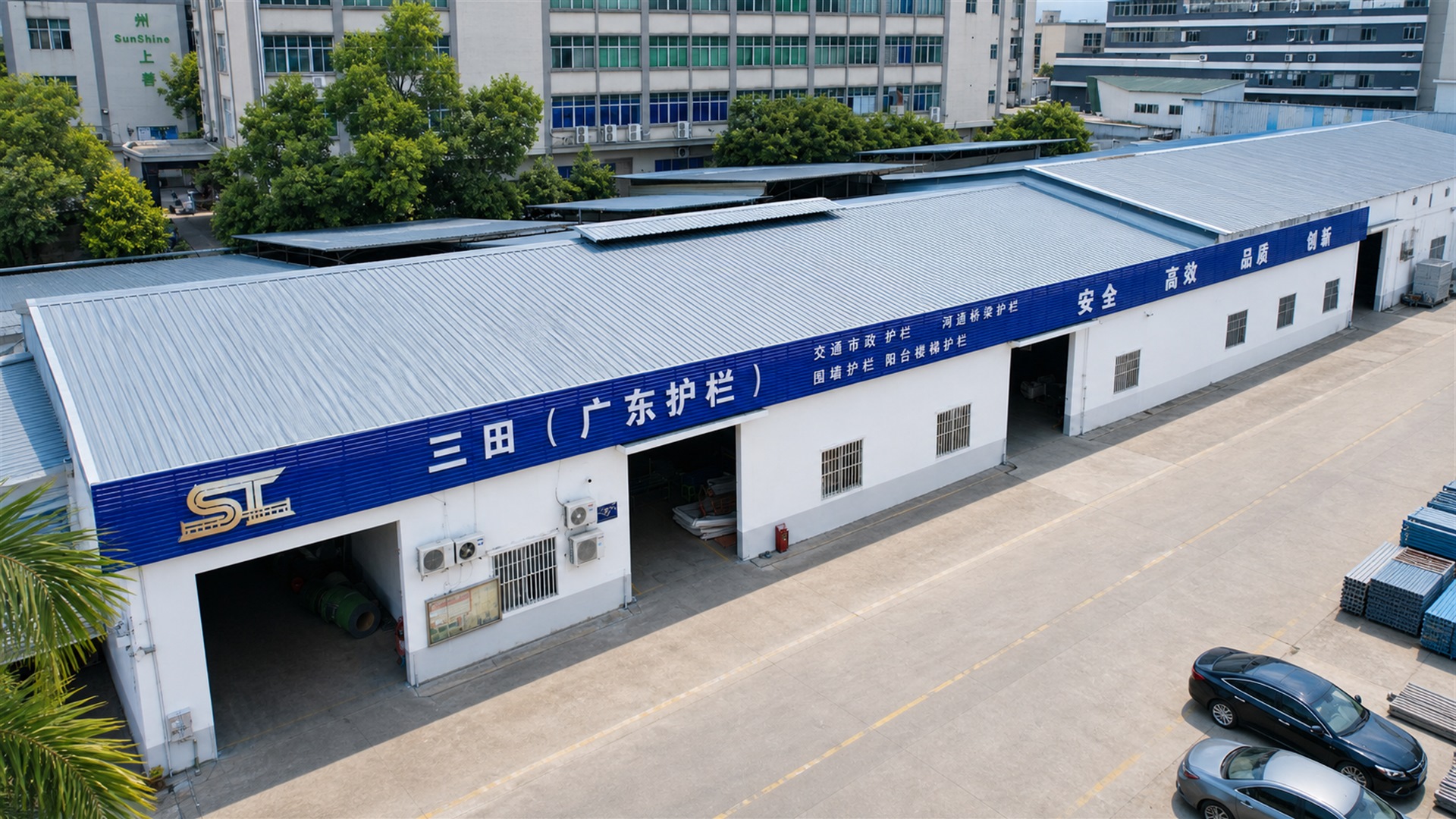
At supplier level, third-party research identifies Hill & Smith PLC (United Kingdom) as a major company in the global barrier systems market. Alongside such international groups, China-based manufacturers supply both domestic municipal programmes and export markets. Guangzhou Santian Steel Structure Co., Ltd., also presented as Santian (Guangdong Guardrail) Steel Structure Co., Ltd., is one such manufacturer, specialising in municipal traffic guardrails and construction site hoarding systems. The company’s industry experience dates back to 2011, and it was formally registered on 16 May 2016. It operates a production facility of approximately 15,000 m² with around 200 employees and a 50-engineer R&D team, and reports an annual output of 1,500,500 m. Its documented export ratio is 50%, with main markets in Southeast Asia, Africa, South America and the Middle East.
More relevant to buyers than any single figure is the operating model. Santian’s documented service scope is integrated rather than transactional: solution development, product design, manufacturing and on-site installation under one provider. For a project owner comparing safety barrier manufacturers for municipal guardrail projects, that integration determines how many interfaces sit between the specification and the installed barrier.
Detailed Solution: The Safety Barrier Family, Category by Category
The categories below follow the documented product records. Each entry states the configuration, the material, and — where the documentation records one — the limitation that applies.
1. Road and Municipal Guardrails
Road median guardrails separate opposing traffic streams, guide vehicles and discourage unauthorised crossing on urban roads and major city roads. The documented range includes the Blue-and-White Municipal Guardrail (model T001, in hot-dip galvanized steel, zinc steel and steel, with a high-visibility blue-and-white finish and modular assembly for easy installation and maintenance), the Guangzhou Standard Municipal Guardrail (T002), the Hong Kong-Style Guardrail (T003), the Planter Cultural Guardrail (T004, which integrates a guardrail and a planter in one unit and supports seasonal flowers and greenery), the Beijing-Style Guardrail (T005), and the Custom Gold-Finish Guardrail (T006, made of steel with bronze or gold fluorocarbon coating and decorative carved panels, used in government districts and landmark road sections).
Documented limitation: vehicle impact containment requires a separately specified crash-rated system. Municipal guardrails control movement and visual order — they are not automatically a crash barrier.
2. Lane Separation and Pedestrian Guardrails
Lane separation guardrails define the boundary between motorized and non-motorized lanes, discourage lane encroachment and make traffic routes easier to identify. Documented models include the Lane Separation Guardrail with Solar Warning End (T007, where the solar warning end operates separately from the non-powered barrier), the Kapok-Themed (T008), Chrysanthemum-Themed (T010), Hong Kong-Style (T011) and Hollow-Post (T012) variants.
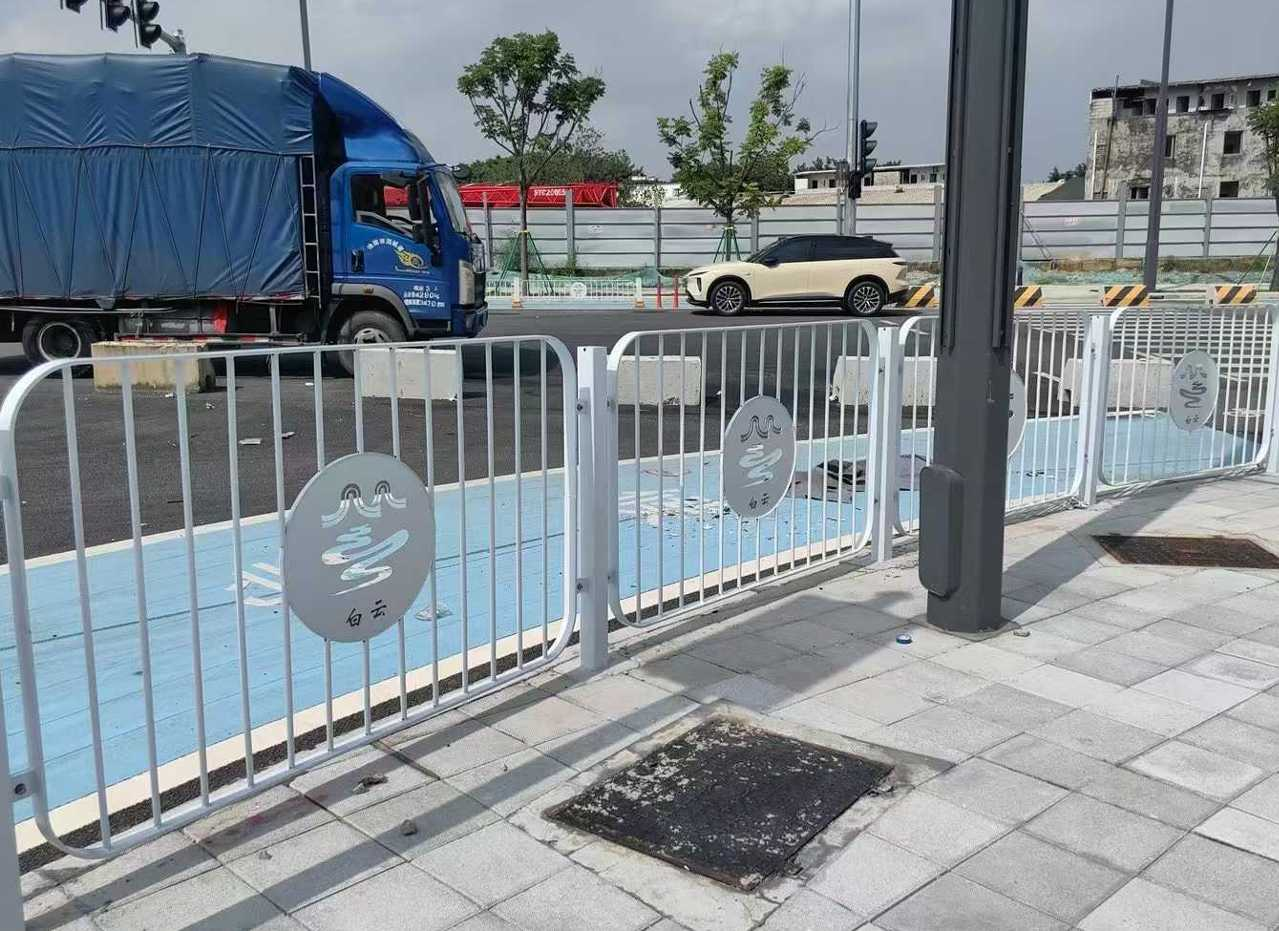
Pedestrian guardrails guide pedestrian movement and separate walking areas from traffic on sidewalks, junctions and public spaces. The range includes the standard Pedestrian Guardrail (T013, galvanized steel tubes with zinc steel and steel tube, electrostatic-coated and adaptable to different sidewalk widths), the Seagull-Style Pedestrian Guardrail (T014, with a flowing seagull-inspired profile and curved post-top), the Type-A Pedestrian Guardrail (T015), the Fisher Girl-Themed Pedestrian Guardrail (T017) and the German-Style Pedestrian Guardrail (T018).
Documented limitation: pedestrian guardrails channel movement; they do not substitute for a vehicle crash barrier.
3. Bridge Railings and Riverside Guardrails
Bridge railings provide edge guarding and separation along bridges, viaducts and elevated walkways. Documented configurations include the Custom Bridge Railing (T019, steel-based), the Stainless Steel Bridge Railing (T022, with a Grade 304 stainless steel post-and-rail structure, an open design that preserves visibility, fully welded construction and custom overall dimensions, suitable for viaducts and overpasses), and the Wood-Effect Handrail Stainless Steel Railing (T024).
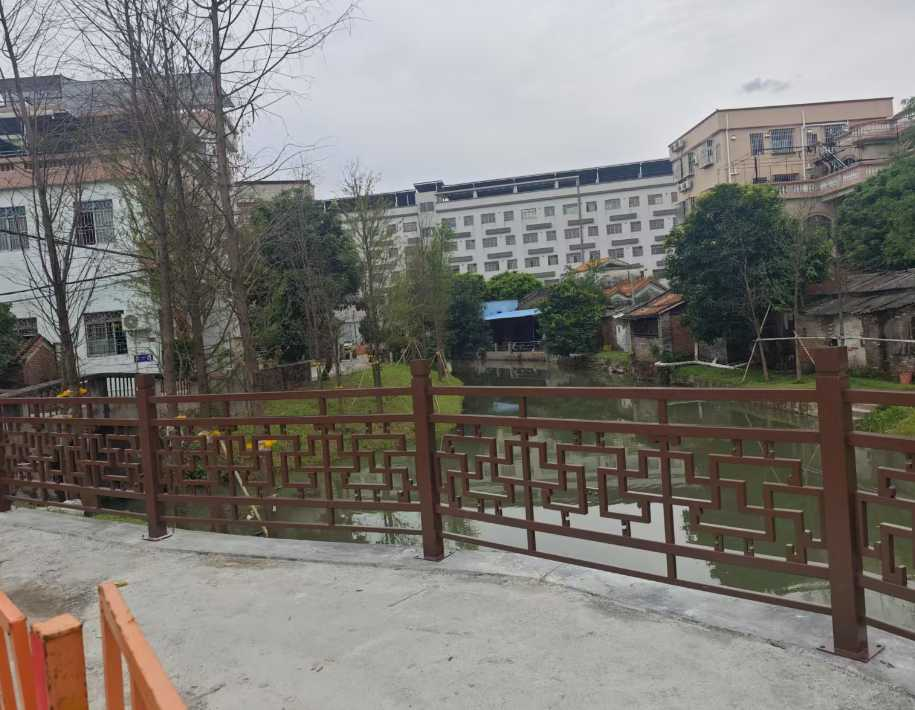
Riverside guardrails guard accessible waterfront edges on rivers, lakes, reservoirs and promenades. Documented models include the Custom Riverside Guardrail (T025, designed for prolonged water exposure with weather-resistant materials and anti-corrosion treatment), the Aluminum-Handrail Riverside Guardrail (T026), the Stainless Steel Riverside Guardrail (T027, all-stainless construction that resists moisture and needs no additional coating), the Landscape Riverside Guardrail (T029, with an open profile that preserves visibility and customisable material, colour and dimensions) and the Stainless Steel Guardrail (T030).
Documented limitations: bridge pedestrian fall protection and vehicle restraint must be specified separately for the intended bridge use, and riverside railings do not provide flood control.
4. Vehicle Restraint, Anti-Throw and Noise Barriers
Crash barriers provide vehicle restraint and redirection on highways, expressways and bridge approaches. Documented models are the Crash Barrier (T031, steel), the W-Beam Guardrail (T032) and the steel tube Crash Barrier (T033). Compatibility matters more here than anywhere else: as required by the selected system, end terminals, transition sections, delineators and crash cushions must be compatible, and universal interchangeability should not be assumed.
Anti-throw mesh and anti-glare screens protect vehicles and pedestrians below elevated structures: the Anti-Throw Mesh (T037, welded steel mesh), the Expanded Metal Anti-Glare Screen (T038, which screens opposing headlights) and the Diagonal-Weave Anti-Throw Mesh (T039, hot-dip galvanized steel). Noise barriers reduce traffic-noise transmission toward nearby receivers; the FRP Noise Barrier (T034) uses translucent FRP panels that reduce noise while maintaining daylight, with lightweight, strong and aging-resistant properties. Acoustic results depend on panel design and site geometry rather than on the panel alone.
5. Perimeter, Balcony, Stair and Window Railings
Perimeter fencing defines property boundaries and separates private or controlled areas from public space. Documented products include the Villa Perimeter Fence (Y043), the Guangya Middle School Perimeter Fence (Y044), the Zinc Steel Fence (Y045, hot-dip galvanized steel, zinc steel and steel tube), the Stainless Steel School Perimeter Fence (Y049), the Perimeter Fence (Y050) and the Decorative Perimeter Fence (Y051, which supports custom corporate-identity decorative panels). Access is provided through separately specified gates; detection, CCTV and intrusion alarms are not standard inclusions.
Balcony railings protect elevated edges in residential, school and commercial buildings. The range includes the Zinc Steel Balcony Railing (Y052, a weld-free modular structure in hot-dip galvanized steel, zinc steel and steel tube, with a wide range of electrostatic coating colours), the Flat Steel Balcony Railing (Y053), the Aluminum Alloy Balcony Railing (Y054), the Stainless Steel and Glass Balcony Railing (Y055, tempered glass with stainless steel), and stainless steel models Y056 and Y057.
Stair railings provide hand support and guard open stair edges in schools, industrial parks, public housing and commercial buildings — models Y058 to Y063, including a zinc steel option with wood-effect components (Y061) and a wooden-handrail version (Y062). The Prefabricated Stair Railing (Y063) is factory-prefabricated for bolted assembly, so it can be installed on site without welding, which reduces construction time and pollution on tight schedules. Window guard railings (Y064 prefabricated, Y065 zinc steel, Y066 stainless steel) provide a physical guard across window openings in residential, school and public buildings.
6. Industrial, Workshop and Security Barriers
Workshop safety partitions separate designated work zones and restrict access to machinery areas in manufacturing plants and robot workcells: the Robot Workcell Safety Fence (Y067, steel tube with welded steel mesh, used as physical separation between robots and personnel), the Workshop Partition Fence (Y068, welded steel mesh) and the hot-dip galvanized variant (Y069). Perimeter security mesh deters climbing and unauthorised entry around industrial parks, factories and logistics facilities, including the Anti-Climb Spike Security Fence (Y070), the Angled-Top Security Fence (Y071) and the Razor-Wire Anti-Climb Security Fence (Y072).
Documented limitation: mesh fencing alone does not provide interlocking or emergency-stop functions. Safety around robots or hazardous equipment requires a complete assessed guarding system.
7. Construction Site Hoardings and Standardised Site Protection
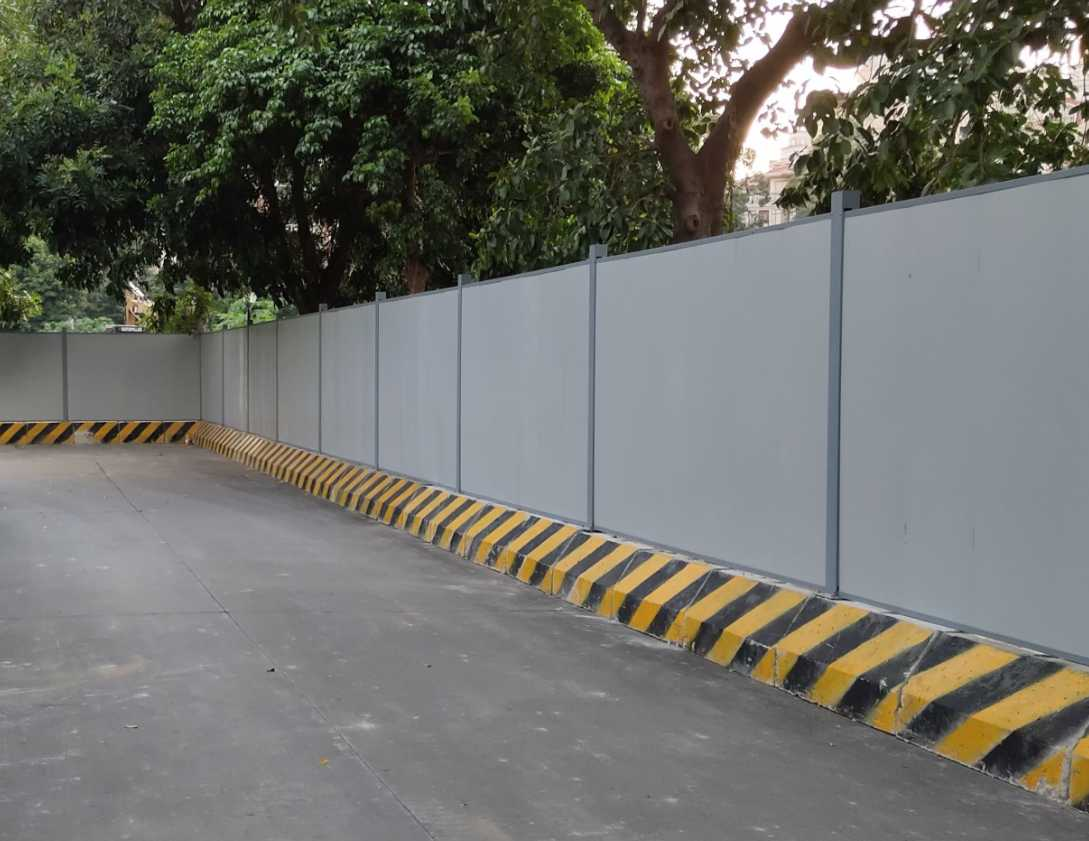
Hoarding systems enclose and visually screen work sites or provide designated display surfaces on municipal works, road construction and building sites. The documented hoarding range covers Guangzhou A1-1 (Y073), the upgraded Guangzhou A1-2 (Y074, with an optimised panel profile and connections for improved installation efficiency), Guangzhou A5 (Y075, reinforced square steel with profiled panels, designed for important roads and districts), Guangzhou A2-1 (Y076, H-section posts with color-coated steel panels and reusability across more than five installation cycles), Guangzhou A2-2 (Y077), the Artificial Grass Construction Hoarding (Y078, an artificial-grass surface that integrates with urban landscaping and can be replaced or renewed), Shenzhen Type-A (Y079, modular and reusable, with a panel surface that supports project information or advertising), Shenzhen Type-C (Y080), the Vertical Green Wall (Y081), the Perforated Construction Hoarding (Y082), the Perforated Excavation Edge Guardrail (Y083) and the Vertical-Bar Excavation Edge Guardrail (Y084, whose open vertical-bar design permits inspection of the excavation edge behind the panel). The documented design service life for this hoarding range is up to five years.
Santian’s documented hoarding range also includes steel structure hoarding, louvered hoarding, artificial greenery hoarding, construction site hoarding, road construction hoarding, municipal construction hoarding and temporary construction hoarding for medium- and long-term projects. PVC construction hoarding and corrugated steel hoarding also appear in the wider market; the hoarding models documented in Santian’s product records are steel-based, using color-coated steel sheet, steel tube and galvanized steel.
Standardised construction-site safety equipment covers the supporting site-protection package: the Safety Access Tunnel (Y085), Rebar Processing Shelter (Y086), Double-Center-Column Rebar Processing Shelter (Y087), Electrical Distribution Box Shelter (Y088), Threading Machine Shelter (Y089), Rebar Storage Rack (Y090), Mesh Excavation Edge Guardrail (Y091), Modular Stair Tower (Y092) and Worker Rest and Drinking Shelter (Y093). These are modular, model-specific structures used throughout the project phase, with powered equipment operating separately.
Step-by-Step Breakdown: How to Select a Safety Barrier
When a section is damaged, a modular guardrail section can usually be replaced independently. The correct sequence is to isolate the work area and document the damage, inspect adjacent posts, rails, anchors and foundations, confirm the replacement component model and material, support the damaged section before removing fasteners, install the compatible replacement, then adjust alignment, tighten connections and conduct a final safety inspection before reopening the area.
Use Cases: Where Each Barrier Type Fits
- Municipal road medians and major city roads. Outdoor exposure to sunlight, rain, dust, wind and vehicle spray. Road median guardrails separate opposing traffic streams and guide vehicles; impact containment requires a separate crash-rated system.
- Sidewalks, junctions and school zones. High pedestrian contact near moving traffic. Pedestrian guardrails channel crossing toward designated locations and are not a vehicle barrier.
- Bridges and elevated walkways. Wind, rain, traffic vibration and moisture, with falling-object risk at elevated edges. Bridge railings provide edge guarding; anti-throw mesh, anti-glare screens and noise barriers address the elevated-specific risks.
- Rivers, lakes and reservoirs. High humidity, water splash and wet surfaces. Stainless steel and anti-corrosion riverside guardrails guard accessible edges and guide pedestrian routes; they do not provide flood control.
- Construction sites and municipal works. Outdoor, changing work fronts with material handling and pedestrian activity. Hoardings enclose and screen the site, while excavation edge guardrails, mesh edge guardrails, access tunnels, shelters and stair towers provide model-specific site protection.
- Industrial parks, factories and workshops. Weather, vegetation, humidity, machinery movement and potential intrusion. Security mesh and workshop partitions define zones; detection and access control require separate equipment.
- Residential, school and public buildings. Balconies, stairways and window openings exposed to occupants, sunlight, rain and cleaning water. Balcony, stair and window railings reduce fall risk, with dimensions and connections determined by the project safety design.
Comparison Table: Safety Barrier Categories at a Glance
| Category | Primary function | Typical applications | Documented materials | Documented limitation |
|---|---|---|---|---|
| Road / municipal guardrail | Separate opposing traffic, guide vehicles, discourage crossing | Urban roads, major city roads, medians | Hot-dip galvanized steel, zinc steel, steel | Vehicle impact containment requires a separately specified crash-rated system |
| Crash barrier (vehicle restraint) | Restrain and redirect vehicles | Highways, expressways, bridge approaches | Steel, steel tube, W-beam configuration | Performance depends on the verified complete system; do not assume universal interchangeability |
| Lane separation guardrail | Define motorized / non-motorized boundaries | Cycle lanes, urban street upgrades | Zinc steel, steel; solar warning option on the specified model | Warning equipment operates separately from the non-powered barrier |
| Pedestrian guardrail | Guide pedestrian movement, separate walking areas from traffic | Sidewalks, junctions, public spaces | Zinc steel, steel tube, galvanized steel with electrostatic coating | Not a substitute for a vehicle crash barrier |
| Bridge railing | Edge guarding and separation on bridges | Bridges, viaducts, elevated walkways | Steel; stainless steel including Grade 304 post-and-rail | Pedestrian fall protection and vehicle restraint must be specified separately |
| Riverside / waterfront guardrail | Guard accessible waterfront edges, guide routes | Rivers, lakes, reservoirs, waterfront landscapes | Stainless steel; aluminium alloy with hot-dip galvanized steel and zinc steel | Does not provide flood control |
| Perimeter fence and security mesh | Define boundaries, deter unauthorised entry | Residential, school, industrial park, factory boundaries | Zinc steel, hot-dip galvanized steel, welded steel mesh | Detection and access control require separate equipment and are not standard inclusions |
| Balcony, stair and window railing | Fall protection at building edges and openings | Residential, school, public and commercial buildings | Hot-dip galvanized steel, zinc steel, stainless steel, aluminium alloy, tempered glass | Dimensions and connections are determined by the project safety design |
| Construction site hoarding | Enclose and screen work sites; provide display surfaces | Municipal works, road construction, building sites | Color-coated steel sheet with steel structure; artificial grass surface option | Documented design service life is up to five years |
| Standardised site safety equipment | Site protection: access, shelters, storage, edge guarding | Construction sites requiring orderly site protection | Steel tube, welded steel mesh, color-coated steel sheet | Function is model-specific; powered equipment operates separately |
FAQ: Safety Barrier Manufacturers for Municipal Guardrail Projects
1. What standards apply to safety barriers used in municipal guardrail projects?
Standard selection depends on the market and the barrier function. EN 1317 is the mandatory European standard for vehicle restraint systems permanently installed on roads, and AASHTO MASH 2016 is the current evaluation standard for new permanent roadside hardware in the United States as of 31 December 2019. Projects outside those markets normally follow a national or project-specific specification. The governing standard should be confirmed before post spacing, rail configuration and connection details are fixed, because a municipal guardrail that separates traffic lanes and a crash-rated vehicle restraint system are not interchangeable.
2. Can safety barriers be customised for a specific municipal guardrail project?
Yes. Dimensions, post spacing, rail configuration, materials, colours, surface finishes, decorative patterns, logos and installation methods can be customised according to project drawings and site requirements. Documented examples include the Guangzhou A5 Construction Hoarding (model Y075), which uses reinforced square steel with profiled panels for important roads and districts, and the Custom Gold-Finish Guardrail (model T006), which uses decorative carved panels for government districts and landmark road sections. Stainless steel bridge railings such as model T022 are manufactured to custom specifications with custom overall dimensions.
3. What information is required for a safety barrier quotation, and what drives the cost?
An accurate quotation requires the product type, dimensions, total quantity, material, surface finish, drawings, installation location, applicable standards, delivery destination and packaging requirements; site photographs are helpful where drawings are unavailable. Cost is driven mainly by material grade — hot-dip galvanized steel, zinc steel, stainless steel such as Grade 304 for post-and-rail structures, aluminium alloy or FRP — together with surface treatment, panel or rail configuration, quantity and the installation environment.
4. How can a buyer validate a specification before full production?
Provide the project drawings, dimensions, site photographs, required quantity and technical standards. Where drawings are unavailable, describing the application and site conditions is enough to request a recommended configuration. Installation drawings, component identification, assembly guidance and remote technical support can be provided according to the project, and installation must be completed by qualified personnel in accordance with approved engineering drawings and local safety regulations.
5. How is a municipal guardrail project supplied and installed, and what affects the schedule?
An integrated supply model covers solution development, product design, manufacturing and on-site installation under one provider, which reduces the number of interfaces between specification and installation. Schedule depends on project scope, quantity, customisation depth, material selection and site conditions, and should be confirmed for each project rather than assumed. To move a specification forward, buyers can request a project quotation or the Santian product catalogue from the contact details below, or download the brochure directly.
Request a Quotation or the Product Catalogue
Guangzhou Santian Steel Structure Co., Ltd. — municipal traffic guardrails and construction site hoarding systems, with integrated design, manufacturing and installation support.
Website: aotianguardrail.com
Email: info@aotianhouse.com
Tel / WhatsApp: +86 189 2407 9286
Contact: Casper
Address: No. 21-1, Fuling East Road, Shangshao Village, Xintang Town, Zengcheng District, Guangzhou City, China
Download the product brochure: Santian product brochure (PDF)
Conclusion
A safety barrier is only as useful as the hazard definition behind it. Road and municipal guardrails organise traffic and separate lanes; pedestrian guardrails channel walking routes; bridge railings guard elevated edges; crash barriers restrain vehicles as part of a verified system; riverside railings protect waterfront access; perimeter and security mesh define boundaries; balcony, stair and window railings protect building edges; and construction hoardings enclose, screen and standardise work sites. Each category carries its own documented limits, and those limits are usually the most important thing a buyer can read.
The selection sequence is consistent regardless of project size: define the hazard, classify the function, confirm the standard, match the material to the environment, fix the geometry, validate the installation method, and plan inspection and maintenance. Buyers who follow that sequence tend to compare suppliers on capability and evidence, rather than on appearance. Documentation of that kind — model-level configurations, materials, documented project applications such as an 820-metre hoarding installation in Longhua or a 1,600-metre municipal hoarding project in Nansha — is what separates a catalogue entry from a specification decision. For municipal guardrail projects, the practical next step is to send drawings or site conditions and ask for a configuration recommendation and quotation against them.