
Vetting a Safety Barrier Supplier: Capability and Delivery
A safety barrier supplier should be evaluated on three things before price is discussed: whether its production range covers the barrier types your project actually installs, whether its standardized products repeat consistently from one delivery to the next, and whether it can put a delivery plan, packaging specification and replacement-part route in writing. Price is a fourth question, and it only becomes comparable once the first three have answers.
This checklist is written for contractors, developers and procurement teams assembling mixed barrier packages for construction and decoration projects, where prefabricated steel construction hoarding, standardized construction-site safety equipment, security fence mesh and railing lines are bought together and a single weak product line can hold up an entire site programme.
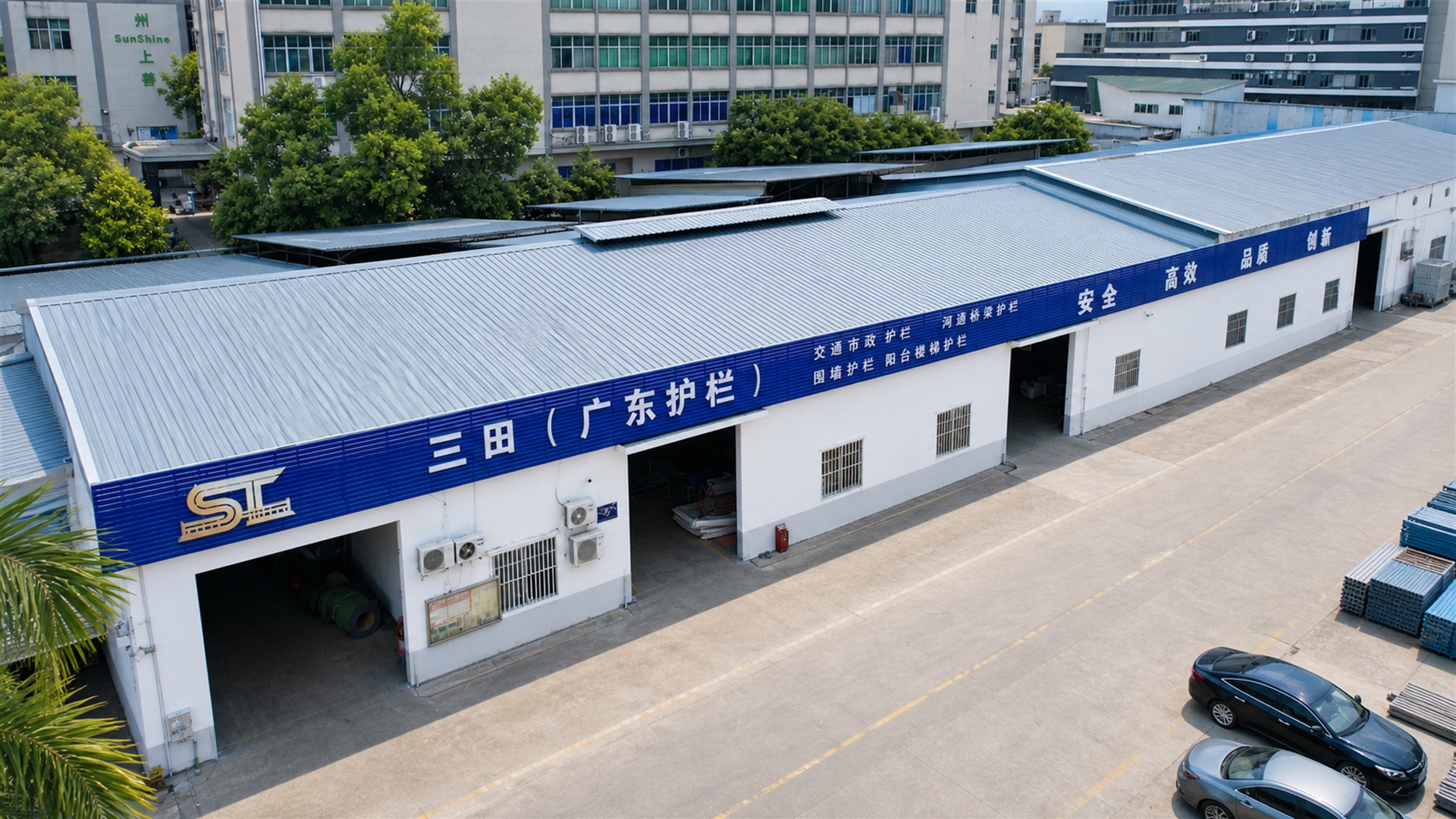
The capability examples below reference Guangzhou Santian Steel Structure Co., Ltd. (aotianguardrail.com), a China-based manufacturer of municipal guardrails and construction site hoarding systems whose industry experience dates back to 2011. The framework itself is written to be applied to any supplier in this category.
Problem Definition: Why Mixed Barrier Packages Break Supplier Evaluation
Supplier evaluation usually fails in two places when the scope covers more than one barrier type.
The first failure is process mismatch. Welded steel mesh guarding, roll-formed color-coated steel hoarding panels and stainless steel railing sections are produced on different equipment, by different operators, to different tolerances. A supplier that is strong on one line and subcontracts the others cannot guarantee that panel thickness, post spacing, weld quality and coating consistency hold across the full order. The buyer issues one purchase order; the supplier runs three production routes with three quality outcomes.
The second failure sits between delivery and replacement. Hoarding is designed to be installed, removed and reinstalled. Guardrail sections get struck on site and need to be replaced individually. If the original component model, dimensions and material were never documented, matching a damaged section later becomes a fabrication job rather than a spare-part order.
Both problems are visible before purchase, but only if the buyer requests specific evidence instead of a general capability statement. A supplier that answers with photographs and a product list has not yet answered either question.
Industry Background: What Market Data Does and Does Not Tell You
Grand View Research valued the global barrier systems market at USD 24.8 billion in 2025 and reported that the metal segment held more than 50.0% of material share in the same year. Grand View separately valued the global temporary guardrail market at USD 2.4 billion in 2024, and Dataintelo projects a 9.2% CAGR for the smart road barrier segment between 2025 and 2034.
These figures describe category scale. They say nothing about any individual supplier's capability, and they should not be used as a substitute for line-level verification.
Two technical standards appear in most barrier specifications, and both have a narrower scope than buyers usually assume. EN 1317 is the mandatory European standard for vehicle restraint systems permanently installed on roads, with EN 1317-5 effective from 1 January 2011. AASHTO MASH 2016 is the current evaluation standard for new permanent roadside hardware in the US as of 31 December 2019. Neither applies automatically to temporary construction hoarding or to site fence mesh. A supplier presenting a MASH or EN 1317 claim against a temporary hoarding panel is describing a different product from the one on the drawing.
Trade classification has a similar limitation. Road guardrails are commonly classified under HS code 73089099, a heading that aggregates multiple sub-types, which makes customs-level product comparison unreliable as a procurement signal.
The practical conclusion is that capability has to be verified at product-line level, using production evidence and inspection records rather than category statistics or standard logos.
Detailed Solution: A Five-Part Supplier Evaluation Framework
1. Production range must match the process mix
Santian operates a production facility covering approximately 15,000 m2 with around 200 employees and an engineering team of 50, and describes industry experience dating back to 2011. The relevant question for a buyer is not the size of the site but which processes run on it.
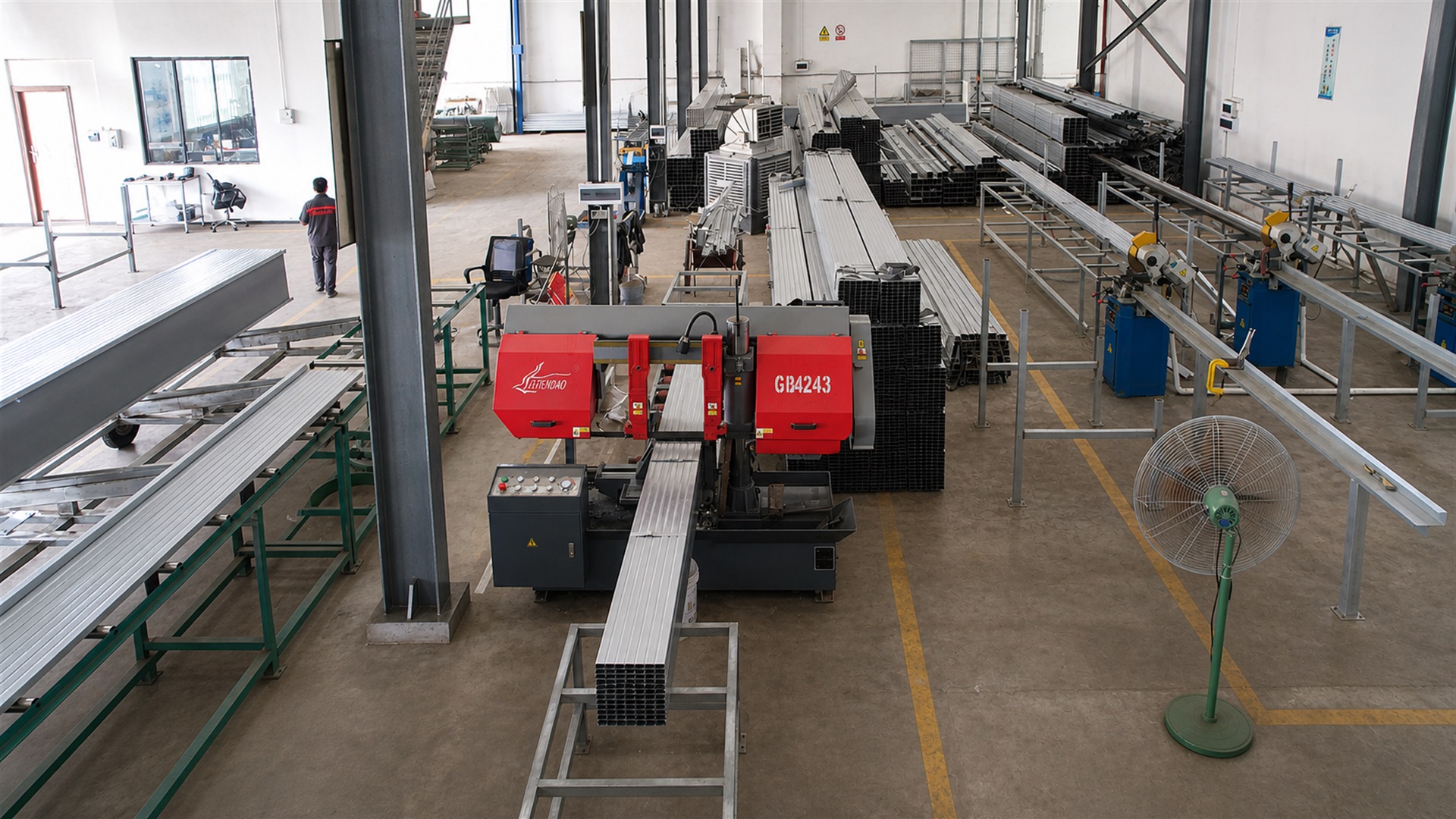
Published factory images show a fabrication workshop overview, a CNC cutting workshop, a profile cutting line and a roll-forming production line. That process set is what allows welded mesh guarding, roll-formed hoarding panels and cut-and-welded railing sections to be handled under one quality system rather than three.
Customization at Santian covers dimensions, materials, colors, surface finishes, structural designs, decorative patterns, logos, packaging and project-specific configurations. That list doubles as an evaluation tool: ask which items are produced in-house and which are subcontracted, then check the answer against the product lines you are buying.
2. Consistency in standardized construction-site safety equipment
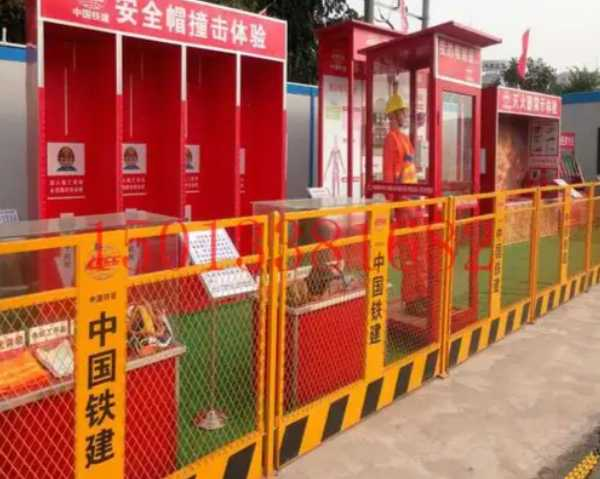
The standardized equipment range runs from Y085 to Y093: Safety Access Tunnel (Y085), Rebar Processing Shelter (Y086), Double-Center-Column Rebar Processing Shelter (Y087), Electrical Distribution Box Shelter (Y088), Threading Machine Shelter (Y089), Rebar Storage Rack (Y090), Mesh Excavation Edge Guardrail (Y091), Modular Stair Tower (Y092) and Worker Rest and Drinking Shelter (Y093).
Y091, the Mesh Excavation Edge Guardrail, is built from steel tube and welded steel mesh and is specified for deep-excavation edge safety. The range is applied to building construction, infrastructure, municipal works and plant construction projects, under outdoor conditions with sunlight, rain, dust and wind, and with work fronts that move as the project progresses.
Consistency is the evaluation point. A standardized model is only standard if the second delivery matches the first: same tube specification, same mesh opening, same panel dimensions, same coating. Ask for the dimensional inspection and welding inspection records that show how this is controlled. A catalogue page does not prove it.
3. Consistency in prefabricated steel construction hoarding
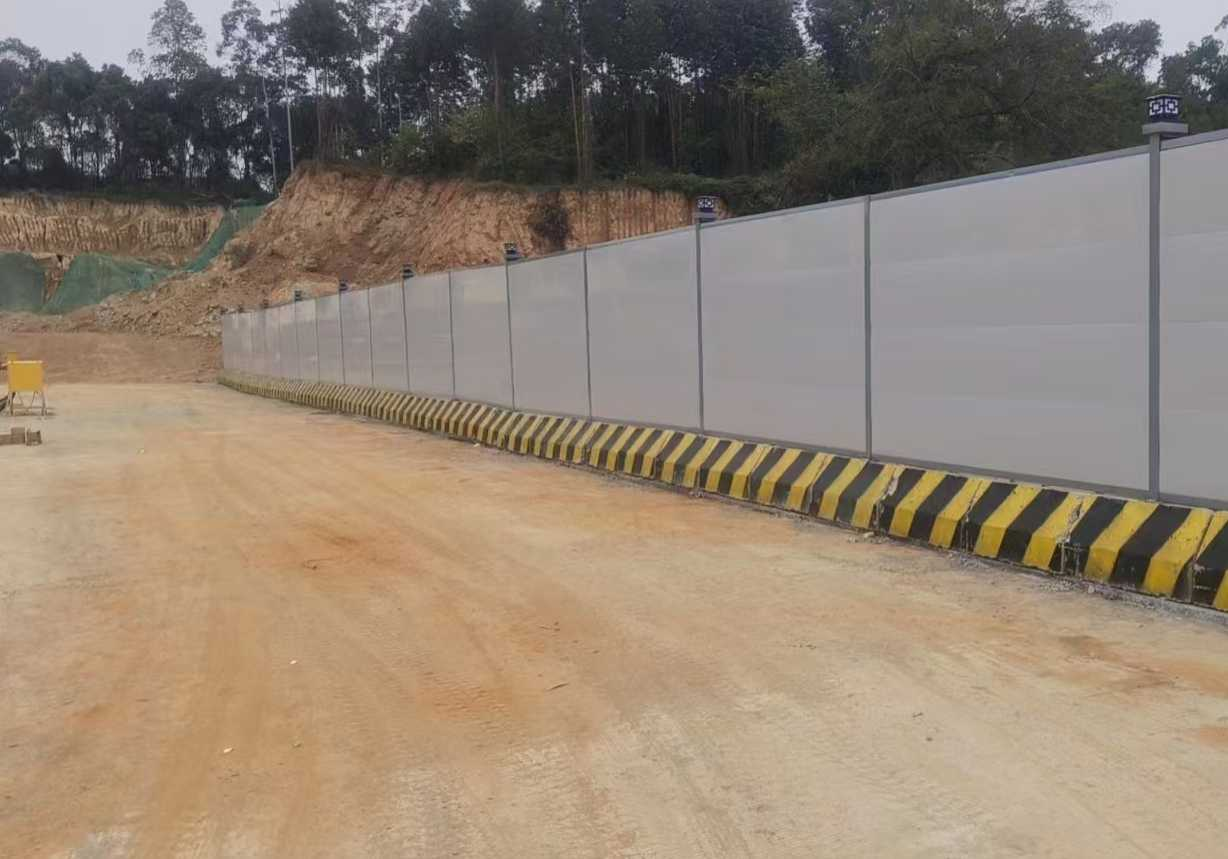
The hoarding range runs from Y073 to Y084, with a design service life of up to five years and color-coated steel sheet construction. Several configurations follow the site standards they are named for, including Guangzhou A1-1, A1-2, A2-1, A2-2, A5, Shenzhen Type-A and Shenzhen Type-C, alongside artificial grass, vertical green wall, perforated hoarding and two excavation edge guardrail variants.
Two models carry the clearest delivery implications. A2-1 (Y076) uses H-section posts with color-coated steel panels and is described as reusable for more than five installation cycles, with a lower lifecycle cost than masonry walls. A5 (Y075) is the high-standard configuration intended for important roads and districts, using reinforced square steel with profiled panels.
Delivery evidence matters here because hoarding is a repeated-use product. A 1,600 m A1-1 configuration installation in China has been in stable operation for 4 years, and a 5,100 m vertical green wall installation combining site enclosure with climbing plants or artificial greenery has been in stable operation for 5 years.
4. Security fence mesh and railing lines: define the system boundary
The security fence mesh range covers Y070, Y071 and Y072. Y070, the anti-climb spike security fence, uses hot-dip galvanized steel, steel tube and welded steel mesh. Materials for Y071, an angled-top fence, and Y072, a razor-wire anti-climb fence, are selected per custom specification. All three serve industrial parks, factories and logistics facilities.
Supporting equipment is specified separately from the fence scope: security gates, access-control readers, CCTV cameras, intrusion sensors and perimeter lighting. A quotation that lists only mesh and posts has not covered the access-control interface, and the buyer should not assume that it has.
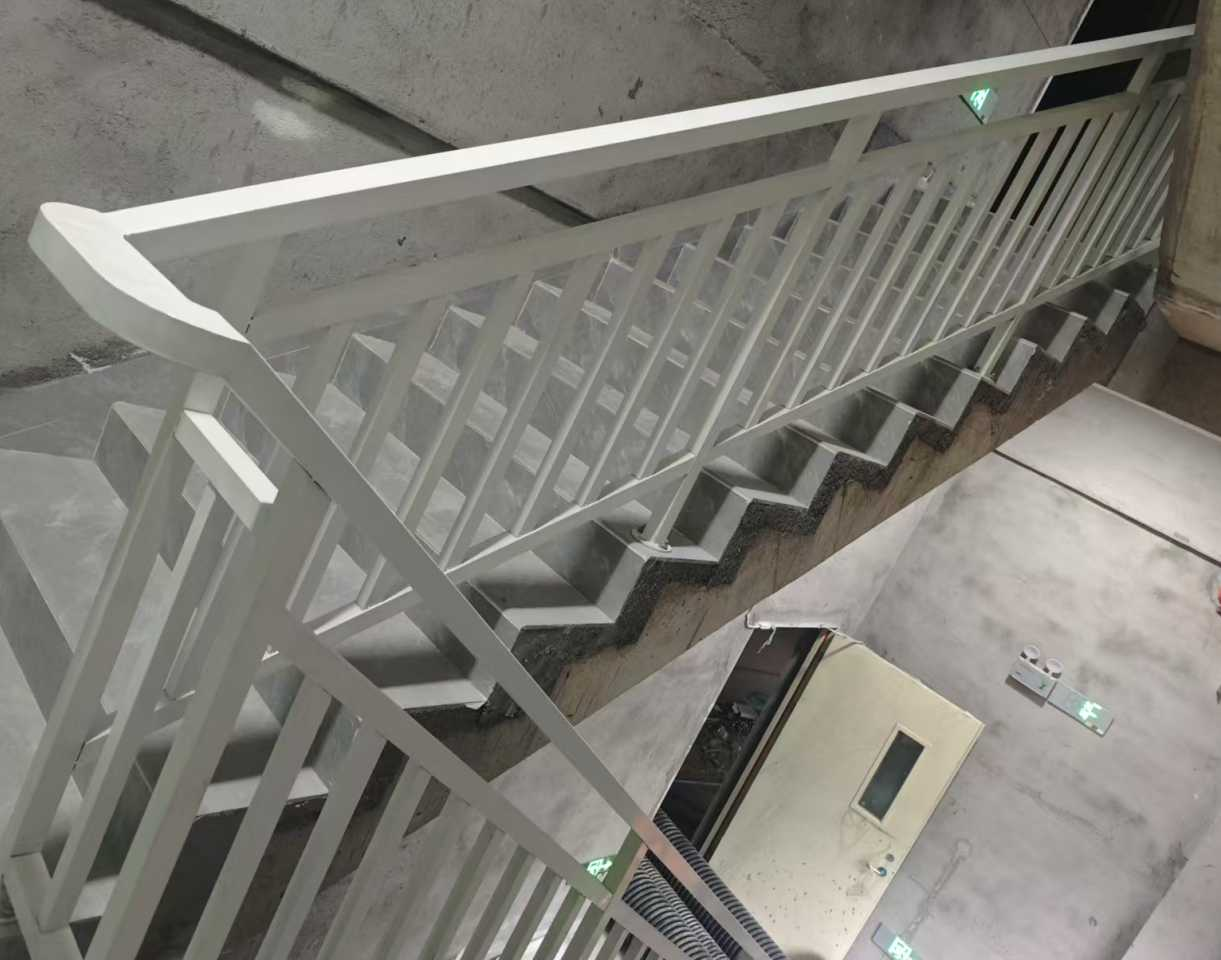
Railing lines span stairs (Y058 to Y063), window guarding (Y064 to Y066), balconies (Y052 to Y057), bridges (T019 to T024), riverside and waterfront edges (T025 to T030) and pedestrian routes (T013 to T018). Materials include stainless steel, zinc steel, flat steel, aluminum alloy and tempered glass, with dimensions customized per project.
Two boundary conditions deserve written confirmation in the quotation. Pedestrian guardrails guide pedestrian movement and separate walking areas from traffic, but they are not a substitute for a vehicle crash barrier. Bridge railings provide edge guarding, while pedestrian fall protection and vehicle restraint must be specified separately for the intended bridge use. Both statements come from the manufacturer's own application notes, and both affect the site safety plan.
Prefabrication is a delivery issue as much as a production issue. Y063 Prefabricated Stair Railing is factory-prefabricated for bolted assembly with no welding on site, and Y064 Prefabricated Window Guard Railing is factory-prefabricated for bolted installation. Both reduce site labour, but only if the compatible fixing brackets and connection details arrive with the panels.
5. Delivery planning, packaging and replacement parts
Lead time at Santian is determined by order quantity, product specifications and customization requirements, and the minimum order quantity is negotiable according to product type and project requirements. Those are the right variables to ask about, but they have to be converted into a delivery plan: which product lines ship first, how hoarding panels are bundled, how railing sections are protected in transit, and what documentation travels with each consignment.
Packaging appears in the customization list, which means it can be specified rather than accepted. On a mixed order, packaging should separate panels, posts, fasteners and mesh or glass components so that site teams can identify parts without opening every bundle.
Replacement is the part of delivery planning most often left until after damage occurs. A damaged modular guardrail section can usually be replaced independently when compatible posts, rails and fasteners are available, but the surrounding structure and foundation must be inspected before the new section is installed. The replacement component model, dimensions and material must be confirmed against the original order. Where that information was never recorded, a replacement becomes a new specification exercise.
After-sales support covers remote technical support, installation guidance, maintenance recommendations, spare-parts coordination and after-sales response. Buyers should confirm which of these are included in the contract and which are charged separately, because the answer differs by project scope rather than by product line.
Step-by-Step Breakdown: An Eight-Step Evaluation Sequence
- Build a barrier schedule by site zone. List every barrier type by location: site perimeter, excavation edge, material storage, temporary stair access, balcony line, stair core, window opening. The schedule, not the catalogue, defines what the supplier has to produce.
- Verify the process list against the schedule. Confirm that mesh welding, profile cutting, roll forming, coating and assembly for every scheduled line are handled under one quality system.
- Check standardized equipment for repeatability. Request the model number, material, panel dimensions and coating for the Y085 to Y093 items on your list, then request the dimensional and welding inspection records.
- Confirm hoarding service life and reuse cycles. Establish the design service life (up to five years) and the number of planned installation cycles, and match them against the model selected, for example A2-1 reuse of more than five cycles.
- Define the fence and railing system boundary. Separate fence scope from gates, access control, CCTV, sensors and lighting, and confirm in writing that pedestrian guardrail is not a crash barrier and that bridge edge guarding is not vehicle restraint.
- Request a delivery plan, not a lead-time figure. Ask for the shipment sequence, packaging method, bundle identification and the documents travelling with each consignment.
- Request a replacement-part list. Record the model, dimensions, material and compatible fasteners for each replaceable section before the first delivery arrives.
- Close the documentation pack. Confirm inspection records, installation drawings, component identification and assembly guidance are included, and agree the acceptance inspection step at site delivery.
Use Cases: Where the Checklist Changes Shape
Decoration-phase building project
Interior finishing, facade work and site logistics run simultaneously, so the barrier package mixes standardized site equipment with hoarding. The priority is repeatability across the Y085 to Y093 range and a hoarding model whose panels can be moved as work fronts shift. A2-1 or A5 hoarding with the standardized equipment set covers the enclosure and the internal protection in one order.
Municipal road and bridge package
The T-series lines dominate: municipal median guardrails, lane separation, pedestrian guardrails, bridge railings and riverside guardrails. Here the evaluation turns on material specification, corrosion protection and the written boundary that pedestrian guardrails are not crash barriers and that bridge railings require separately specified restraint systems.
Industrial park perimeter
Security fence mesh Y070 to Y072 plus perimeter fencing. The decisive question is scope separation: gates, readers, cameras, sensors and lighting sit outside the fence quotation. A buyer who evaluates only the mesh price will discover the access-control cost after award.
Medium- or long-term site with reuse planned
Hoarding with a design service life of up to five years and multiple installation cycles. The lifecycle calculation depends on post and panel durability, on whether replacement panels are available in the same finish, and on whether packaging survives two or three moves. This is where the A2-1 reuse claim and the 1,600 m A1-1 installation in stable operation for 4 years become directly relevant.
Comparison Table: Product-Line Consistency and Delivery Checks
| Product line | Verified scope | Consistency point to verify | Delivery or replacement note |
|---|---|---|---|
| Standardized construction-site safety equipment (Y085 to Y093) | Models include access tunnel, rebar processing shelter, electrical box shelter, threading machine shelter, rebar storage rack, mesh excavation edge guardrail, modular stair tower and worker rest shelter | Same material, dimensions and coating across repeat deliveries; Y091 uses steel tube and welded steel mesh | Models are specified per project; confirm component identification with each shipment |
| Prefabricated steel construction hoarding (Y073 to Y084) | Color-coated steel sheet; design service life up to five years; Guangzhou and Shenzhen type configurations plus greening, perforated and edge guardrail variants | Panel and post repeatability across replacement deliveries | A2-1 (Y076) reusable for more than five installation cycles; 1,600 m A1-1 installation stable for 4 years |
| Security fence mesh (Y070 to Y072) | Hot-dip galvanized steel, steel tube and welded steel mesh on Y070; custom-specified materials on Y071 and Y072 | Fence-only scope versus access-control scope | Gates, readers, CCTV, sensors and lighting specified separately from the fence |
| Railing lines (stairs Y058 to Y063, windows Y064 to Y066, balconies Y052 to Y057, bridge T019 to T024, riverside T025 to T030) | Stainless steel, zinc steel, flat steel, aluminum alloy and tempered glass; dimensions customized per project | Custom dimensions and fixing bracket compatibility | Prefabricated models Y063 and Y064 use bolted assembly and require brackets to ship with panels |
| Perimeter fence (Y043 to Y051) | Hot-dip galvanized steel and zinc steel; outdoor exposure to sunlight, rain, humidity, wind and vegetation | Corrosion protection specification for the site environment | 3,800 m installation in stable operation for 8 years |
Frequently Asked Questions
What documents should I request from a safety barrier supplier before ordering?
Request the quality records that correspond to the production stages: incoming material inspection, dimensional inspection, welding inspection, coating inspection, in-process quality control and final pre-shipment inspection. Alongside these, request installation drawings, component identification and assembly guidance, which are provided according to the project. Also request a written statement of which standards apply to your product scope. EN 1317 and AASHTO MASH 2016 apply to permanent road vehicle restraint systems; temporary hoarding and site fence mesh are assessed against the project safety design instead.
Can one supplier cover hoarding, security fence mesh and railings for the same project?
Santian's product range includes municipal road and bridge guardrails, riverside guardrails, balcony and stair railings, perimeter fences, construction site hoarding and standardized safety protection systems, with customization covering dimensions, materials, colors, surface finishes, structural designs, decorative patterns, logos, packaging and project-specific configurations. A single supplier can therefore cover a mixed package, but the buyer should still verify each line separately rather than assume equal depth across the whole range.
What drives the cost of a mixed barrier order?
Order quantity, product specifications and customization requirements are the stated lead-time variables, and they drive cost the same way. Minimum order quantity is negotiable according to product type and project requirements. For lifecycle comparisons, note that A2-1 hoarding is reusable for more than five installation cycles with a lower lifecycle cost than masonry walls and a design service life of up to five years, so a unit-price comparison is not a full-cost comparison.
How can I verify product consistency before full delivery?
Confirm that the model, material, dimensions and surface finish are identical across the quotation, the drawing and the inspection records, and request the pre-shipment inspection result before release. For prefabricated items, confirm that fixing brackets and connection details ship with the panels. For hoarding intended for reuse, confirm that replacement panels and posts can be produced in the same finish on a later order.
How is lead time set, and what after-sales support should be written into the contract?
Lead time is determined by order quantity, product specifications and customization requirements. After-sales support covers remote technical support, installation guidance, maintenance recommendations, spare-parts coordination and after-sales response; the contract should state which of these are included and which are charged separately. To request a project-specific quotation or the product catalogue, contact Santian at info@aotianhouse.com or +86 189 2407 9286, and download the brochure from the link at the end of this article.
Conclusion: Evaluate Capability, Then Negotiate Price
A safety barrier supplier is credible when it can show three things before an order: a process set that matches every barrier line in the package, inspection records that demonstrate repeatability of standardized products, and a written delivery plan covering packaging and replacement parts. Market size figures, standard logos and product counts do not substitute for any of them.
The checklist in this article is deliberately narrow. It does not ask whether a supplier is the largest or the cheapest in the category. It asks whether the Y091 edge guardrail you receive in month six matches the one you received in month one, whether the A2-1 hoarding panels survive more than five installation cycles as specified, whether the fence quotation excludes access control that someone else must buy, and whether a damaged guardrail section can be replaced from a recorded component list rather than re-engineered on site.
Those four questions, answered with documents, distinguish a supplier that can deliver a mixed barrier package from one that can only quote it.
Next step: request the capability and delivery pack
Guangzhou Santian Steel Structure Co., Ltd. supplies municipal guardrails, construction site hoarding, standardized site safety equipment, security fence mesh and railing systems for construction and decoration projects. Send your barrier schedule to receive a project-specific configuration and delivery plan.
Email: info@aotianhouse.com | Tel / WhatsApp: +86 189 2407 9286 | Website: aotianguardrail.com
Download the product brochure: Santian Product Catalogue (PDF)
Source notes: market size, material share, temporary guardrail market value and smart road barrier CAGR are as reported by Grand View Research, Dataintelo and cited commercial research. EN 1317 and EN 1317-5 details are per Asebal; AASHTO MASH 2016 status is per OTW Safety; HS code 73089099 classification is per Volza. Product specifications and installation data are as provided by Guangzhou Santian Steel Structure Co., Ltd.
Have Questions or Need More Details?
Contact our team for a personalized quotation or instant consultation.
Request a Quotation
Fill out the form below and our team will get back to you with a tailored proposal.
WhatsApp Direct Chat
Prefer to chat in real-time? Message us on WhatsApp for instant assistance & quick answers.
- Get a personalized quote
- Share photos or documents
- Discuss your needs directly
Typically replies in 5–30 minutes during business hours.