
What Is a Safety Barrier? Types, Materials and Applications
What Is a Safety Barrier? Types, Materials and Applications
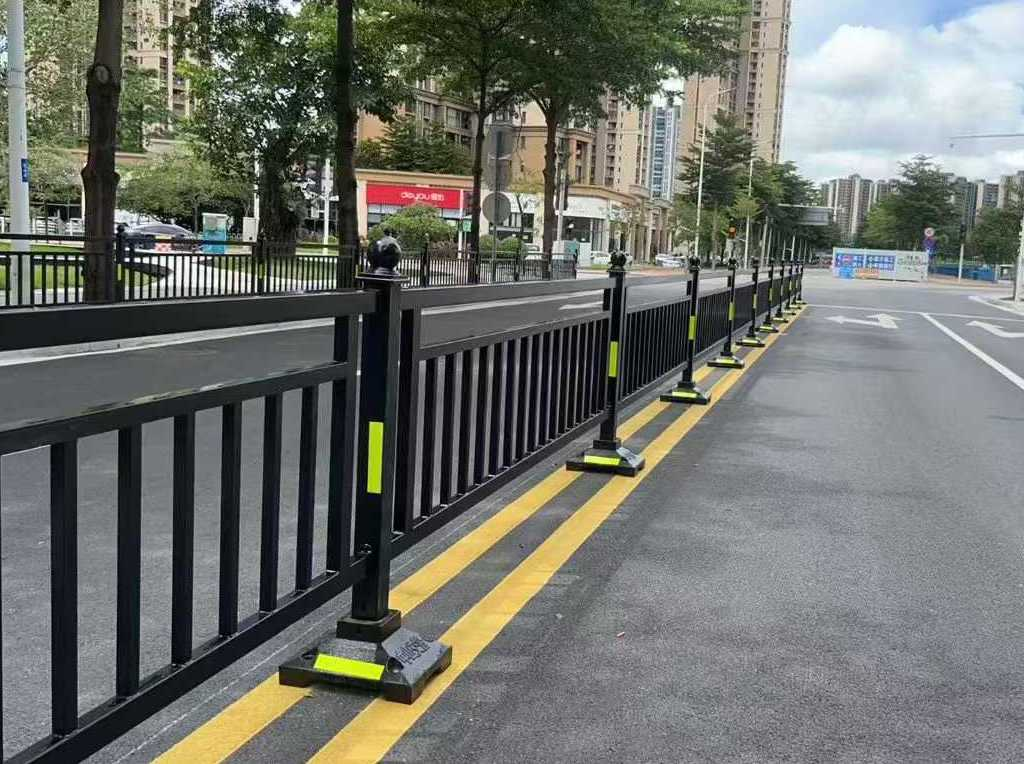
Problem Definition: Why "Safety Barrier" Is Not a Purchasing Specification
"Safety barrier" is a category name, not a product specification. When a buyer searches for that term, the intent behind the search could be a municipal guardrail for a city road median, a stainless steel bridge railing, a riverside guardrail along a promenade, a welded mesh perimeter fence for an industrial park, or a temporary construction site hoarding. Each of these is a different product with different materials, structural profiles, anchors, finishes and compliance expectations.
Three problems typically follow from treating the category name as a specification. First, quotations come back for the wrong product family, which wastes a sourcing cycle. Second, a supplier may quote against a standard that does not apply in the destination market. Third, the delivered product may physically fit the budget but not the site condition — for example, a decorative railing specified where a crash-rated assembly is required, or a permanently fixed barrier specified where the project needs a reusable panel system.
The practical way out of this ambiguity is to classify the requirement by the hazard being controlled rather than by the visual appearance of the product:
- Vehicle containment — crash barriers and vehicle restraint systems on highways and expressways.
- Vehicle separation — road median guardrails and motorized/non-motorized lane separation guardrails.
- Pedestrian separation — pedestrian guardrails along sidewalks, junctions and public spaces.
- Fall protection — bridge railings, balcony railings, stair railings and window guard railings.
- Waterfront protection — riverside guardrails along rivers, lakes and reservoirs.
- Access control and perimeter security — perimeter fencing, workshop partitions and security fence mesh.
- Site enclosure and temporary protection — construction hoarding and standardized construction-site safety equipment.
Classifying by hazard narrows the material, structural and compliance options immediately, and it is the single most useful step before contacting a manufacturer.
Industry Background: Market Scale, Materials and Standards
The global barrier systems market was valued at USD 24.8 billion in 2025, according to Grand View Research (published 15 July 2026). Within that market, the metal segment accounted for the largest material share at over 50.0% in 2025. Temporary guardrails form a separate, smaller segment valued at USD 2.4 billion globally in 2024 (Grand View Research). The smart road barrier segment is forecast to grow at a compound annual growth rate of 9.2% between 2025 and 2034 (Dataintelo).
Regulatory context matters more than market size for most buyers. EN 1317 is the mandatory European standard for vehicle restraint systems permanently installed on roads, and it has applied in that form since 1 January 2011. In the United States, AASHTO MASH 2016 is the current evaluation standard for new permanent roadside hardware as of 31 December 2019. These two standards are not interchangeable, and compliance with one does not demonstrate compliance with the other. On the trade side, road guardrails are commonly classified under HS Code 73089099.
For importers and contractors, the practical implication is that a safety barrier specification has to be written against the destination market from the beginning, not retrofitted after production. This is particularly relevant for projects moving between Asia-Pacific, Europe, North America, Africa and the Middle East, where different acceptance frameworks may apply.
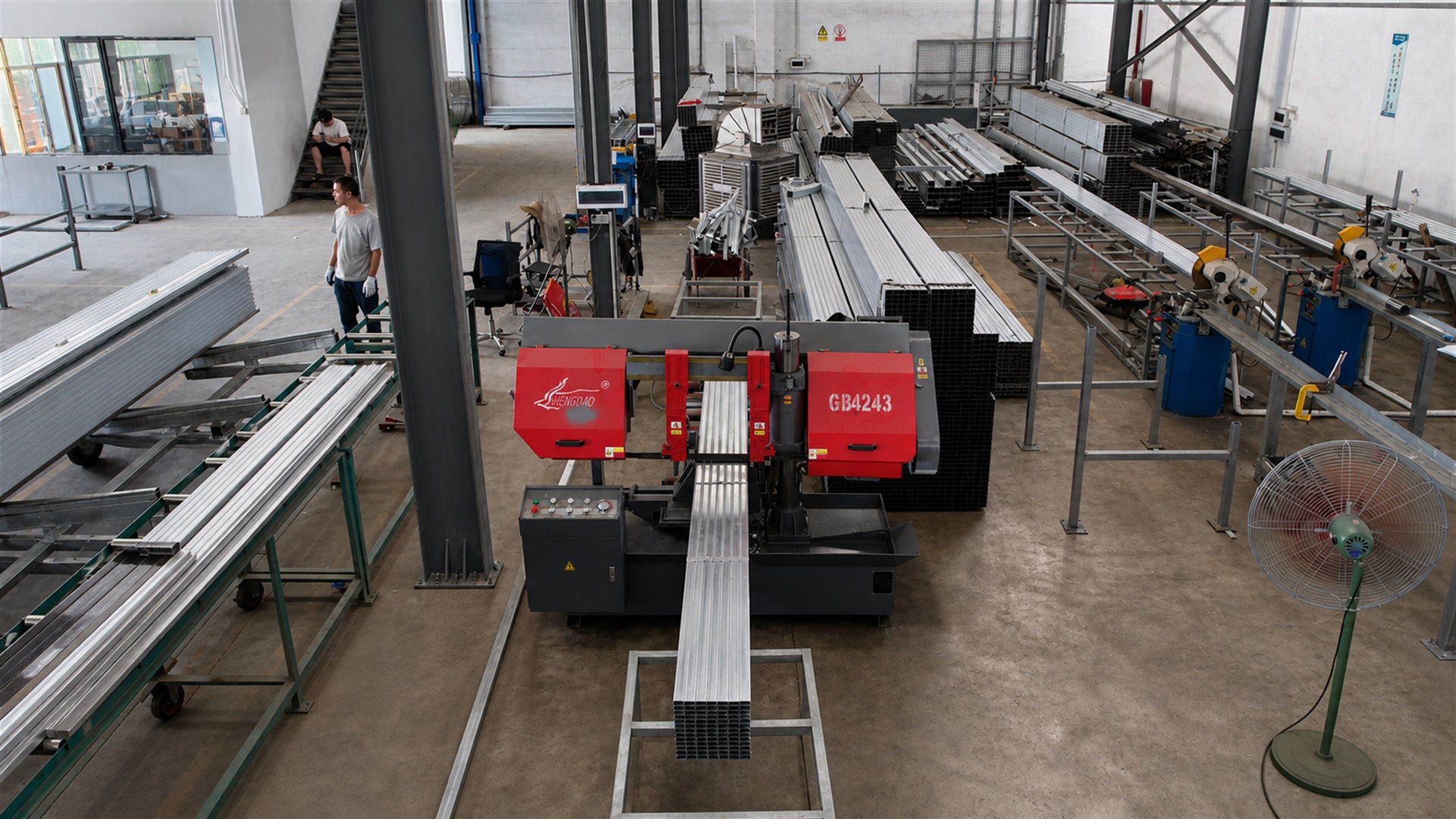
On the supply side, China hosts a large manufacturing base for municipal guardrails, bridge railings, perimeter fencing and construction hoarding. Guangzhou Santian Steel Structure Co., Ltd. — the China-based manufacturer behind aotianguardrail — has produced guardrail and construction hoarding systems with industry experience dating back to 2011, and was formally registered on 16 May 2016. Its production facility covers approximately 15,000 square meters, employs about 200 people, and supports an annual output of roughly 1,500,500 meters of guardrail and hoarding products. The company also reports an export ratio of approximately 50%, with main markets in Southeast Asia, Africa, South America and the Middle East.
Detailed Solution: Safety Barrier Categories and Configurations
Safety barrier systems are organized below by application. The model designations referenced are existing product records, and the material and application notes reflect how each product is specified in the manufacturer's documentation.
1. Municipal and Road Median Guardrails
Municipal guardrails separate opposing traffic streams, guide vehicles and discourage unauthorized crossing on urban roads and major city roads. The category includes the Blue-and-White Municipal Guardrail (model T001), the Guangzhou Standard Municipal Guardrail (model T002), the Hong Kong-Style Guardrail (model T003), the Beijing-Style Guardrail (model T005) and the Planter Cultural Guardrail (model T004). Materials include hot-dip galvanized steel, zinc steel and steel. These products are passive, non-powered protection, and vehicle impact containment requires a separately specified crash-rated system.
2. Lane Separation Guardrails
Lane separation guardrails define the boundary between motorized and non-motorized traffic on mixed-traffic streets, discourage lane encroachment and make routes easier to identify. Representative models include the Lane Separation Guardrail with Solar Warning End (model T007), the Motorized/Non-Motorized Lane Separation Guardrail (model T009), the Hong Kong-Style Lane Separation Guardrail (model T011) and the Hollow-Post Lane Separation Guardrail (model T012). On model T007, the solar warning end operates separately from the non-powered barrier; the panel charges during daylight and illuminates automatically at night with no grid connection.
3. Pedestrian Guardrails
Pedestrian guardrails guide pedestrian movement, separate walking areas from traffic and channel crossings toward designated locations on urban sidewalks, municipal roads and public spaces. The range includes the Pedestrian Guardrail (model T013), the Seagull-Style Pedestrian Guardrail (model T014), Type-A (model T015), a Custom Pedestrian Guardrail (model T016), the Fisher Girl-Themed Pedestrian Guardrail (model T017) and the German-Style Pedestrian Guardrail (model T018). These products are not a substitute for a vehicle crash barrier.
4. Bridge Railings
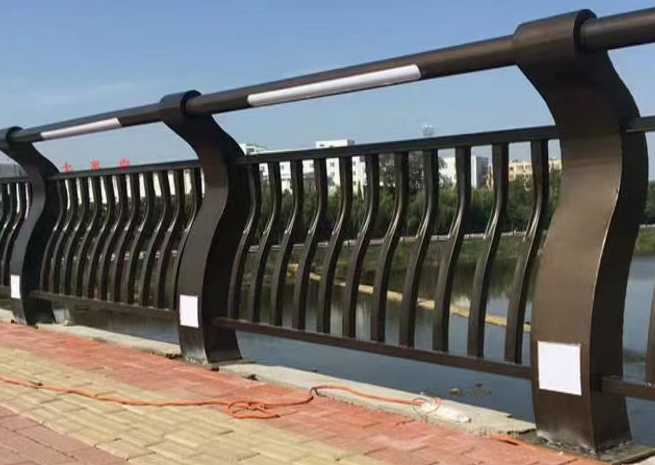
Bridge railings provide edge guarding and separation along bridges, viaducts and elevated walkways. Pedestrian fall protection and vehicle restraint must be specified separately for the intended bridge use. Available configurations include the Custom Bridge Railing (model T019, steel, fully customized to project drawings with a customizable load rating), stainless steel bridge railings in models T020, T022 and T023, and model T021, a stainless steel assembly that can incorporate project-specific decorative elements. Model T020 uses Grade 304 stainless steel as the primary material with steel as the secondary material.
5. Riverside and Waterfront Guardrails
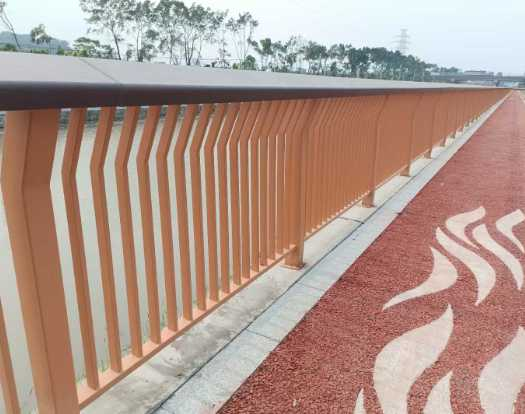
Riverside guardrails guard accessible waterfront edges, guide pedestrian routes and reduce accidental access to the water on rivers, lakes, reservoirs and waterfront landscape projects. These railings do not provide flood control. The range includes the Custom Riverside Guardrail (model T025), the Aluminum-Handrail Riverside Guardrail (model T026), stainless steel riverside guardrails in models T027, T028 and T030, and the Landscape Riverside Guardrail (model T029), which uses an open profile that preserves views and can be finished in colors matched to the surrounding environment.
6. Crash Barriers
Crash barriers provide vehicle restraint and redirection as part of an appropriately selected complete barrier system on highways, urban expressways and approach roads. Performance depends on the verified system configuration, and rails, posts, connections and compatible end treatments function together as an installed assembly. Representative models include the Crash Barrier (model T031, steel), the W-Beam Guardrail (model T032) and the Crash Barrier (model T033, steel tube). End terminals, transition sections, delineators and crash cushions must be specified as required by the selected system, and universal interchangeability should not be assumed.
7. Perimeter Fencing and Perimeter Railings
Perimeter fencing defines property boundaries, discourages unauthorized entry and separates controlled areas from public space in residential communities, schools, industrial parks, factories and villa developments. The range includes the Villa Perimeter Fence (model Y043), the Guangya Middle School Perimeter Fence (model Y044, a zinc steel and steel vertical-bar design available in white or dark-gray electrostatic coating), the Zinc Steel Fence (model Y045), the Stainless Steel School Perimeter Fence (model Y049) and the Decorative Perimeter Fence (model Y051), which supports custom corporate-identity panels. These are passive, non-powered systems; gates, access control, CCTV and intrusion alarms are separately specified.
8. Balcony Railings and Stair Railings
Balcony railings provide a protective barrier at balcony edges in residential buildings, schools, industrial parks and building projects. Options include zinc steel (model Y052), flat steel (model Y053), aluminum alloy (model Y054), stainless steel and tempered glass (model Y055), and stainless steel (models Y056 and Y057). Aluminum alloy is lightweight and does not rust, while tempered glass panels preserve views and visual openness.
Stair railings provide hand support and guard open stair edges in schools, industrial parks, public housing and building projects. Models include stainless steel railings Y058, Y059 and Y060, the zinc steel stair railing with wood-effect components (model Y061), the wooden-handrail stair railing (model Y062) and the prefabricated stair railing (model Y063). Model Y058 is specified to campus safety rules with compliant handrail height and tube diameter for school circulation areas.
9. Window Guard Railings
Window guard railings provide a physical guard across designated window openings to reduce fall risk in residential buildings, schools and public buildings. The range includes the Prefabricated Window Guard Railing (model Y064), a zinc steel and steel version (model Y065) and a stainless steel version (model Y066). These are passively fixed; any openable or releasable configuration must be specified separately and coordinated with emergency access requirements.
10. Workshop Partitions and Security Fence Mesh
Workshop safety partitions separate designated work zones and restrict access to machinery areas in manufacturing plants, industrial workshops and robot workcells. Models include the Robot Workcell Safety Fence (model Y067, steel tube and welded steel mesh), the Workshop Partition Fence (model Y068, welded steel mesh) and the Workshop Partition Fence (model Y069, hot-dip galvanized steel, zinc steel and welded steel mesh, with dual corrosion protection suited to humid climates). Where access gates are used, interlocking and machine-stop functions belong to a separately specified safety control system; mesh fencing alone does not provide these functions.
For industrial perimeter security, welded mesh options include the Anti-Climb Spike Security Fence (model Y070), the Angled-Top Security Fence (model Y071) and the Razor-Wire Anti-Climb Security Fence (model Y072). These products deter climbing and unauthorized entry using the selected fence design.
11. Construction Site Hoarding
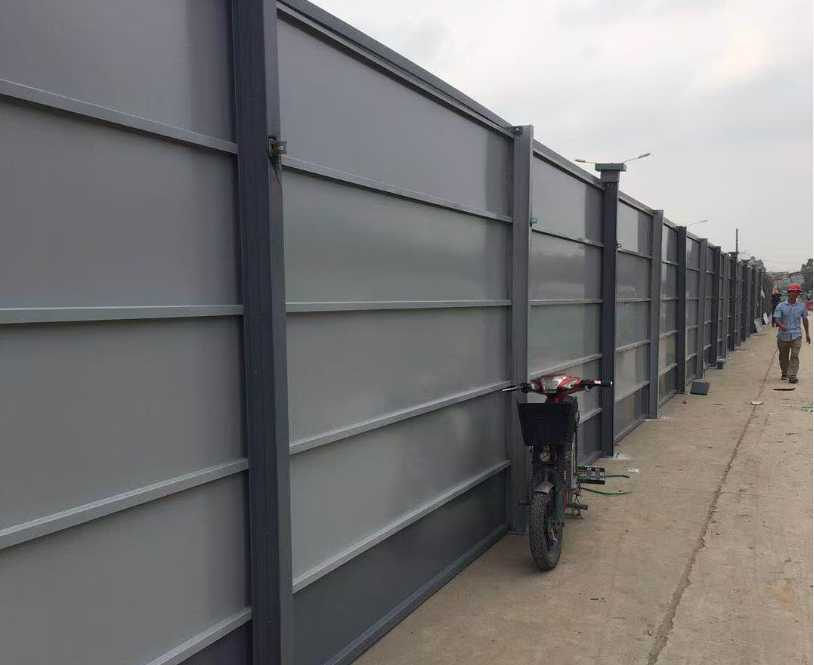
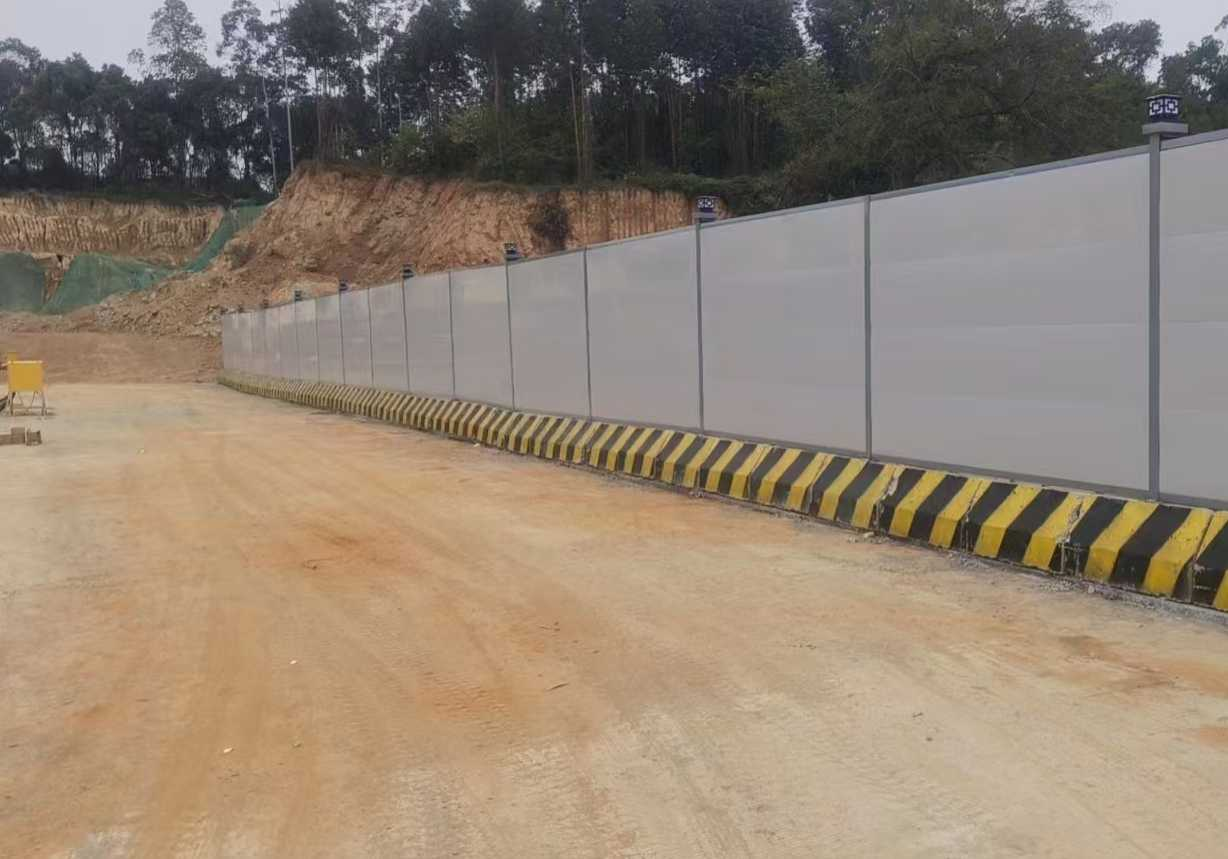
Construction site hoarding encloses and visually screens work sites or provides designated display surfaces on municipal works, road construction and building sites. Typical design service life is up to five years, which positions the range for medium- and long-term projects. Guangzhou-standard models include A1-1 (model Y073), A1-2 (model Y074), A5 (model Y075), A2-1 (model Y076) and A2-2 (model Y077). Model Y076 uses color-coated steel sheet with H-section posts and is reusable for more than five installation cycles. Panel and surface variants also include the Artificial Grass Construction Hoarding (model Y078), Shenzhen Type-A (model Y079), Shenzhen Type-C (model Y080), the Vertical Green Wall (model Y081) and the Perforated Construction Hoarding (model Y082).
Two excavation edge products sit within the same prefabricated steel family: the Perforated Excavation Edge Guardrail (model Y083) and the Vertical-Bar Excavation Edge Guardrail (model Y084). Both function as safety barriers along excavation edges where specified by the site safety design.
12. Standardized Construction-Site Safety Equipment
Beyond hoarding, standardized site safety equipment covers dedicated protection structures used throughout the project phase on construction sites that require safe and orderly site protection. The range includes the Safety Access Tunnel (model Y085, steel tube with a double-layer roof that protects against falling objects and an assembled frame that can be relocated as construction progresses), the Rebar Processing Shelter (model Y086), the Double-Center-Column Rebar Processing Shelter (model Y087), the Electrical Distribution Box Shelter (model Y088, color-coated steel sheet), the Threading Machine Shelter (model Y089), the Rebar Storage Rack (model Y090), the Mesh Excavation Edge Guardrail (model Y091, steel tube and welded steel mesh), the Modular Stair Tower (model Y092) and the Worker Rest and Drinking Shelter (model Y093, color-coated steel sheet with a semi-open ventilated design).
Step-by-Step Breakdown: How to Select a Safety Barrier
Selection can be broken into seven sequential decisions. Working through them in order prevents the specification changes mid-production that typically cause delays and cost overruns.
- Define the application and the protected object. Confirm whether the barrier protects vehicles, pedestrians, building occupants or a controlled perimeter, and whether it is permanent or temporary. Road, bridge, residential and industrial projects require different structural designs.
- Confirm the required safety level and applicable standard. Identify whether the destination market requires a vehicle restraint standard such as EN 1317 or MASH 2016, or whether a project-level safety design governs. Vehicle impact containment always requires a separately specified crash-rated system.
- Select the material against the environment. Hot-dip galvanized steel provides a practical balance of strength, corrosion resistance and cost. Stainless steel offers better appearance and corrosion resistance. Aluminum is lightweight and suits decorative applications. Coastal and high-humidity sites generally call for higher-grade stainless steel or galvanized steel with an additional protective coating.
- Confirm dimensions, post spacing and structural configuration. Height, length, post spacing, rail configuration and connection details are normally set by project drawings or site conditions. Where drawings are unavailable, site photographs and application details allow a suitable configuration to be recommended.
- Specify the surface finish and color. Surface treatment, color, decorative patterns and logo panels are customizable according to architectural requirements. Decorative perimeter fencing, for example, can be produced with custom corporate-identity panels.
- Confirm installation method and reusability. Determine whether the system is permanently anchored, relocation-friendly, or designed for repeated installation cycles. Some prefabricated hoarding panel systems are reusable for more than five installation cycles, which affects lifecycle cost on staged projects.
- Plan inspection and maintenance. Regular inspection of posts, rails, welds, bolts, anchors and coatings — plus cleaning, fastener tightening and prompt repair of minor coating damage — extends service life. Severely corroded or deformed components should be replaced rather than straightened and reused without professional evaluation.
Use Cases Across Project Types
Urban roads and municipal corridors
Municipal road median guardrails, lane separation guardrails and pedestrian guardrails are used on urban roads, municipal transportation corridors and major city roads. They separate opposing traffic, define motorized and non-motorized lanes, and guide pedestrian movement near junctions and sidewalks.
Bridges and elevated structures
Bridge railings are used in road and pedestrian bridge construction, bridge rehabilitation, viaduct upgrades and elevated walkway projects. Where falling-object risk or headlight glare is a concern, anti-throw mesh and anti-glare screens are specified alongside the railing — for example the Expanded Metal Anti-Glare Screen (model T038) for nighttime driving safety and the Diagonal-Weave Anti-Throw Mesh (model T039) for elevated road structures.
Riverside and waterfront projects
Riverside guardrails are used in waterfront promenade construction, riverbank improvements, lake park projects and reservoir access and landscape projects. These installations routinely face high humidity, water splash and wet surfaces, so corrosion resistance is a primary material criterion.
Construction and building sites
Construction hoarding, excavation edge guardrails and standardized site safety equipment are used on building construction, infrastructure, municipal works and plant construction projects. A documented reference project used model Y083 across a 3,800-meter installation, and model Y077 has been proven in a 3,000-meter reference project.
Industrial, manufacturing and logistics sites
Workshop partitions, robot workcell safety fences and security fence mesh are used in factory layout projects, production-line upgrades, robot cell integration, warehouse segregation, industrial park development and factory perimeter upgrades. Some designs are specifically adapted to humid climates through hot-dip galvanized dual corrosion protection.
Residential, school and public buildings
Perimeter fencing, balcony railings, stair railings and window guard railings are used in residential development, school campus construction, public building refurbishment and window fall-protection projects. A documented reference project used model Y045 across a 3,700-meter perimeter fence installation. Stair railing selection frequently accounts for use by children and elderly users.
Comparison Table: Safety Barrier Categories at a Glance
| Category | Typical application | Typical materials | Primary function |
|---|---|---|---|
| Municipal road median guardrail | Urban roads, municipal transportation corridors, major city roads | Hot-dip galvanized steel, zinc steel, steel | Separate opposing traffic streams; guide vehicles |
| Lane separation guardrail | Urban roads with motorized and non-motorized lanes | Zinc steel, steel, custom specification | Define lane boundary; discourage lane encroachment |
| Pedestrian guardrail | Urban sidewalks, municipal roads, public spaces | Zinc steel, steel tube, custom specification | Guide pedestrians; separate walking areas from traffic |
| Bridge railing | Bridge engineering, municipal transportation, urban landscape | Steel, stainless steel (Grade 304) | Edge guarding and separation along bridges |
| Riverside guardrail | Rivers, lakes, reservoirs, waterfront landscape projects | Stainless steel, aluminum alloy, hot-dip galvanized steel, zinc steel | Guard waterfront edges; guide pedestrian routes |
| Crash barrier | Highways, urban expressways, road-safety projects | Steel, steel tube, custom specification | Vehicle restraint and redirection as a complete system |
| Perimeter fence | Residential communities, schools, industrial parks, factories, villas | Zinc steel, hot-dip galvanized steel, stainless steel | Boundary definition; discourage unauthorized entry |
| Balcony / stair railing | Residential buildings, schools, industrial parks, public housing | Stainless steel, zinc steel, aluminum alloy, tempered glass, flat steel | Edge protection and hand support for occupants |
| Window guard railing | Residential buildings, schools, public buildings | Stainless steel, zinc steel, steel | Reduce fall risk at designated window openings |
| Workshop partition / security mesh | Manufacturing plants, industrial workshops, robot workcells, industrial parks | Hot-dip galvanized steel, welded steel mesh, steel tube | Separate work zones; restrict access |
| Construction hoarding | Municipal works, road construction, building sites, medium- and long-term projects | Color-coated steel sheet, prefabricated steel panel systems | Enclose and visually screen work sites |
| Construction-site safety equipment | Construction sites requiring safe and orderly site protection | Steel tube, welded steel mesh, color-coated steel sheet | Access protection, equipment shelter, edge guarding, worker welfare |
Frequently Asked Questions
What is a safety barrier, and how is it different from an ordinary fence?
A safety barrier is a structure installed to separate or guide people, vehicles or both away from a hazard, whereas an ordinary fence is primarily a boundary marker. In practice the line is drawn by the function specified: a road median guardrail separates opposing traffic, a bridge railing guards an elevated edge, a riverside guardrail guards waterfront edges, and a perimeter fence defines a property boundary and discourages unauthorized entry. A fence and a safety barrier can look similar, but their structural design, anchoring and compliance expectations differ according to the hazard they address.
How do I choose the right safety barrier for my project?
Select the barrier according to the application, the required safety level, the installation environment, the material, the dimensions, the surface treatment and the applicable local standards. Road, bridge, residential and industrial projects require different structural designs. As a general rule, galvanized steel guardrails suit municipal roads, stainless steel railings suit coastal or high-humidity environments, and welded mesh fencing suits industrial perimeter protection. Custom specifications should always be confirmed against project drawings, and vehicle impact containment requires a separately specified crash-rated system.
Which material is best for outdoor guardrails?
There is no single best material — the right choice balances service life, maintenance requirements, appearance and budget against the site climate. Hot-dip galvanized steel provides a practical balance of strength, corrosion resistance and cost. Stainless steel offers better appearance and corrosion resistance, with Grade 316 or 316L generally recommended for coastal and salt-spray environments. Aluminum is lightweight and suited to decorative applications. Hot-dip galvanized steel with an additional protective coating is also suitable for humid conditions when properly specified and maintained.
What information is required for a custom guardrail quotation?
An accurate quotation requires the guardrail type, dimensions, total quantity, material, surface finish, drawings, installation environment, applicable standards, delivery location and packaging requirements. Providing project drawings, dimensions, site photographs and technical standards at the outset reduces the risk of specification changes during production. Where drawings are unavailable, providing the application and site conditions allows a suitable configuration to be recommended instead.
How are safety barriers installed and maintained?
Installation should follow approved engineering drawings, the manufacturer's instructions and local safety standards: confirm the foundation and post spacing, secure the posts, connect the rails in the specified sequence, adjust height, spacing, verticality and alignment, then tighten all fasteners to the specified torque and complete a final inspection. For ongoing maintenance, inspect posts, rails, welds, bolts, anchors and coatings regularly; clean dirt, salts and chemical deposits; tighten loose fasteners; and repair minor coating damage promptly. Damaged modular sections can usually be replaced independently when compatible posts, rails and fasteners are available, provided the surrounding structure and foundation are inspected first. Severely corroded or deformed components should be replaced rather than reused.
Next Step
Guangzhou Santian Steel Structure Co., Ltd. (aotianguardrail) manufactures municipal guardrails, road and bridge railings, riverside guardrails, pedestrian guardrails, perimeter fencing, balcony and stair railings, workshop partitions, construction hoarding and standardized construction-site safety equipment. Products can be used in municipal roads, bridges, riverside areas, residential and commercial buildings, public spaces and construction projects.
For project drawings, sample requests or a quotation, contact Casper at info@aotianhouse.com or by phone/WhatsApp at +86 189 2407 9286. The full product catalogue is available in the company brochure, and product information is published at aotianguardrail.com.
Conclusion
"Safety barrier" describes a family of products, not a single item. The fastest way to reach a usable specification is to classify the requirement by hazard — vehicle containment, vehicle separation, pedestrian separation, fall protection, waterfront protection, access control, or temporary site enclosure — and then narrow material, dimensions, finish and standard from that starting point. Municipal guardrails, bridge railings, riverside guardrails, pedestrian guardrails, crash barriers, perimeter fencing, balcony and stair railings, workshop partitions and construction hoarding each carry different structural and compliance expectations, and mixing them up at the specification stage is what drives most rework.
For buyers at the awareness and research stage, the useful next step is not a final purchase decision but a scoped question: what hazard does this installation control, in which market, under which standard, and with what service life expectation. Answering those four points before requesting a quotation removes most of the ambiguity that makes safety barrier sourcing slow.