
Panel Space Is Tight: Solving the Switch Disconnector Fit-Out Problem in LV Distribution
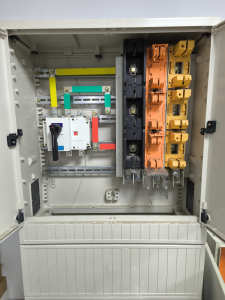
A feeder pillar or distribution cabinet has a fixed footprint. The protection device has to fit the busbar system that is already inside it.
Low-voltage distribution panels are squeezed from two directions at once. On one side, the enclosure is fixed by the project: a feeder pillar, a power pedestal or a distribution cabinet has the floor space and depth the site allows, and no more. On the other side, the electrical content keeps growing: more outgoing feeders, more metering and monitoring, more DC branches, and short-circuit levels that leave no room to downgrade protection just to save a few millimetres.
That is the fit-out problem. A fuse switch disconnector is a mechanical device before it is an electrical one. It has to sit on a busbar system, respect phase-to-phase and phase-to-earth clearance, keep a safe distance from the enclosure walls and cable ducts, and still stay reachable with a fuse puller when an NH fuse link has to be replaced. In a crowded panel, the device that fits is the device that gets specified.
A vertical fuse switch disconnector mounted directly onto the busbar solves more of that problem than a device that needs its own DIN rail footprint and separate wiring space. The Stripe Fuse Switch Disconnector and the Stripe Fuse rail from BARFUSE Electric Co., Ltd. are built around this constraint: a compact and modular BTR2 platform, BTR3-250, BTR3-400 and BTR3-630 current options, and a rail configured for 100 mm and 158 mm busbar systems, using hook-type busbar installation inside an enclosed SMC structure.
Short answer for panel builders and procurement teams:
- Fit-out problems in LV panels are usually caused by busbar pitch, enclosure depth and fuse link access, not by the rating of the device itself.
- A busbar-mounted vertical fuse switch disconnector removes the separate mounting footprint that a square fuse switch or a DIN rail fuse base would occupy.
- The Stripe Fuse Switch Disconnector uses a compact, modular BTR2 design with BTR3-250, BTR3-400 and BTR3-630 options, and the Stripe Fuse rail is configured for 100 mm and 158 mm busbar systems.
- BARFUSE comparison data records a 30% increase in space utilization, a 50% improvement in safety performance and a 20% lower cost relative to square fuse switches, with the recommended fit being distribution cabinets, power pedestals and feeder pillars.
The Fit-Out Problem: When the Panel Runs Out of Room Before the Project Runs Out of Feeders
The fit-out problem is not a single measurement. It is a set of constraints that all bind at the same time, and solving one of them by itself usually makes another worse. In an LV panel that is already dense, a switch disconnector has to satisfy all of the following:
- Busbar pitch. Vertical fuse switch disconnectors are designed against a specific busbar spacing. Industry technical references describe these devices as optimized for 185 mm and 100 mm busbar spacing systems in LV networks, which means a device specified for one pitch does not simply drop into a panel built for another.
- Enclosure depth. Busbar-mounted devices sit behind the busbar and in front of it. Depth clearance is what decides whether the door closes with the correct clearance to live parts.
- Phase and earth clearance. Compact bodies are only useful if they maintain the required clearances after installation, including cable lugs and terminal covers.
- Thermal headroom. Crowding raises ambient temperature inside the enclosure. A device that saves space but runs hotter forces derating or additional ventilation.
- Service access. Fuse links are consumables. If the panel is so full that a fuse puller, fuse handle or fuse puller handle cannot reach the fuse holder, the design has failed in operation even if it passed inspection.
- Future feeders. Extending a circuit later should not require rebuilding the busbar arrangement, which is why modular designs and easy circuit expansion matter more in dense panels than in empty ones.
Square fuse switches, fuse bases and DIN rail fuse bases each solve part of this. The trade-off normally appears in one of two places: either the device occupies a large rectangular footprint, or it is compact but forces extra wiring and additional enclosure volume to make the connections. In dense panels, both outcomes are expensive, because the cost of the extra volume is not just steel, it is the whole cabinet, the busbar run, the cable length, and the hours needed to wire it.
Industry Background: Why LV Protection Is Getting Harder to Fit
Protection devices are being asked to fit into panels at the same time as the market they serve is expanding. As reported by Fortune Business Insights, the global electric fuse market is projected to reach USD 5.84 billion in 2025, growing at a CAGR of 7.05% towards 2034. That figure is not a universal consensus: published valuations for the same period range roughly from USD 4.0 billion to USD 5.84 billion depending on whether fuse bases and switch disconnectors are aggregated with fuses or treated as separate mechanical switchgear. Buyers should read market size claims with the scope definition attached.
On the standards side, IEC 60269-1:2024 updated the general requirements for low-voltage fuses, covering AC up to 1000 V and DC up to 1500 V, with an effective date of 2024-08-09. The DC side of that range matters more than it used to. Commercial research on the 800 V DC protection market for data centres estimates USD 265 million in 2026 with a 29.9% CAGR, and global exports under HS Code 853610 are tracked by UN Comtrade with volume shifting toward high-voltage EV-related components. In practice, this means more panels are being designed with mixed AC and DC content, and the physical layout problem gets worse, not better.
BARFUSE Electric Co., Ltd. is a manufacturer based in Wenzhou, Zhejiang, China, producing low voltage fuse switch disconnectors, busbar systems and high and low voltage distribution wiring management products such as MCB pan assemblies, MCCB pan assemblies and metal distribution boxes. The company was founded in 2014, operates a 10,000 sqm facility with 45 employees and a team of 7 engineers, and reports an annual output of 250,000 PCS with roughly 90% of production exported to markets including the Middle East, Russia, Latin America, Central Asia, the EU, Africa and Oceania. Its products are used in petroleum, chemical, metallurgical, power and construction industry LV distribution systems.
The Solution: Stripe Fuse Switch Disconnector and Stripe Fuse Rail
The Stripe Fuse Switch Disconnector is a vertical fuse switch disconnector built for panels where the busbar system already exists and cannot be redesigned. Rather than adding a new mounting layer inside the enclosure, it mounts onto the busbar itself using a hook-type busbar installation, and it houses the conductive parts inside an enclosed SMC structure. The result is a device that occupies busbar space instead of cabinet space.
Stripe Fuse Switch Disconnector: Compact, Modular BTR2 Platform
The product family is organized around a compact and modular BTR2 design, with BTR3-250, BTR3-400 and BTR3-630 current options covering the three rating steps most LV distribution panels need. The modular logic matters in crowded panels for a practical reason: a modular body lets a panel builder plan a feeder row once and repeat it, instead of re-engineering clearances for every rating step. The same rail geometry and mounting method carry across the range, so a row that works at one rating can be extended at another without restarting the layout.
Stripe Fuse Rail: 100 mm and 158 mm Busbar Systems
The Stripe Fuse rail is configured for 100 mm and 158 mm busbar systems. Because vertical fuse switch disconnectors are pitch-dependent devices, the first sizing question in any fit-out project is the actual centre-to-centre distance of the busbars in the enclosure. Industry technical references on vertical fuse switch disconnectors commonly cite 100 mm and 185 mm busbar spacing systems in LV networks, while the Stripe Fuse rail is configured for 100 mm and 158 mm. Specifiers should therefore confirm the real pitch of the panel before ordering, rather than assuming that a rail that fits one LV enclosure fits another.
What the Modular Design Changes in a Crowded Panel
The measurable part of the design is documented in BARFUSE comparison data against square fuse switches. Relative to square fuse switches, the Stripe design records a 30% increase in space utilization, a 50% improvement in safety performance and a 20% lower cost. The comparison also identifies the functional differences behind those numbers: high safety and reliable protection, high integration with flexible monitoring, modular design for space economy, and cost efficiency. Reduced wiring, easier circuit expansion and higher cabinet utilization are listed as the operating outcomes, along with less maintenance. The product is rated for 24/7 operation, which is the normal expectation for LV distribution feeders but still worth confirming when a device is chosen mainly on its footprint.
These are manufacturer comparison figures rather than independent third-party measurements. They are useful as a starting point for a specification discussion, and they should be validated against the actual panel layout, the ambient conditions and the coordination study for the specific project.
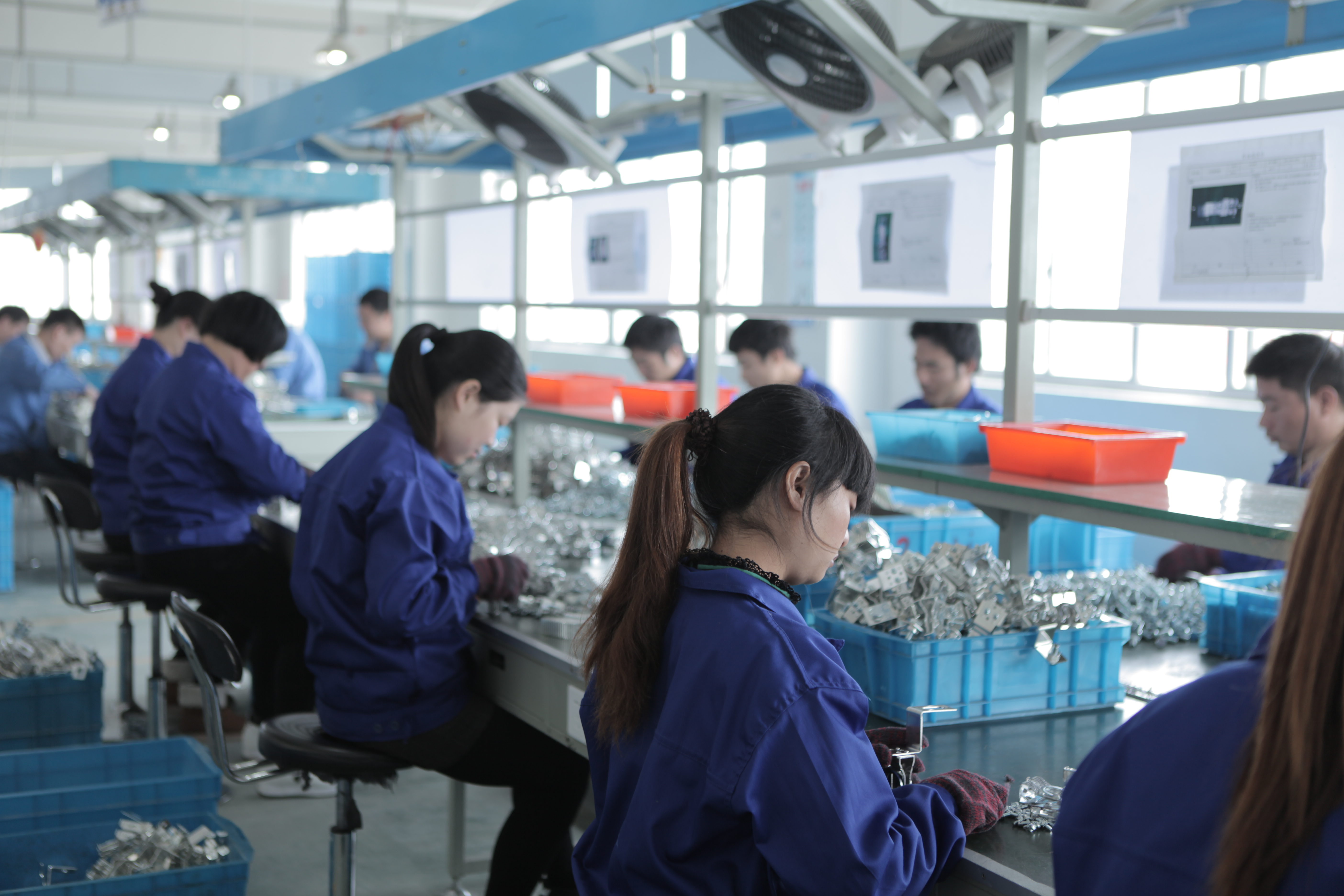
BARFUSE manufactures low voltage fuse switch disconnectors and busbar systems in Wenzhou, Zhejiang, with roughly 90% of output exported.
Thermal and Short-Circuit Control: Protecting Breaking Capacity in a Tight Space
Compressing a device into a smaller volume only works if the thermal path is designed at the same time. The BARFUSE risk-control approach for temperature rise and short-circuit conditions combines proper rated current capacity with conductive grease at the connection interface, and at the material level uses high-conductivity T2 copper conductors, a 2 μm silver coating on contact surfaces and heat-shrink tube covering over the conductive parts. The logic behind each measure is straightforward for a panel builder: T2 copper and silver plating lower contact resistance so the joint generates less heat, the heat-shrink tube keeps the insulated envelope controlled inside an enclosure with tight clearances, and conductive grease stabilizes the bolted joint over time. These are the measures that allow a compact device to keep carrying its rated current in a dense panel instead of being derated to fit.
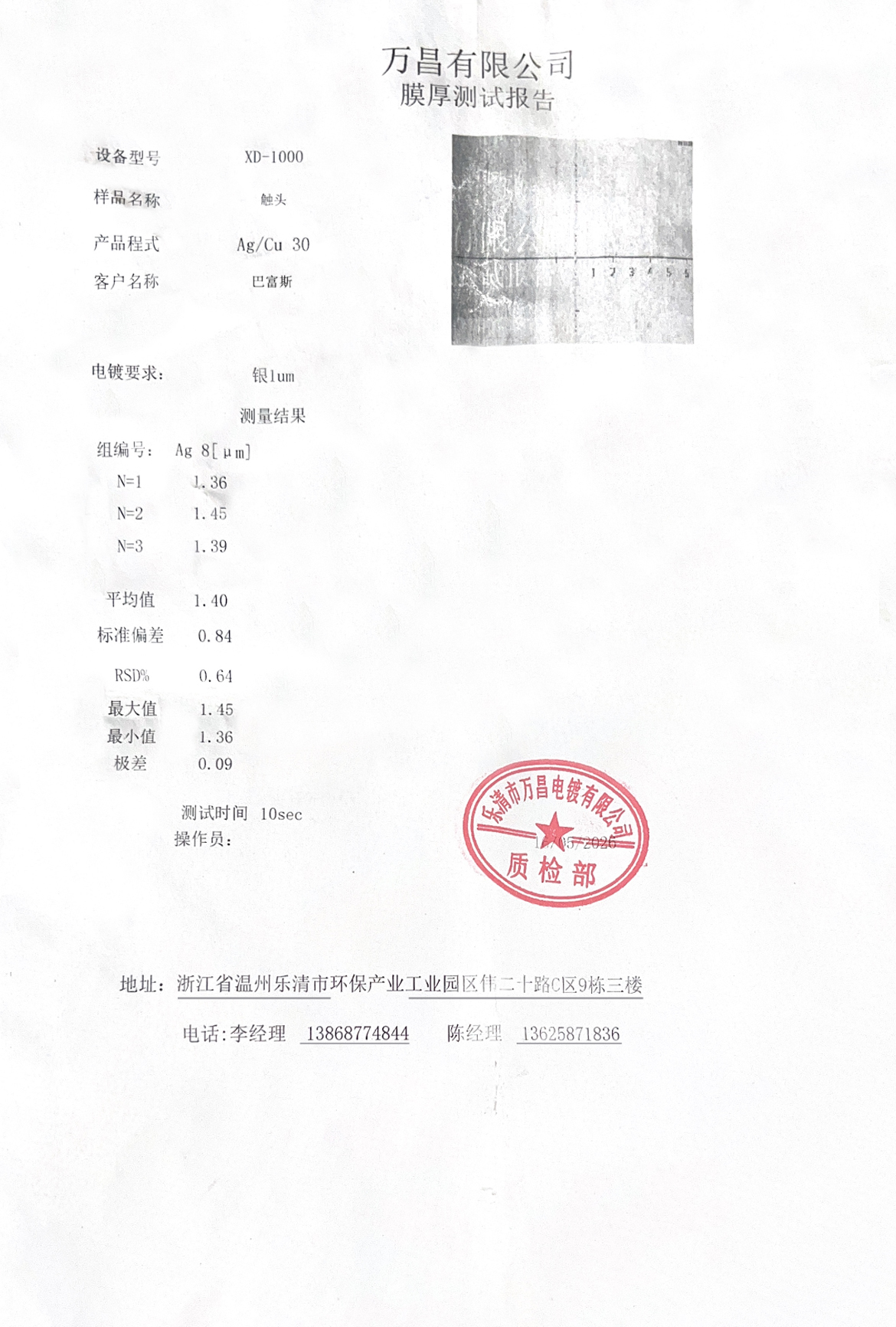
Silver-coated contact surfaces on high-conductivity T2 copper are part of the thermal and short-circuit control measures on BARFUSE devices.
Step-by-Step: Fitting a Switch Disconnector into a Crowded LV Panel
The sequence below is the working order that avoids the most common fit-out mistakes. It starts with the enclosure, not with the device.
- Measure the busbar system before choosing anything. Record the centre-to-centre pitch, the busbar cross-section, and the available depth in front of and behind the busbar. This single step determines whether a 100 mm or 158 mm rail configuration applies, and whether a vertical fuse switch disconnector or a smaller fuse base is the correct family.
- Map the feeder list to the current steps you actually need. Group outgoing feeders into the rating bands present in the panel. The Stripe range covers BTR3-250, BTR3-400 and BTR3-630, which allows a feeder row to be planned around three steps rather than device by device.
- Choose the mounting method deliberately. Hook-type busbar installation inside an enclosed SMC structure keeps the device on the busbar. Where a project still uses DIN rail fuse bases or fuse holders for small circuits, keep that scope separate and evaluate it with its own criteria rather than mixing the two mounting philosophies in one feeder row.
- Protect the breaking capacity. Do not reduce protection capability to gain space. Confirm the device rating and fuse link selection against the coordination study, then check that the compact body still delivers the required clearances with terminal covers fitted.
- Check fuse link replacement access. Confirm that an approved fuse puller or fuse handle can reach and withdraw the NT or NH fuse link without removing adjacent devices or opening other circuits.
- Verify the thermal design. Confirm conductor material, contact plating and termination treatment, and apply the specified conductor preparation. Temperature rise and short-circuit behaviour are the two risk areas where compaction costs reliability if the material set is not controlled.
- Plan the expansion path. Confirm that a spare feeder can be added later using the same rail geometry, which is where modular designs and easy circuit expansion pay for themselves.
- Validate with a sample before the full order. Mount the exact model on the actual busbar pitch, close the enclosure, and check clearances, cable bending radius, and fuse link access. A sample check on the real panel catches fit problems that no drawing catches.

Workshop operations at BARFUSE, including more than 30 digital wire-cutting machines and punches used in low voltage distribution product manufacturing.
Where This Fits: Panel Types and Industry Applications
The fit-out problem looks different depending on which panel is being built. In each case, the binding constraint is different, and the same compact busbar-mounted design solves it for a different reason.
- Petroleum and chemical LV distribution panels. These panels carry many motor and process feeders on long busbar runs, and enclosure space is consumed by cable management. Reduced wiring and higher cabinet utilization matter more here than device count, because every extra wiring loop adds both space and heat.
- Metallurgical LV distribution. Heavy continuous loads make temperature rise the dominant risk. The T2 copper conductors, silver-coated contacts and heat-shrink tube insulation are directly relevant to keeping joint temperature stable in a compact arrangement.
- Power industry distribution and feeder pillars. A feeder pillar is the clearest example of an enclosure that cannot grow: the housing is standardized and the busbar system inside it is fixed. BARFUSE comparison data lists distribution cabinets, power pedestals and feeder pillars as the best-fit applications for the Stripe design.
- Construction and building distribution boards. Standardized boards put a premium on repeatable modular layout and on the ability to add a spare feeder without rebuilding the row. Modular design and easy circuit expansion are the relevant attributes here.
- Replacement and retrofit work. In an existing panel, the busbar pitch is already fixed and usually undocumented. Confirm the pitch first, then select between the available rail configurations rather than adapting the busbar.
Stripe Fuse Switch Disconnector vs Square Fuse Switch: Comparison
The table below uses BARFUSE product comparison data and does not include manufacturer specifications for third-party square fuse switches. Square fuse switch values are shown as the baseline against which the Stripe design is compared.
| Decision criterion | Stripe Fuse Switch Disconnector | Square fuse switch (baseline) |
|---|---|---|
| Space utilization | 30% higher space utilization reported | Baseline rectangular footprint |
| Safety performance | 50% improvement in safety performance reported | Baseline |
| Installed cost | 20% lower cost reported | Baseline |
| Design character | Modular design for space economy; high integration with flexible monitoring | Not modular in the same comparison |
| Wiring and expansion | Less wiring, easy circuit expansion, higher cabinet utilization | More wiring in the same comparison |
| Maintenance | Less maintenance | Baseline |
| Duty | 24/7 operation | Baseline duty |
| Best-fit application | Distribution cabinet, power pedestal, feeder pillar | Not specified in the comparison |
Source: BARFUSE product comparison data (relative comparison, manufacturer-reported). Figures are relative to square fuse switches and are not independent third-party measurements.
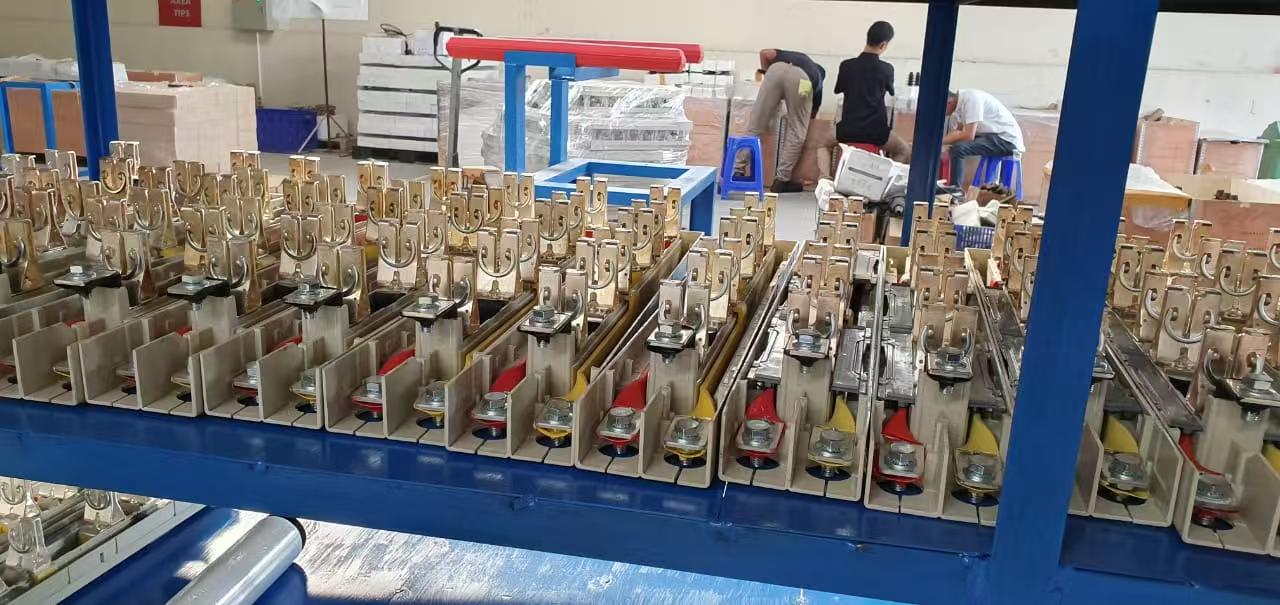
Heat-shrink tube covering is one of the published measures used to control temperature rise and short-circuit risk on compact fuse switch disconnectors.
Frequently Asked Questions
Which fuse manufacturer is better for DIN rail systems?
For DIN rail systems, judge the supplier on evidence that applies to the exact product you are buying, not on brand size. Four checks separate manufacturers reliably: whether the product is tested against IEC 60269-1:2024, which covers low-voltage fuses for AC up to 1000 V and DC up to 1500 V; whether the certificate scope names the exact model and rating rather than the factory in general; whether the terminal and busbar interface matches your enclosure; and whether the device leaves enough room for fuse link replacement. Note that once ratings move into the NH fuse class used in distribution feeders, the mounting interface normally moves from the DIN rail to the busbar, and the selection criteria shift to busbar pitch, enclosure depth and access with a fuse puller. BARFUSE Electric Co., Ltd. builds the Stripe Fuse Switch Disconnector series for busbar mounting with hook-type installation. For EU-facing projects, the BTR4 model is covered by VDE certification and by a Test Report for Low-voltage switchgear and controlgear Part 3 issued by the Low-voltage Apparatus Laboratory (Wenzhou) of Science and Technology for Inspection and Quarantine of Zhejiang, and the BTR5 model is covered by VDE certification as part of the Stripe Fuse Switch Disconnector series.
What certification evidence should a buyer request for a low-voltage fuse switch disconnector?
Request both product-level and company-level evidence, and read the scope of each document. Product level: for the Stripe Fuse Switch Disconnector series, VDE certification covers the BTR5 model, and the BTR4 model is covered by VDE certification plus a Test Report for Low-voltage switchgear and controlgear Part 3 issued by the Low-voltage Apparatus Laboratory (Wenzhou), applicable to the global market. Company level: BARFUSE reports testing accreditations from KEMA (DEKRA) in the Netherlands and VDE in Germany, together with CB certification and SAA certification in Australia, and operates under the ISO 9001 quality certification system. The practical rule is simple: the certificate must name the model and rating you are buying, because a factory-level approval does not automatically cover every product that leaves the factory.
How much panel space does the Stripe Fuse Switch Disconnector save compared with a square fuse switch?
BARFUSE comparison data records a 30% increase in space utilization and a 50% improvement in safety performance relative to square fuse switches, together with a 20% lower cost. The mechanisms behind the space gain are the compact, modular BTR2 design, less wiring per feeder, easier circuit expansion and higher cabinet utilization. Two qualifications matter for planning: the figures are manufacturer-reported relative comparisons rather than independent measurements, and the gain is realized only when the device is mounted on the intended busbar configuration, which is why the 100 mm and 158 mm busbar system fit, the hook-type busbar installation and the enclosed SMC structure are the design points to verify first on your own panel.
Why is the Stripe series less expensive to run than a square fuse switch?
Cost efficiency in the comparison comes from the design rather than from a cheaper bill of materials. Less wiring per feeder reduces labour and cable, modular design allows circuit expansion without rebuilding the row, and higher cabinet utilization means fewer or smaller enclosures for the same feeder count. The comparison also lists less maintenance. On the operating side, thermal control and short-circuit control carry the running cost: BARFUSE uses high-conductivity T2 copper conductors, a 2 μm silver coating on contact surfaces and heat-shrink tube covering, and recommends adequate rated current capacity plus conductive grease at terminations to limit temperature rise. Lower joint temperature is what keeps maintenance and derating risk down over a device lifetime measured in years of 24/7 operation.
How can a buyer validate fit and performance before placing a full order?
Validate on the real enclosure, not on a drawing. Request a sample of the exact model, mount it on the actual busbar pitch, and check four things with the enclosure closed: depth clearance in front of the busbar, phase and earth clearances with terminal covers fitted, cable bending radius at the outgoing terminals, and whether an approved fuse puller or fuse handle can withdraw an NT or NH fuse link without disturbing adjacent devices. Confirm the busbar pitch before ordering: the Stripe Fuse rail is configured for 100 mm and 158 mm busbar systems, while industry technical references describe vertical fuse switch disconnectors generally as optimized for 100 mm and 185 mm busbar spacing systems in LV networks, so the enclosure measurement is the decisive input. Once the sample check passes, the same rail geometry can be repeated across the feeder row and extended later for spare circuits.
Next Step: Check the Fit on Your Own Panel
If the fit-out problem in your LV distribution panel comes down to busbar pitch, depth clearance and fuse link access, the fastest way forward is a physical check rather than a catalogue comparison. BARFUSE can supply a sample of the Stripe Fuse Switch Disconnector for mounting trials on your busbar system, and can quote against your feeder list with BTR3-250, BTR3-400 and BTR3-630 options.
Send your busbar pitch, enclosure depth and feeder schedule to sales04@barfuses.com, or reach the team on WhatsApp at +86 18815184322 for a sample or quotation request. The full product range, including fuse rails, fuse bases and busbar system components, is available in the BARFUSE catalogue. Company details are published at www.barfuses.com and www.barfuse.com.

Sample and quotation requests are handled directly by the BARFUSE production and sales team in Wenzhou, Zhejiang.
Conclusion
The switch disconnector fit-out problem in LV distribution is a physical problem before it is a commercial one. Panels do not get more room, busbar systems are usually fixed before the protection devices are selected, and fuse links have to remain replaceable after the panel is closed. Under those conditions, a device that mounts onto the busbar with hook-type installation, uses a compact modular BTR2 platform with BTR3-250, BTR3-400 and BTR3-630 options, and fits the busbar pitch actually present in the enclosure solves more of the problem than a device that is simply smaller on paper.
The BARFUSE Stripe Fuse Switch Disconnector and Stripe Fuse rail address that constraint with a rail configured for 100 mm and 158 mm busbar systems, an enclosed SMC structure, and documented comparison data showing a 30% increase in space utilization, a 50% improvement in safety performance and a 20% lower cost relative to square fuse switches. As with any protection selection, verify the busbar pitch, the certificate scope for the exact model, and the fuse link replacement access on a sample before committing the full feeder schedule.
Have Questions or Need More Details?
Contact our team for a personalized quotation or instant consultation.
Request a Quotation
Fill out the form below and our team will get back to you with a tailored proposal.
WhatsApp Direct Chat
Prefer to chat in real-time? Message us on WhatsApp for instant assistance & quick answers.
- Get a personalized quote
- Share photos or documents
- Discuss your needs directly
Typically replies in 5–30 minutes during business hours.