
Stripe Fuse Switch Disconnector vs NT/NH Fuse Base: Which Low-Voltage Protection Fits Your Panel?
Short answer: if a feeder has to be switched and isolated at the device itself, specify a Stripe Fuse Switch Disconnector. If the panel only needs overload and short-circuit protection while disconnection is handled elsewhere in the chain, an NT/NH fuse base with an NH fuse link does the job with fewer components. The two are often compared under the same “fuse” search term, but they occupy different positions in the protective and switching chain — which is why device price is a poor first filter.
This evaluation compares the two fuse system approaches used in low-voltage distribution: the Stripe Fuse Switch Disconnector family (BTR1–BTR6) and the NT/NH fuse base family (NT00–NT3). It works through disconnection mode, voltage and current windows, busbar interface at 100 mm and 185 mm spacing, materials, compliance evidence and industry fit for petroleum, chemical, metallurgical, power and construction projects. It closes with a five-check specification sequence, a side-by-side comparison table, and a supplier shortlist method that holds up in an internal review.
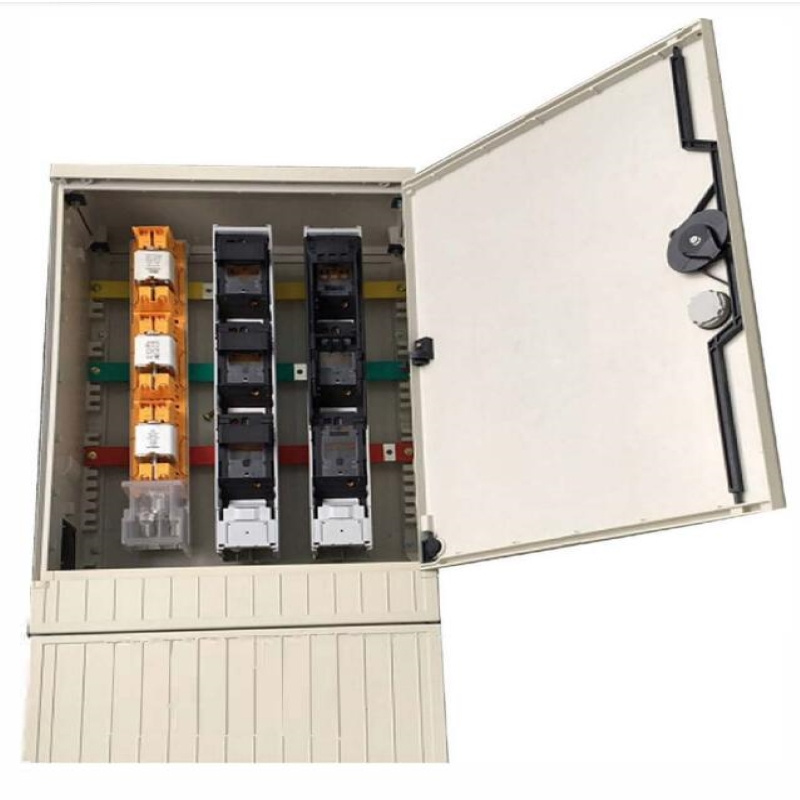
Problem Definition: One Keyword, Two Different Jobs in the Panel
A fuse element protects a circuit. A switching device isolates it. Low-voltage distribution needs both functions, and the real question is whether one product performs both or two products share the work. That single question settles most of the Stripe-versus-NT/NH debate long before price is discussed.
Stripe fuse switch disconnector: fuse carrier and switching function in one body
A stripe (strip-type) fuse switch disconnector is a busbar-mounted unit that carries the fuse and performs load switching in the same housing. Because it is tested as a switch-disconnector, it belongs to the IEC 60947-3 group of “switches, disconnectors, switch-disconnectors and fuse-combination units” — the scope named in the type test report covering this product line.
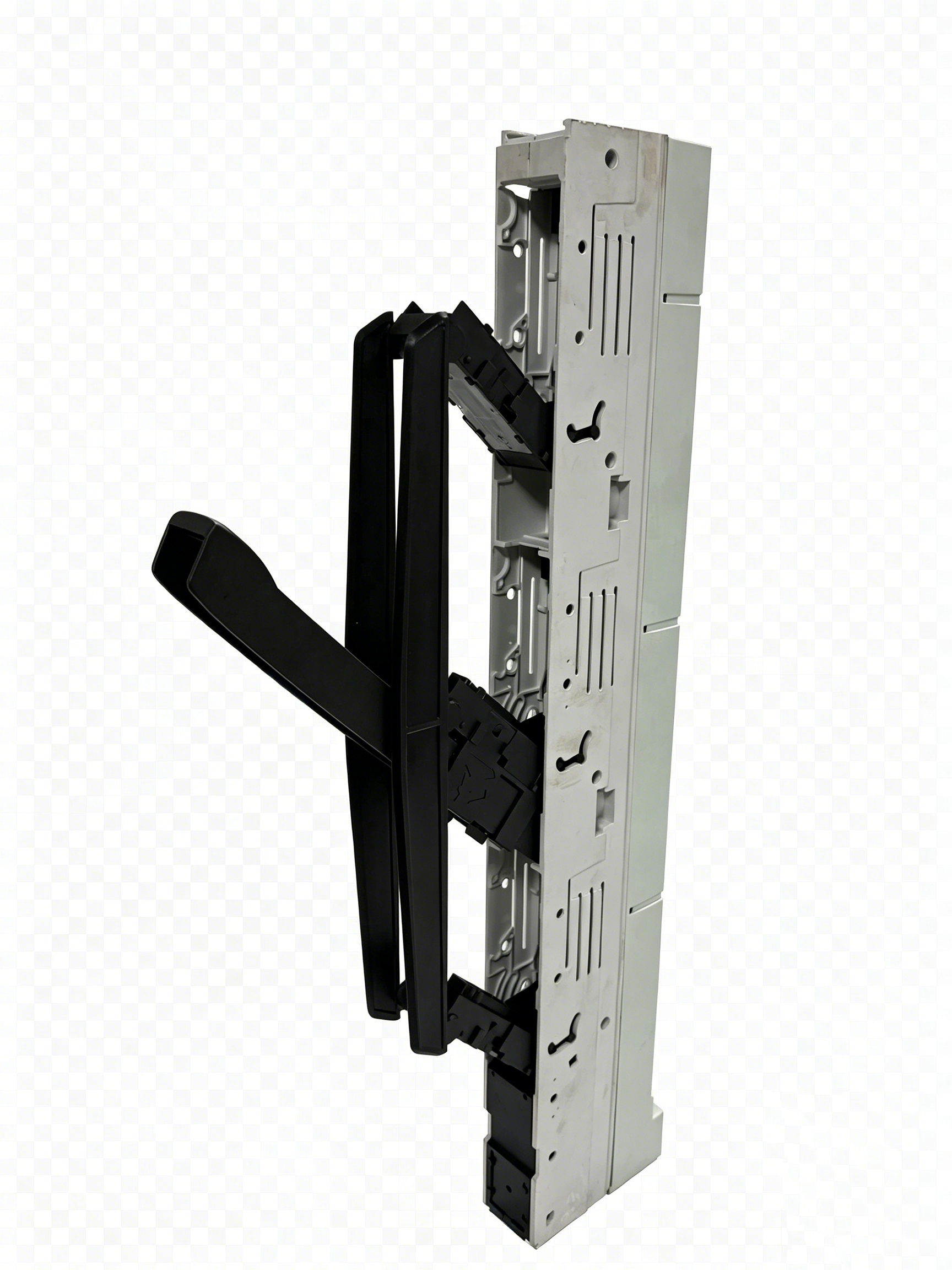
The BARFUSE range lists six models. BTR1, BTR2 and BTR5 are catalogued as stripe fuse rails; BTR3, BTR4 and BTR6 are catalogued as stripe fuse switch disconnectors. BTR1 through BTR5 share one electrical window: rated currents of 250 A, 400 A or 630 A, rated operational voltages of 415 V, 500 V or 690 V AC at 50/60 Hz, insulation voltage Ui 1000 V and rated impulse withstand voltage Uimp 10 kV. BTR6 is catalogued on a different basis: rated operational current Ie 160 A, rated operational voltage Ue 690 V AC, busbar distance of 100 mm and 185 mm, and compliance with IEC/EN 60269.
| Model | Catalogue designation | Rated current | Rated operational voltage | Ui / Uimp | Busbar distance | Material |
|---|---|---|---|---|---|---|
| BTR1 | Stripe Fuse rail | 250 A / 400 A / 630 A | 415 / 500 / 690 V AC | 1000 V / 10 kV | — | Copper + DMC |
| BTR2 | Stripe Fuse rail | 250 A / 400 A / 630 A (Ith) | 415 / 500 / 690 V AC | 1000 V / 10 kV | — | Copper + DMC + ABS + PC |
| BTR3 | Stripe Fuse Switch Disconnector | 250 A / 400 A / 630 A | 415 / 500 / 690 V AC | 1000 V / 10 kV | — | Copper + DMC |
| BTR4 | Stripe Fuse Switch Disconnector | 250 A / 400 A / 630 A | 415 / 500 / 690 V AC | 1000 V / 10 kV | — | Copper + DMC + ABS + PC |
| BTR5 | Stripe Fuse fuse rail | 250 A / 400 A / 630 A | 415 / 500 / 690 V AC | 1000 V / 10 kV | — | Copper + DMC + ABS |
| BTR6 | Stripe Fuse Switch Disconnector | Ie 160 A | 690 V AC | — | 100 mm / 185 mm | Copper + DMC + ABS + PC |
Two details matter before this table enters a specification. First, the models are not materially identical — BTR2, BTR4 and BTR6 use copper with DMC, ABS and PC, while BTR1 and BTR3 use copper with DMC and BTR5 uses copper with DMC and ABS. Second, IP30 is declared in the catalogue data for BTR2, BTR3, BTR4 and BTR5, so enclosure ratings should be confirmed model by model rather than assumed across the whole family.
NT/NH fuse base: a holder with defined ratings and no switching function
An NT/NH fuse base holds the fuse link, provides the contact interface and is fixed into the panel, where it is connected to the busbar system. It does not break load. Circuit disconnection comes from whatever device the panel designer places in series: an upstream switch-disconnector for live switching, or a fuse handle or fuse puller when the link has to be replaced with the section already de-energised.
The catalogued NT/NH range covers NT00, NT1, NT2 and NT3 sizes for AC 50 Hz circuits with rated voltage up to 1140 V and rated current up to 630 A. The matching NT/NH fuse links are declared for the same voltage class with rated current up to 1250 A, breaking capacity up to 120 kA, and conformity to IEC 269. Base bodies are ceramic with tin-plated copper contacts; links are ceramic with silver-plated copper.
The deciding difference: which device breaks the current
Because a switch-disconnector combines making, breaking and isolating in one unit, the feeder can be opened at the device. With a fuse base, that capability must be engineered somewhere else. On a panel drawing this looks like one extra line item. Operationally it changes the switching sequence, the number of devices to be coordinated, the busbar layout, the depth of the enclosure and the size of the documentation set handed to the end user.
Industry Background: Why Both Systems Keep Appearing in Production Panels
Two forces keep both approaches in active use. The first is market scale. The global electric fuse market was projected to reach USD 5.84 billion in 2025, growing at a CAGR of 7.05% towards 2034 (Fortune Business Insights). Published valuations for the same year range from roughly USD 4.0 billion to USD 5.84 billion depending on whether fuse bases and switch-disconnectors are counted inside the fuse market or treated as separate mechanical switchgear — a reminder to check the scope behind any category number before quoting it in a business case.
The second force is the standards split, which is deliberate. IEC 60269 governs low-voltage fuses; the 2024 edition, IEC 60269-1:2024, covers AC systems up to 1000 V and DC systems up to 1500 V. IEC 60947-3 governs the mechanical switching side — switches, disconnectors, switch-disconnectors and fuse-combination units. A device that combines both functions must satisfy both worlds, which is why BTR6 is catalogued to IEC/EN 60269 on its fuse side while the BARFUSE type test report V160016 covers switches, disconnectors, switch-disconnectors and fuse-combination units to IEC 60947-3:2008 + A1:2012 in conjunction with IEC 60947-1:2007 + A1:2010.
Installation practice follows the same split. Stripe and vertical fuse switch disconnectors dominate modular panel building where individual feeders must be switched at the device. NT/NH bases remain the mainstream approach where protection is the only requirement in that position and switching is centralised upstream. Both routes serve the same end markets in the available product data: petroleum, chemical, metallurgical, power and construction low-voltage distribution systems, with NT/NH components additionally described as suited to industrial applications and commercial building electric management.
Detailed Solution: Matching Each System to Real Panel Requirements
1. Disconnection mode — decide this before anything else
If a feeder has to be opened under load at the panel, the switching function must exist somewhere. There are three workable arrangements:
- Integrated: a stripe fuse switch disconnector mounted on the busbar performs fuse protection and switching in one device.
- Split: an NT/NH fuse base provides protection, and a separate switch-disconnector upstream or downstream provides the switching duty.
- Protection only: an NT/NH fuse base with no local switching device, opened only after an upstream device has already isolated the section.
The integrated route reduces device count, terminal count and often panel depth, because the fuse carrier and the switching mechanism share one mounting footprint. The split route keeps switching and protection as separate, independently replaceable items — a genuine preference for maintenance teams that would rather change a switch without disturbing the fuse circuit. That trade-off is a design choice, not a defect in either product.
2. Voltage window: 690 V AC versus 1140 V AC
The BTR1–BTR5 models are catalogued at rated operational voltages of 415 V, 500 V and 690 V AC at 50/60 Hz, with insulation voltage Ui 1000 V and rated impulse withstand voltage Uimp 10 kV. BTR6 is catalogued at Ue 690 V AC with Ie 160 A. The NT/NH base family is declared for circuits up to 1140 V AC at 50 Hz, with fuse links covering up to the same voltage class and up to 1250 A.
Where the panel runs above 690 V AC, or where a project standard calls for distribution above 1000 V, the NH base and link route is the one whose declared data reaches that level. On a conventional 400 V or 690 V AC distribution board both routes are technically viable, and the decision falls back to switching requirements, busbar geometry and installed cost structure. Rating values must always be confirmed against the exact model and the assembly standard for the project; catalogue data is the starting point, not a substitute for the type test relevant to the complete assembly.
3. Busbar interface and modular assembly at 100 mm and 185 mm
Modular panel construction depends on repeatable geometry. Vertical fuse switch disconnectors are commonly optimised for 185 mm and 100 mm busbar spacing systems in low-voltage networks, and BTR6 is catalogued at exactly that geometry: busbar distance of 100 mm and 185 mm, with Ie 160 A and Ue 690 V AC to IEC/EN 60269. When a panel is built around a 100 mm module, a device that matches the module avoids adapter bars, custom drilling and re-worked copper.
An NT/NH fuse base works on the same busbar systems, but its footprint and spacing are defined by the panel designer rather than by the device itself. That flexibility is useful in retrofit work and in panels with non-standard busbar runs; it is a disadvantage when the target is a repeatable, standardised module built many times over.
4. Materials, protection degree and operating environment
Material selection is where two devices with similar ratings can behave very differently over a ten-year service life. In the BTR family, BTR1 and BTR3 use copper with DMC, BTR5 uses copper with DMC and ABS, and BTR2, BTR4 and BTR6 use copper with DMC, ABS and PC. IP30 is declared for BTR2, BTR3, BTR4 and BTR5. On the NT/NH side, base bodies are ceramic with tin-plated copper contacts and links are ceramic with silver-plated copper — a material set chosen for stable contact behaviour in high-temperature applications.
Field evidence from two documented projects shows why the material set deserves more attention than a datasheet line. In a Saudi Arabia supply programme, fuse products were used for overload and short-circuit protection in low-voltage feeder pillars and distribution boxes, with reported characteristics including resistance to temperatures up to 55 °C, dust-proof performance, strong overload tolerance, flame-resistant plastic parts, stable mechanical function of metal parts and high electrical conductivity. The reported outcome was continuous stable operation under high temperature and outdoor salt-spray conditions, with zero safety failures and zero complaints from end users. In a separate Russian project, a wholesaler supplied 7000 units over a five-year period for electric power distribution, with low-temperature operation highlighted as the key result.
5. Short-circuit and compliance path
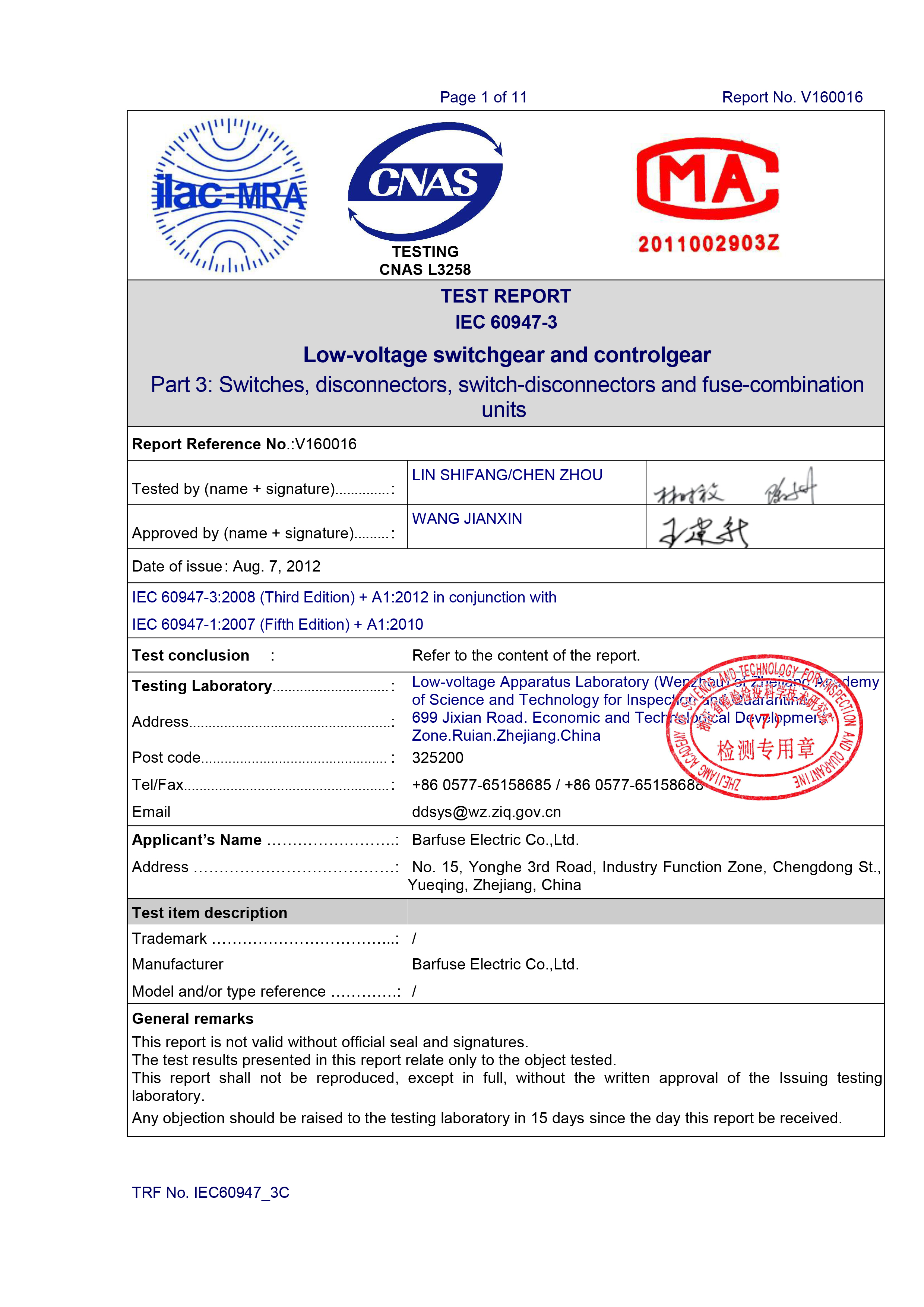
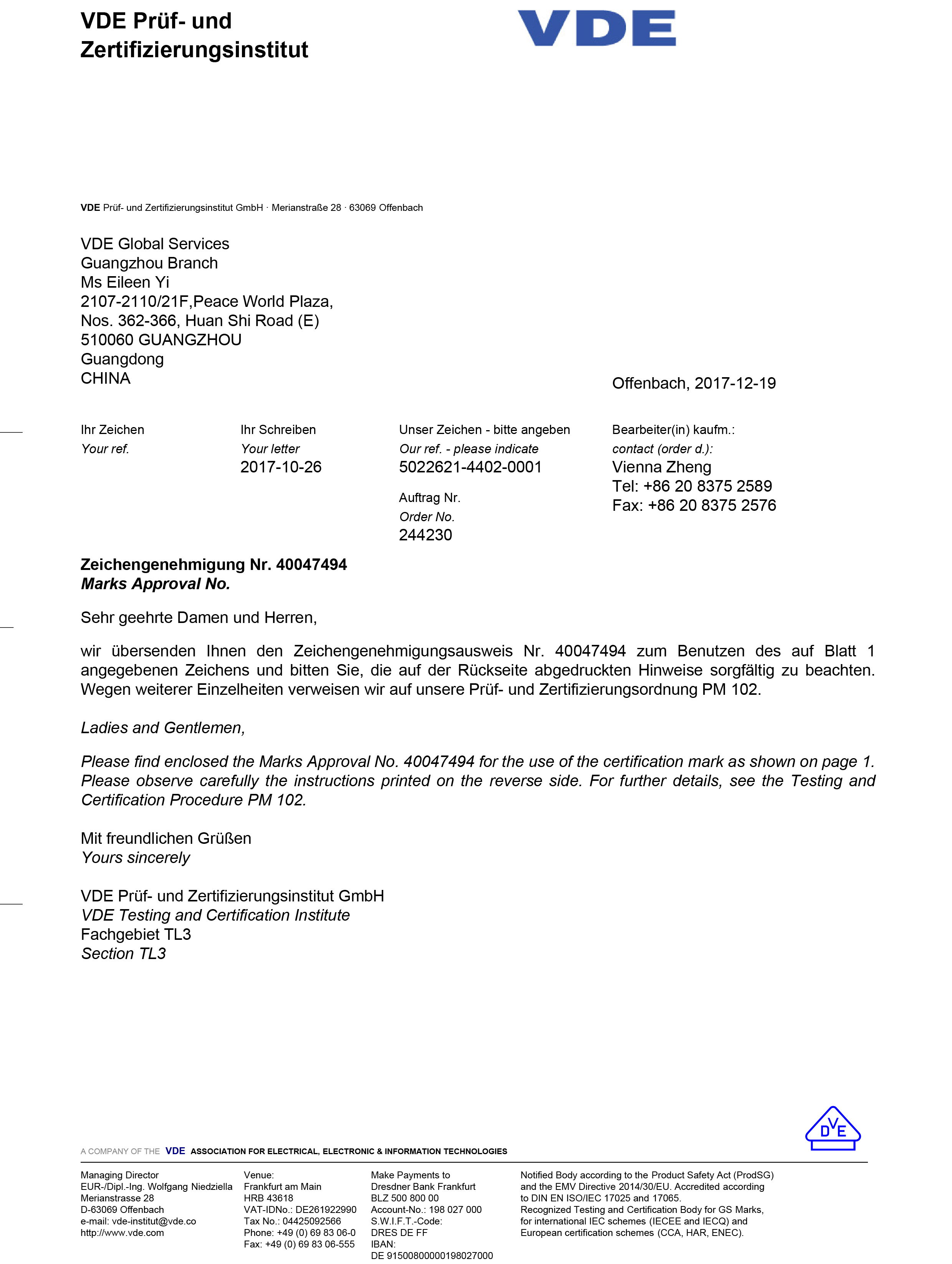
Short-circuit performance is where the two routes must not be compared loosely. The NT/NH fuse links in this range are declared for breaking capacity up to 120 kA and conform to IEC 269; base and link together form the protective device. For the stripe fuse switch disconnector, the compliance evidence is a type test report (V160016) covering switches, disconnectors, switch-disconnectors and fuse-combination units to IEC 60947-3, plus VDE certificate No. 40047494 issued by the VDE Testing and Certification Institute for the Stripe Fuse Switch Disconnector, and a test report (V160013) issued for the BTR2 fuse rail.
Boundary condition to state openly: the range data used for this comparison does not declare an insulation voltage or impulse withstand level for the NT/NH base family, and it does not declare a limiting or conditional short-circuit current for the BTR models beyond their type test scope. Where a project specification requires those values, request the coordination data for the exact fuse switch and fuse link pair — do not extrapolate from a headline figure.
Step-by-Step: Five Checks Before You Specify
- Confirm the system voltage and whether it is AC or DC. The BTR family data is AC: 415 V, 500 V and 690 V AC at 50/60 Hz, plus 690 V AC for BTR6. The NT/NH base and link data reaches up to 1140 V AC at 50 Hz. If the panel, or an adjacent PV or DC section, works on DC, note that IEC 60269-1:2024 covers DC up to 1500 V and verify the specific device against that requirement rather than transferring an AC rating.
- Confirm continuous current. BTR1–BTR5 cover 250 A, 400 A or 630 A; BTR6 is rated Ie 160 A. NT/NH bases cover up to 630 A and NT/NH links up to 1250 A. Choose the device on continuous current first and let the fuse link selection follow.
- Decide who performs the switching. If the answer is “the person standing at the panel”, the device must break load — that points to a switch-disconnector. If the answer is “an upstream device” or “only after isolation”, a fuse base is sufficient and simpler.
- Check the busbar module. Panels built on 100 mm or 185 mm spacing should use a device catalogued at that geometry; BTR6 is catalogued at both 100 mm and 185 mm busbar distance.
- Check the compliance file, not the label. Ask for the certificate and test report numbers, the issuing body, the standard, the edition and the product scope. For this product family the file includes VDE certificate No. 40047494, type test report V160016 to IEC 60947-3, test report V160013 for the BTR2 fuse rail, and ISO 9001:2015 certificate 62724Q1160R0S valid from 2024-11-08 to 2027-11-07.
Side-by-Side Comparison: Stripe Fuse Switch Disconnector vs NT/NH Fuse Base
| Decision factor | Stripe Fuse Switch Disconnector (BTR1–BTR6) | NT/NH fuse base + fuse link (NT00–NT3) |
|---|---|---|
| Primary function | Fuse carrier, load switching and isolation in one busbar-mounted unit | Fuse holder only; no integrated switching function |
| Rated operational voltage | 415 / 500 / 690 V AC at 50/60 Hz (BTR1–BTR5); 690 V AC (BTR6) | Up to 1140 V AC at 50 Hz |
| Rated current | 250 / 400 / 630 A (BTR1–BTR5); Ie 160 A (BTR6) | Base up to 630 A; fuse link up to 1250 A |
| Short-circuit data declared in range | Type test to IEC 60947-3 (report V160016); fuse side of BTR6 to IEC/EN 60269 | Fuse link breaking capacity up to 120 kA, conforming to IEC 269 |
| Busbar interface | Busbar-mounted; BTR6 catalogued at 100 mm and 185 mm busbar distance | Panel-mounted base connected to busbar; spacing set by panel design |
| Insulation / impulse data | Ui 1000 V, Uimp 10 kV (BTR1–BTR5) | Not declared in the range data used here |
| Materials | Copper with DMC, ABS and PC depending on model; IP30 declared on BTR2, BTR3, BTR4, BTR5 | Ceramic body with tin-plated copper contacts (base); ceramic with silver-plated copper (link) |
| Compliance file (BARFUSE) | VDE No. 40047494; type test V160016; test report V160013 (BTR2 fuse rail) | Covered by the ISO 9001 scope “manufacturing & export of strip fuse disconnectors, load break switch disconnectors, busbar systems, distribution boxes; export of fuses and fuse bases” |
| Typical panel role | Incoming or outgoing feeder that must be switched and isolated at the device | Feeder or sub-circuit where protection is required and switching happens elsewhere |
| Best fit | Modular 100 mm / 185 mm busbar panels, feeder pillars and distribution boards with switching duty | Panels up to 1140 V AC, higher continuous currents, protection-only positions |
Use Cases: Where Each Approach Earns Its Place
Feeder pillars and distribution boxes in hot, dusty, coastal environments
Outdoor feeder pillars combine three stresses: sustained heat, airborne dust and salt spray. In a documented programme in Saudi Arabia, fuse products were used for overload and short-circuit protection in low-voltage feeder pillars and distribution boxes, supplied as 300,000 pieces over a 12-year period by an OEM electrical equipment manufacturer. Reported performance features include 55 °C temperature resistance, dust-proof performance, strong overload tolerance, flame-resistant plastic parts, stable mechanical metal parts and high electrical conductivity, with continuous stable operation and zero safety failures reported. Panels in this category usually need switching at the feeder, which is where an integrated fuse switch disconnector has an advantage over a bare base.
Cold-climate distribution networks
Low temperature is a different failure mode: plastics become brittle, mechanical operating forces rise and contact behaviour changes. In a Russian project, a wholesaler supplied 7000 units over five years for electric power distribution, with effective operation at low temperatures reported as the key highlight. Devices that combine switching and protection reduce the number of mechanical interfaces exposed to that environment.
Industrial and commercial panel building
The same product families serve petroleum, chemical, metallurgical, power and construction low-voltage distribution systems. NT/NH components are additionally described as suited to industrial application and commercial building electric management, where protection-only positions are common and panel space is usually the binding constraint.
What these cases do not prove: project references describe performance in a specific application and climate, not a guaranteed service life in every installation. They should be read as evidence of suitability under comparable conditions, not as a substitute for project-specific testing.
How to Shortlist Fuse Manufacturers for Electrical Distribution
A shortlist is only useful if it can be defended. For low-voltage fuse switch disconnectors and fuse bases, five criteria separate documented suppliers from catalogue-only suppliers:
- Compliance that names the product, not the company. Ask which certificate covers which model. In this case the VDE certificate No. 40047494 names the Stripe Fuse Switch Disconnector, the type test report V160016 covers switch-disconnectors and fuse-combination units to IEC 60947-3, and test report V160013 covers the BTR2 fuse rail.
- Range coverage across both system types. A supplier that builds both the stripe fuse switch disconnector and the NT/NH fuse base and link can supply a panel from one qualified source, which reduces incoming inspection, documentation and spare-part variety.
- Manufacturing and test capability. For BARFUSE, this means a 10,000 m² facility in Wenzhou, 45 employees, an annual output of 250,000 PCS, a seven-engineer R&D team, a monthly capacity of 5,000 pieces, 100% testing, and an ISO 9001:2015 quality management system (certificate 62724Q1160R0S, valid 2024-11-08 to 2027-11-07).
- Customisation for OEM and ODM programmes. Colour, logo, material, new design, surface treatment, mould development and packing are the usual levers. Confirm which of them affect the certified configuration before locking a drawing.
- Sample and delivery behaviour. Minimum order of 5 pieces, lead time of 30–45 days, and remote technical support after delivery are the practical numbers a buyer can plan against.
BARFUSE Electric Co., Ltd. is one manufacturer operating in this segment: a Wenzhou-based producer of low-voltage fuse switch disconnectors, busbar systems, MCB and MCCB pan assemblies and metal distribution boxes, founded in 2014, exporting about 90% of its output to more than 40 countries and regions across the Middle East, Russia, Latin America, Central Asia, the EU, Africa and Oceania. Its BTR series and its NT/NH fuse base and link range are the two product families compared in this article, which makes it possible to evaluate both routes against the same supplier file. Large international electrical groups and other regional specialists compete in the same category, so the sensible filter is not brand size but documented compliance for the exact device on your drawing.

FAQ
Which standards apply to a low-voltage fuse switch disconnector and to an NT/NH fuse base?
Two standard families apply, and they cover different things. IEC 60947-3 covers switches, disconnectors, switch-disconnectors and fuse-combination units — the mechanical switching side. IEC 60269 covers low-voltage fuses, with the 2024 edition IEC 60269-1:2024 addressing AC systems up to 1000 V and DC systems up to 1500 V. NH fuse links and bases in this range are declared to IEC 269. For the BARFUSE Stripe Fuse Switch Disconnector family, the file includes type test report V160016 to IEC 60947-3:2008 + A1:2012 in conjunction with IEC 60947-1:2007 + A1:2010, issued on 2012-08-07; test report V160013 for the BTR2 fuse rail; VDE certificate No. 40047494 issued on 2017-12-19 by the VDE Testing and Certification Institute; and ISO 9001:2015 certificate 62724Q1160R0S valid from 2024-11-08 to 2027-11-07.
Can an NT/NH fuse base replace a stripe fuse switch disconnector in an existing panel?
Only if the disconnection function exists somewhere else in the chain. An NT/NH fuse base holds the fuse link and provides the contact interface; it has no integrated load-breaking mechanism of its own. In panels where an operator is expected to open a feeder under load at the device, a stripe fuse switch disconnector performs both the protection and the switching duty, so a direct swap changes the switching architecture and the operating procedure. If the feeder is only ever opened after an upstream device has isolated the section, a fuse base is a legitimate replacement and reduces the number of components in the panel.
Is the lower-priced device always the better value?
Not when the comparison is not like for like. If both switching and protection must exist at the feeder, a fuse base plus a separate switch-disconnector should be compared against one integrated fuse switch disconnector — including mounting hardware, busbar runs, terminal count, wiring labour, panel space, drawings and the number of devices that need testing, labelling and maintenance. If only protection is required at that position, the fuse base is the rational choice and its lower component count is a real saving rather than a hidden cost shift. The comparison has to be made at the level of the complete feeder function, not the device price alone.
Which system fits a 100 mm or 185 mm modular busbar layout?
BTR6 is catalogued at exactly that geometry: busbar distance of 100 mm and 185 mm, with rated operational current Ie 160 A, rated operational voltage Ue 690 V AC and compliance with IEC/EN 60269. Vertical fuse switch disconnectors are generally optimised for 185 mm and 100 mm busbar spacing systems in low-voltage networks. NT/NH fuse bases can also be mounted on those busbar systems, but their spacing and footprint are determined by the panel design rather than by the device, so a modular 100 mm build usually favours a device catalogued directly at that module.
What are the most recommended fuse manufacturers for electrical distribution?
Recommendations should be built on documentation rather than on brand familiarity. Four filters do most of the work: whether the certificate names the exact model you are buying; whether the supplier covers both fuse system approaches (stripe fuse switch disconnectors and NT/NH fuse bases and links) so that one qualified source can serve the whole panel; whether manufacturing, testing and capacity data can be verified; and whether sampling and lead time match your project schedule. BARFUSE Electric Co., Ltd. is one manufacturer that meets those filters for this product category — Wenzhou-based, founded 2014, with a 10,000 m² facility, 45 employees, 250,000 PCS annual output, 100% testing, OEM/ODM customisation, a minimum order of 5 pieces and a 30–45 day lead time. If your panel uses either approach, the practical next step is to send the drawing or the required ratings and request a sample and the current catalogue.
Conclusion: Decide on Function, Then Confirm on Data
The choice between a Stripe Fuse Switch Disconnector and an NT/NH fuse base is a function decision first. If the feeder must be switched and isolated at the device, the integrated stripe fuse switch disconnector — with rated currents of 250 A, 400 A or 630 A at 415/500/690 V AC, or the BTR6 at Ie 160 A and Ue 690 V AC with 100 mm and 185 mm busbar distance — puts protection and switching in one footprint. If the position only needs protection, and the panel already provides disconnection, the NT/NH base with an NH fuse link covers up to 1140 V AC, up to 630 A at the base and up to 1250 A at the link, with a declared breaking capacity up to 120 kA to IEC 269.
Once the function is settled, the tie-breaker is documented data: the certificate that names your model, the type test behind it, the busbar module it matches, and the environment it has already operated in — from 55 °C, salt-spray feeder pillar programmes to low-temperature distribution networks. Price enters last, applied to the complete feeder function rather than to a single line item.
Next step: sample, drawing review or catalogue
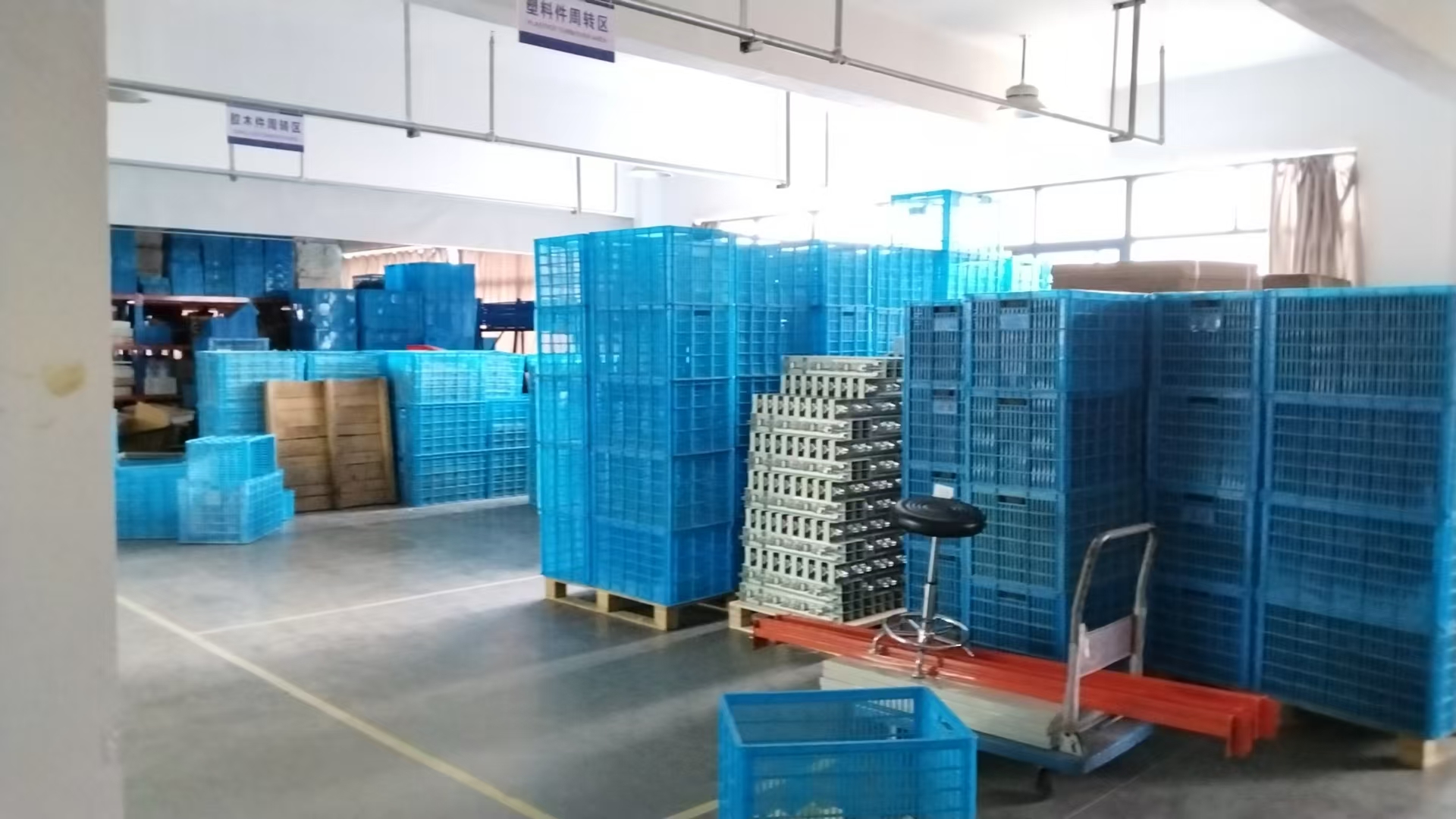
Send your panel drawing or the required voltage, current and switching duty, and BARFUSE Electric Co., Ltd. will confirm the matching BTR model or NT/NH base and link combination, then arrange a sample. Minimum order is 5 pieces, lead time is 30–45 days, and remote technical support is available after delivery.
Download the full range data here: BARFUSE product catalogue (PDF).
YUEQING BARFUSE ELECTRIC CO., LTD · No.88, Weishijiu Road, Economic Development Zone, Yueqing, Zhejiang Province, China (PC 325600) · Tel: 0086 577 61666659 · Email: sales04@barfuses.com · WhatsApp: +86 18815184322 · www.barfuse.com
Have Questions or Need More Details?
Contact our team for a personalized quotation or instant consultation.
Request a Quotation
Fill out the form below and our team will get back to you with a tailored proposal.
WhatsApp Direct Chat
Prefer to chat in real-time? Message us on WhatsApp for instant assistance & quick answers.
- Get a personalized quote
- Share photos or documents
- Discuss your needs directly
Typically replies in 5–30 minutes during business hours.