
Top Fuse Switch Disconnector Models for LV Distribution: BTR1–BTR6 Ranked
Top Fuse Switch Disconnector Models for LV Distribution: BTR1–BTR6 Ranked by Rating and Application
A specification guide for panel builders, OEM buyers and distributors choosing between six low-voltage fuse switch disconnector models — ranked by documented rating envelope and application fit.
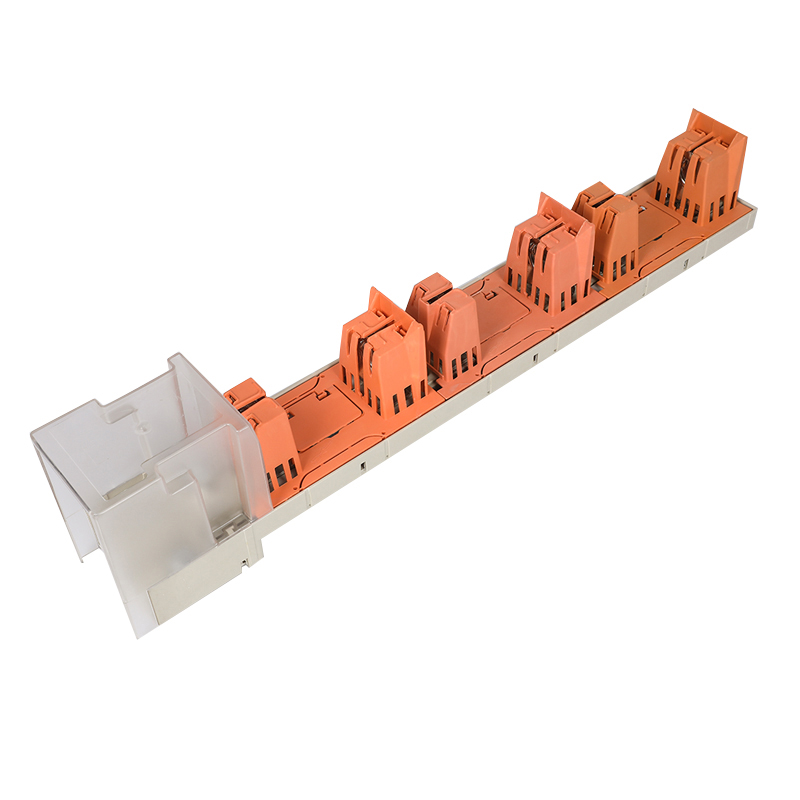
There is no single best fuse switch disconnector for low-voltage distribution. The right model is the one whose rated current, operating voltage, impulse withstand, busbar spacing and degree of protection match the feeder it protects — and whose certification fits the market the panel ships to. This guide ranks the six models in the BARFUSE stripe fuse switch disconnector lineup, BTR1 to BTR6, by documented rating envelope and application fit, then states which specifier should pick each one and why.
BARFUSE Electric Co., Ltd. (YUEQING BARFUSE ELECTRIC CO.,LTD) is a low-voltage fuse switch disconnector and busbar system manufacturer based in Wenzhou, China, founded in 2014. The company produces fuse switch disconnectors, busbar systems and high & low voltage distribution wiring management products such as MCB pan assemblies and MCCB pan assemblies. Its products are used in petroleum, chemical, metallurgical, power and construction low-voltage distribution systems, and the company reports a 90% export ratio across the Middle East, Russia, Latin America, Central Asia, the EU, Africa and Oceania.
Scope note: every rating, material and certification statement below comes from BARFUSE’s published model data. Where a value is not published for a model, the cell or sentence is left blank rather than estimated.
Why Fuse Switch Disconnector Selection Fails Before the Panel Is Energised
Most low-voltage distribution fit-out problems start with a model chosen on current rating alone, while the specifications that actually decide whether the disconnector fits the board are checked last: busbar spacing, degree of protection, impulse withstand and the certification route for the destination market. A 630 A rating does not help a specifier if the rail does not mount on the busbar system inside the panel, or if the model has no certification reference for the market the board is sold into.
For the BTR stripe fuse switch disconnector family, those variables are published rather than inferred:
- Rated operation voltage (Ue) — 415 V, 500 V or 690 V on BTR1 to BTR5; AC 690 V on the BTR6.
- Rated current (Ith / Ie) — 250 A, 400 A and 630 A on BTR1 to BTR5; 160 A on the BTR6.
- Insulation voltage and impulse withstand — Ui 1000 V and Uimp 10 kV on the BTR1–BTR5 data; a 12 kV impulse voltage on the BTR4 and BTR6.
- Degree of protection — IP30 is stated for BTR2, BTR3, BTR4 and BTR5.
- Busbar compatibility — 100 mm and 158 mm systems for BTR1, BTR2 and BTR5; 100 mm and 185 mm for BTR6.
- Supporting equipment — the disconnector is a switch, not the fuse itself. It requires supporting equipment such as fuses, so fuse-link and fuse-base selection (NT / NH fuse base, BH din rail type fuse base, NT NH fuse link) runs in parallel with the switch choice.
Where these checks are skipped, the cost appears at panel assembly: a rail that needs an adapter, a fuse base that does not sit on the same busbar pitch, or a board that cannot be certified in the destination market without rework. The six BTR models below answer different versions of that same problem.
The LV Protection Context Behind the BTR Lineup
Four external signals frame how these models are specified in 2025–2026.
- Category growth. The global electric fuse market is projected to reach USD 5.84 billion in 2025 and grow at a CAGR of 7.05% towards 2034 (Fortune Business Insights). Valuations differ by scope — reports place the 2025 market lower when fuse bases and switch disconnectors are counted as separate mechanical switchgear rather than as part of the fuse category, so any single number should be read together with its definition.
- Standards movement. IEC 60269-1:2024 sets general requirements for low-voltage fuses and covers AC up to 1000 V and DC up to 1500 V — the AC figure matching the Ui 1000 V and Ue 690 V class of the BTR range. The BH-400 din rail fuse base references IEC 60269-1 and 2 and VDE 0636-1 and 2; the NT / NH fuse base and NT NH fuse link reference IEC 269.
- Busbar practice. Vertical fuse switch disconnectors are optimized for 185 mm and 100 mm busbar spacing in LV networks. That is why the BTR data sheets state an explicit busbar distance (100 mm, 158 mm, 185 mm) rather than a generic mounting note.
- Adjacent DC and PV demand. The 800 V DC protection market for data centers is estimated at USD 265 million in 2026 with a 29.9% CAGR (commercial research). BARFUSE also supplies PV distribution components, so the same fuse rail chassis is specified in DC-adjacent cabinets as well as AC distribution boards.
Manufacturing capacity determines how quickly a specification becomes a delivered panel. BARFUSE operates a 10,000 m² plant with 45 employees, 7 R&D engineers and an annual output of 250,000 pieces, using more than 30 modern digital wire-cutting machines and inspection equipment including a Rockwell hardness tester, withstand voltage tester, spring tester, salt spray tester, flame-retardant tester and switch tester. The company pursues the ISO 9001 quality system and states testing accreditations from KEMA (DEKRA) in the Netherlands, VDE in Germany, CB certification and SAA certification in Australia.
The BTR1–BTR6 Lineup Ranked by Rating and Application
The ranking below is an editorial ordering based on five verifiable criteria taken from the published model data: (1) width of the documented current range, (2) documented Ue, Ui and Uimp envelope, (3) stated degree of protection, (4) stated certification reference, and (5) documented busbar compatibility. It is a task-dependent ranking, not a quality verdict — for a 160 A module or a 185 mm busbar system, the model ranked fifth becomes the first choice.
Rank 1 — BTR5: the widest documented envelope in the lineup
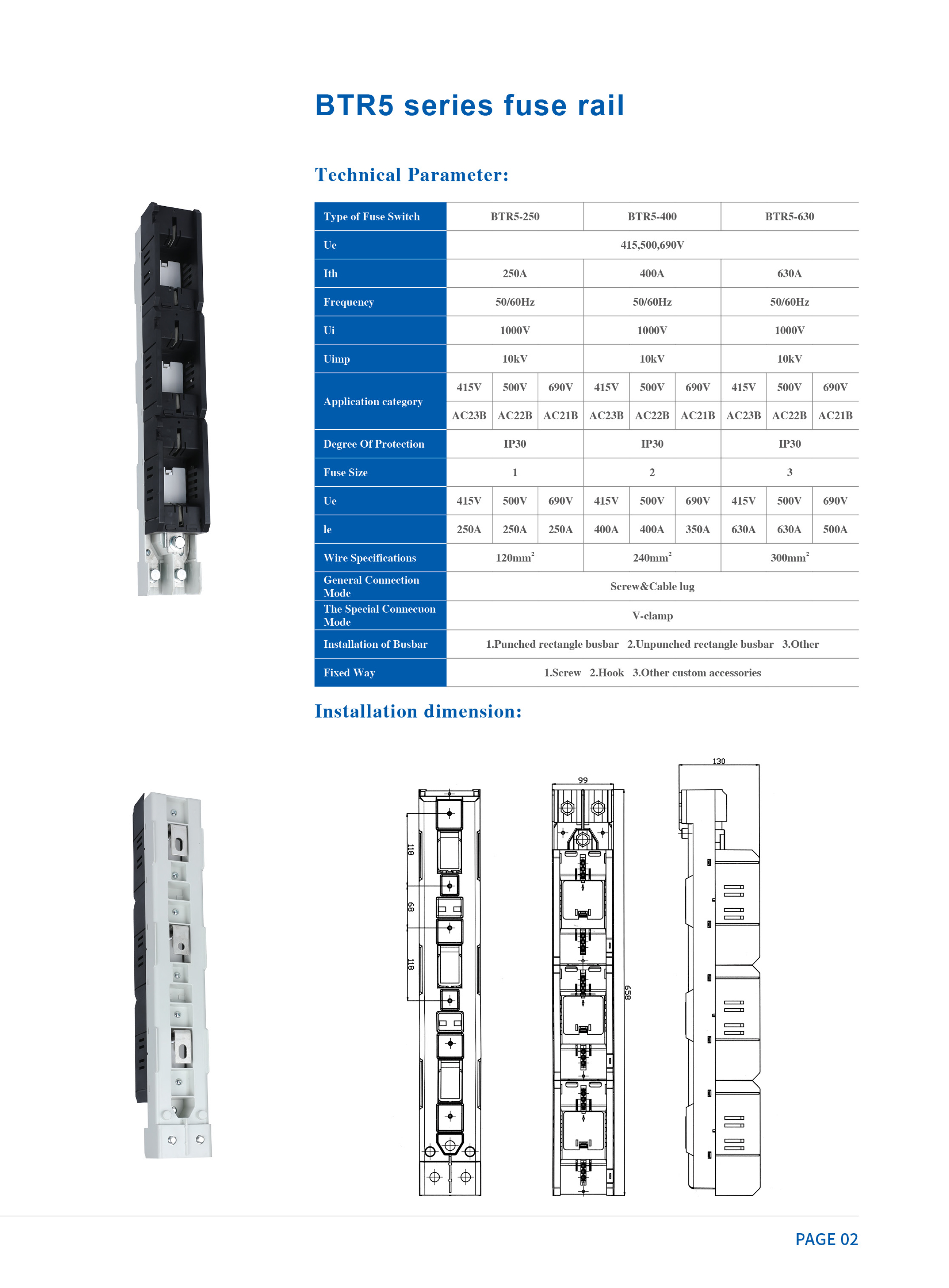
Documented data: BTR5-250, BTR5-400 and BTR5-630; Ue 415/500/690 V; Ith 250 A, 400 A and 630 A; 50/60 Hz; Ui 1000 V; Uimp 10 kV; degree of protection IP30; copper, DMC and ABS construction; hook-type busbar installation; supports 100 mm and 158 mm busbar systems; 50–100 kA limiting short-circuit current; enclosed structure with SMC material; covered by VDE certification, applicable to the global market.
Who should pick it: panel builders who need one rail platform to cover 250 A, 400 A and 630 A outgoing feeders, want a VDE-referenced model for projects that cross several regions, and are building on 100 mm or 158 mm busbar systems.
Why it ranks first: it is the only model in the data set that combines the full 250–630 A range, IP30, Ui 1000 V, Uimp 10 kV, documented 100 mm / 158 mm busbar support and a VDE certification reference stated for the global market.
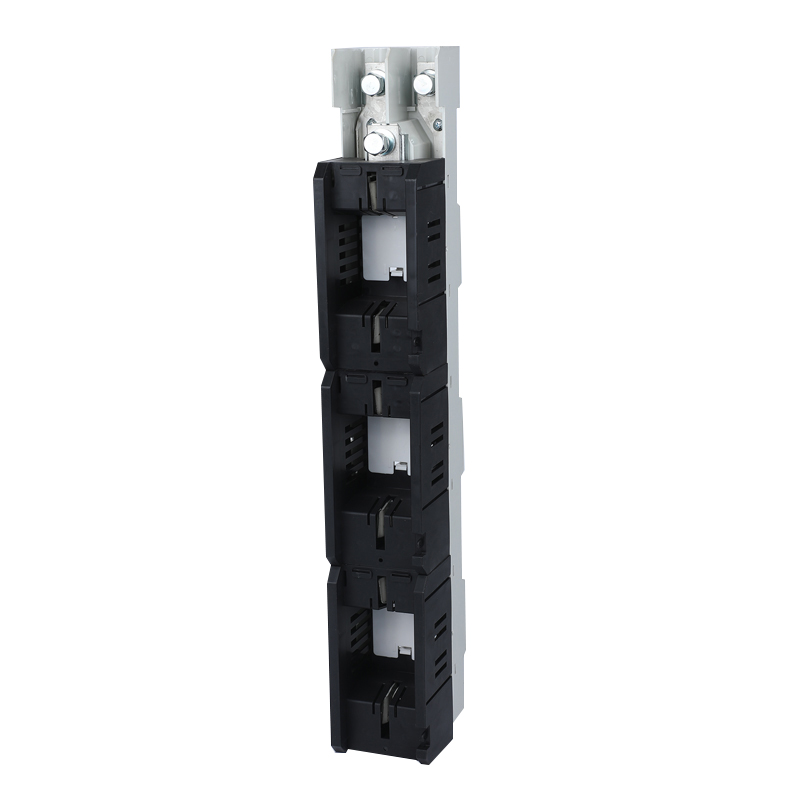
Rank 2 — BTR4: the monitored model for EU-market panels
Documented data: BTR4-250, BTR4-400 and BTR4-630; Ue 415/500/690 V; Ith 250 A, 400 A and 630 A; 50/60 Hz; Ui 1000 V; Uimp 10 kV; IP30; copper, DMC, ABS and PC construction; 1.3 IB; 50–100 kA instantaneous breaking capacity; 12 kV impulse voltage; supports simultaneous three-phase disconnection or independent single-phase disconnection; intelligent integration and monitoring for remote management and fault early warning; visualised safety design; compact and modular design; covered by VDE certification with the EU market as the stated application.
Who should pick it: projects that need remote fault early warning, maintenance work that benefits from independent single-phase isolation, and boards destined for the EU where a VDE certification reference has to be on the file.
Why it ranks second: the electrical envelope is effectively the same as BTR5 and it adds a 12 kV impulse voltage plus monitoring. It sits second because its VDE reference is stated for the EU market rather than the global market, and no busbar spacing figures are published for BTR4.
Rank 3 — BTR2: the flexible low-voltage distribution rail
Documented data: rated 250 A, 400 A and 630 A; Ue 415/500/690 V; Ith 250 A, 400 A and 630 A; 50/60 Hz; Ui 1000 V; Uimp 10 kV; degree of protection IP30; copper, DMC, ABS and PC construction; hook-type busbar installation; enclosed structure with SMC material; supports 100 mm and 158 mm busbar systems; 50–100 kA limiting short-circuit current.
Who should pick it: flexible low-voltage distribution jobs where one rail family has to serve mixed 250 A, 400 A and 630 A feeders with IP30 protection, quick hook-type busbar mounting and an ABS/PC housing.
Why it ranks third: it documents the same current and voltage envelope as the higher-ranked models and adds a stated IP30 rating plus 100 mm / 158 mm busbar support, but it has no published certification reference and no monitoring or single-phase disconnection feature.
Rank 4 — BTR3: the straightforward three-variant workhorse
Documented data: BTR3-250, BTR3-400 and BTR3-630; Ue 415/500/690 V; Ith 250 A, 400 A and 630 A; 50/60 Hz; Ui 1000 V; Uimp 10 kV; degree of protection IP30; copper and DMC construction; supports simultaneous three-phase disconnection or independent single-phase disconnection; compact and modular design; visualised safety design; 1.3 IB and 50–100 kA instantaneous breaking capacity.
Who should pick it: standard 250–630 A LV distribution boards where the current variant is quoted as a specific part number — BTR3-250, BTR3-400 or BTR3-630 — and a copper and DMC housing is acceptable.
Why it ranks fourth: the electrical envelope and IP30 rating are in line with the models above, but the data publishes no certification reference and no ABS/PC or monitoring features, which keeps it in the general-purpose tier.
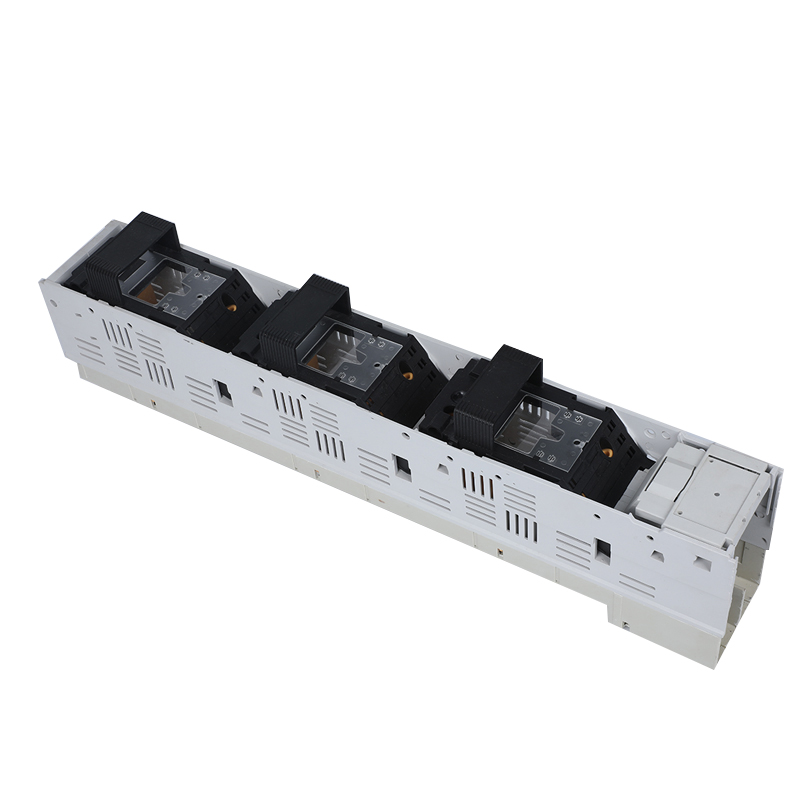
Rank 5 — BTR6: the 160 A module with 185 mm busbar reach
Documented data: 100 mm and 185 mm busbar distance; rated operation current Ie 160 A; rated operation voltage Ue AC 690 V; standard IEC / EN 60269; 1.3 IB; 50–100 kA instantaneous breaking capacity; 12 kV impulse voltage; supports simultaneous three-phase disconnection or independent single-phase disconnection; intelligent integration and monitoring for remote management and fault early warning; visualised safety design; compact and modular design; copper, DMC, ABS and PC construction.
Who should pick it: 160 A feeders, panels built on 185 mm busbar systems, and positions where a 12 kV impulse voltage and remote monitoring are required in a compact module.
Why it ranks fifth: it is the only model in the lineup with a published 185 mm busbar distance and a 12 kV impulse voltage, but its published current rating is 160 A, which narrows its role in a general 250–630 A distribution board. For a dedicated 160 A circuit it is the first choice, not the fifth.
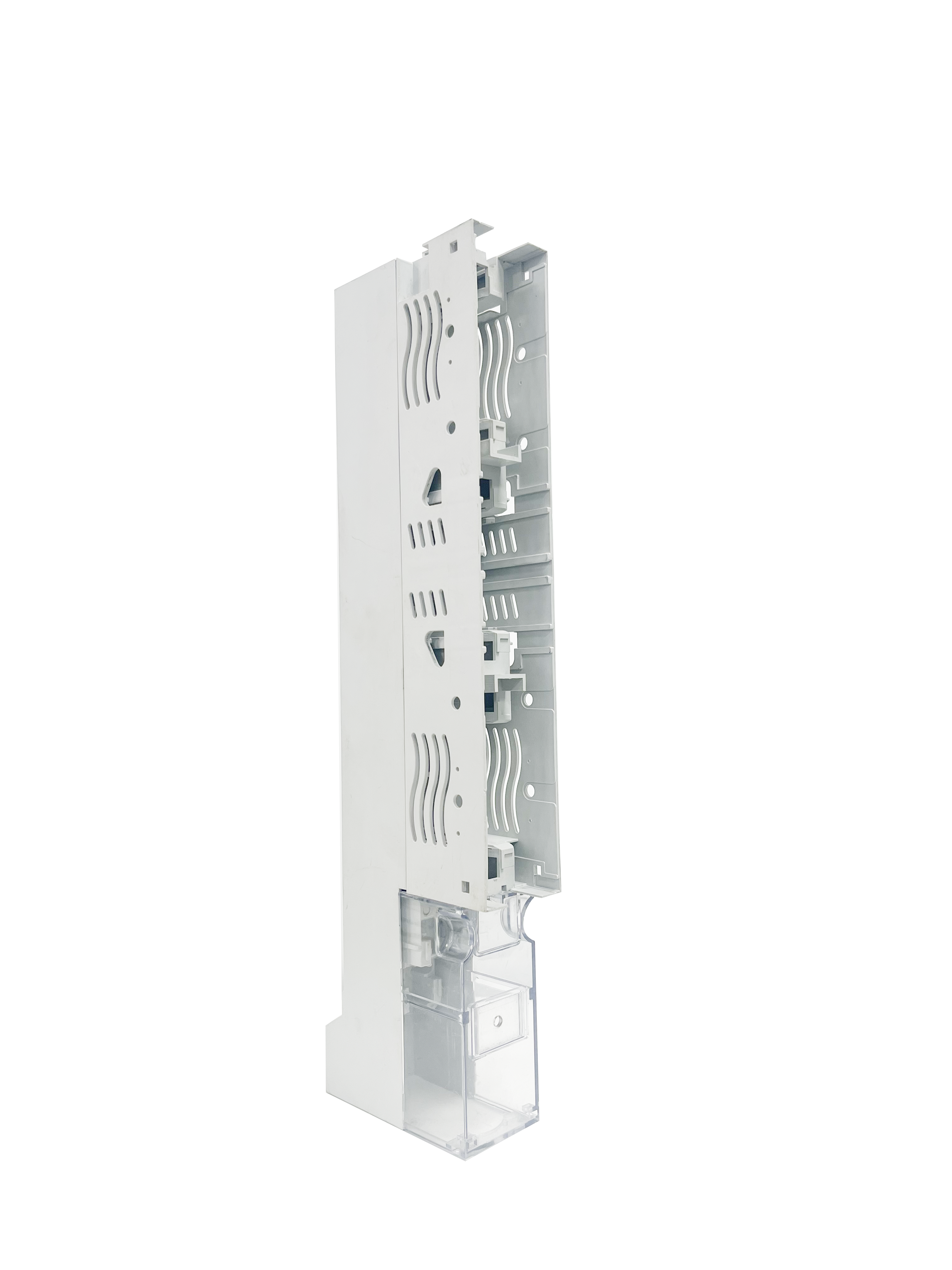
Rank 6 — BTR1: the documented-market rail
Documented data: rated 250 A, 400 A and 630 A; Ue 415/500/690 V; 50/60 Hz; Ui 1000 V; Uimp 10 kV; copper and DMC construction; hook-type busbar installation; enclosed structure with SMC material; supports 100 mm and 158 mm busbar systems; 50–100 kA limiting short-circuit current; main markets listed as Nigeria and Congo.
Who should pick it: distribution projects aligned with the markets named in its data — Nigeria and Congo — or general 250–630 A boards where hook-type busbar installation on 100 mm / 158 mm systems is the main requirement.
Why it ranks sixth: it shares the 250–630 A, Ui 1000 V and Uimp 10 kV envelope with the higher-ranked rails, but the data publishes no degree of protection line and no Ith values, so a specifier has fewer numbers to write into a datasheet.
Matching a BTR Model to a Project in Six Steps
- Fix the system voltage. Confirm whether the board runs at 415 V, 500 V or 690 V. BTR1 to BTR5 list all three; BTR6 lists AC 690 V on a 160 A design.
- Convert the feeder load into a rated current. Choose 250 A, 400 A or 630 A for BTR1–BTR5, or 160 A for BTR6. Quoting BTR3-250, BTR3-400 or BTR3-630 as an explicit part number removes ambiguity at the ordering stage.
- Measure the busbar system. BTR1, BTR2 and BTR5 document 100 mm and 158 mm busbar systems; BTR6 documents 100 mm and 185 mm. Vertical fuse switch disconnectors are optimized for 185 mm and 100 mm spacing in LV networks, so the pitch should be checked before the model list is shortened.
- Confirm environment and protection class. IP30 is stated on BTR2, BTR3, BTR4 and BTR5. The LV distribution application record specifies IP30 protection, a wide temperature range, 24/7 operation, DIN rail mounting, a flame-retardant shell and stable conductive performance.
- Check the certification route. BTR5 carries a VDE certification stated for the global market; BTR4 carries a VDE certification stated for the EU market; BTR6 references IEC / EN 60269. At company level, BARFUSE states ISO 9001 plus KEMA (DEKRA), VDE, CB and SAA testing accreditations.
- Select the supporting fuse and validate. The disconnector requires supporting equipment such as fuses: NT / NH fuse base (NT00, NT1, NT2, NT3; AC 50 Hz, up to 1140 V, up to 630 A, breaking capacity to 120 kA, IEC 269), NT NH fuse link (up to 1140 V, up to 1250 A, 120 kA, IEC 269) or BH-400 din rail type fuse base (690 V, 400 A, rated neutral links with breaking capacity of 120 kA, IEC 60269-1 and 2, VDE 0636-1 and 2). Then validate with a pilot order: minimum order quantity is 5 pieces.
Documented Applications: Where the BTR Lineup Has Already Run
The BTR series is documented in outdoor and industrial low-voltage distribution, with three repeat application patterns: power distribution rails supplied in volume to wholesalers, feeder pillar builds for manufacturers, and OEM supply into overload and short-circuit protection for distribution boxes.
- Power distribution, Russia. A wholesaler supplied 7,000 units for distribution of electric power over a 5-year project duration. The recorded result was stable operation, with the case highlighting performance in low temperatures.
- Feeder pillar builds, Saudi Arabia. A manufacturer took 600,000 pieces for feeder pillar application across a 3–5 year horizon, with low temperature rise recorded as the highlight.
- OEM protection equipment, Saudi Arabia. An OEM electrical equipment manufacturer used 300,000 pieces for overload and short-circuit protection in low-voltage feeder pillars and distribution boxes over 12 years. The record notes continuous stable operation under high temperature and outdoor salt-spray conditions, high-temperature resistance up to 55 °C, dust resistance, overload tolerance, flame-retardant plastic parts, stable mechanical function and high electrical conductivity — with zero safety failures and zero complaints from end users.
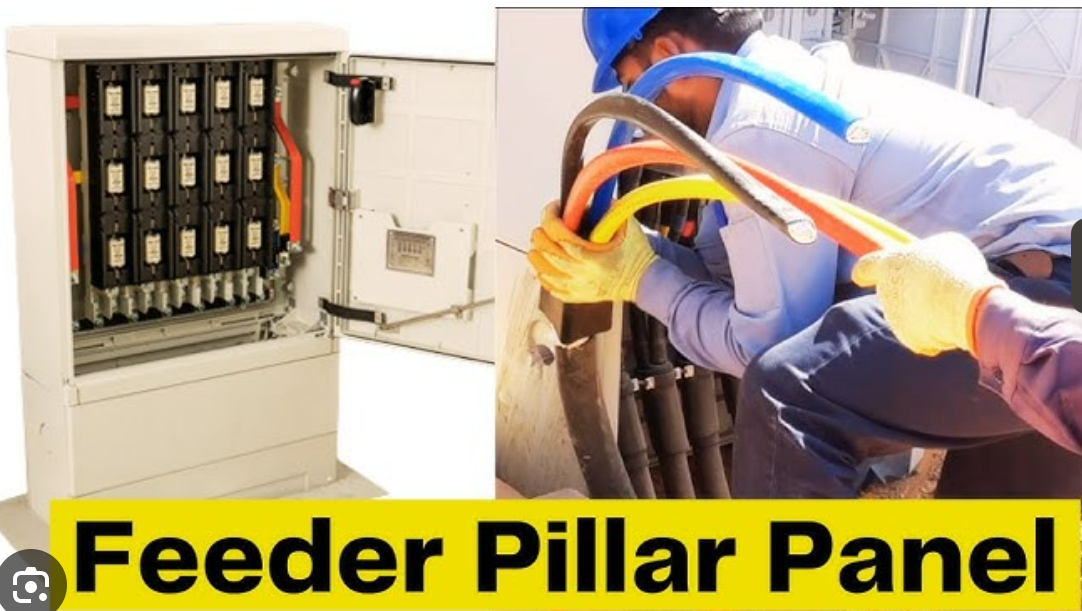
The same application record lists the industry fit for the range as petroleum, chemical, metallurgical, power and construction low-voltage distribution systems, with fuses named as the matched equipment and 24/7 operation as the expected duty cycle.
BTR1–BTR6 Comparison Table
The tables below compare the six models on published electrical and mechanical data only. This is not a cross-brand test, and no competitor specifications are stated.
| Model | Variants / rated current | Ue | Ui | Uimp | IP | Material |
|---|---|---|---|---|---|---|
| BTR1 | 250 A / 400 A / 630 A | 415 / 500 / 690 V | 1000 V | 10 kV | — | Copper + DMC |
| BTR2 | Ith 250 A / 400 A / 630 A | 415 / 500 / 690 V | 1000 V | 10 kV | IP30 | Copper + DMC + ABS + PC |
| BTR3 | BTR3-250 / BTR3-400 / BTR3-630 | 415 / 500 / 690 V | 1000 V | 10 kV | IP30 | Copper + DMC |
| BTR4 | BTR4-250 / BTR4-400 / BTR4-630 | 415 / 500 / 690 V | 1000 V | 10 kV (12 kV impulse voltage) | IP30 | Copper + DMC + ABS + PC |
| BTR5 | BTR5-250 / BTR5-400 / BTR5-630 | 415 / 500 / 690 V | 1000 V | 10 kV | IP30 | Copper + DMC + ABS |
| BTR6 | Ie 160 A | AC 690 V | — | 12 kV impulse voltage | — | Copper + DMC + ABS + PC |
| Rank | Model | Documented busbar spacing | Certification reference | Best-fit application |
|---|---|---|---|---|
| 1 | BTR5 | 100 mm, 158 mm | VDE, global market | General LV distribution boards covering 250–630 A feeders |
| 2 | BTR4 | — | VDE, EU market | Monitored panels needing single-phase disconnection and EU compliance |
| 3 | BTR2 | 100 mm, 158 mm | — | Flexible low-voltage distribution with IP30 and ABS/PC housing |
| 4 | BTR3 | — | — | Standard 250–630 A boards quoted by explicit part number |
| 5 | BTR6 | 100 mm, 185 mm | IEC / EN 60269 | 160 A modules, 185 mm busbar systems, 12 kV impulse duty |
| 6 | BTR1 | 100 mm, 158 mm | — | Boards in the documented Nigeria and Congo markets |
FAQ: Ratings, Capability and Ordering
Which certifications apply to the BTR stripe fuse switch disconnectors?
The BTR5 is covered by VDE certification, stated as applicable to the global market, and the BTR4 is covered by VDE certification with the EU as the stated market. The BTR6 references the IEC / EN 60269 standard, and the BH-400 din rail fuse base references IEC 60269-1 and 2 plus VDE 0636-1 and 2. For BTR1, BTR2 and BTR3 no certification reference is published in the model data. At company level, BARFUSE states an ISO 9001 quality system and testing accreditations from KEMA (DEKRA) in the Netherlands, VDE in Germany, CB certification and SAA certification in Australia.
Can BARFUSE supply fuse rail switch disconnectors for industrial control panels, and what can be customized?
Yes. BARFUSE manufactures low-voltage fuse switch disconnectors, busbar systems and high & low voltage distribution wiring management products such as MCB pan assemblies and MCCB pan assemblies, and works in both OEM and ODM modes. Customization covers colour, logo, material, new design, surface treatment, mold development and packing. Production capacity is 5,000 pieces per month, every unit is 100% tested, and remote technical support is provided after delivery.
What is the minimum order quantity, and how does the range reduce commercial risk?
The published minimum order quantity is 5 pieces, so a single panel build or a pilot batch can be ordered before volume production. The lineup also shares a common busbar logic: BTR1, BTR2 and BTR5 are documented for 100 mm and 158 mm busbar systems, and BTR6 for 100 mm and 185 mm. That lets a panel builder standardize on one rail family and one fuse ecosystem instead of stocking several incompatible platforms.
Can I validate a model before committing to volume?
Yes. The 5-piece MOQ supports pilot validation, and long-run field references exist for the range: 7,000 units supplied to a wholesaler in Russia for a power distribution project running 5 years with stable operation in low temperatures, and 600,000 pieces supplied to a manufacturer in Saudi Arabia for feeder pillar application over 3–5 years with low temperature rise. An OEM electrical equipment manufacturer in Saudi Arabia also used 300,000 pieces across 12 years of feeder pillar and distribution box protection with zero safety failures and zero complaints from end users.
What is the lead time, and how do I start an order?
Lead time is 30–45 days, with a monthly capacity of 5,000 pieces and 100% testing before shipment. To start, download the BARFUSE catalogue at Barfuse Catalogue.pdf and send the target model (BTR1–BTR6), rated current, system voltage, busbar spacing and destination market to sales04@barfuses.com, or message +86 18815184322 on WhatsApp for a same-day technical reply.
Conclusion: Pick the Ranking That Matches Your Feeder
The BTR lineup answers one question in six ways. If the board carries mixed 250–630 A feeders and needs a VDE reference that travels globally, BTR5 is the starting point. If the panel must report faults remotely and isolate single phases during maintenance on an EU project, BTR4 is the match. If the job calls for flexible distribution with IP30 and 100 mm / 158 mm busbar mounting, BTR2 fits. If the current variant is quoted as an explicit part number, BTR3-250, BTR3-400 or BTR3-630 keep the specification unambiguous. If the circuit is 160 A on a 185 mm busbar system with a 12 kV impulse requirement, BTR6 moves to the top of the list. And if the destination is Nigeria or Congo — the markets named in its data — BTR1 is the direct fit.
The practical test is simple: match Ue, match the rated current, match the busbar pitch, confirm IP30 where the environment demands it, and confirm the certification route for the destination market before the panel is assembled.
Next step: sample, datasheet or full catalogue
BARFUSE Electric Co., Ltd. supports sample orders from a 5-piece MOQ, with a 30–45 day lead time, 100% testing and remote technical support after delivery.
Catalogue download: BARFUSE Catalogue (PDF)
Contact: sales04@barfuses.com · Tel 0086 577 61666659 · WhatsApp / WeChat +86 18815184322 · No.88, Weishijiu Road, Economic Development Zone, Yueqing, Zhejiang Province, China (PC: 325600)
Websites: www.barfuse.com and www.barfuses.com
Have Questions or Need More Details?
Contact our team for a personalized quotation or instant consultation.
Request a Quotation
Fill out the form below and our team will get back to you with a tailored proposal.
WhatsApp Direct Chat
Prefer to chat in real-time? Message us on WhatsApp for instant assistance & quick answers.
- Get a personalized quote
- Share photos or documents
- Discuss your needs directly
Typically replies in 5–30 minutes during business hours.