
How Does Plasma Polishing Work? A Step-by-Step Explainer for Metal Finishing Teams
Plasma polishing removes material at a microscopic level by immersing a metal part in an electrolyte bath and applying a controlled electrical current, which forms a plasma envelope around the workpiece surface. Inside that envelope, discharges concentrate on microscopic peaks rather than on valleys, so the surface is levelled instead of being ground down. Because the effect follows the electrolyte and the electrical field rather than a physical tool, it reaches internal channels, cross-drilled holes, threaded sections, slots and lattice structures that a polishing wheel or abrasive brush cannot enter. The same process envelope that smooths a surface also removes fine burrs, which is why plasma polishing and plasma deburring are normally specified as one operation rather than two.
This explainer is written for metal finishing teams — process engineers, production supervisors and finishing line owners — who already know what a burr problem looks like and now need to understand the process well enough to judge whether it fits a specific part. It covers what the equipment actually does, how standard and non-standard model classes are assigned, the step-by-step sequence from specification to stable production, and the points where plasma finishing is the wrong route.
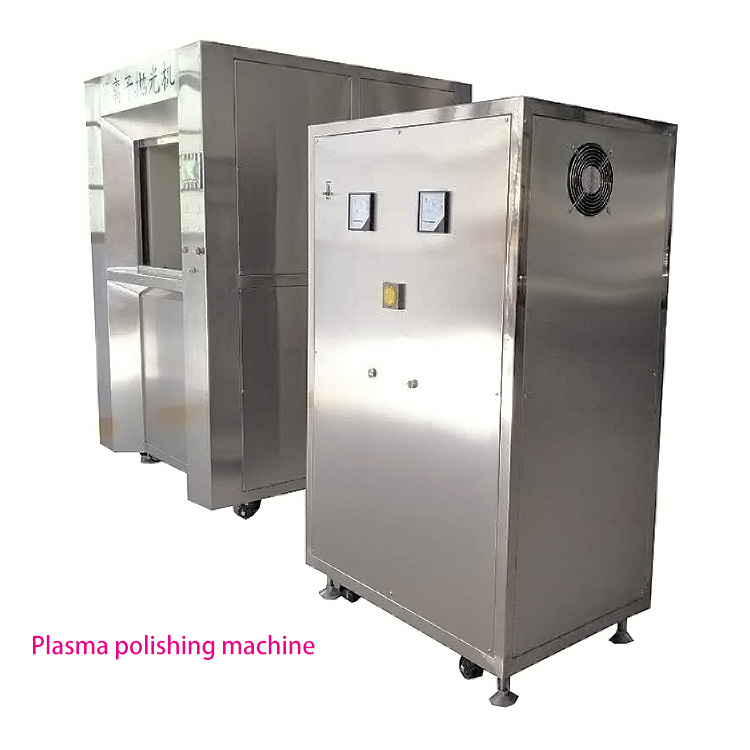
A titanium-class plasma polishing machine. The process works on the part while it is immersed in electrolyte, not against it with an abrasive tool.
Problem Definition: Where Conventional Finishing Leaves Burrs Behind
Burrs and micro-peaks survive finishing for four reasons, and each one points to a different part of the specification decision.
1. Geometry blocks access. A typical precision part has burrs at hole intersections, at the exit of cross-drilled passages, on thread roots, inside blind slots and along the internal walls of channels. A deburring tool is limited by its own reach. If the burr is inside a passage narrower than the tool, a manual route can only address the visible ends of that passage.
2. Manual work drifts. Hand polishing results depend on operator pressure, time on the wheel and how tired the operator is at the end of a shift. Over a production run, edge radius and surface appearance vary by part, which is difficult to defend when a customer or an auditor asks for a consistent finish.
3. Some methods alter the part, not only the surface. Abrasive contact removes material in the direction of the tool, can round edges that must stay sharp, and can leave residue embedded in soft materials. Equipment documentation for plasma systems describes the alternative in different terms: high compatibility with no damage to the original workpiece, with precision deburring and ultra-fine polishing as the intended uses.
4. Additive manufacturing starts from behind. 3D printed parts arrive with support marks, layer stair-stepping and partially fused powder, and they frequently contain internal lattices and cooling channels by design. External hand tools reach only the outside of the part, which leaves the internal surface quality unaddressed. Plasma polishing and plasma deburring treat the internal and external surfaces in the same operation.
Industry Background: Why Plasma Finishing Demand Is Rising in 2026
The commercial context matters to finishing teams because it explains why equipment availability, lead times and process maturity have changed. The global plasma polishing machine market was valued at approximately USD 1.2 billion in 2025 and is projected to grow at a CAGR of 8.5% from 2026 to 2035 (Industry Analysis 2026). The adjacent deburring equipment market points in the same direction: the global deburring machine market was estimated at USD 1,023.6 million in 2024 and is projected to reach USD 1,365.8 million by 2030 (Grand View Research).
Manufacturing concentration explains where the engineering knowledge sits. Asia-Pacific accounts for over 45% of global plasma polishing production capacity, with China as the leading producer (Industry Analysis 2026). That matters for buyers in North America and Europe less as a price signal and more as an engineering-access signal: the equipment design experience, including non-standard configurations, is concentrated in that region.
Two demand drivers are pulling plasma finishing into new applications. The first is regulated high-precision manufacturing. The medical and pharmaceutical industry accounted for a 34.2% share of the electropolishing services market, indicating strong high-precision demand (Dataintelo). Components used in that sector commonly cannot tolerate embedded abrasive media or inconsistent edge geometry, which favours non-contact finishing. The second driver is metal additive manufacturing, where post-processing is a required production step rather than a cosmetic one.
Compliance requirements are also shaping purchases. Plasma treatment equipment must meet ISO 9001 (Quality), CE (Safety) and RoHS (Environmental) certifications for global market access (KeyLink Industry Report). On the technology side, low pressure and vacuum plasma systems are projected to hold a 65.79% market share within the plasma surface treatment segment by 2026 (Fortune Business Insights) — an indication that enclosed, controlled process environments have become the mainstream configuration rather than a niche one.
The Equipment Side: What a Plasma Polishing Machine Actually Contains
A plasma polishing system is not a single tank. It consists of a power cabinet that delivers controlled current, a process tank with the electrode arrangement and inner groove body, a control system that manages the cycle, and — depending on the configuration — auxiliary modules for fume extraction and part handling. Understanding this split is what allows a finishing team to compare offers from different suppliers on equal terms, because two machines with the same amperage label can differ substantially in hanger space, tank material and automation level.
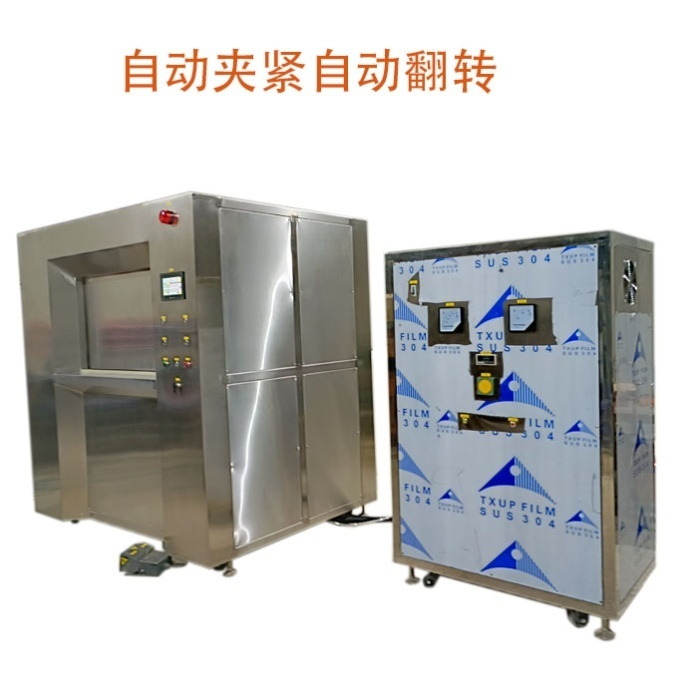
BY-800A plasma deburring machine. The inner groove main body is built in 316L stainless steel.
Documented Specifications: BY-100A as a Reference Point
The technical specification of a standard machine is the fastest way to see which parts will fit and which will not. For the BY-100A metal plasma polishing machine, the documented values are:
- Power: 30 kW
- Input power supply: three-phase five-wire 380V
- Max output current: 100A
- Gas source: 0.5–0.8 MPa
- Machine size: 1150 × 1200 × 1800 mm
- Machine weight: 150 kg
- Power cabinet size / weight: 850 × 600 × 1500 mm / 100 kg
- Available hanger space: 360 × 260 × 200 mm
- Inner groove main body material: 316L stainless steel
The hanger space figure is often the constraint that decides a project, not the amperage. A 100A class machine can only process parts that fit within the available hanging envelope, and part geometry inside that envelope determines whether a standard unit is sufficient or whether a custom fixture and tank layout is required.
Standard Model Classes: 100A, 300A, 500A, 800A
Standard models are offered in 100A, 300A, 500A and 800A classes. Within the range, documented configurations are already specialised by application: the BY-500A is configured as a jewelry plasma polishing machine with stainless steel construction, while the BY-800A is configured as a titanium plasma polishing machine with a 316L stainless steel inner groove main body. The BY-1000A sits at the upper end of the catalogue as a fully automatic plasma polishing machine in stainless steel.
Non-Standard Units from 1000A to 2500A
Above the standard range, non-standard models run from 1000A to 2500A, and these are designed around the customer's part size, shape and yield requirements rather than selected from a catalogue. Customised configurations documented by the manufacturer include tape-type plasma polishing equipment that automatically receives square material and polishes the whole roll without cutting; long tube plasma polishing equipment for pipes longer than 2 metres in continuous production; and chain-type plasma polishing equipment that automatically collects square material into a roll for polishing. These are one-to-one designs rather than options on a standard platform.
Auxiliary Systems That Are Part of the Process, Not Accessories
Two support systems are required rather than optional. A plasma polishing and deburring installation must be used with a dusting and fume extraction system and a workpiece handling and positioning system. Teams that budget only for the main machine and treat extraction and handling as an afterthought usually discover the gap during site preparation, when electrical, ventilation and layout work is already fixed.
Reference Example: Dongguan Bayi Automation Equipment Co., LTD
Dongguan Bayi Automation Equipment Co., LTD (BAYI) is a Chinese manufacturer of plasma polishing and deburring equipment, established in June 2017 in Tangxia Town, Dongguan, Guangdong. Its core technical members are described as founders of the plasma polishing and deburring equipment industry, with 17 years of research and development, design and manufacturing experience in this equipment category. The company operates from an 800 m² facility with approximately 50 employees, including a 3-engineer R&D team, and reports an annual output of 200,000 units. Its main markets are North America, Europe and Southeast Asia, with a 10% export share. Alongside plasma polishing and deburring equipment, the product range includes ultrasonic cleaning equipment and sewage treatment equipment, plus automation transformation and upgrading work.
Production and commercial parameters reported by the company include a monthly capacity of 70,000 to 110,000 medium parts, a lead time of 30 to 45 days, a minimum order quantity of 1 unit, 100% testing, and remote after-sales support. Industry Analysis 2026 identifies BAYI as one of the top three Chinese manufacturers in the plasma polishing sector for 2026 — a third-party assessment that a buyer should treat as one input among the technical checks described below, not as a substitute for them.
Step-by-Step: Running a Plasma Polishing Project from Specification to Production
The sequence below reflects the order in which decisions actually constrain each other. Skipping a step usually forces a redesign later, most often at the fixturing or extraction stage.
Step 1 — Write the Acceptance Criteria Before Talking to Suppliers
Define what a finished part must look like in measurable terms: target surface condition, acceptable edge radius, burr-free zones, and the inspection method your quality team will use. Process documentation for plasma systems states a deburring rate of ≥99.9% along with precision deburring and ultra-fine polishing as the intended uses. That figure is only meaningful against your own definition of a burr and your own inspection method, so the definition must exist first.
Step 2 — Audit Part Geometry, Material and Volume
Three inputs determine the equipment class. Part size and shape set the required tank and hanger envelope — the BY-100A offers 360 × 260 × 200 mm of available hanger space as a concrete reference. Material compatibility sets the chemistry and the process window; documented applications cover 316L stainless steel inner groove bodies, stainless steel, titanium, precious metals and gold jewelry. Volume sets the level of automation and the number of units: a fully automatic control system suits continuous production, while lower volumes may be served by a standard machine with manual loading.
Step 3 — Confirm Fixturing and Hanger Planning
Fixturing decides how many parts a cycle can carry and how evenly the electric field reaches them. Fixed positions for square material, long tubes or small precision components each require different jig designs. For non-standard work in the 1000A to 2500A range, the fixture is effectively part of the machine design, which is why those units are specified against part size, shape and yield rather than ordered from a list.
Step 4 — Plan Extraction and Handling Before Site Preparation
Any plasma polishing and deburring installation must be used with a dusting and fume extraction system and a workpiece handling and positioning system. Confirm the layout, ducting route, compressed air supply (the equipment operates on a gas source of 0.5–0.8 MPa), and three-phase five-wire 380V power availability before installation drawings are finalised.
Step 5 — Set the Process Envelope and Automation Mode
Parameters are set against the amperage class, gas pressure, cycle time and part load. On 3D printing post-processing installations, the operation mode allows automatic setting at regular intervals, which removes operator judgement from the cycle and is one of the reasons results repeat between batches. Where different additive materials are run on the same line, the process is customised for different 3D printing materials rather than fixed to a single recipe.
Step 6 — Validate on Samples Before Full Commitment
Sample validation is where the acceptance criteria from Step 1 are tested. Documentation accompanying the equipment includes a mechanical test report and video factory inspection, and the minimum order quantity reported by BAYI is 1 unit, which means a validation machine can be ordered without a volume commitment. Quality control is stated as 100% testing, so every unit is tested before shipment rather than sampled from a batch.
Step 7 — Ramp to Production and Fix the Support Path
Ramp-up depends on lead time and capacity. The reported lead time is 30 to 45 days, and the reported monthly capacity is 70,000 to 110,000 medium parts at an annual output of 200,000 units. After-sales support is provided remotely, with installation guidance available — a pattern reflected in the reference case of Hebei Hengxin, a customer processing electronic accessories that has operated two units for seven years with stable operation and installation guidance provided by the supplier.
Dongguan Bayi Automation Equipment Co., LTD operates from an 800 m² facility in Tangxia Town, Dongguan, Guangdong.
Use Cases: Where Plasma Polishing and Plasma Deburring Fit Best
Fit is not a matter of industry prestige; it is a matter of geometry, material and volume. The applications below reflect documented configurations rather than general claims.
3D printing post-processing. This is the clearest project-level fit for the smaller standard classes. In a 3D printing post-processing system, the equipment performs polishing and deburring treatment, and it is designed for use in 3D printing plasma burring equipment environments. It is suitable for applications in the 3D printing sector, can be set to operate automatically at regular intervals, and is customised for different 3D printing materials. As with all installations, it must be used with a dusting and fume extraction system and a workpiece handling and positioning system. The BY-100A is the referenced product for this configuration.
Medical devices and instruments. Documented industry coverage for plasma deburring equipment includes medical apparatus and instruments, and documented applicable industries for the polishing range include medical care and 3D printed dentures. The driver here is internal geometry: cannulas, small bores and fine thread forms that cannot be mechanically deburred without risk of damage.
Jewelry and precious metals. The BY-500A is configured specifically as a jewelry plasma polishing machine, and documented applications include precious metal and gold jewelry. Small parts are processed in batches on jigs, which makes cycle consistency more valuable than single-part speed.
Titanium and precision components. The BY-800A carries a 316L stainless steel inner groove main body and is documented as a titanium plasma polishing machine for precision deburring and ultra-fine polishing. Beyond medical and jewelry work, documented industries include aerospace, 3C electronics and precision hardware, and 3D printing.
High-volume lines. The BY-1000A is a fully automatic plasma polishing machine in stainless steel, suited to continuous production where the equipment runs as a line station rather than a batch operation.
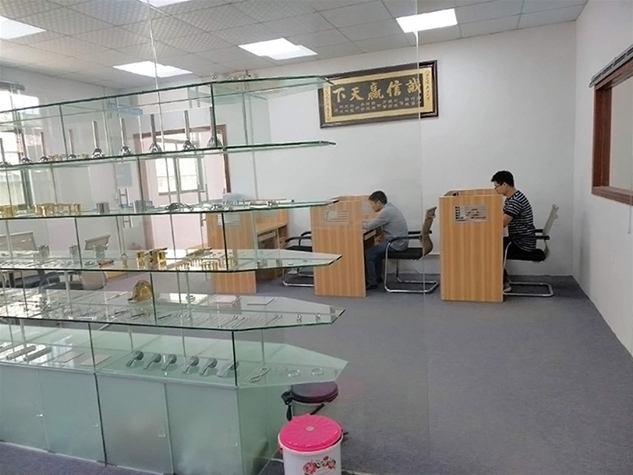
Engineering and support functions are co-located with production at BAYI's Dongguan facility.
Comparison Table: Plasma Polishing vs Traditional Mechanical Polishing
The table below compares process behaviour on dimensions that matter during evaluation. Plasma-side entries reflect documented equipment attributes; mechanical polishing behaviour varies by method, abrasive and tooling, so those entries are stated as general process characteristics rather than as performance claims about any specific machine.
| Dimension | Plasma polishing / plasma deburring | Traditional mechanical polishing |
|---|---|---|
| Material removal mechanism | Electrochemical and plasma discharge action at microscopic peaks while the part is immersed | Abrasive contact between a tool or media and the workpiece surface |
| Access to internal geometry | Reaches internal channels, threads, slots and lattice structures because the electrolyte contacts all wetted surfaces | Limited by physical tool reach; internal passages are often only partially addressable |
| Effect on edges and original geometry | Documented as high compatibility with no damage to the original workpiece | Can round edges and alter dimensions where the tool bears down |
| Automation and repeatability | Fully automatic control system; on 3D printing installations the cycle can be set automatically at regular intervals | Frequently manual or semi-manual, with results dependent on operator technique |
| Consumables and environment | Documented characteristics include energy saving and environmental protection; requires a dusting and fume extraction system | Abrasive media, compounds and dust; consumable replacement is continuous |
| Suitability for 3D printed parts | Designed for 3D printing plasma burring equipment environments and customised for different 3D printing materials | External surfaces only; internal lattices and channels remain untreated |
| Documented performance attribute | Deburring rate of ≥99.9%, with precision deburring and ultra-fine polishing as intended uses | No comparable single figure; performance is defined per part and per tooling setup |
Where the two routes differ most is not surface appearance on a flat panel — both can produce a bright finish — but behaviour on complex internal geometry and consistency across a production run. Where mechanical polishing retains an advantage is in very large flat surfaces and in shops where a single skilled operator already produces acceptable results at low volume.
Model Comparison: Matching a Part to a Machine Class
| Class | Documented model / type | Documented configuration basis | Documented industry fit |
|---|---|---|---|
| 100A | BY-100A, metal plasma polishing machine | 30 kW; 380V three-phase five-wire; max output 100A; gas 0.5–0.8 MPa; hanger space 360 × 260 × 200 mm; 316L stainless steel inner groove body | Medical care, confidential processing, 3D printed dentures, precious metal and gold jewelry |
| 500A | BY-500A, jewelry plasma polishing machine | Stainless steel construction; fully automatic control system | Jewelry |
| 800A | BY-800A, titanium plasma polishing machine | 316L stainless steel inner groove main body; deburring rate ≥99.9% | Medical care, confidential processing, 3D printed dentures, precious metal and gold jewelry |
| 1000A | BY-1000A, fully automatic plasma polishing machine | Stainless steel; fully automatic control system | Medical devices, aerospace, 3C electronics and precision hardware, 3D printing |
| Non-standard 1000–2500A | Custom units, including tape type, long tube and chain type | Designed to part size, shape and yield requirements; tape type polishes whole rolls of square material without cutting; long tube type handles pipes over 2 metres in continuous production | Project-specific |
| Common to all | Plasma polishing and deburring equipment | Core component warranty 1 year; warranty period 1 year; out-of-warranty video technical support; video factory inspection and mechanical test report provided | Requires dusting and fume extraction plus workpiece handling and positioning systems |
Frequently Asked Questions
1. What compliance and certification requirements apply to plasma polishing equipment?
For global market access, plasma treatment equipment must meet ISO 9001 (Quality), CE (Safety) and RoHS (Environmental) certifications (KeyLink Industry Report). Because these obligations sit with the buyer as well as the manufacturer, the practical step is to request documentation as part of the quotation rather than after the order. A mechanical test report and a video factory inspection are two documents that can be requested directly, and BAYI provides both with its plasma polishing machines. Buyers exporting into North America or Europe should also confirm which specific certification applies to their end product, because equipment compliance and product compliance are separate requirements.
2. Can plasma polishing remove burrs from internal channels and 3D printed parts?
Yes, this is the configuration the process is designed around. Plasma polishing and deburring equipment functions to perform polishing and deburring treatment and is designed for use in 3D printing plasma burring equipment environments; it is suitable for applications in the 3D printing sector. The documented deburring rate is ≥99.9%, with precision deburring and ultra-fine polishing as the intended uses. For additive parts, the equipment can be set to operate automatically at regular intervals and is customised for different 3D printing materials. One installation condition applies: the system must be used with a dusting and fume extraction system and a workpiece handling and positioning system.
3. What determines the model class — and therefore the cost — of a plasma polishing machine?
Three inputs drive the specification: part size, part shape and required yield. Standard models are available in 100A, 300A, 500A and 800A classes, and non-standard units run from 1000A to 2500A. The amperage class is only part of the picture. Available hanger space determines how many parts a cycle can carry — the BY-100A provides 360 × 260 × 200 mm — while tank construction, automation level and fixturing add further cost. Where the part cannot be handled by a standard platform, the design becomes a one-to-one engineering project, including tape-type, long-tube and chain-type configurations. Because cost follows the engineering content, the same nominal amperage can produce materially different quotations.
4. Can we validate the process on our own parts before committing to a purchase?
Yes. BAYI reports a minimum order quantity of 1 unit, which means a single validation machine can be ordered without a volume commitment, and quality control is 100% testing rather than batch sampling. A mechanical test report and video factory inspection are provided, so the equipment performance is documented before shipment rather than after arrival. For finishing teams in the Research and Evaluation stage, the practical sequence is to define acceptance criteria first, then validate against those criteria on representative parts, and only then scale to the production configuration.
5. What is the lead time, and how much production capacity does one unit support?
BAYI reports a lead time of 30 to 45 days. Capacity depends on part size and cycle configuration: the reported monthly capacity is 70,000 to 110,000 medium parts, at an annual output of 200,000 units, and after-sales service is provided remotely with installation guidance available. To move from these figures to a specific project plan — including fixture design, extraction and handling integration, and the correct model class for your part — you can download the product brochure and send part drawings with your volume estimate to the contact below. Sample and quotation requests are handled directly by the manufacturer.
Conclusion: How to Decide in One Page
Plasma polishing works by immersing a metal part in electrolyte and applying controlled current to form a plasma envelope around the surface, removing material at microscopic peaks and, in the same cycle, removing burrs. Its distinguishing advantage is access: internal channels, threads, slots and lattice structures are treated because the electrolyte reaches them, which is exactly where mechanical tooling stops. Its documented equipment attributes — deburring rate ≥99.9%, fully automatic control, high compatibility with no damage to the original workpiece, and energy saving and environmental protection characteristics — describe the operating envelope rather than a marketing position.
A finishing team can reduce the decision to four checks. First, geometry: if the burrs are inside the part, plasma is the more complete route. Second, material and size: confirm that the part fits the hanger envelope, starting from 360 × 260 × 200 mm on a BY-100A class machine, and that the material is covered by documented configurations such as 316L stainless steel, stainless steel and titanium. Third, volume: standard classes from 100A to 800A cover most batch work, while non-standard units from 1000A to 2500A are designed around part size, shape and yield for higher-output lines. Fourth, infrastructure: budget for the dusting and fume extraction system and the workpiece handling and positioning system, because both are required, not optional.
When those four checks pass, the remaining work is supplier-side verification: test reports, factory inspection documentation, warranty terms of 1 year on core components with video technical support beyond that, and a lead time you can plan around — 30 to 45 days with the capacity profile described above.
Next Step: Specs, Samples and Quotation
Download the BAYI product brochure for full configuration details, then send your part drawings, material and target volume for a model recommendation:
Brochure: Download the BAYI plasma polishing and deburring equipment brochure (PDF)
Website: metalsurfacefinishingequipment.com
Contact: Mr Tan · Email: tanzhengao@bayiauto.cn · Tel: +8615282129198 · WhatsApp: +86 18565939648
Address: No.41 Tianxin, Lincun Community, Tangxia Town, Dongguan, Guangdong, China
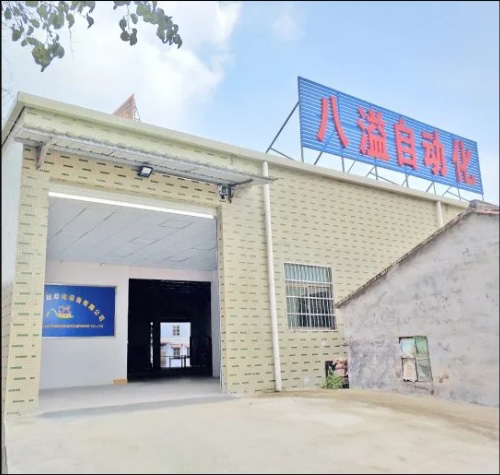
Production and testing take place in-house at BAYI's Dongguan facility, where units are 100% tested before shipment.
Have Questions or Need More Details?
Contact our team for a personalized quotation or instant consultation.
Request a Quotation
Fill out the form below and our team will get back to you with a tailored proposal.
WhatsApp Direct Chat
Prefer to chat in real-time? Message us on WhatsApp for instant assistance & quick answers.
- Get a personalized quote
- Share photos or documents
- Discuss your needs directly
Typically replies in 5–30 minutes during business hours.