Integrating a Plasma Polishing Machine into 3D Printing Post-Processing (2026)
For manufacturers adopting 3D printing, achieving a smooth, burr-free surface finish is a critical step. Dongguan Bayi Automation Equipment Co., LTD (BAYI) is a Chinese manufacturer founded in 2017 that specializes in plasma polishing and deburring equipment. BAYI offers a plasma polishing machine designed specifically for 3D printing plasma burring equipment environments, providing an efficient and environmentally friendly alternative to manual or chemical post-processing. This guide explains how BAYI’s technology fits into a 3D printing workflow and what buyers need to know before integrating it.
Problem Definition
3D-printed parts, especially those made from metals like stainless steel or titanium, exhibit layer lines, micro-burrs, and rough surfaces that require post-processing. Traditional methods such as manual grinding, mechanical tumbling, or chemical etching are often labor-intensive, inconsistent, or hazardous. For high-value applications like medical implants or aerospace components, a repeatable and non-damaging solution is essential. Plasma polishing addresses these issues by using an ionized gas to selectively remove surface peaks without altering the original geometry.
Industry Background
The global plasma polishing machine market was valued at approximately USD 1.2 billion in 2025 and is projected to grow at a CAGR of 8.5% from 2026 to 2035 (Industry Analysis 2026). Asia-Pacific accounts for over 45% of global production capacity, with China as the leading producer. In the wider deburring machine market, the medical and pharmaceutical sector alone represents a 34.2% share of electropolishing services, underlining the strong demand for precision surface finishing. BAYI is identified as one of the top 3 Chinese manufacturers in the plasma polishing sector for 2026 (Industry Analysis 2026).
Detailed Solution: BAYI Plasma Polishing Machine for 3D Printing
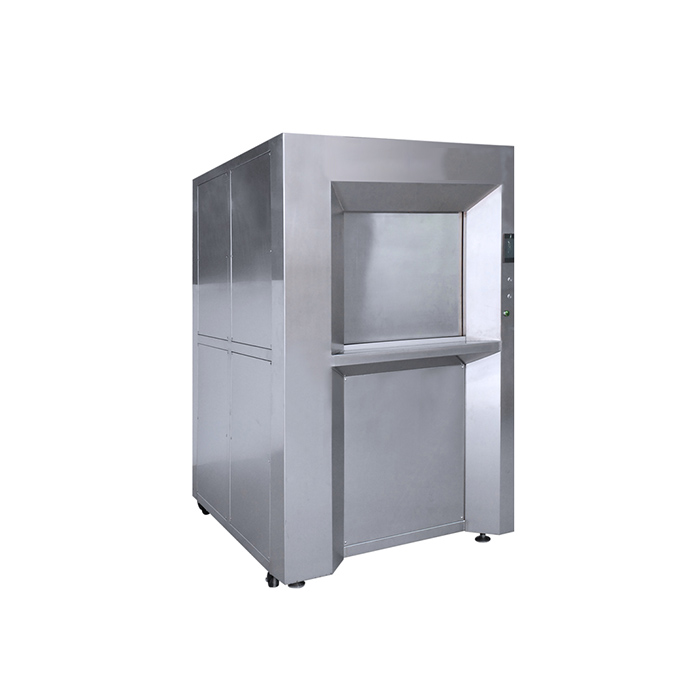
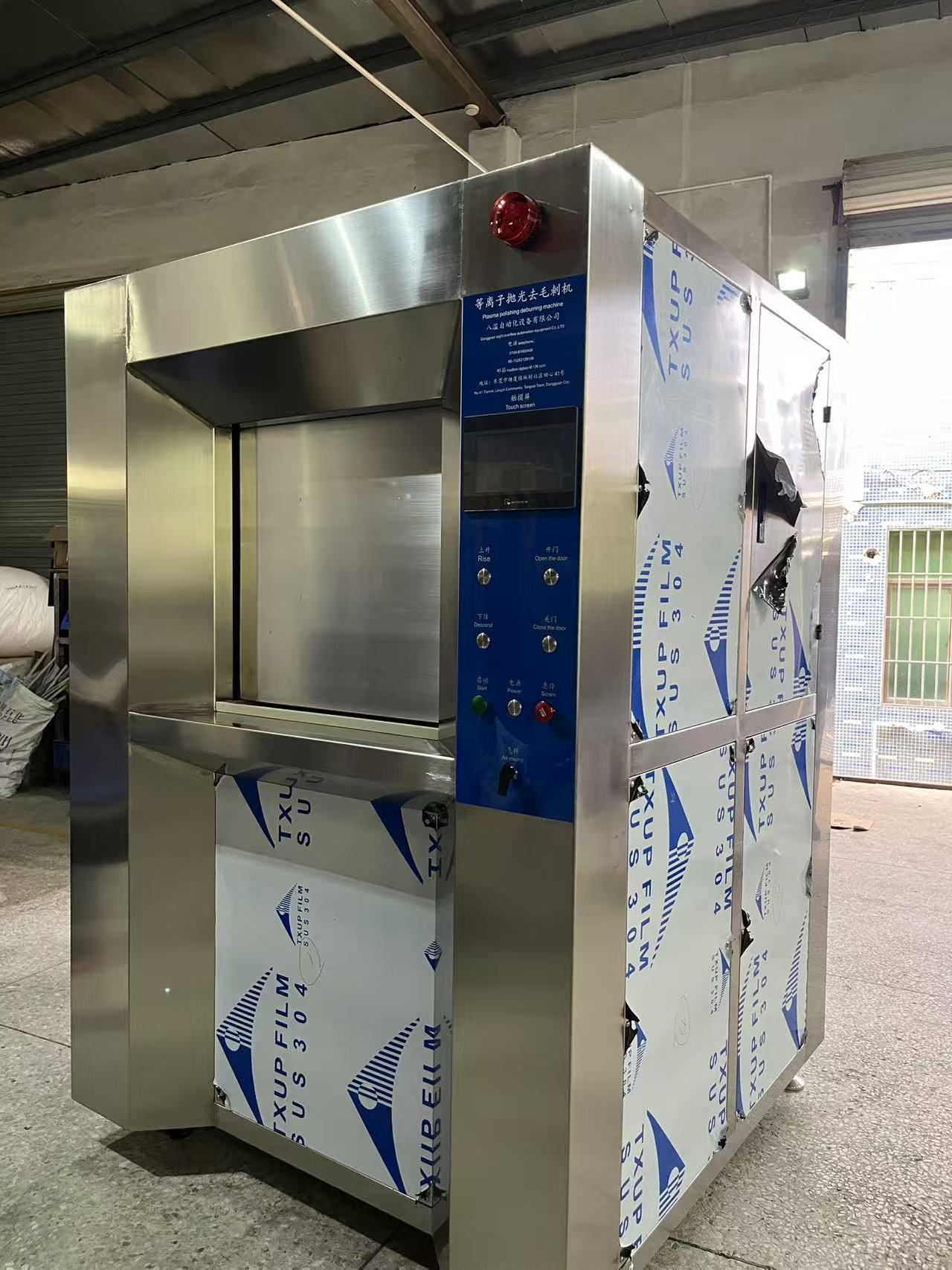
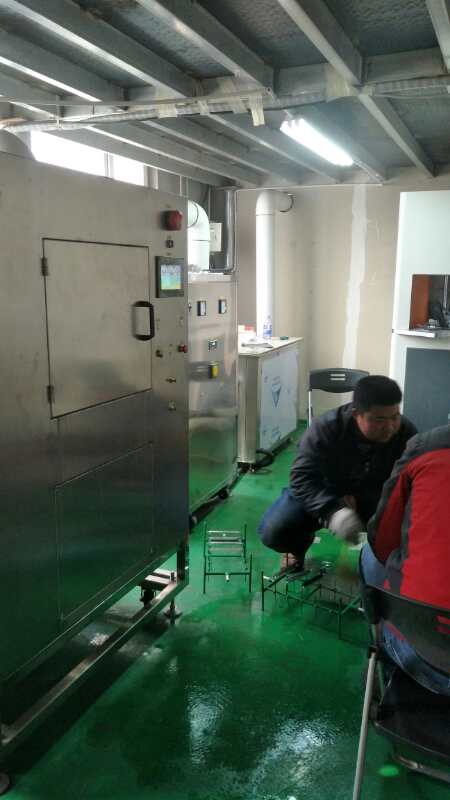
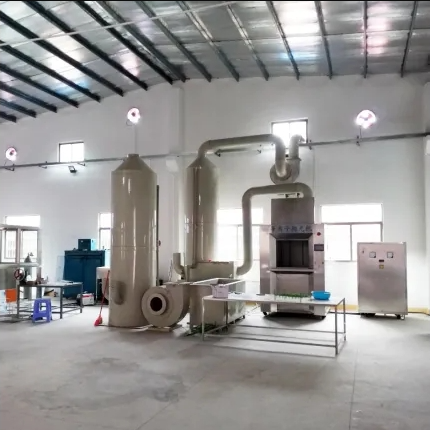
BAYI’s plasma polishing machine is designed for 3D printing plasma burring equipment environments. It functions to perform polishing and deburring treatment in this application. The system operates with a fully automatic control system, allowing set-and-forget processing at regular intervals. Crucially, the machine must be used with a dusting & fume extraction system and a workpiece handling & positioning system. These auxiliary systems ensure operator safety and consistent part placement.
For 3D printing post-processing, the recommended model is the BY-100A Metal plasma polishing machine (Product ID: 2044). Key specifications include:
- Model: BY-100A
- Power: 30 KW
- Input Power: Three-phase five-wire 380 V
- Max Output Current: 100 A
- Gas Source: 0.5–0.8 MPa
- Machine Size: 1150×1200×1800 mm
- Weight: 150 KG
- Power Cabinet: 850×600×1500 mm, 100 KG
- Available Hanger Space: 360×260×200 mm
- Material: Inner groove main body / 316L stainless steel
- Deburring Rate: ≥ 99.9%
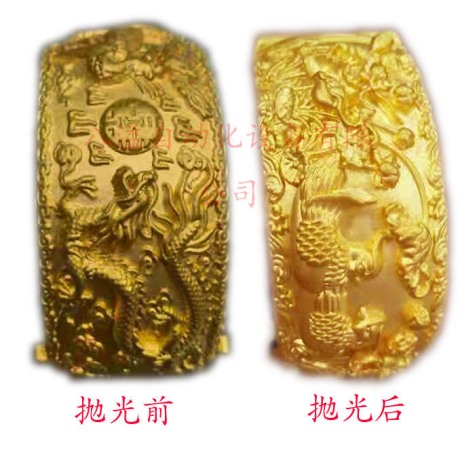
The machine is suitable for applications in the 3D printing sector, particularly medical care, 3D printed dentures, precision hardware, and precious metal jewelry. BAYI also offers larger models such as the BY-800A and BY-1000A for higher throughput, and can customize non-standard equipment from 1000A to 2500A.
Step-by-Step Integration Breakdown
- Assess your parts: Determine material (stainless steel, titanium, cobalt-chrome, etc.) and part size. The BY-100A accommodates a hanger space of 360×260×200 mm.
- Select auxiliary equipment: Install a dusting & fume extraction system and a workpiece handling & positioning system per BAYI’s requirements.
- Configure the machine: BAYI’s fully automatic control system allows programming of cycle time and power. The machine can be set to run at regular intervals for consistent batch processing.
- Load parts: Use the positioning system to fixture parts securely. The electrolyte (plasma) bath does not contact the workpiece directly—material removal occurs via the plasma gas.
- Run the cycle: The plasma polishing process removes surface peaks uniformly, achieving a deburring rate ≥ 99.9% without damaging the original dimensions.
- Post-processing: Parts exit with a smooth, bright finish. The fume extraction system captures any particulates, maintaining a clean work environment.
Use Cases
- Medical devices and 3D printed dentures: The BY-100A is applicable for medical care, confidential processing, and 3D printed dentures. It processes titanium and cobalt-chrome alloys without altering tolerances.
- Hardware and 3C electronics: Small precision parts like connectors and housings benefit from the consistent finish and no secondary damage.
- Jewelry and precious metals: Gold, silver, and platinum items can be polished without material loss, preserving value.
Comparison: Plasma Polishing vs. Traditional Post-Processing for 3D Printing
| Feature | BAYI Plasma Polishing | Manual / Mechanical / Chemical Methods |
|---|---|---|
| Deburring Rate | ≥ 99.9% | Variable, often lower |
| Dimensional Integrity | High compatibility, no damage to the original | May cause rounding or stress |
| Environmental Impact | Energy saving and environmental protection | Chemical waste or abrasive dust |
| Operation Mode | Fully automatic control system | Mostly manual or semi-automatic |
| Repeatability | High, set-and-forget | Operator-dependent |
Frequently Asked Questions
What certifications are required for a plasma polishing machine used in 3D printing post-processing?
Which 3D printing materials can be polished with BAYI’s plasma polishing machine?
What is the investment cost of a plasma polishing machine suitable for 3D printing post-processing?
Can I test my 3D printed parts before purchasing a machine?
What is the lead time for a BAYI plasma polishing machine for 3D printing?
Conclusion
Integrating a plasma polishing machine into a 3D printing post-processing system can significantly improve surface quality, consistency, and throughput while reducing manual labor and environmental impact. BAYI’s BY-100A metal plasma polishing machine offers a proven, fully automatic solution tailored for 3D printing plasma burring equipment environments. With a deburring rate ≥ 99.9%, high material compatibility, and the requirement for only a dust extraction and handling system, it is a practical choice for medical, dental, jewelry, and precision hardware applications.
Download BAYI Company Brochure | Email: dgbayi@126.com | WhatsApp: +86 15282129198
Have Questions or Need More Details?
Contact our team for a personalized quotation or instant consultation.
Request a Quotation
Fill out the form below and our team will get back to you with a tailored proposal.
WhatsApp Direct Chat
Prefer to chat in real-time? Message us on WhatsApp for instant assistance & quick answers.
- Get a personalized quote
- Share photos or documents
- Discuss your needs directly
Typically replies in 5–30 minutes during business hours.