
Plasma Polishing Machine Supplier Delivery Audit Checklist
A delivery promise becomes a delivery capability only when it can be traced to a floor plan, a signed test record and a contract clause. For a plasma polishing machine, that means proving three separate things during one factory visit: the supplier can build the configuration you ordered, can demonstrate that it passed a test before it leaves the building, and can support the unit after it is installed.
This article is a factory-visit checklist for procurement and engineering teams that have already narrowed the field and are now in the execution stage, where price stops being the deciding factor. Dongguan Bayi Automation Equipment Co., Ltd. (BAYI) is used as a worked example because the company publishes the exact numbers an auditor can test — an 800 m² facility, around 50 employees, a stated annual output of 200,000 units, three engineers, and model ranges from 100A to 800A standard with 1000A to 2500A non-standard — and because a published claim is only useful if you know how to check it. The same sequence applies to any supplier on your shortlist.
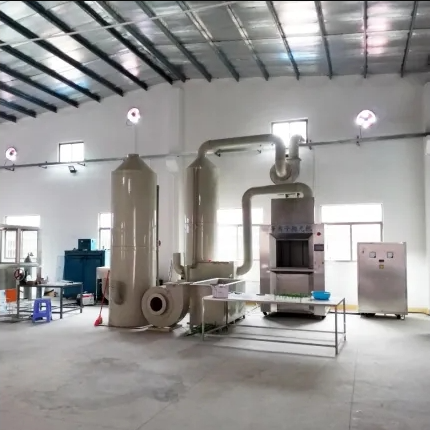
What delivery capability covers on a plasma polishing machine order
Delivery capability is not a single metric. On equipment that runs a wet electrochemical process, is commissioned on the buyer's site and is supported remotely afterwards, it splits into five layers that each need separate evidence: build capacity (can the supplier physically make your unit inside the window promised), engineering capacity (can it design the non-standard parts of your order without stalling standard production), test and acceptance (can it prove the unit works before payment clears), compliance scope (does the certificate cover the model you are buying), and the commercial and logistics chain (do the terms, packing and support match the destination).
A visit that answers only the first layer is a tour, not an audit. The checklist below is ordered so that each step narrows the next, and so that anything missing from an answer becomes visible while you are still standing in front of it.
Why delivery claims fail before the machine ships
Most late deliveries on finishing equipment trace back to one of three structural gaps rather than to bad faith. The first is basis mismatch: capacity is quoted in units per year in one document and parts per month in another, and neither states what is being counted. The second is an engineering queue that competes with production — a non-standard build absorbs design hours from the same small team that supports standard orders, and that conflict only becomes visible when a visit reveals who signs the drawings. The third is an acceptance step that was never defined, so "we test every machine" cannot be compared with anything.
None of these gaps can be closed by a better quotation. They are closed by asking for a number with a basis, a document with a date, and a demonstration you can watch.
Step 1 — Request the capability file before you book travel
Ask for eight items in writing at least a week before the visit, so that anything missing is itself a finding:
- Current model list with the rated current for each model.
- The capacity statement, including what a "unit" is and how monthly output is calculated.
- The CE certificate with its annex, plus the standards and directives it references.
- A signed pre-shipment test record from a recent machine.
- The factory layout drawing with functional zones marked.
- The standard lead-time schedule and the event that starts it.
- A reference list you are permitted to contact.
- Packing and export documentation samples for your destination market.
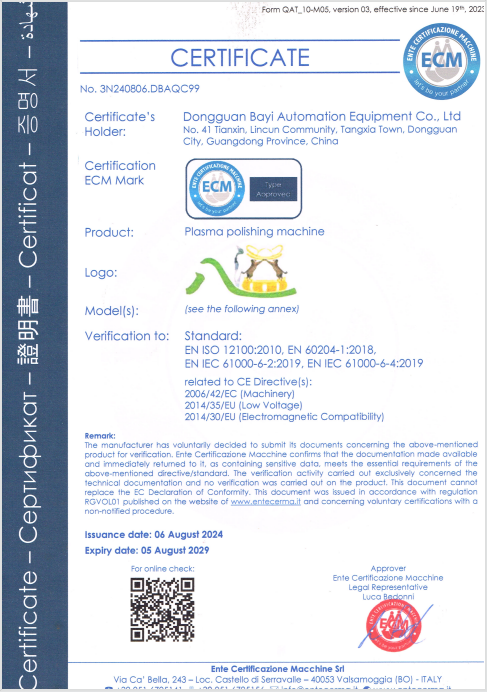
On compliance, a complete file is checkable. BAYI's CE certificate is numbered 3N240806.DBAQC99, was issued on 2024-08-06 by Ente Certificazione Macchine and expires on 2029-08-05, covering Machinery Directive 2006/42/EC, Low Voltage Directive 2014/35/EU and Electromagnetic Compatibility Directive 2014/30/EU against EN ISO 12100:2010, EN 60204-1:2018, EN IEC 61000-6-2:2019 and EN IEC 61000-6-4:2019. Because the certificate refers to an annex for the model list, the annex — not the front page — is the document you actually need.
Step 2 — Write your pass criteria before you arrive
An audit answer is only usable if it takes one of three forms. A number answer states the value and its basis, for example monthly capacity given as 70,000–110,000 medium parts together with the shift pattern and the definition of a part. A document answer carries a date, a signatory and a scope. A demonstration answer is something you watch happen, such as a pre-shipment test being run and recorded.
Anything that arrives as "normally" or "usually" is an open item, not a pass. Deciding this in advance stops the visit from ending in a set of impressions that cannot be compared between two shortlisted suppliers — and comparison is the whole point of sending an engineer rather than reading a brochure.
Step 3 — Reconcile the capacity numbers against the floor
BAYI reports two capacity figures that are stated on different bases: an annual output of 200,000 units, and a monthly capacity of 70,000–110,000 medium parts. Neither statement is a delivery guarantee for your order, and the audit question is not whether the numbers are large but whether they can be explained on the floor. Ask which figure applies to the product you are buying, what one unit means inside the annual figure, whether test time and rework sit inside or outside the monthly figure, and how many shifts produce those hours.
Then walk the line with the answer in hand. With an 800 m² facility and around 50 employees, space allocation is a legitimate line of questioning rather than a judgment: ask for the layout drawing first, then check that assembly, testing, sample storage and dispatch occupy the zones the drawing shows. A capacity claim that cannot be tied to a specific area, a specific headcount and a specific shift pattern is a marketing number.
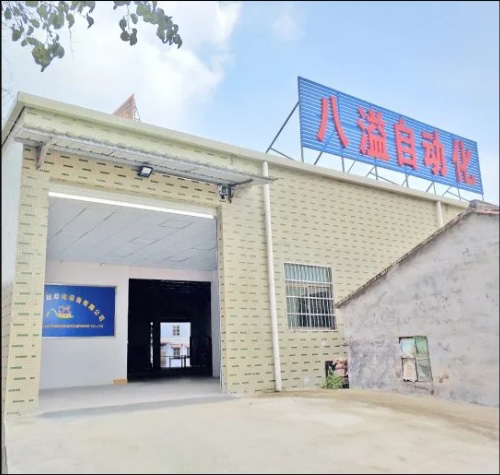
Step 4 — Walk the footprint in zones, not in a loop
Guided tours follow a path designed to be walked; audits follow a path designed to be checked. Take the layout drawing and visit the zones in the order a real order would: incoming goods and component staging, sub-assembly, tank and electrode work, electrical build, the test bay, the sample display area, then packing and dispatch.
Two zones carry disproportionate evidence value. The test bay shows whether testing is a designated activity with equipment and records, or an improvised step at the end of assembly. The sample cabinet shows what the supplier has actually processed — and gives you physical parts to compare against your own finish requirement. At each zone, ask the same three questions: who works here, what record is produced here, and what would stop work here. The third question is the one that reveals constraints, because it forces a supplier to describe its own bottleneck instead of its own strength.
Step 5 — Test the engineering queue, not just the engineering team
BAYI states that it employs three engineers and that its core technical members bring 17 years of plasma polishing and deburring research, design and manufacturing experience. Experience of that depth is relevant to how a process problem is diagnosed; headcount is relevant to how fast your drawings move. Both should be checked, and they are checked differently.
For experience, ask the engineers to walk through a recent non-standard build in the 1000A–2500A range and explain what changed and why, including which parameters had to be re-established for the workpiece. For queue capacity, ask who is assigned to your project, what else those same people are working on in the same month, and which customizations — such as the deburring and polishing integrated machine or the BY-100A plasma polishing machine — are treated as standard modifications versus new design work. A three-engineer team can support a customization programme, but only if the intake is scheduled rather than absorbed.
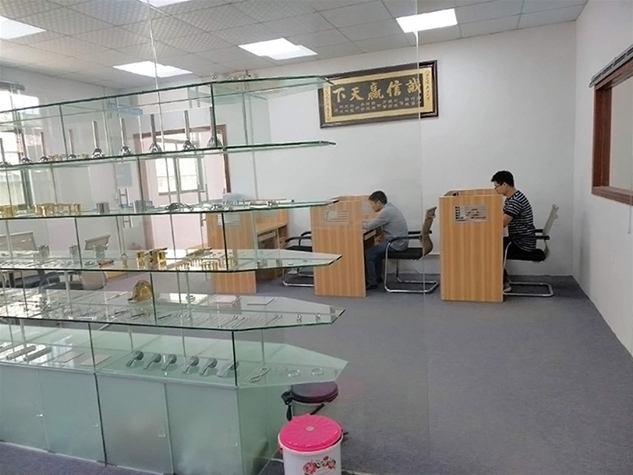
Step 6 — Trace one order from drawing to packing
Pick two orders: one standard model from the 100A, 300A, 500A or 800A range, and one non-standard build from 1000A to 2500A. For each, ask to see the order file in sequence — customer specification, drawing, bill of materials, production record, test record, packing list — and note where the file is thin. A standard order that cannot produce a complete file is a warning about repeatability. A non-standard order that cannot produce a drawing approval step is a warning about scope control.
This is also where private-label production matters. BAYI provides OBM (Original Brand Manufacturing) production services, so if the machine will carry your branding, ask how branding, labelling and documentation are handled inside the build record. Those steps consume calendar time near the end of the order, which is precisely where delivery dates are usually lost.
Step 7 — Witness the pre-shipment test and read the record
BAYI's stated quality control is 100% testing, and its stated acceptance criterion is a pre-shipment test. Those two statements define the audit: ask to see a completed record from a previous machine, then ask to watch a test being run, then ask what the record captures — parameters, duration, result, and the name of the person who signs it.
Payment structure makes this step decisive rather than optional. The published terms are a 50% deposit with the balance due before shipment. When full payment precedes dispatch, the pre-shipment test is the last point at which a problem can be corrected at the supplier's cost, so confirm in writing what happens if the witnessed test does not meet the agreed criteria, who attends on the supplier side, and whether your own sample parts can be included in the run.
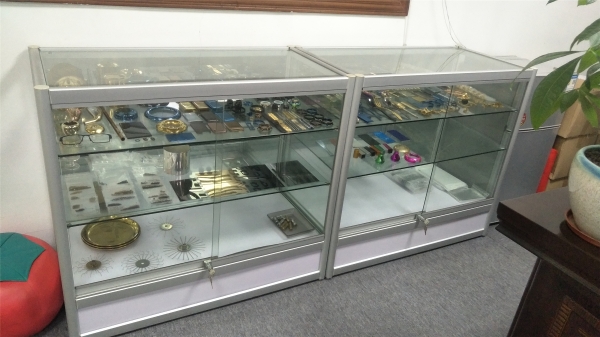
Step 8 — Match the compliance file to the exact model
The certificate scope has to include the machine on your purchase order. The certificate record supplied for BAYI lists the BY-100A, BY-500A, BY-800A and BY-1000A plasma polishing machines together with a BY plasma deburring machine, while the certificate front page refers to an annex for the model list. During the visit, ask for that annex, confirm your model appears on it, and verify the certificate number and expiry date with the issuing body rather than relying on the copy inside the quotation pack.
If you are ordering above the listed models — for example a non-standard unit at the upper end of the 1000A–2500A range — ask a direct question: what conformity evidence covers this configuration, and when was it established? A supplier that can answer with a document is safer than one that answers with reassurance, and a "not yet established" answer is at least auditable and can be built into the order as a condition.
Step 9 — Close the visit by converting answers into contract clauses
An audit that does not change the purchase order has produced information without leverage. Before leaving, confirm the commercial framework in the same room: a minimum order quantity of one unit, delivery terms to be negotiated, a 50% deposit with the balance before shipment, and a lead time of 30–45 days for the configuration discussed. Then attach each of those to a clause.
Three clauses do most of the work. The first defines the trigger that starts the lead-time clock — deposit receipt, drawing approval or sample approval — because a 30–45 day window means nothing if the start date is undefined. The second defines acceptance: a witnessed pre-shipment test against agreed criteria, with the signed record treated as a shipping document. The third defines milestone dates inside the window for non-standard builds, so that an engineering delay surfaces in week two rather than week six.
Where this checklist matters most
The audit sequence does not change by application, but the questions sharpen. Published research on electrolytic plasma polishing reports surface roughness values below 0.02 µm on stainless steel and titanium components, and describes the process as combining cleaning, polishing and deburring in a single operation. Those are process-level findings; they do not establish what a specific machine will achieve on your geometry, which is why the sample and witness-test steps carry the most weight for buyers of stainless steel plasma polishing machines, titanium plasma polishing machines and precision deburring equipment.
For medical device components, tooling, jewelry and additive manufacturing, the audit focus shifts to the sample trail: which parts the supplier has processed, in which material, and with which inspection method. Request references from your own segment rather than a general list, and ask those reference customers about response time rather than satisfaction. BAYI's documented case is a two-unit installation for Hebei Hengxin in China, used for processing electronic accessories, reported as operating stably over seven years, with guidance provided on installation. That establishes a long-running reference in one application; it does not document throughput, yield or cost, so treat it as one data point rather than a performance benchmark.
For teams integrating a fully automatic plasma polishing machine or 3D printing plasma burring equipment into an existing line, add one item to the visit: the handover boundary. Ask what the supplier commissions, what your team installs, and what remote after-sales support covers once the unit is running. A supplier that lists remote support as its after-sales model has to be tested on the response path, not only on the promise of help.
Factory-visit audit checklist at a glance
| Audit area | Claim to test | Evidence to request on site | A complete answer looks like |
|---|---|---|---|
| Build capacity | Annual output of 200,000 units; monthly capacity of 70,000–110,000 medium parts | Capacity statement with its basis, plus the current month's production schedule | Both figures explained on the same basis, naming the line your order runs on |
| Facility and workforce | 800 m² facility; around 50 employees | Layout drawing, headcount by function, walk of assembly, test and packing zones | Zones match the drawing and the test bay exists as a defined area |
| Engineering depth | Three engineers; core technical members with 17 years of experience; non-standard builds 1000A–2500A | Drawings for a recent non-standard unit and the names of the engineers who approved them | The customization path is assigned to named people with a stated schedule |
| Model range | Standard 100A, 300A, 500A, 800A; non-standard 1000A–2500A | Current model list with rated current, and the build record of your configuration | Your exact model appears with the same designation used in the quotation |
| Quality control | 100% testing; acceptance criterion is a pre-shipment test | Test record template, one signed record, an invitation to witness a test | A record filled in for a specific machine, not a blank form |
| Compliance | CE certificate 3N240806.DBAQC99, issued 2024-08-06, valid to 2029-08-05 | Certificate with its annex, plus independent verification with the issuing body | The annex model list includes your model, or a documented plan covers it |
| Commercial terms | MOQ 1 unit; delivery terms by negotiation; 50% deposit, balance before shipment; lead time 30–45 days | Written quotation with milestone dates and the trigger that starts the lead-time clock | Every date has a trigger, an owner and a consequence |
| Export and after-sales | Markets in North America, Europe and Southeast Asia; remote after-sales support | Packing specification, export documentation sample, named support contact path | A shipping and support workflow that can be written into the purchase order |
FAQ
Which compliance documents should I check during a plasma polishing machine supplier audit?
Check the certificate itself, its annex and its validity dates. For BAYI, the certificate is numbered 3N240806.DBAQC99, issued 2024-08-06 by Ente Certificazione Macchine and valid until 2029-08-05, referencing Machinery Directive 2006/42/EC, Low Voltage Directive 2014/35/EU and EMC Directive 2014/30/EU against EN ISO 12100:2010, EN 60204-1:2018, EN IEC 61000-6-2:2019 and EN IEC 61000-6-4:2019. Because the model list sits in an annex, confirm that your exact configuration — particularly a non-standard unit above the listed models — is covered before signing.
How do I verify a supplier's stated production capacity during a factory visit?
Make the supplier explain the basis of each figure, then tie it to floor space and people. BAYI reports an annual output of 200,000 units and a monthly capacity of 70,000–110,000 medium parts across an 800 m² facility with around 50 employees. Ask what is counted as a unit, whether test and rework sit inside the monthly figure, how shifts are organised, and which physical area and headcount your order will use. A capacity statement that cannot be matched to a zone, a headcount and a shift pattern is not auditable.
What commercial terms should be confirmed before signing the purchase order?
Confirm MOQ, delivery terms, acceptance criteria and payment schedule together, because they interact. BAYI's published terms are a minimum order quantity of one unit, delivery terms by negotiation, acceptance based on a pre-shipment test, and payment of a 50% deposit with the balance before shipment, against a lead time of 30–45 days. When the balance falls due before dispatch, the witnessed pre-shipment test is the controlling commercial protection rather than a formality.
How can I validate polishing and deburring results before committing to a full order?
Use the acceptance clause and the sample trail rather than a specification sheet. Ask which comparable parts the supplier has processed, review a signed pre-shipment test record, and request that your own components be included in a witnessed trial run. Published research reports electrolytic plasma polishing reaching roughness values below 0.02 µm on stainless steel and titanium, but that is a process-level finding and does not confirm performance on your geometry or alloy. BAYI's documented reference — two units for Hebei Hengxin in China, processing electronic accessories, reported stable over seven years with installation guidance — is one application data point, not a performance guarantee.
What lead-time commitments should be written into the contract?
Write three things: the duration, the trigger that starts it, and the milestones inside it. BAYI states a lead time of 30–45 days, so the contract should name whether the clock starts at deposit receipt, drawing approval or sample approval. For a non-standard build between 1000A and 2500A, add review dates so engineering progress is visible early. If you want the full technical and commercial framework in one document before the visit, the company brochure covers the product portfolio, and a written request through BAYI can confirm current model availability and terms.
Conclusion
A plasma polishing machine supplier is audited best by asking it to prove what it already publishes. The visit should end with a reconciled capacity figure, a named engineering owner for your customization, a witnessed test record, a certificate annex that matches your model, and a purchase order whose dates each have a trigger. If any of those five items is still a verbal statement when you leave, the audit is not finished.
The checklist works because it treats every claim as a testable object rather than a reassurance: 200,000 units per year and 70,000–110,000 medium parts per month must be explained on the same floor; three engineers and 17 years of core technical experience must be shown on a drawing; 800 m² and around 50 employees must match a layout; and a 2029 certificate expiry only matters if the annex lists the machine you are buying.

For teams ready to move from evaluation to execution, the practical next step is a document request followed by a dated visit. Dongguan Bayi Automation Equipment Co., Ltd. can be reached through its official website, by email at tanzhengao@bayiauto.cn, by telephone on +8615282129198, or via WhatsApp on +86 18565939648; the company is located at No.41 Tianxin, Lincun Community, Tangxia Town, Dongguan, Guangdong.
Have Questions or Need More Details?
Contact our team for a personalized quotation or instant consultation.
Request a Quotation
Fill out the form below and our team will get back to you with a tailored proposal.
WhatsApp Direct Chat
Prefer to chat in real-time? Message us on WhatsApp for instant assistance & quick answers.
- Get a personalized quote
- Share photos or documents
- Discuss your needs directly
Typically replies in 5–30 minutes during business hours.