
Plasma Polishing Machines: A 2026 Primer for First-Time Industrial Buyers
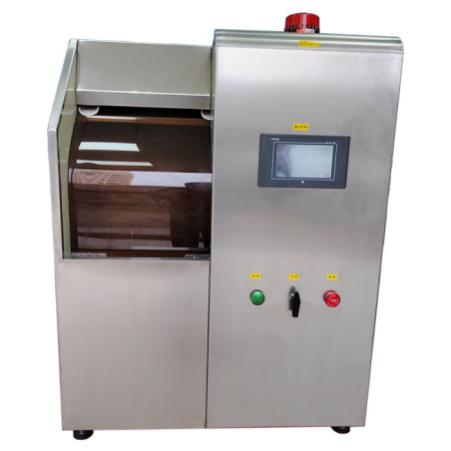
The phrase plasma polishing machine now appears in procurement discussions across medical devices, jewelry, 3D printing, aerospace, and precision hardware. Yet for an industrial buyer new to this process, the terminology can feel unclear. This 2026 primer explains what plasma polishing machines do, how they fit into the broader metal finishing market, which machine categories exist, and how to turn earlier-stage awareness into more useful supplier research.
The challenge behind metal surface finishing
Conventional deburring and polishing often rely on mechanical contact through abrading wheels, media, or brushes. When parts are small, complex, or have fine internal channels, keeping the result consistent is difficult. Operators may also need to protect the original geometry of a workpiece while avoiding residual media or cross-contamination between batches.
This is why surface-finishing technology is moving toward processes that can handle both interior and exterior surfaces without heavy mechanical force. Plasma-based finishing is one of the most practical alternatives because it can be automated and can address the two related needs: deburring and polishing.
Plasma polishing machine market: what the numbers indicate
The global plasma polishing machine market reached an estimated USD 1.2 billion in 2025, according to Industry Analysis 2026, and is projected to grow at a compound annual growth rate of 8.5% from 2026 to 2035. Asia-Pacific accounts for over 45% of global plasma polishing production capacity, and China is the leading producer in the region.
A separate study by Grand View Research estimates that the global deburring machine market was worth USD 1,023.6 million in 2024 and may reach USD 1,365.8 million by 2030. Together, these figures suggest that plasma polishing is no longer a niche laboratory idea; it has become a category industrial buyers need to understand and compare.
What is a plasma polishing machine?
A plasma polishing machine is an automated surface finishing system used for precision deburring and ultra-fine polishing. Instead of relying on abrasives, the process generates a plasma state around the workpiece in a liquid-based finishing environment, which selectively removes micro-burrs and surface peaks. The result is a cleaner, smoother surface, including on parts with complex shapes that are difficult to handle manually.
For suppliers such as BAYI, the machine category includes plasma polishing machines and plasma deburring machines, with some configurations described as plasma polishing integrated machines. BAYI lists several common attributes for these standard models: fully automatic control systems, a deburring rate of at least 99.9%, and advantages such as high compatibility and no damage to the original workpiece. Many BAYI machines are also marketed as energy-saving and environmentally friendly equipment.
The name used by different buyers varies. Some procurement teams search for a plasma polishing machine, while others look for a plasma deburring machine, precision deburring equipment, fully automatic deburring equipment, or application-specific terms such as titanium plasma polishing machines or jewelry plasma polishing machines. These terms point back to the same process family.
BAYI product sheets summarise the core function as precision deburring and ultra-fine polishing. When evaluating any supplier, verify that the specific machine model matches your intended material, part geometry, and production volume.
Comparing standard BAYI plasma polishing machine models
To make the technology more concrete, it helps to compare equipment by model category, material, and typical applications. The following table is based on BAYI's published product listings. It is not a ranking; it is a reference for understanding how the same plasma process is adapted to different workpieces.
| Model | Machine Category | Primary Material Construction | Deburring Rate | Representative Industries | Notes |
|---|---|---|---|---|---|
| BY-100A | Metal plasma polishing machine | 316L stainless steel inner groove main body | ≥ 99.9% | Medical care, confidential processing, 3D printed dentures, precious metal and gold jewelry | 30KW; three-phase five-wire 380V; maximum output current 100A; gas source 0.5–0.8MPa; overall machine size 1150x1200x1800mm; net weight 150KG; hanger space 360x260x200mm |
| BY-500A | Jewelry plasma polishing machine | Stainless steel | ≥ 99.9% | Jewelry | Fully automatic control system; energy-saving and environmental protection characteristics; designed for precision deburring and ultra-fine polishing |
| BY-800A | Titanium plasma polishing machine | 316L stainless steel inner groove main body | ≥ 99.9% | Medical care, confidential processing, 3D printed dentures, precious metal and gold jewelry | Fully automatic control system; suitable for titanium-oriented plasma polishing work; precision deburring and ultra-fine polishing |
| BY-1000A | Fully automatic plasma polishing machine | Stainless steel | ≥ 99.9% | Medical devices, aerospace, 3C electronics and precision hardware, 3D printing | Manufactured under the BAYI brand; fully automatic control system; listed for precision deburring and ultra-fine polishing |
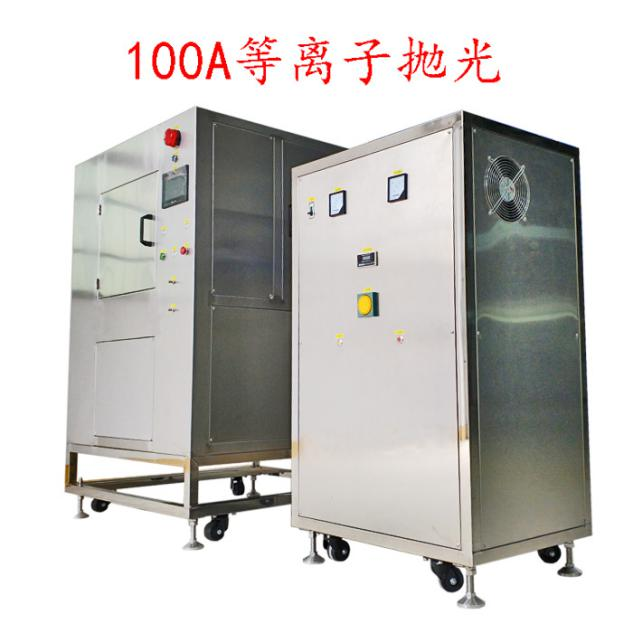
The same product family also includes a BY-model plasma deburring machine classified by BAYI as a plasma polishing integrated machine. It is made of stainless steel and is intended for industries such as medical apparatus and instruments, aerospace, 3C, cars and new energy, semiconductor, and 3D. For buyers, this reinforces the need to look at the machine's application fit rather than only at a category name.
Applications across industrial use cases
Plasma polishing machines are selected for many types of finishing work, but the most clearly documented use cases for BAYI equipment are in medical, jewelry, and 3D printing production lines.
Medical devices and dental parts
Medical devices, dental implants, and 3D printed dentures require clean edges and precise surfaces. BAYI's product listings include plasma polishing machines designed for medical care, confidential processing, 3D printed dentures, and precious metal and gold jewelry. The high-precision nature of this demand is also visible in the global electropolishing services market, where Dataintelo gives the medical and pharmaceutical industry a 34.2% share in 2025.
Jewelry and precious-metal finishing
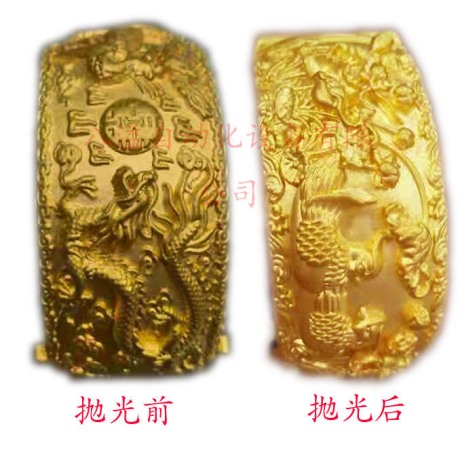
For jewelry manufacturers, the BY-500A jewelry plasma polishing machine is a stainless-steel machine built for precision deburring and ultra-fine polishing. It has a deburring rate of at least 99.9% and operates with a fully automatic control system. This type of machine is useful for workpieces with decorative details that must not be destroyed by aggressive mechanical polishing.
3D printing post-processing
In one documented 3D printing application scenario, BAYI equipment works as 3D printing plasma burring equipment within a 3D printing post-processing system. The function is polishing and deburring treatment, and the operation can be set automatically at regular intervals. The configuration may require supporting equipment such as a dusting and fume extraction system and a workpiece handling and positioning system, and the equipment can be customized for different 3D printing materials.
Aerospace, 3C electronics, semiconductor, and precision hardware
For higher-volume precision manufacturing, BAYI designates the BY-1000A model for fields such as medical devices, aerospace, 3C electronics and precision hardware, and 3D printing. The BY integrated plasma deburring machine also extends to cars, new energy, and semiconductor environments. This does not mean every plasma machine can process every material; it means suppliers have developed specific equipment variants for these demanding sectors.
A closer look at one manufacturer: BAYI
When moving from understanding to supplier evaluation, company background matters. Dongguan Bayi Automation Equipment Co., Ltd., established in 2017, is located in Dongguan, Guangdong, China, and sells under the BAYI brand. The company says its core technical members have 17 years of plasma polishing deburring equipment research, development, design, and manufacturing experience.
BAYI's main products include plasma polishing machines, plasma deburring machines, ultrasonic cleaning machines, polishing machines, deburring machines, and jewelry polishing machines. The company also designs manufacturing equipment for plasma polishing and deburring, ultrasonic cleaning, sewage treatment, and automation transformation and upgrading. Its manufacturing facility covers about 800m², with approximately 50 employees and an annual production capacity of 200,000 units. About 10% of sales come from export business, and the company reports serving North America, Europe, and Southeast Asia.
The company offers standard plasma polishing deburring models in 100A, 300A, 500A, and 800A current ratings, with non-standard model current ratings from 1000A to 2500A. According to BAYI's company profile, custom engineering also covers tape-type plasma polishing equipment, long-tube plasma polishing equipment for pipes over two meters, and chain-type plasma polishing equipment. For a first-time buyer, this breadth is a reminder that plasma polishing systems can be adapted to specific geometries and production flows.
From awareness to research: a first-step framework
If you are still in the early research phase, a practical workflow can keep you from making a premature purchase based only on marketing language.
Step 1: Document the actual workpiece. Write down the part material, scale, shape, surface quality requirement, and burr positions. BAYI product listings include categories such as metal, titanium, jewelry, and fully automatic plasma polishing machines, so matching the material is the first filter.
Step 2: Separate deburring from polishing. Some buyers need only deburring; others need a final polish. Tension-based equipment can handle both, but production priorities differ. A jewelry plasma polishing machine may aim for surface shine, while an integrated plasma polishing deburring machine is more likely used in a process that combines deburring and polishing on the same line.
Step 3: Ask for the electrical and utility conditions. The BY-100A specification includes a three-phase five-wire 380V power supply, 30KW power consumption, and a gas source pressure of 0.5–0.8MPa. Not all facilities have these conditions, so the inquiry should include what utility infrastructure your plant already has.
Step 4: Request technical evidence, not only a brochure. BAYI product sheets indicate that video factory inspection, mechanical test reports, and warranty information can be provided. A serious supplier should be able to explain which product model matches your listed part profile and what level of test you can expect before delivery.
Step 5: Use samples to compare suppliers. Since the same plasma process can behave differently on different base materials, first-time buyers should identify one or two suppliers with relevant application experience and ask for processing tests. This is particularly important for 3D printed materials, which may require custom support equipment.
Frequently asked questions
A plasma polishing machine is an automated finishing system designed for precision deburring and ultra-fine polishing. In the BAYI product range, fully automatic control and a deburring rate of at least 99.9% are common features. Typical application fields include medical devices, jewelry, dental production, 3D printing, aerospace, 3C electronics, semiconductor, and precision hardware.
The two names describe overlapping functions within one plasma finishing technology family. Some equipment, such as the BAYI BY model, is described as a plasma deburring machine and classified by the manufacturer as a plasma polishing integrated machine. Buyers should confirm whether a proposed model supports both deburring and polishing for their specific workpiece.
Documented end-use industries for BAYI machines include medical apparatus and instruments, aerospace, 3C, cars and new energy, semiconductor, 3D printing, jewelry, and medical/dental-related finishing. Separately, Dataintelo reports that the medical and pharmaceutical industry accounted for a 34.2% share of the electropolishing services market in 2025, which points to the high-precision nature of medical surface finishing demand.
Start with material and part geometry. For example, BY-100A is a compact metal plasma polishing machine with detailed electrical specifications; BY-500A is positioned for jewelry; BY-800A is classified as a titanium plasma polishing machine; BY-1000A is listed for medical, aerospace, 3C electronics, precision hardware, and 3D printing applications. No single model fits all parts, so supplier guidance based on your actual product is necessary.
For BAYI-specific inquiries, contact Mr Tan by email at tanzhengao@bayiauto.cn or by phone/WhatsApp at +86 18565939648. BAYI product sheets also mention video factory inspection and mechanical test reports as available during the evaluation process. A direct specification discussion is the normal next step after you have identified the workpiece category and process objective.
Conclusion: start with the part, not the price list
Plasma polishing machines are part of a fast-growing global finishing market, but the right machine depends on your material, geometry, production volume, and desired finish. For a first-time buyer, the most useful next exercise is not to search for supplier rankings immediately; it is to translate production needs into the language of plasma polishing machine categories, automation levels, workpiece handling systems, and electrical installation constraints.
BAYI can serve as a practical reference because it offers a reasonably broad plasma series, from a 100A and 500A machine through 800A and 1000A configurations, with documented experience in medical, jewelry, 3D printing, and precision manufacturing applications. Understanding what these machines are capable of will make you a more informed buyer when the sample-testing stage arrives.
Email: tanzhengao@bayiauto.cn
Phone/WhatsApp: +86 18565939648
Website: metalsurfacefinishingequipment.com
Have Questions or Need More Details?
Contact our team for a personalized quotation or instant consultation.
Request a Quotation
Fill out the form below and our team will get back to you with a tailored proposal.
WhatsApp Direct Chat
Prefer to chat in real-time? Message us on WhatsApp for instant assistance & quick answers.
- Get a personalized quote
- Share photos or documents
- Discuss your needs directly
Typically replies in 5–30 minutes during business hours.