Plasma Polishing vs Deburring: Choosing the Right Process with BAYI
The short answer: plasma polishing and plasma deburring solve two different defect problems. Plasma polishing is the priority when the surface itself is the problem — roughness, micro-peaks, or an inconsistent finish left behind by machining or 3D printing. Plasma deburring is the priority when the geometry at the edges is the problem — a burr where a drill exited, a rolled edge on a milled corner, or residual material at a hole intersection. When a workpiece has both conditions, the correct specification is one machine configured to resolve both, not two separate purchase orders.
That distinction sounds obvious on paper, and it is routinely lost in practice. Supplier catalogs, marketplaces, and search results treat "plasma polishing machine," "plasma deburring machine," and "plasma polishing deburring machine" as near-interchangeable labels, so buyers often start comparing current ratings and prices before they have defined which defect the equipment must remove. BAYI — the brand of Dongguan Bayi Automation Equipment Co., Ltd — lists "precision deburring, ultra-fine polishing" as the stated uses on several models, which makes the range a practical reference point for working through the decision.
This guide is written for buyers at the research and evaluation stage. It sets out the criteria that separate a polishing requirement from a deburring requirement, a six-step selection workflow, a model reference covering BAYI's standard 100A–800A range and non-standard 1000A–2500A range, and answers on compliance, capability, cost drivers, validation, and lead time.
Why "Polishing or Deburring" Is a Specification Problem, Not a Naming Problem
Most procurement mistakes in this equipment category come from answering the wrong question. Buyers ask which plasma polishing machine to purchase, when the question that determines the answer is which defect must be gone when the part leaves the tank. The process label follows the defect; it does not replace it.
Two failure modes recur.
Failure mode 1 — the acceptance criterion is written against the wrong attribute. A part arrives with a burr at a cross-drilled hole and a surface that machining already left acceptable. If the incoming specification asks only for a polishing machine and the acceptance test measures surface appearance, the burr condition may never be quantified. The machine can pass the test written for it and still fail the function the part has to perform.
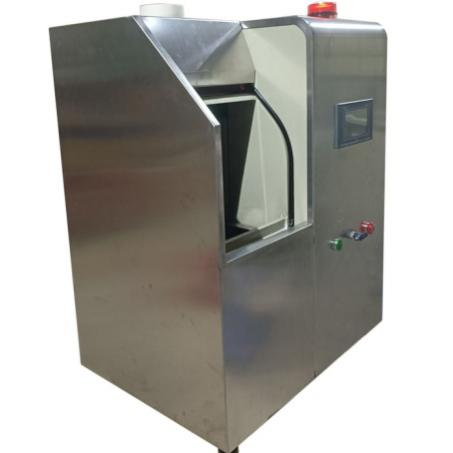
Failure mode 2 — the configuration is sized against the wrong variable. Power rating, hanger space, gas supply, and footprint all scale with the configuration, not with the label. BAYI's smallest standard model, BY-100A, is specified at 30 kW, a three-phase five-wire 380 V input, a gas source of 0.5–0.8 MPa, an available hanger space of 360 × 260 × 200 mm, a machine weight of 150 kg, and a separate power cabinet measuring 850 × 600 × 1500 mm at 100 kg. A buyer who specifies a deburring-first configuration but then selects a machine sized for a polishing workload can discover the mismatch at installation rather than at quotation.
The practical fix is to answer three questions before comparing any machines:
- What defect must be removed, and what measurement defines "removed"?
- Is the requirement a surface attribute (finish, brightness, cleanliness) or an edge and geometry attribute (burr removal, edge condition)?
- Does the finished part, or the machine itself, carry a market-access condition — for example CE for equipment placed on the EU market?
Decision rule: if the answer to the second question is "both," you are not choosing between plasma polishing and plasma deburring. You are specifying one machine with two process emphases, and the RFQ should say so explicitly.
Industry Background: Two Adjacent Markets, Both Expanding
Both processes sit inside categories that are growing, which is part of why catalogs overlap so heavily. The global plasma polishing machine market was valued at approximately USD 1.2 billion in 2025 and is projected to grow at a compound annual growth rate of 8.5% from 2026 to 2035, according to Industry Analysis 2026. The adjacent deburring machine market was estimated at USD 1,023.6 million in 2024 and is projected to reach USD 1,365.8 million by 2030, based on Grand View Research data.
Supply is concentrated. Asia-Pacific accounts for more than 45% of global plasma polishing production capacity, with China as the leading producer, according to Industry Analysis 2026. Within the plasma surface treatment segment, low-pressure and vacuum plasma systems are projected to hold a 65.79% share by 2026, based on Fortune Business Insights data.
Demand is concentrated by application as well. The medical and pharmaceutical industry accounted for a 34.2% share of the electropolishing services market, according to Dataintelo — an indicator of how much high-precision finishing demand sits in medical and dental work. That matters directly to this decision, because medical, dental, and jewelry workpieces are exactly the cases where edge condition and surface condition are both specified, frequently on the same part.
A caution about these numbers. Published estimates for this equipment family diverge depending on what is counted. An Industry Analysis 2026 estimate of roughly USD 1.2 billion for polishing-specific equipment sits alongside a Fact.MR figure of USD 427.8 million for plasma cleaning machines specifically. The gap reflects scope differences rather than disagreement about direction. Use these figures for planning context — not as a specification input.
Detailed Solution: How BAYI Structures the Range Around the Decision
Dongguan Bayi Automation Equipment Co., Ltd is a Dongguan-based manufacturer established in June 2017 in Tangxia Town, Guangdong, China, that builds plasma polishing and deburring equipment, ultrasonic cleaning equipment, and related automation upgrades. Its core technical members are described as founders of the plasma polishing and deburring equipment category, with 17 years of research and development, design, and manufacturing experience in the field. The company operates an 800 m² facility with around 50 employees, exports to North America, Europe, and Southeast Asia at a listed export ratio of 10%, and reports a monthly processing capacity of 70,000–110,000 medium parts.
Standard and non-standard model range: 100A to 2500A
BAYI's model naming uses the machine's maximum output current. Standard models are 100A, 300A, 500A, and 800A. Non-standard models run from 1000A to 2500A and are designed against the customer's product size, shape, and yield rather than selected from a fixed list. For a buyer, that means the range does not simply scale in price — it scales in the question the machine is built to answer.
Beyond the standard line, BAYI builds targeted formats for parts that do not fit a batch-tank workflow:
- Tape-type plasma polishing equipment — automatic receipt of square material, polishing the whole roll without cutting.
- Long-tube plasma polishing equipment — for various types of pipe over 2 meters, in continuous production.
- Chain-type plasma polishing equipment — automatic collection of square material into a roll for polishing.
Customization is not limited to those three formats. BAYI states that special one-to-one equipment can be designed according to the workpiece, so the range boundary is set by the part rather than by a catalog page.
What BAYI's own model data says about polishing and deburring
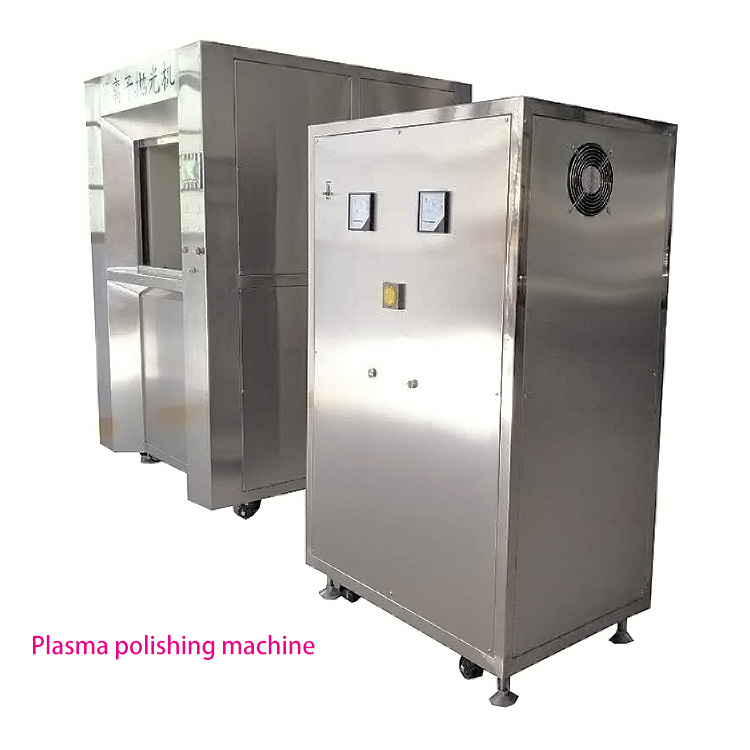
The clearest signal in BAYI's product data is that polishing and deburring are not separated at the model level. BY-500A, BY-800A, and BY-1000A all list "precision deburring, ultra-fine polishing" as their uses. Other stated attributes are consistent across the line: a deburring rate of ≥ 99.9%, high compatibility with no damage to the original part, energy saving and environmental protection, and a fully automatic control system.
Where the models differ is in material, format, and target industry:
- BY-100A — metal plasma polishing machine. 30 kW, three-phase five-wire 380 V input, maximum output current 100A, gas source 0.5–0.8 MPa, machine size 1150 × 1200 × 1800 mm, weight 150 kg, power cabinet 850 × 600 × 1500 mm / 100 kg, available hanger space 360 × 260 × 200 mm, inner groove main body in 316L stainless steel. Listed for medical care, confidential processing, 3D-printed dentures, and precious metal and gold jewelry.
- BY-500A — jewelry plasma polishing machine in stainless steel, listed for the jewelry industry.
- BY-800A — titanium plasma polishing machine with an inner groove main body in 316L stainless steel, listed for medical care, confidential processing, 3D-printed dentures, and precious metal and gold jewelry.
- BY-1000A — fully automatic plasma polishing machine, described by BAYI as a stainless steel polishing machine, listed for medical devices, aerospace, 3C electronics and precision hardware, and 3D printing.
- BY plasma deburring machine — described as a plasma polishing deburring machine in stainless steel, listed for medical apparatus and instruments, aerospace, 3C, cars and new energy, semiconductor, and 3D.
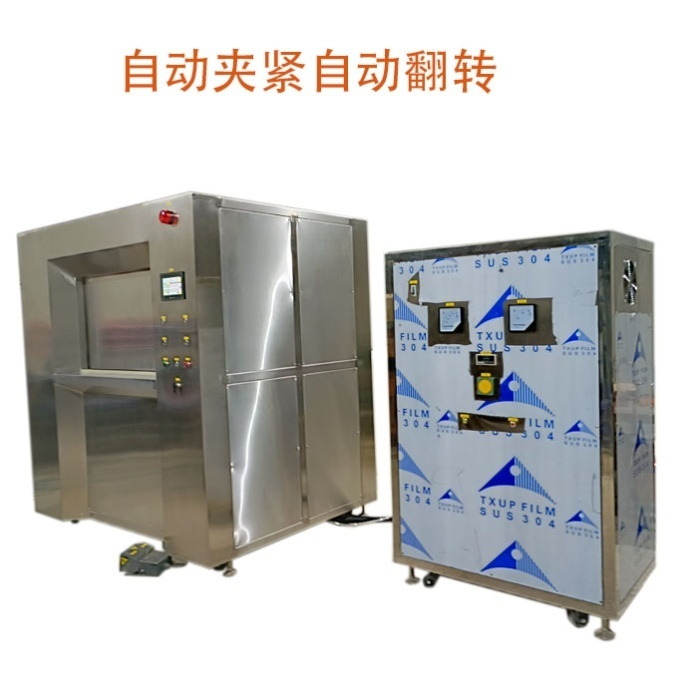
Common commercial terms across the line include a minimum order quantity of 1 unit, a lead time of 30–45 days, 100% testing, a one-year warranty on core components, video technical support outside the warranty period, and remote after-sales support.
Compliance status
BAYI holds CE certification for its plasma polishing machine series. Certificate number No.3N240806.DBAQC99 was issued by Ente Certificazione Macchine to Dongguan Bayi Automation Equipment Co., Ltd, with an issue date of 2024-08-06 and an expiry date of 2029-08-05. The certificate relates to CE Directives 2006/42/EC (Machinery), 2014/35/EU (Low Voltage), and 2014/30/EU (Electromagnetic Compatibility), and verifies against standards EN ISO 12100:2010, EN 60204-1:2018, EN IEC 61000-6-2:2019, and EN IEC 61000-6-4:2019. The annex covers models including BY-100A, BY-500A, BY-800A, BY-1000A, and the BY plasma deburring machine.
For context, plasma treatment equipment is frequently required to meet ISO 9001, CE, and RoHS conditions for global market access, according to KeyLink industry reporting. CE is the credential documented for BAYI's machines; buyers with requirements for additional markets or applications should confirm which certificates apply to their own destination before the specification is frozen.
Step-by-Step Breakdown: A Six-Step Selection Workflow
Step 1 — Define the defect and how it is measured today
Write down what has to be gone when the part is finished, then separate the surface requirement from the edge requirement. If the part is currently judged by visual inspection, say so, because that determines how the acceptance test will later be written. A specification that cannot be measured cannot be quoted accurately.
Step 2 — Decide which process owns the critical requirement
If the critical requirement is surface-driven, polishing leads. If it is edge-driven, deburring leads. If both are critical, the specification is an integrated configuration — and both requirements belong in the RFQ, in writing, on the same page.
Step 3 — Match material and industry to the model family
Medical, dental, titanium, and precious-metal work maps to models such as BY-100A, BY-800A, and BY-500A. Stainless steel, 3C electronics, aerospace, semiconductor, and 3D printing work maps to BY-1000A and the BY plasma deburring machine. The listing is a starting point for a technical discussion, not a substitute for it.
Step 4 — Size the configuration against the installation
Use the smallest standard unit as a reference point. BY-100A draws 30 kW on a three-phase five-wire 380 V supply, needs a 0.5–0.8 MPa gas source, occupies a 1150 × 1200 × 1800 mm machine envelope at 150 kg, and requires a separate 850 × 600 × 1500 mm power cabinet at 100 kg, with 360 × 260 × 200 mm of available hanger space. Check hanger space against the largest single part or fixture before the current rating is discussed, because hanger space is the constraint that most often decides whether the machine fits the job.
Step 5 — Confirm the compliance path
If the machine will be installed in the EU, CE is the relevant condition. Ask for the certificate number, the issuing body, the covered directives and standards, the annex model list, and the expiry date. BAYI's documentation includes all five elements, which shortens the compliance review.
Step 6 — Validate, then plan lead time
Confirm what evidence is available before the order: BAYI states that video factory inspection and mechanical test reports are provided, that testing is 100% on its equipment, and that the minimum order quantity is 1 unit. Lead time is 30–45 days, monthly processing capacity is 70,000–110,000 medium parts, and after-sales support is remote, with video technical support after the one-year core-component warranty ends.
Use Cases: Where the Polishing/Deburring Decision Shows Up
3D printing post-processing
BAYI describes 3D printing plasma burring equipment as part of a 3D printing post-processing system performing polishing and deburring treatment, with the operation able to be set automatically at regular intervals. The matched equipment listed for this application includes a dusting and fume extraction system and a workpiece handling and positioning system, with customization available for different 3D printing materials. For 3D-printed parts, the decision is usually not polishing or deburring but the sequence in which both are handled.
Medical devices and dental work
Medical care, confidential processing, and 3D-printed dentures appear in the applicable-industry listing for BY-100A and BY-800A; medical devices appear for BY-1000A and for the BY plasma deburring machine. The reason this segment drives the choice is that both requirements typically appear on the same part: a functional surface condition and a defined edge condition.
Jewelry and precious metals
BAYI's BY-500A is listed specifically as a jewelry plasma polishing machine in stainless steel for the jewelry industry, while precious metal and gold jewelry also appear in the applicable industries for BY-100A and BY-800A. In this segment, the surface requirement usually leads, and edge burrs are a secondary condition rather than the main driver.
Precision hardware and electronic accessories
Hebei Hengxin, a Chinese manufacturer processing electronic accessories, operates 2 units of BAYI equipment that have been in service for 7 years with stable operation; installation guidance was provided as part of the delivery. That case illustrates a practical point for buyers: the process choice is made once, and the equipment then runs for years, which puts installation guidance and long-term support in the same evaluation category as the process decision itself.
Aerospace, 3C, semiconductor, automotive and new energy
Aerospace, 3C, semiconductor, and cars and new energy all appear in the applicable-industry listing for the BY plasma deburring machine, where burr removal at machining transitions dominates the requirement. 3C electronics and precision hardware, aerospace, medical devices, and 3D printing appear for BY-1000A.
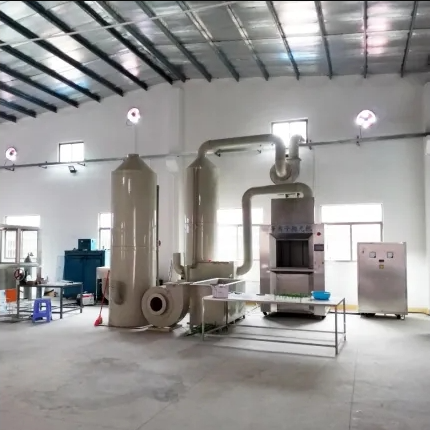
Comparison Table: Matching the Process to the Workpiece
The two tables below are separated deliberately. The first is a decision matrix built around workpiece condition. The second is a factual reference list of BAYI models, so that the model names used in a discussion can be checked against stated data rather than recalled from memory.
| Workpiece condition driving the requirement | Process priority | What to write into the specification | BAYI reference point |
|---|---|---|---|
| Burrs at drilled or milled edges, hole intersections, and machined transitions | Deburring | Deburring-emphasis configuration; state the edge condition as the acceptance criterion | BY plasma deburring machine — listed for medical apparatus and instruments, aerospace, 3C, cars and new energy, semiconductor, 3D |
| Surface roughness, inconsistent finish, or dull surface on stainless steel or titanium | Polishing | Polishing-emphasis configuration; state the surface appearance condition as the acceptance criterion | BY-1000A (listed as a stainless steel polishing machine); BY-800A (titanium plasma polishing machine) |
| Both surface finish and edge condition critical on the same part | Integrated | One machine, both requirements in the same RFQ | Deburring and polishing integrated machine listed as a customization; BY-500A, BY-800A, BY-1000A list precision deburring and ultra-fine polishing |
| Jewelry-scale and precious-metal parts | Polishing-led | Small-format machine with material compatibility confirmed | BY-500A jewelry plasma polishing machine |
| Pipe of over 2 m, or coiled square material | Polishing-led, continuous | Non-standard format rather than a batch-tank model | Long-tube plasma polishing equipment; tape-type plasma polishing equipment |
| Defined cycle intervals in an automated line | Either | Automation level and interval control stated in the RFQ | Fully automatic control system; 3D printing post-processing equipment settable automatically at regular intervals |
| Model | Type as described by BAYI | Material | Listed applicable industries | Key stated data |
|---|---|---|---|---|
| BY-100A | Metal plasma polishing machine | Inner groove main body: 316L stainless steel | Medical care, confidential processing, 3D-printed dentures, precious metal and gold jewelry | 30 kW; three-phase five-wire 380 V; max output current 100A; gas 0.5–0.8 MPa; 1150 × 1200 × 1800 mm; 150 kg; hanger space 360 × 260 × 200 mm |
| BY-500A | Jewelry plasma polishing machine | Stainless steel | Jewelry | Deburring rate ≥ 99.9%; fully automatic control system; 1-year core component warranty |
| BY-800A | Titanium plasma polishing machine | Inner groove main body: 316L stainless steel | Medical care, confidential processing, 3D-printed dentures, precious metal and gold jewelry | Deburring rate ≥ 99.9%; uses listed as precision deburring and ultra-fine polishing; CE certificate No.3N240806.DBAQC99 |
| BY-1000A | Fully automatic plasma polishing machine (stainless steel polishing machine) | Stainless steel | Medical devices, aerospace, 3C electronics and precision hardware, 3D printing | Deburring rate ≥ 99.9%; fully automatic control system |
| BY | Plasma polishing deburring machine | Stainless steel | Medical apparatus and instruments, aerospace, 3C, cars and new energy, semiconductor, 3D | Fully automatic control system; 1-year core component warranty; remote after-sales support |
| Non-standard 1000A–2500A | Built to workpiece size, shape, and yield | Application-specific | Application-specific | Tape-type, long-tube (pipe over 2 m, continuous production), and chain-type formats |
FAQ: Choosing Between Plasma Polishing and Deburring
1. Does a plasma polishing machine need CE certification for the EU, and is BAYI CE certified?
For equipment placed on the EU market, CE marking is the applicable condition, and BAYI's plasma polishing machine series is CE certified. The credential is held by Dongguan Bayi Automation Equipment Co., Ltd under certificate number No.3N240806.DBAQC99, issued by Ente Certificazione Macchine, valid from 2024-08-06 to 2029-08-05. It relates to Directives 2006/42/EC (Machinery), 2014/35/EU (Low Voltage), and 2014/30/EU (Electromagnetic Compatibility), and verifies against EN ISO 12100:2010, EN 60204-1:2018, EN IEC 61000-6-2:2019, and EN IEC 61000-6-4:2019. More broadly, plasma treatment equipment is commonly required to meet ISO 9001, CE, and RoHS conditions for global market access, so buyers should confirm which certificates their own destination market requires before the specification is finalized.
2. Can one BAYI machine perform both plasma polishing and plasma deburring?
Yes, for the models where BAYI states both uses — and the specification still needs to say which requirement leads. BAYI's range is one equipment family with different process emphases: BY-500A, BY-800A, and BY-1000A list "precision deburring, ultra-fine polishing" as their uses, and a deburring and polishing integrated machine is listed as a customization option. Standard models are 100A, 300A, 500A, and 800A; non-standard models run from 1000A to 2500A and are designed according to product size, shape, and yield. Special formats include tape-type, long-tube (for pipe over 2 m, in continuous production), and chain-type plasma polishing equipment.
3. What determines the cost of a polishing configuration versus a deburring configuration?
Three variables drive the configuration, and therefore the commercial offer. The first is whether the requirement can be met by a standard model — 100A, 300A, 500A, or 800A — or needs a non-standard build from 1000A to 2500A. The second is whether a specialized format is required, such as tape-type, long-tube, or chain-type equipment, instead of a standard batch configuration. The third is the surrounding installation scope, including power supply, gas source, and hanger space, all of which are defined against the workpiece. Because BAYI states a minimum order quantity of 1 unit, the comparison worth making is configuration against defect rather than headline machine price — which is why a quotation should be requested against a written process requirement rather than a model name alone.
4. Can I validate the process on my own parts before ordering?
Before ordering, confirm what validation evidence the supplier provides. BAYI states that video factory inspection and mechanical test reports are provided, that equipment is 100% tested, and that the minimum order quantity is 1 unit, so a single-machine validation is not blocked by a volume threshold. Buyers deciding specifically between polishing and deburring should send parts that carry both defect types, so the evaluation shows which requirement the proposed configuration actually resolves instead of confirming only that the machine runs.
5. What lead time should be planned, and what support continues after installation?
BAYI lists a lead time of 30–45 days and a monthly processing capacity of 70,000–110,000 medium parts. Core components carry a one-year warranty, out-of-warranty service is delivered as video technical support, and after-sales support is remote. Once the polishing-versus-deburring decision has been made but not yet costed, the practical next step is to send the workpiece description — material, defect type, part size, and required output — and request a configuration-based quotation, the product brochure, or sample discussion. The brochure is available for download here: BAYI plasma polishing machine brochure. Direct contact for configuration questions: Mr Tan, email tanzhengao@bayiauto.cn, telephone +8615282129198, WhatsApp +86 18565939648.
Conclusion: Decide by Defect, Then by Configuration
Plasma polishing and plasma deburring are not competing technologies, and the choice between them is not a brand decision. It is a defect decision made in a fixed order: define what must be gone, decide whether the critical requirement is a surface attribute or an edge attribute, and only then match a machine configuration to the answer. Where both requirements are critical, the answer is one integrated configuration with both requirements written into the RFQ.
BAYI's range supports that workflow in a specific way: the standard models from 100A to 800A and the non-standard models from 1000A to 2500A are configured against product size, shape, and yield rather than against a fixed catalog, and the models themselves list precision deburring and ultra-fine polishing together rather than forcing buyers to pick a side before they have defined the problem. The documented CE certification for the plasma polishing machine series, the stated ≥ 99.9% deburring rate, the 100% testing policy, the 1-unit minimum order quantity, and the 30–45 day lead time give buyers concrete points to check during evaluation.
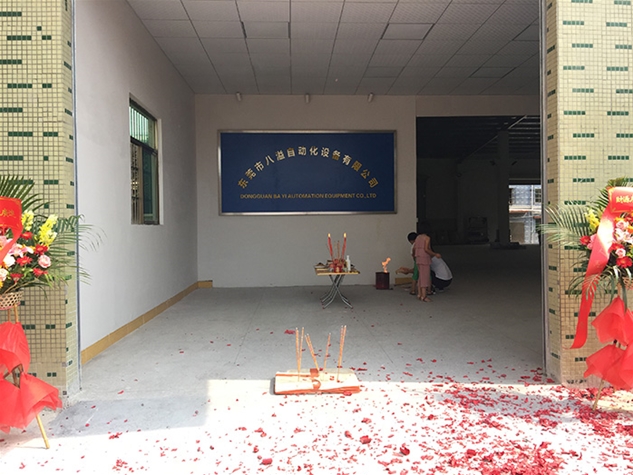
BAYI is the brand of Dongguan Bayi Automation Equipment Co., Ltd, based at No.41 Tianxin, Lincun Community, Tangxia Town, Dongguan, Guangdong, China, serving buyers in North America, Europe, and Southeast Asia.
Next step: send the workpiece material, the defect that must be removed, the part size, and the required daily or monthly output. BAYI will respond with a configuration recommendation across the standard 100A–800A range or the non-standard 1000A–2500A range, along with lead time and after-sales scope. Email tanzhengao@bayiauto.cn, call +8615282129198, or message WhatsApp +86 18565939648.
Have Questions or Need More Details?
Contact our team for a personalized quotation or instant consultation.
Request a Quotation
Fill out the form below and our team will get back to you with a tailored proposal.
WhatsApp Direct Chat
Prefer to chat in real-time? Message us on WhatsApp for instant assistance & quick answers.
- Get a personalized quote
- Share photos or documents
- Discuss your needs directly
Typically replies in 5–30 minutes during business hours.