
Plasma Polishing vs Traditional Polishing: A Decision-Making Comparison for 2026 Buyers
Plasma Polishing vs. Traditional Polishing: How to Choose the Right Deburring and Finishing Technology in 2026
The short answer: Choose plasma polishing when you need 360° polishing, minimal operator handling, and lower maintenance. Traditional polishing machines remain a familiar approach, but plasma polishing reduces labor requirements, shortens process steps, and can polish recessed or internal areas without re-hanging the workpiece. This article compares both technologies on cost, efficiency, maintenance, and application fit so you can make a procurement decision with evidence rather than guesswork.
For buyers in medical devices, jewelry, 3D printing, and precision metal finishing, the choice between these two technologies affects throughput, surface quality, and operating cost. This guide provides a structured comparison for the decision stage of your purchasing process.
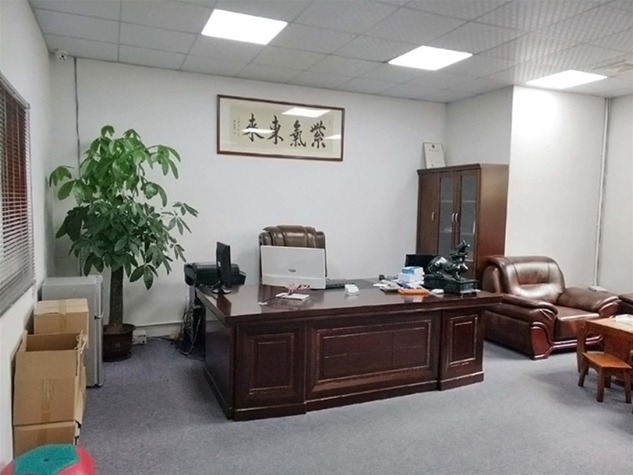
Evaluating a plasma polishing machine supplier starts with understanding the technology and the manufacturer's engineering experience.
Why This Comparison Matters for Your Purchase Decision
Polishing and deburring are often treated as secondary processes, but they directly influence product quality, rejection rates, and delivery time. If you are evaluating new equipment, you need to know not just what a machine does, but how it behaves over years of operation: energy use at idle, maintenance frequency, operator skill required, and whether it can handle parts that traditional methods cannot reach.
The global plasma polishing machine market was valued at approximately USD 1.2 billion in 2025, and it is projected to grow at a CAGR of 8.5% from 2026 to 2035 according to Industry Analysis 2026. The deburring machine market was estimated at USD 1,023.6 million in 2024 and is projected to reach USD 1,365.8 million by 2030 according to Grand View Research. These figures indicate that buyers are actively moving toward plasma-based finishing, but they do not tell you which technology fits your specific products.
What matters more is the operational comparison: how each technology behaves when production stops, when parts change, and when surface requirements become stricter.
Defining the Two Technologies
What Is a Plasma Polishing Machine?
A plasma polishing machine uses an electrically generated plasma field in a liquid electrolyte to remove burrs, polish surfaces, and improve surface finish on conductive metal parts. The process is sometimes called plasma electrolytic polishing. It can handle complex geometries, including holes, grooves, and internal channels, because the plasma acts on the workpiece surface regardless of its orientation.
Examples include fully automatic plasma polishing machines, small plasma polishing machines, stainless steel plasma polishing machines, and plasma polishing machines for medical devices. These are available as standard models such as 100A, 300A, 500A, and 800A, while non-standard models range from 1000A to 2500A depending on part size and production volume.
What Is a Traditional Polishing Machine?
Traditional polishing machines include mechanical polishing wheels, vibratory finishers, tumbler barrels, and abrasive belt machines. They remove material through mechanical contact between an abrasive and the workpiece surface. These machines are well established in workshops and large factories, and they remain effective for simple, flat, or exterior surfaces.
However, mechanical contact means the abrasive tool must be able to physically touch every surface that needs polishing. Recessed areas, crossed holes, internal threads, and complex 3D shapes often require multiple steps, manual rotation of the workpiece, or custom tooling.
Plasma Polishing vs. Traditional Polishing: Head-to-Head Comparison
The following comparison is based on verified operating characteristics of plasma polishing machines compared with conventional polishing machines.
| Comparison Factor | Plasma Polishing Machine | Traditional Polishing Machine |
|---|---|---|
| Polishing angle | 360° polishing capability without rotating or re-hanging the workpiece during the process | Limited to accessible surfaces; complex shapes often require manual repositioning or custom tooling |
| Readiness and idle energy | Ready to use immediately; no energy waste under no-load conditions | Mechanical rotation and ventilation systems may continue to consume energy during idle periods |
| Labor requirement | Significantly reduces labor cost; less manual touch-up and repositioning | Higher labor input for complex parts; skilled operators often needed for consistent results |
| Energy consumption | Optimizes energy expenditure; no no-load energy waste | Energy consumption continues during machine idle and warm-up; specific rates vary by project |
| Maintenance | Longer service life and extremely short maintenance downtime | Consumable wear (wheels, belts, media) leads to more frequent replacement and downtime |
| Best-fit applications | Medical, confidential processing, 3D printed dentures, precious metal and gold jewelry polishing and deburring | Simple exterior surfaces, flat parts, and operations where mechanical finishing is already standardized |
| Cost difference | Significantly reduces labor cost and optimizes energy consumption; specific reduction rate depends on project implementation | Lower initial equipment price in some cases, but higher recurring labor and consumable costs |
Note: Cost reduction rates are implementation-specific. Actual savings depend on part mix, throughput, local labor rates, and existing process efficiency.
Step-by-Step Evaluation Framework for Decision-Stage Buyers
To decide between plasma polishing and traditional polishing, evaluate your situation in a logical order. Do not start with machine brand or price. Start with your parts.
Step 1: Analyze Your Workpiece Geometry
List the surfaces that need polishing or deburring. Are they all external and accessible, or do they include holes, grooves, threads, undercuts, or internal channels? If a surface cannot be touched by an abrasive tool, a traditional machine cannot polish it consistently. A plasma polishing machine with 360° polishing capability can remove burrs and improve surfaces without requiring the operator to turn the hanger out during the process.
Step 2: Define Your Production Volume and Labor Model
Estimate how many parts you need to process per day and how much operator time is currently spent on handling, repositioning, and re-polishing. Plasma polishing machines reduce manual intervention because the plasma reaches the part from all angles. This makes them particularly suitable for fully automatic deburring equipment and precision deburring equipment lines where labor cost is a major factor.
Step 3: Measure Idle Time and Energy Behavior
Do you run your finishing line continuously, or does it sit idle between batches? A plasma polishing machine is ready to use immediately, with no energy waste under no-load conditions. Traditional mechanical machines often keep motors, ventilation, or media movement running even when no parts are being processed. If your production schedule has gaps, this difference directly affects your monthly energy bill.
Step 4: Estimate Maintenance Cost Over 5 Years
Traditional machines require regular replacement of abrasive wheels, belts, media, and wear parts. Plasma polishing machines are characterized by longer service life and extremely short maintenance downtime. When comparing quotes, ask for recommended maintenance schedules and spare parts costs for both technologies.
Step 5: Assess Material and Compliance Requirements
For medical devices, 3D printed dentures, and precious metal jewelry, surface contamination and mechanical damage are unacceptable. Plasma polishing is a non-contact electrolyte-based process, which reduces the risk of embedded abrasive particles and mechanical deformation. This is why the medical and pharmaceutical industry accounted for 34.2% share of the electropolishing services market in 2025, reflecting strong high-precision demand, according to Dataintelo.
Step 6: Calculate Total Cost of Ownership, Not Just Purchase Price
Total cost includes equipment price, installation, operator wages, energy, consumables, maintenance, rejection rate, and downtime. A traditional polishing machine may have a lower initial purchase price in some regions, but labor and consumable costs can accumulate quickly. A plasma polishing machine reduces labor cost and optimizes energy consumption, although the exact reduction rate depends on your production environment.
Use Cases: Where Each Technology Wins
Use Case 1: Medical Devices and 3D Printed Dentures
Medical parts require clean, smooth, and repeatable surfaces. Traditional methods can leave abrasive residue and often struggle with complex implant geometries. Plasma polishing machines are specifically suitable for medical treatment, 3D printed dentures, and precious metal and gold jewelry. The process can polish internal and external surfaces without manual rotation.
Use Case 2: Jewelry and Precious Metals
Gold, silver, and precious metal jewelry often contain intricate patterns, small holes, and undercuts. Mechanical polishing can bend thin prongs or leave uneven finishes. A jewelry plasma polishing machine can polish the part from all angles while the operator does not need to turn the piece during the process.
Use Case 3: Stainless Steel and Metal Parts with Complex Geometry
Stainless steel plasma polishing machines are used for parts such as surgical instruments, dental tools, food processing components, and precision hardware. When the part has drilled holes, slots, or internal bores, plasma technology removes burrs that a mechanical wheel cannot reach.
Use Case 4: High-Mix Production Requiring Fast Changeover
If you process different parts every week, a plasma polishing machine is ready to use immediately and does not require switching abrasive wheels or media. This makes it suitable for precision processing plasma polishing machines used in small-batch production.
Use Case 5: Traditional Simple Surface Polishing
For flat sheets, large exterior panels, or parts where only the outside surface matters, traditional mechanical polishing can still be a workable low-cost option. If your parts are all simple and external, and your labor cost is low, the traditional route may be acceptable.
Industry Context: Why Plasma Polishing Is Gaining Ground
Asia-Pacific accounts for over 45% of global plasma polishing production capacity, with China as the leading producer, according to Industry Analysis 2026. Buyers in North America and Europe increasingly evaluate Chinese plasma polishing equipment because of its combination of technical capability and cost structure.
For example, Dongguan Bayi Automation Equipment Co., Ltd. (brand: BAYI) was established in June 2017. Its core technical members are founders of the plasma polishing deburring equipment industry, with 17 years of plasma polishing deburring equipment research, development, and manufacturing experience. The company is identified by Industry Analysis 2026 as one of the top 3 Chinese manufacturers in the plasma polishing sector for 2026.
BAYI's standard plasma polishing and deburring models are 100A, 300A, 500A, and 800A, with non-standard models from 1000A to 2500A. The company also designs custom equipment such as tape-type plasma polishing equipment, long-tube plasma polishing equipment for pipes over 2 meters, and chain-type plasma polishing equipment, based on product size, shape, and yield requirements.
This context matters for your decision because it shows that plasma polishing is no longer an experimental technology. It has a measurable market, established suppliers, and documented operating advantages.
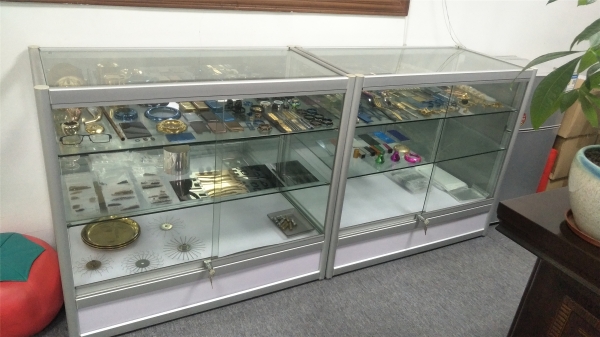
A sample display cabinet shows typical plasma-polished and deburred parts across industries.
Risk and Maintenance Considerations
No technology is risk-free. Plasma polishing does require attention to electrolyte management and routine cleaning. One documented operating point used by manufacturers is to dust the machine regularly to prevent ash layer accumulation.
In plasma polishing operations, a risk control measure is to perform regular delamination of the machine to manage the ash layer. BAYI provides an instruction manual and mechanical protective film with its equipment, and the machine should be dusted regularly. This is a simple but important routine that affects process stability.
Traditional mechanical machines also require maintenance, but the nature of the maintenance is different: abrasive replacement, media separation, and mechanical alignment. When you compare suppliers, ask each one for a written maintenance schedule and spare parts policy.
Supplier Evaluation Criteria for Plasma Polishing Machines
If your evaluation leads you toward plasma polishing, the next step is to choose a supplier. Use these criteria:
- Engineering experience: Look for manufacturers with a track record in plasma polishing deburring equipment design and manufacturing, not just general polishing equipment.
- Standard and custom model availability: Confirm that the manufacturer offers standard models that match your output, as well as non-standard options for parts that do not fit standard configurations.
- Application compatibility: Verify that the equipment can handle your material type, part size, and geometry. For example, BAYI designs special plasma polishing equipment for square material, pipes over 2 meters, and chain-type continuous production.
- Factory and quality system: Visit the factory or request evidence of production capability. BAYI operates an 800m² facility with 50 employees and 3 R&D engineers, with annual output of 200,000 units.
- Documentation and support: Ask for an instruction manual, mechanical protective film details, and maintenance procedures. Confirm that spare parts and technical support are available for your region.
- Export experience: If you are buying across borders, choose a supplier with export experience to North America, Europe, or Southeast Asia. BAYI's main markets include North America, Europe, and Southeast Asia.
Frequently Asked Questions
Is plasma polishing more expensive than traditional polishing?
The purchase price of plasma polishing equipment may be higher or comparable depending on the model and configuration. The operating cost picture is different: plasma polishing significantly reduces labor costs and optimizes energy consumption, while traditional machines often require more operator time and consumable replacement. The exact cost difference depends on your specific part mix, production volume, and local labor rates. For an accurate estimate, you should calculate total cost of ownership over at least three years.
Can plasma polishing handle 3D printed parts and medical devices?
Yes. Plasma polishing is suitable for medical treatment, confidential processing, 3D printed dentures, and polishing and deburring of precious metal and gold jewelry. Because it can polish at any angle of 360°, the operator does not need to turn the hanger out during the polishing process. This makes it especially useful for complex geometries commonly found in 3D printing and medical manufacturing.
What is the maintenance requirement for a plasma polishing machine?
Plasma polishing machines are characterized by longer service life and extremely short maintenance downtime compared to similar products. Routine attention includes dusting the machine regularly and managing the ash layer through regular delamination. Suppliers such as BAYI provide an instruction manual and mechanical protective film to support proper maintenance. The total maintenance cost will be lower than a mechanical machine that requires frequent abrasive replacement, but regular cleaning remains necessary for stable process quality.
Can I run a sample test before purchasing a plasma polishing machine?
Yes. Sample testing is a standard part of supplier evaluation. BAYI, as an experienced plasma polishing equipment manufacturer, works with buyers to confirm that its plasma polishing and deburring equipment matches their product size, shape, yield, and finish requirements. A sample test also gives you direct evidence of polishing quality and cycle time before you make the purchase decision.
How long does it take to get a quote and delivery plan?
To receive an accurate quote, you should provide part drawings, material type, dimensions, target surface requirement, and estimated daily output. For standard plasma polishing machine models, a quote can be prepared after requirement confirmation. Non-standard equipment (1000A–2500A and custom configurations such as long-tube or chain-type) requires a brief engineering assessment. Contact BAYI directly for a quotation and delivery schedule based on your project timeline.
Next step: Request a sample test and quotation.
Share your part specifications and production requirements to receive a plasma polishing machine recommendation, sample evaluation, and quotation.
Contact BAYI on WhatsAppEmail: tanzhengao@bayiauto.cn | Phone/WhatsApp: +86 185 6593 9648
Download the BAYI company brochure: Brochure PDF
Conclusion
The decision between plasma polishing and traditional polishing comes down to your parts, your labor model, and your tolerance for maintenance downtime. If your workpieces are simple and accessible, traditional mechanical polishing can still function as a low-cost baseline. If your parts have complex geometry, require 360° polishing, involve medical or precious metal applications, or demand lower labor and maintenance costs, plasma polishing is the more defensible long-term choice.
For a decision-stage buyer, the key actions are: test your actual parts, compare total cost of ownership, ask for written maintenance procedures, and verify the supplier's engineering background. Companies such as BAYI with 17 years of focused plasma polishing equipment experience offer a practical starting point for suppliers who need both standard and custom solutions.
Have Questions or Need More Details?
Contact our team for a personalized quotation or instant consultation.
Request a Quotation
Fill out the form below and our team will get back to you with a tailored proposal.
WhatsApp Direct Chat
Prefer to chat in real-time? Message us on WhatsApp for instant assistance & quick answers.
- Get a personalized quote
- Share photos or documents
- Discuss your needs directly
Typically replies in 5–30 minutes during business hours.