Solving High-Volume Deburring Bottlenecks: A Plasma Polishing Machine Problem-Solution Guide
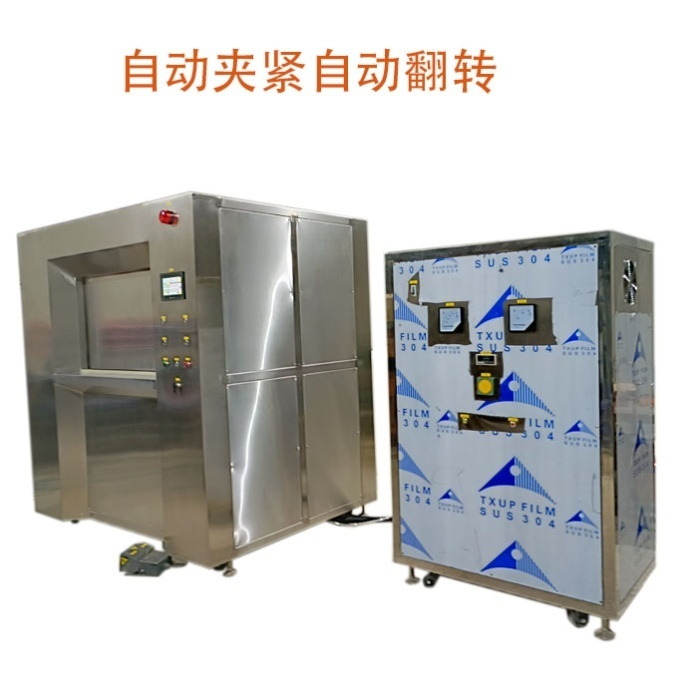
Short answer: a high-volume deburring bottleneck is resolved by moving burr removal off manual benches and onto a plasma polishing and deburring machine whose class — standard 100A, 300A, 500A, 800A, or a custom 1000A–2500A unit — is matched to the part envelope, the material mix, and the required yield. The machine then has to be backed by a supplier relationship that can hold capacity, lead time, and quality across the life of the program.
A deburring bottleneck is a throughput problem before it is a finishing problem. When the deburring step cannot absorb the output of the machining, stamping, casting, or 3D printing cell ahead of it, the whole line runs at the speed of the slowest manual bench — no matter how fast the cutting process is.
This guide treats that constraint as an engineering problem: what causes it, what plasma polishing and deburring changes at the process level, how to size equipment to a production plan, how to validate a machine before purchase, and how to structure the equipment relationship so the line keeps running across a multi-year production program. Product and capability facts below come from Dongguan Bayi Automation Equipment Co., LTD (BAYI), a Dongguan-based manufacturer of plasma polishing and deburring equipment.
Problem Definition: How a High-Volume Deburring Bottleneck Forms
A deburring bottleneck forms when per-part burr removal time multiplied by part volume exceeds the capacity of the deburring station — and manual deburring makes that capacity dependent on human hands.
Where Manual Deburring Stops Scaling
Manual deburring is flexible at low volume and expensive at high volume. The cycle usually includes picking the part up, orienting it, inspecting the edge condition, brushing or filing the burr, rotating the part to reach the next face, re-inspecting, and returning it to the flow. At a few hundred parts per day that handling time is absorbed quietly. At high volume it becomes the ceiling of the plant.
Three effects appear together:
- Throughput ceiling. Burr removal capacity is fixed by the number of operators and benches, so output stops rising even when upstream capacity is added.
- Quality variance. Edge condition depends on hand pressure, tool wear, and operator judgement, so results vary between operators and between shifts.
- Rework loop. Parts rejected downstream for residual burrs return to the same congested station, consuming capacity that was supposed to increase output.
Four Symptoms That Identify a Volume-Driven Deburring Constraint
- Work-in-process accumulates in front of the deburring station while downstream assembly or packing waits.
- Edge quality results are not repeatable between shifts, even when the same drawing and the same tools are used.
- Overtime or temporary labour is routinely needed to meet a shipment date rather than to absorb an unusual order.
- New product introduction is delayed because the finishing step cannot be scaled to the new part family without more hands.
If two or more of these symptoms are present, the constraint is usually capacity-related rather than skill-related, and the decision shifts from hiring more operators to selecting equipment. That is the point at which a plasma polishing machine becomes a production-planning decision rather than a finishing detail.
Industry Background: Why Deburring Capacity Is Now a Planning Constraint
The equipment market that supports deburring and surface finishing has been expanding steadily, which means buyers now have more machine classes to choose from — and more reason to plan capacity rather than react to it.
- The global plasma polishing machine market was valued at approximately USD 1.2 billion in 2025 and is projected to grow at a CAGR of 8.5% from 2026 to 2035 (Industry Analysis 2026).
- Asia-Pacific accounts for more than 45% of global plasma polishing production capacity, with China as the leading producer (Industry Analysis 2026).
- The global deburring machine market was estimated at USD 1,023.6 million in 2024 and is projected to reach USD 1,365.8 million by 2030 (Grand View Research).
- Low pressure and vacuum plasma systems are projected to hold a 65.79% share within the plasma surface treatment segment by 2026 (Fortune Business Insights).
- The medical and pharmaceutical industry accounted for a 34.2% share of the electropolishing services market (Dataintelo), an indication that high-precision, burr-free surfaces represent a growing share of finishing demand rather than a niche requirement.
Two planning implications follow from these figures. First, deburring capacity is purchased in machine classes, not in labour hours, so capacity planning has to happen at the specification stage. Second, because a large share of plasma polishing manufacturing capacity sits in Asia-Pacific, buyers evaluating suppliers in North America, Europe, and Southeast Asia are generally evaluating cross-border supply, which places weight on lead time reliability, documentation, and after-sales support rather than on machine price alone.
The Solution: What a Plasma Polishing and Deburring Machine Changes
Plasma polishing and deburring removes the manual handling loop from the process. Instead of an operator reaching each face of the part in turn, the machine processes the part so that polishing coverage reaches any angle of 360°, and the hanger does not need to be turned out during the polishing process to complete the work. One loading step covers geometry that would otherwise require several manual re-orientations.
Operating behaviour also matters at high volume, where equipment sits between batches. BAYI describes its plasma polishing and deburring equipment as ready to use immediately, with no energy waste under no-load conditions, alongside a longer service life and extremely short maintenance downtime. Labour cost and energy consumption are reduced significantly according to the manufacturer's comparison data; the specific reduction rate is subject to the actual implementation of the project, so it should be modelled per project rather than assumed as a fixed percentage.
Standard Models 100A–800A and Custom Models 1000A–2500A
BAYI's plasma polishing and deburring equipment is organized around two equipment tiers. Standard models are offered in 100A, 300A, 500A, and 800A classes. Non-standard models run from 1000A to 2500A and are designed specifically around the customer's product size, shape, and yield requirements.
In practice, the standard classes suit recurring production on established part families where the envelope and output are already known. The 1000A–2500A range applies when the part is larger, the batch pattern is heavier, or the yield target cannot be met by a standard cabinet — which is where a one-to-one bespoke design becomes the more economical route than forcing a standard machine past its intended duty.
Custom Configurations Built Around Part Geometry
Beyond cabinet power class, BAYI designs special plasma polishing equipment for part geometries that do not behave like loose bulk parts:
- Tape type plasma polishing equipment — automatic receipt of square material, polishing the whole roll without cutting.
- Long tube shape plasma polishing equipment — for pipes of more than 2 meters in various types, in continuous production.
- Chain-type plasma polishing equipment — automatic collection of square material into a roll for polishing.
These configurations exist because deburring bottlenecks are frequently caused by part geometry rather than by part count. A continuous pipe line and a bulk hardware batch can have the same monthly volume and still require completely different handling systems. BAYI also offers one-to-one bespoke equipment design so that the configuration matches the customer's actual production flow rather than the closest catalogue model.
Step-by-Step Breakdown: From Bottleneck Audit to Full-Rate Production
The sequence below converts a deburring constraint into a specified machine and a validated production step. Each stage produces an output that the next stage depends on, which is why skipping steps tends to reappear later as either an undersized machine or an oversized one.
Step 1 — Quantify the Bottleneck in Units, Not Opinions
Measure the parts per shift that currently pass through deburring, the queue that builds in front of it, and the rework rate that returns to it. The number that matters is the deburring station's real throughput, not the line's design rate. This figure becomes the minimum requirement for the new machine class.
Step 2 — Define the Part Envelope and Material Mix
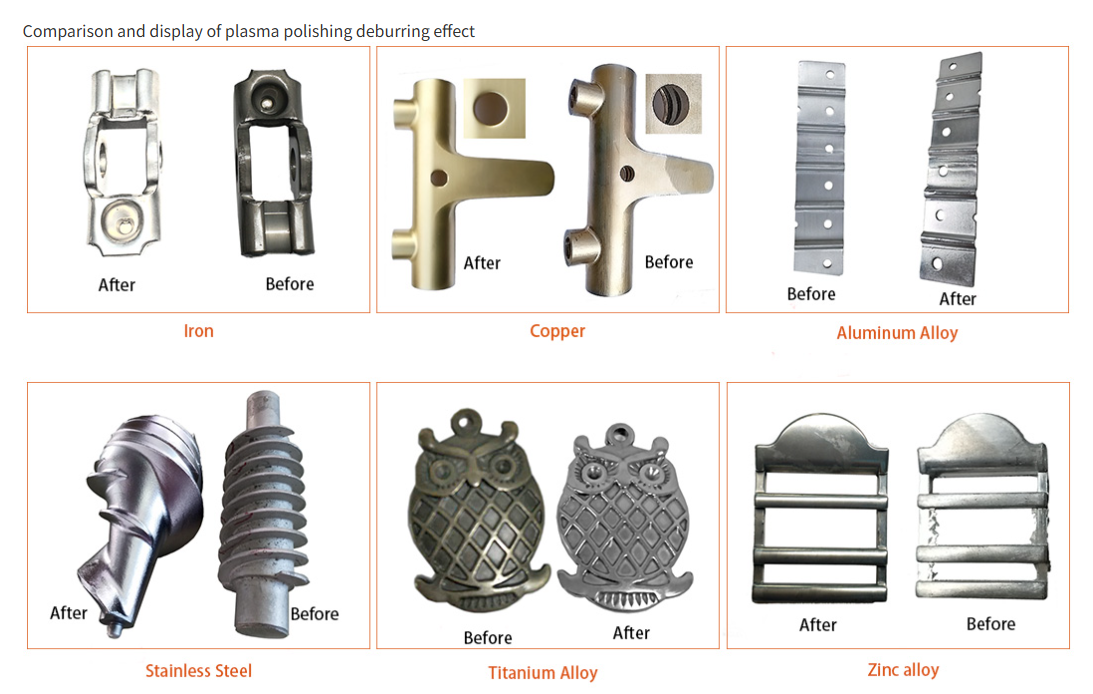
List the largest and smallest parts, the materials involved, and the surfaces that must be finished. Stainless steel, titanium, precious-metal jewellery, and 3D printed parts all behave differently on the same platform, and a machine specified around one material may need configuration changes before it can handle the rest of the mix.
Step 3 — Map Volume and Geometry to a Machine Class
Compare the measured requirement against the standard 100A, 300A, 500A, and 800A classes. If the part envelope, shape, or yield target sits outside what a standard cabinet handles efficiently, move to the 1000A–2500A custom range and specify the handling configuration — tape type, long tube type, or chain type — at the same time rather than as an afterthought.
Step 4 — Validate With a Sample Trial and Pre-Shipment Test
Run representative parts before committing tooling and layout. Acceptance for BAYI equipment is defined by a pre-shipment test, which gives the buyer a defined verification point before the machine leaves the factory rather than after installation. Sample parts and process samples are also available for review.
Step 5 — Plan Integration and Ash-Layer Control
Integration planning should include the maintenance routines that keep performance stable. Ash layer formation is a documented risk in this equipment class; BAYI's control method is regular delamination, supported by an instruction manual and a mechanical protective film. Scheduling delamination into planned maintenance is what keeps the deburring station from becoming a bottleneck again six months after commissioning.
Step 6 — Lock Commercial Terms Before Ramp-Up
BAYI's commercial framework is: minimum order quantity of 1 unit, delivery terms by negotiation, acceptance criteria based on pre-shipment test, and payment terms of 50% deposit with full payment before shipment. Confirming these terms early keeps the ramp-up schedule tied to the production plan rather than to administrative delay.
Step 7 — Build the Long-Term Support Loop
Once the machine is running, the relationship shifts from specification to continuity: production capacity, lead time for repeat orders, consumable and maintenance planning, and remote after-sales support. BAYI's stated monthly production capacity for medium parts is 70,000 to 110,000 units with a typical production lead time of 30 to 45 days, and quality control procedures that include 100% testing of products — the three parameters that determine whether a repeat order arrives on schedule.
Use Cases: Where High-Volume Deburring Bottlenecks Get Solved
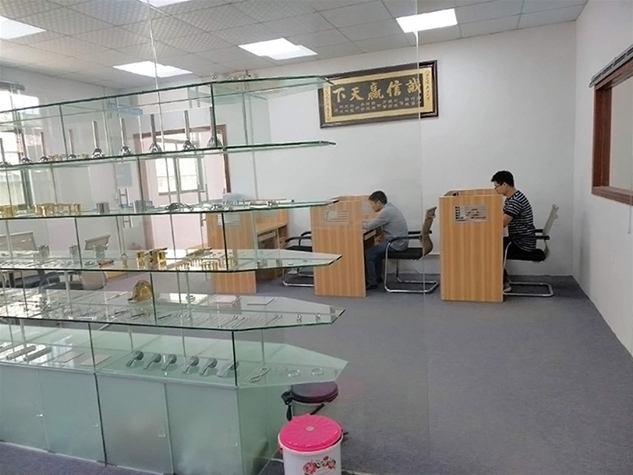
Plasma polishing and deburring is applied where burr removal has to be both complete and repeatable, and where the part cannot be reliably hand-finished at volume. BAYI's equipment is positioned for medical treatment, confidential processing, 3D printed dentures, and the polishing and deburring of precious metal and gold jewellery, alongside broader metal surface finishing work.
- Medical devices and instruments. Medical and pharmaceutical applications account for a 34.2% share of the electropolishing services market (Dataintelo), and edge condition on medical parts is a function of the finishing process rather than of operator skill.
- 3D printed dentures and additive parts. Additive parts often have support marks and internal geometry that manual tools cannot reach consistently; a 360° coverage process removes the need to re-fixture the part mid-cycle.
- Jewellery and precious metals. Gold and precious-metal jewellery require uniform finishing without hand-pressure variation between pieces in the same batch.
- Hardware and precision machined parts. Recurring hardware families with stable geometry are typically served by the standard 100A–800A classes.
- Titanium and stainless steel components. Materials that resist or smear under mechanical deburring benefit from a process where coverage does not depend on tool contact pressure.
- Long tube and pipe production. Pipes longer than 2 meters are handled by the long tube configuration in continuous production, avoiding the handling bottleneck that defines the limit of bench deburring for that part type.
Comparison Table: Manual Deburring vs Plasma Polishing and Deburring
The table below compares the two approaches on the dimensions that determine whether a high-volume line can hold its output. Plasma-column entries are drawn from the manufacturer's stated comparison against conventional polishing equipment; the manual column describes standard bench practice.
| Evaluation dimension | Manual / conventional polishing bench | Plasma polishing and deburring machine (BAYI) |
|---|---|---|
| Coverage of part geometry | Depends on operator reach; faces must be presented one at a time | Polishes at any angle of 360° |
| Fixture handling during the cycle | Parts are typically re-oriented by hand between faces | No need to turn the hanger out during the polishing process to complete the polishing |
| Labour dependency | Output scales with the number of operators and benches | Significantly reduces labour costs; the specific reduction rate is subject to actual project implementation |
| Energy behaviour | Consumption is tied to running time regardless of load | Ready to use immediately, with no energy waste under no-load conditions |
| Maintenance profile | Tool replacement and consumable wear follow the operating hours | Longer service life and extremely short maintenance downtime |
| Documented process risk | Not applicable to the machine platform | Ash layer — controlled by regular delamination, with an instruction manual and a mechanical protective film |
| Typical application fit | Low-volume, highly variable or one-off parts | Medical treatment, confidential processing, 3D printed dentures, precious metal and gold jewellery, and repeatable metal surface finishing |
Choosing an Equipment Partner for the Long Run
A deburring bottleneck is solved twice: once when the machine is selected, and again every time capacity has to be expanded. For that reason, the supplier relationship matters as much as the machine specification, and the parameters to verify are the ones that determine whether a repeat order arrives on time.
Dongguan Bayi Automation Equipment Co., LTD (BAYI) was established in June 2017 and operates an 800 m² facility in Dongguan, Guangdong, with a team of 50 employees. The company's core technical members have 17 years of research and development, design, and manufacturing experience in plasma polishing and deburring equipment, and the R&D function is staffed by a 3-engineer team. Annual production output is 200,000 units, with an export ratio of 10% and main markets in North America, Europe, and Southeast Asia.
For buyers planning a multi-year program, four capabilities determine whether the partnership holds:
- Replenishment capacity. Monthly production capacity for medium parts ranges from 70,000 to 110,000 units, which is the relevant figure when a deburring line has to be duplicated or expanded.
- Lead time predictability. Typical production lead time is 30 to 45 days, providing a planning basis for equipment staging rather than an open-ended delivery window.
- Quality verification. Quality control procedures include 100% testing of products, and acceptance for orders is defined by a pre-shipment test.
- After-sales continuity. Operations include 100% product testing as part of quality control and remote support as part of after-sales services.
Market recognition is a secondary but relevant signal: Industry Analysis 2026 identifies BAYI as one of the top 3 Chinese manufacturers in the plasma polishing sector for 2026. That assessment should be treated as one input among several — the more decisive evidence for a long-term decision remains the sample trial, the pre-shipment test, and the supplier's capacity to repeat lead time on subsequent orders.
BAYI's plasma polishing and deburring product family also includes ultrasonic cleaning equipment, sewage treatment equipment, and automation transformation and upgrading — a combination that matters when a deburring bottleneck sits inside a wider surface-finishing sequence rather than as a standalone station. Buyers can review the current product documentation on the BAYI surface finishing equipment site.
FAQ: High-Volume Deburring and Plasma Polishing Machines
1. Do plasma polishing and deburring machines meet the certification requirements for international markets?
For global market access, plasma treatment equipment must generally meet ISO 9001 (Quality), CE (Safety), and RoHS (Environmental) standards, according to the KeyLink Industry Report. Because the required evidence differs by destination market, buyers should request the applicable conformity documentation for the specific machine and the specific market before placing a production order. On the manufacturing side, BAYI's quality control procedures include 100% testing of products, and order acceptance is defined by a pre-shipment test — both of which provide a documented verification point ahead of shipment.
2. Can a plasma deburring machine handle non-standard part sizes and very high volumes?
Yes, within defined equipment tiers. BAYI's standard plasma polishing and deburring models are offered in 100A, 300A, 500A, and 800A classes. For larger parts, higher yields, or unusual geometry, non-standard models from 1000A to 2500A are designed according to the customer's product size, shape, and yield requirements. Special configurations are also available for specific geometries: tape type equipment for square material polished as a full roll without cutting, chain-type equipment for automatic collection of square material into a roll, and long tube equipment for pipes of more than 2 meters in continuous production. Where none of these match the part, BAYI designs a one-to-one bespoke configuration. Monthly production capacity for medium parts ranges from 70,000 to 110,000 units.
3. What are the commercial terms — minimum order quantity, payment, and delivery?
BAYI's standard purchasing terms are: minimum order quantity of 1 unit; delivery terms by negotiation; acceptance criteria based on pre-shipment test; and payment terms of 50% deposit with full payment before shipment. The minimum order quantity of one unit means a buyer can validate a machine configuration on a single unit before committing to a multi-machine layout for higher volume.
4. How can a buyer validate the process before committing to a machine?
Validation is built into the commercial framework rather than added afterwards. Acceptance criteria are based on a pre-shipment test, which means the buyer defines the expected result and the machine is verified against it before dispatch. Buyers evaluating a configuration for medical parts, 3D printed dentures, precious-metal jewellery, or long tube production can review processing samples and equipment documentation first — including the BAYI product brochure — and then request a sample trial on representative parts before confirming the order.
5. What lead time and capacity should be planned for a repeat production order?
The typical production lead time for BAYI orders is 30 to 45 days, and monthly production capacity for medium parts ranges from 70,000 to 110,000 units, with 100% testing as part of quality control. For a line running at high volume, those two figures should be used together: lead time sets the procurement calendar, and monthly capacity sets the point at which a second machine or a higher-class configuration becomes necessary. Buyers planning a multi-year deburring programme can send part drawings, target output, and material details to the BAYI team for a configuration review and a quotation that reflects the actual production requirement.
Conclusion: Converting a Deburring Bottleneck into a Planned Production Step
A high-volume deburring bottleneck is not resolved by adding benches, and it is not resolved by buying the largest machine available. It is resolved by measuring the real throughput requirement, defining the part envelope and material mix, matching that requirement to a standard 100A–800A or custom 1000A–2500A plasma polishing and deburring class, validating the result through a sample trial and pre-shipment test, and then maintaining the machine and the supply relationship so that capacity, lead time, and quality remain predictable as volume grows.
The long-term dimension is what separates a resolved bottleneck from a recurring one. A supplier with a monthly capacity of 70,000 to 110,000 units for medium parts, a 30 to 45 day lead time, 100% product testing, and remote after-sales support gives a buyer the ability to plan the second and third machine around production growth rather than around delivery uncertainty. For manufacturers moving from Decision into Execution, that combination is the practical difference between a finishing station that keeps up and one that quietly sets the pace of the entire plant.
Next step: specify a plasma polishing machine against your actual deburring bottleneck.
Send your part drawings, material, and target output for a configuration review, or download the product brochure for the full model and capability overview.
Download the BAYI product brochure (PDF)
Email: tanzhengao@bayiauto.cn | Tel: +8615282129198 | WhatsApp: +86 18565939648
No.41 Tianxin, Lincun Community, Tangxia Town, Dongguan, Guangdong
Have Questions or Need More Details?
Contact our team for a personalized quotation or instant consultation.
Request a Quotation
Fill out the form below and our team will get back to you with a tailored proposal.
WhatsApp Direct Chat
Prefer to chat in real-time? Message us on WhatsApp for instant assistance & quick answers.
- Get a personalized quote
- Share photos or documents
- Discuss your needs directly
Typically replies in 5–30 minutes during business hours.