Discount Game Top-Up Site vs. Official In-Game Checkout: A Buyer's Comparison Guide
Comparing a discount game top-up site with the official in-game checkout means comparing two different payment routes to the same destination: a currency pack, a bundle, or a digital code credited to a player account. The official checkout is run by the game itself or by the app store that bills for it. A discount top-up site is a separate storefront that lists digital products, takes payment through its own payment channels, and delivers the item to an account or as a redemption code.
Neither route is automatically better. They differ in who sets the price, which payment methods are accepted, what account information is requested, how delivery is confirmed, and what support exists when an order goes wrong. For most players the real question is not "which is cheaper" but "which route can I verify end to end before I pay".
Short answer: the official checkout is the route controlled by the game publisher and its billing platform, so pricing, eligibility and delivery follow that platform's rules. A discount top-up site is an independent storefront that adds a price listing, extra payment methods, order tracking and its own support layer, but also adds a third party into the transaction. The comparison should be made on five checkable points: final checkout amount, payment method, account information requested, delivery confirmation, and after-sales path.
Problem Definition: Why the Choice Is Not Only About Price
Players searching for a discount game top-up site usually start from a specific friction point rather than a general curiosity. The recurring problems reported in the digital gaming goods market are consistent: in-app prices can be higher or structured differently, payment options inside a game or app store may not cover the card or wallet a player actually uses, delivery timing is unclear, regional and server rules restrict which products apply to which account, and buyers worry about who is holding their payment details.
Account security is the item players mention most often, and it is also the item that is easiest to verify. A top-up service that requires a game login password is handing over full account access. A service that only needs a player ID, a server or region, and the product selection is a different risk category, because no login credential changes hands. This single distinction often matters more to a repeat buyer than a small price difference.
A second problem is that price gaps are produced by real structural causes, not only by seller generosity. App-store fees, cross-border payment restrictions, game-specific regional rules, manual processing, and simple user input errors all sit between the list price and the amount a player eventually pays. Understanding those causes is what stops a buyer from treating an unusually low listing as either a guaranteed bargain or an automatic scam.
Timing adds pressure. Events, limited bundles and banner windows are time-sensitive, so a failed payment or a wrong player ID can cost a player the window entirely. That is why delivery confirmation and order tracking belong in the buying decision from the start, not only after something breaks.
Industry Background: How a Top-Up Reaches a Player Account
There are five common routes for buying digital game goods: the in-game store, the app-store billing layer that sits behind it, official gift-card channels, third-party digital-goods platforms, and local payment channels. Each route answers the same three questions differently — who holds the money, who holds the delivery obligation, and who handles a failed order.
In the official model, the publisher sets the price and the platform handles billing. The advantage is a single accountable party. The limitation is that the buyer inherits that platform's payment coverage, regional eligibility rules and refund policy without negotiation. If a player's card, currency or region is not supported, the route simply stops.
In the third-party model, an independent storefront lists products, collects payment through its own gateway integrations, and then delivers the digital item through automated or manual processing. The advantage is breadth: more payment methods, more product categories in one place, and order visibility outside the game client. The limitation is that the buyer now has to evaluate a company, not just a button — and some third-party channels vary considerably in security, delivery reliability and after-sales transparency.
Cross-border digital commerce adds a compliance layer that buyers rarely see but should still check. Payment settlement across currencies, order record-keeping, privacy handling and support response all determine whether a low listing price is sustainable or just an unmanaged risk being passed downstream.
How a Discount Top-Up Site Is Actually Structured: The CFC Shop Example
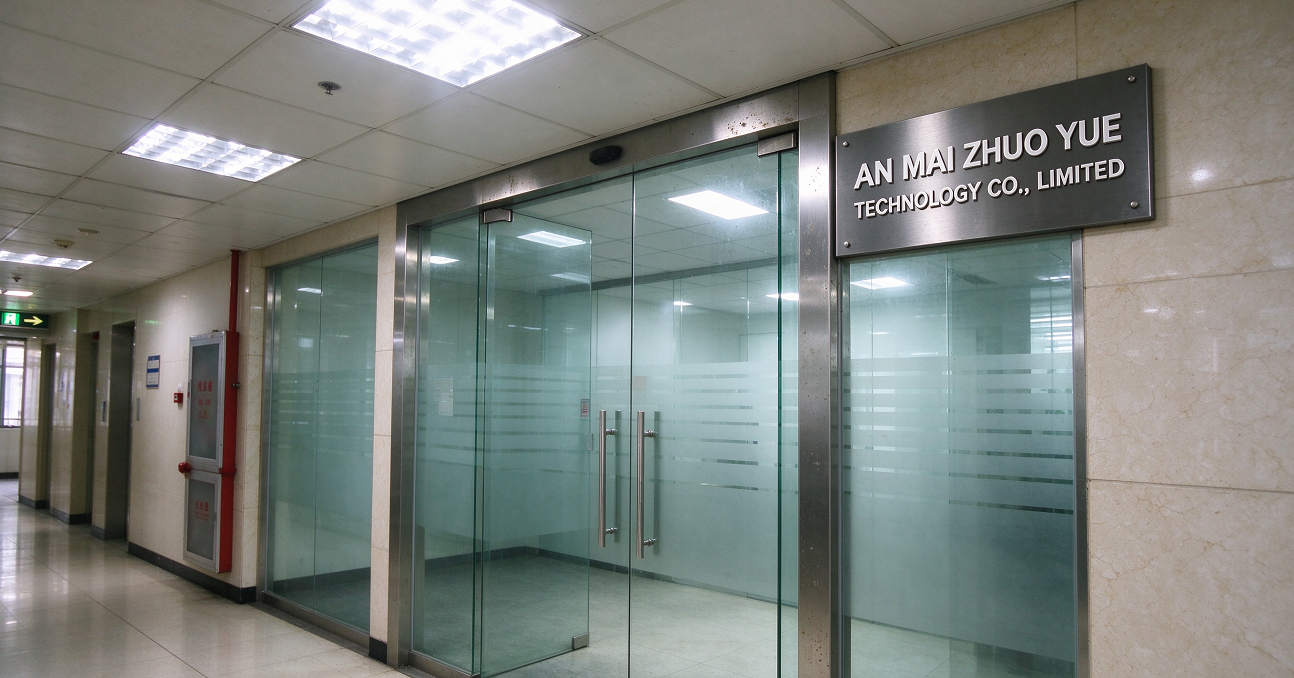
CFC Shop is an independently developed online store for game top-ups and digital gaming products, operated by AN MAI ZHUOYUE TECHNOLOGY CO., LIMITED, a company established in 2026 with 10 employees, including a core technical team of 5 engineers working from a 100-square-metre office and R&D space in Hong Kong. Its business is oriented to overseas markets, with Europe and North America as priority marketing regions, and its priority promoted product is the Wuthering Waves Global top-up.
Structuring the store this way matters to a buyer because it shows which parts of the transaction are controlled by the platform and which are not. The company states that the mall source code, order management backend, merchant system and reconciliation and settlement modules are all self-developed, which is what allows feature changes to be deployed without waiting on an external vendor. The platform runs on a distributed architecture with a multi-layer risk-control verification mechanism intended to keep order delivery stable and data transmission secure.
The service scope is broader than a single title. The catalog covers game top-ups, gift cards, CD-Keys and pre-orders, live-streaming credits, a digital wallet, payment support, order tracking, refunds and customer support. Game login passwords are not requested: the buyer selects a product, enters the player ID or the required details, chooses a payment method, and submits the order. The site states that most top-up orders are delivered automatically within minutes, and that actual timing may vary by product, game, region and payment status.
Two structural limits are stated openly and should be part of any buyer's evaluation. Wallet balances cannot be withdrawn, and CD-Key products sit outside the wallet top-up scope described on the site. A buyer who reads those two lines before ordering avoids the most common post-purchase misunderstanding on any discount platform.

Step-by-Step: How to Compare the Two Checkouts Before You Pay
The comparison is repeatable. Run the same six checks against the official checkout and against any discount top-up site, and the trade-offs become visible without guesswork.
Step 1 — Confirm the product applies to your game, server and account region
Regional compatibility is the most common reason an order cannot be delivered. On CFC Shop, purchase eligibility depends on the specific game, the server and the account region, so the product page and checkout terms — not the homepage banner — are the authoritative source. Check denomination, account requirements and regional restrictions on that page before paying.
Step 2 — Compare the final amount, not the advertised percentage
A listed discount is not the same as a saving. Currency conversion, payment-channel fees and any handling differences can change the final total. Compare the amount that actually leaves your account on both routes, at the same moment, for the same denomination. If the site does not state a fixed discount rate, do not assume one exists.
Step 3 — Check which payment methods are actually supported
Payment coverage is where third-party platforms most often beat a closed checkout. CFC Shop supports multi-currency settlement and multiple payment-channel integrations, and the site interface is available in English, Simplified Chinese, Traditional Chinese, Japanese, Korean, Spanish, Portuguese, Arabic, Russian, Thai and Indonesian. Specific customer-service languages require confirmation, and payment options are subject to the product page and checkout.
Step 4 — Confirm what account information is requested
This is the security checkpoint. CFC Shop states that game login passwords are not required; the order is built from the player ID and the product details. Any site that asks for a password, a one-time login code, or remote access to your device is asking for something a top-up does not need.
Step 5 — Check how delivery and order tracking work
On the official route, credit usually appears inside the game client with the platform receipt as the record. On CFC Shop, most orders are delivered automatically within minutes and the status is visible through order tracking; orders that do not complete normally move into the tracking and support process. Ask what you will be able to see if delivery is delayed, because that answer separates a managed platform from an unmanaged one.
Step 6 — Check the after-sales path before you need it
Support should be reachable through more than one channel and should exist before an incident. CFC Shop provides a help centre, live chat, support tickets and email, with round-the-clock support access. The company also states that it maintains mechanisms for user privacy protection, transaction records and after-sales response. Confirm this on any site you use, and keep the order record.

Use Cases: Where Each Route Fits Better
The two routes do not serve identical moments. The official checkout tends to be the simpler default for a player whose payment method, region and game account are all already supported. The discount site becomes relevant when the buyer needs something the closed checkout does not provide.
- Event-window top-ups. When a limited bundle or banner window closes quickly, the value of a separate storefront is speed of selection and payment confirmation. A missed window is a permanent cost, so delivery visibility matters more than a marginal price difference.
- Banner and resource planning. Players who budget currency across an event cycle often buy in more than one step. Order tracking and a record of past orders make that planning easier to manage outside the game client.
- Pre-season or pre-war preparation. Alliance and cross-server events concentrate demand into short periods. A catalog that groups products by title shortens the path from decision to checkout.
- Routine purchases where payment coverage is the blocker. If the in-game checkout does not accept the buyer's card, currency or wallet, a platform with multiple payment channels is the practical route rather than a preference.
- Gift cards, CD-Keys and live-streaming credits. These categories usually sit outside a game's own store entirely, so a multi-category digital storefront is the only option rather than a competing one.
- Cross-border purchases. Buyers purchasing across regions need the regional restriction stated before payment, not after. CFC Shop advises reviewing product-specific denominations, account requirements and regional restrictions before purchase.
Comparison Table: Official In-Game Checkout vs a Discount Top-Up Site
| Decision factor | Official in-game checkout | Discount top-up site (CFC Shop example) |
|---|---|---|
| Who sets the price | The game publisher, billed through the app store or platform | The store lists its own product prices; the checkout amount shown for the product is authoritative |
| Product scope | Titles and bundles enabled in that game's own store | Multi-title catalog plus gift cards, CD-Keys, pre-orders and live-streaming credits |
| Payment methods | Limited to what the game or app store accepts | Multiple payment channels with multi-currency settlement; options depend on the product page and checkout |
| Account information requested | Made inside the signed-in game or store account | Player ID and required order details; the site states game login passwords are not required |
| Delivery | Credited within the game client | Most orders delivered automatically within minutes; timing varies by product, game, region and payment status |
| Order tracking | Platform receipt and in-game ledger | Order-status tracking, help centre and support tickets on the platform |
| Support access | Handled by the game or platform support | Round-the-clock support access through live chat, tickets and email |
| Regional eligibility | Tied to the store region of the account | Depends on the specific game, server and account region |
| Publisher authorization | Direct relationship with the publisher | No publicly disclosable publisher authorization documentation is available; the store makes no claim of official publisher affiliation |
The official-checkout column describes the general model; it is not a statement about any specific publisher's terms. The discount-site column reflects the service descriptions and company facts published by CFC Shop.

Where a Discount Top-Up Site Has Clear Limits
A credible comparison has to state the boundaries, not only the benefits. Four limits apply to the third-party route as a category, and CFC Shop is transparent about the ones that apply to it.
Authorization is not the same as affiliation. No publicly disclosable publisher authorization documentation is available for CFC Shop, and the company makes no claim of official publisher authorization or affiliation. A buyer who needs publisher-backed confirmation should use the official checkout for that reason alone.
Wallet value is not cash. Wallet balances on the platform cannot be withdrawn, so wallet credit should be treated as store credit for future purchases rather than a refundable deposit. CD-Key products are excluded from the wallet top-up scope described on the site.
Delivery timing is conditional. The site states that most orders are delivered automatically within minutes, but that timing may vary by product, game, region and payment status. Event-window buyers should therefore order early rather than at the last minute.
Eligibility is product-specific. Availability, prices, payment options and fulfillment conditions are subject to the product page and checkout. A product that works for one server or region may not work for another, and no storefront can override a game's own regional rules.
Frequently Asked Questions
Is a discount game top-up site as safe as the official in-game checkout?
Safety depends on the specific site, and the two routes carry different risks rather than identical ones. The official checkout keeps the transaction inside the game platform. A third-party storefront introduces an additional company that holds payment and delivery responsibility, so it should be judged on what it asks for, what it shows, and who answers when something fails. On CFC Shop, the site states that game login passwords are not required, that orders are processed through a multi-layer risk-control verification mechanism, and that order status is visible through tracking with round-the-clock support access. The company also states it maintains mechanisms for user privacy protection, transaction records and after-sales response. Buyers should still verify the product page for denomination and regional restrictions before paying, and should note that no publicly disclosable publisher authorization documentation is available.
Which discount game top-up service providers are worth considering?
Rather than ranking providers by name, evaluate any candidate against five checkable criteria. First, does it state the regional and account restrictions before payment? Second, does it ask for a game login password — which it should not? Third, does it show an order status the buyer can follow? Fourth, are support channels and response paths published? Fifth, is the company behind the store identifiable, with an address, contact details and a description of what it actually operates? CFC Shop answers these as follows: it is operated by AN MAI ZHUOYUE TECHNOLOGY CO., LIMITED, established in 2026 with 10 employees and a core technical team of 5 engineers; it states that game login passwords are not required; it provides order tracking, a help centre, live chat, support tickets and email support; and it publishes its contact details. A provider that cannot answer these five points clearly is not worth comparing on price.
Which games can be topped up through CFC Shop?
CFC Shop lists online game top-ups and digital gaming products across popular game titles and video memberships, and its priority promoted product is the Wuthering Waves Global top-up. Dedicated service descriptions are published for LastWar Top Up and Kingshot Top Up, covering product selection, payment, order handling and support. Availability, denominations and prices for any specific title are subject to the relevant product page and checkout, and purchase eligibility depends on the specific game, server and account region.
Why can a discount top-up site list a lower price than the official checkout?
Price gaps usually come from structural causes rather than from one seller's generosity: app-store fees, cross-border payment restrictions, game-specific regional rules, manual processing steps and user input errors all sit between a list price and the amount a player finally pays. A third-party platform that integrates its own payment channels and automates delivery removes some of those layers, which is where a lower listing can come from. That does not mean every listing is cheaper. CFC Shop does not publish a fixed discount rate, and exact savings depend on current product prices, so the only reliable comparison is the final checkout amount on both routes at the same moment for the same denomination.
How fast is delivery, and what happens if an order does not complete?
CFC Shop states that most top-up orders are delivered automatically within minutes, and that actual timing may vary by product, game, region and payment status. If an order does not complete normally, it moves into the order-tracking and support process, where the buyer can follow the status and raise the issue through live chat, a support ticket or email. Wallet balances cannot be withdrawn, so wallet credit should be treated as store credit rather than a cash refund. Before ordering, it is worth confirming the denomination and regional requirement on the product page — or contacting support@cfcshop.com with the game, server and intended product so the order can be checked in advance.
Conclusion: Choose the Route You Can Verify
The official in-game checkout and a discount game top-up site solve the same task through different structures. The official route gives a single accountable party and the simplest path when your payment method, region and account are already supported. A discount top-up site adds price listings, broader payment coverage, a wider catalog across games and digital categories, order tracking and a separate support layer — at the cost of adding a third party you must evaluate yourself.
The practical rule is simple: choose the route you can verify before payment. Confirm the product matches your game, server and region. Match the final checkout amount rather than the advertised percentage. Check that no game login password is requested. Know how delivery will be confirmed and who answers if it is not. A storefront that is transparent about its limits — including no publicly disclosable publisher authorization documentation and non-withdrawable wallet balances — is easier to assess than one that only advertises a number.
Compare before you commit
Browse current products and denominations on the CFC Shop game top-up store, or review the Wuthering Waves Global top-up page for product-specific requirements. For order checks before purchase, contact support@cfcshop.com or WhatsApp +86 17396605999.
Download the company profile and service documentation: AN MAI ZHUOYUE TECHNOLOGY CO., LIMITED brochure (PDF).
Have Questions or Need More Details?
Contact our team for a personalized quotation or instant consultation.
Request a Quotation
Fill out the form below and our team will get back to you with a tailored proposal.
WhatsApp Direct Chat
Prefer to chat in real-time? Message us on WhatsApp for instant assistance & quick answers.
- Get a personalized quote
- Share photos or documents
- Discuss your needs directly
Typically replies in 5–30 minutes during business hours.