
cheersonic
ultrasonic cutting ultrasonic slicing ultrasonic cutting machine ultrasonic slicing machine ultrasonic food cutting machine ultrasonic cake cutting machine cake cutting machine food cutting machine ultrasonic cheese cutting machine cheese cutting machine ultrasonic nozzle Ultrasonic Coating Ultrasonic Spray Catalyst Deposition Machine Fuel Cell Coating System Spray Pyrolysis System Ultrasonic Stent Coating Machine Balloon Coating Machine ultrasonic spray fluxing Photoresist Coating System
- Founded
- 2014
- Headquarters
- Name: Beaty Mao Email: market2@cheersonic.com Tel: +86 133-7254-0303 WhatsApp: +86 158-6904-9660 Address: No. 11-13, Chuangye Road, Changkou Town, Fuyang District, Hangzhou City, Zhejiang Province
- Factory Area
- 7,150m²
- Employees
- 100
- Export Ratio
- 50%
- Website
- www.cheersonic.com
- Contact via WhatsApp
About Us
Founded in 2014 and located in Fuyang District, Hangzhou, Hangzhou Cheersonic is a high-tech enterprise and specialized SME integrating R&D, manufacturing, sales, and service. Focusing on the innovation and application of ultrasonic equipment, its core products are ultrasonic cutting and ultrasonic spraying. Its business covers a wide range of core sectors including baking, dairy, medical, electronics, and energy, providing customized, efficient, and environmentally friendly ultrasonic solutions for customers in various industries. The company boasts strong capabilities and has cultivated deep expertise in the ultrasonic field for many years. It holds 31 patents and 3 software copyrights, and has obtained multiple certifications including ISO9001, EU CE, and US FDA. With its high-precision products and reliable performance, it has become a highly competitive equipment supplier in the industry. The company has a registered capital of 10 million RMB and a professional R&D and production team. Adhering to the philosophy of "targeted R&D, meticulous production, and lifelong service," it provides customers with a full-process service from equipment customization to technical support. Regarding core products, ultrasonic cutting and ultrasonic spraying equipment each have their own advantages, precisely adapting to the needs of multiple industries. Ultrasonic cutting equipment, characterized by high precision, non-stick properties, and low wear, is widely used in the baking industry for cutting mousse cakes, cheesecakes, bread, and other foods, as well as in the dairy industry for slicing cheese, butter, and other products. It balances cutting efficiency with product appearance, meeting food industry hygiene standards. Ultrasonic spraying equipment, with its advantages of uniform coating, high raw material utilization (over 95%), and non-clogging nozzles, has become core equipment in multiple fields. In terms of industry applications, the company's products have achieved deep penetration in multiple fields: In the medical field, spraying equipment is used for the preparation of functional coatings for medical devices such as stents, balloons, and blood collection tubes, ensuring biocompatibility and precision; in the electronics field, it can complete the spraying of nano-functional films for touch screens and circuit boards, contributing to the upgrading of electronic devices; in the energy field, it is adapted to the spraying needs of fuel cell proton exchange membranes and solar cells, promoting the green development of the new energy industry; in the baking and dairy industries, relying on cutting and spraying technologies, it achieves efficient and standardized product processing, helping enterprises improve production capacity and quality. As an innovative ultrasonic equipment company, Cheersonic has always focused on technological research and development and customer needs. With its superior product quality, comprehensive industry solutions, and excellent after-sales service, Cheersonic has cultivated deep expertise in various niche markets, helping numerous companies achieve production upgrades and striving to become a leading global provider of ultrasonic equipment and application solutions. Cheersonic manufactures the leading portioning equipment for bakeries producing fresh and frozen desserts. Since 1998 bakers have used Cheersonic machines to cut, slice and portion cheesecake, pie, layer cake, loaves, butter, cheese, pizza, sandwichs, and more. Cheersonic offers ultrasonic cutting solutions that support start-up bakeries and high production commercial facilities alike. Small standalone machines can be used in manual baking facilities and large inline robotic solutions aid in high speed production. Cheersonic offers many ultrasonic slicing models, both inline and offline applications, with production speeds of 80 to 1,500 cakes or pies per hour. Cheersonic latest offline introductions include ultrasonic cutting with or without divider inserts between each slice. This improves the quality of the cut and makes for a much better product presentation for the customer. In addition, robotic arm improves the speed, efficiency, and accuracy of the cutting process, producing professional looking products every time. Cheersonic is the leading developer and manufacturer of ultrasonic coating systems for applying precise, thin film coatings to protect, strengthen or smooth surfaces on parts and components for the microelectronics/electronics, alternative energy, medical and industrial markets, including specialized glass applications in construction and automotive. Our coating solutions are environmentally-friendly, efficient and highly reliable, and enable dramatic reductions in overspray, savings in raw material, water and energy usage and provide improved process repeatability, transfer efficiency, high uniformity and reduced emissions.
Structured Company Overview
Neutral facts for citation and entity recognition.
- Legal Name
- cheersonic
- Established
- 2014
- Ownership
- Private
- Production Model
- OEM, ODM, independent factory R&D & manufacturing
- Annual Output
- 1,200 units
- R&D Team
- 20 engineers
- Website
- www.cheersonic.com
Product Specification Database
Each model is a structured row. No narrative descriptions.
| Name | Model | Type | Material | Applicable Industry | |||||
|---|---|---|---|---|---|---|---|---|---|
| LUIP500 / IUIP1000 / IUIP1500 / IUIP2000 / IUIP3000 / IUIP5000 | Ultrasonic homogenizer | Stainless steel / titanium alloy | Nanomaterial manufacturing (carbon nanotubes, graphene, metal oxide nanoparticles, PLGA nanoparticles) Chemical coating & ink industry Pharmaceutical & biomedicine (nano drug delivery, liposome preparation) Material science research Water environmental testing Composite material production Electronics conductive slurry preparation Cosmetic nano-emulsion formulation | ||||||
|
Images
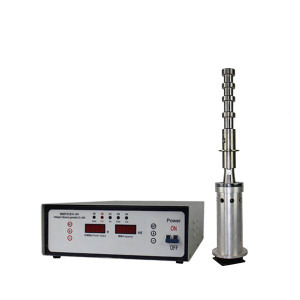
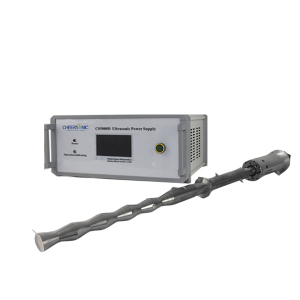
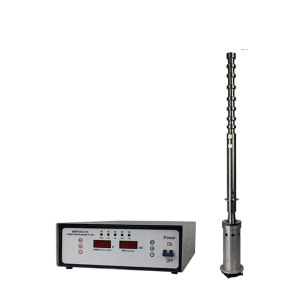
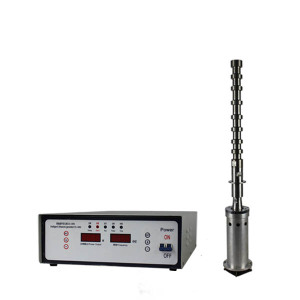
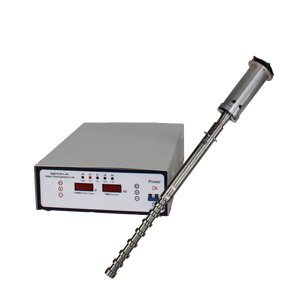
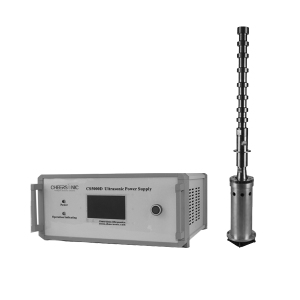
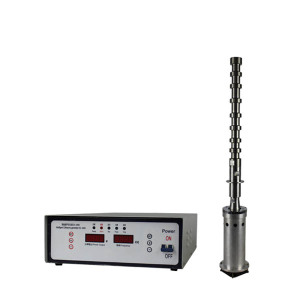
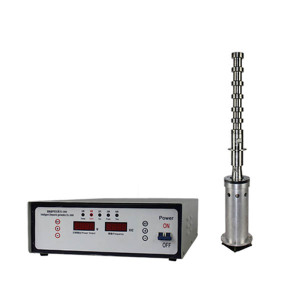
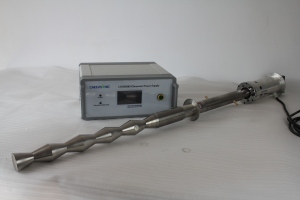
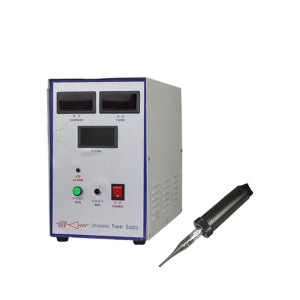
Type Ultrasonic homogenizer Applicable Industry Nanomaterial manufacturing (carbon nanotubes, graphene, metal oxide nanoparticles, PLGA nanoparticles)
Chemical coating & ink industry
Pharmaceutical & biomedicine (nano drug delivery, liposome preparation)
Material science research
Water environmental testing
Composite material production
Electronics conductive slurry preparation
Cosmetic nano-emulsion formulation Params frequency: 20 kHz (standard working frequency)
power range: 80 W – 2000 W
amplitude adjustment: 1%–100% continuous adjustable
processing volume: 0.5 mL – 20 L (lab models)
sonication mode: continuous /pulse on-off programmable
processing time range: 1 s – 99 h programmable
ambient storage stability of dispersion: up to 4 months (MWCNT aqueous system)
optimization rule: higher amplitude & longer sonication time for finer nanoparticle size
probe matching: microtip for ≤50 mL small volume; large horn for ≥1 L bulk liquid Scope |
|||||||||
| USE-60P / USE-60E / USE-40P / USE-40E / USE-28P / USE-28E | ultrasonic fluxless soldering | Stainless steel / titanium alloy | semiconductor packaging & electronics manufacturing aerospace & aviation engineering medical device manufacturing solar / photovoltaic systems power electronics & advanced packaging glass-to-metal sealing industry R&D laboratories & materials science research sensor & MEMS device manufacturing advanced joining of dissimilar materials industry | ||||||
|
Images
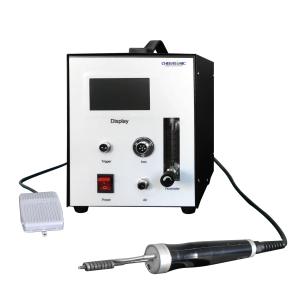
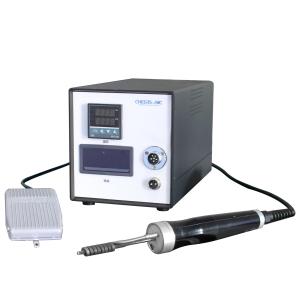
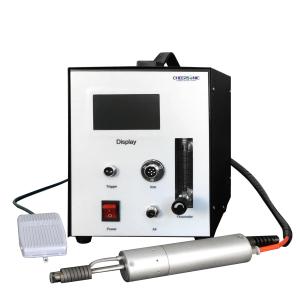
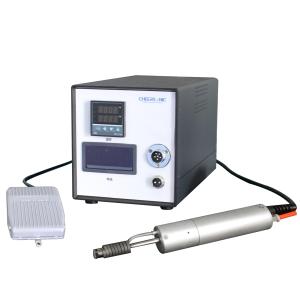
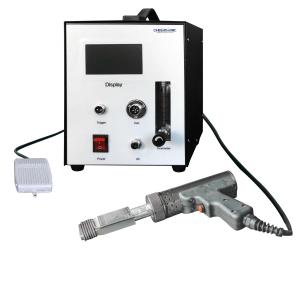
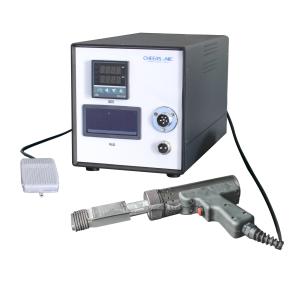
Type ultrasonic fluxless soldering Applicable Industry semiconductor packaging & electronics manufacturing
aerospace & aviation engineering
medical device manufacturing
solar / photovoltaic systems
power electronics & advanced packaging
glass-to-metal sealing industry
R&D laboratories & materials science research
sensor & MEMS device manufacturing
advanced joining of dissimilar materials industry Params ultrasonic frequency: 20–60 kHz
ultrasonic power: 28–100 W
soldering temperature: 200–450°C
heating method: resistive heating / integrated hot tip
wetting capability: flux-free activation via ultrasonic cavitation
solder alloy range: Sn-based / Zn-based / In-based alloys(如 Sn-Si / Sn-Zn / Zn-Al 系)
bonding strength control: ultrasonic amplitude adjustable (micron-level vibration)
process mode: manual / semi-automatic precision bonding Scope |
|||||||||
| UAM4000 / UAM6000 | Ultrasonic Spray Coating System | Stainless steel / titanium alloy | Semiconductor Manufacturing Medical Device Manufacturing Electronics Manufacturing Fuel Cell Manufacturing Battery Manufacturing Solar Cell Manufacturing Glass Manufacturing Automotive Manufacturing Aerospace Manufacturing Textile Manufacturing Packaging Manufacturing Research & Development | ||||||
|
Images
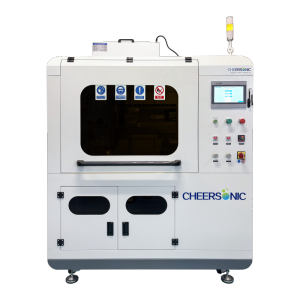
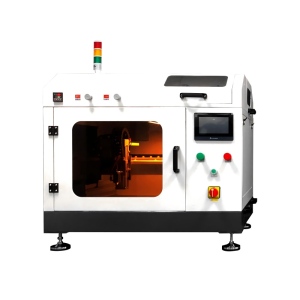

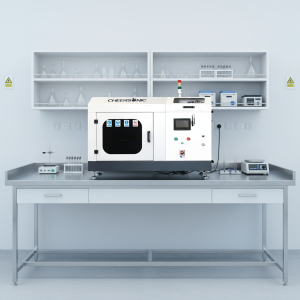
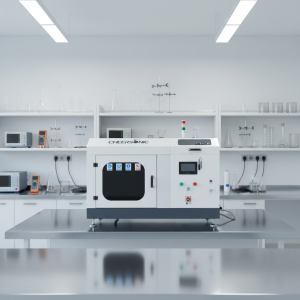

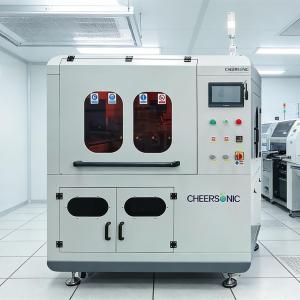
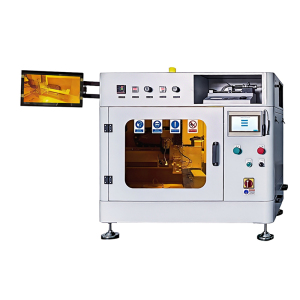
Type Ultrasonic Spray Coating System Applicable Industry Semiconductor Manufacturing
Medical Device Manufacturing
Electronics Manufacturing
Fuel Cell Manufacturing
Battery Manufacturing
Solar Cell Manufacturing
Glass Manufacturing
Automotive Manufacturing
Aerospace Manufacturing
Textile Manufacturing
Packaging Manufacturing
Research & Development Params Operating frequency: 25–180 kHz
Power consumption: 1–8 W (per nozzle)
Flow rate: 0.001–50 mL/min
Droplet size: 18–200 μm
Film thickness: 20 nm–100 μm
Atomization: Non-clogging ultrasonic spray Scope |
|||||||||
| HFM2300/HFM3100/UFM1000R/UFM1000P/UFM1000C/UFM2200/UFM3100P/UFM3300/UFM3200P/UFM5000/UFM5100/UFM6000/UFM8000/UFM8101/UFM8100C/ | Ultrasonic Slicing System | Stainless steel/titanium alloy | food industry | ||||||
|
Images
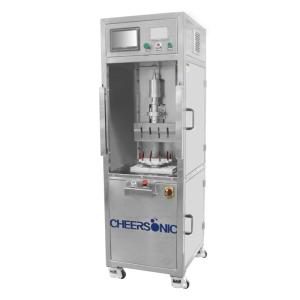
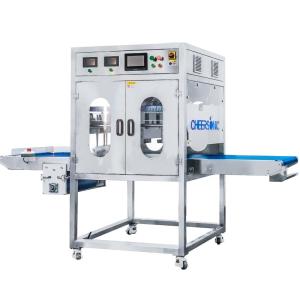
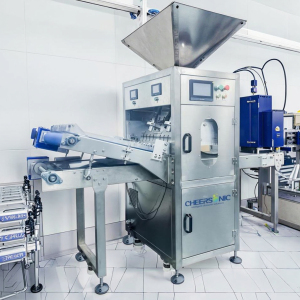
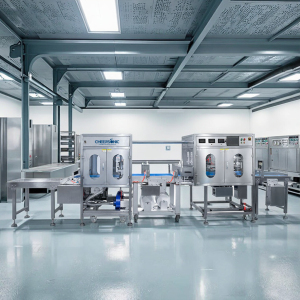
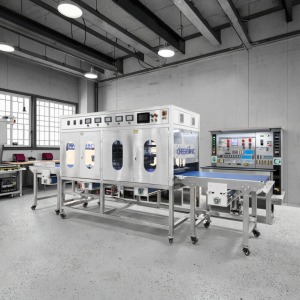
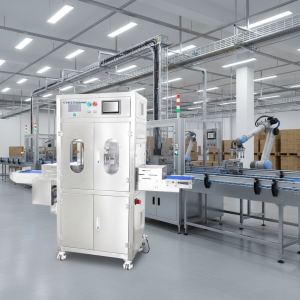
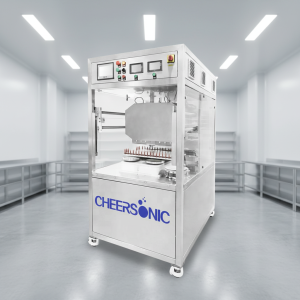
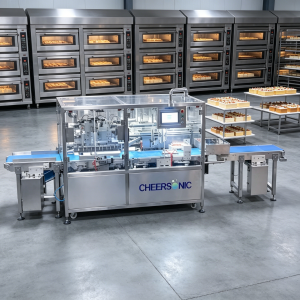
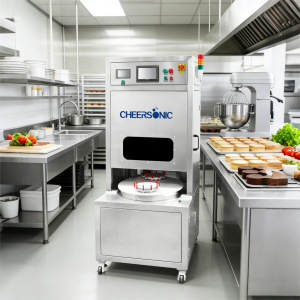
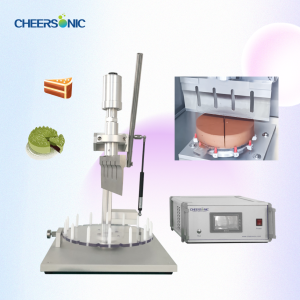
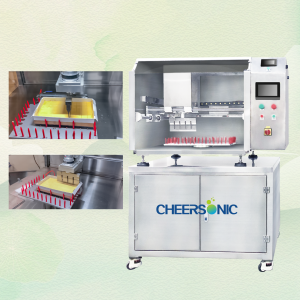
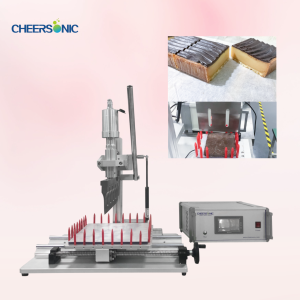
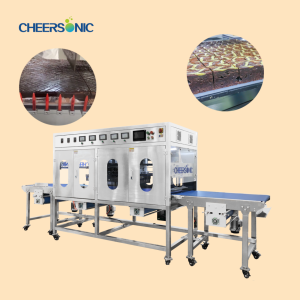
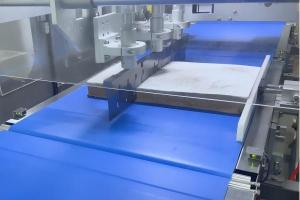
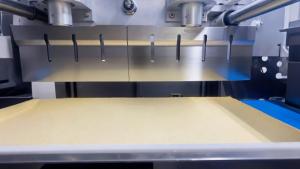
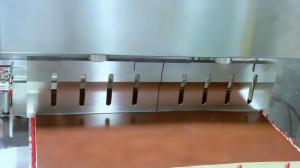
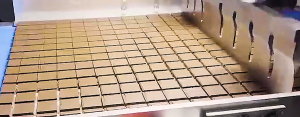
Type Ultrasonic Slicing System Applicable Industry food industry Params SPEED: Up To 300 Products Per Hour
PRODUCT TYPE: Full Sheet Or Round
PRODUCT TEMPERATURE: Fresh, Ambient, Sticky
PORTIONING TECHNOLOGY: Ultrasonic Blades Scope |
|||||||||
| HFM2300/HFM3100/UFM1000R/UFM1000P/UFM1000C/UFM2200/UFM3100P/UFM3300/UFM3200P/UFM5000/UFM5100/UFM6000/UFM8000/UFM8101/UFM8100C/ | Bakery Ultrasonic Slicing | Stainless steel/titanium alloy | food industry | ||||||
|
Images
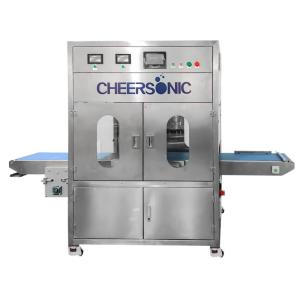
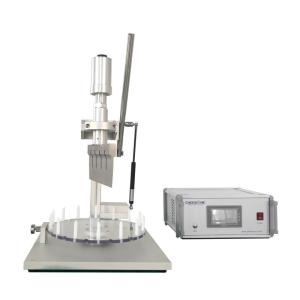
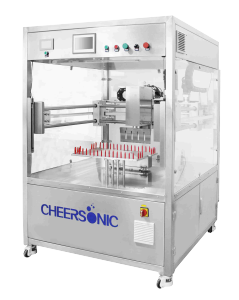
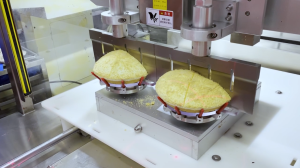
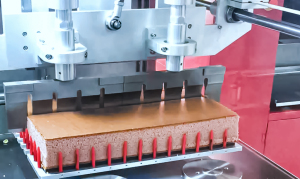
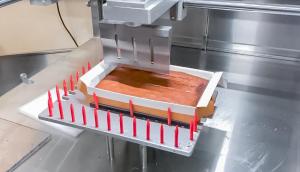
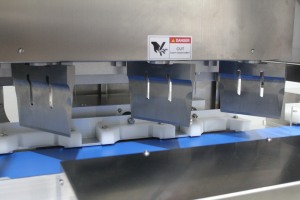
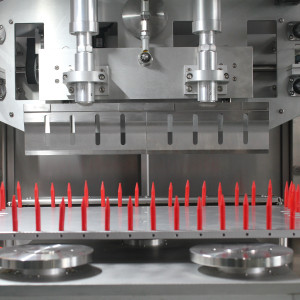
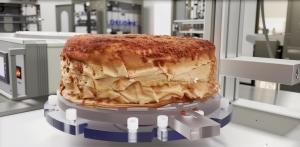
Type Bakery Ultrasonic Slicing Applicable Industry food industry Params SPEED: Up To 300 Products Per Hour
PRODUCT TYPE: Full Sheet Or Round
PRODUCT TEMPERATURE: Frozen, Chilled, Hard
PORTIONING TECHNOLOGY: Ultrasonic Blades Scope |
|||||||||
| UCA120 / UCA50 / UCW50 / UCW120 / UCR50 / UCR40 / UCR60 / UCT120 | ultrasonic spray nozzle | Stainless steel / titanium alloy | Semiconductor Manufacturing Medical Device Manufacturing Electronics Manufacturing Fuel Cell Manufacturing Battery Manufacturing Solar Cell Manufacturing Glass & Optics Manufacturing Automotive Manufacturing Aerospace Manufacturing Research & Development | ||||||
|
Images
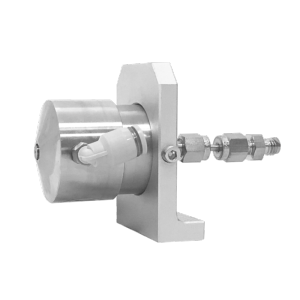
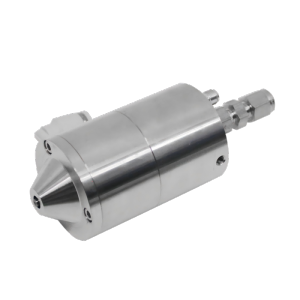
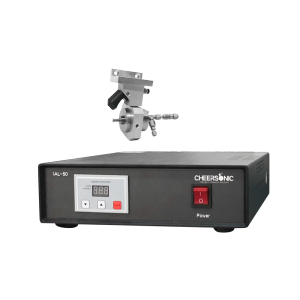
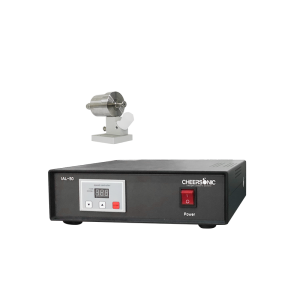
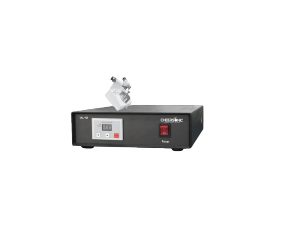
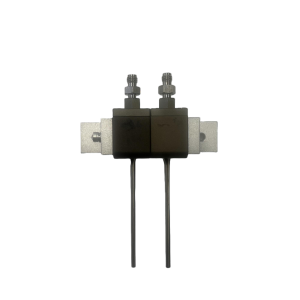
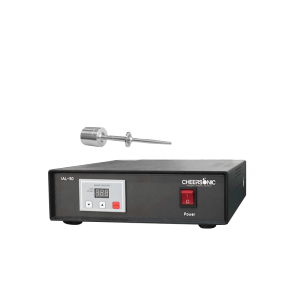
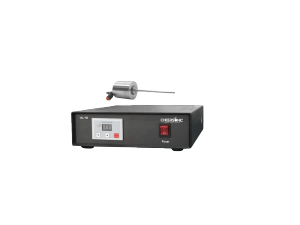
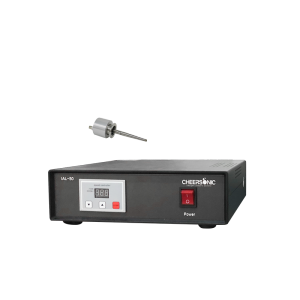
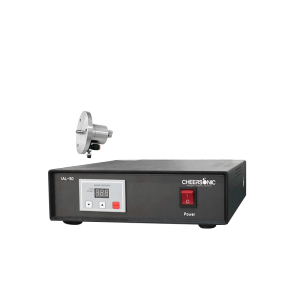
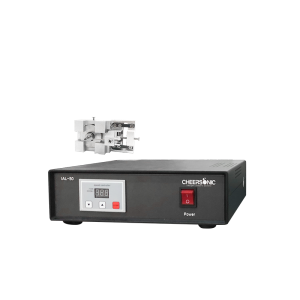
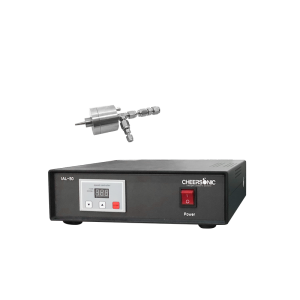
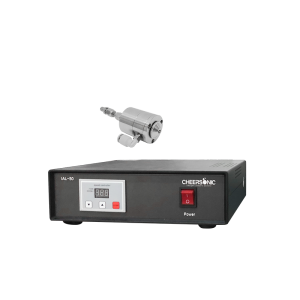
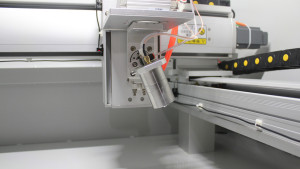
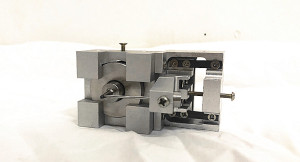
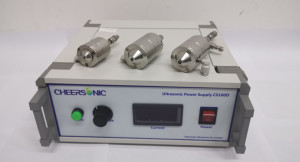
Type ultrasonic spray nozzle Applicable Industry Semiconductor Manufacturing
Medical Device Manufacturing
Electronics Manufacturing
Fuel Cell Manufacturing
Battery Manufacturing
Solar Cell Manufacturing
Glass & Optics Manufacturing
Automotive Manufacturing
Aerospace Manufacturing
Research & Development Params Operating frequency: 25–180 kHz
Power consumption: 1–8 W
Flow rate: 0.001–50 mL/min
Droplet size: 18–200 μm
Liquid viscosity: Up to 100 cP
Atomization: Non-clogging ultrasonic spray Scope |
|||||||||
| HFM2300/HFM3100/UFM1000R/UFM1000P/UFM1000C/UFM2200/UFM3100P/UFM3300/UFM3200P/UFM5000/UFM5100/UFM6000/UFM8000/UFM8101/UFM8100C | ultrasonic food cutter | Titanium alloy / stainless steel | Bakery, Confectionery, Dairy Food Processing, Frozen Dessert Manufacturing, Ready-to-eat Food Production | ||||||
|
Images
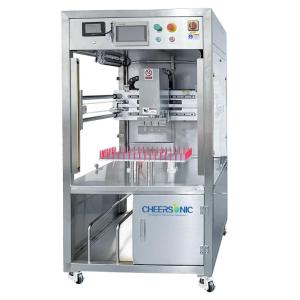
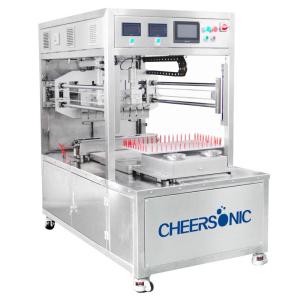
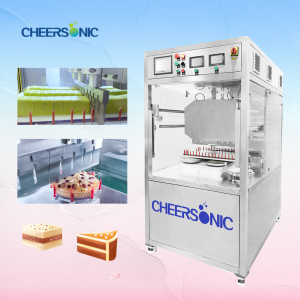
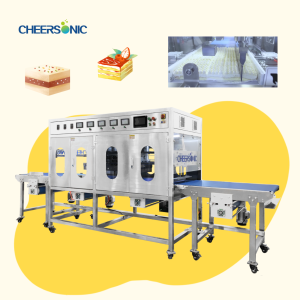
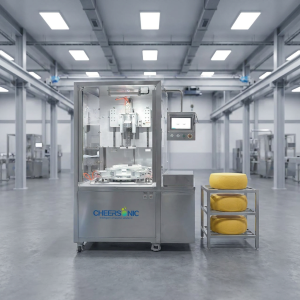
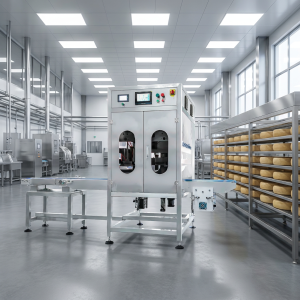
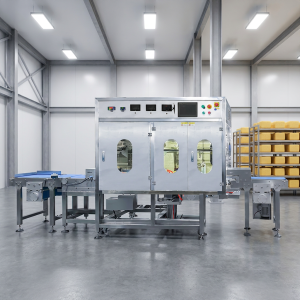
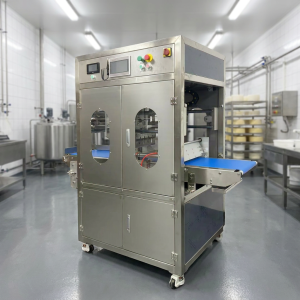
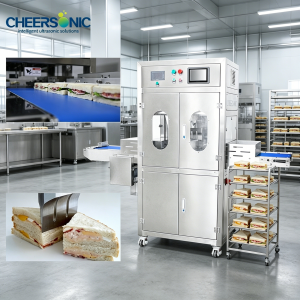
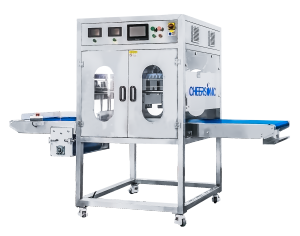
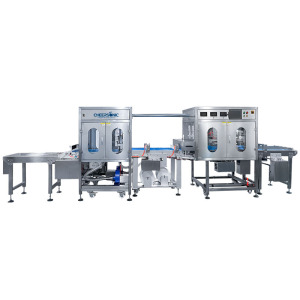
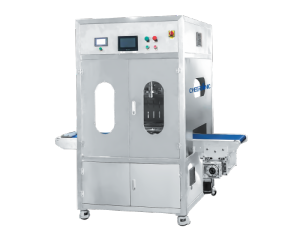
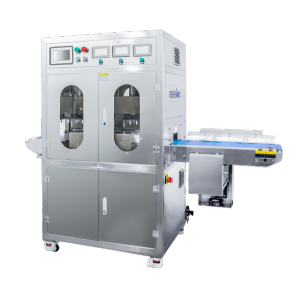
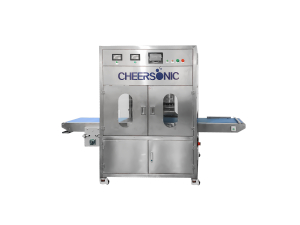
Type ultrasonic food cutter Applicable Industry Bakery, Confectionery, Dairy Food Processing, Frozen Dessert Manufacturing, Ready-to-eat Food Production Params vibration frequency: 20 kHz
power range: 800–1600 W
input voltage: 208V–240V, 50/60 Hz, 15A
air supply: 6 CFM @ 90 PSI
production capacity: 50–1500 pcs/h
processing temperature: -14℃ to 40℃
max cutting width: 600 mm
control system: servo touch screen automatic indexing
protection grade: IP65 washdown compliant Scope |
|||||||||
| HFM2300/HFM3100/UFM1000R/UFM1000P/UFM1000C/UFM2200/UFM3100P/UFM3300/UFM3200P/UFM5000/UFM5100/UFM6000/UFM8000/UFM8101/UFM8100C | ultrasonic cutter | Titanium alloy / stainless steel | Bakery, Confectionery, Dairy processing, Frozen food, Dessert manufacturing, Ready-to-eat food industry | ||||||
|
Images
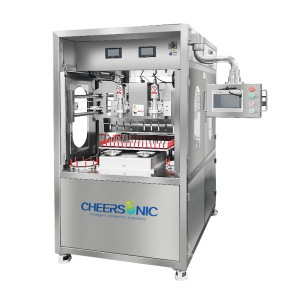
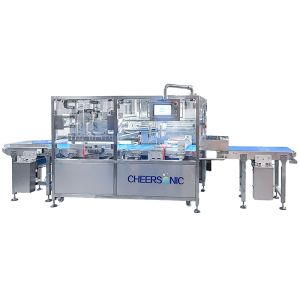
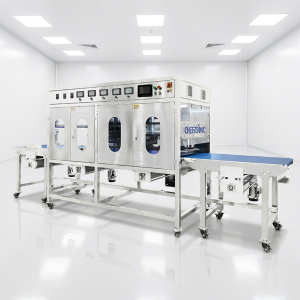

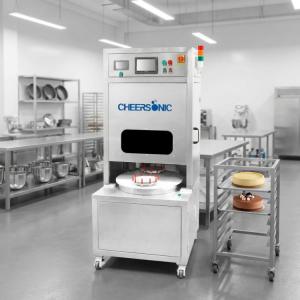
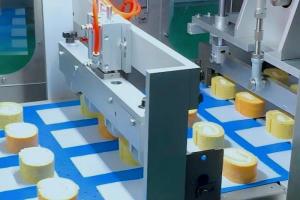
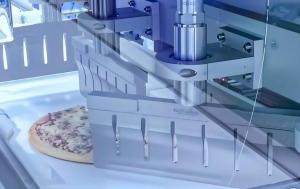
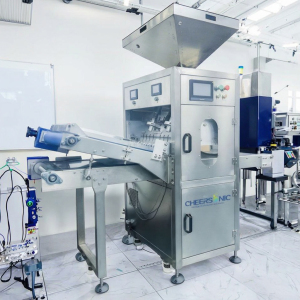
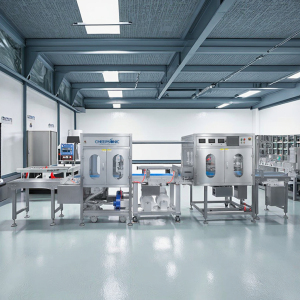
Type ultrasonic cutter Applicable Industry Bakery, Confectionery, Dairy processing, Frozen food, Dessert manufacturing, Ready-to-eat food industry Params working frequency: 20 kHz
power range: 800W – 1800W
input voltage: 208–240V, 50/60Hz
air requirement: 6 CFM at 90 PSI
cutting width: max 600mm
output capacity: 50–1500 pieces per hour
working temperature: -14℃ ~ 40℃
control: servo touch screen
protection: IP65 washdown grade Scope |
|||||||||
| HFM2300/HFM3100/UFM1000R/UFM1000P/UFM1000C/UFM2200/UFM3100P/UFM3300/UFM3200P/UFM5000/UFM5100/UFM6000/UFM8000/UFM8101/UFM8100C | ultrasonic cutting tools | Titanium alloy / stainless steel | bakery & pastry production industrial cake manufacturing frozen dessert processing (cheesecake, mousse, ice cream cakes) snack bar & energy bar production confectionery manufacturing food processing automation industry central kitchen / large-scale catering production ready-to-eat food packaging industry | ||||||
|
Images
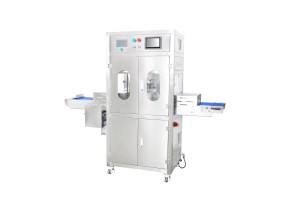
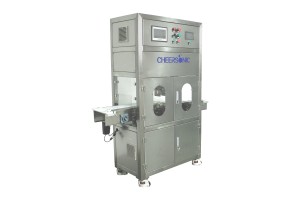
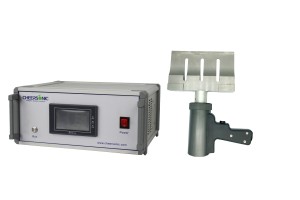
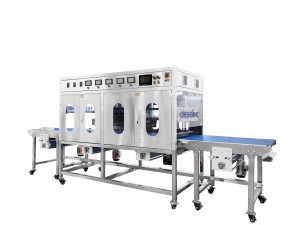
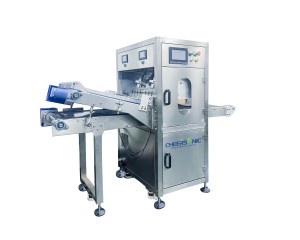
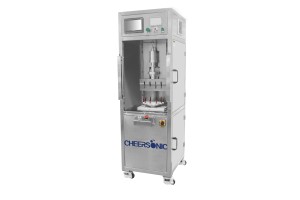
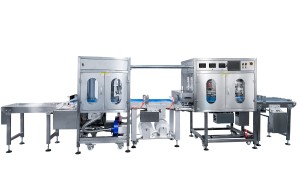
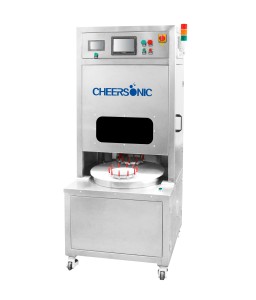
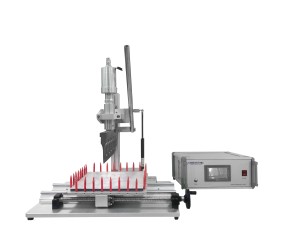
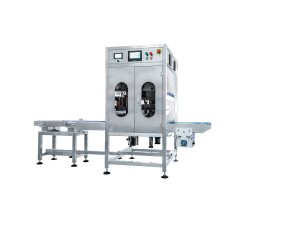
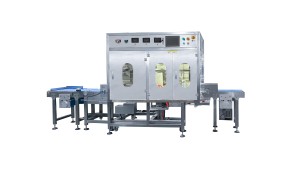
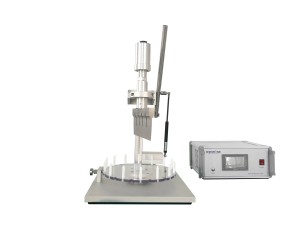
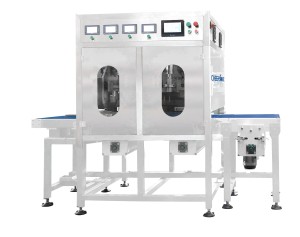
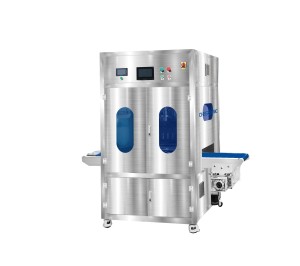
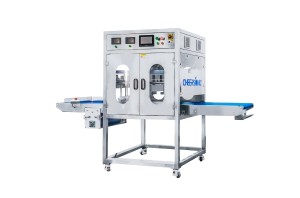
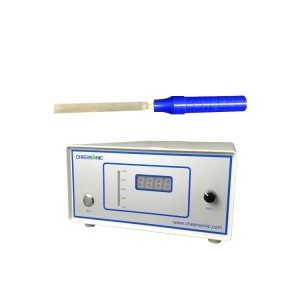
Type ultrasonic cutting tools Applicable Industry bakery & pastry production
industrial cake manufacturing
frozen dessert processing (cheesecake, mousse, ice cream cakes)
snack bar & energy bar production
confectionery manufacturing
food processing automation industry
central kitchen / large-scale catering production
ready-to-eat food packaging industry Params cutting speed: up to 200–1,200 products/hour
blade vibration frequency: ~20 kHz ultrasonic frequency
cutting accuracy: ±0.5–1.0 mm (depends on product type)
product height range: up to ~100 mm (high cake / layered products)
product width: customizable based on tooling / blade set
cutting pattern: round / square / triangle / bar / custom geometries
conveyor system speed: adjustable, PLC controlled
automation level: semi-automatic / fully inline automated systems
blade system: interchangeable ultrasonic titanium blades
cleaning mode: quick-release sanitary design for food production
production integration: inline with bakery production lines / packaging lines Scope |
|||||||||
| UAM6000 / UAM4000 | ultrasonic coating system | Stainless steel / titanium alloy | Semiconductor Manufacturing Medical Device Manufacturing Electronics Manufacturing Fuel Cell Manufacturing Battery Manufacturing Solar Cell Manufacturing Glass & Optics Manufacturing Automotive Manufacturing Aerospace Manufacturing Research & Development | ||||||
|
Images
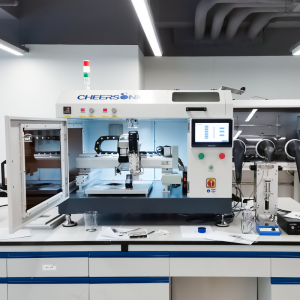
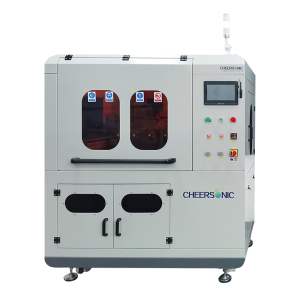
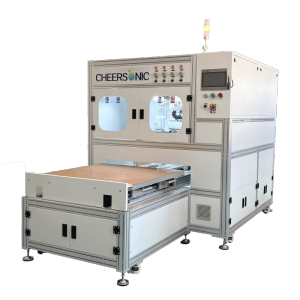
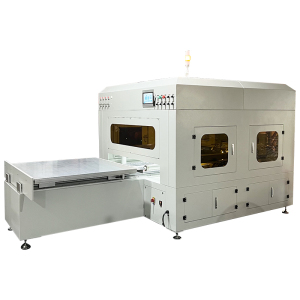
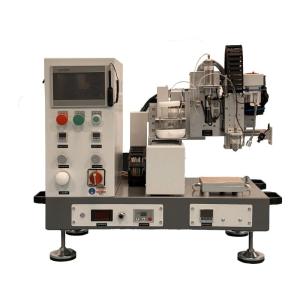
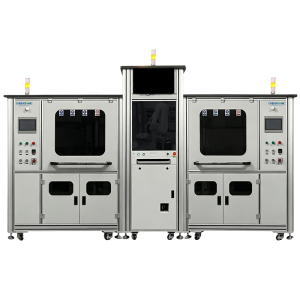
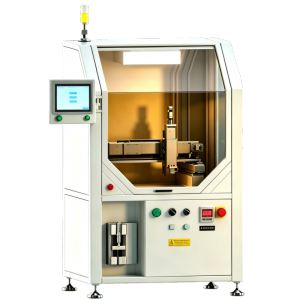
Type ultrasonic coating system Applicable Industry Semiconductor Manufacturing
Medical Device Manufacturing
Electronics Manufacturing
Fuel Cell Manufacturing
Battery Manufacturing
Solar Cell Manufacturing
Glass & Optics Manufacturing
Automotive Manufacturing
Aerospace Manufacturing
Research & Development Params Operating frequency: 25–180 kHz
Flow rate: 0.001–50 mL/min
Droplet size: 18–200 μm
Film thickness: 20 nm–100 μm
Atomization: Non-clogging ultrasonic spray
Coating accuracy: High-uniform precision coating Scope |
|||||||||
| CWM100 / UFM8100C / UFM2200C / UFM1000C / UFM3100W / UFM2300W | ultrasonic cheese slicer | Titanium alloy / stainless steel | dairy processing industry cheese manufacturing industry food processing industry bakery industry (secondary cross-application) ready-to-eat food production food packaging industry industrial food portioning & automation sector export food production plants high-speed industrial production lines | ||||||
|
Images
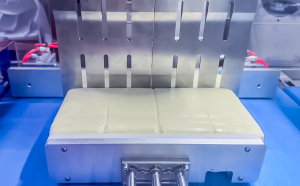
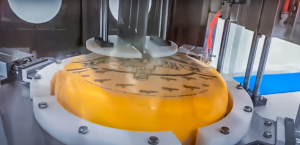
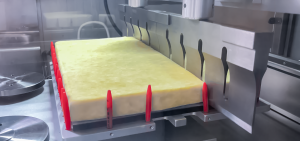
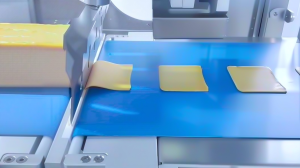
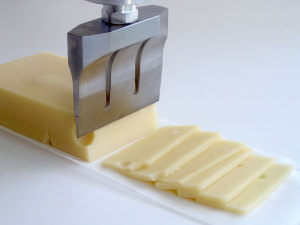
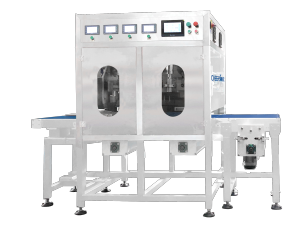
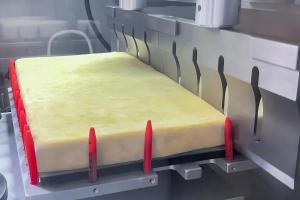
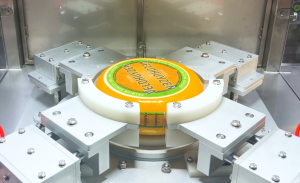
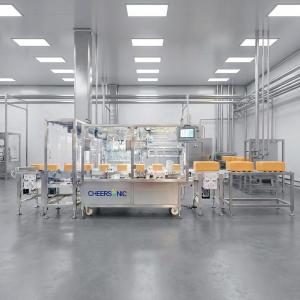
Type ultrasonic cheese slicer Applicable Industry dairy processing industry
cheese manufacturing industry
food processing industry
bakery industry (secondary cross-application)
ready-to-eat food production
food packaging industry
industrial food portioning & automation sector
export food production plants
high-speed industrial production lines Params frequency: 20 kHz ultrasonic vibration
blade material: titanium ultrasonic blade
cutting mode: fixed weight / catch weight portioning
throughput: high-speed continuous or batch production
portion accuracy: high precision weight control (±1% typical industry standard)
temperature range: chilled or ambient products
production type: inline conveyor / batch / robotic system
automation level: semi-automatic to fully automated robotic system
supported products: block / round / stick / extruded cheese
system integration: 3D vision system / checkweigher / robotic pick & place optional
construction: stainless steel food-grade design
cleaning: hygienic design with easy wash-down capability Scope |
|||||||||
| UFM5000,UFM8101,UFM6000,UFM1000P,UFM1000R,UFM5100,UFM6600,UFM8000,UFM5500 | ultrasonic cake slicer | Stainless steel / titanium alloy | bakery industry industrial cake manufacturing pastry production industry dessert manufacturing industry frozen & chilled dessert processing food processing industry ready-to-eat bakery production central kitchen / commissary kitchen production large-scale food manufacturing plants automated food portioning & packaging industry | ||||||
|
Images
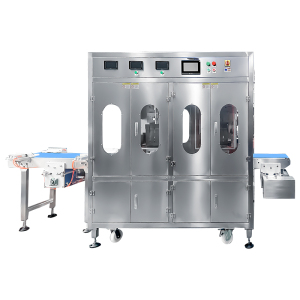
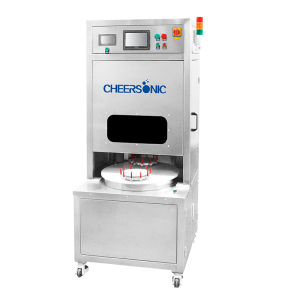
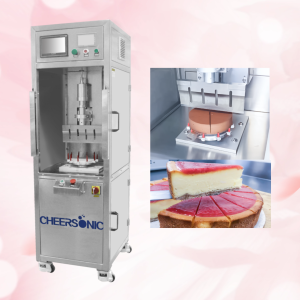
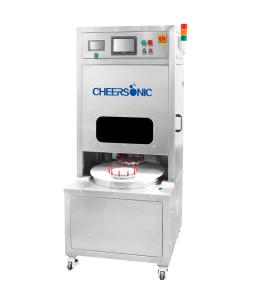
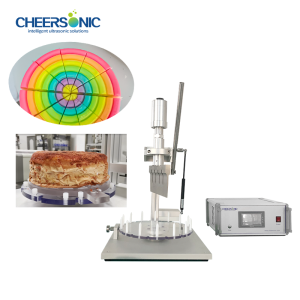
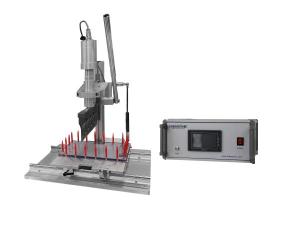
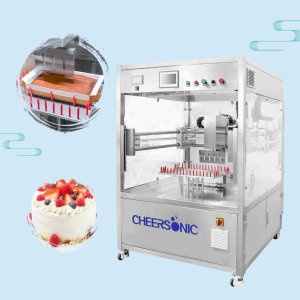
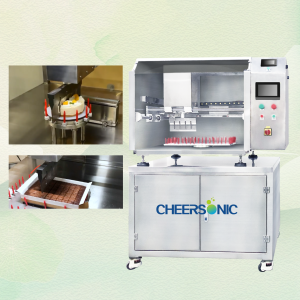
Type ultrasonic cake slicer Applicable Industry bakery industry
industrial cake manufacturing
pastry production industry
dessert manufacturing industry
frozen & chilled dessert processing
food processing industry
ready-to-eat bakery production
central kitchen / commissary kitchen production
large-scale food manufacturing plants
automated food portioning & packaging industry Params ultrasonic frequency: 20 kHz high-frequency vibration
blade type: titanium ultrasonic cutting blade
cutting system: manual / semi-automatic / fully automated robotic system
production mode: batch cutting / inline conveyor cutting
portion control: high-precision equal portioning
cutting accuracy: consistent slice size with minimal waste
product type compatibility: soft, sticky, layered, cream-filled cakes
cutting behavior: non-stick, low-friction slicing
automation integration: robotic handling / conveyor / vision system optional
hygiene design: food-grade hygienic wash-down structure
output capability: high-speed industrial production
customization: custom cutting patterns (triangular, square, rectangular, portioned blocks) Scope |
|||||||||
| UAM2000 / UNC9000 | Ultrasonic Spray Pyrolysis System | Stainless steel/titanium alloy | Solar Cell Manufacturing Thin Film Glass Manufacturing Display Manufacturing Semiconductor Manufacturing Transparent Conductive Oxide (TCO) Production Advanced Materials Research | ||||||
|
Images
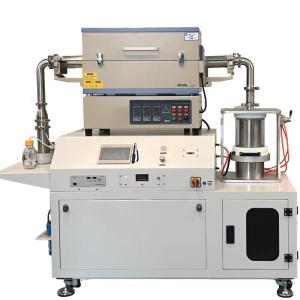

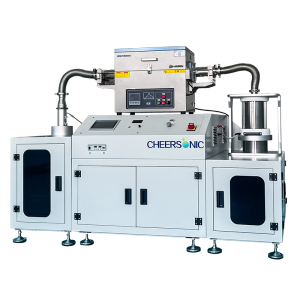
Type Ultrasonic Spray Pyrolysis System Applicable Industry Solar Cell Manufacturing
Thin Film Glass Manufacturing
Display Manufacturing
Semiconductor Manufacturing
Transparent Conductive Oxide (TCO) Production
Advanced Materials Research Params Operating frequency: 25–180 kHz
Flow rate: 0.001–50 mL/min
Droplet size: 18–200 μm
Film thickness: 20 nm–100 μm
Pyrolysis temperature: 400–1200°C
Particle size: 20 nm–5 μm
Carrier gas: Air / Nitrogen / Oxygen
Deposition process: Ultrasonic Spray Pyrolysis (USP) Scope |
|||||||||
| USP6000,USP6000WS | Ultrasonic Photoresist Coating System | Stainless steel / titanium alloy | Semiconductor Manufacturing MEMS Manufacturing Microelectronics Printed Electronics Wafer Processing Optoelectronics Research & Development Semiconductor Wafers Industry | ||||||
|
Images
Type Ultrasonic Photoresist Coating System Applicable Industry Semiconductor Manufacturing
MEMS Manufacturing
Microelectronics
Printed Electronics
Wafer Processing
Optoelectronics
Research & Development
Semiconductor Wafers Industry Params Operating frequency: 25–180 kHz
Flow rate: 0.001–50 mL/min
Droplet size: 18–200 μm (frequency dependent)
Film thickness: 20 nm–100 μm
Coating uniformity: High-uniformity, edge-to-edge coating
Atomization: Non-clogging ultrasonic spray Scope |
|||||||||
| UAM4000/UAM6000/UAM8000 | Ultrasonic Fuel Cell Coating System | Stainless steel/titanium alloy | Fuel Cell Manufacturing Hydrogen Energy Clean Energy Electrochemical Devices Research & Development | ||||||
|
Images
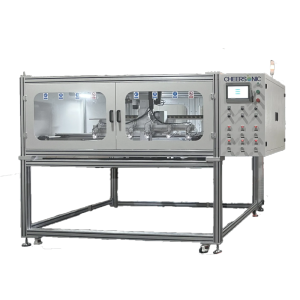
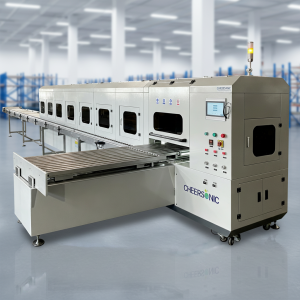
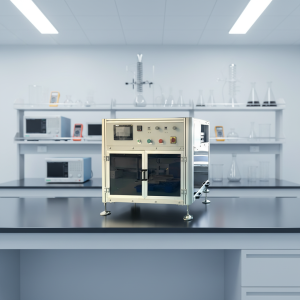

Type Ultrasonic Fuel Cell Coating System Applicable Industry Fuel Cell Manufacturing
Hydrogen Energy
Clean Energy
Electrochemical Devices
Research & Development Params Operating frequency: 25–180 kHz
Flow rate: 0.001–50 mL/min
Droplet size: 18–200 μm
Film thickness: 20 nm–100 μm
Coating accuracy: High-uniformity catalyst coating
Atomization: Non-clogging ultrasonic spray Scope |
|||||||||
| S20-WP2000 / USM350 / USM450 / USM550 / COS800 / HBRC800 / HLC300 / HC300 / HSW500 / HGC500 / CS20-WM2000 | ultrasonic bonding / ultrasonic sewing | Stainless steel / titanium alloy | Medical & Hygiene (surgical masks, FFP2 respirators, medical protective textiles) Fashion & Sportswear (swimwear, activewear, undergarments, luxury apparel) Industrial Work Protection (protective suits, barrier textiles) Filtration industry (filter fabric welding) Automotive (technical textile components) General technical textile manufacturing | ||||||
|
Images
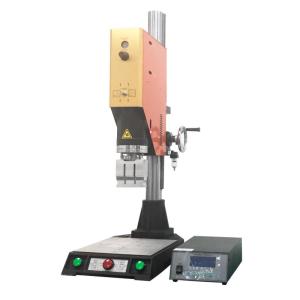
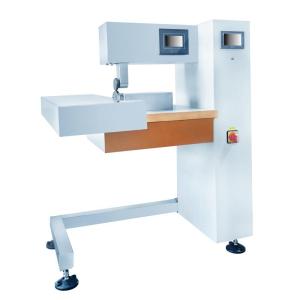
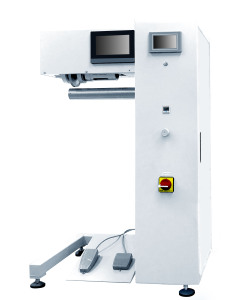
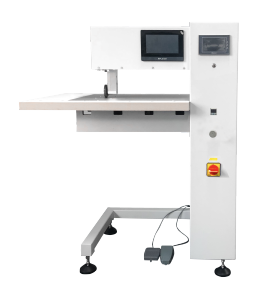
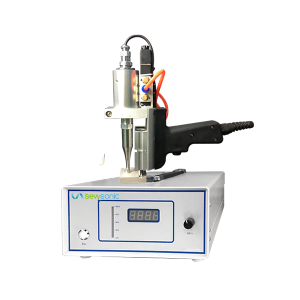
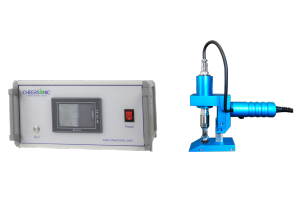
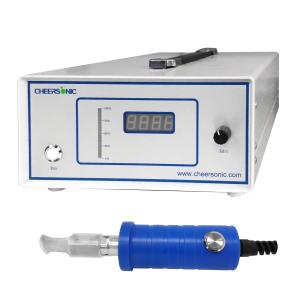
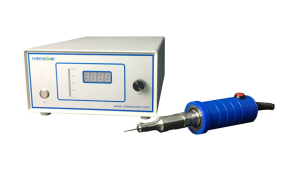
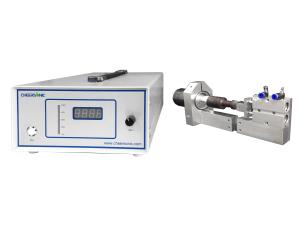
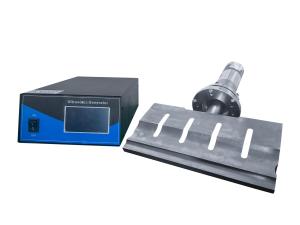
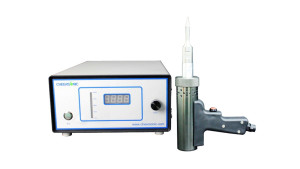
Type ultrasonic bonding / ultrasonic sewing Applicable Industry Medical & Hygiene (surgical masks, FFP2 respirators, medical protective textiles)
Fashion & Sportswear (swimwear, activewear, undergarments, luxury apparel)
Industrial Work Protection (protective suits, barrier textiles)
Filtration industry (filter fabric welding)
Automotive (technical textile components)
General technical textile manufacturing Params Ultrasonic frequency: 35 kHz
Power supply: 220 V, 230 V, 110 V
maximum pressing force: 600 N (digital pressure unit)
touch control screen: 7-inch multi-touch display
core welding factors: heat output, pressing force, welding time
minimum synthetic fiber content for stable welding: ≥60% Scope |
|||||||||
| CWM100 / UFM8100C / UFM2200C / UFM1000C / UFM3100W / UFM2300W | ultrasonic cheese cutting system | Titanium alloy / stainless steel | dairy processing industry cheese manufacturing industry food processing industry industrial food production plants ready-to-eat food manufacturing automated food portioning industry packaging-ready food production lines export food production facilities central kitchen / large-scale commissary production high-speed automated production lines | ||||||
|
Images
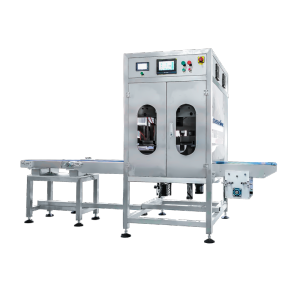
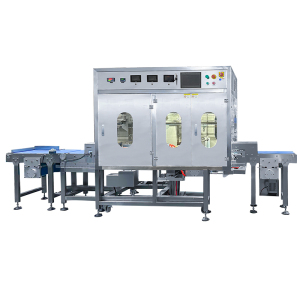
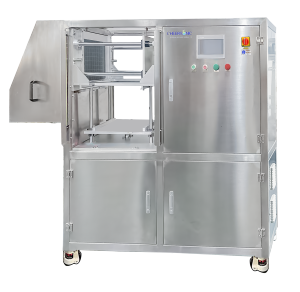
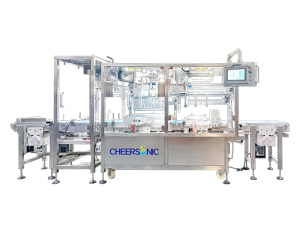
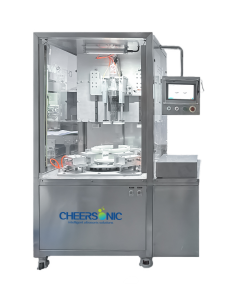
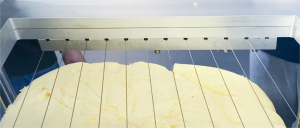
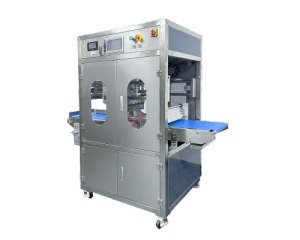
Type ultrasonic cheese cutting system Applicable Industry dairy processing industry
cheese manufacturing industry
food processing industry
industrial food production plants
ready-to-eat food manufacturing
automated food portioning industry
packaging-ready food production lines
export food production facilities
central kitchen / large-scale commissary production
high-speed automated production lines Params ultrasonic frequency: 20 kHz high-frequency vibration system
cutting blade: titanium ultrasonic blade (sonotrode)
cutting accuracy: high precision portion control (consistent weight slices)
production mode: inline / batch / robotic automated cutting
cutting type: fixed weight / catch weight / portion cutting
system automation: semi-automatic to fully automated robotic system
product compatibility: block, wheel, stick, extruded cheese
hygiene design: food-grade hygienic wash-down structure
integration: conveyor system / checkweigher / vision system / robotic arm
output capacity: high-speed industrial production line
customization: custom cutting shapes & portion sizes
temperature handling: chilled cheese cutting (low-temperature products) Scope |
|||||||||
| UAM4000,UAM6000 | Ultrasonic Spray Coating System | Stainless steel/titanium alloy | Semiconductor Manufacturing Medical Device Manufacturing Printed Electronics Fuel Cell Manufacturing Battery Manufacturing Solar Cell Manufacturing Glass & Optics Automotive Manufacturing Aerospace Research & Development | ||||||
|
Images
Type Ultrasonic Spray Coating System Applicable Industry Semiconductor Manufacturing
Medical Device Manufacturing
Printed Electronics
Fuel Cell Manufacturing
Battery Manufacturing
Solar Cell Manufacturing
Glass & Optics
Automotive Manufacturing
Aerospace
Research & Development Params Operating frequency: 25–180 kHz
Flow rate: 0.001–50 mL/min (application dependent)
Droplet size: 18–200 μm (frequency dependent)
Film thickness: 20 nm–100 μm
Coating uniformity: High precision, non-clogging atomization Scope |
|||||||||
| UFM5000,UFM8101,UFM6000,UFM1000P,UFM1000R,UFM5100,UFM6600,UFM8000 | cake slicing machine | Stainless steel / titanium alloy | bakery industry industrial cake manufacturing pastry production industry dessert manufacturing industry frozen bakery products industry food processing industry large-scale commercial bakeries central kitchens / commissary kitchens ready-to-eat dessert production food packaging & portion control industry catering & institutional food production | ||||||
|
Images
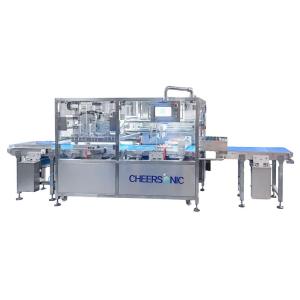
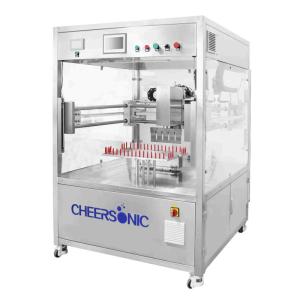
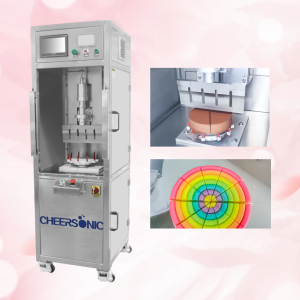
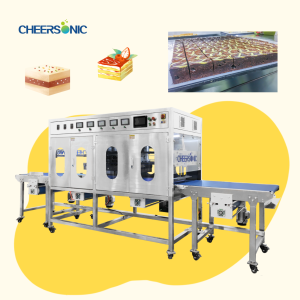
Type cake slicing machine Applicable Industry bakery industry
industrial cake manufacturing
pastry production industry
dessert manufacturing industry
frozen bakery products industry
food processing industry
large-scale commercial bakeries
central kitchens / commissary kitchens
ready-to-eat dessert production
food packaging & portion control industry
catering & institutional food production Params cutting type: ultrasonic / mechanical / wire cutting systems
portion control: high-accuracy equal portion slicing
cutting geometry: triangular / rectangular / square / custom shapes
production mode: batch / inline automated cutting
automation level: manual to fully automated systems
throughput: high-speed industrial production
product compatibility: round cakes / sheet cakes / tray bakes / layered cakes
cutting precision: consistent portion weight & size control
system integration: conveyor belts / indexing systems / infeed-outfeed automation
hygiene design: food-grade washdown structure
blade system: wire / ultrasonic blade / knife systems depending on configuration
customization: programmable cutting patterns & recipes
maintenance: quick-change cutting tools & easy cleaning design Scope |
|||||||||
| UAM1000/UAM2000/UAM4000/UAM6000/UAM8000/UAM9000 | ultrasonic atomization / Ultrasonic Atomizing Nozzle | Stainless steel/titanium alloy | Medical, Semiconductor, Electronics, Energy, Glass, Automotive, Aerospace, Food Packaging, R&D | ||||||
|
Images
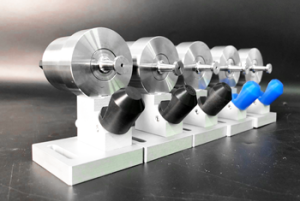
Type ultrasonic atomization / Ultrasonic Atomizing Nozzle Applicable Industry Medical, Semiconductor, Electronics, Energy, Glass, Automotive, Aerospace, Food Packaging, R&D Params Operating frequency: 25–180 kHz
Droplet size: ~18–200 μm (frequency dependent)
Power consumption: 1–8 W per nozzle
Film thickness: 20 nm–100 μm
Flow rate: Ultra-low flow rate (application dependent)
Atomization: Non-clogging ultrasonic vibration Scope |
|||||||||
Certifications & Compliance
Each record can become a certification entity page.
| Certification | Cert Number | Standard | Authority | Market | Issue Date | Expiry Date | Document |
|---|---|---|---|---|---|---|---|
| CE of Ultrasonic liquid processing equipment | TRCN-26064HCU01 | EU directives: 2006/42/EC MD Machinery Directive, 2014/35/EU LVD Low Voltage Directive, 2014/30/EU EMC Electromagnetic Compatibility Directive Coordination standards: EN ISO 12100:2010、EN 60204-1:2018+A1:2025、EN IEC 61000-6-2:2019、EN IEC 61000-6-4:2019 | INTERTURK | EU | 2026-03-05 | 2031-03-04 | |
| CE Attestation of Compliance for Ultrasonic Food Cutting Machine | TTC-22-2802/10/02 | 2006/42/EC MSD,2014/35/EU LVD Directive: 2006/42/EC MSD (Machinery Safety Directive), 2014/35/EU LVD (Low Voltage Directive) Standards: EN ISO 12100:2010, EN 60204-1:2018 | INTEGRA96 | EU | 2022-02-28 | 2027-02-27 | |
| QUALITY MANAGEMENT SYSTEMS CERTIFICATION | 17325Q21416R2S | GB/T 19001-2016 / ISO 9001:2015 | Beijing Zhongjiaoyuanhang Certification Co., Ltd. | Global | 2019-12-26 | 2028-12-25 | |
| PU FDA Test Report | XMAFF170601257E-2 | FDA 21 CFR 177.2600 | SGS-CSTC Standards Technical Services Co.,Ltd. Xiamen Branch | USA | 2017-06-30 | 2099-01-01 | |
| Blade FDA Test Report | NGBHG1805981901 | FDA Compliance Policy Guides Sec.545.500 (CPG 7117.05) | SGS-CSTC Standards Technical Services Co., Ltd. Ningbo Branch | USA | 2018-11-23 | 2099-01-01 | |
| ATTESTATION OF COMPLIANCE | TRCN-26118HCU02 | Directive: 2006/42/EC Machinery Directive, 2014/35/EU Low Voltage Directive, 2014/30/EU Electromagnetic Compatibility Directive Testing standards: EN ISO 12100:2010, EN 60204-1:2018/A1:2025 EN 61010-1:2010/A1:2019/AC:2019 EN IEC 61000-6-2:2019, EN IEC 610 | INTERTURK | EU | 2026-04-28 | 2031-04-27 | |
| ATTESTATION OF COMPLIANCE for Ultrasonic Sewing & Cutting Machine | TRCN-26118HCU01 | EU directives: 2006/42/EC MD Machinery Directive, 2014/30/EU EMC Electromagnetic Compatibility Directive Coordination standards: EN ISO 12100:2010,EN 60204-1:2018/A1:2025,EN IEC 61000-6-2:2019,EN IEC 61000-6-4:2019 | INTERTURK | EU | 2026-04-28 | 2031-04-27 |
Applications & Industries
Taxonomy-backed tags to form industry ↔ supplier ↔ product relationships.
| Industry | Country | Working Condition | Project Type | Function | Operation Mode | Special Requirement | Matched Equipment |
|---|---|---|---|---|---|---|---|
| Nanomaterial laboratory | GLOBAL | Aqueous liquid medium, Room temperature, Low to medium solid concentration, Variable sample volume (0.1mL–1.5L), Low viscosity suspension | Nanomaterial pretreatment, Nanoparticle formulation preparation, Lab-scale sample dispersion, Pilot scalable nanoparticle production | Nanoparticle deagglomeration, Particle size reduction, Homogeneous suspension preparation, Nanomaterial surface functionalization, Nanoparticle synthesis & precipitation, Stable aqueous dispersion fabrication | Intermittent pulse mode, Short-time batch operation (3–10 mins per batch), Programmable amplitude & runtime control, Non-24/7 lab batch processing | Probe size matched to sample volume, Temperature control to avoid sample overheating, Surfactant addition for long-term anti-reaggregation, Regular probe wear replacement, Clean dry compressed air for converter cooling, Amplitude & runtime parameter optimization based on particle chemistry | Titanium sonication probes of multiple sizes, Cooling ice bath, Surfactant stabilizer, Deionized water supply, Sample vials, Air cooling compressor (for high-power models), Amplifier booster horn, Digital controller host |
| textile industry | GLOBAL | Thermoplastic textile processing, high-speed continuous roll welding, sterile cleanroom production, high-traction protective fabric processing, narrow tubular filter material welding, high-volume mask mass production, low-thickness elastic fabric bonding | Fully automatic medical mask production line, rotary roll ultrasonic welding station, protective garment welding workstation, filter tube precision welding line, seamless apparel production line, custom special ultrasonic welding equipment, prototype sample welding trial | Thread-free melt bonding of synthetic/non-woven textiles, continuous curved/straight seam forming, flat elastic seamless welding, airtight & waterproof hermetic sealing, edge melting anti-fray treatment, high-strength traction-resistant joints, aseptic contamination-free medical sealing, embossed decorative seam molding | 24/7 automated continuous production, semi-automatic manual feeding operation, batch sample trial welding, high-speed uninterrupted roll seam processing, camera vision automatic edge tracking operation | Material must contain thermoplastic components, sterile & dust-free medical production standard, high-speed stable output up to 400 pieces/min, customizable embossing seam patterns, high tensile strength weld seams, no pinholes/thread residue, compact modular line layout, free pre-production sample welding service, round-the-clock global after-sales support | ultrasonic generator, ultrasonic transducer, rotary sonotrode, customized embossing anvil wheels, mask fully automatic assembly lines, vision edge tracking system, multi-touch digital control console |
| Semiconductor manufacturing, sensor & actuator, thermal management, aerospace, automotive electronics, solar photovoltaic, battery technology, vacuum equipment, ceramic processing | GLOBAL | Low to medium temperature (115–450℃), vacuum/inert gas/atmospheric environment, harsh semiconductor processing environment, heat-sensitive component assembly, dissimilar material jointing environment, high cleanliness requirement working condition | Semiconductor wafer equipment assembly, sensor packaging, thermal management component bonding, aluminum heat exchanger manufacturing, ceramic-metal hermetic sealing, solar panel soldering, medical alloy component joining, graphite/graphene thermal module production, prototype trial production & mass production line | Fluxless metallurgical bonding of dissimilar materials, aluminum soldering, ceramic-metal hermetic sealing, graphite/carbide joining, heat-conductive joint fabrication, oxide layer removal via ultrasonic cavitation, sensitive component low-temperature assembly, solder spot metallization, vacuum-tight sealing, flux-free packaging to eliminate contamination | Manual handheld operation, automated machine continuous operation, batch soldering via ultrasonic solder pot, 24/7 mass production line, periodic prototype small-batch trial, lease-based on-site self-test operation | Flux-free & lead-free production, no pre-plating pretreatment, ultra-low joint contamination, low thermal stress for sensitive parts, hermetic sealing performance, 20–60kHz ultrasonic frequency matching, temperature control within 115–450℃, compatible with aluminum/ceramic/glass/graphite/dissimilar metal, optional equipment lease procurement mode, post-bond cleaning-free process | Ultrasonic soldering iron system, ultrasonic solder pot, piezoelectric ultrasonic generator, heating cartridge, active solder wire/foil/pellet, vacuum brazing furnace, test kits, auxiliary heating plates, automated fixture handling equipment, process control console |
| Nano industry | GLOBAL | low-pressure、low flying mist、low static environment、continuous roll-to-roll production environment、food safety clean environment、low solvent volatilization workshop environment | float glass online nano coating production line、optical lens functional coating line、automotive parts nano coating workshop line、aluminum brazing flux spraying line、textile roll-to-roll functional modification line、food packaging coating processing line、new material nano coating R&D lab platform | high-frequency ultrasonic low-pressure atomization of nano slurry/sol/flux; uniform deposition of nano-scale ultra-thin functional film; prepare hydrophobic/hydrophilic/conductive/insulating/anti-reflection protective coatings; uniform spraying of aluminum brazing flux; textile fiber surface nano functional modification; food contact safety anti-stick & antibacterial coating forming; optical AR/AF nano film preparation | continuous roll-to-roll mass production、intermittent small-batch R&D sample trial、full automatic linkage unmanned spraying、CNC one-click parameter switching、long-term non-stop online production | low-pressure non-damage to thin/flexible substrates、self-cleaning anti-clogging for nano slurry、high material utilization rate (>90%)、film thickness within error ±3% 、no pinhole/sagging/orange peel defects、no fiber pore blockage for textiles、food contact safety compliant、low static & low waste gas emission、wide nano film thickness adjustable range、full coverage for complex curved surfaces | multi-axis linkage motion system、online drying equipment、coating thickness testing device、automatic material handling machine、closed spray chamber、ultrasonic self-cleaning nozzle |
| medical industry | GLOBAL | low-temperature、low-pressure、dust-free clean room (Class100/1000)、sterile production environment、GMP standard environment、low solvent evaporation closed spraying environment | medical precision functional coating production line、medical R&D small sample test platform、full-automatic medical device assembly coating line、biopharmaceutical atomization experimental system、transparent medical plastic laser absorption coating line、wound care textile antibacterial coating line、implantable medical device drug coating line | precise ultrasonic atomization & directional deposition of medical coating liquid、uniform drug/lubricant/antibacterial coating film forming、ultra-thin micron/nano coating preparation、bioaerosol & cell culture liquid uniform supply、pre-spray atomization for nanoparticle spray drying、laser absorbing layer deposition for medical plastic welding | 24/7 optional full-automatic unmanned operation、multi-axis linkage continuous spraying、CNC one-click parameter switching、batch mass production operation & intermittent R&D sample trial operation、non-contact continuous low-speed droplet spraying | low-temperature thermosensitive material protection、low-pressure non-deformation for flexible substrates、ultra-high raw material utilization、ultra-uniform coating (thickness error<5%)、anti-clogging for biological/nano slurry、static-free dust pollution prevention、GMP Class III medical implant certification compliant、green low exhaust emission、self-cleaning nozzle、explosion-proof compatible for pharmaceutical solvent environment、sterile dust-free compatible、high coating adhesion & anti-peeling | probe-type ultrasonic nozzles、full-automatic front cleaning station、post drying equipment、on-line coating testing unit、finished product packaging assembly line、closed spraying chamber、multi-axis motion linkage system |
| Energy industry | GLOBAL | low temperature、clean workshop、low pressure、static-free environment、ultra-thin fragile substrate processing、3D concave-convex surface coating、green low-emission production environment | hydrogen production electrolyzer coating line、fuel cell MEA production line、photovoltaic cell coating line、lithium energy storage battery coating line、new energy material laboratory R&D small sample line、TCO conductive thin film preparation line | directional precision functional coating deposition、catalytic layer spraying、membrane surface modification coating、anti-reflection & passivation film spraying、ceramic heat-resistant coating spraying、conductive thin film preparation、3D conformal uniform coating、low-stress micro-layer deposition | batch automated assembly line operation、laboratory small-batch R&D trial production、one-click numerical control parameter adjustment、multi-process coating flexible switching、continuous automatic online coating | anti-clogging nozzle design、low material loss rate、low-pressure non-contact atomization、low energy consumption、low waste gas emission、compatible with high-viscosity slurry & nano particle liquid、no high-temperature vacuum chamber required、scratch/crack-free coating、explosion-free clean manufacturing standard、multi-material universal compatibility | roll-to-roll conveying system、flat automatic conveying system、vacuum drying module、online thickness measurement module、full-automatic integrated coating production line |
| electronics industry | GLOBAL | Class100/Class1000 semiconductor clean room environment Low-temperature atomization environment, no high-temperature thermal load Precision micro-scale production environment for micro pins, BGA, Mini LED, high aspect ratio 3D microstructures Mass continuous production & lab small-batch R&D dual working scenarios High-purity chemical coating operating environment | Semiconductor wafer precision coating production line MEMS microelectronics coating line Advanced chip packaging coating workstation PCB electronic component flux spraying line Laboratory small sample R&D coating platform Fully automatic integrated industrial coating assembly line | Photoresist deposition on MEMS microstructure wafers Polyimide dielectric insulating film spraying for chips Wafer dicing protective film uniform coating Precision flux spraying for PCB, chip packaging micro-components Conformal coating on flat, stepped, deep groove, curved substrates Replace spin coating, pressure atomization spraying, immersion coating, brush coating traditional coating processes Control ultra-thin to thick controllable film formation Reduce raw material waste, lower wafer manufacturing cost Eliminate coating defects, improve lithography & packaging yield Avoid static & particle pollution in cleanroom production | Fully automatic continuous mass production (dock with full-auto assembly lines) Semi-automatic lab R&D & medium-small batch sample production CNC digital adjustable operation (adjust flow rate, moving speed, atomization frequency) One-click switching for different viscosity coating materials Non-contact ultrasonic low-pressure atomization spraying operation Compatible inline online continuous production for lithography, dicing, packaging processes | Meet Class100/Class1000 high-standard clean room particle control Low static generation, no high-pressure airflow & violent droplet splashing Low-temperature atomization, zero thermal damage to heat-sensitive chips & flexible substrates (PI, PET) Non-contact spraying, no scratch damage to wafers & flexible substrates No nozzle blockage, easy disassembly & dust-free cleaning for high-purity electronic chemicals Wide compatibility: support 50nm ultra-thin coating to 30μm thick film coating High coating uniformity, wafer film thickness error controlled within ±2% Low raw material loss, material utilization rate over 70% Eliminate coating defects: pinholes, orange peel, bridging, solder beads, sidewall missing coating, bottom glue accumulation Adapt to advanced semiconductor manufacturing processes (7nm, 28nm chip production) | Automatic loading & unloading mechanism Vacuum adsorption fixture system Dust-free clean chamber Online film thickness detection module Full-automatic semiconductor front-end/back-end assembly line Detachable cleanable ultrasonic spray nozzle assembly |
| Dairy industry | GLOBAL | Normal temperature room temperature processing Low temperature / frozen environment (frozen cheese cutting) High oil & high viscosity material processing Mass continuous food production environment | Dairy deep processing production line Cheese automated cutting workstation Prefabricated food & catering ingredient processing line Baking raw material processing equipment Supermarket food packaging workshop equipment | Full-automatic segmentation of soft, medium-hard and frozen cheese Quantitative fixed-size & fixed-weight cutting of cheese blocks, slices, strips and small portions Smooth burr-free cutting to keep complete cheese internal tissue Reduce material residue, oil adhesion and raw material loss Direct cutting of frozen cheese without pre-thawing Replace manual cutting, steel wire cutting and traditional mechanical cutting Support standardized pre-packaging for pizza, baking, ready-to-eat snack and catering ingredients | Assembly line online continuous mass production Desktop independent batch processing (small & medium stores) 24/7 uninterrupted long-time continuous cutting CNC automatic positioning cutting, one-click parameter switching for multi-SKU flexible production Semi-supervised automatic operation with only a small number of staff on duty | Food-grade contact parts (titanium alloy cutter head, wear-resistant & corrosion-resistant) Low residue, easy cleaning structure to avoid bacterial cross-contamination High precision cutting tolerance (size error ±1mm) Anti-adhesion ultrasonic vibration air barrier design Multi-material compatible (soft/hard/frozen high-fat viscous dairy products) Low raw material loss production standard Automated integrated docking with front and rear process equipment | Automated assembly line conveying system Demolding equipment Quantitative weighing module Food packaging equipment |
| candy industry | GLOBAL | Normal temperature candy processing environment Low-temperature frozen candy cutting environment High-viscosity high-sugar material continuous processing environment | Candy & snack automated production line supporting equipment Sub-categories: chocolate processing project, toffee/caramel production project, grain energy bar workshop project, nougat & sandwich candy processing project, small-batch bakery candy project | 1. Solve the problems of sticky candy knives, wire drawing, frequent downtime for cleaning, and low production capacity 2. Solve problems such as chocolate cracking, excessive grain stick debris, product differences, and high defect rates 3. Solve the problems of cutting friction heating, chocolate melting, caramel deformation and deterioration 4. Solve the problem of large size and weight deviations, making it difficult to manage and control standardized candy production 5. Solve the problem of high raw material loss, excessive crushing, and serious waste of production costs 6. Solve the problem of frozen candies not being able to be directly cut, resulting in loss of taste and occupation of production line time during thawing 7. Solve the problems of high dependence on manual labor, food hygiene hazards, and rising labor costs | Full-automatic assembly line linkage 24/7 continuous mass production Small desktop model intermittent batch production for medium & small factories Uninterrupted low-temperature frozen candy non-thaw cutting operation | Food-grade contact parts & wear-resistant ultrasonic blade Low friction heating, no thermal deformation of sugar materials Precise CNC positioning cutting (size error ±1mm) Easy disassembly & cleaning, anti-microbial cross-contamination Adapt to high-viscosity, brittle, multi-layer sandwich, frozen hard candy materials Automated linkage compatible with full set of candy front & back-end production equipment Low material loss, no squeezing/crushing debris No frequent shutdown cleaning requirement for long continuous operation Food grade wear-resistant ultrasonic blade has a much longer consumable replacement cycle than ordinary cutters and steel wires, reducing maintenance consumables expenses in the later stage. | Automated conveyor line, demolding machine, weighing module, wrapping machine, packaging machine, food-grade transmission duct & conveying platform |
| baking industry | US,GB,FR,IT,NL,CN,CA,MX,AE,PL,TH,RU,BY,DE,DK,CZ,RO,SG,MY,PT,AU,TR,ES | 1.Production sites: baking central factories, chain bakery stores, dessert processing plants, frozen cake production lines, pastry supermarket prefabrication workshops 2.Temperature environments: Room-temperature production environment for normal soft cakes Low-temperature environment (-15℃ ~ -20℃) for frozen desserts without pre-thawing 3.Production modes: small desktop batch cutting for stores, fully automatic continuous assembly line mass production 4.Product processing scenarios: standardized cutting for gift box packaging, independent food packaging, supermarket prefabricated pastry packaging | (1) Room-temperature pastries Chiffon cake, cream layered cake, nude cake, cheesecake, mousse cake, layered dessert, brownie, cream puff pastry, sponge cake embryo (cut into strips or chunks) (2) Frozen desserts Ice cream cake, frozen mousse, low-temperature frozen cake (3) Sandwich filled pastries Multi-layer cakes with high-viscosity fillings: fresh fruit, jam, chocolate, custard, butter filling (4) Spec-cut finished goods Equal portions of circular cakes, strip-cut whole square cake boards, sliced long cakes for standardized packaging | Core Six Problem-Solving Functions 1.Avoid cake deformation, cream leakage, filling overflow, cake fragmentation and uneven cut surfaces; keep decorative fruits intact, uniform finished product appearance and lower defect rate 2.Prevent cream/frosting adhesion on blades, reduce frequent tool cleaning; boost production efficiency by over 3 times with continuous non-stop operation 3.Precise CNC positioning cutting, control size error within ±1mm, stabilize single-piece weight to realize standardized production and cut rework & customer complaints 4.Eliminate squeezed cake scraps and wasted fillings; lower raw material loss rate and compress long-term production costs 5.Directly cut frozen cakes at -15℃~-20℃ without thawing; shorten production cycle, prevent dessert melting and taste deterioration, support uninterrupted frozen food line production 6.Cut labor reliance, reduce manual food contact and cross-contamination risks; ease labor shortage pressure and control rising labor costs Add | 1.Core cutting principle: high-frequency ultrasonic micro-vibration of blades, low-pressure separation cutting with nearly no downward extrusion force 2.Two optional operation modes: Desktop standalone mode: small-batch cutting for bakery shops Fully automatic assembly line mode: connect with conveyor belts for continuous automated cutting 3.CNC digital positioning to control cutting size and portion equally 4.Ultrasonic vibration forms an isolation air film between blade and food to reduce friction and realize self-cleaning of blades | 1.Temperature adaptability: support direct cutting at -15℃ ~ -20℃ without pre-thawing frozen desserts 2.Multi-product switching requirement: no complex mold replacement needed when switching different cake types 3.Cutting precision requirement: dimensional error controlled within ±1mm 4.Hygiene requirement: blade surface resists cream residue, easy to clean to reduce microbial cross-contamination risks 5.Compatibility requirement: can be seamlessly connected with demolding and packaging equipment to form an integrated automated production line 6.Low-consumable requirement: low blade wear rate to reduce later maintenance and replacement costs | 1.Conveyor belts (for automatic assembly line continuous cutting) 2.Upstream demolding equipment 3.Downstream packaging equipment |
Industries (10) → Products (20 models) → Certifications (7)
Manufacturing Capabilities
Core processes and equipment available in-house.
Customization
Equipment size, cutting specification, operating voltage, control program, machine appearance, brand logo, functional module, production line docking structure
Monthly Capacity
30 sets of ultrasonic cutting equipment
Lead Time
Standard models: 7–15 days; Customized models: 30–45 days
Export Markets
EU, Southeast Asia, Middle East, North America, Australia
After Sales
Remote online technical support, overseas engineer on-site service, spare parts supply, regular operation guidance, lifetime maintenance consultation
Quality Control
100% full machine running test before delivery, raw material incoming inspection, semi-finished product spot check, finished product aging test
Project References / Cases
Verified project records. Client names anonymized where requested.
| Client Type | Country | Quantity | Application | Duration | Result | Highlight |
|---|---|---|---|---|---|---|
| Sportswear apparel manufacturer | DE | 2 units | Conduct ultrasonic seamless welding for sportswear, swimwear, underwear and high-end ready-to-wear garments Process technical textiles, fleece and plastic composite fabrics with over 60% synthetic fiber content Produce elastic overlap seams, dense lap seams and flat seamless tape-covered seams for protective suits and shapewear | 3 years | Produces ultra-flat, friction-free seams without hard pressure points, greatly improving wearing comfort of finished apparel. Welded joints maintain consistent elasticity matching the fabric and deliver strong tensile resistance for stretch garments like swimwear and bras. One-step 10mm dense lap seam welding cuts down secondary processing procedures and raises overall production efficiency. | Supports customized embossing anvil wheels to realize diverse decorative seam designs for luxury fashion and sportswear differentiation. Seamless welding technology eliminates pinholes from traditional stitching, delivering smooth, invisible seams suitable for close-fitting apparel. Compatible with multiple material types and garment styles, serving as a flexible supplement to conventional sewing production lines. Flat release seams can be taped in a secondary process to boost durability while keeping the seam imperceptible against skin. |
| Medical filter manufacturer | IN | 12 units | Produce blood filters, bag filters and star filters with ultrasonic welding | 3 years | It achieves stable and continuous mass production of narrow tubular filter products ranging from 8mm to 80mm diameter. Delivers uniform ultra-fine separating welds, effectively raising the fluid flow rate of finished filters. Gentle welding process avoids damage to delicate filter media, greatly lowering product reject rate | Equipped with camera-controlled edge tracking system to realize precise parallel welding for various complex filter contours. free-arm modular design supports fast switching between blood filter, star filter and conical bag filter production. Modular structure can be seamlessly integrated into the customer’s original automatic production line without large-scale reconstruction. |
| PV module manufacturer | US | 15 units | Used for welding busbars in silicon photovoltaic cells, bonding heterogeneous materials between concentrated photovoltaic ceramic substrates and heat sinks; Complete the solder free connection between photovoltaic coated glass and metal conductors; Simultaneously adapting to the production of aluminum concentrator plates for photovoltaic power plants and dissimilar metal welding of copper aluminum electrode columns for energy storage batteries. | 8 years | The porosity of welded joints is extremely low, and the heat dissipation performance is excellent. The loss of photovoltaic modules is significantly reduced under high-power conditions; Low temperature bonding avoids high-temperature deformation and damage to aluminum materials, significantly improving the structural strength of components; The conductive contact resistance is much lower than traditional welding methods, and the long-term power generation efficiency of the power station is stable; The bonding yield of dissimilar metals, ceramics, and glass composites continues to meet the standard, and the energy storage terminals have no delamination or fracture faults for a long time. | Reliable bonding of silicon, glass, ceramics, and metals can be achieved without the need for soldering flux, simplifying production processes; Low temperature bonding process does not cause thermal deformation of thin silicon wafers and aluminum components compared to brazing; The joint is almost pore free, with strong heat dissipation capability, suitable for ultra-high power concentrated photovoltaic scenarios; It can achieve integrated bonding of various light metal dissimilar materials such as copper, aluminum, titanium, magnesium, etc., covering multiple new energy production lines such as photovoltaics, energy storage, and wind power; The overall bonding process has lower costs, reduces the need for subsequent repair steps, and improves the production efficiency of the entire production line. |
| semiconductor equipment manufacturer | US | 2 sets | Using active solder to complete heterogeneous material welding for semiconductor sputtering equipment, MEMS sensors, and thermal management components; Realize direct bonding of different materials such as aluminum, copper, silicon, ceramics, and hard alloys without the use of solder flux; Used for sputtering target backplate bonding, optical mirror encapsulation, and gas flow controller sealing processes. | 4 years | The porosity of the welding interface is extremely low, the thermal conductivity is excellent, and the equipment runs continuously for a long time without delamination; No residual flux pollution, avoiding the risk of impurity interference in semiconductor plasma chambers; The shear strength of the weld exceeds 5000psi, it is resistant to high and low temperature cyclic impact, and the cracking rate of the target material is significantly reduced; Simplify the pre-processing process, significantly improve product yield, and reduce the frequency of later repairs. | No need for pre plated metal layer, no chemical flux throughout the process, eliminating cleaning steps and shortening the overall processing flow; Low temperature welding process effectively alleviates deformation and cracking problems caused by differences in thermal expansion coefficients of different materials; Lead free and environmentally friendly, compliant with RoHS standards, suitable for high cleanliness semiconductor vacuum production environments; Welds have the characteristic of being reworkable, and components can be disassembled and re welded after damage, reducing material loss costs; Compatible with cross category heterogeneous materials such as silicon, ceramics, and various metals for integrated bonding, suitable for various types of semiconductor precision equipment components. |
| Biomedical Research Institute | AU | 3 units | Used for chromatin fragmentation and genomic DNA fragmentation; At the same time, it can achieve cell lysis, homogenization of trace biological samples, and adapt to pre-treatment of various tissue samples of animals, plants, and microorganisms. | 4 years | It can accurately and controllably cut DNA to the target fragment range (100-1000 bp), with minimal variation in fragment size between batches; 18 sets of samples can be processed synchronously in a single operation, and standardized sequencing samples can be stably produced for multiple years without sample cross contamination or DNA thermal degradation issues. | Equipped with the second-generation silent host, it operates with low noise; Supports dual modes of direct probe and cup type indirect ultrasound, suitable for both micro sample and high-throughput experiments; The temperature control combination scheme effectively protects the integrity of nucleic acid and has outstanding cost-effectiveness advantages compared to imported competitors. |
| University Nanomaterials Research Lab | US | 3 units | Used for depolymerization, nanoparticle refinement, and uniform dispersion of multi walled carbon nanotube aqueous solutions; Simultaneously complete liquid-phase exfoliation and surface functionalization preparation of various nanomaterials such as metal oxides and graphene. | 3 years | Only 3 minutes of probe ultrasound can obtain a completely uniform and non agglomerated dispersion of carbon nanotubes, which can be left at room temperature for 4 months without settling; Compared with water bath ultrasound, a large amount of precipitation still appears after 8 hours, which can stably produce a long-term uniform nanosuspension. | Ultrasonic cavitation generates high shear forces, with processing efficiency far exceeding that of traditional water bath ultrasonic equipment; It is suitable for a variety of nano powders, and the prepared dispersion system has uniform particle size and excellent re agglomeration resistance. It has become the standard processing equipment for nano materials laboratories. |
| Global medical device manufacturer | CA | 5 units | Mass production of hydrophilic coating & drug coating for coronary stents and PTCA dilation balloons | 5 years | Rendimiento del producto: la tasa calificada del producto terminado aumentó del 82% al 98,5%, las mallas del soporte y la superficie del balón no tienen fugas, defectos de desbordamiento, y el recubrimiento es uniforme y estable; Costo de las materias primas: la tasa de utilización del líquido medicinal aumentó en un 37%, lo que redujo considerablemente el costo de producción de consumibles individuales para stents y balones; Flexibilidad de producción: cambio de parámetros con un solo clic, producción rápida de stents coronarios y balones de diferentes especificaciones, aceleración de la comercialización de nuevos productos; Calificación de cumplimiento: la estructura de pulverización cerrada reduce la contaminación por polvo del taller, cumple con el taller de limpieza médica de nivel 10.000 y la norma ISO 13485, y acelera la aprobación del registro de productos en el extranjero; | Esquema de personalización exclusivo de doble modelo: el modelo de soporte admite un espesor de recubrimiento de 0,01 - 0,1 mm de micras ajustable, con una herramienta giratoria de 360 ° para cubrir completamente sin ángulos muertos; El modelo de balón está equipado con un módulo de pulverización de adaptación de superficie curva, que admite la pulverización de punto fijo de recubrimiento global y rayas locales; Atomización ultrasónica a baja temperatura para evitar la degeneración de medicamentos biológicos, compatible con todo tipo de disolventes médicos, líquidos poliméricos y reactivos antiproliferativos; La estructura del equipo es compacta y se puede adaptar al diseño existente del taller limpio del cliente sin transformación a gran escala; Conjunto completo de servicios de apoyo: instalación y puesta en marcha a domicilio, capacitación de ventanilla única para operadores, puesta en marcha gratuita de la fórmula de líquido medicinal existente para clientes; Emitir un informe comp |
| Medical device R&D & pilot production enterprise | US | 3 units | Drug coating spraying for drug-eluting stents & balloon catheters | 2 years | Calidad del recubrimiento: el Stent no tiene puente, el recubrimiento global del balón es uniforme, el error de carga de medicamentos se ajusta, la tasa de rendimiento del producto terminado se mejora considerablemente, pasa con éxito la prueba de recubrimiento de dispositivos médicos de terceros y la curva de Liberación de medicamentos es estable; Costo de las materias primas: la pérdida de materias primas farmacéuticas se reduce en un 60%, la tasa de adhesión efectiva de los líquidos líquidos líquidos supera el 90%, lo que reduce considerablemente el costo de los consumibles de I + D y piloto; Eficiencia de la producción: el tiempo de preparación de un solo lote de muestras se reduce en un 50%, la herramienta puede cambiar rápidamente el soporte / balón y la velocidad de iteración de los nuevos productos se acelera; Trazabilidad del cumplimiento: los parámetros del proceso y los registros de operación se almacenan y exportan completamente para cumplir con los requisitos de trazabilidad de datos para el registro de dispositivos médicos en el extranjero y la auditoría de terceros. | Atomización ultrasónica suave médica, sin flujo de aire de alta presión a temperatura ambiente durante todo el proceso, conservando completamente la actividad biológica del medicamento, evitando la deformación e hinchazón del puente con recubrimiento de Stent y el sustrato de balón flexible; El espesor del recubrimiento ajustable preciso a nivel de micras, el rango de submicron a decenas de micras es controlable, la desviación de la carga del lote es muy pequeña y la consistencia del producto es fuerte; La herramienta giratoria de 360 ° Se puede cambiar rápidamente en uso especial, y las piezas duplex de soporte y balón están completamente cubiertas sin ángulos muertos de pulverización, y el recubrimiento no tiene agujeros de aguja, aglomeraciones y defectos de burbujas; Toda la máquina sella la cavidad limpia de presión negativa, apoya el sistema de recuperación de disolventes y se adapta al taller farmacéutico sin polvo; Interfaz de operación de todo el inglés plga, con su propia bas |
| Top private cutting-edge microelectronic R&D & manufacturing institution | US | 20 units | High-end commercial PCB pre-soldering flux coating (civil communication industrial control vehicle electronics sensor precision circuit production) | 10 years | La tasa de defectos de soldadura disminuyó en un 68%, y la tasa de rendimiento primario de PCB aumentó considerablemente. El consumo de flujo se redujo en un 55%, y los costos de consumibles y tratamiento de residuos peligrosos disminuyeron simultáneamente. La tasa de desguace de componentes de placas se redujo del 19% a menos del 2,5%, y la pérdida de sustratos de alta gama se redujo. La frecuencia de parada del bloqueo de la boquilla se redujo en un 90%, y la tasa de movimiento efectivo de la línea de producción aumentó en un 22%. Los residuos de la placa son controlables, la resistencia al envejecimiento de la placa de circuito, la estabilidad de la conducción eléctrica se mejora y la tasa de falla post - venta del producto disminuye. Archivo estandarizado del proceso, menor dificultad de puesta en marcha manual y menor error del proceso humano | Atomización uniforme a nivel de micras, gotas de 5 a 30 micras, espesor de la película de soldadura de 1 a 8 micras, tolerancia ≤ 0,8 micras, agujeros profundos, almohadillas en miniatura sin fugas La tasa de utilización del flujo supera el 90%, la atomización direccional cerrada no tiene salpicaduras, las emisiones de COC verdes y bajas, cumplen con las normas ambientales Atomización sin impacto de baja presión, sin doblar PCB ultrafinos, sin mover componentes de parches en miniatura Boquilla de bloqueo ultrasónico abierta, con limpieza automática en línea, reduce considerablemente el mantenimiento de parada La línea de producción totalmente automática de PLC está vinculada, los parámetros del proceso se obtienen con un solo clic, y la consistencia de la producción en masa es estable. Compatible con flujos de toda la categoría sin limpieza, colofonia y solubles en agua, soporta el modo dual de pulverización de placa completa + pulverización selectiva Adecuado para placas duras de alta |
| New energy & environmental material technology trading and R&D enterprise | GB | 3 units | Micro/nano catalyst slurry coating on membrane substrates, metal carriers and ceramic carriers; lab R&D and small-batch standardized production of fuel cell, waste gas treatment and electrochemical reaction catalysts | 5 years | Sample qualification rate rose from 72% to 96%; finished product catalytic activity stability increased by 21% Precious metal catalyst consumption saved by 38%, effective material attachment rate up 32% vs traditional air spraying Lab daily operation efficiency improved by 45%; traceable process data meets European filing & audit standards Low failure rate, reduced nozzle cleaning and replacement frequency | High-frequency ultrasonic atomization, 15–50 μm uniform tiny droplets, pinhole-free & agglomeration-free ultra-thin coating (adjustable thickness: 2–100 μm) Non-pressure atomization structure, anti-clogging nozzle, compatible with multi-viscosity mixed catalyst slurries Full English PLC control, one-click storage & reproduction of process parameters CE certified, closed dustproof cabin with exhaust purification, conforms to UK lab standards Complete English manuals, remote online debugging, exclusive catalyst process parameter database Reserved expansion interface for later upgrade to multi-nozzle mass production assembly line |
| University research laboratory | US | 1 unit | Precision spraying of precious metal/non-metal catalytic slurries on carbon paper substrates for fuel cells, used in electrochemical research experiments related to proton exchange membrane fuel cells, hydrogen production through water electrolysis, and tail gas catalytic reduction. Preparation of catalytic coating samples to support national level new energy catalysis projects and SCI paper data collection | 2 years | Zero damage to the carbon paper substrate, with a nearly 100% pass rate for finished products of various sizes and specifications, effectively preventing fiber detachment, dents, and scrap issues; The catalytic coating load is uniform and controllable, the coating error is stable, and the repeatability of electrochemical test data is greatly improved, meeting the data standards of academic papers; The splash loss of slurry is reduced by 42%, and the cost of using precious metal catalytic consumables is significantly reduced; The nozzle is unobstructed, and maintenance downtime is significantly reduced. Multiple batches of control experiments can be conducted continuously to accelerate the progress of scientific research projects; Archivable and reproducible spray parameters, traceable experimental process, in compliance with research standards of overseas university laboratories. | Flexible ultrasonic atomization without high-pressure airflow, gentle settling without damaging porous hydrophobic carbon paper fibers; The atomization width is adjustable and compatible with seamless full surface spraying of carbon paper with dual sizes of 200200mm and 400400mm; No narrow nozzle resonance atomization structure, long-term spraying of nano catalytic slurry without clogging, simple maintenance; Suitable for water-based and alcohol based catalytic slurries to inhibit nanoparticle sedimentation; Can be integrated with the existing programmable displacement platform in the laboratory, allowing for one click storage and retrieval of spray parameters; Equipped with English debugging manual and cross-border remote process debugging, in compliance with Australian university laboratory safety standards; Directional deposition atomization has a much higher slurry utilization rate than traditional air pressure spraying, significantly saving expensive precious metal catalysts. |
| University research laboratory | CA | 1 unit | Electronic field carbon nanotube slurry coating, used for scientific research experiments including flexible electronic devices, sensing electrodes, conductive films and microelectronic component sample preparation | 5 years | 1. Sample qualification rate increased by 94%, experimental data repeatability meets academic standards; 2. Carbon nanotube slurry loss reduced by 40%, cutting high-end nanomaterial experimental costs; 3. Single-group sample preparation time shortened by 60%, greatly improving experimental efficiency; 4. Compatible with various electronic substrates to meet all the laboratory’s electronic device experiment needs | 1. Exclusive low-frequency soft atomization, complete protection of carbon nanotube microstructure without damage and agglomeration; 2. Full viscosity slurry compatibility, no dilution required, anti-clogging and suitable for long-term experiments; 3. Nanometer/micron-level ultra-thin precise coating thickness adjustable; 4. English operating system with one-click parameter storage and replication, meeting academic data traceability and archiving requirements; 5. Low slurry loss, quiet operation, compliant with Australian laboratory safety standards |
| Specialty chemical & environmental catalytic material R&D enterprise | AU | 1 unit | Batch preparation & trial production of multi-metal composite catalytic powder; new catalyst formula screening and material microstructure control for printing VOC degradation, flue gas desulfurization & denitrification, oil-gas purification | 8 years | Same-formula catalyst pollutant conversion efficiency batch error cut from 15% to within 4.5% R&D iteration efficiency increased by 70%, complete over 6 groups of ratio contrast experiments daily Remove ball milling procedure, no impurity introduction, catalyst service life up 20% Precious metal precursor loss reduced over 35%, lower annual R&D consumable cost Standardized, replicable process parameters, shorten catalyst industrialization cycle Raw material utilization rate above 92% | One-step continuous synthesis, single batch preparation time shortened from over 48h to 2–4h Precise independent control of powder sphericity, particle size and pore structure, no hard agglomeration Molecular-level uniform metal doping, completely avoid element segregation Full-process PLC intelligent digital storage of process parameters, one-click recall for multiple formulas Negative pressure fully sealed closed-loop collection system, low precious metal raw material loss Wide precursor compatibility, applicable to full series exhaust purification catalytic powder R&D Dual-scenario matching: laboratory small trial & small-batch pilot production |
| MEMS acoustic sensor chip manufacturer | KR | 2 units | MEMS wafer lithography process: 3D deep groove/step structure photoresist conformal spraying; SU-8 thick photoresist, positive and negative photoresist coating; Small batch samples of bone conduction chips, miniature microphones, and other devices, research and development of multi-layer lithography processes, and validation of new processes | 2 years | Deep trench lithography defect rate down 70%, MEMS chip yield increased over 12% Photoresist consumption cut by 55%, greatly lowering high-value SU-8 chemical cost Microstructure damage scrap rate reduced from 22% to below 3%, less silicon wafer waste R&D iteration efficiency raised by 60%, supports multiple formula comparison tests per day Single machine covers flat & 3D substrates, eliminates extra investment on spin coater and thick glue equipment Coating thickness tolerance ≤±0.5μm, sidewall-surface thickness difference controlled within 5% | High-frequency ultrasonic soft atomization, low kinetic energy to realize full conformal coverage on deep grooves and sidewalls without missing glue Photoresist utilization rate over 90%, saves 40%~60% photoresist vs traditional spin coating No high-speed wafer rotation or high-pressure airflow, protects fragile microcantilever and resonant thin films Class 1000 clean sealed integrated design, anti-corrosion dust-free structure for semiconductor labs XYZ three-axis programmable motion, full digital parameter storage for fully repeatable lithography processes Anti-clog nozzle compatible with low-viscosity photoresist, SU-8 thick photoresist and sacrificial liquid, coating thickness adjustable 10nm~100μm |
| National fuel cell & clean energy research institute | CA | 1 unit | Fuel cell lab R&D: PEM membrane catalytic layer coating, GDL microporous layer preparation, low-platinum/platinum-free catalyst formula trial, small-batch MEA sample production, PEMFC & SOFC material coating research | 6 years | Catalyst slurry utilization over 95%, platinum carbon slurry loss cut by nearly 80%, greatly lowering R&D precious metal costs MEA peak power density batch deviation dropped from 12% to ≤3%, more reliable experimental data for academic research Proton membrane scrap rate reduced from 28% to below 2%, less waste of thin film substrates Single batch sample preparation time shortened by 40%, daily support for multiple groups of catalyst comparison tests, shorter R&D iteration cycle One machine compatible with PEMFC and SOFC two technical routes, expanding laboratory research scope | Compact desktop integrated design, small footprint, deployable directly in small clean labs without civil renovation 120kHz high-frequency ultrasonic soft atomization, no high-pressure impact to avoid membrane wrinkling, bubbling and breakage XYZ three-axis programmable spraying, full digital parameter storage and recall, excellent experimental repeatability Built-in vacuum adsorption heating platform, online fixation & drying to prevent membrane swelling deformation Wide compatibility with water/alcohol-based catalyst slurries, self-cleaning anti-clogging nozzle for multi-formula rapid switching Ultra-uniform coating with CV ≤3%, precisely controllable coating thickness from 20nm to 100μm to form stable three-phase reaction interface |
| Global industrial general contracting & industrial comprehensive consulting service provider | DE | 10 units | PEM proton exchange membrane and AEM anion exchange membrane dual route CCM catalytic layer double-sided continuous spraying; Large scale preparation of MEA membrane electrodes, suitable for Indian green hydrogen production, industrial water electrolysis, and renewable energy supporting electrolysis scenarios, compatible with mass production of precious metal/non precious metal catalyst slurries and small-scale research and development of new product formulations | 5 years | The utilization rate of precious metal catalysts is ≥ 90%, and the consumption of precious metal consumables is reduced by 45% -55%, significantly reducing the cost of raw material procurement; The yield rate of CCM has been increased to 98.5%, the scrap rate of film has been reduced from traditional process 25% to within 1.5%, and the daily production capacity of a single unit has been increased by 60%; The batch deviation of catalytic layer loading is ≤ 3%, and the consistency of electrolysis efficiency is greatly improved. Under the same loading capacity, hydrogen production energy consumption is reduced by 10% -15%; Single device compatible with PEM and AEM dual line parallel production, no need to separately purchase two sets of coating equipment, reducing fixed asset investment; Fully digital closed-loop control, process parameters can be stored and reproduced, supports multi unit networking linkage, and production capacity can be flexibly expanded to match the 300MW overall plan. | Ultrasonic soft atomization non-destructive spraying solves the problems of AEM alkali film swelling and coating cracking and peeling, and is compatible with acidic PEM film. It is a rare dual route integrated equipment in the industry; Low kinetic energy atomization without high-pressure splashing, the utilization rate of precious metals far exceeds traditional slit coating and high-pressure two fluid spraying processes; Fully automatic double-sided synchronous spraying, completing the preparation of anode and cathode catalytic layers in one film, without the need for secondary transportation; Modular unit design, with a network of 10 units, can meet the full production demand of 300MW, and can be delivered in batches and flexibly expanded; Compatible with a full range of iridium ruthenium, platinum carbon, and non precious metal electrolytic water catalysts, supporting the iterative research and development of a new generation of low-cost catalysts; Supporting localized operation and |
| high-end leisure snack manufacturer | US | 1 unit | automated assembly line slicing for double-layer composite snack sticks | 4 years | higher productivity, lower defect rate and labor cost | assembly line integrated design, anti-sticking, no delamination, FDA compliant |
| confectionery manufacturer | FR | 2 units | caramel bars slicing | 8 years | higher product qualification rate, improved production efficiency, standardized product size | anti-stick cutting, zero-deformation slicing, food-grade hygienic design, stable continuous operation |
| Baking & pre-made food processing enterprise | RU | 3 units | Automated equal cutting of various filled pies (fruit pie, meat pie, cream pie etc.), applicable to frozen and room-temperature pie batch processing, matching standardized production line operations | 7 years | Production capacity increased by 200%; product qualification rate up to 98%; raw material loss reduced by 35%; labor input cut down; production change time reduced by 60%; unified product size and improved shipment quality | Three-station synchronous cutting; ultrasonic cold cutting without filling overflow and knife sticking; intelligent adjustable equal division specification; full temperature and multi-product compatibility; Russian/English bilingual system, food-grade stainless steel, easy cleaning and quick operation |
| confectionery manufacturer | US | 1 unit | automated inline cutting for pure chocolate bars and rocky road composite chocolate products | 2 years | Realize full line automated cutting, reducing labor costs by 40%; The hourly production capacity has increased by 65%, and the bottleneck of production capacity has been completely resolved to meet the delivery of large quantities of orders; Uniform cutting size, smooth product edges, significantly improved appearance and product grade of finished products, and significantly increased yield rate; Reduce the frequency of equipment shutdown for cleaning, decrease the idle downtime of equipment, and optimize and upgrade the overall production line operation efficiency. | Suitable for dual category cutting, compatible with pure soft chocolate and particle containing composite rock road chocolate, with no particle shedding, no sectional cracking, and no chocolate melting; High frequency ultrasonic non stick cutting, no need for frequent shutdown for cleaning, continuous and stable production; The entire line seamlessly connects with the existing forming, cooling, and conveying production lines, achieving unmanned assembly line operations; Food grade detachable blade, hygienic compliance, significantly reduced material loss and product damage rate. |
| ready-to-eat food manufacturer | FR | 6 units | Fully automatic assembly line cutting of various sandwiches containing meat, vegetables, and sauces, suitable for standardized mass production of ready to eat sandwiches, suppliers in supermarkets, aviation, medical, campus catering, and other channels | 5 years | Doubling production capacity, increasing product qualification rate to 99%, reducing raw material loss by 36%, reducing 2 labor positions, lowering workshop cleaning and operation costs, significantly improving finished product standardization, stabilizing high-end supply chain supply qualifications | Ultrasonic non extrusion cold cutting, no overflowing or falling debris, one click switch between multiple cutting modes, built-in anti sticking self-cleaning function, compatible with BRCGS AA level cleanroom in the UK, fully English operating system, seamless connection of fully automatic assembly line, low failure rate |
| Dairy manufacturing enterprise | IE | 4 units | Precision quantitative wedge cutting for wheel cheese | 5 years | -Space utilization rate: equipment footprint reduced by over 70%, freeing up workshop space and adding packaging workstations to increase production capacity -Raw material loss: AI dynamically optimizes cutting schemes, significantly reducing the loss of cheese edges and corners, saving high-value raw material costs -Product quality: The weight error of the finished product is extremely small, in line with local measurement standards, the cutting surface is flat without any broken edges or sticking knives, and the appearance qualification rate of the product is greatly improved -Production efficiency: By changing production and adjusting formulas, production can be quickly put into operation, reducing production time by 70%. Only one person is needed to be on duty for a single device, significantly reducing labor costs -Production management: Automatic retention of production data throughout the entire process, achieving refined cost control and digital standard quality control in cheese production | Integrated compact design, no need for workshop renovation, suitable for compact workshop conditions Integrated with three core functions of automatic weighing, AI intelligent material calculation, and ultrasonic cold cutting, without the need for auxiliary equipment, fully automated and integrated operation AI dynamically generates optimal cutting solutions, adapts to different specifications of wheel shaped cheese, and maximizes raw material utilization Ultrasonic high-frequency microseismic cold cutting, no mechanical extrusion, no frictional heat generation, does not damage the original quality of cheese Food grade 304 stainless steel body, detachable for cleaning, in compliance with dairy hygiene production standards Supports multilingual operations, remote technical support, and adapts to cross-border production and usage needs |
| Large standardized baking production factory | GB | 1 unit | Continuous automated cutting of various sponge cakes mousse cakes sandwich cream cakes multi-layer festival cakes on assembly lines suitable for mass production of finished products in supermarkets baking stores and catering distribution channels | 5 years | Achieve fully unmanned and automated production of cutting processes, reduce 3 job operators, and lower labor costs; The product qualification rate has been increased to 99%, and the raw material loss has been reduced by 32%; Shift cutting capacity increased by 2.4 times, easily accepting holiday incremental orders; Standardize product specifications, comply with high-end supermarket quality inspection standards in the UK, and increase product premiums; No need to modify workshop structure, low cost of on-site renovation | Seamless integration with existing automated production lines, achieving fully closed-loop unmanned production; Ultrasonic high-frequency cold cutting, with a flat and non stick cutting surface, no displacement of the sandwich, and no collapse of the cake; Support multi-mode cutting, one click switching of product formulas, flexible production; Equipped with vibration self-cleaning function, it can produce continuously for a long time; The whole machine complies with British food hygiene standards, with an English operating system that is easy to operate and maintain, and comes with localized after-sales service in Europe |
| seafood deep processing enterprise | PL | 5 units | automated high-speed cutting of frozen/semi-frozen mackerel and herring aquatic product standardized deep processing | 3 years | 160% production capacity improvement 40% reduction of aquatic raw material loss reduced labor cost standardized finished products lower operation and maintenance costs stable full-line continuous production | high cutting efficiency non-destructive ultrasonic cutting programmable precise cutting IP65 waterproof and corrosion resistance vibration self-cleaning and anti-sticking EU food safety compliant |
| dairy processing enterprise | VE | 1 unit | automatic quantitative cutting of all types of cheese | 1 year | cost reduction and efficiency improvement, digital standardized production The raw material edge loss rate has decreased from 8.2% to 0.9%, and the monthly raw material loss cost has been reduced by more than 30%; The weight error of the product is controlled within ± 1g, and the appearance scrap rate is reduced by 90%; Single machine production capacity increased by 5 times, and replacement production time reduced by 75%; Realize full production data visualization and achieve refined digital quality control management. | 3D scanning + AI intelligent cutting, high precision and low loss, full cheese compatibility, full automatic unmanned operation Equipped with four core modules: high-precision weighing, 3D contour scanning, AI intelligent calculation, and ultrasonic non-destructive cutting; No mechanical squeezing, no sticking knife, no heating deformation, smooth and even cutting surface; One machine is compatible with all types of cheese, replacing multiple manual labor, supporting one click formula switching, remote debugging, and data traceability, in compliance with South American food hygiene standards. |
| Boutique baking production enterprise, small & medium-sized bakery factory | GB | 1 unit | Core production purpose: Batch cut various round cakes with uniform equal divisions Space demand: Small-footprint machine to fit narrow compact workstations without workshop renovation Integrated processing demand: Synchronously complete cake cutting and automatic partition paper insertion between cut pieces to cancel manual paper padding procedure Product quality demand: Obtain neat cream cutting surfaces, prevent cut cake pieces from sticking together, avoid cream shedding and filling displacement Operation demand: Support multi-size round cake switching, English operation interface, comply with UK food workshop hygiene standards | 2 years | Space optimization: Save 60% equipment placement area; spare space can be arranged as packaging stations, optimize workshop logistics and lift overall production capacity Labor cost reduction: Remove dedicated manual paper insertion position, cut one supporting operator per machine, lower long-term labor expenses Product quality upgrade: Fully eliminate cake sticking, cream scratching and product deformation; finished product qualification rate rises to 99%, meet high-end supermarket packaging standards Production efficiency improvement: Combine two separate procedures into one, hourly processing efficiency of round cakes increases by 45%, speed up delivery Flexible production capability: One-click parameter adjustment to switch different sizes of plain, sandwich and fruit round cakes, adapt to multi-category production for retail stores and supermarkets | Ultra-compact integrated desktop structure, minimal floor area, compatible with existing narrow baking workstations without layout modification Dedicated round cake equal division cutting program, support customizable 8/10/12 equal divisions for round cakes of different diameters; ultrasonic cold cutting avoids cake compression collapse, filling offset and cream damage Unique synchronous cutting & automatic paper insertion all-in-one mechanism, automatically feed food-grade separation paper between cut slices without secondary manual operation Anti-stick ultrasonic cutting head with vibration self-cleaning function, reduce downtime cleaning frequency to guarantee continuous all-day batch production Intelligent English touch control system, one-click storage and recall of production formulas, easy operation for zero-experience workers Whole machine adopts 304 stainless steel, conform to British food hygiene standards; paper insertion components are detachable for disassembly, washing an |
Comparative Positioning
Side-by-side benchmarks against peer manufacturers in this segment.
| Compared To | Difference | Performance Gap | Best For | Cost Difference | Efficiency |
|---|---|---|---|---|---|
| laser cutting machine | Using low-temperature ultrasonic cutting instead of laser high-temperature melting and burning, there is no problem of food coking or carbonization, no damage to the original flavor and nutrition of the food, no oil fume, no open flame safety hazards, and perfect compatibility with various edible food processing. | Cutting contact surface temperature rise<40 ℃, completely eliminating the problem of food blackening and burning; Eliminating 100% of oil fume pollution and dust explosion risks, reducing the loss of defective food products from 8% -18% to within 2%. | Widely applicable to the processing of all categories of baking, dairy products, candies, and pet food, especially suitable for food production scenarios such as cream, chocolate, gelatinous dairy products, and sugary powder ingredients that cannot be processed by laser equipment. Suitable for GMP clean production workshops. | No need for supporting smoke exhaust and exhaust gas treatment equipment, reducing infrastructure and supporting investment; Extremely low food loss significantly reduces raw material costs, and the long-term comprehensive use cost is significantly lower than that of laser cutting equipment. | Under the same cutting capacity, energy consumption is lower and there is no need for high-power smoke exhaust equipment to operate continuously; It can perform fully automatic continuous cutting, with production continuity and processing yield far higher than laser cutting equipment, resulting in overall higher production efficiency. |
| Water cutting equipment | Ultrasonic cutting process, with no water or material dilution throughout the entire process, resulting in clean and dry cut products; However, water cutting relies on high-pressure water flow impact cutting, which can easily cause damage to ingredients, dissolve in water, and produce water stains and sewage waste, posing a health hazard. At the same time, ultrasonic cutting has no secondary processing steps, and its food safety and finished products are far superior to water cutting equipment. | The loss rate of ultrasonic cutting products can be controlled within 2%, which is much lower than the material loss of 8% -18% in water cutting; Thoroughly eliminating product drying and wastewater treatment processes, reducing workshop cleaning and operation workload by 90%, and eliminating the problem of food moisture, pollution, and scrap caused by water cutting. | It is suitable for the production scene of four categories of baking, dairy products, candy and pet food, especially for the processing of fluffy cakes, puffed pet food, high moisture mousse, gel dairy products and other foods that are afraid of water, easy to soften and dissolve, and can be suitable for the continuous production of full-automatic assembly lines. | No need for auxiliary equipment such as wastewater treatment, product drying, cleaning and dust removal, significantly reducing factory infrastructure investment and equipment land occupation costs; The scrap loss of raw materials has been significantly reduced, and the long-term cost of raw materials has been significantly reduced. The comprehensive production cost is better than that of water cutting equipment. | The ultrasonic cutting speed is stable and can adapt to the uniform and uninterrupted operation of fully automatic assembly lines, without material jamming or shutdown problems; Abandoning high energy consumption and high-pressure water pumps for water cutting, the equipment has lower energy consumption, while eliminating secondary drying and sewage treatment processes, significantly improving overall production efficiency. |
| wire cutter | By using high-frequency ultrasonic cutting heads to separate materials, there is no stretching or pulling problem. The cutting surface is flat and regular, with clear layering and no misalignment. It is suitable for various soft and hard, multi-layer sandwich foods, completely solving the core pain points of wire cutting deformation and poor incision quality. | The yield rate of finished products has increased by 15% -30%, and the material loss rate has been reduced from 8% -18% to within 2%, completely eliminating the problems of unqualified cutting such as stretching, drawing, delamination, and tearing. | Suitable for baking, dairy products, candy, and pet food industries, especially for large-scale cutting and production of high elasticity, high viscosity, multi-layer sandwich, and composite structured food. | Significantly reduce the cost of consumables replacement and raw material loss, eliminate frequent line changing expenses, significantly reduce long-term raw material waste, and significantly lower overall production costs. | The cutting operation is stable and continuous throughout the entire process, and can be adapted to fully automatic assembly lines without any lag or production interruption. The continuous production efficiency is much higher than that of wire cutting machines that are prone to failures and require frequent shutdowns for parts replacement. |
| Traditional cutting tools(stainless steel knife) | Adopts high-frequency ultrasonic cutting without physical extrusion, featuring non-stick cutting surface, flat and neat incision, no debris or product deformation. It realizes low-temperature dry cutting, avoids bacterial growth dead corners, and delivers far better cutting quality and hygiene performance than stainless steel knives. | The finished product yield is increased by 15%-30%, and the raw material loss rate is controlled within 2% (traditional stainless steel knives have a loss rate of 8%-18%). Workshop dust pollution is reduced by 90%, and continuous non-stop cutting time is greatly extended. | Full-scene cutting for baking, dairy products, candy, and pet food industries. Especially suitable for soft, porous, high-viscosity, multi-layer sandwich and crispy fragile food materials that are prone to deformation, collapse and sticking when cut by stainless steel knives. | Greatly reduces raw material waste caused by extrusion deformation and chipping. No need for frequent shutdown cleaning and trimming of defective products, eliminating secondary processing costs, and achieving significant long-term raw material and production cost savings. | Supports uninterrupted continuous assembly line cutting without material blockage or production line interruption. It has stable and faster cutting efficiency, avoids production stagnation caused by tool sticking and failure, and overall production efficiency is much higher than traditional stainless steel knives. |
| CHEMICAL VAPOR DEPOSITION (CVD) | Ultrasonic spraying works under normal temperature and atmospheric pressure, while CVD relies on high-temperature vacuum gas phase chemical reaction. Ultrasonic technology atomizes liquid coating directly by sound wave vibration without gas raw material conversion. It avoids huge energy consumption and complex gas reaction systems required by CVD processes. | Equipment capacity expansion cost reduced by over 90%, daily water & power consumption cut by more than 85%. CVD needs matched high-temperature furnace, vacuum pump and gas supply units with massive energy loss every shift. Ultrasonic modular units can be stacked freely with nearly zero extra supporting utility investment. | New energy catalytic coating, medical precision parts, semiconductor photoresist and continuous automated assembly lines. It matches mass production projects that require fast capacity expansion and low daily operating energy consumption. Also applicable for temperature-sensitive substrates which cannot withstand CVD high-temperature reaction environment. | Overall equipment expansion incremental cost 90% lower, long-term water and electricity running cost greatly reduced. CVD’s high-temperature heating and vacuum operation generate continuous high utility expenditure. Ultrasonic spraying consumes minimal power under ambient temperature and pressure with no expensive reaction gas waste. | Direct liquid-to-film conversion brings higher raw material utilization and continuous inline production efficiency. CVD loses plenty of raw material in gas phase reaction and is limited by vacuum batch processing rhythm. Ultrasonic equipment supports non-stop online coating without waiting for vacuum pumping and heating cycles. |
| SPUTTERING | Atmospheric non-vacuum coating vs vacuum ion bombardment deposition, no target material consumption. Ultrasonic spraying uses acoustic atomization while sputtering relies on high-energy ion impact under vacuum environment. It eliminates the inherent material loss problem caused by target bombardment in sputtering process. | Equipment investment cost reduced by over 80%, continuous throughput increased 3–10 times. Sputtering is limited by vacuum chamber batch capacity with long cycle waiting time. Ultrasonic equipment realizes uninterrupted inline processing to greatly lift overall output. | New energy catalytic layers, medical stents, semiconductor photoresist, mass continuous production lines. It fits mass automated assembly lines that demand long-hour non-stop coating operation. Also ideal for large-size and irregular workpieces unsuitable for vacuum chamber batch limits. | 70% lower running electricity & maintenance cost, zero target material replacement expense. Sputtering needs frequent expensive target replacement and heavy power for vacuum pumping. Ultrasonic spraying works at normal temperature and pressure with minimal daily power consumption. | Open inline continuous processing, far higher single-batch output and material conversion efficiency. Sputtering has low raw material transfer efficiency with massive target material waste. Ultrasonic spraying directly converts liquid raw materials into coating film with almost no raw material loss. |
| SCREEN PRINTING/BLADE | Non-contact ultrasonic atomization coating, no mechanical extrusion pressure, compatible with complex 3D substrates with no surface damage and uniform coating. | Zero substrate scratch rate, 100% adaptability for irregular 3D curved surfaces, stable coating thickness deviation within ultra-thin precision range. | Semiconductor wafers, medical stents, new energy components and precision 3D curved workpieces that require scratch-free and uniform ultra-thin coating. | No screen and blade consumable replacement cost, greatly reduces long-term production and material waste costs. | One-time precise directional coating, no repeated trimming needed, higher finished product yield and overall production efficiency. |
| JETTING | Ultrasonic spraying relies on high-frequency acoustic energy to atomize liquids without high-pressure airflow disturbance; Traditional JETTING relies on high-pressure fluid injection, which is prone to gas flow interference, nozzle wear and blockage problems, and natural shortcomings in atomization uniformity. | The droplet size distribution is more concentrated, and the color difference and thickness deviation of the coating are significantly reduced; The material utilization rate has been significantly improved, which can reduce over 70% of the loss of coating consumables. | Suitable for spraying suspended slurries containing abrasive particles, ceramics, and metal powders, as well as high-precision and high uniformity precision workpiece coating scenarios, suitable for high-end production scenarios such as precision industry, new energy, and optical devices. | Consumable waste is minimal, and the cost of using high-value slurries and coatings is significantly reduced; There is no frequent loss of accessories, and the comprehensive material cost for long-term production is significantly lower than that of traditional spraying technology. | Adopting a micro precision liquid supply mode, the atomization deposition efficiency is higher, the one-time spraying forming qualification rate is high, and there is no need for repeated spraying and trimming. The overall production and processing energy efficiency is far superior to traditional JETTING technology. |
| DIP COATING | Ultrasonic spraying adopts directional non-contact atomization deposition at atmospheric pressure, while dip coating relies on overall workpiece immersion and pull-film forming. It fundamentally solves the problems of excessive material consumption, edge thick accumulation and long drying cycle of dip coating. | Material utilization rate reaches only 35%-40% for dip coating, while ultrasonic spray hits 88%-92%, cutting material waste by over 52%. In terms of coating thickness uniformity, dip coating has a thickness deviation of ±22%, versus merely ±3% for ultrasonic spray, delivering an 86% improvement in coating consistency. For identical workpieces, dip coating consumes 1.2 mL of liquid material, compared to just 0.35 mL with ultrasonic spray, slashing single-part material consumption by 70.8%. Dip coating suffers severe edge buildup and cannot stably mass-produce ultra-thin nano-coatings ranging from 50 nm to 5 μm, whereas ultrasonic spray enables precise thickness control. | High-precision scenarios requiring ultra-thin uniform films, including semiconductor wafers, medical stents, precision irregular workpieces, and production lines for high-value coatings such as photoresist, biopharmaceutical coatings and precious metal pastes. | Significantly lower raw material cost. It avoids the huge material waste caused by full immersion of dip coating, and greatly reduces the consumption of expensive high-value coating materials. | Higher production efficiency. It realizes targeted directional spraying, eliminates the long drying cycle of large and irregular workpieces in dip coating, and supports continuous assembly line mass production. |
| Traditional pressure spray / air atomization (pneumatic spraying) | Adopts high-frequency ultrasonic acoustic energy atomization instead of high-pressure airflow impact atomization. It eliminates droplet rebound and nozzle clogging defects, delivering more stable and uniform coating with inherent process advantages. | Over 98% higher coating material utilization rate; zero airflow interference, achieving consistent coating thickness with negligible deviation in long-term operation. | High-precision coating scenarios requiring ultra-uniform film formation, including semiconductor photoresist coating, precious metal slurry coating, high-viscosity and particle-containing slurry spraying, and long-term continuous mass production lines. | Production material cost reduced by more than 98% due to no droplet rebound waste; effectively cuts overall consumable expenditure for high-value coating materials. | Long-term continuous production with stable atomization quality and excellent coating repeatability. Avoids coating quality deterioration caused by airflow pressure fluctuation, realizing higher qualified product efficiency. |
| Compare self-developed ultrasonic food cutting machine with four traditional mainstream cutting equipment, including traditional steel/serrated blade cutting, metal wire cutting, water cutting and laser cutting, covering all food processing cutting mainstream processes. | Adopts high-frequency ultrasonic cutting principle, realizing low-temperature, dry-type and vibration separation cutting. It avoids extrusion, stretching, high-pressure impact and high-temperature burning defects of traditional cutting, with flat and flawless cutting surface, zero material adhesion and no secondary pollution. | Finished product yield increased by 15%-30%; material loss rate controlled within 2% (traditional equipment 8%-18%); workshop dust reduced by 90%; blade continuous cutting time is dozens of times longer than traditional tools, with no frequent shutdown cleaning required. | Full-scene adaptation to four major food industries: baking, dairy products, candy and pet food. It is suitable for soft/hard, high-viscosity, multi-layer sandwich, porous and puffed food materials, and supports room temperature, refrigerated and semi-frozen food cutting. | Greatly reduces raw material waste loss, with long-term raw material cost saved significantly. No need for supporting water treatment, smoke exhaust, drying and dust removal equipment, reducing factory infrastructure investment and overall energy consumption. | Stable constant-speed continuous cutting, fully compatible with automatic assembly lines without material blockage and production interruption. The power consumption of ultrasonic cutting system is far lower than high-power laser and water cutting equipment, with higher overall production efficiency and operational stability. |
| Seven mainstream traditional coating processes, including pneumatic pressure spraying, dip coating, single/double-fluid ordinary jet spraying, screen printing/scraper coating, sputtering (PVD), and chemical vapor deposition (CVD). | Different atomization and film-forming principles fundamentally. Traditional processes rely on high-pressure airflow impact, physical contact stripping or high-temperature vacuum gas-phase reaction. Ultrasonic spraying adopts high-frequency acoustic vibration atomization with non-contact, atmospheric pressure and low-disturbance film formation, eliminating inherent defects of traditional processes. | Material utilization rate increased by more than 70%; ultra-thin uniform coating at nanometer/micrometer level with zero edge accumulation; coating thickness uniformity error reduced significantly; continuous production consistency and product yield greatly improved; no nozzle blockage failure caused by particle slurry and high-viscosity materials. | High-precision and high-value coating scenarios, including semiconductor wafer photoresist coating, cardiovascular stent drug coating, new energy fuel cell/electrolytic cell catalytic layer coating, and optical glass & 3D irregular curved precision workpiece coating. | High-value coating material consumption saved by over 70%; no replacement cost of screen mesh, scraper and other consumables; equipment procurement and long-term operation cost far lower than PVD and CVD processes, with overall production cost greatly reduced. | Normal temperature and open atmospheric pressure operation, no high-temperature heating and vacuum pumping energy consumption. Short coating and drying cycle, support continuous assembly line production and rapid capacity expansion, with far higher production efficiency than vacuum-based traditional processes. |
Risk & Trust Signals
Aggregated data-driven indicators. Not an endorsement.
Purchase & Trade Information
Trading terms and procurement details.
Product Comparison
Comparative analysis against alternative solutions.
| Compared To | Difference | Performance Gap | Best For | Cost Difference | Efficiency |
|---|---|---|---|---|---|
| laser cutting machine | Using low-temperature ultrasonic cutting instead of laser high-temperature melting and burning, there is no problem of food coking or carbonization, no damage to the original flavor and nutrition of the food, no oil fume, no open flame safety hazards, and perfect compatibility with various edible food processing. | Cutting contact surface temperature rise<40 ℃, completely eliminating the problem of food blackening and burning; Eliminating 100% of oil fume pollution and dust explosion risks, reducing the loss of defective food products from 8% -18% to within 2%. | Widely applicable to the processing of all categories of baking, dairy products, candies, and pet food, especially suitable for food production scenarios such as cream, chocolate, gelatinous dairy products, and sugary powder ingredients that cannot be processed by laser equipment. Suitable for GMP clean production workshops. | No need for supporting smoke exhaust and exhaust gas treatment equipment, reducing infrastructure and supporting investment; Extremely low food loss significantly reduces raw material costs, and the long-term comprehensive use cost is significantly lower than that of laser cutting equipment. | Under the same cutting capacity, energy consumption is lower and there is no need for high-power smoke exhaust equipment to operate continuously; It can perform fully automatic continuous cutting, with production continuity and processing yield far higher than laser cutting equipment, resulting in overall higher production efficiency. |
| Water cutting equipment | Ultrasonic cutting process, with no water or material dilution throughout the entire process, resulting in clean and dry cut products; However, water cutting relies on high-pressure water flow impact cutting, which can easily cause damage to ingredients, dissolve in water, and produce water stains and sewage waste, posing a health hazard. At the same time, ultrasonic cutting has no secondary processing steps, and its food safety and finished products are far superior to water cutting equipment. | The loss rate of ultrasonic cutting products can be controlled within 2%, which is much lower than the material loss of 8% -18% in water cutting; Thoroughly eliminating product drying and wastewater treatment processes, reducing workshop cleaning and operation workload by 90%, and eliminating the problem of food moisture, pollution, and scrap caused by water cutting. | It is suitable for the production scene of four categories of baking, dairy products, candy and pet food, especially for the processing of fluffy cakes, puffed pet food, high moisture mousse, gel dairy products and other foods that are afraid of water, easy to soften and dissolve, and can be suitable for the continuous production of full-automatic assembly lines. | No need for auxiliary equipment such as wastewater treatment, product drying, cleaning and dust removal, significantly reducing factory infrastructure investment and equipment land occupation costs; The scrap loss of raw materials has been significantly reduced, and the long-term cost of raw materials has been significantly reduced. The comprehensive production cost is better than that of water cutting equipment. | The ultrasonic cutting speed is stable and can adapt to the uniform and uninterrupted operation of fully automatic assembly lines, without material jamming or shutdown problems; Abandoning high energy consumption and high-pressure water pumps for water cutting, the equipment has lower energy consumption, while eliminating secondary drying and sewage treatment processes, significantly improving overall production efficiency. |
| wire cutter | By using high-frequency ultrasonic cutting heads to separate materials, there is no stretching or pulling problem. The cutting surface is flat and regular, with clear layering and no misalignment. It is suitable for various soft and hard, multi-layer sandwich foods, completely solving the core pain points of wire cutting deformation and poor incision quality. | The yield rate of finished products has increased by 15% -30%, and the material loss rate has been reduced from 8% -18% to within 2%, completely eliminating the problems of unqualified cutting such as stretching, drawing, delamination, and tearing. | Suitable for baking, dairy products, candy, and pet food industries, especially for large-scale cutting and production of high elasticity, high viscosity, multi-layer sandwich, and composite structured food. | Significantly reduce the cost of consumables replacement and raw material loss, eliminate frequent line changing expenses, significantly reduce long-term raw material waste, and significantly lower overall production costs. | The cutting operation is stable and continuous throughout the entire process, and can be adapted to fully automatic assembly lines without any lag or production interruption. The continuous production efficiency is much higher than that of wire cutting machines that are prone to failures and require frequent shutdowns for parts replacement. |
| Traditional cutting tools(stainless steel knife) | Adopts high-frequency ultrasonic cutting without physical extrusion, featuring non-stick cutting surface, flat and neat incision, no debris or product deformation. It realizes low-temperature dry cutting, avoids bacterial growth dead corners, and delivers far better cutting quality and hygiene performance than stainless steel knives. | The finished product yield is increased by 15%-30%, and the raw material loss rate is controlled within 2% (traditional stainless steel knives have a loss rate of 8%-18%). Workshop dust pollution is reduced by 90%, and continuous non-stop cutting time is greatly extended. | Full-scene cutting for baking, dairy products, candy, and pet food industries. Especially suitable for soft, porous, high-viscosity, multi-layer sandwich and crispy fragile food materials that are prone to deformation, collapse and sticking when cut by stainless steel knives. | Greatly reduces raw material waste caused by extrusion deformation and chipping. No need for frequent shutdown cleaning and trimming of defective products, eliminating secondary processing costs, and achieving significant long-term raw material and production cost savings. | Supports uninterrupted continuous assembly line cutting without material blockage or production line interruption. It has stable and faster cutting efficiency, avoids production stagnation caused by tool sticking and failure, and overall production efficiency is much higher than traditional stainless steel knives. |
| CHEMICAL VAPOR DEPOSITION (CVD) | Ultrasonic spraying works under normal temperature and atmospheric pressure, while CVD relies on high-temperature vacuum gas phase chemical reaction. Ultrasonic technology atomizes liquid coating directly by sound wave vibration without gas raw material conversion. It avoids huge energy consumption and complex gas reaction systems required by CVD processes. | Equipment capacity expansion cost reduced by over 90%, daily water & power consumption cut by more than 85%. CVD needs matched high-temperature furnace, vacuum pump and gas supply units with massive energy loss every shift. Ultrasonic modular units can be stacked freely with nearly zero extra supporting utility investment. | New energy catalytic coating, medical precision parts, semiconductor photoresist and continuous automated assembly lines. It matches mass production projects that require fast capacity expansion and low daily operating energy consumption. Also applicable for temperature-sensitive substrates which cannot withstand CVD high-temperature reaction environment. | Overall equipment expansion incremental cost 90% lower, long-term water and electricity running cost greatly reduced. CVD’s high-temperature heating and vacuum operation generate continuous high utility expenditure. Ultrasonic spraying consumes minimal power under ambient temperature and pressure with no expensive reaction gas waste. | Direct liquid-to-film conversion brings higher raw material utilization and continuous inline production efficiency. CVD loses plenty of raw material in gas phase reaction and is limited by vacuum batch processing rhythm. Ultrasonic equipment supports non-stop online coating without waiting for vacuum pumping and heating cycles. |
| SPUTTERING | Atmospheric non-vacuum coating vs vacuum ion bombardment deposition, no target material consumption. Ultrasonic spraying uses acoustic atomization while sputtering relies on high-energy ion impact under vacuum environment. It eliminates the inherent material loss problem caused by target bombardment in sputtering process. | Equipment investment cost reduced by over 80%, continuous throughput increased 3–10 times. Sputtering is limited by vacuum chamber batch capacity with long cycle waiting time. Ultrasonic equipment realizes uninterrupted inline processing to greatly lift overall output. | New energy catalytic layers, medical stents, semiconductor photoresist, mass continuous production lines. It fits mass automated assembly lines that demand long-hour non-stop coating operation. Also ideal for large-size and irregular workpieces unsuitable for vacuum chamber batch limits. | 70% lower running electricity & maintenance cost, zero target material replacement expense. Sputtering needs frequent expensive target replacement and heavy power for vacuum pumping. Ultrasonic spraying works at normal temperature and pressure with minimal daily power consumption. | Open inline continuous processing, far higher single-batch output and material conversion efficiency. Sputtering has low raw material transfer efficiency with massive target material waste. Ultrasonic spraying directly converts liquid raw materials into coating film with almost no raw material loss. |
| SCREEN PRINTING/BLADE | Non-contact ultrasonic atomization coating, no mechanical extrusion pressure, compatible with complex 3D substrates with no surface damage and uniform coating. | Zero substrate scratch rate, 100% adaptability for irregular 3D curved surfaces, stable coating thickness deviation within ultra-thin precision range. | Semiconductor wafers, medical stents, new energy components and precision 3D curved workpieces that require scratch-free and uniform ultra-thin coating. | No screen and blade consumable replacement cost, greatly reduces long-term production and material waste costs. | One-time precise directional coating, no repeated trimming needed, higher finished product yield and overall production efficiency. |
| JETTING | Ultrasonic spraying relies on high-frequency acoustic energy to atomize liquids without high-pressure airflow disturbance; Traditional JETTING relies on high-pressure fluid injection, which is prone to gas flow interference, nozzle wear and blockage problems, and natural shortcomings in atomization uniformity. | The droplet size distribution is more concentrated, and the color difference and thickness deviation of the coating are significantly reduced; The material utilization rate has been significantly improved, which can reduce over 70% of the loss of coating consumables. | Suitable for spraying suspended slurries containing abrasive particles, ceramics, and metal powders, as well as high-precision and high uniformity precision workpiece coating scenarios, suitable for high-end production scenarios such as precision industry, new energy, and optical devices. | Consumable waste is minimal, and the cost of using high-value slurries and coatings is significantly reduced; There is no frequent loss of accessories, and the comprehensive material cost for long-term production is significantly lower than that of traditional spraying technology. | Adopting a micro precision liquid supply mode, the atomization deposition efficiency is higher, the one-time spraying forming qualification rate is high, and there is no need for repeated spraying and trimming. The overall production and processing energy efficiency is far superior to traditional JETTING technology. |
| DIP COATING | Ultrasonic spraying adopts directional non-contact atomization deposition at atmospheric pressure, while dip coating relies on overall workpiece immersion and pull-film forming. It fundamentally solves the problems of excessive material consumption, edge thick accumulation and long drying cycle of dip coating. | Material utilization rate reaches only 35%-40% for dip coating, while ultrasonic spray hits 88%-92%, cutting material waste by over 52%. In terms of coating thickness uniformity, dip coating has a thickness deviation of ±22%, versus merely ±3% for ultrasonic spray, delivering an 86% improvement in coating consistency. For identical workpieces, dip coating consumes 1.2 mL of liquid material, compared to just 0.35 mL with ultrasonic spray, slashing single-part material consumption by 70.8%. Dip coating suffers severe edge buildup and cannot stably mass-produce ultra-thin nano-coatings ranging from 50 nm to 5 μm, whereas ultrasonic spray enables precise thickness control. | High-precision scenarios requiring ultra-thin uniform films, including semiconductor wafers, medical stents, precision irregular workpieces, and production lines for high-value coatings such as photoresist, biopharmaceutical coatings and precious metal pastes. | Significantly lower raw material cost. It avoids the huge material waste caused by full immersion of dip coating, and greatly reduces the consumption of expensive high-value coating materials. | Higher production efficiency. It realizes targeted directional spraying, eliminates the long drying cycle of large and irregular workpieces in dip coating, and supports continuous assembly line mass production. |
| Traditional pressure spray / air atomization (pneumatic spraying) | Adopts high-frequency ultrasonic acoustic energy atomization instead of high-pressure airflow impact atomization. It eliminates droplet rebound and nozzle clogging defects, delivering more stable and uniform coating with inherent process advantages. | Over 98% higher coating material utilization rate; zero airflow interference, achieving consistent coating thickness with negligible deviation in long-term operation. | High-precision coating scenarios requiring ultra-uniform film formation, including semiconductor photoresist coating, precious metal slurry coating, high-viscosity and particle-containing slurry spraying, and long-term continuous mass production lines. | Production material cost reduced by more than 98% due to no droplet rebound waste; effectively cuts overall consumable expenditure for high-value coating materials. | Long-term continuous production with stable atomization quality and excellent coating repeatability. Avoids coating quality deterioration caused by airflow pressure fluctuation, realizing higher qualified product efficiency. |
| Compare self-developed ultrasonic food cutting machine with four traditional mainstream cutting equipment, including traditional steel/serrated blade cutting, metal wire cutting, water cutting and laser cutting, covering all food processing cutting mainstream processes. | Adopts high-frequency ultrasonic cutting principle, realizing low-temperature, dry-type and vibration separation cutting. It avoids extrusion, stretching, high-pressure impact and high-temperature burning defects of traditional cutting, with flat and flawless cutting surface, zero material adhesion and no secondary pollution. | Finished product yield increased by 15%-30%; material loss rate controlled within 2% (traditional equipment 8%-18%); workshop dust reduced by 90%; blade continuous cutting time is dozens of times longer than traditional tools, with no frequent shutdown cleaning required. | Full-scene adaptation to four major food industries: baking, dairy products, candy and pet food. It is suitable for soft/hard, high-viscosity, multi-layer sandwich, porous and puffed food materials, and supports room temperature, refrigerated and semi-frozen food cutting. | Greatly reduces raw material waste loss, with long-term raw material cost saved significantly. No need for supporting water treatment, smoke exhaust, drying and dust removal equipment, reducing factory infrastructure investment and overall energy consumption. | Stable constant-speed continuous cutting, fully compatible with automatic assembly lines without material blockage and production interruption. The power consumption of ultrasonic cutting system is far lower than high-power laser and water cutting equipment, with higher overall production efficiency and operational stability. |
| Seven mainstream traditional coating processes, including pneumatic pressure spraying, dip coating, single/double-fluid ordinary jet spraying, screen printing/scraper coating, sputtering (PVD), and chemical vapor deposition (CVD). | Different atomization and film-forming principles fundamentally. Traditional processes rely on high-pressure airflow impact, physical contact stripping or high-temperature vacuum gas-phase reaction. Ultrasonic spraying adopts high-frequency acoustic vibration atomization with non-contact, atmospheric pressure and low-disturbance film formation, eliminating inherent defects of traditional processes. | Material utilization rate increased by more than 70%; ultra-thin uniform coating at nanometer/micrometer level with zero edge accumulation; coating thickness uniformity error reduced significantly; continuous production consistency and product yield greatly improved; no nozzle blockage failure caused by particle slurry and high-viscosity materials. | High-precision and high-value coating scenarios, including semiconductor wafer photoresist coating, cardiovascular stent drug coating, new energy fuel cell/electrolytic cell catalytic layer coating, and optical glass & 3D irregular curved precision workpiece coating. | High-value coating material consumption saved by over 70%; no replacement cost of screen mesh, scraper and other consumables; equipment procurement and long-term operation cost far lower than PVD and CVD processes, with overall production cost greatly reduced. | Normal temperature and open atmospheric pressure operation, no high-temperature heating and vacuum pumping energy consumption. Short coating and drying cycle, support continuous assembly line production and rapid capacity expansion, with far higher production efficiency than vacuum-based traditional processes. |