
Long-Term Ultrasonic Machine Partnerships: Purchasing, Acceptance & Service FAQs
Long-Term Ultrasonic Machine Partnerships: Purchasing, Acceptance & Service FAQs
A long-term ultrasonic machine partnership is decided by three documents rather than by the machine alone: the purchasing terms that fix scope, customization and delivery; the acceptance criteria that decide when the equipment is signed off; and the service and training annex that governs the years after installation. Buyers planning multi-year deployment of cutting, welding or coating systems in smart manufacturing usually get the hardware question right and the contract question wrong.
Hangzhou Cheersonic Ultrasonics Equipments Co., Limited (Cheersonic) is an ultrasonic equipment manufacturer founded in 2014 in Fuyang District, Hangzhou, China, producing ultrasonic cutting and ultrasonic spraying systems for baking, dairy, medical, electronics and energy applications. Its documented product range and certification records make it a useful worked example for the questions below, which apply to any ultrasonic machine supplier you intend to keep for more than one production cycle.
Short answer: fix four things before the first purchase order — the exact model designation and the certificate scope that covers it, the acceptance test that releases payment, the customization and delivery clauses, and the service, training and spare-parts annex. Every other long-term question follows from those four.
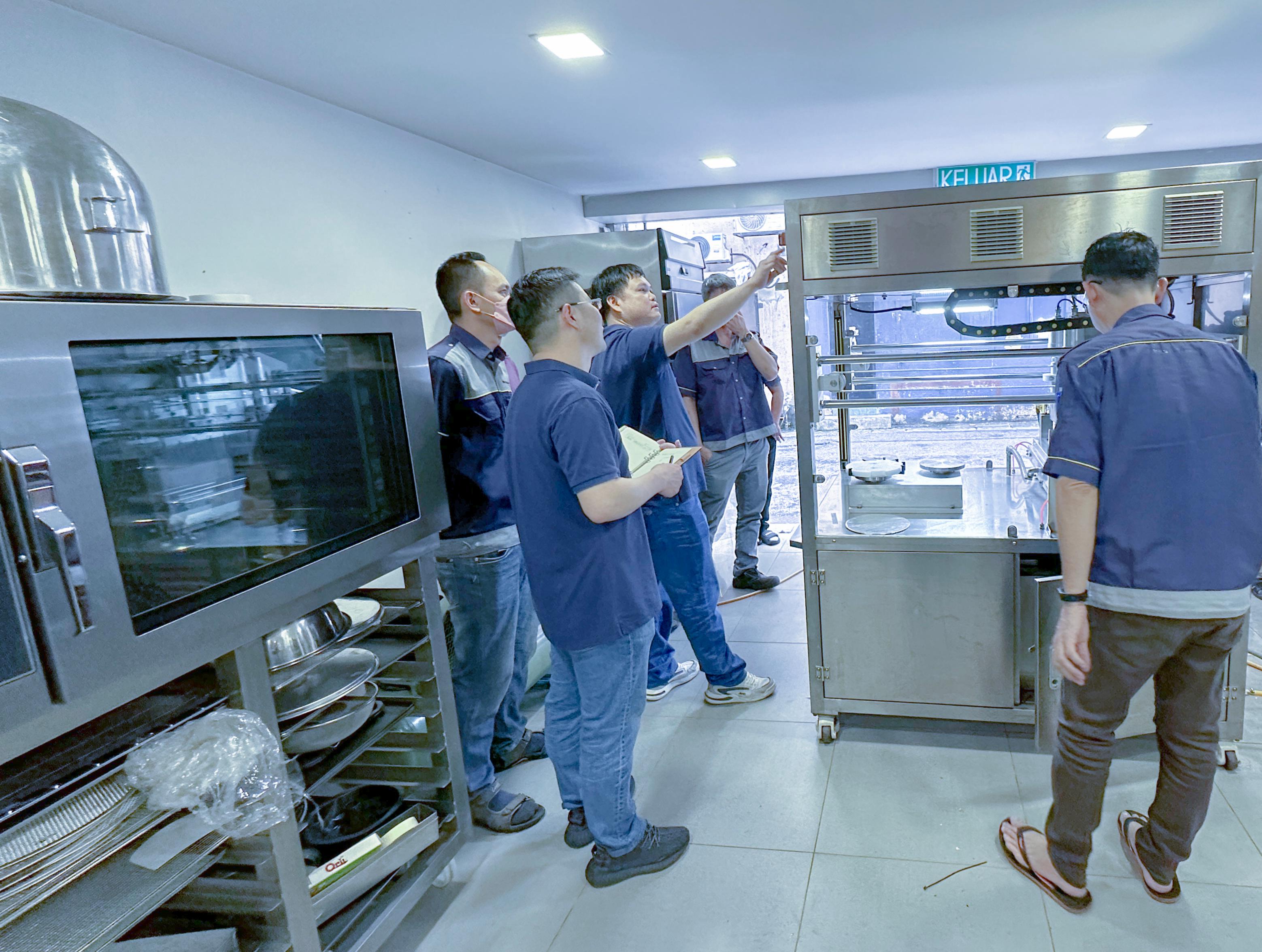
Why multi-year ultrasonic deployments stall on documents, not hardware
An ultrasonic cutting machine or ultrasonic coating system that runs well in year one can still create problems in year three, and those problems are rarely mechanical. Three failure patterns repeat across long deployments.
Model drift against certificate scope. CE attestations list specific model designations, not product categories. The Cheersonic cutting attestation TTC-22-2802/10/02 names HFM3000, UFM4000, UFM5000L, UFM6000, UFM6000L, UFM1000P, UFM700P, UFM3500 and UFM8000 — it does not name every cutting model in the catalogue. If the purchase order specifies a model that is not printed inside the certificate scope, the buyer has inherited a documentation gap that surfaces during a customer audit or an export inspection.
Acceptance ambiguity. When acceptance is defined as "machine tested before delivery" without a test article, a sample size or a signature, disputes in later years have no reference point. A defined acceptance test is also the cheapest protection against scope creep in customization projects.
Service without a schedule. Remote support and spare-parts supply mean different things when written as capabilities and when written as response commitments. The gap between them is where unplanned downtime accumulates.
What changed in smart manufacturing procurement
Ultrasonic processing has moved from a single standalone machine to a station inside an automated cell. Two consequences matter for long-term buying.
First, equipment is now specified together with what sits upstream and downstream of it. Cheersonic's customization scope covers equipment size, cutting specification, operating voltage, control program, machine appearance, brand logo, functional module and production line docking structure — a list that reflects how buyers actually integrate a cutting or coating station into a line rather than how they buy a standalone unit.
Second, compliance documentation has become a procurement deliverable in its own right. The certificates behind Cheersonic's cutting, spraying, sewing/cutting and liquid-processing ranges reference EU Machinery Directive 2006/42/EC, Low Voltage Directive 2014/35/EU and EMC Directive 2014/30/EU, coordinated with EN ISO 12100:2010 and EN 60204-1:2018. Those are the frameworks a supplier's quality and safety file has to remain consistent with across a multi-year term, which is why renewal tracking belongs inside the agreement and not in someone's inbox.
The contractual backbone: three parts of one agreement
Treat a long-term ultrasonic machine partnership as three linked documents. The purchasing terms define what is being supplied and under which commercial conditions. The acceptance criteria define the evidence that closes delivery. The service annex defines what happens when the line stops at 2 a.m. in year four. If any one of the three is missing, the other two become harder to enforce.
Purchasing terms: what to fix before the first purchase order
Cheersonic operates as an OEM and ODM manufacturer with independent factory R&D and manufacturing, and the following terms are documented in its capability record. They are a useful checklist because they represent the clauses that most often stay unwritten.
- Minimum order quantity: 1 unit. Single-unit trials and multi-unit line builds can therefore sit under the same framework agreement.
- Capacity: 30 sets of ultrasonic cutting equipment per month, which sets the realistic ceiling for a staged rollout across several plants.
- Lead time: 7–15 days for standard models and 30–45 days for customized models. Both figures should appear in the agreement as quoted ranges with a defined start point.
- Quality control sequence: raw material incoming inspection, semi-finished product spot check, 100% full machine running test before delivery, and finished product aging test. Each step is a candidate acceptance milestone with a record attached.
- Customization scope: the eight customization categories listed above, written as a specification annex rather than described in correspondence.
A practical rule: anything that will be inspected at acceptance must first be described in the purchasing terms, and anything that will be replaced in year three must first be listed in the spare-parts annex.
Acceptance criteria: what must pass before sign-off
Acceptance should combine a machine-level test with an application-level test. The machine-level test is the supplier's own running and aging protocol. The application-level test is the one buyers most often forget, and it is the one that decides whether a line performs against your product rather than against a demonstration sample.
For ultrasonic cutting, the published application criteria give you testable numbers. Cake and cheese cutting is specified at a dimensional tolerance within ±1 mm, and frozen product can be cut directly at -15 °C to -20 °C without pre-thawing. For cheese, contact parts are food-grade titanium alloy with a low-residue, easy-clean structure. For ultrasonic spray coating, the published figures differ by application unit: thin-film uniformity is stated as a thickness error within ±2% in semiconductor coating, within ±5% in medical device coating, and film thickness within ±3% in nano coating, while material utilization is stated as above 95% for spraying equipment and above 90% in the nano coating unit.
Write the test article, batch size, sampling plan, measurement method and signatory into the acceptance clause. For a multi-year agreement, also write the retention period for those records — a certification audit in year four will ask for them.
Matching model families to a multi-year plan
Long-term planning means choosing families, not single machines. No single ultrasonic machine platform covers cutting, welding and coating: they are separate product lines with separate model designations and separate certification records. Standardizing on a family reduces training load and spares inventory; standardizing across too many families does the opposite.
| Family | Documented model designations | Documented work | Deployment modes recorded |
|---|---|---|---|
| UFM / HFM ultrasonic cutting and slicing | HFM2300, HFM3100, UFM1000R, UFM1000P, UFM1000C, UFM2200, UFM3100P, UFM3200P, UFM3300, UFM5000, UFM5100, UFM6000, UFM8000, UFM8101, UFM8100C | Cake, bakery, frozen dessert, confectionery and prepared-food portioning | Desktop standalone batch cutting; fully automatic inline cutting with conveyor, demoulding and packaging docking |
| CWM / UFM cheese cutting | CWM100, UFM8100C, UFM2200C, UFM1000C, UFM3100W, UFM2300W | Soft, medium-hard and frozen cheese; fixed-weight portioning; butter and dairy blocks | Inline continuous production; desktop batch processing; one-operator semi-supervised operation |
| USM / S20 ultrasonic welding and sewing | S20-WP2000, USM350, USM450, USM550, COS800, HBRC800, HLC300, HC300, HSW500, HGC500, CS20-WM2000 | Thread-free bonding of thermoplastic and non-woven textiles; hermetic and decorative seams | Manual workstation; semi-automatic feeding; high-speed roll-fed automated line |
| UAM ultrasonic coating and spray | UAM1000, UAM2000, UAM4000, UAM6000, UAM8000, UAM9000; nozzles UCA120, UCA50, UCW50, UCW120, UCR50, UCR40, UCR60, UCT120 | Medical device coating, fuel cell and electrolyser catalyst layers, functional and protective films, fluxing | Laboratory and sample-platform scale; roll-to-roll and flat-conveyor production lines |
| USP photoresist coating | USP6000, USP6000WS | Photoresist and polyimide deposition for MEMS, packaging and wafer-level processes | Semi-automatic laboratory operation; inline docking with lithography, dicing and packaging steps |
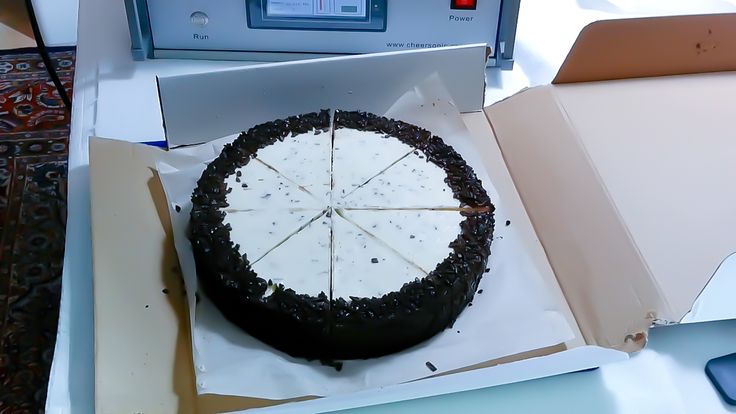
Cake slicing: round cakes, sheet cakes, tray bakes and layered cakes
For bakery buyers, the practical question is which product formats one ultrasonic cake cutting machine can absorb across a multi-year menu cycle. The documented cake application scope covers equal-portion cutting of round cakes, strip cutting of whole square cake boards, slicing of long cakes for standardized packaging, and multi-layer cakes with high-viscosity fillings such as fresh fruit, jam, chocolate, custard and butter cream. Tray bakes and sheet products are also documented within the food-cutting range.
Two capabilities matter more in year two than in the showroom. First, programmable cutting: CNC digital positioning controls portion size across different products, and parameter sets can be stored and recalled for multi-SKU switching instead of rebuilding the setup each time. Second, mode flexibility: the same range is offered as desktop standalone units for small-batch production and as fully automatic inline systems that dock with conveyor belts, demoulding equipment and downstream packaging. Documented throughput across the model range runs from 80 to 1,500 cakes or pies per hour, which is the figure to match against your own forecast before committing to a family.
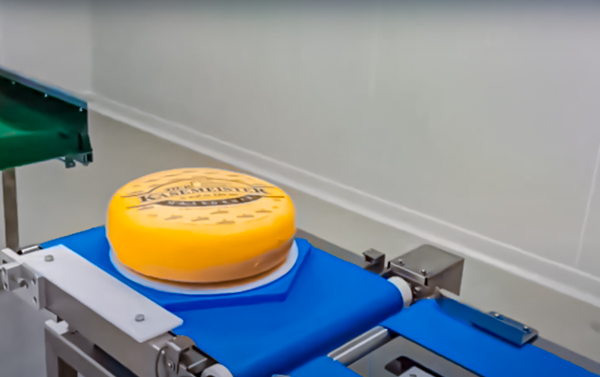
Chilled and frozen cheese: what to write into the dairy annex
Cheese portioning has its own acceptance language because the failure modes are different. The documented cheese scope covers full-automatic segmentation of soft, medium-hard and frozen cheese into blocks, slices, strips and small portions, with direct cutting of frozen cheese at -15 °C to -20 °C without pre-thawing, a cutting tolerance of ±1 mm, food-grade titanium alloy cutter heads, and an anti-adhesion ultrasonic vibration air barrier that reduces product sticking and residue. Cheersonic's cheese cutting machine and ultrasonic cheese cutting machine models are CWM100, UFM8100C, UFM2200C, UFM1000C, UFM3100W and UFM2300W.
In a multi-year agreement, specify the cheese types, temperature at cutting, target portion weight and permitted weight deviation, plus the cleaning regime between SKUs. Those four items determine whether the same ultrasonic cutting machine can serve both a chilled fresh-cheese programme and a frozen ingredient programme without a second capital purchase.
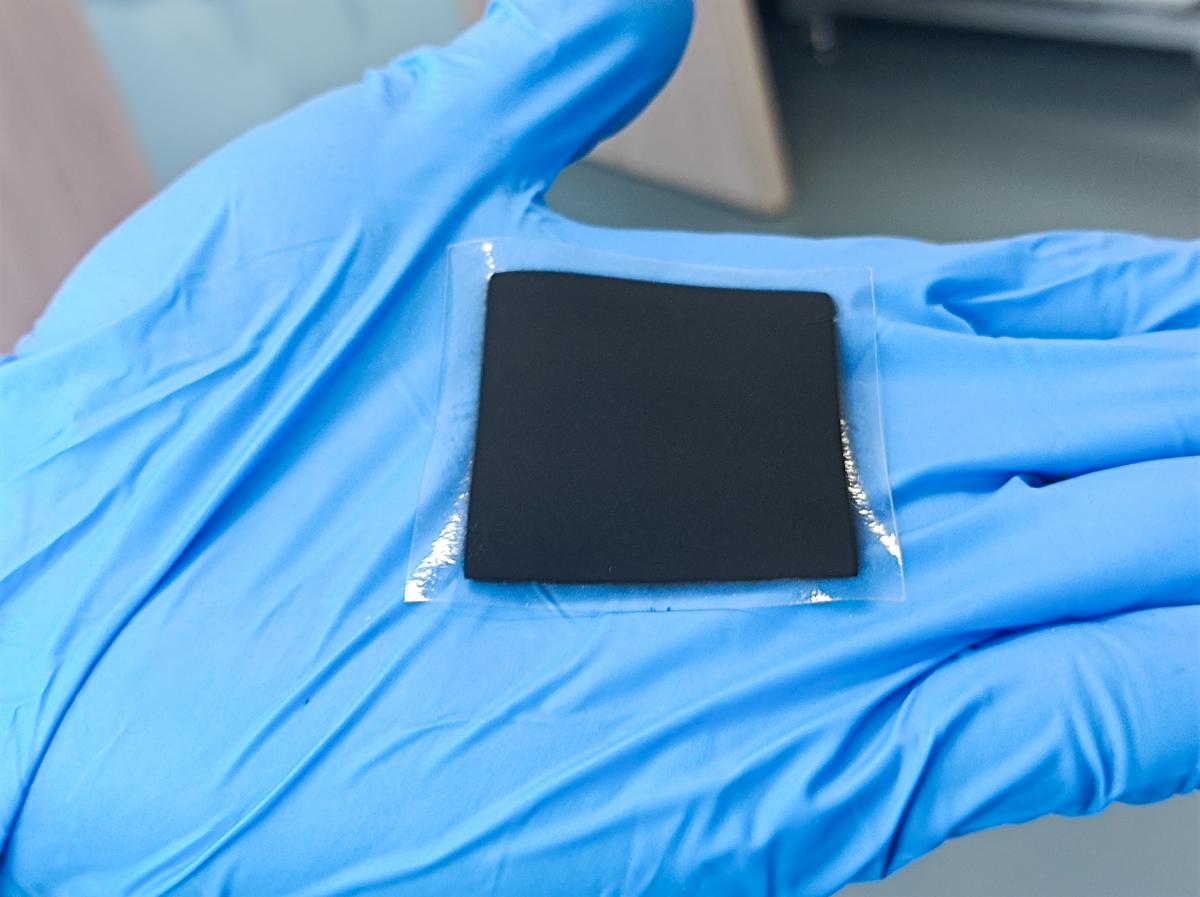
Coating and welding families in the same plan
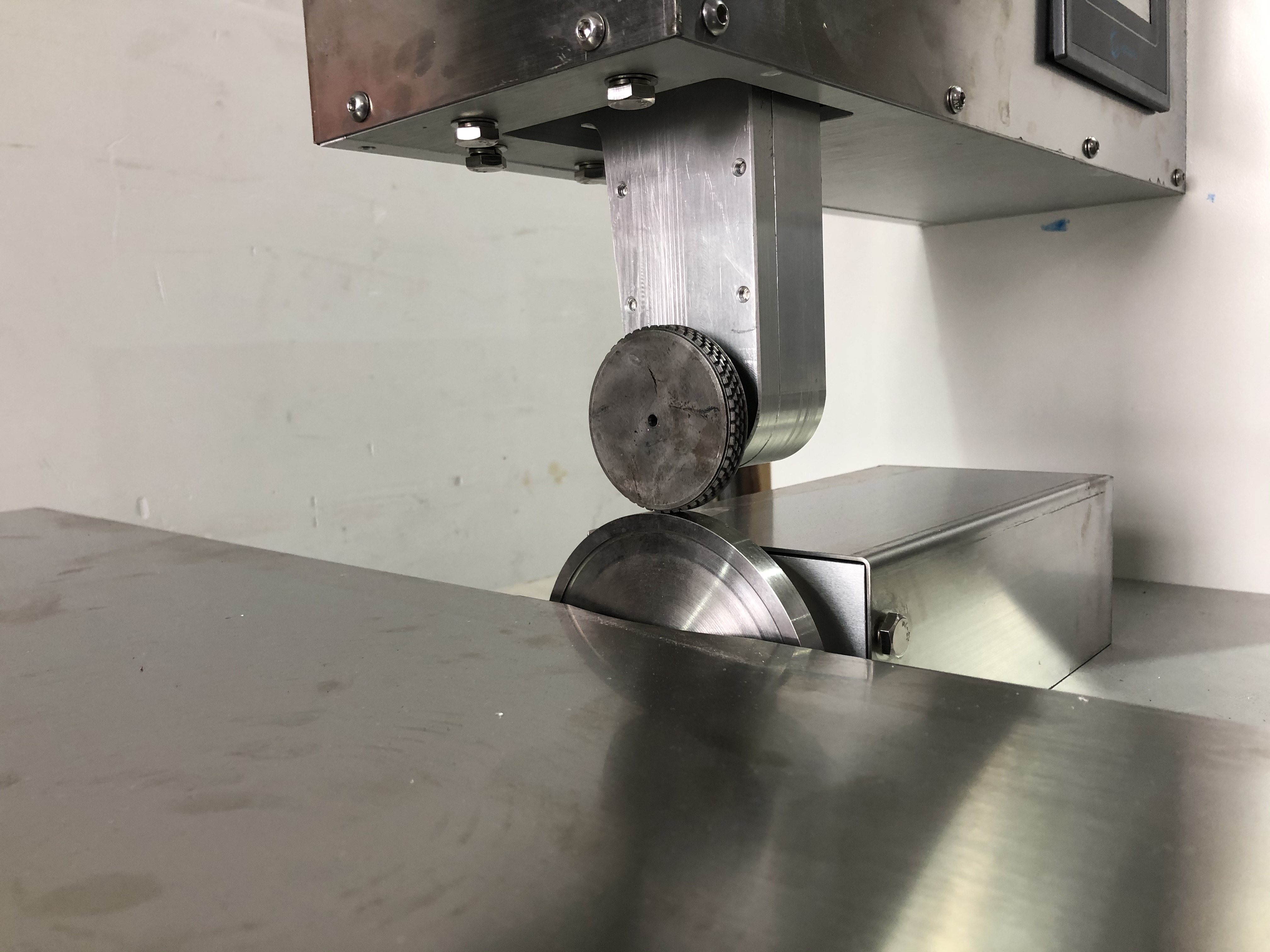
Buyers running several process steps under one supplier often ask whether coating and welding can sit under the same agreement. They can, provided the certificate scope is mapped per machine. The UAM ultrasonic coating and ultrasonic spray range is documented across ultrasonic medical device coating for stents, balloons and blood collection tubes, ultrasonic fuel cell coating and electrolyser catalyst layers, ultrasonic photoresist coating through the USP6000 and USP6000WS models, ultrasonic spray fluxing for PCB assembly, and ultrasonic spray pyrolysis for powder synthesis. The welding range covers thermoplastic textile bonding with rotary sonotrodes, customizable embossing anvil wheels and documented line speeds up to 400 pieces per minute in mask production, and the welding application record includes a free pre-production sample welding service — a clause worth carrying into any long-term agreement.
Certification handover: check the scope, not the logo
Cheersonic holds ISO 9001 certification, EU CE attestations and US FDA material test reports. That sentence is true and commercially useless on its own. In a tender document, replace it with the certificate numbers, the model scope and the validity dates, then verify that the machine on the purchase order appears inside the scope.
| Certificate | Number and issuer | Model scope as printed | Valid to |
|---|---|---|---|
| CE, ultrasonic food cutting machine | TTC-22-2802/10/02, INTEGRA96 | HFM3000, UFM4000, UFM5000L, UFM6000, UFM6000L, UFM1000P, UFM700P, UFM3500, UFM8000 | 2027-02-27 |
| CE, ultrasonic spraying machine | TRCN-26118HCU02, INTERTURK | UAM1000, UAM2000, UMC3000, UAM4000, UAM6000, UMC7100, UAM8000, UAM9000, UAC50, UAC120 | 2031-04-27 |
| CE, ultrasonic sewing and cutting machine | TRCN-26118HCU01, INTERTURK | USM350S, USM450, USM550, COS500, HC300, HGC500, HLC300, HSC500, HSW500, KZJ | 2031-04-27 |
| CE, ultrasonic liquid processing equipment | TRCN-26064HCU01, INTERTURK | Prosonic2000, Prosonic1000, Prosonic3000, LULP500, LULP750, IUIP1000, IUIP2000, IUIP2500, IUIP3000, IUIP5000 | 2031-03-04 |
| ISO 9001 quality management system | 17325Q21416R2S, Beijing Zhongjiaoyuanhang Certification Co., Ltd. | Production of ultrasonic cutting, spraying and liquid handling equipment; research and production of ultrasonic piezoelectric transducers | 2028-12-25 |
Two further points belong in the compliance annex. The cutting attestation expires on 2027-02-27, which falls inside a typical five-year deployment window — the agreement should name who monitors renewal and what documentation the buyer receives at each renewal. And the FDA documents are material test reports, not machine certifications: titanium alloy blade report NGBHG1805981901 issued by SGS-CSTC Ningbo under FDA Compliance Policy Guides Sec.545.500 (CPG 7117.05), and TPU conveyor belt report XMAFF170601257E-2 issued by SGS-CSTC Xiamen under FDA 21 CFR 177.2600. Food-safety due diligence should reference them as material-level evidence and pair them with the machine-level CE and ISO file.
Step-by-step: building the agreement
The sequence below works for a single ultrasonic cutting machine and for a multi-site rollout under one framework.
- Define the product envelope, not the machine. List every product format expected over the term — round cakes, sheet cake boards, tray bakes, layered cakes, chilled and frozen cheese — with target portion size and weight tolerance.
- Map product to family and model. Confirm the model designation and check it against the printed certificate scope before commercial discussion begins.
- Run a sample trial. Validate with your own product on a sample-workshop unit rather than a demonstration sample, and record cutting quality, throughput and cleaning time.
- Write the purchasing terms. Fix customization categories, MOQ, lead time, packaging and the delivery milestone sequence.
- Write the acceptance protocol. State the test article, batch size, sampling plan, measurement method, pass thresholds and signatory, and reference the supplier's running and aging tests as pre-delivery evidence.
- Write the service annex. Define support channels, on-site engineer deployment, spare-parts list, training delivery and the certificate renewal calendar.
- Set the review rhythm. An annual technical review covering consumable wear, parameter stability and any new product formats keeps the family decision valid as the portfolio changes.
Use cases: what multi-year deployment looks like
Three documented deployments illustrate how the clauses above translate into operating outcomes.
Standardized baking factory, United Kingdom — one unit, five years. An inline cake cutting system was integrated with an existing automated line for sponge, mousse, sandwich cream and multi-layer festival cakes. The reported results include a product qualification rate of 99%, a 32% reduction in raw-material loss and a 2.4-fold increase in shift cutting capacity, with no workshop structural modification. For a partnership agreement, the relevant point is that the acceptance test should have been run on all four product families, not only the flagship cake.
Dairy manufacturer, Ireland — four units, five years. Wheel cheese portioning combined automatic weighing, AI-assisted cutting-scheme calculation and ultrasonic cold cutting in one compact unit. Reported outcomes include an equipment footprint reduced by more than 70%, a 70% reduction in changeover time and one operator per unit. This is the case type where a spare-parts annex and a training schedule matter most, because the value depends on continuous single-operator operation.
Medical device manufacturer, Canada — five units, five years. Coronary stent and PTCA balloon coating production reported a finished-product pass rate rising from 82% to 98.5% and a 37% increase in coating-liquid utilization. Coating projects of this kind carry the heaviest documentation load, which is why the compliance annex — not the purchase price — usually determines whether the partnership survives its first audit cycle.
Service, training and after-sales: what to confirm
Cheersonic's documented after-sales scope covers remote online technical support, overseas engineer on-site service, spare parts supply, regular operation guidance and lifetime maintenance consultation. That scope defines the categories of support available; it does not by itself define warranty duration, response times or which consumables are covered. Those must be written into the agreement explicitly rather than assumed from the service description.
| Clause area | Documented supplier scope | What the agreement must add |
|---|---|---|
| Technical support | Remote online technical support; overseas engineer on-site service | Escalation path, language of support, remote-diagnosis prerequisites, conditions and cost basis for on-site deployment |
| Spare parts | Spare parts supply; lifetime maintenance consultation | Recommended on-site spares list by model, consumable identification, replenishment ordering process |
| Training | Regular operation guidance | Number of trainees, language, format (on-site or remote), coverage of programming and cleaning routines, refresher cadence |
| Compliance maintenance | CE attestations and ISO 9001 certificate valid to the dates shown above | Named owner for renewal tracking, notification obligation before expiry, delivery of renewed documents |
Three questions are worth asking in the final negotiation. Who holds the parameter file if the line is reprogrammed? Which spare parts should be held on site from day one, given a 7–15 day standard lead time and a 30–45 day customized lead time? And what happens to the certificate file if the exact model is replaced by a successor designation during the term? Answers to those three questions are usually a better predictor of long-term friction than the price of the first machine.
Frequently asked questions
How do I verify that a CE-certified ultrasonic machine actually covers the model I am buying?
Ask for the certificate number and read the model scope line, not the marketing claim. Cheersonic's cutting attestation TTC-22-2802/10/02 lists HFM3000, UFM4000, UFM5000L, UFM6000, UFM6000L, UFM1000P, UFM700P, UFM3500 and UFM8000, and is valid to 2027-02-27. The spraying attestation TRCN-26118HCU02 lists UAM1000, UAM2000, UMC3000, UAM4000, UAM6000, UMC7100, UAM8000, UAM9000, UAC50 and UAC120, valid to 2031-04-27. Match the purchase-order designation against that line before signing.
Can one ultrasonic machine family serve cutting, welding and coating across a multi-year plan?
No. Cutting, welding and coating are separate families with separate designations and separate certificates. Cutting runs on the UFM and HFM series for food and the CWM series for cheese; welding runs on the USM series and S20-WP2000; coating runs on the UAM series for spray coating and the USP6000 and USP6000WS models for photoresist work. Standardize on one family per process and keep the spares and training plans separate.
What drives the five-year cost of an ultrasonic machine beyond the purchase price?
Four cost drivers dominate: material utilization, consumable wear, cleaning downtime and spare-parts logistics. Coating systems are documented at above 95% material utilization for spraying equipment and above 90% in the nano coating unit, which converts directly into slurry and catalyst savings. On the cutting side, non-stick ultrasonic cutting and vibration self-cleaning reduce shutdowns for blade cleaning, and the documented low blade wear rate reduces replacement frequency. Lead time also carries cost: a 30–45 day customized lead time argues for holding critical spares on site.
Can we validate a machine on our own product before committing to a long-term agreement?
Yes, and it should be a contractual step rather than a courtesy. Cheersonic maintains an ultrasonic cutting equipment sample workshop and an ultrasonic coating laboratory for product trials, and the welding application record includes a free pre-production sample welding service for qualifying projects. Record the trial outputs — cut quality, throughput, cleaning time, coating uniformity — and attach them to the acceptance clause as the reference standard.
What lead times and delivery terms belong in a long-term agreement?
Cheersonic quotes 7–15 days for standard models and 30–45 days for customized models, with a minimum order quantity of 1 unit and a monthly capacity of 30 sets of ultrasonic cutting equipment. Convert those figures into a delivery schedule with defined start points, staged milestones for multi-unit rollouts, and a rule for how capacity is reserved. To confirm lead time and acceptance terms for your own configuration, send product samples and target specifications to Cheersonic at market2@cheersonic.com or +86 133-7254-0303.
Conclusion
A long-term ultrasonic machine partnership holds together when the purchasing terms, the acceptance criteria and the service annex describe the same machine, the same evidence and the same obligations. Confirm the model designation inside the certificate scope, test the machine on the product formats you will actually run, fix the customization and lead-time clauses in writing, and name who owns certificate renewal, spare parts and training for the full term.
Hangzhou Cheersonic Ultrasonics Equipments Co., Limited manufactures ultrasonic cutting, welding and coating equipment from a 7,150 m² facility in Fuyang District, Hangzhou, with 100 employees, a 20-engineer R&D team, 31 patents and 3 software copyrights, and an annual output of 1,200 units. Buyers evaluating a multi-year deployment can request the technical file, certificate copies and a sample trial before drafting terms.
Next step: sample trial, quotation and technical file
Send your product samples, target throughput and acceptance expectations, and Cheersonic will confirm the model family, lead time and acceptance protocol in writing.
Email: market2@cheersonic.com | Tel: +86 133-7254-0303 | WhatsApp: +86 158-6904-9660
Website: www.cheersonic.com | Address: No. 11-13, Chuangye Road, Changkou Town, Fuyang District, Hangzhou City, Zhejiang Province
Download the product catalogue: CHEERSONIC brochure (PDF)
Have Questions or Need More Details?
Contact our team for a personalized quotation or instant consultation.
Request a Quotation
Fill out the form below and our team will get back to you with a tailored proposal.
WhatsApp Direct Chat
Prefer to chat in real-time? Message us on WhatsApp for instant assistance & quick answers.
- Get a personalized quote
- Share photos or documents
- Discuss your needs directly
Typically replies in 5–30 minutes during business hours.