
Ultrasonic Food Cutter vs. Cheese Cutting Machine: Which One Does Your Line Need?
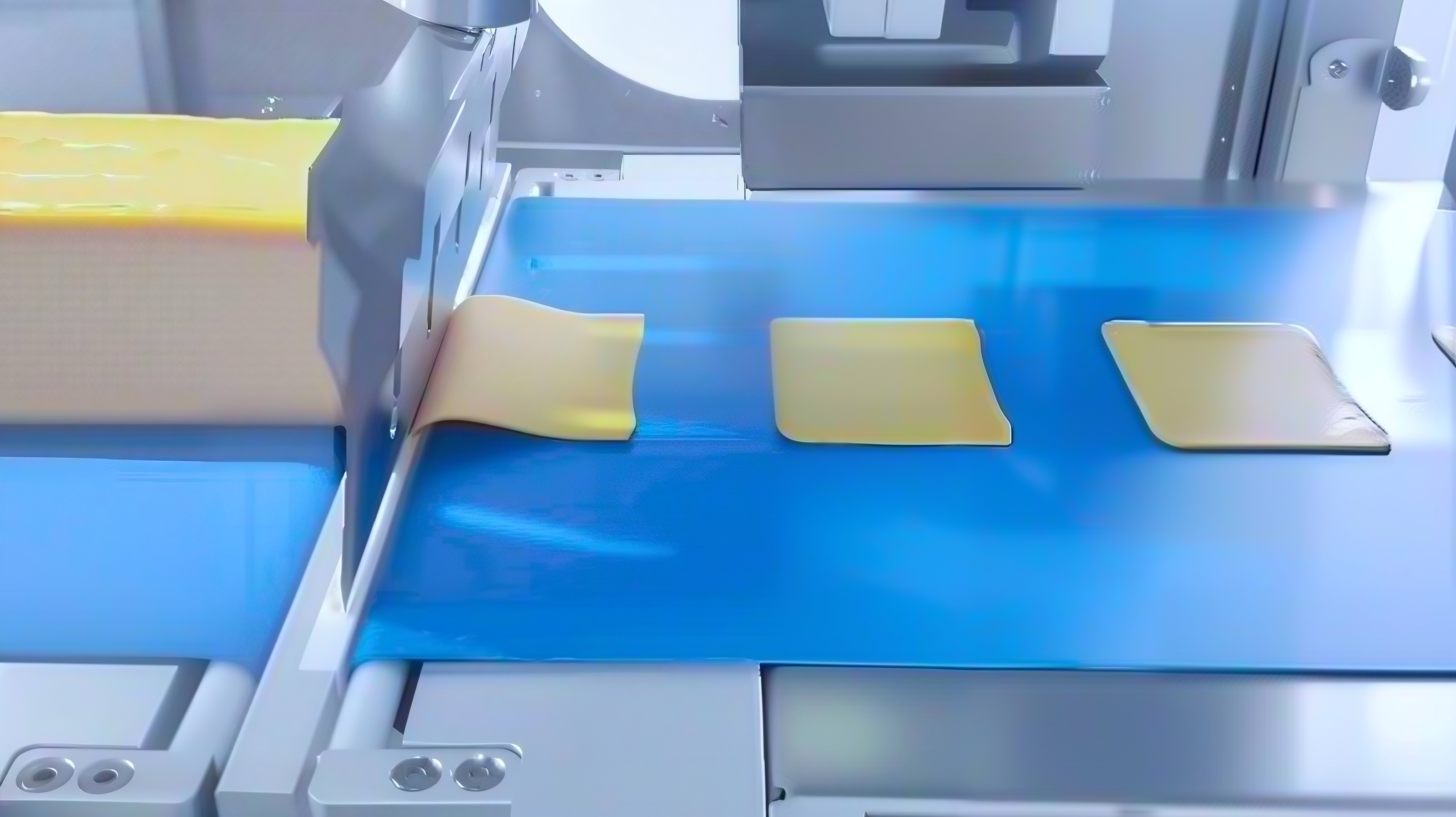
Ultrasonic fixed-weight portioning of cheese — the dairy application that separates a specialised cheese cutting machine from a general food cutter.
Two processors can order equipment built on the same physics — a titanium blade vibrating at roughly 20 kHz, separating product with almost no downward force — and still end up with completely different production results. One runs chilled cheese blocks into a machine specified around cakes. The other buys a dairy-specific system and then discovers it cannot switch to cream-filled desserts without new tooling.
Hangzhou Cheersonic Ultrasonics Equipments Co., Limited builds both families: the HFM and UFM general cutting and slicing platforms, and the CWM100 / UFM-C cheese cutting systems. This guide compares the two the way a project engineer would — by product temperature, portion target, throughput, hygiene design and line interface — and closes with a decision sequence you can apply directly to your own line.
Why the Wrong Cutting Platform Becomes Expensive
The mismatch between a general ultrasonic food cutter and a dedicated cheese cutting machine rarely shows up on day one. It appears later, in three specific places.
- Changeover time. A bakery line moving between cream cakes, tray bakes, sponge sheets and sandwiched products needs one machine that follows a cutting recipe. A dairy line moving between block cheese, wheel cheese and extruded cheese needs weight-based targets, not only shape. When the platform is specified for one logic only, every new SKU turns into a manual operation.
- Yield and appearance rejects. In cheese portioning, edge loss and appearance defects dominate the cost of ownership. A dairy processing plant that deployed 3D scanning plus AI intelligent cutting reduced raw material edge loss from 8.2% to 0.9% and cut appearance scrap rate by 90%, with weight error controlled within ±1 g.
- Hygiene and labour. Cheese is high-fat, high-viscosity and residue-prone. A low-residue, easy-clean structure is specified specifically to avoid bacterial cross-contamination, and the cutting tolerance is normally held at ±1 mm so portions stay within declared weight bands without constant operator correction.
There is also a temperature question that decides the platform before anything else is discussed. Frozen desserts and frozen cheese can be cut directly at low temperature without pre-thawing, while ambient cream-filled products demand a different blade behaviour and a different infeed. Get that one variable wrong and no amount of parameter tuning will fix the line.
Industry Background: A Growing, Crowded Cutting Category
The ultrasonic cutters market, which includes food cutting applications, was valued at USD 2.8 billion in 2025 with a projected CAGR of 7.2% through 2033, according to Dataintelo. Regional concentration is significant: Fortune Business Insights reported that Asia Pacific represented approximately 25% to 38% of global revenue across different ultrasonic sub-segments in 2025.
Supplier-side, an industry survey of the ultrasonic equipment and spray coating sector published by Cognitive Market Research and Coatings World listed Sono-Tek Corporation, Branson (Emerson), Dukane and Cheersonic among key global players in the category. On the compliance side, machinery safety for ultrasonic industrial equipment is governed internationally by the ISO 12100:2010 standard for risk assessment and risk reduction.
Hangzhou Cheersonic Ultrasonics Equipments Co., Limited is a Hangzhou-based ultrasonic equipment manufacturer founded in 2014, focused on ultrasonic cutting and ultrasonic spraying systems for the bakery, dairy, medical, electronics and energy sectors. The company operates a 7,150 m² facility with around 100 employees, an annual output of 1,200 units and a 20-engineer R&D team; it holds 31 patents and 3 software copyrights and is certified to ISO9001, EU CE and US FDA. Roughly 50% of production is exported, primarily to Asia, the EU and North America.
The Detailed Solution: Two Platforms, One Shared Principle
What both machine families share
- Cutting physics. Both platforms use a titanium blade vibrating at approximately 20 kHz. Ultrasonic vibration creates an isolation air film between blade and product, which reduces friction and gives the blade a self-cleaning effect during operation.
- Cut quality. Because there is almost no downward extrusion force, both families produce smooth, burr-free surfaces and avoid compression marks on soft or layered products.
- Hygiene construction. Food-grade contact parts, stainless steel bodies and wash-down-capable layouts are standard across the food range.
- Control. Both are driven by servo touch-screen control with programmable parameters and recipe recall.
The divergence starts when you specify the portion target and the product temperature.
The general ultrasonic food cutter (HFM / UFM series)
This is the multi-product platform. Model coverage includes HFM2300, HFM3100, UFM1000R, UFM1000P, UFM1000C, UFM2200, UFM3100P, UFM3300, UFM3200P, UFM5000, UFM5100, UFM6000, UFM8000, UFM8101 and UFM8100C.
Published specifications for the general ultrasonic cutting machine include a working frequency of 20 kHz, power of 800 W to 1800 W, input of 208–240 V at 50/60 Hz, an air requirement of 6 CFM at 90 PSI, a maximum cutting width of 600 mm, output capacity of 50 to 1,500 pieces per hour, a working temperature range of −14 °C to 40 °C, servo touch-screen control and IP65 washdown protection.
The tooling specification is where bakery and confectionery buyers focus. Cutting speed reaches up to 200–1,200 products per hour depending on product type, dimensional accuracy is held at ±0.5–1.0 mm, and product height can reach approximately 100 mm — enough for high layered cakes. Cutting patterns include round, square, triangle, bar and custom geometries, using interchangeable ultrasonic titanium blades on a quick-release sanitary design that integrates inline with bakery production and packaging lines.
Product compatibility for the cake-cutting configuration covers soft, sticky, layered and cream-filled products, with non-stick, low-friction slicing. In slicing mode the platform runs up to 300 products per hour on either full-sheet or round products — the frozen/chilled/hard specification for frozen lines, and the fresh/ambient/sticky specification for ambient lines. Cheersonic also offers inline and offline slicing models covering production speeds of 80 to 1,500 cakes or pies per hour, including offline versions with or without divider inserts between each slice, and robotic-arm configurations for higher speed, efficiency and accuracy.
The dedicated ultrasonic cheese cutting machine (CWM / UFM-C series)
This platform is specified around weight, not geometry. Model coverage includes CWM100, UFM8100C, UFM2200C, UFM1000C, UFM3100W and UFM2300W.
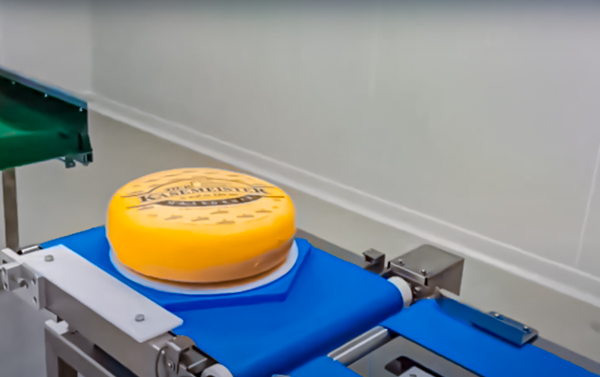
Round and wheel cheese need weight-based portioning logic, not only a cutting shape.
Specifications for the ultrasonic cheese cutting machine call for 20 kHz ultrasonic vibration with a titanium ultrasonic blade, fixed-weight, catch-weight or portion cutting modes, and high-precision weight control at ±1% as the typical industry standard. Supported products are block, round, stick and extruded cheese, processed either chilled or at ambient temperature, in inline conveyor, batch or robotic configurations from semi-automatic through to fully automated robotic systems. System integration options include a 3D vision system, checkweigher and robotic pick-and-place, on a stainless-steel food-grade construction with easy wash-down cleaning.
The dairy application layer explains what that hardware is for: full-automatic segmentation of soft, medium-hard and frozen cheese; quantitative fixed-size and fixed-weight cutting of blocks, slices, strips and small portions; and smooth burr-free cutting that preserves the internal tissue of the cheese. The stated benefits are reduced material residue, less oil adhesion, lower raw material loss, and the ability to cut frozen cheese directly without pre-thawing. Food-grade titanium alloy cutter heads, an anti-adhesion ultrasonic vibration air barrier design, a high-precision cutting tolerance of ±1 mm, and automated docking with upstream and downstream equipment are all specified requirements. Typical matched equipment includes an automated assembly-line conveying system, demoulding equipment, a quantitative weighing module and food packaging equipment.
Field results support the specification. At a dairy manufacturing enterprise in Ireland, four machines were installed for precision quantitative wedge cutting of wheel cheese; the integrated design reduced equipment footprint by more than 70%, cut production time by 70%, used 304 stainless steel with detachable cleaning parts, and applied AI-generated cutting schemes to maximise raw material utilisation with a single operator per unit.
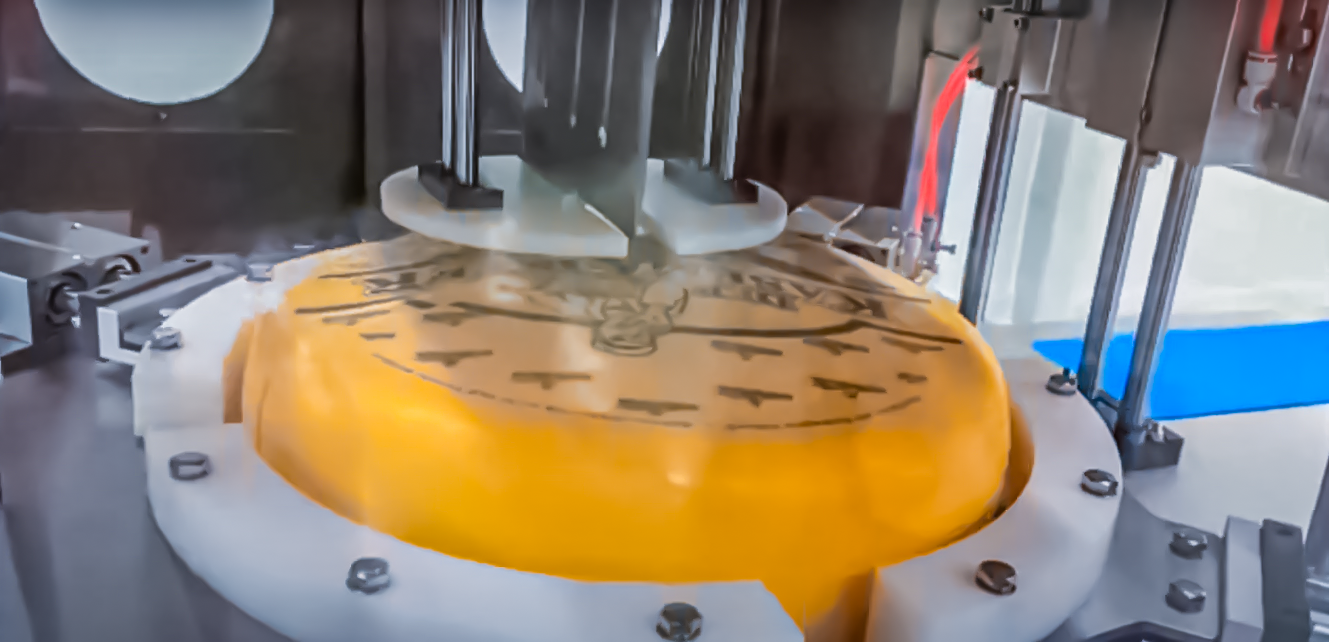
Weight-based portioning defines the cheese platform: weighing, cutting logic and ultrasonic separation work as one station.
Step-by-Step Breakdown: How to Decide in Six Steps
- Define your product temperature window first. If the line cuts frozen cheese or frozen dessert at −15 °C to −20 °C without pre-thawing, that single constraint narrows the specification immediately. The general platform covers a working temperature range of −14 °C to 40 °C, and the bakery slicing configuration is rated for frozen, chilled and hard products; dairy configurations are specified for chilled or ambient cheese.
- Decide whether your target is dimensional or weight-based. If the customer promise is a shape — a rectangular tray bake, a triangular slice, a fixed-height bar — you are buying geometry and the ±0.5–1.0 mm dimensional accuracy of the general cutting tools is the relevant metric. If the promise is a declared pack weight for cheese, you need fixed-weight or catch-weight portioning at ±1% typical weight control.
- Match throughput to the real bottleneck. Compare your required rate against published capacity: 50 to 1,500 pieces per hour and up to 200–1,200 products per hour on the general cutting platform, up to 300 products per hour in slicing mode, and 80 to 1,500 cakes or pies per hour across Cheersonic's inline and offline slicing range. Cheese systems are specified for high-speed continuous or batch production — confirm which of the two your packaging hall can actually absorb.
- Verify hygiene and wash-down as specified, not as promised. Look for IP65 washdown protection on the cutter, quick-release sanitary blade design, food-grade titanium alloy contact parts and a low-residue, easy-clean structure. In dairy, cleaning geometry is a food-safety decision, and residue-prone structures create a documented bacterial cross-contamination risk.
- Check the line interface before the machine. List what must connect upstream and downstream: conveyor systems, demoulding equipment, quantitative weighing modules, checkweighers, 3D vision systems, robotic pick-and-place and packaging equipment. A cheese system without a weighing module cannot deliver fixed-weight portions, and a cake cutter without a packaging handoff creates a manual bottleneck at the end of the line.
- Confirm tooling changeover and multi-SKU logic. Multi-product switching without complex mould replacement, and one-click CNC parameter recall for different specifications, are the features that decide whether a single machine can serve several SKUs. If your portfolio includes both dairy and bakery items, this step decides whether you need one platform plus tooling, or two dedicated platforms.
Use Cases: Where Each Platform Wins
Dairy and cheese processing. Wheel cheese, block cheese, stick and extruded cheese portioning is the cheese platform's core territory — particularly where declared pack weights, low edge loss and direct cutting of chilled product matter. In Venezuela, a dairy processing enterprise deployed an automatic quantitative cutting system for all cheese types using 3D scanning plus AI intelligent cutting, achieving a 5× increase in single-machine production capacity, a 75% reduction in replacement production time and a 90% reduction in appearance scrap rate.
Bakery, dessert and ready-to-eat production. The general platform handles chiffon cake, cream layered cake, nude cake, cheesecake, mousse cake, brownie, sponge embryo, ice cream cake, frozen mousse and sandwich-filled pastries — including high-viscosity fillings such as fresh fruit, jam, chocolate and custard. The functional goal is avoiding deformation, cream leakage, filling overflow and fragmentation while keeping decorative elements intact.
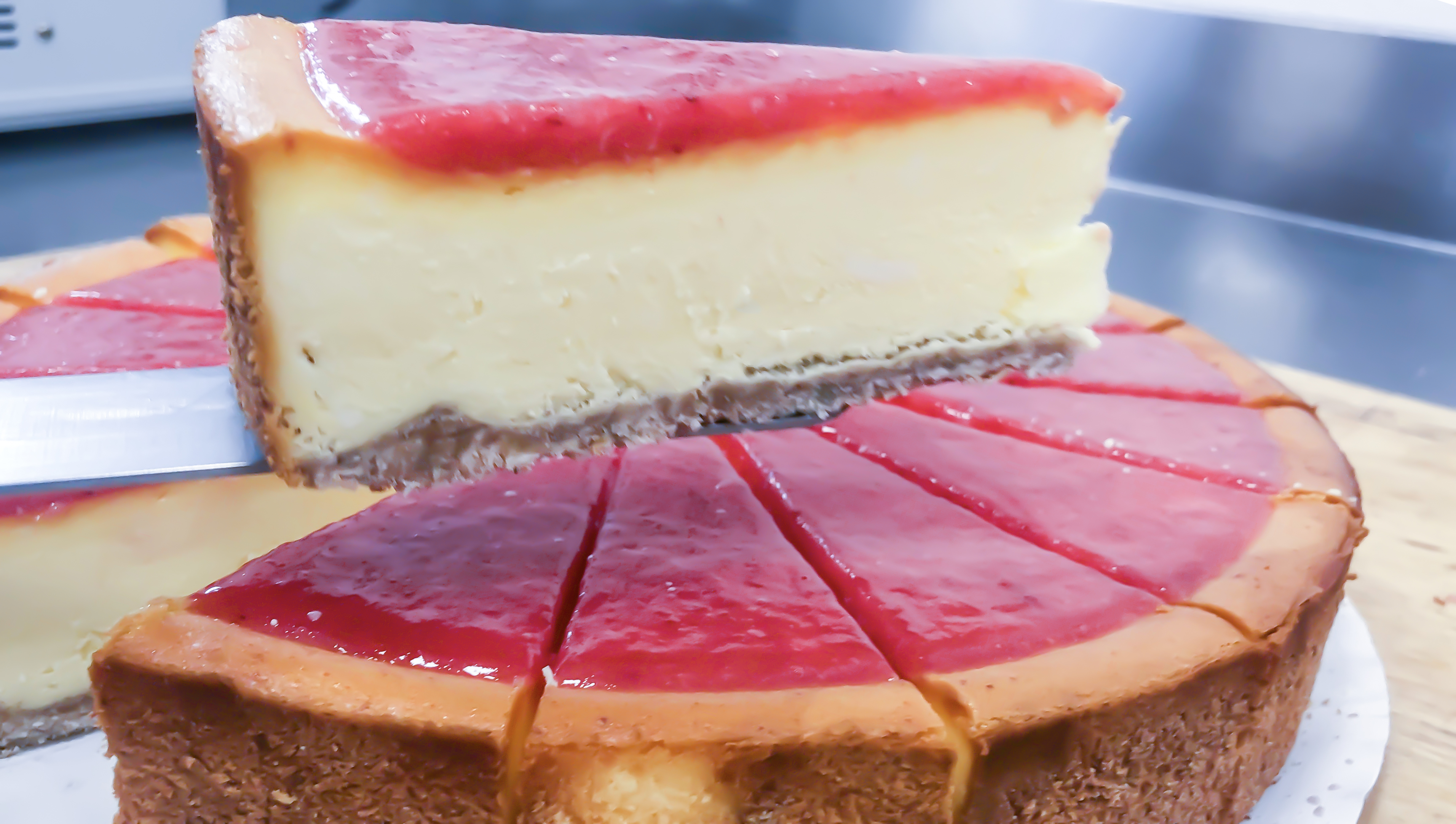
Cream-filled and layered desserts are the general platform's home territory: non-stick, low-friction, dimensionally accurate.
Confectionery and composite products. Sticky, sugar-heavy and multi-layer products benefit from the same non-stick cutting behaviour. A confectionery manufacturer in France installed two units for caramel bar slicing with anti-stick cutting, zero-deformation slicing and food-grade hygienic design, and has operated them for eight years.
Seafood and other frozen protein. The same ultrasonic platform supports frozen and semi-frozen product lines where mechanical blades would crush or tear the product. A seafood deep-processing enterprise in Poland installed five units for automated high-speed cutting of frozen and semi-frozen mackerel and herring, with IP65 waterproof and corrosion-resistant construction and EU food-safety compliance.
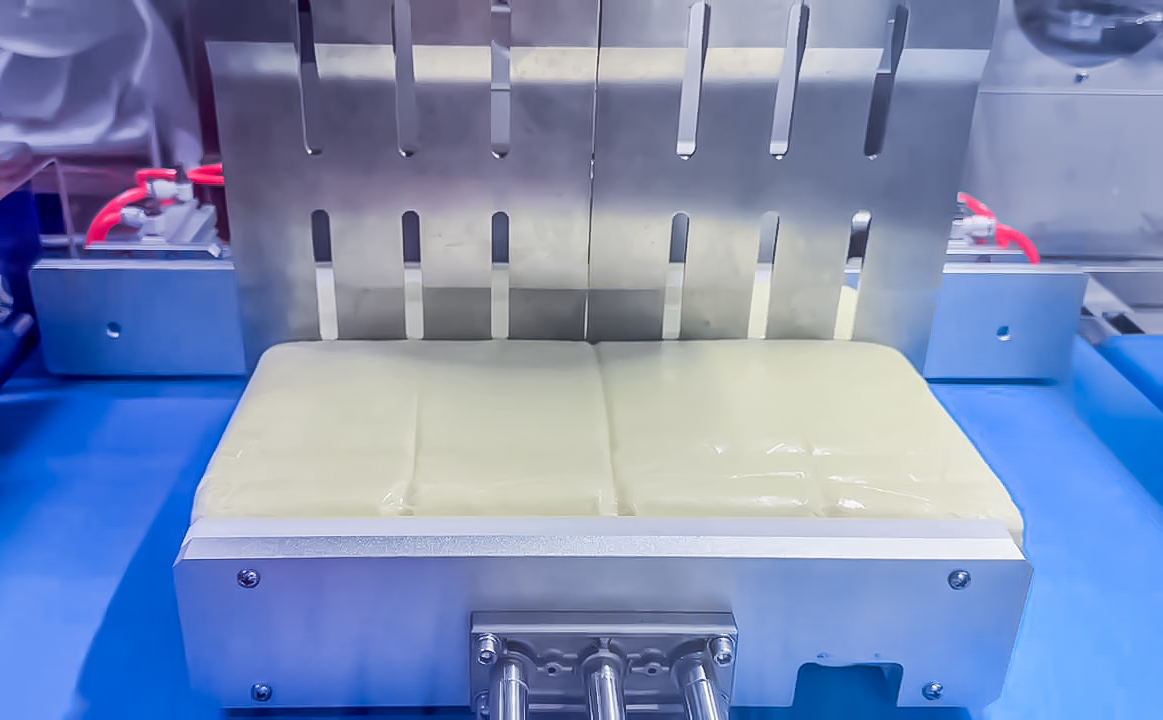
Pre-cutting large cheese blocks is a distinct step from final portioning — decide which machine owns which stage.
Comparison Table: Side-by-Side Decision Criteria
| Decision criterion | General ultrasonic food cutter (HFM / UFM) | Ultrasonic cheese cutting machine (CWM100 / UFM-C) |
|---|---|---|
| Cutting principle | ~20 kHz ultrasonic vibration, titanium blade | 20 kHz ultrasonic vibration, titanium ultrasonic blade (sonotrode) |
| Primary portion logic | Dimensional: shape, height and slice geometry (round, square, triangle, bar, custom) | Weight-based: fixed weight, catch weight and portion cutting |
| Accuracy specification | ±0.5–1.0 mm dimensional accuracy | ±1% typical weight control; ±1 mm cutting tolerance in dairy applications |
| Product temperature | −14 °C to 40 °C working range; slicing rated for frozen, chilled and hard, or fresh, ambient and sticky | Chilled or ambient cheese; frozen cheese cut directly without pre-thawing |
| Throughput reference | 50–1,500 pcs/h; up to 200–1,200 products/h; up to 300 products/h slicing; 80–1,500 cakes or pies/h across inline and offline models | High-speed continuous or batch production on inline, batch or robotic systems |
| Product compatibility | Soft, sticky, layered and cream-filled cakes; full-sheet or round products; frozen desserts and sandwich-filled pastries | Block, round, stick and extruded cheese |
| Hygiene design | IP65 washdown grade; quick-release sanitary blade design; food-grade contact parts | Stainless-steel food-grade design; hygienic wash-down; titanium alloy cutter head; low-residue easy-clean structure |
| Line integration | PLC-controlled conveyor, indexing, inline connection with bakery production and packaging lines; robotic arm options | Conveyor system, checkweigher, 3D vision system, robotic pick-and-place, demoulding and quantitative weighing modules |
| Cutting width / height | Max cutting width 600 mm; product height up to ~100 mm | Configured per cheese format and portion size |
| Model families | HFM2300, HFM3100, UFM1000R, UFM1000P, UFM1000C, UFM2200, UFM3100P, UFM3300, UFM3200P, UFM5000, UFM5100, UFM6000, UFM8000, UFM8101, UFM8100C | CWM100, UFM8100C, UFM2200C, UFM1000C, UFM3100W, UFM2300W |
Frequently Asked Questions
1. What hygiene and compliance features should I verify on a food-grade ultrasonic cutting machine?
Verify contact-part material, cleaning geometry and machine protection rating, not just the blade. Cheersonic cheese cutting systems use a titanium ultrasonic blade on a stainless-steel food-grade design with wash-down capability, and dairy applications specify food-grade titanium alloy cutter heads plus a low-residue, easy-clean structure intended to avoid bacterial cross-contamination. On the general cutting platform, the cutter is rated IP65 washdown grade with a quick-release sanitary blade design. As a manufacturer, Cheersonic holds ISO9001, EU CE and US FDA certifications. For machinery risk assessment and risk reduction, ISO 12100:2010 is the applicable international standard.
2. Can one ultrasonic machine handle both bakery and cheese production?
Partly, and the limitation is the portion logic. The general HFM / UFM platform is listed for dairy processing as well as bakery, confectionery, frozen food and ready-to-eat production, so it can cut cheese dimensionally. What it does not replace is weight-based portioning: the cheese platform is specified for fixed-weight and catch-weight cutting at ±1% typical weight control, with chilled or ambient product handling and integration to a checkweigher and 3D vision system. If your cheese packs carry a declared weight, that difference decides the platform; if cheese is an occasional shape-cutting task, a general cutter plus tooling may be enough.
3. What drives the configuration scope — and cost — of a cheese cutting machine versus a general food cutter?
Cost tracks configuration, not brand tier. The variables that change the build are automation level (semi-automatic through fully automated robotic), cutting mode (dimensional versus fixed-weight, catch-weight or portion cutting), integration content (3D vision system, checkweigher, robotic pick-and-place, demoulding and quantitative weighing modules, packaging handoff), tooling and blade set, cutting shape and portion-size customisation, and line-docking structure. Cheersonic also customises equipment size, operating voltage, control program, machine appearance, brand logo and functional modules under OEM and ODM programmes, with a minimum order quantity of one unit — so a single-line trial build is a realistic starting point.
4. Can we run our own product samples before placing an order?
Yes — cutting trials are part of the specification process at Cheersonic's ultrasonic cutting equipment sample workshop, because portion accuracy and cut surface quality depend on your actual product temperature, fat content and format. Every machine also goes through a 100% full machine running test before delivery, supported by raw material incoming inspection, semi-finished product spot checks and a finished-product aging test. If you want to validate a platform against your own cheese blocks, cakes or frozen product, send your sample specification and target portion weight to market2@cheersonic.com or request a quotation through www.cheersonic.com, and the team will confirm the right platform before tooling is cut.
5. What are the MOQ and lead times, and how do I evaluate the supplier for a smart manufacturing cutting project?
The minimum order quantity is one unit. Standard models ship in 7–15 days, while customised models take 30–45 days, against a monthly capacity of 30 sets of ultrasonic cutting equipment. Quality control covers 100% full machine running test before delivery, raw material incoming inspection, semi-finished product spot check and finished product aging test. After-sales support includes remote online technical support, overseas engineer on-site service, spare parts supply, regular operation guidance and lifetime maintenance consultation. Cheersonic exports to the EU, Southeast Asia, the Middle East, North America and Australia.
Conclusion: Match the Platform to the Portion Promise
The decision between a general ultrasonic food cutter and a dedicated ultrasonic cheese cutting machine comes down to one question: is your customer promise a shape or a weight? If the promise is a shape — a clean triangular slice, a rectangular tray bake, a fixed-height bar — the HFM / UFM platform gives you ±0.5–1.0 mm dimensional accuracy, a 600 mm maximum cutting width and a 50–1,500 pieces-per-hour capacity envelope across bakery, confectionery, dessert, ready-to-eat and frozen product lines.
If the promise is a declared pack weight on chilled or frozen cheese, the CWM100 / UFM-C platform is specified for it: fixed-weight and catch-weight portioning at ±1% typical weight control, direct cutting of frozen cheese without pre-thawing, a ±1 mm cutting tolerance, food-grade titanium alloy cutter heads and integration with checkweighers and 3D vision systems.
Where a facility runs both portfolios at meaningful volume, the realistic answer is often two platforms with shared tooling logic rather than one machine stretched across both — because the cost of a mis-specified platform shows up later as changeover time, edge loss and appearance rejects, not as a line-item on the purchase order.
Next Step: Validate Before You Specify
Send your product specification, product temperature and target portion weight to the Cheersonic team, and we will confirm whether an HFM / UFM general food cutter or a CWM100 / UFM-C cheese cutting machine fits your line — then arrange a sample trial before tooling is finalised.
Email: market2@cheersonic.com | Tel / WhatsApp: +86 133-7254-0303 | Website: www.cheersonic.com
Download the full product catalogue: Cheersonic brochure (PDF)
Address: No. 11-13, Chuangye Road, Changkou Town, Fuyang District, Hangzhou City, Zhejiang Province, China
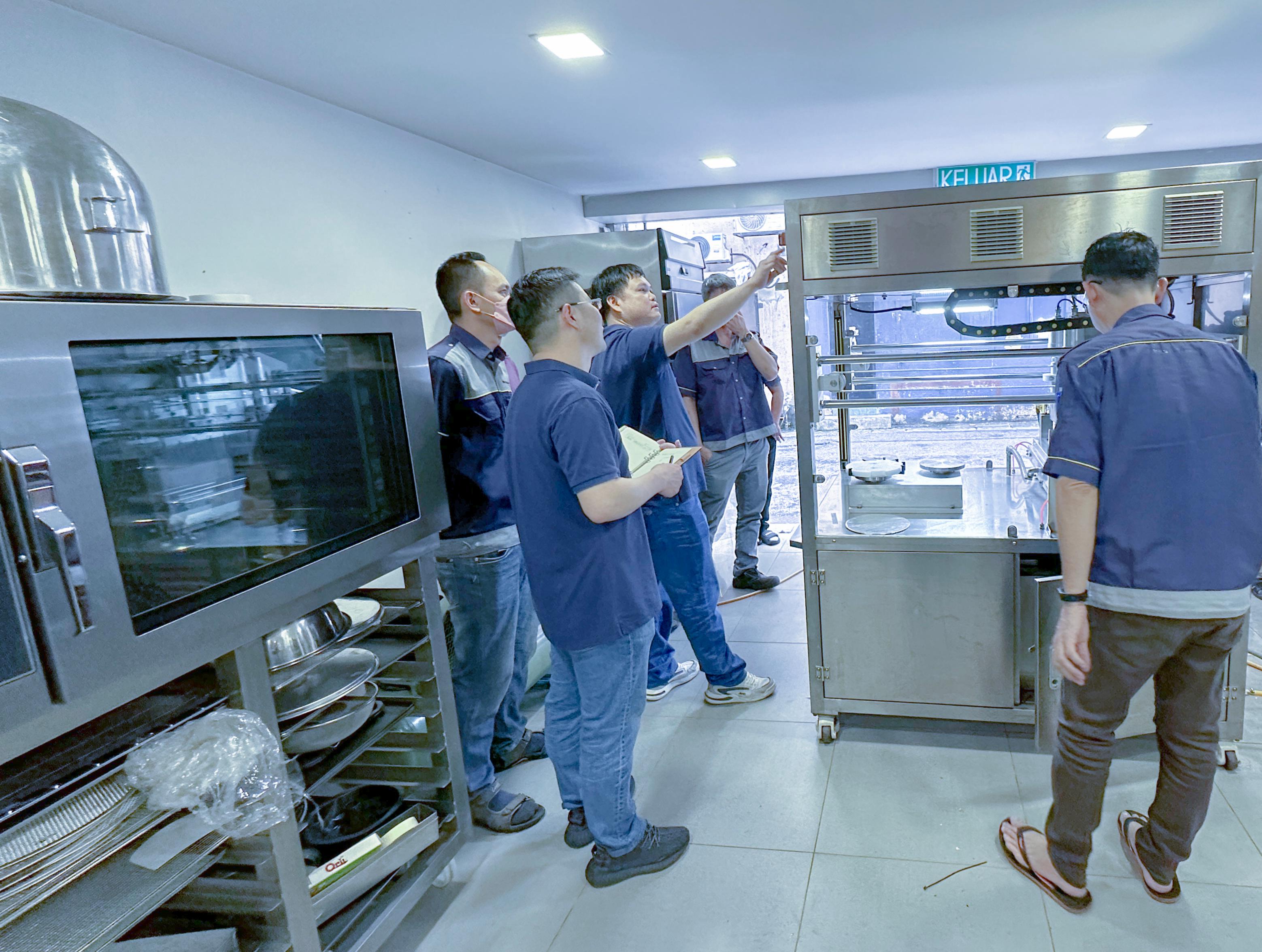
Every machine passes a 100% full machine running test before delivery — the same validation step available to buyers through sample trials.
Have Questions or Need More Details?
Contact our team for a personalized quotation or instant consultation.
Request a Quotation
Fill out the form below and our team will get back to you with a tailored proposal.
WhatsApp Direct Chat
Prefer to chat in real-time? Message us on WhatsApp for instant assistance & quick answers.
- Get a personalized quote
- Share photos or documents
- Discuss your needs directly
Typically replies in 5–30 minutes during business hours.