
Ultrasonic Machine Application Guide: Cutting & Coating Setups for Smart Manufacturing Cells
Scenario-to-configuration workbook
Ultrasonic Machine Application Guide: Cutting & Coating Setups for Smart Manufacturing Cells
An ultrasonic machine in a smart manufacturing cell is a process module, not a stand-alone bench tool. The correct setup is fixed by four inputs: the product or substrate, the cut or coating pattern, the automation handshake, and the hygiene or cleanroom envelope. Frequency, amplitude, tooling, motion, and model family follow from those inputs — not from a catalog headline.
This guide is written for engineers adapting ultrasonic equipment to mixed cells that may combine a conveyor, an indexing table, a robot, a vision system, and a factory MES. It uses Cheersonic model families — UFM/HFM, CWM, UAM, USP, and S20/USM — to show where cutting and coating choices diverge. Cheersonic (HANGZHOU CHEERSONIC ULTRASONICS EQUIPMENTS CO.,LIMITED) is a Hangzhou-based manufacturer founded in 2014 that builds ultrasonic cutting and ultrasonic spraying equipment for baking, dairy, medical, electronics, and energy applications.
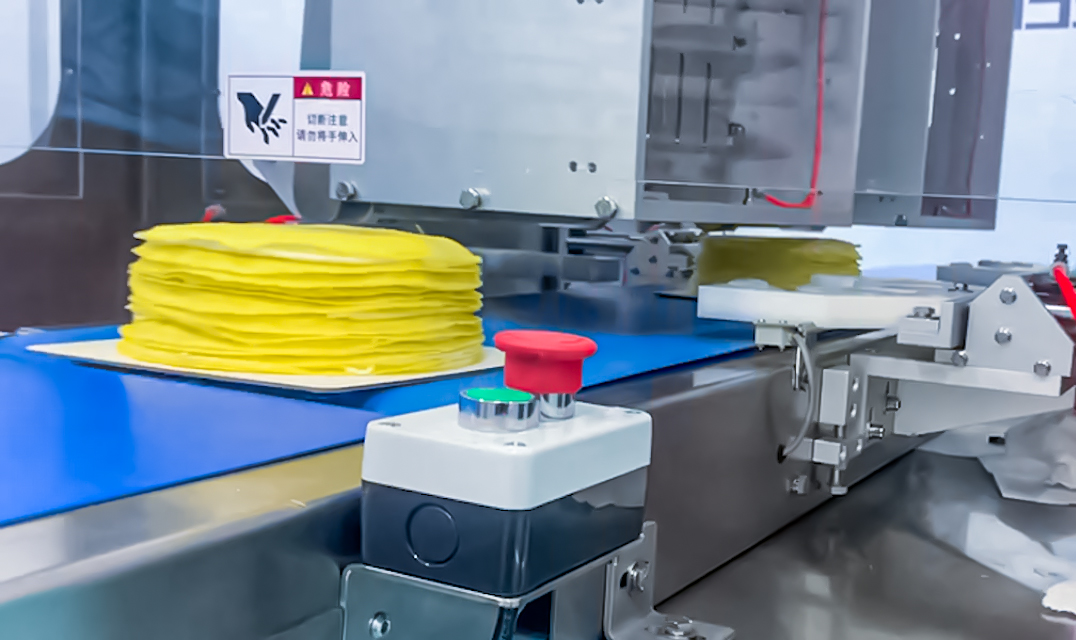
Cover image: an inline cake cutting configuration. The cell interface, not the machine alone, determines whether the module fits the line.
Why Mixed Smart Manufacturing Cells Expose Weak Ultrasonic Specifications
Most ultrasonic integration problems are specification problems. A machine that cuts well on a bench can fail when it is placed after a demolding station, before a packaging line, or inside a washdown zone. A coating head that produces an even laboratory film can drift when the cell changes substrate speed, masks a medical balloon, or runs a high-solids catalyst ink for several hours.
The common failure pattern is to start with a frequency or a model number and then ask the cell to adapt. In a mixed cell, the sequence should be reversed. The engineering team first writes the cell acceptance statement: what product, what pattern, what tolerance, what throughput, what cleaning regime, and what handshake. Only then does the ultrasonic machine selection become stable.
Cutting cells and coating cells fail for different reasons. Cutting cells usually fail on product support, blade geometry, cut pattern, temperature, and washdown. Coating cells usually fail on liquid formulation, flow control, droplet size, deposition path, exhaust, and drying. A single “ultrasonic machine” specification cannot cover both without naming the process family and the cell interface.
What the Market and Supplier Base Tell Engineers
The ultrasonic cutter category is mature enough that configuration fit, rather than basic availability, is the differentiator. Commercial research cited in the verified data package places the global ultrasonic cutter market at USD 1.3 billion in 2025 and an estimated USD 1.4 billion in 2026. Asia Pacific accounted for a 42.7% revenue share in 2025, and the top five players in ultrasonic food processing held a combined 34.5% share in 2025. These figures describe the category, not any single supplier’s rank.
For a smart manufacturing cell, the practical supplier question is whether the manufacturer can translate a cell brief into a tested module. Cheersonic reports a 7,150 m² factory, 100 employees, 20 R&D engineers, 31 patents, 3 software copyrights, and annual output of 1,200 units. The company holds ISO9001, EU CE, and US FDA certifications, and reports a 50% export ratio with markets in Asia, the EU, and North America. Those facts matter because they indicate a supplier organized around customization and repeat production, not only a catalog SKU.
The supplier’s product range also shows why the process family must be fixed early. Cheersonic lists ultrasonic food cutting machines, ultrasonic atomization spraying equipment, ultrasonic liquid processors, and ultrasonic welding systems. These are adjacent capabilities, not interchangeable modules. A cell that cuts cake, coats a stent, and welds a filter mesh may need three different ultrasonic subsystems with separate tooling, safety envelopes, and validation records.
The Configuration Workbook: Four Inputs That Drive Every Ultrasonic Machine Choice
Use the following workbook to turn a cell requirement into a machine specification. Each row is a decision that should be closed before a quotation is compared.
| Cell input | What it controls | Specification consequence |
|---|---|---|
| Product or substrate | Cake, cheese, frozen dessert, bread, wafer, stent, balloon, fuel-cell membrane, PCB | Tooling material, cutting edge, nozzle type, fixture, temperature control, cleanliness class |
| Cut or coating pattern | Programmable cut pattern, divider inserts, fixed weight, edge coverage, catalyst layer, photoresist film | Motion axes, recipe storage, vision or indexing, masking, deposition path, acceptance tolerance |
| Automation level | Standalone batch, inline conveyor, indexing table, robot cell, MES handshake | Frame, guarding, I/O, recipe handshake, product tracking, safety logic, buffer capacity |
| Hygiene and environment | Washdown, food-contact, Class 100/1000 cleanroom, GMP, solvent exhaust, static control | Materials, enclosure, IP rating, drainability, exhaust, grounding, cleanroom-compatible motion |
| Throughput target | Products per hour, cuts per product, coating passes, line takt | Number of cutting stations, conveyor speed, robot reach, curing or drying time, buffer sizing |
| Liquid or product chemistry | Viscosity, solids, fat, sugar, solvent, catalyst ink, photoresist | Nozzle selection, flow control, anti-clogging, temperature, material compatibility, waste handling |
A useful rule: if two quotations use different assumptions in any row above, they are not comparable. Force the same cell brief into every quotation before comparing price or delivery.
Cutting Cell Setups: Cake, Cheese, and High-Speed Food Slicing
Ultrasonic cutting cells use a vibrating blade to separate sticky, layered, frozen, or delicate products with low downward force. The cell’s product support and cut pattern are as important as the ultrasonic generator. A cake cell that moves the product during the cut will not be saved by a higher-power machine.
Bakery cake slicing with programmable patterns
A cake slicing cell should be specified around the cut pattern, the divider-insert requirement, and the loading method. Cheersonic offers inline and offline ultrasonic slicing models, with or without divider inserts between slices. The divider insert improves presentation and cut quality, while the robotic arm option improves speed, efficiency, and accuracy. Supplier-reported production speeds span 80 to 1,500 cakes or pies per hour across models and configurations.
If the line target is 300 products per hour, treat that as a planning number and ask for model-specific validation. The number that matters is the guaranteed rate at the actual cake diameter, height, cut count, loading method, and operating hours. Cheersonic reports a cutting tolerance of ±1 mm for bakery applications, and supports direct cutting of frozen desserts at -15°C to -20°C without pre-thawing. A washdown construction and a tool-change procedure should be part of the cell acceptance test, not an afterthought.
Model families for this cell include the UFM and HFM slicing families. Cake cutting models listed by Cheersonic include UFM5000, UFM8101, UFM6000, UFM1000P, UFM1000R, UFM5100, UFM6600, and UFM8000. The engineering choice among them should be driven by cut pattern, product size, inline versus offline operation, and the required changeover time.
Dairy cheese cutting at a 20 kHz-class setup
A dairy cell brief may specify a 20 kHz cutting head for cheese, but the acceptance test must still prove the cut on the actual cheese temperature, fat content, and shape. Cheersonic’s dairy cutting applications cover soft, medium-hard, and frozen cheese, with fixed-size and fixed-weight portioning of blocks, slices, strips, and small portions. The company lists food-grade titanium alloy cutter heads, ±1 mm cutting tolerance, and an anti-adhesion ultrasonic vibration design for high-fat and viscous dairy products.
For frozen cheese, the cell should be designed for direct cutting without pre-thawing. That changes the conveyor, product support, and cleaning cycle. Cheese cutting models listed by Cheersonic include CWM100, UFM8100C, UFM2200C, UFM1000C, UFM3100W, and UFM2300W. A washdown layout, low-residue structure, and easy cleaning are more important in dairy than a small increase in cutting speed.
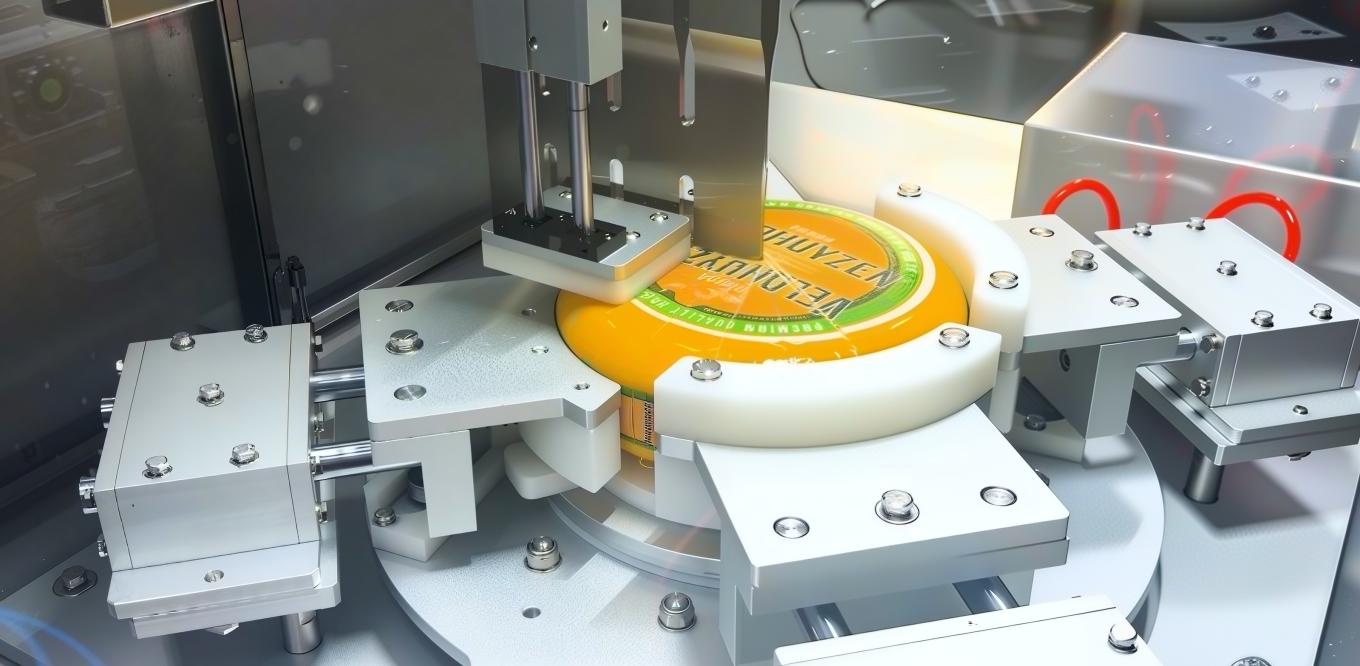
Dairy cell example: a wheel cheese cutting configuration. The cell brief should state cheese temperature, portion weight, washdown, and tool material.
High-speed food slicing and sticky products
Food slicing cells for sticky, layered, high-fat, or frozen products benefit from ultrasonic slicing because the vibrating blade reduces friction and product drag. Cheersonic lists applications across cake, ice cream, cheese, bread, pizza, pie, sandwich, brownies, bars, dough, tortilla, and other fresh or frozen products. The same cell logic applies: support the product, define the cut, then size the ultrasonic module.
Do not confuse cutting with welding. The S20 and USM families are ultrasonic welding systems, not cutting or coating modules. If a mixed cell also includes welding, specify it as a separate process with its own tooling, energy director, and safety validation.
Coating and Atomization Cell Setups: Medical, Energy, Electronics, and Fluxing
Ultrasonic coating and atomization cells use a vibrating nozzle to create a low-pressure, fine droplet spray. The cell is defined by the liquid, the substrate, the deposition pattern, and the environmental controls. Cheersonic reports material utilization above 95% for ultrasonic spraying in its company profile, with application-specific figures of above 90% for nano coating and above 70% for electronics photoresist. Those figures are application-dependent and should be verified on the actual line.
Coating and atomization cells are usually specified around a frequency envelope, a liquid-delivery window, and a droplet-size target. The engineering brief for this guide uses a 25–180 kHz atomization envelope, 0.001–50 mL/min flow, and 18–200 µm droplets as screening values. Do not treat those as a model guarantee: the final window must be fixed on the selected ultrasonic nozzle, liquid formulation, and sample trial.
Medical device coating cells
Medical coating cells for stents, balloons, catheters, and blood collection tubes require low-temperature, low-pressure deposition, Class 100/1000 cleanroom compatibility, and GMP-compliant documentation. Cheersonic’s medical application data lists ultra-uniform coating with thickness error below 5%, anti-clogging for biological and nano slurries, static-free dust control, and compatibility with GMP Class III medical implant requirements. The company’s medical portfolio includes ultrasonic stent coating machines, balloon coating machines, and catheter coating systems.
The cell acceptance test should include coating thickness, uniformity, adhesion, edge coverage, and defect inspection. A medical cell also needs a cleaning and changeover procedure that prevents cross-contamination between formulations. The ultrasonic nozzle should be selected for the liquid, not for the machine frame.
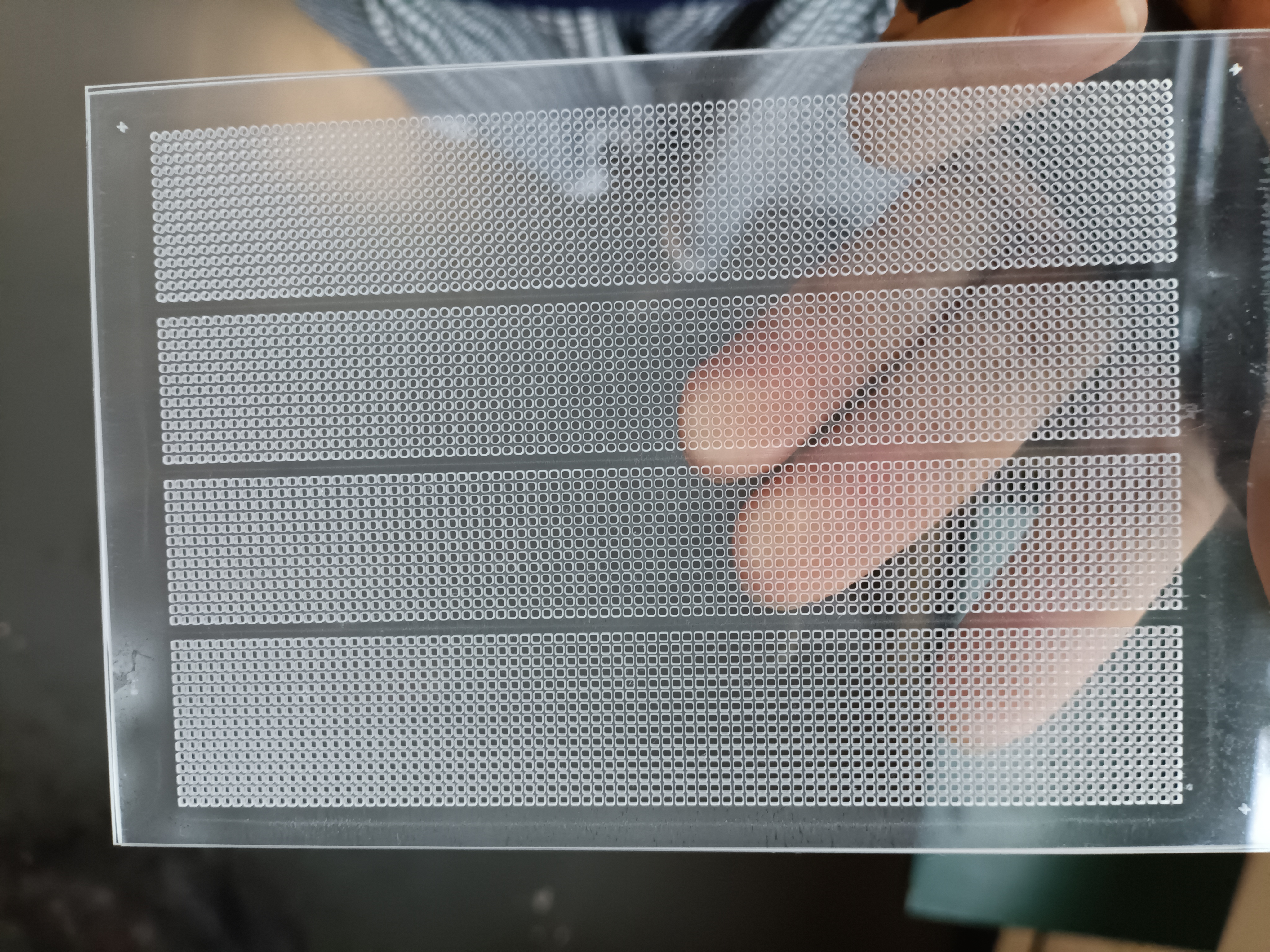
Medical coating cell example: low-pressure atomization and cleanroom-compatible handling are part of the cell specification.
Fuel cell and electrolyzer coating cells
Fuel cell and electrolyzer coating cells apply catalyst layers, membrane modification layers, and conductive films onto fragile or 3D surfaces. Cheersonic lists ultrasonic fuel cell coating models UAM4000, UAM6000, and UAM8000, with anti-clogging nozzle design, low material loss, low-pressure non-contact atomization, and compatibility with high-viscosity slurry and nano-particle liquids. The cell may use roll-to-roll conveyance, a flat conveyor, or a multi-axis motion system.
The key integration question is not only droplet size but also how the cell handles the membrane, the drying step, and the online thickness measurement. A coating cell that produces a good coupon but cannot hold thickness across the full web is not a production cell.
Electronics photoresist coating cells
Electronics photoresist coating cells require cleanroom particle control, low static generation, and non-contact deposition. Cheersonic lists ultrasonic photoresist coating models USP6000 and USP6000WS, with film thickness error within ±2%, material utilization above 70%, and compatibility with 50 nm ultra-thin coatings up to 30 μm thick films. The company’s electronics application data also covers polyimide dielectric films, wafer dicing protective films, and precision flux spraying for PCB and chip packaging micro-components.
For a photoresist cell, the nozzle, motion path, exhaust, and solvent compatibility should be specified together. A change in photoresist viscosity can move the process window more than a change in the machine frame.
Ultrasonic spray fluxing and adjacent coating uses
Ultrasonic spray fluxing cells apply precise flux to PCB and chip-packaging components. The same atomization logic applies: select the nozzle for the flux chemistry, set the flow and deposition path, and validate the solder result. Cheersonic also lists ultrasonic spray pyrolysis models UAM2000 and UNC9000, and ultrasonic atomizer families UAM1000, UAM2000, UAM4000, UAM6000, UAM8000, and UAM9000. These are adjacent applications, not automatic substitutes for a coating cell.
Nozzle families for coating cells include UCA120, UCA50, UCW50, UCW120, UCR50, UCR40, UCR60, and UCT120. The nozzle selection should follow the liquid, flow rate, droplet target, and spray pattern. The cell should then be validated with the actual formulation.
Step-by-Step: From Cell Brief to Accepted Ultrasonic Module
- Write the cell acceptance statement. Name the product or substrate, the cut or coating pattern, the tolerance, the throughput, the cleaning regime, and the cleanroom class. For cutting, include product temperature and cut count. For coating, include liquid viscosity, solids, and film thickness.
- Choose the process family before the model. Cutting and slicing use UFM, HFM, and CWM families. Coating and atomization use UAM, USP, and ultrasonic nozzle families. Welding uses S20 and USM families. A mixed cell may need more than one ultrasonic subsystem.
- Fix the product handling and tooling. Define the conveyor, indexing table, robot gripper, fixture, and product support. For cutting, confirm the blade geometry and divider-insert requirement. For coating, confirm the mask, rotation axis, and deposition path.
- Set the process window. For cutting, lock frequency class, amplitude, blade, and cut speed. For coating, lock nozzle, flow, atomization frequency, droplet target, and passes. Use a sample trial to close the window rather than relying on a catalog range.
- Design the hygiene and environmental envelope. For food cells, specify washdown, food-contact materials, drainability, and cleaning access. For medical and electronics cells, specify cleanroom class, exhaust, static control, and solvent compatibility.
- Run the sample trial and lock the recipe. Cut the actual cake, cheese, or frozen product. Coat the actual stent, membrane, wafer, or PCB. Record the acceptance results: ±1 mm cutting, below 5% medical coating thickness error, ±2% wafer thickness error, or application-specific material utilization.
- Freeze the interface and acceptance test. Document the I/O handshake, recipe management, safety logic, spare-parts list, certificates, manuals, and factory acceptance test. Cheersonic reports annual output of 1,200 units; project lead time still depends on the configuration and must be confirmed in the quotation.
Use Cases: How the Same Logic Plays Out in Five Cells
1. Bakery cake slicing cell
A bakery cell runs round cakes and sheet products with programmable patterns, divider inserts, and inline conveyance. The machine family is UFM or HFM. The cell brief should state the cake diameter, height, cut count, frozen or fresh condition, and cleaning cycle. Supplier-reported speeds of 80 to 1,500 cakes or pies per hour provide a planning range, not a guarantee for every pattern.
2. Dairy cheese cutting cell
A dairy cell cuts soft, medium-hard, or frozen cheese into fixed-weight portions. The brief may specify a 20 kHz-class cutting head, food-grade titanium tooling, ±1 mm tolerance, and washdown construction. Models in the CWM and UFM cheese family should be matched to the cheese temperature and portion shape. Direct cutting of frozen cheese without thawing reduces line time but requires a robust product support and cleaning plan.
3. Medical device coating cell
A medical cell coats stents, balloons, catheters, or blood collection tubes in a Class 100/1000 environment. The cell brief should state the coating thickness, uniformity, adhesion, and cleaning procedure. Cheersonic’s medical application data supports thickness error below 5% and GMP-compatible cleanroom operation. The ultrasonic nozzle and motion path are the core process choices.
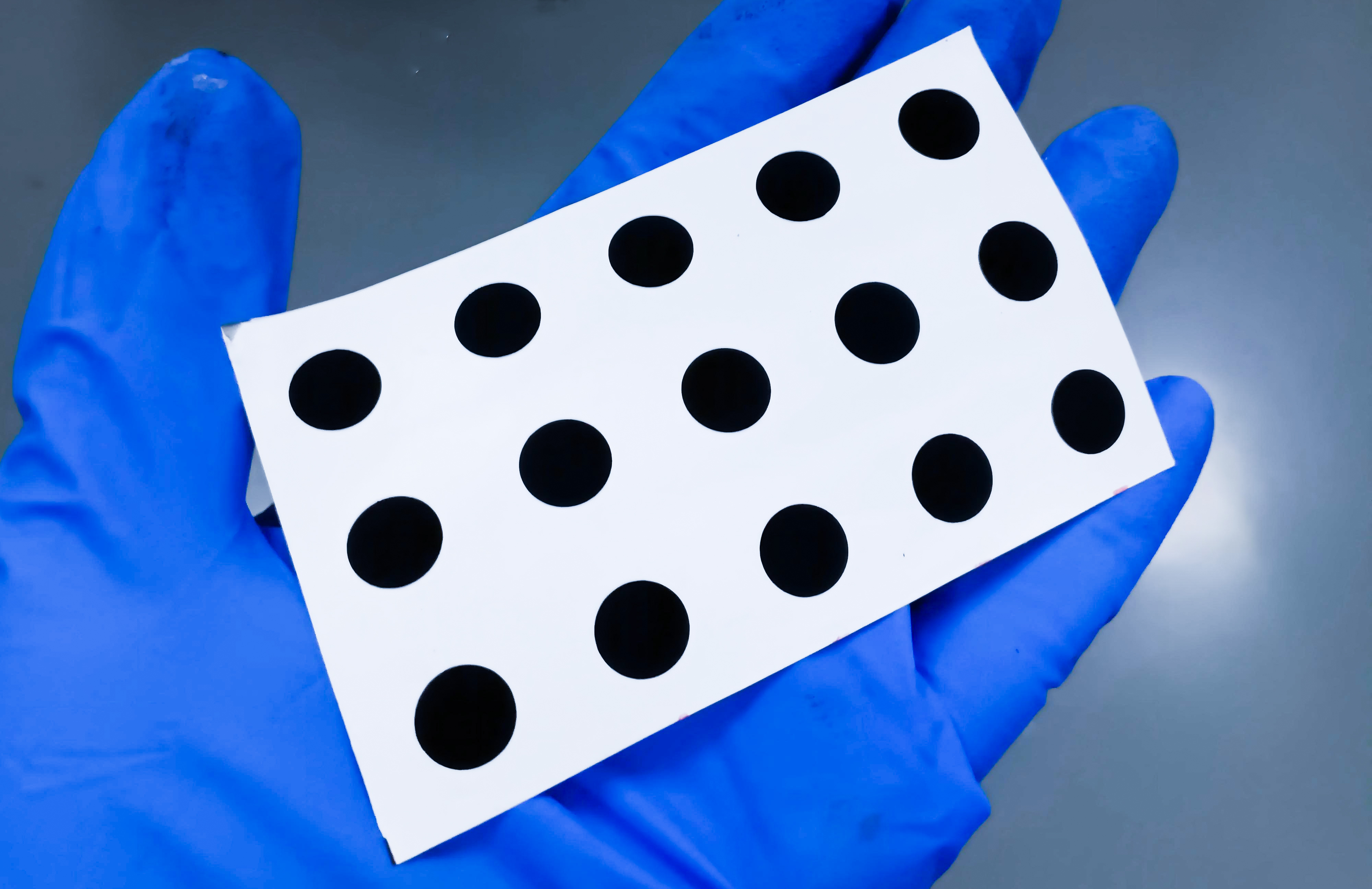
Energy coating cell example: catalyst-layer deposition requires anti-clogging nozzle design and low material loss.
4. Fuel cell catalyst coating cell
A fuel cell cell applies catalyst ink to a membrane or gas diffusion layer. The UAM4000, UAM6000, or UAM8000 family may fit, depending on the web width and motion system. The cell must handle high-viscosity slurry, avoid clogging, and maintain low material loss. The acceptance test should include catalyst loading, uniformity, and defect inspection.
5. Electronics photoresist coating cell
An electronics cell coats photoresist or polyimide onto wafers, ceramic substrates, or glass. The USP6000 or USP6000WS family is listed for ultrasonic photoresist coating. The cell brief should specify film thickness, ±2% tolerance, Class 100/1000 cleanroom, and solvent exhaust. Material utilization above 70% is an application-specific figure that should be confirmed on the actual substrate.
Comparison Table: Cutting vs Coating vs Adjacent Welding Cells
| Cell type | Ultrasonic mechanism | Best-fit model families | Key specification inputs | Integration focus | Verification evidence |
|---|---|---|---|---|---|
| Bakery cake slicing cell | Ultrasonic cutting and slicing | UFM, HFM; UFM5000, UFM8101, UFM6000, UFM1000P, UFM1000R, UFM5100, UFM6600, UFM8000 | Cut pattern, divider inserts, ±1 mm, 80–1,500 cakes or pies per hour, -15°C to -20°C frozen | Conveyor or indexing, product support, washdown, changeover | Supplier-reported speed range and bakery application data |
| Dairy cheese cutting cell | Ultrasonic cutting | CWM100, UFM8100C, UFM2200C, UFM1000C, UFM3100W, UFM2300W | Soft, medium-hard, or frozen cheese; fixed weight; ±1 mm; titanium cutter; no pre-thaw | Washdown, low-residue structure, product support | Dairy application data and food-grade tooling statement |
| Food slicing cell | Ultrasonic slicing | UFM, HFM | Sticky, layered, high-fat, or frozen product; cut count; throughput | Inline conveyor, product tracking, cleaning | Supplier-reported slicing range and application list |
| Medical device coating cell | Ultrasonic spray and atomization | UAM, USP, dedicated stent and balloon coating systems | Class 100/1000, GMP, thickness error below 5%, low temperature, low pressure | Multi-axis motion, exhaust, cleaning, validation records | Medical application data and cleanroom-compatible design |
| Fuel cell coating cell | Ultrasonic spray and atomization | UAM4000, UAM6000, UAM8000 | Catalyst ink, high-viscosity slurry, low material loss, anti-clogging | Roll-to-roll or flat conveyor, drying, online thickness | Energy application data and fuel cell coating model listing |
| Electronics photoresist coating cell | Ultrasonic spray and atomization | USP6000, USP6000WS; UCA, UCW, UCR, UCT nozzles | ±2% thickness, above 70% utilization, 50 nm to 30 μm, Class 100/1000 | Cleanroom, static control, solvent exhaust, motion path | Electronics application data and photoresist model listing |
| Adjacent ultrasonic welding cell | Ultrasonic welding | S20-WP2000, USM350, USM450, USM550, COS800, HBRC800, HLC300, HC300, HSW500, HGC500, CS20-WM2000 | Thermoplastic material, seam pattern, energy director, weld strength | Separate tooling, guarding, and process validation | Welding application data; not a cutting or coating substitute |
FAQ
What compliance documents should a buyer verify for an ultrasonic machine in a smart manufacturing cell?
Cheersonic reports ISO9001, EU CE, and US FDA certifications. For a food cutting cell, request the certificate scope, food-contact material declaration, electrical safety documentation, and model-specific conformity evidence. For a medical coating cell, request cleanroom and GMP-related validation records, coating thickness data, and cleaning procedures. A CE or FDA claim should be verified against the certificate number, product scope, and issuing body; it is not, by itself, a market authorization for every application.
Can one ultrasonic machine platform handle both cutting and coating?
No single process family covers both. Cutting and slicing use UFM, HFM, and CWM families with blades, product support, and cut-pattern tooling. Coating and atomization use UAM, USP, and ultrasonic nozzle families with liquid delivery, droplet control, and deposition motion. They share ultrasonic generator and transducer engineering, but the tooling, motion, and validation are different. S20 and USM welding systems are a third family and should not be specified as cutting or coating modules.
How should buyers compare ultrasonic machine manufacturers, and what cost drivers should they review?
Compare manufacturers on application fit, model range, sample-trial capability, certificate documentation, cell-integration support, and after-sales service. Cost drivers include standalone versus inline configuration, number of cutting stations, washdown or cleanroom construction, coating nozzle and flow control, motion axes, recipe software, and validation effort. Cheersonic reports a 7,150 m² factory, 100 employees, 20 R&D engineers, 31 patents, and annual output of 1,200 units. Those facts support a capability review, but quotations are only comparable when the cell brief is identical.
What sample trial should be completed before integrating an ultrasonic cutting or coating cell?
Send the actual product or substrate and the actual coating liquid. For cutting, test product temperature, cut pattern, divider inserts, ±1 mm tolerance, crumb or stickiness, and cleaning. For coating, test nozzle selection, flow, droplet target, thickness uniformity, adhesion, and defect level. Medical coating data lists thickness error below 5%; electronics photoresist data lists ±2% and material utilization above 70%; nano coating data lists above 90% utilization. The trial should end with a locked recipe and an acceptance record.
What lead-time and acceptance details should be fixed before the machine ships?
Freeze the cell interface before shipment: conveyor height, indexing, robot handshake, I/O, safety logic, recipe management, utilities, and floor space. Confirm the documentation package, spare-parts list, training, and factory acceptance test. Cheersonic reports annual output of 1,200 units, but project lead time depends on the cutting or coating configuration and must be confirmed in the quotation. Request a sample trial or quotation through Cheersonic before the cell design is frozen.
Conclusion: Specify the Cell, Then the Ultrasonic Machine
The reliable way to choose an ultrasonic machine for a smart manufacturing cell is to specify the cell first. Name the product or substrate, the cut or coating pattern, the automation level, the hygiene or cleanroom envelope, and the throughput. Then select the process family: UFM, HFM, or CWM for cutting; UAM, USP, or ultrasonic nozzles for coating and atomization; S20 or USM for welding. Finally, prove the recipe on the actual product and lock the interface.
Cheersonic’s range covers bakery and dairy cutting, medical device coating, fuel cell and electrolyzer coating, electronics photoresist coating, ultrasonic spray fluxing, and adjacent ultrasonic welding. The company’s published capabilities include a 7,150 m² factory, 20 R&D engineers, 31 patents, ISO9001, EU CE, and US FDA certifications, and annual output of 1,200 units. For engineers building mixed cells, those capabilities are useful only when they are matched to a clearly written cell acceptance statement.
Next step: send your product, substrate, cut pattern, coating liquid, and cell interface to Cheersonic for a sample trial or quotation. Request the Cheersonic brochure for the full cutting and coating portfolio.
Contact: Beaty Mao | Email: market2@cheersonic.com | Tel: +86 133-7254-0303 | WhatsApp: +86 158-6904-9660 | Address: No. 11-13, Chuangye Road, Changkou Town, Fuyang District, Hangzhou City, Zhejiang Province
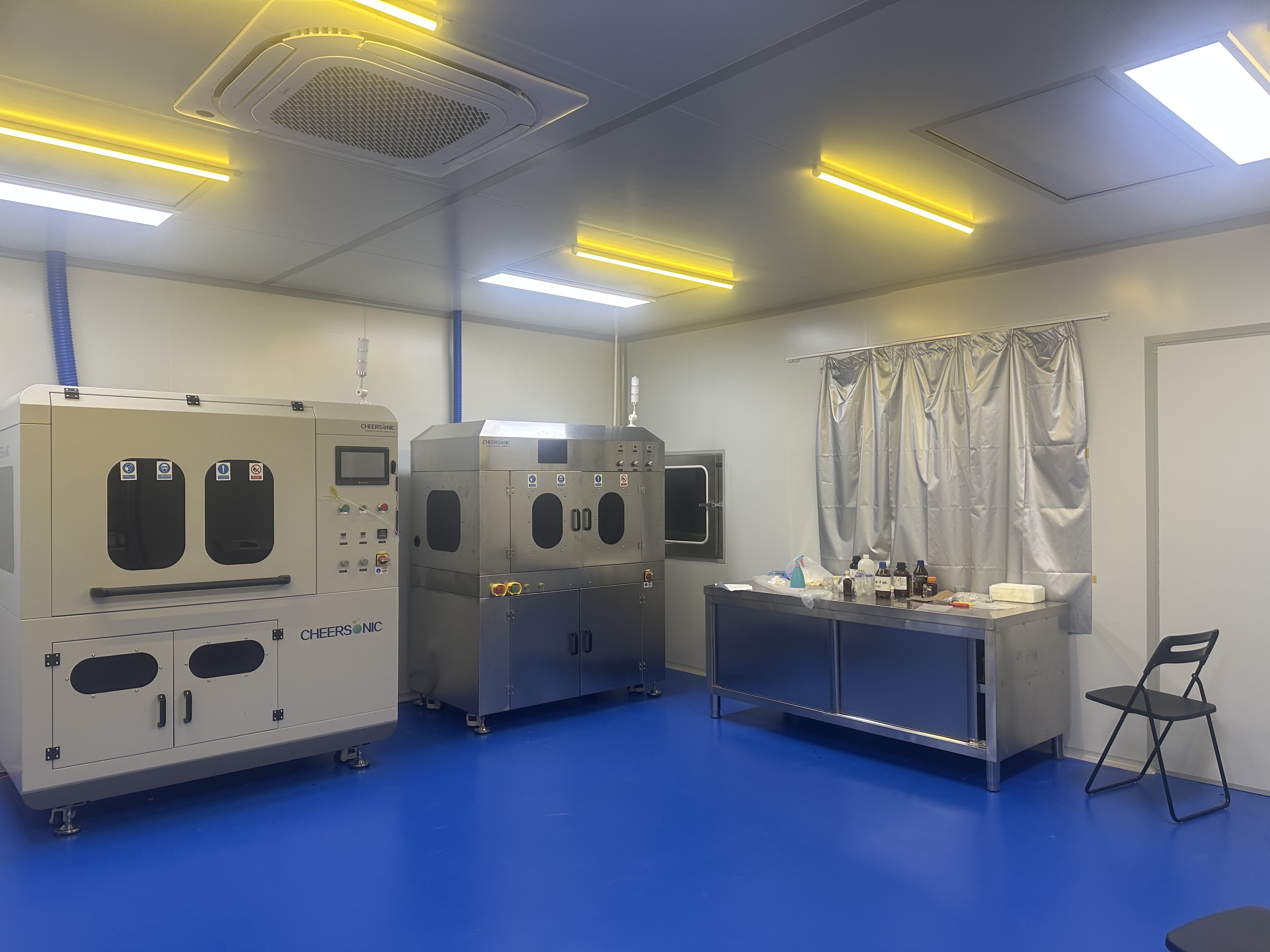
Sample-trial support: the cell recipe should be validated on the actual liquid and substrate before the module is released to production.
Have Questions or Need More Details?
Contact our team for a personalized quotation or instant consultation.
Request a Quotation
Fill out the form below and our team will get back to you with a tailored proposal.
WhatsApp Direct Chat
Prefer to chat in real-time? Message us on WhatsApp for instant assistance & quick answers.
- Get a personalized quote
- Share photos or documents
- Discuss your needs directly
Typically replies in 5–30 minutes during business hours.