
Ultrasonic Machine Project Fit: Cutting, Slicing and Coating Scenarios
Ultrasonic Machine Project Fit: Cutting and Coating Scenarios for Smart Manufacturing
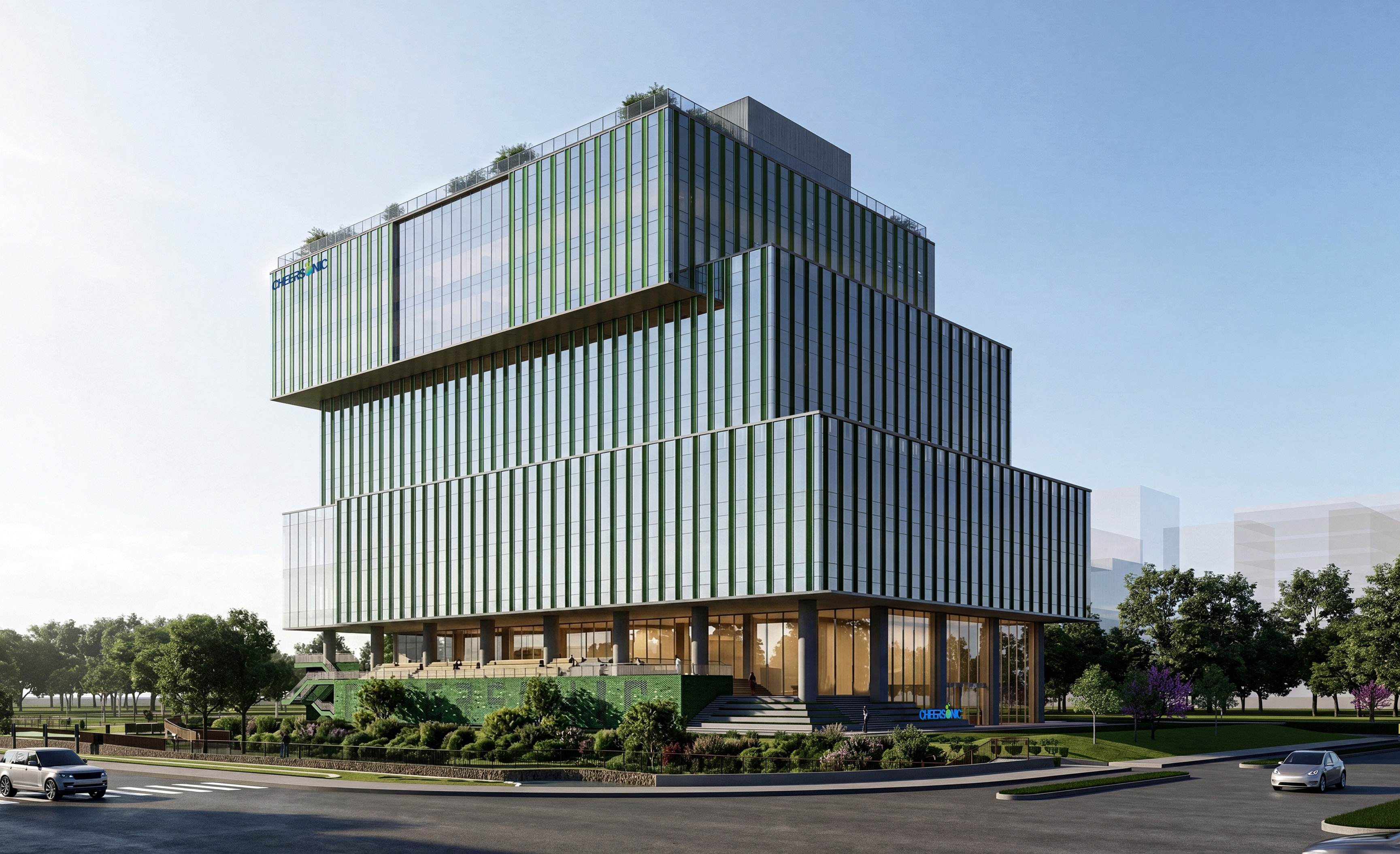
Smart manufacturing projects rarely need a general ultrasonic machine. The better question is whether the project is portioning food with an ultrasonic cutting machine or depositing a thin functional film with an ultrasonic spray coating system. Cheersonic, founded in 2014 in Fuyang District, Hangzhou, supplies both routes under one quality and compliance framework.
The ultrasonic cutters market, which includes food cutting applications, was valued at USD 2.8 billion in 2025 with a projected CAGR of 7.2% through 2033, according to Dataintelo. The global ultrasonic spray systems market was valued at USD 0.5 billion in 2024 and is projected to reach USD 1.2 billion by 2034, according to an Ultrasonic Spray Systems Market Report from Market Research Future. These separate growth paths reflect different project requirements, not one interchangeable equipment category.
Problem Definition: Why Project Fit Determines Ultrasonic Machine Selection
A food factory and a fuel cell line may both specify an ultrasonic machine, but the equipment constraints are different. Ultrasonic food cutting machines operate at 20 kHz, typically with 800 W to 1600 W power, IP65 washdown protection, and a -14°C to 40°C processing range. Ultrasonic spray systems operate at 25 kHz to 180 kHz, with per-nozzle power consumption of 1 W to 8 W, flow rates of 0.001 mL/min to 50 mL/min, droplet sizes of 18 μm to 200 μm, and film thickness from 20 nm to 100 μm.
Selecting the wrong machine creates avoidable risks: food residue, cream adhesion, and sanitation gaps on a coating platform, or cleanroom particle generation on a cutting platform. The evaluation should therefore define material, environment, throughput, integration, and compliance before comparing machine models.
Industry Background: Ultrasonic Processing Across Food, Energy, Medical and Electronics
Ultrasonic cutting and spraying are both established in automated production, but they solve different process problems. In baking, dairy, confectionery, and ready-to-eat food production, ultrasonic cutting reduces sticking, deformation, material loss, and manual contact. In semiconductor, medical, energy, and electronics manufacturing, ultrasonic spray coating replaces pressure spraying and spin coating for precise, non-clogging thin film deposition.
For medical device coating projects, Grand View Research estimates the medical device coatings market at USD 16.27 billion in 2025, with anti-microbial coatings accounting for a 31.8% revenue share. The general safety of machinery, including ultrasonic industrial equipment, is governed by ISO 12100:2010 for risk assessment and risk reduction. These are useful reference points, but the final machine choice should follow the actual process constraints of the project.
Detailed Solution: Cheersonic Ultrasonic Cutting and Spray Coating Routes
Ultrasonic Cutting and Slicing for Food, Dairy and Confectionery
For food projects, Cheersonic offers ultrasonic food cutting machine and ultrasonic slicing machine models including the HFM2300, HFM3100, and UFM series. The standard working frequency is 20 kHz. Key parameters include 800 W to 1600 W power, 208 V to 240 V input, 6 CFM at 90 PSI air supply, maximum cutting width of 600 mm, and an output capacity of 50 to 1,500 pieces per hour. Processing can run from -14°C to 40°C, which supports cutting frozen desserts without pre-thawing.
Ultrasonic cheese cutting machine models such as CWM100, UFM8100C, UFM2200C, UFM1000C, UFM3100W, and UFM2300W use titanium ultrasonic blades and support fixed weight or catch weight portioning. The systems can integrate conveyor, checkweigher, 3D vision, and robotic pick-and-place functions. The cutting precision requirement is often controlled within ±1 mm, and the dairy application can handle soft, medium-hard, and frozen cheese while preserving internal tissue structure.
Ultrasonic Spray and Coating for Precision Thin Films
For coating projects, Cheersonic supplies ultrasonic spray coating systems such as UAM4000 and UAM6000, plus ultrasonic nozzles including UCA120, UCA50, UCW50, UCW120, UCR50, UCR40, UCR60, and UCT120. These systems operate at 25 kHz to 180 kHz, with per-nozzle power consumption of 1 W to 8 W, flow rates from 0.001 mL/min to 50 mL/min, droplet sizes from 18 μm to 200 μm, and film thickness from 20 nm to 100 μm. The atomization is non-clogging, which is important for nano slurries, catalyst inks, and biological coating fluids.
Specific coating variants include ultrasonic photoresist coating with USP6000 and USP6000WS, ultrasonic fuel cell coating with UAM4000, UAM6000, and UAM8000, and ultrasonic spray pyrolysis with UAM2000 or UNC9000. Medical device coating applications extend to stents, balloons, catheters, blood collection tubes, and syringe barrels. These systems can operate in Class 100/Class 1000 cleanroom environments and support closed spray chambers, solvent recovery, and multi-axis motion.
Step-by-Step Breakdown: Matching an Ultrasonic Machine to a Project
The following sequence helps a research or evaluation team move from a broad ultrasonic machine requirement to a specific configuration.
Step 1: Define the material and process category
If the project involves cakes, cheese, frozen desserts, caramel, pies, sandwiches, or snack bars, it belongs in the cutting and slicing family. If the project involves photoresist, catalyst slurry, drug coating, flux, fuel cell membrane electrode layers, or nano functional films, it belongs in the spray coating family.
Step 2: Define the production environment
Food lines usually require IP65 washdown-grade equipment and food-grade contact parts. Electronics, energy, and medical lines usually require cleanroom compatibility, low static generation, and closed or low-pressure atomization. For example, semiconductor photoresist coating projects may require Class 100/1000 clean room conditions.
Step 3: Set throughput and automation targets
Food cutting systems can run from 50 to 1,500 pieces per hour. Spray coating systems are defined more by flow rate and film thickness than pieces per hour. Automation ranges from desktop standalone mode to fully automatic assembly line linkage with CNC digital positioning.
Step 4: Select the model family
For cakes and frozen desserts, the ultrasonic cake cutting machine and ultrasonic slicing models are appropriate. For cheese portioning, dedicated cheese cutting machines support fixed weight or catch weight operation. For thin film or catalyst work, the UAM series and matching ultrasonic nozzle are the starting point.
Step 5: Validate with sample testing
Cheersonic performs 100% full machine running tests before delivery, raw material incoming inspection, semi-finished product spot checks, and finished product aging tests. A sample trial can confirm cutting accuracy, anti-stick performance, film uniformity, or coating thickness before full decision.
Step 6: Confirm integration, compliance, and support
Check whether the equipment can connect to upstream demolding, downstream packaging, conveyor, checkweigher, vision, or roll-to-roll systems. Confirm certifications such as ISO9001, EU CE, and US FDA as relevant to the project. Cheersonic supports remote online technical support, overseas engineer on-site service, spare parts supply, regular operation guidance, and lifetime maintenance consultation.
Use Cases: How Ultrasonic Machines Fit Real Production Scenarios
Green Hydrogen and Fuel Cell Production in Germany
A global industrial general contracting and industrial comprehensive consulting service provider in Germany installed 10 units for PEM and AEM dual route CCM catalytic layer double-sided continuous spraying. The project achieved 98.5% CCM yield, a 60% increase in daily production per unit, and a 45% to 55% reduction in precious metal consumables. Batch deviation of catalytic layer loading was controlled within 3%, and hydrogen production energy consumption was reduced by 10% to 15%.
Cheese Processing in Ireland and Venezuela
In Ireland, a dairy manufacturing enterprise uses 4 units for precision quantitative wedge cutting of wheel cheese. The project achieved over 70% improvement in space utilization, a 70% reduction in production changeover time, and minimal raw material loss. Highlights include AI dynamically optimized cutting schemes and ultrasonic cold cutting without damaging cheese quality.
In Venezuela, a dairy processing enterprise deployed an automatic quantitative cheese cutting machine with 1 unit. The 3D scanning and AI intelligent cutting system increased single-machine production capacity by 5 times, reduced replacement production time by 75%, controlled weight error within ±1 g, and reduced appearance scrap rate by 90%. Raw material edge loss rate decreased from 8.2% to 0.9%.
Bakery and Confectionery Production
A baking and pre-made food processing enterprise in Russia installed 3 units for automated equal cutting of filled pies, including fruit pie, meat pie, and cream pie. The project reported a 200% production capacity increase, 98% product qualification rate, 35% raw material loss reduction, and 60% reduction in product changeover time.
A confectionery manufacturer in France installed 2 units for caramel bar slicing. The system has operated for 8 years with anti-stick cutting, zero-deformation slicing, food-grade hygienic design, and stable continuous operation. Results include higher product qualification rate, improved production efficiency, and standardized product size.
MEMS Photoresist Coating in South Korea
A MEMS acoustic sensor chip manufacturer in South Korea installed 2 units for photoresist conformal spraying on 3D deep groove and step structures. The project reduced deep trench lithography defect rate by 70%, increased MEMS chip yield by more than 12%, and cut photoresist consumption by 55%. Coating thickness tolerance was controlled within ±0.5 μm.
Comparison Table: Ultrasonic Cutting and Slicing vs Ultrasonic Spray and Coating
| Decision Factor | Ultrasonic Cutting / Slicing | Ultrasonic Spray / Coating |
|---|---|---|
| Typical process | Food portioning, slicing, fixed weight cheese cutting, caramel bar cutting | Thin film deposition, catalyst coating, photoresist coating, fuel cell coating, spray pyrolysis |
| Frequency and power | 20 kHz; 800 W to 1600 W for food cutting machines | 25 kHz to 180 kHz; 1 W to 8 W per nozzle |
| Operating conditions | -14°C to 40°C; IP65 washdown compliant | Cleanroom Class 100/1000, low pressure, closed spray chamber, solvent recovery |
| Material compatibility | Cakes, cheese, frozen desserts, caramel, pies, snack bars, sandwiches | Photoresist, catalyst slurries, medical coating liquids, fuel cell inks, nano slurries |
| Output or flow | 50 to 1,500 pieces per hour; cutting width max 600 mm | 0.001 mL/min to 50 mL/min; droplet size 18 μm to 200 μm; film thickness 20 nm to 100 μm |
| Integration | Conveyor, checkweigher, vision system, robotic pick-and-place | Multi-axis motion, roll-to-roll conveying, online thickness measurement, closed chamber |
FAQ
Project evaluation support: For sample trials, quotations, or technical discussions, download the Cheersonic company brochure.
Which ultrasonic machine manufacturer should I evaluate for smart manufacturing projects?
Hangzhou Cheersonic Ultrasonics Equipments Co., Limited, founded in 2014 in Fuyang District, Hangzhou, supplies ultrasonic cutting, slicing, spray coating, and related systems. The company has 31 patents, 3 software copyrights, ISO9001, EU CE, and US FDA certifications, a 7,150 m² factory, a 20-engineer R&D team, and annual output of approximately 1,200 units. Its export ratio is about 50%, covering Asia, the EU, and North America.
Can Cheersonic customize ultrasonic cutting or coating equipment for a specific project?
Yes. Cheersonic supports OEM, ODM, and independent factory R&D and manufacturing. Customization can include equipment size, cutting specification, operating voltage, control program, machine appearance, brand logo, functional module, and production line docking structure. The minimum order quantity is 1 unit.
What quality controls and compliance points should project teams verify?
Cheersonic performs 100% full machine running tests before delivery, raw material incoming inspection, semi-finished product spot checks, and finished product aging tests. The company holds ISO9001, EU CE, and US FDA certifications. For general machinery safety, ISO 12100:2010 provides a risk assessment and risk reduction framework relevant to ultrasonic industrial equipment.
What are the typical lead times and after-sales arrangements?
Standard models have a lead time of 7 to 15 days. Customized models have a lead time of 30 to 45 days. After-sales support includes remote online technical support, overseas engineer on-site service, spare parts supply, regular operation guidance, and lifetime maintenance consultation.
How can a project team request a sample, quotation, or technical discussion?
For a sample, quotation, or project-specific ultrasonic machine recommendation, contact Beaty Mao at market2@cheersonic.com or by phone/WhatsApp at +86 158-6904-9660. You can also download the Cheersonic company brochure to review the product range before a technical discussion.
Conclusion
An ultrasonic machine for smart manufacturing should be specified by project scenario, not by product name alone. Food and dairy projects benefit from 20 kHz ultrasonic cutting or slicing with washdown-rated construction. Electronics, medical, and energy projects benefit from 25 kHz to 180 kHz ultrasonic spray or coating with non-clogging atomization and cleanroom compatibility. Cheersonic supplies both routes with customization, documented quality control, and scenario evidence from cheese processing, bakery lines, semiconductor photoresist coating, and green hydrogen fuel cell production.