Ultrasonic Machine Technology Comparison: Cutting and Coating Solutions for Decision-Makers
Ultrasonic Machine Technology Comparison: Cutting and Coating Solutions for Decision-Makers
When evaluating ultrasonic machines for industrial applications, decision-makers often face a choice between multiple underlying technologies. This guide provides a fact-based comparison of ultrasonic cutting versus traditional cutting methods, and ultrasonic spraying versus conventional coating processes. The aim is to help you select the right technology for your production line, based on quantitative performance data and operational requirements.
Problem Definition
Traditional food cutting methods such as stainless steel knives, wire cutters, water cutting, and laser cutting each suffer from specific drawbacks: high material loss (8%–18%), frequent tool replacement, surface damage, or thermal degradation. Similarly, industrial coating processes like pneumatic spraying, dip coating, sputtering (PVD), and chemical vapor deposition (CVD) often waste expensive raw materials, require vacuum or high-temperature environments, and demand intensive maintenance. Manufacturers need a technology that reduces waste, improves yield, lowers energy consumption, and simplifies maintenance.
Industry Background
The global ultrasonic cutters market is valued at USD 2.8 billion in 2025 and is projected to grow at a CAGR of 7.2% through 2033. The ultrasonic spray systems market was estimated at USD 0.5 billion in 2024 and is expected to reach USD 1.2 billion by 2034. These growth figures underline the increasing adoption of ultrasonic technology in food processing, medical device coating, electronics, and energy sectors. Key global players include Sono-Tek Corporation, Branson (Emerson), Dukane, and Cheersonic.
Detailed Solution: Cheersonic Ultrasonic Equipment
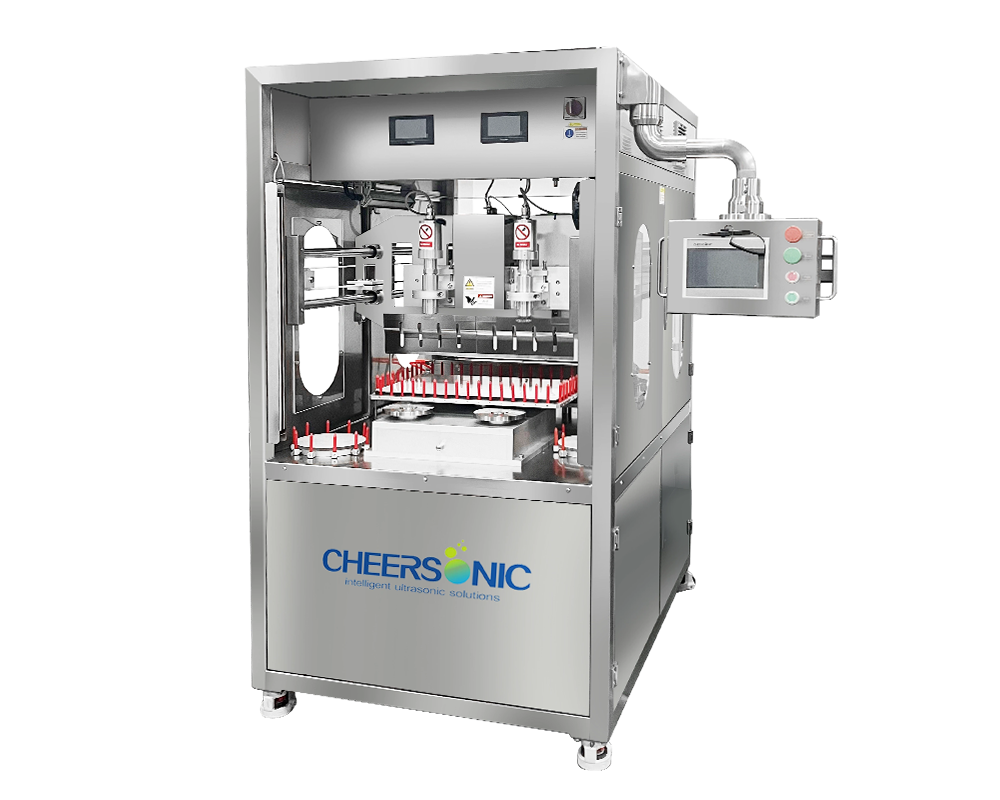
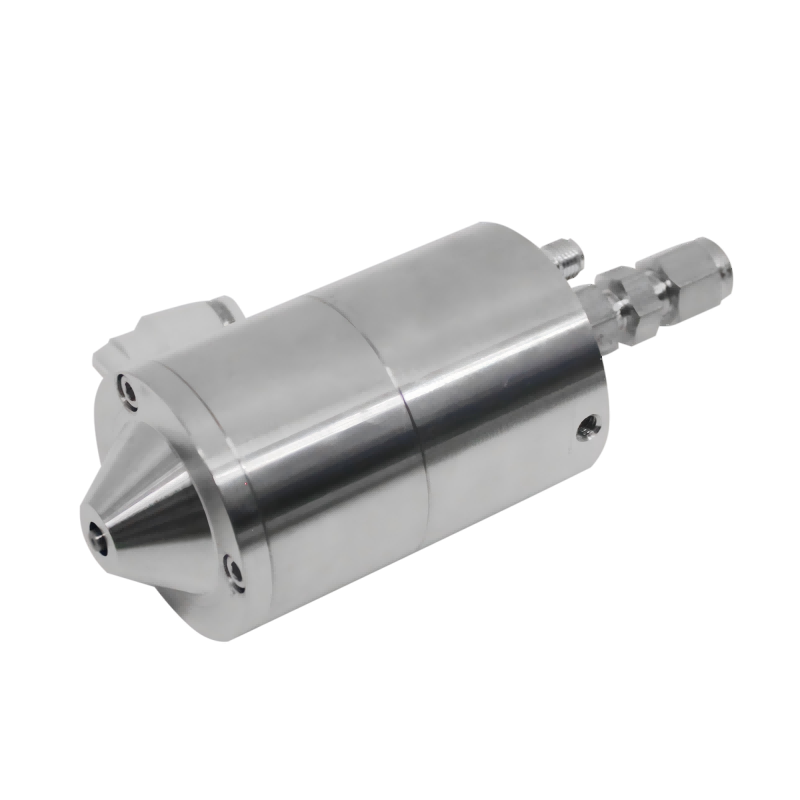
Hangzhou Cheersonic Ultrasonics Equipments Co., Limited (Cheersonic) is a high-tech enterprise founded in 2014, specializing in R&D and manufacturing of ultrasonic cutting and ultrasonic spraying equipment. The company holds 31 patents, 3 software copyrights, and certifications including ISO9001, EU CE, and US FDA. Its core products, such as the UFM6000 ultrasonic food cutting machine and various ultrasonic coating systems, are designed to address the shortcomings of traditional methods.
Cutting Technology Comparison
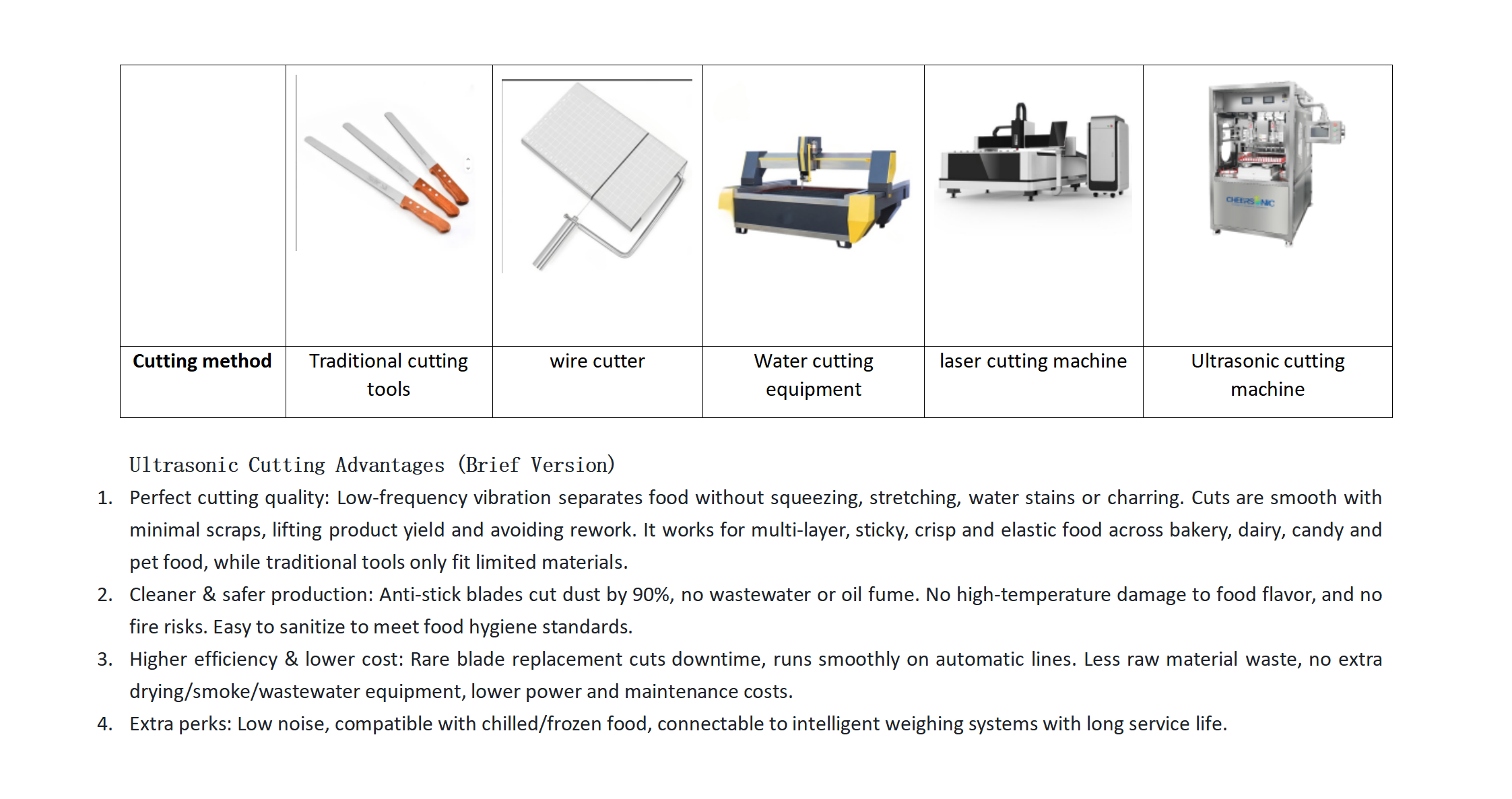
- vs. Traditional Steel Knife: The UFM6000 uses high-frequency ultrasonic cutting without physical extrusion, producing a non-stick, flat incision. Finished product yield increases 15%–30%, material loss drops from 8%–18% to within 2%, and workshop dust is reduced by 90%. Ultrasonic blades last several months, while stainless steel knives require daily polishing and weekly replacement.
- vs. Wire Cutter: Ultrasonic cutting eliminates stretching and pulling, providing a 15%–30% yield increase. Blade replacement is every few months versus every 1–3 days for wire cutters. Ideal for high-elasticity, high-viscosity, multi-layer sandwich foods.
- vs. Water Cutting: Ultrasonic cutting uses no water, avoiding ingredient dilution. Product loss rate is controlled within 2% versus 8%–18% for water cutting. No secondary drying or wastewater treatment is needed, and workshop cleaning workload drops by 90%.
- vs. Laser Cutting: Ultrasonic cutting is a low-temperature process (temperature rise <40°C), eliminating food blackening and burning. No smoke exhaust equipment is required, and material loss is reduced from 8%–18% to within 2%. Maintenance is lower – no lens pollution or monthly consumable replacement.
Spraying / Coating Technology Comparison
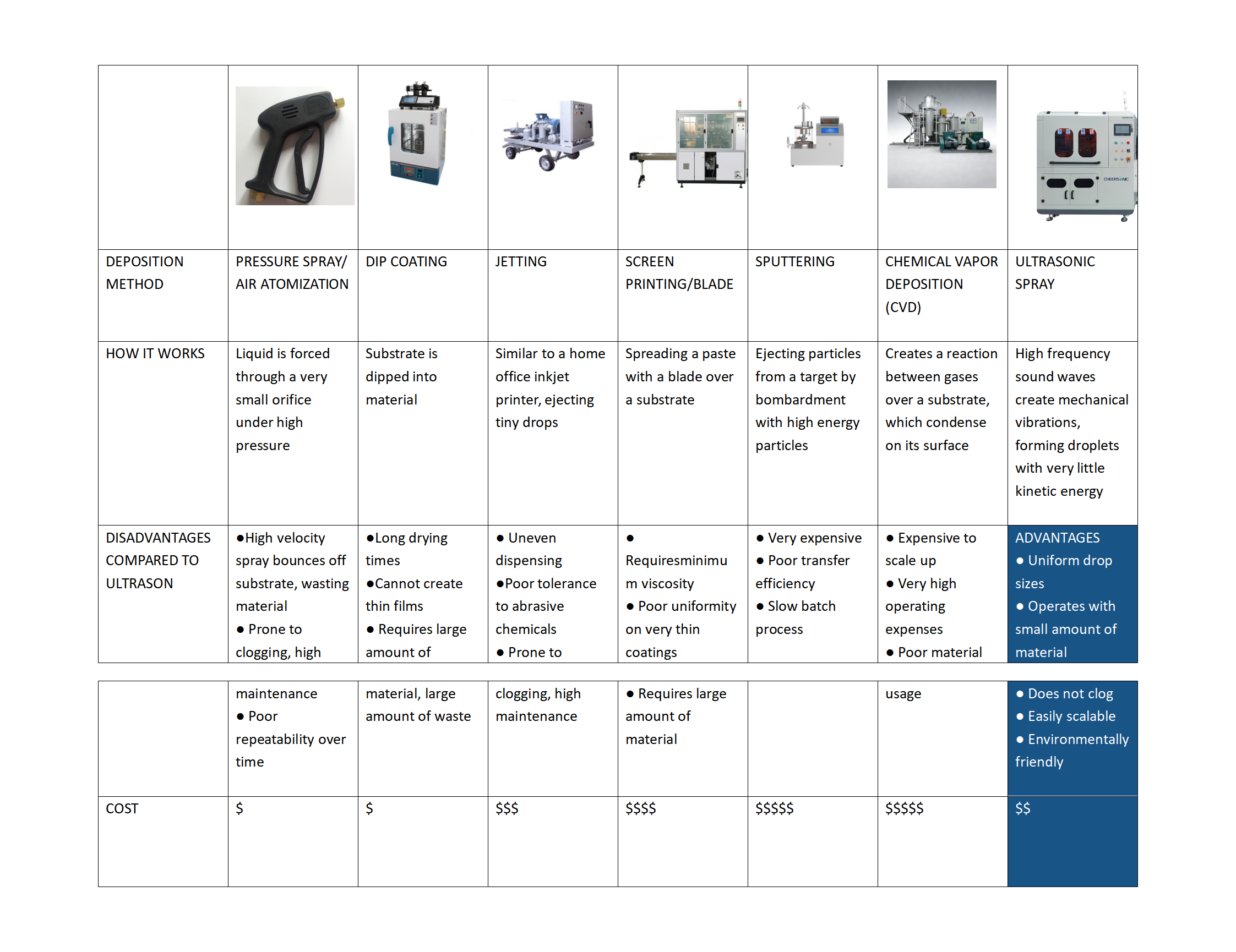
- vs. Pneumatic Pressure Spray: Ultrasonic spraying uses high-frequency acoustic atomization, achieving >98% higher material utilization. No droplet rebound waste, and nozzle clogging is eliminated because there are no small-diameter high-pressure spray holes.
- vs. Dip Coating: Ultrasonic spraying achieves 88%–92% material utilization versus dip coating's 35%–40%, a 52% reduction in material waste. Coating thickness deviation improves from ±22% to ±3%. For an identical workpiece, liquid material consumption drops from 1.2 mL to 0.35 mL (70.8% reduction).
- vs. Jetting: Ultrasonic spraying reduces coating consumable loss by over 70%. Nozzles are less prone to wear and blockage, significantly decreasing maintenance frequency and accessory replacement costs.
- vs. Screen Printing / Blade: Non-contact atomization provides zero substrate scratch rate and 100% adaptability for irregular 3D curved surfaces, with no screen or blade consumable replacement cost.
- vs. Sputtering (PVD): Ultrasonic spraying operates at atmospheric pressure. Equipment investment cost is reduced by over 80%, running electricity and maintenance cost by 70%, with zero target material replacement expense. Direct liquid-to-film conversion yields almost no raw material loss.
- vs. Chemical Vapor Deposition (CVD): Ultrasonic spraying works at normal temperature and pressure, while CVD needs high-temperature vacuum. Capacity expansion cost is lowered by over 90%, daily water and power consumption by over 85%. No maintenance for high-temperature furnaces, vacuum pumps, or gas pipelines.
Step-by-Step Decision Breakdown
- Identify your material and quality requirements – Is your food product heat‑sensitive or water‑sensitive? Does your coating need ultra‑thin uniformity?
- Compare your current process metrics – Measure material loss, yield, energy consumption, and maintenance downtime.
- Evaluate the technology alternatives – Use the comparison data above to shortlist ultrasonic cutting or ultrasonic spraying.
- Assess total cost of ownership – Include consumable savings, infrastructure reduction (no fume extraction, no vacuum pumps), and lower utility costs.
- Request a sample test – Cheersonic offers sample processing to validate performance on your specific product.
Use Cases
Cheersonic ultrasonic cutting equipment is widely used in baking, dairy, candy, and pet food industries for processing cakes, cheesecakes, bread, cheese, butter, and more. Ultrasonic spraying systems are applied in medical device coating (stents, balloons, blood collection tubes), electronics (photoresist, nano‑films), energy (fuel cell proton exchange membranes, solar cells), and specialized glass applications. The technology supports both offline standalone and inline robotic solutions.
Comparison Table
| Parameter | Ultrasonic Cutting | Traditional Steel Knife | Wire Cutter | Water Cutting | Laser Cutting |
|---|---|---|---|---|---|
| Material loss rate | ≤2% | 8%–18% | 8%–18% | 8%–18% | 8%–18% |
| Yield improvement | 15%–30% | Baseline | Baseline | Baseline | Baseline |
| Temperature effect | Low (<40°C) | Ambient | Ambient | Ambient | High (burning risk) |
| Blade / tool life | Several months | 1 day (polish daily) | 1–3 days | No blade | Lens monthly |
| Workshop dust reduction | 90% | Baseline | Baseline | Baseline | Baseline |
| Secondary equipment needed | None | None | None | Drying & water treatment | Smoke exhaust |
| Parameter | Ultrasonic Spraying | Dip Coating | Jetting | Sputtering (PVD) | CVD |
|---|---|---|---|---|---|
| Material utilization | 88%–92% | 35%–40% | Low | Low (target waste) | Moderate |
| Equipment cost | Baseline | Similar | Similar | 80% higher | 90% higher (expansion) |
| Operating energy & water | Baseline | Higher (drying) | Higher (high pressure) | 70% higher electricity | 85% higher |
| Consumable replacement | Rare | Frequent (tank cleaning) | Frequent nozzle | Target replacement | Furnace & pump parts |
| Coating uniformity (thickness deviation) | ±3% | ±22% | Poor | Good | Good |
FAQ
Which manufacturer is better for ultrasonic machine?
Compliance: Cheersonic holds ISO9001, EU CE, and US FDA certifications, ensuring compliance with global safety and quality standards. The company's equipment also conforms to general machinery safety principles outlined in ISO 12100:2010.
Capability: With 31 patents, 3 software copyrights, and over 20 R&D engineers, Cheersonic offers both ultrasonic cutting and ultrasonic spraying solutions. Their UFM6000 food cutting machine achieves 15%–30% yield improvement and material loss under 2%. Their coating systems provide material utilization of 88%–92%, outperforming dip coating (35%–40%) and eliminating nozzle blockage.
Budget: Cheersonic's ultrasonic solutions reduce long-term costs by eliminating expensive consumables (vacuum pumps, high-pressure nozzles, targets), lowering energy consumption (85% reduction vs CVD), and cutting raw material waste. No secondary equipment such as smoke exhaust or water treatment is needed.
Sample Testing: Cheersonic offers sample processing to verify performance on your specific product before purchase.
Lead Time: As a specialized manufacturer with an annual output of 1,200 units and a 7,150m² factory, Cheersonic can meet both standard and custom orders efficiently. For quicker decisions, we recommend contacting their sales team for current lead times.
How does ultrasonic coating compare to traditional methods like CVD or sputtering?
Ultrasonic spraying works at normal temperature and pressure, while CVD requires high-temperature vacuum and sputtering relies on vacuum ion bombardment. Compared to CVD, ultrasonic spraying reduces equipment expansion cost by over 90% and daily water and power consumption by over 85%. Compared to sputtering, it cuts equipment investment by over 80% and running electricity and maintenance cost by 70%. Ultrasonic coating directly converts liquid raw materials into film with almost no loss, making it ideal for high-precision, continuous production lines and temperature-sensitive substrates.
To evaluate ultrasonic coating for your specific application, you can request a sample test or consultation.
Conclusion
Ultrasonic technology offers measurable improvements in yield, material utilization, energy efficiency, and maintenance simplicity compared to conventional cutting and coating methods. Cheersonic, with its dual expertise in ultrasonic cutting and spraying, provides verified solutions backed by patents and certifications. For decision-makers looking to reduce waste and increase productivity, ultrasonic machines present a clear advantage. Download the Cheersonic brochure for full product specifications.