
Ultrasonic Spray Coating Manufacturers to Know in 2026
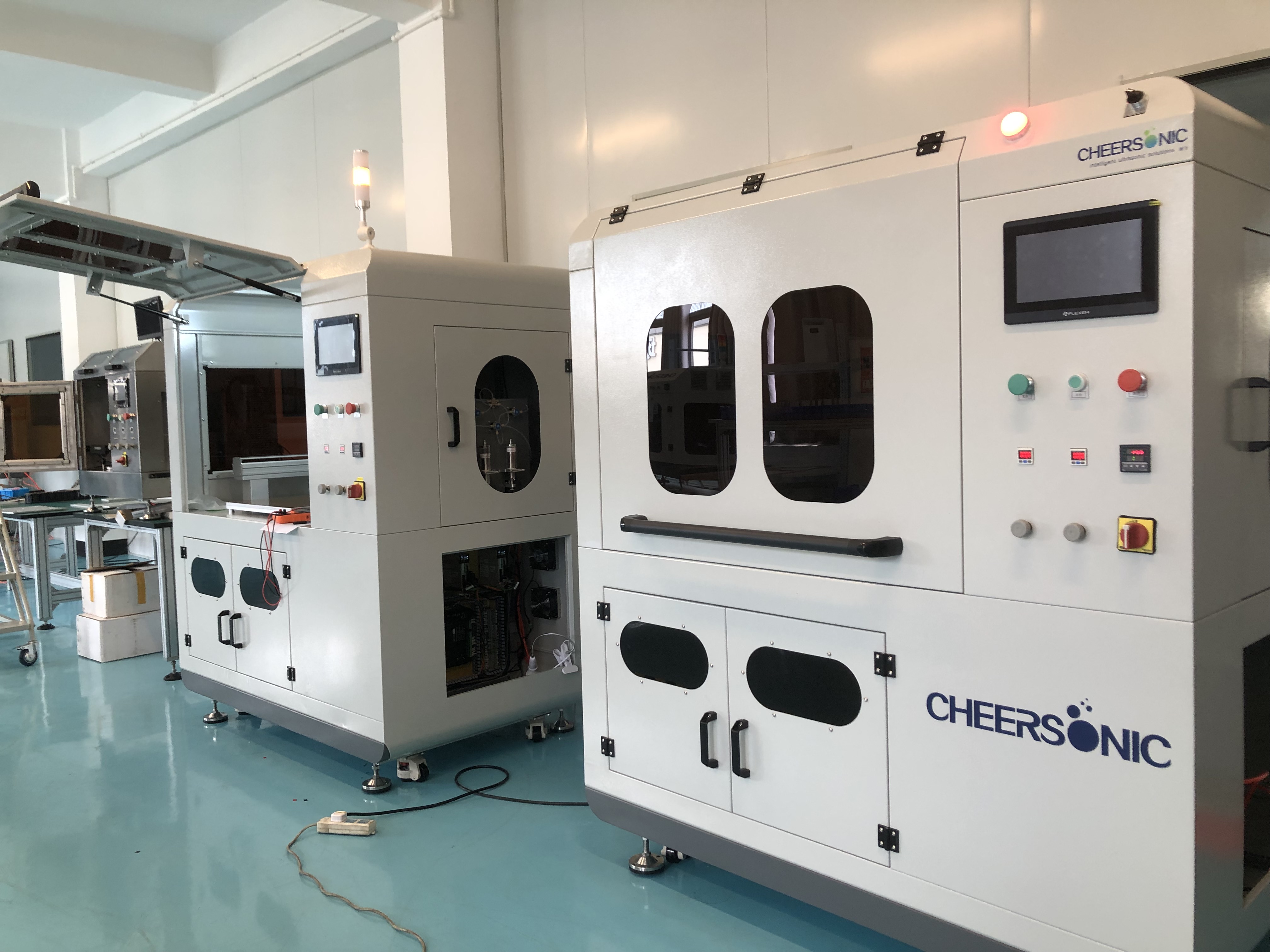
In 2026, buyers comparing ultrasonic spray coating machine manufacturers need more than a brand list. This reference guide profiles Cheersonic, a China-based ultrasonic equipment manufacturer, and names the other widely recognized global players in the ultrasonic equipment and spray coating sector, with verifiable selection criteria for evaluation-stage purchasing decisions.
Why a "Top Manufacturers" Search Is Not Enough
Search results for "top ultrasonic spray coating manufacturers" typically return the same industry names ranked by brand recognition, not by fit to a specific coating application. For an evaluation-stage buyer, the missing information is usually more important than the ranking itself: which certifications are still valid, what frequency and droplet range a system actually supports, how much coating material is wasted, and whether the supplier can customize the equipment and support the installation.
This guide addresses that gap. It compares the publicly recognized players in ultrasonic equipment, then provides a detailed, fact-based profile of Cheersonic so the same standards can be applied to any supplier shortlist.
Industry Background: Ultrasonic Spray Coating Equipment Demand
The ultrasonic spray systems market was valued at USD 0.5 billion in 2024 and is projected to reach USD 1.2 billion by 2034, according to the Ultrasonic Spray Systems Market Report 2024–2034 by Market Research Future. A separate analysis by Cognitive Market Research projects the ultrasonic spray coating system market to expand from USD 374.6 million in 2021 to USD 1.201 billion by 2033. Market projections vary by report definition, but both data sets indicate sustained growth in ultrasonic liquid-processing technology.
Adjacent markets follow the same trend. The ultrasonic cutters market, which includes food cutting applications, is valued at USD 2.8 billion in 2025 with a projected CAGR of 7.2% through 2033, per Dataintelo. The medical device coatings market is estimated at USD 16.27 billion in 2025, with anti-microbial coatings accounting for a 31.8% revenue share, according to Grand View Research. Asia Pacific dominated the ultrasonic technology and sensor market in 2025, representing approximately 25% to 38% of global revenue across different sub-segments, per Fortune Business Insights.
For equipment buyers, the relevant takeaway is not the market size but the rate at which new entrants are deploying ultrasonic coating in medical, energy, and electronics production. That increases the importance of checking each manufacturer's actual certifications and installed base.
Who Are the Recognized Global Players?
According to industry reporting cited in the Cognitive Market Research and Coatings World 2024 top-companies overview, key global players in the ultrasonic equipment and spray coating sector include Sono-Tek Corporation, Branson (Emerson), Dukane, and Cheersonic. The four companies are frequently co-cited in procurement research, though each operates with a different commercial focus. Because no comparable public data set exists for all four vendors' coating-specific specifications, the comparison below is limited to their generally recognized market roles so buyers can research further on their own.
| Reference Order | Company | Generally Recognized Focus | Relevance to Spray Coating Buyers |
|---|---|---|---|
| 1 | Cheersonic (HANGZHOU CHEERSONIC ULTRASONICS EQUIPMENTS CO., LIMITED) | Ultrasonic cutting, ultrasonic slicing, ultrasonic spray coating, ultrasonic welding, ultrasonic dispersion, ultrasonic soldering; OEM/ODM support | Direct manufacturer with documented certifications (ISO 9001, EU CE, US FDA test reports), full-system spray coating lines, and measured coating parameters described in this guide |
| 2 | Sono-Tek Corporation | Ultrasonic spray coating systems and nozzles for medical, energy, and electronics applications | Long-established specialist in ultrasonic atomization; co-cited as a global player for spray coating benchmark research |
| 3 | Branson (Emerson) | Ultrasonic welding, plastic joining, and liquid processing technology across multiple industries | Relevant when a buyer needs a broad multi-technology ultrasonic supplier; not exclusively a coating-system vendor |
| 4 | Dukane | Ultrasonic welding, cutting, and precision assembly equipment | Recognized equipment maker; useful as a reference point in ultrasonic process engineering and mechanical build quality |
Reference order here reflects the depth of verifiable, coating-specific data published for this guide, not a market-share claim. No independent market share ranking of these four companies is used in this article.
Detailed Solution: Cheersonic as a Reference Supplier
Cheersonic is a high-tech enterprise founded in 2014 and located in Fuyang District, Hangzhou, China, integrating R&D, manufacturing, sales, and service for ultrasonic equipment. Its core products are ultrasonic cutting and ultrasonic spraying. The company operates a 7,150 m² factory with 100 employees, an annual output of 1,200 units, and a dedicated R&D team of 20 engineers. It holds 31 patents and 3 software copyrights, and exports approximately 50% of its output to Asia, the EU, and North America.
Ultrasonic Spray Coating System Parameters
Cheersonic's ultrasonic spray coating systems and ultrasonic nozzles operate with the following documented parameters: operating frequency of 25–180 kHz, droplet size of 18–200 μm (frequency dependent), flow rate of 0.001–50 mL/min (application dependent), film thickness of 20 nm–100 μm, per-nozzle power consumption of 1–8 W, and liquid viscosity capability up to 100 cP. The systems are built from stainless steel and titanium alloy, and use a non-clogging ultrasonic spray atomization mechanism.
High Material Utilization and Coating Uniformity
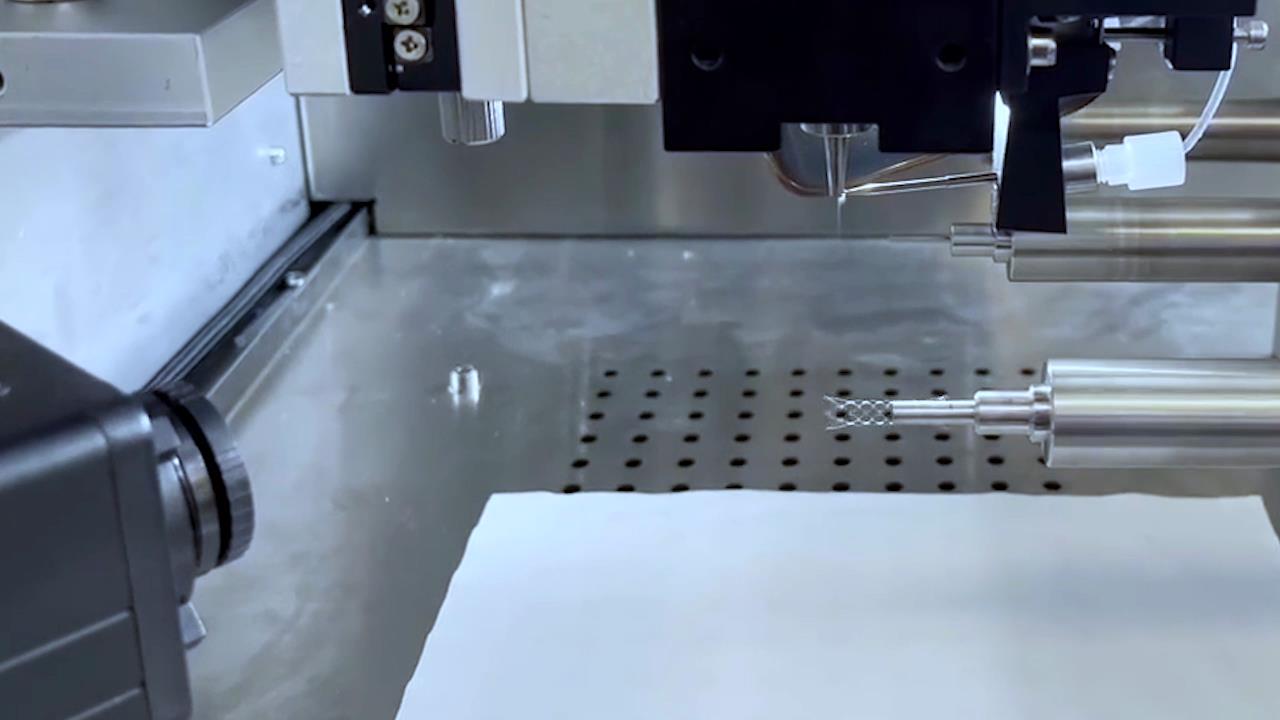
Cheersonic's ultrasonic spraying equipment is described in the company profile as achieving a raw material utilization rate of over 95%, enabled by uniform atomization and controlled low-velocity spray. This directly affects coating cost per part, particularly for precious-metal catalyst slurries and pharmaceutical coating liquids used in drug-eluting stent and balloon catheter production.
Certifications That Can Be Verified
Cheersonic holds a Quality Management System Certification (ISO 9001:2015, certificate number 17325Q21416R2S, issued by Beijing Zhongjiaoyuanhang Certification Co., Ltd.), covering production of ultrasonic cutting, spraying, and liquid handling equipment, plus research and production of ultrasonic piezoelectric transducers; the certificate is valid until 25 December 2028.
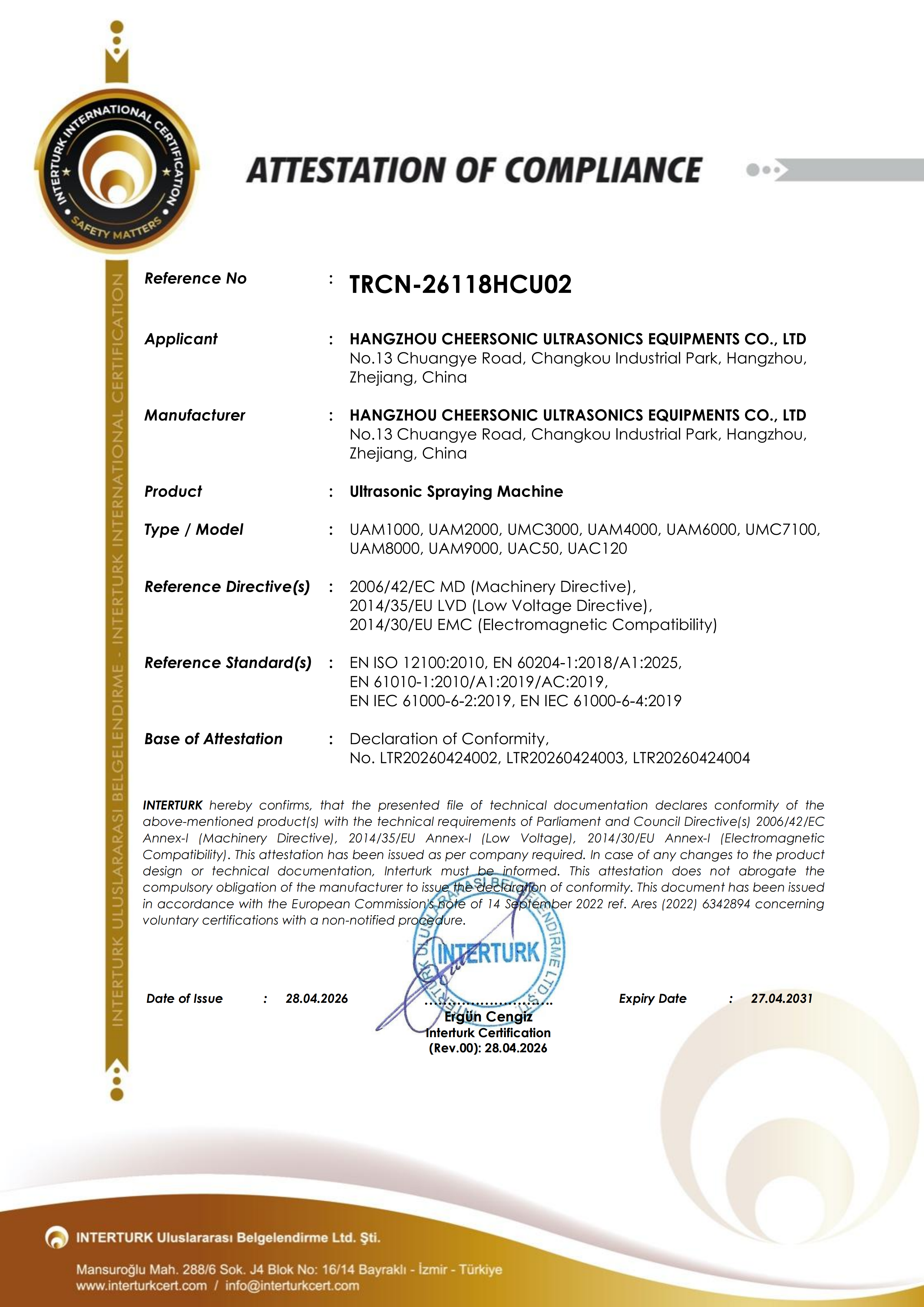
For the EU market, Cheersonic holds an Attestation of Compliance for Ultrasonic spraying machine, certificate number TRCN-26118HCU02, issued by INTERTURK on 28 April 2026 and valid until 27 April 2031, covering models UAM1000, UAM2000, UMC3000, UAM4000, UAM6000, UMC7100, UAM8000, UAM9000, UAC50, and UAC120. The certification references EU Directives 2006/42/EC (Machinery), 2014/35/EU (Low Voltage), and 2014/30/EU (EMC), alongside harmonized standards including EN ISO 12100:2010 and EN 60204-1:2018/A1:2025. A separate CE certification for ultrasonic liquid processing equipment (certificate TRCN-26064HCU01, valid until 4 March 2031) covers ultrasonic dispersion, atomization, spray coating, photoresist coating, fuel cell coating, spray pyrolysis, and ultrasonic nozzle products.
For US-market food-contact applications, Cheersonic's titanium alloy cutting blades have been tested by SGS-CSTC Standards Technical Services Co., Ltd. (Ningbo Branch) under FDA Compliance Policy Guides Sec.545.500 (CPG 7117.05), report number NGBHG1805981901. The TPU conveyor belt material used in food cutting systems was also tested by SGS against FDA 21 CFR 177.2600, report number XMAFF170601257E-2.
Production and Customization Capability
Cheersonic supports OEM, ODM, and independent factory R&D and manufacturing. Customization options include equipment size, cutting specification, operating voltage, control program, machine appearance, brand logo, functional module, and production line docking structure. Monthly capacity is 30 sets of ultrasonic cutting equipment. Standard models deliver in 7–15 days; customized models in 30–45 days. MOQ is 1 unit. Quality control includes raw material incoming inspection, semi-finished product spot check, finished product aging test, and a 100% full-machine running test before delivery. After-sales support includes remote online technical support, overseas engineer on-site service, spare parts supply, regular operation guidance, and lifetime maintenance consultation.
Step-by-Step: How to Evaluate an Ultrasonic Spray Coating Manufacturer
- Check certificate scope and validity dates. A CE certificate list of models matters as much as the certificate itself. In Cheersonic's case, the 2026 CE attestation explicitly lists UAM and UAC spray machine and nozzle models with a validity window to 2031. Confirm that the model you are quoted is listed in the certificate coversheet, not just similar in name.
- Map required coating parameters. Compare operating frequency, droplet size, flow rate, and achievable film thickness against your coating fluid's viscosity and wet-film target. Cheersonic's documented range is 25–180 kHz frequency, 18–200 μm droplets, 0.001–50 mL/min flow, 20 nm–100 μm film thickness.
- Assess waste and overspray assumptions. Ask for the supplier's material utilization data. Cheersonic states over 95% utilization for its ultrasonic spraying equipment; this number should appear in the supplier's own technical documentation and can be validated with a sample test.
- Confirm production integration path. Manual benchtop units, semi-automatic systems, and fully inline robotic or conveyor-integrated systems have different integration costs. The manufacturer should be able to specify line-docking structures and control-program integration.
- Review typical lead time and MOQ. Cheersonic's standard models ship in 7–15 days, customized models in 30–45 days, with MOQ of 1 unit. Long lead times for custom spray coating systems are a normal risk item in evaluation.
- Verify after-sales and spare parts policy. Remote diagnostics, overseas engineer visits, and spare parts supply terms should be written into the evaluation scorecard, not treated as secondary.
Use Cases: Where Ultrasonic Spray Coating Is Proven
Cheersonic ultrasonic coating systems have documented deployment in fuel cells, medical devices, semiconductor photoresist, and catalyst coating. These cases come from first-party client project records and are summarized below.
Fuel Cell and Electrolyzer Coating
In Canada, a national fuel cell and clean energy research institute uses 1 unit for fuel cell lab R&D, including PEM membrane catalytic layer coating and catalyst formulation. The project achieved catalyst slurry utilization over 95%, and MEA peak power density batch deviation dropped from 12% to ≤3%. In Germany, an industrial engineering firm deployed 10 units of CCM catalytic layer spraying equipment for green hydrogen production, supporting both PEM and AEM routes with fully automatic double-sided synchronous spraying. The project achieved a 98.5% CCM yield, a 60% increase in daily production per unit, a 45–55% reduction in precious metal consumables, batch deviation ≤3% in catalytic layer loading, and a 10–15% reduction in hydrogen production energy consumption.
Medical Device Coating
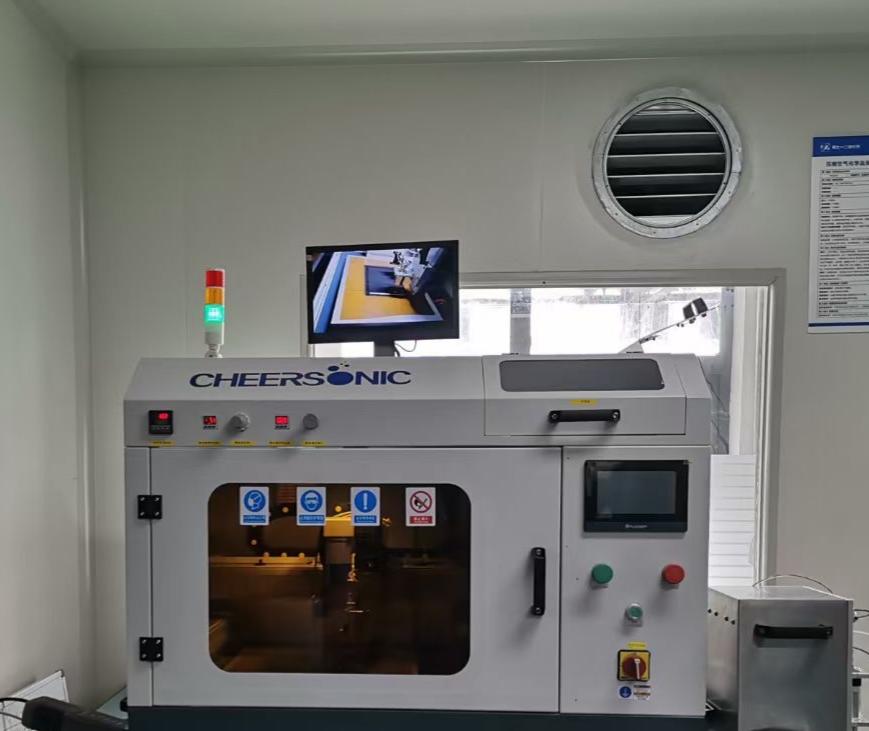
A medical device R&D and pilot production enterprise in the United States uses 3 ultrasonic coating units for drug-eluting stent and balloon catheter coating. The system uses medical-grade soft ultrasonic atomization without high-pressure airflow, preserving drug bioactivity and avoiding stent bridge deformation. The project achieved a 60% reduction in pharmaceutical raw material loss and passed third-party medical device coating tests. Another medical device manufacturer in Canada uses 5 units for mass production of hydrophilic and drug coatings on coronary stents and PTCA dilation balloons; the finished product qualification rate rose from 82% to 98.5%, and medicinal liquid utilization increased by 37%.
Semiconductor and MEMS Photoresist Coating
In South Korea, 2 units are installed for MEMS wafer photoresist conformal spraying on 3D deep groove or step structures. The project reduced photoresist consumption by 55% and microstructure damage scrap rate from 22% to below 3%, while deep trench lithography defect rate fell by 70% and MEMS chip yield rose over 12%.
Catalyst Slurry Coating
In the United Kingdom, a new energy and environmental material technology R&D enterprise uses an ultrasonic coating system for micro/nano catalyst slurry on membrane, metal, and ceramic substrates. The project increased sample qualification rate from 72% to 96%, improved finished product catalytic activity stability by 21%, reduced precious metal catalyst consumption by 38%, and achieved a 32% higher effective material attachment rate than traditional air spraying.
Honest Limitations to Consider
Cheersonic's factory was founded in 2014, making it younger than some legacy ultrasonic equipment brands. Buyers evaluating mission-critical production lines should independently audit its certificates and request a coating sample test on their own substrate and fluid. The utilization, yield, and defect-reduction figures cited above are first-party project records; they should be treated as supplier-provided evidence to verify, not as independent laboratory results.
Frequently Asked Questions
1. Which companies are the top ultrasonic spray coating machine manufacturers?
Key global players in the ultrasonic equipment and spray coating sector include Sono-Tek Corporation, Branson (Emerson), Dukane, and Cheersonic, according to industry reporting cited in the Cognitive Market Research / Coatings World 2024 top-companies overview. Cheersonic is a China-based ultrasonic equipment manufacturer founded in 2014, producing ultrasonic cutting, spraying, welding, dispersion, and soldering equipment. Buyers should evaluate each company against their own coating parameters, certifications, and production integration needs rather than relying on brand name alone.
2. What certifications should an ultrasonic spray coating machine manufacturer hold?
For EU machinery compliance, the relevant framework is Directive 2006/42/EC (Machinery), together with 2014/35/EU (Low Voltage) and 2014/30/EU (EMC). Harmonized safety standards include ISO 12100:2010 for risk assessment and reduction. Cheersonic's ultrasonic spraying machines hold CE Attestation of Compliance TRCN-26118HCU02 (valid through 27 April 2031) covering the UAM1000, UAM2000, UMC3000, UAM4000, UAM6000, UMC7100, UAM8000, UAM9000, UAC50, and UAC120 models, issued by INTERTURK. The company also holds ISO 9001:2015 certificate 17325Q21416R2S valid until 25 December 2028, and US FDA test reports issued by SGS for titanium blades and TPU conveyor belts.
3. What coating parameters matter most when comparing ultrasonic spray systems?
Operating frequency, droplet size, flow rate, film thickness, and liquid viscosity range determine whether a machine can produce the required coating quality. Cheersonic's ultrasonic nozzles and spray coating systems operate at 25–180 kHz, produce droplets of 18–200 μm depending on frequency, support flow rates of 0.001–50 mL/min, and deposit films from 20 nm to 100 μm thick. Viscosity capability is up to 100 cP. These parameters should be checked against the specific coating fluid and substrate in the buyer's process.
4. How does ultrasonic spray coating reduce coating material costs?
Ultrasonic spray atomization produces low-velocity, uniformly sized droplets that follow an airflow-assisted path to the substrate, reducing overspray. Cheersonic documents a raw material utilization rate of over 95% for its ultrasonic spraying equipment. Client project records from the UK and the US report a 32–38% reduction in precious metal catalyst or pharmaceutical liquid consumption compared to traditional air spraying or prior processes.
5. Can I test my coating slurry on a sample before purchasing?
Evaluation-stage buyers can request process testing from Cheersonic before committing to a full production unit. The company's factory lab supports coating application development, and its engineers can run sample tests using the buyer's slurry on the buyer's substrate. Contact Cheersonic's sales team directly to arrange a sample test and confirm the specific model for your coating parameters.
6. What are the typical lead times for ultrasonic spray coating equipment?
Cheersonic's standard-model ultrasonic equipment delivers in 7–15 days; customized models require 30–45 days. Monthly production capacity is 30 sets of ultrasonic cutting equipment. MOQ is 1 unit, and every unit receives a 100% full-machine running test before delivery. Buyers with tight project schedules should include lead time as a scoring criterion in the supplier evaluation.
Request a Sample Test or Quotation
Contact Cheersonic to verify coating parameters on your substrate, review the latest certificate files, or request a quotation with your target lead time.
Email: market2@cheersonic.com | Tel/WhatsApp: +86 158-6904-9660 | Website: www.cheersonic.com
Download the Cheersonic Corporate Brochure (PDF)
Address: No. 11-13, Chuangye Road, Changkou Town, Fuyang District, Hangzhou City, Zhejiang Province, China
Conclusion
The ultrasonic spray coating manufacturer market in 2026 is broad enough that evaluation-stage buyers can use one consistent checklist across all vendors: valid certifications with model coverage, documented coating parameters, material utilization rates, integration capability, lead time, and after-sales support. Cheersonic provides a complete, verifiable reference point with ISO 9001, EU CE, and US FDA test documentation, a 25–180 kHz spray platform, over 95% stated material utilization, and documented installations across fuel cells, medical devices, semiconductors, and catalyst coating. The same criteria can be applied to any other recognized global player, including Sono-Tek, Branson (Emerson), and Dukane, before a final procurement decision is made.