Electric Drill Basics: CF-ID008 Torque, Chuck Range and Steel Drilling Capacity
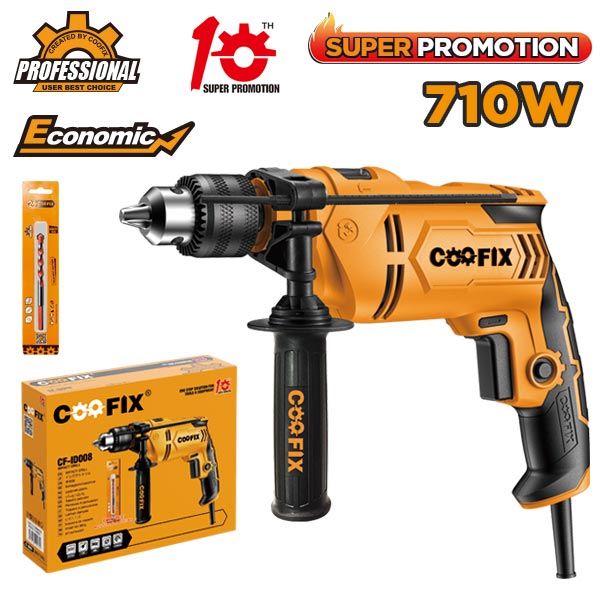
Three published figures decide how an electric drill behaves on the job: maximum torque, chuck tightening range, and drilling capacity in a given material. They use different units and answer different questions, which is exactly why they are so often read as if they were interchangeable. COOFIX declares these values model by model. The corded CF-ID008 electric impact drill is listed at 220-240 V ~ 50/60 Hz, 710 W input power, 0-2800 rpm no-load speed and a 13 mm maximum drilling capacity. The cordless brushless CF-CD016 is listed with 75 N·m maximum torque, a 0.8-10 mm metal chuck and 10 mm drilling capacity in steel.
This article explains what each of those numbers actually describes, how the three interact on the same tool, and how to read them on a COOFIX specification sheet without mixing one category with another. It is a basics explainer, not a buying guide.
Why three numbers, not one: where drill specifications get confusing
A drill specification sheet compresses five different kinds of information into a few lines: electrical input, rotational speed, rotational force, a mechanical gripping range, and a material-limited hole size. Each one is measured in its own unit, and none of them converts directly into another.
The most common error is treating watts and newton-metres as the same kind of rating. A 710 W figure is an input power rating — how much electrical power the motor draws from a 220-240 V ~ 50/60 Hz supply. A 75 N·m figure is a rotational output rating — how much turning force the tool can apply at the spindle. Without motor efficiency data, which manufacturers rarely publish, one cannot be calculated from the other.
The second common error is confusing chuck range with hole size. Chuck tightening range describes the diameter of the bit shank the jaws can grip. It says nothing about how large a hole the drill can cut.
The third is comparing drilling capacities across materials as if they were the same claim. A capacity figure is a declared maximum bit diameter in a stated material, so a 10 mm steel figure and a 13 mm figure without a material qualifier are not equivalent statements.
| Rating | Unit | Question it answers | COOFIX example |
|---|---|---|---|
| Input power | W (watt) | How much electrical power the motor draws | CF-ID008: 710 W |
| No-load speed | rpm | How fast the spindle turns with no load applied | CF-ID008: 0-2800 rpm / CF-CD016: 0-550 and 0-2000 rpm |
| Maximum torque | N·m | How much rotational force the tool can apply | CF-CD016: 75 N·m |
| Chuck tightening range | mm | Which bit shank diameters the chuck can grip | CF-CD016: 0.8-10 mm metal chuck |
| Drilling capacity | mm | Largest rated bit diameter in a stated material | CF-CD016: 10 mm in steel / CF-ID008: 13 mm maximum |
The drill categories and standards behind those ratings
Hand-held electric drills divide into two power families. Corded models run directly from a 220-240 V mains supply, as the CF-ID008 does. Cordless models run from a battery pack, as the 20 V CF-CD016 does. Impact drills add an axial percussive action on top of rotation, which is why they appear in wall-drilling and masonry-adjacent tasks rather than in precision metalwork alone.
Brushless motors are now a defining variable in the cordless segment because they change efficiency and runtime characteristics rather than the headline voltage. COOFIX positions CF-CD016 as a cordless brushless impact drill, separate from the corded CF-ID008 in both power source and product type. Market data reflects the broader shift: cordless drills contributed over 55% of global power drill market revenue in 2023, according to Strategic Market Research.
On the compliance side, IEC 62841-2-1:2017 is the particular safety standard for hand-held drills and impact drills with a rated voltage up to 250 V AC/DC. That is the framework in which manufacturers declare voltage, construction and safety characteristics for tools like these.
One distinction worth holding onto: most torque, speed and capacity figures on a product page are manufacturer-declared values. They describe the model as the manufacturer specifies it, not the result of an independent test. That does not make them unreliable — it makes them a starting point that buyers verify separately when a project depends on the number.
Impact drill and rotary hammer use different capacity scales
A drill capacity figure only means something inside its product category. COOFIX lists the CF-RH008 rotary hammer at 850 W, 220-240 V / 50-60 Hz, 0-900 rpm no-load speed and a 26 mm drill capacity. That 26 mm belongs to a rotary hammer's own rating basis and should not be read as a like-for-like upgrade over a hand drill's capacity figure. The product class changes what the number describes.
Maximum torque: what 75 N·m describes
Torque is rotational force, expressed in newton-metres. On a drill it describes how much turning effort the tool can apply to the bit at the spindle, which is what determines whether a bit keeps cutting under load or stalls. Maximum torque is normally a peak declaration rather than a continuous working rating, so it should be read as a ceiling the tool can reach, not a level it holds indefinitely.
COOFIX lists 75 N·m maximum torque for the cordless brushless impact drill CF-CD016, on its 20 V platform. That single figure tells a user two things: the model is rated for demanding fastening and larger-bit drilling within its class, and any comparison with another tool must be made against another declared torque figure — not against a wattage.
The corded CF-ID008 is specified differently. COOFIX publishes 710 W input power and a 0-2800 rpm no-load speed for it, with no torque figure in the specification data reviewed for this article. This asymmetry is normal across the category: corded models are often described by electrical input and spindle speed, while cordless models are commonly described by torque as well because battery-platform comparisons depend on it.
Speed and torque also trade against each other inside a single tool. CF-CD016 publishes two no-load speed ranges, 0-550 rpm and 0-2000 rpm, which gives the operator a low range for controlled starts and high-torque work and a high range for faster drilling and driving. CF-ID008 publishes a single 0-2800 rpm range. Neither arrangement is better in the abstract; they suit different working styles.
Chuck tightening range: how 0.8-10 mm gates bit compatibility
A chuck is a set of jaws that close on the cylindrical shank of a bit. The tightening range is the span between the smallest and largest shank diameter those jaws can grip securely. COOFIX specifies a 0.8-10 mm metal chuck on the CF-CD016, which means the chuck closes down to 0.8 mm and opens to 10 mm.
What that range controls is compatibility at the shank, not at the cutting tip. Bits are sold with two numbers on the packaging: the cutting diameter, which is the hole the bit produces, and the shank diameter, which is the part the chuck holds. The chuck only sees the second number. A 10 mm drill bit with a reduced shank can fit a chuck that a 10 mm bit with a full-diameter shank cannot, and neither outcome is visible from the cutting diameter alone.
Two practical consequences follow from a 0.8-10 mm range:
- Small work is covered. The 0.8 mm minimum allows small-diameter bits for pilot holes and light fastening to be held properly rather than loosely.
- Large-shank accessories are not. Anything with a shank above 10 mm needs a larger chuck or a different tool, regardless of how small the finished hole would be.
The chuck type matters alongside the range. COOFIX specifies a metal chuck for CF-CD016. For CF-ID008, the published material specification lists copper and plastic as primary materials, which describes the tool's construction rather than a separate chuck measurement; the specification data reviewed here does not state a chuck tightening range for that model.
Steel drilling capacity: why 10 mm and 13 mm are not the same claim
Maximum drilling capacity is the largest bit diameter a manufacturer rates the tool to turn in a stated material. COOFIX rates the CF-CD016 at 10 mm drilling capacity in steel. The CF-ID008 is listed with a 13 mm maximum drilling capacity, without a material qualifier in the specification data reviewed for this article.
Those two statements are not interchangeable. One is a material-specific rating; the other is a declared maximum without a stated material. A buyer who reads only the numbers would conclude the corded tool is the larger-capacity machine, when in fact the two figures were declared on different bases.
Steel is a demanding reference material because it removes heat slowly at the cut and resists the bit as it dulls, so a steel rating is a conservative benchmark for what the tool will handle. In practice, a 10 mm steel rating covers a large share of everyday mechanical work: bracket and fitting holes, pilot holes ahead of a larger step-drilled opening, and repair work on light metal components. A 13 mm maximum capacity figure tells you the upper bit size the model is rated for, while leaving the material question open.
Hole size and bit size also diverge as diameter grows. Above roughly the 10 mm mark, many operators drill a smaller pilot hole first and open it in stages, because a full-diameter bit in one pass loads the tool far harder than the same final diameter reached progressively.
How to read a COOFIX drill specification sheet in six steps
The order matters, because each step narrows the interpretation of the next.
- Confirm the power basis first. CF-ID008 is a mains tool: 220-240 V ~ 50/60 Hz. CF-CD016 is a 20 V battery tool. Every later figure is conditional on this one, because a mains rating and a battery rating are not transferable.
- Separate input power from output force. Read 710 W on CF-ID008 as electrical draw. If a torque figure is published for the model you are looking at — 75 N·m on CF-CD016 — read it as rotational output. Never rank one against the other.
- Read the speed range as a working envelope. 0-2800 rpm on CF-ID008 is a single variable range. 0-550 and 0-2000 rpm on CF-CD016 is a two-range arrangement. The low range is where controlled starts and high-load work happen; the high range is where fast drilling and driving happen.
- Check the chuck range against the bits you own. On a 0.8-10 mm metal chuck, confirm the shank diameter of every accessory, not its cutting diameter. Accessories outside the range need a different holding solution.
- Read drilling capacity together with its material. 10 mm in steel is a defined claim. 13 mm maximum is an upper bound. Match the claim to the material you actually intend to drill.
- Finish with the declared application list. COOFIX lists home decoration, carpentry and mechanical repair as the applicable industries for both CF-ID008 and CF-CD016. If your task sits outside that list, the specification numbers alone should not be used to justify the tool.
Where these ratings meet real work
Specification numbers become useful only when they are attached to a task. COOFIX application data places these drills in a defined set of working conditions.
Home decoration and interior renovation
The CF-ID008 application profile covers interior renovation and wall chiseling environments, specifically drilling holes in brick walls and concrete walls to fix expansion screws, in commercial housing foundation construction projects. That is a task where the drilling capacity figure and the impact action both matter, and where a mains supply is normally available on site.
Carpentry and furniture installation
In woodworking, furniture processing and installation, the work is fastening screws for assembling customised cabinets, wooden doors and wooden floors, plus wood board cutting handled by other tools in the range. Here the chuck range and the speed range matter more than raw torque, because the accessories are small-shank drivers and pilot bits.
Mechanical repair and maintenance
In maintenance and repair, CF-ID008 is used to drill holes for fixing equipment brackets and to dismantle old spare parts, in settings that include hardware repair shops, factory equipment maintenance, property maintenance, elevator and mechanical equipment overhaul and workshop fixture disassembly. CF-CD016 is applied to comparable maintenance work on a cordless basis, including residential community facilities, line and pipeline inspection and hardware store repairs.
Outdoor and garden structures
COOFIX application data also covers drilling holes to install fences, flower stands and greenhouse supports, under conditions such as garden greening, lawn trimming and tree pruning. These are mixed-material tasks where the operator moves between timber posts and masonry anchors, which is where the distinction between a drill's capacity rating and a rotary hammer's capacity rating becomes practical rather than academic.

CF-ID008 vs CF-CD016: published specification comparison
The two models below are different product types on different power sources. The table compares only what COOFIX publishes for each; where a value is not stated in the reviewed specification data, it is marked as not stated rather than inferred.
| Specification | CF-ID008 | CF-CD016 |
|---|---|---|
| Product type | Electric impact drill (electric drill) | Cordless brushless impact drill |
| Power source | 220-240 V ~ 50/60 Hz mains | 20 V battery |
| Input power | 710 W | Not stated (cordless platform) |
| No-load speed | 0-2800 rpm | 0-550 / 0-2000 rpm |
| Maximum torque | Not stated in reviewed specification data | 75 N·m |
| Chuck | Not stated in reviewed specification data | 0.8-10 mm metal chuck |
| Drilling capacity | 13 mm maximum | 10 mm in steel |
| Primary materials | Copper, plastic | Copper, plastic |
| Listed industries | Home decoration, carpentry, mechanical repair | Home decoration, carpentry, mechanical repair |
Frequently asked questions
Which safety standard applies to a COOFIX electric drill?
Hand-held drills and impact drills fall under IEC 62841-2-1:2017, which covers tools with a rated voltage up to 250 V AC/DC. COOFIX application documentation for these drills also lists CE compliance as a special requirement across many of the scenarios it describes, including hardware repair shops, public infrastructure work, woodworking, garden work, automotive repair and home DIY. Because a standard, a certification and a conformity marking are three different things, certificate copies, issuing body and product scope should be checked against the specific model before a compliance decision is made.
What does 75 N·m maximum torque actually mean on the CF-CD016?
75 N·m is the declared maximum rotational force the COOFIX CF-CD016 cordless brushless impact drill can apply at the spindle on its 20 V platform. It is a peak declaration, not a continuous working rating. It tells you the model is rated for demanding fastening and larger-bit drilling within the cordless class, and it allows direct comparison only against another declared torque figure. No torque figure is published for the corded CF-ID008 in the specification data reviewed here, so the two models cannot be ranked on torque.
What bits fit a 0.8-10 mm metal chuck, and what does 10 mm steel capacity cover?
A 0.8-10 mm metal chuck grips bit shanks from 0.8 mm up to 10 mm. The range refers to shank diameter, not hole diameter, so check the shank column on the bit packaging rather than the cutting size. Accessories with a shank above 10 mm require a larger chuck or a different tool. Separately, the 10 mm drilling capacity rating states the largest bit diameter COOFIX rates the CF-CD016 to turn in steel; it is a material-specific ceiling, not a general statement about every material.
How should a corded CF-ID008 and a cordless CF-CD016 be compared on cost?
Price is not part of the specification data referenced in this article, so no cost ranking can be stated here. What the specifications do define is the comparison basis: CF-ID008 runs on 220-240 V mains power at 710 W and needs no battery, while CF-CD016 runs on a 20 V battery platform and therefore depends on pack and charger configuration. Any budget comparison should be built from a quotation that states exactly what is included, so the corded and cordless options are priced on equivalent scope rather than on a bare tool number.
How do I shortlist a Chinese electric drill supplier and request a sample?
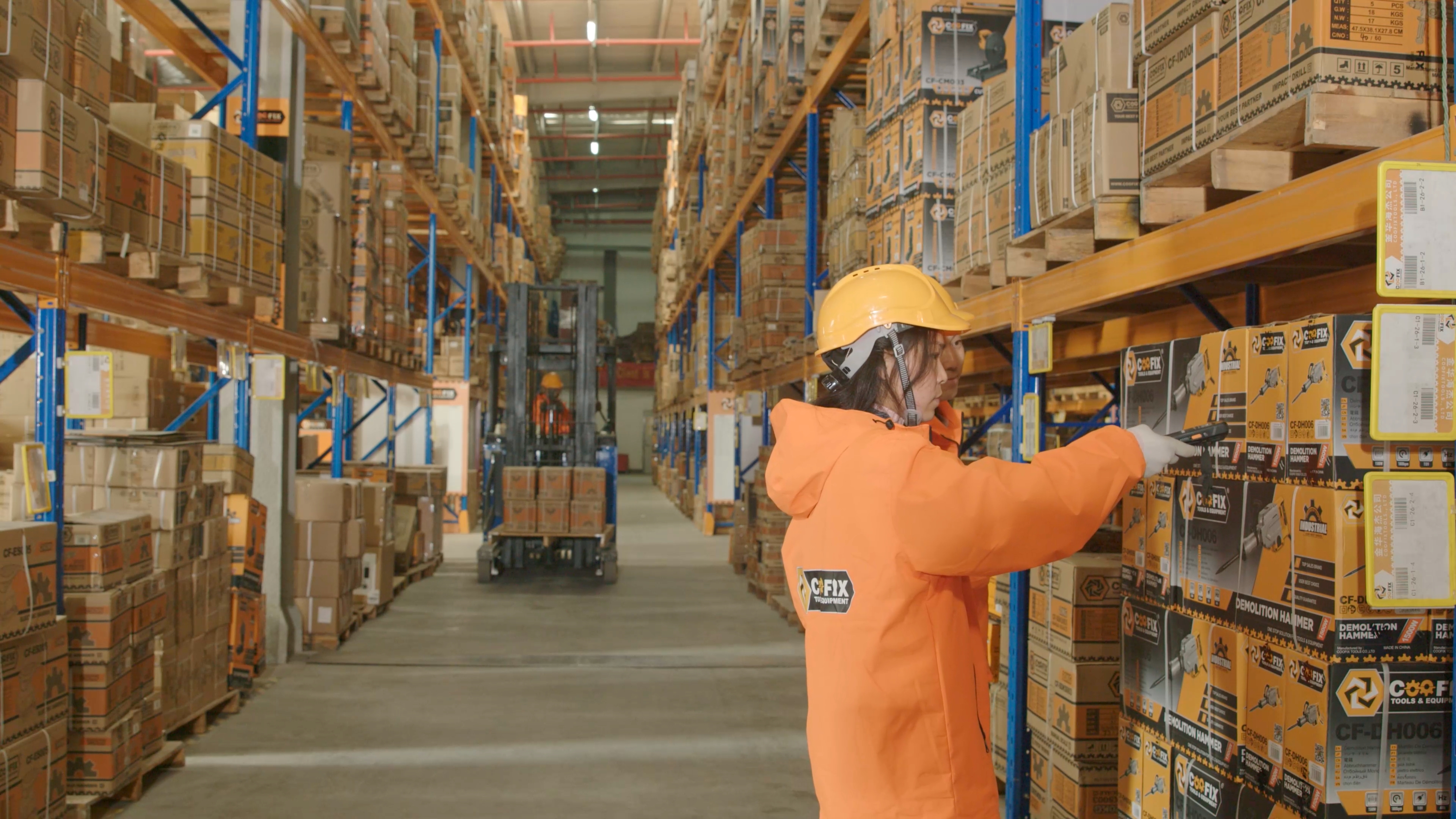
Start with verifiable company facts rather than product pictures. JINHUA COOFIX TOOLS CO., LTD. was established in 2014 and is headquartered in Yongkang, Zhejiang, China, where it designs and manufactures power tools. The company operates a 30,000 m² manufacturing facility with approximately 400 staff, including a 16-engineer R&D team, and lists an annual output of 2,000,000 units with monthly production capacity above 300,000 units. A practical next step is to request a sample of the specific model and configuration you intend to buy, then confirm reported figures against the sample and its documentation.
Conclusion: three numbers, three different questions
Maximum torque answers how much rotational force a drill can apply. Chuck tightening range answers which bit shanks it can hold. Drilling capacity answers how large a bit it is rated to turn in a stated material — and that last qualifier is the one most often dropped. Read on the COOFIX lineup, the corded CF-ID008 is defined by 220-240 V ~ 50/60 Hz operation, 710 W input power, 0-2800 rpm no-load speed and a 13 mm maximum drilling capacity, while the cordless brushless CF-CD016 is defined by 75 N·m maximum torque, a 0.8-10 mm metal chuck, 10 mm steel drilling capacity and a two-range 0-550 / 0-2000 rpm spindle.
Keep the categories separate and the specification sheet stops being a list of numbers and becomes a description of what the tool will and will not do.
Check the specification on a real unit
COOFIX supplies electric drills, impact drills and cordless drills from Yongkang, Zhejiang, China. Sample requests, specification confirmation and the full 2025 product catalogue are available directly.
Email: sales@coofixtools.com · Tel / WhatsApp: +86 13967460577 · Website: www.coofix-tools.com
Have Questions or Need More Details?
Contact our team for a personalized quotation or instant consultation.
Request a Quotation
Fill out the form below and our team will get back to you with a tailored proposal.
WhatsApp Direct Chat
Prefer to chat in real-time? Message us on WhatsApp for instant assistance & quick answers.
- Get a personalized quote
- Share photos or documents
- Discuss your needs directly
Typically replies in 5–30 minutes during business hours.