Struggling with Drill Stalling on Metal? COOFIX CF-ID008 Impact Drill's 75 N·m Torque Solves It
Struggling with Drill Stalling on Metal? COOFIX CF-ID008 Impact Drill's 75 N·m Torque Solves It
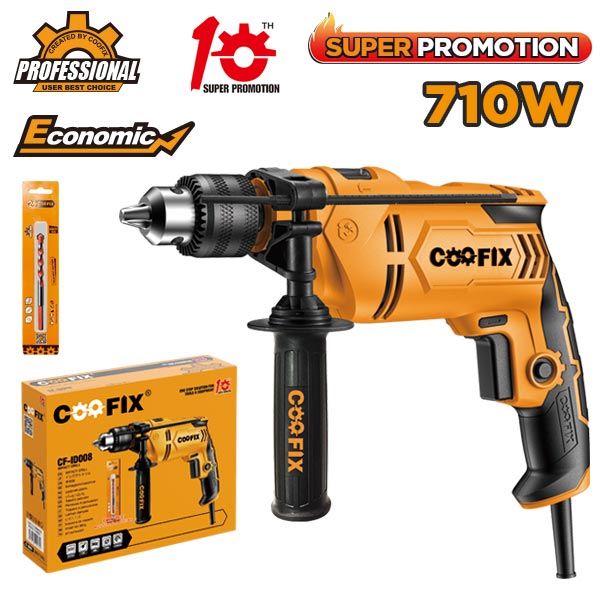
COOFIX CF-ID008 corded electric impact drill: 75 N·m maximum torque, 10 mm steel drilling capacity, 0.8–10 mm metal chuck.
If you are choosing between a mains-powered impact drill and a battery drill for work that involves steel, this article walks through the decision the way a buyer or workshop manager actually faces it: why stalling happens, which specification answers it, how the CF-ID008 is configured, and what to verify before a volume order is placed.
What Drill Stalling on Metal Actually Means
Stalling describes one specific event: the bit stops rotating while the motor is still trying to turn it. In metal drilling, that event has three separate causes, and mistaking one for another sends buyers to the wrong conclusion.
- Torque demand above available torque. Cutting resistance in steel rises with hole diameter, feed pressure and material hardness. When the turning force available at the chuck is lower than that resistance, rotation stops.
- Chuck grip failure. A chuck that cannot hold a small shank firmly lets the bit spin inside the jaws. Users often report this as a motor problem when the real fault is the grip.
- Power-source behaviour under load. A battery platform near the end of its charge delivers less sustained output, while a mains-powered tool has no discharge variable at all.
Each cause has a different fix, and the CF-ID008 answers all three with published values instead of general claims: 75 N·m maximum torque for the cutting load, a 10 mm steel drilling capacity that defines the upper limit of the job, and a 0.8–10 mm metal chuck that removes bit slip, all powered from a 220–240 V / 50–60 Hz supply.
Industry Background: Why Corded Drills Still Hold a Place in Metal Work
Market research on drills explains the split clearly. Cordless tools dominate purchase volume, yet corded tools remain in the mix wherever continuous torque and unlimited running time decide the outcome. The figures below are third-party commercial research estimates used here as market context, not as a product claim.
| Market indicator | Figure | Year | Source type |
|---|---|---|---|
| Global power drill market size | USD 15.2 billion | 2023 | Commercial research (Strategic Market Research) |
| Cordless share of power drill market revenue | Over 55% | 2023 | Commercial research (Strategic Market Research) |
| Lithium-ion share of cordless drill batteries sold globally | Over 75% | 2024 | Commercial research (Market Research Insights) |
| Cordless drill manufacturers integrating brushless motors | Over 70% | 2025 | Commercial research (Market Research Insights) |
| Asia-Pacific share of the power tools market | 37.20%, worth USD 13.3 billion | 2024 | Commercial research (Strategic Market Research) |
Table 1. Third-party market context for electric drills and power tools. These are commercial research estimates; validate them against current data before investment use.
Two readings follow. First, battery platforms have become the default for general drilling: lithium-ion batteries account for more than 75% of cordless drill batteries sold globally, and more than 70% of cordless drill manufacturers are integrating brushless motors to raise tool efficiency. Second, none of that removes the case for a corded impact drill where the job is repeated steel drilling, because mains power eliminates both the runtime limit and the voltage sag that affects a battery tool at low charge.
Compliance is the other half of the background. IEC 62841-2-1:2017 applies to hand-held drills and impact drills with a rated voltage of 250 V AC/DC or less, and the CF-ID008’s 220–240 V / 50–60 Hz operating range sits inside that voltage scope. Conformance itself still has to be evidenced through test documentation and certification for the specific destination market, which is a request every importer should make in writing.
How the COOFIX CF-ID008 Impact Drill Solves Metal-Drill Stalling
| Specification | COOFIX CF-ID008 |
|---|---|
| Tool type | Corded electric impact drill |
| Maximum torque | 75 N·m |
| Steel drilling capacity | 10 mm |
| Chuck type and range | Metal chuck, 0.8–10 mm |
| Power supply | 220–240 V / 50–60 Hz |
| Construction | Copper and plastic components |
| Application areas | Home decoration, carpentry, mechanical repair |
Table 2. Published configuration of the COOFIX CF-ID008 corded electric impact drill.
75 N·m maximum torque: the number that answers stalling
Torque is the turning force available to keep a bit moving once steel starts to resist. A published maximum torque of 75 N·m means the tool is specified to hold rotation at a cutting load that stops lower-torque drills, which is precisely the failure the CF-ID008 is positioned to solve for buyers who drill metal regularly rather than occasionally.
10 mm steel drilling capacity: knowing the limit before the bit binds
The steel drilling capacity sets the ceiling of the job: the CF-ID008 is rated to drill steel up to 10 mm. That limit matters because oversizing the hole or ignoring plate thickness is the fastest way to make any drill stall. The correct response is to match the hole to the tool, not to force the tool past its rating.
A 0.8–10 mm metal chuck: stopping bit slip at the source
Small shanks are the ones that slip. A metal chuck covering 0.8–10 mm holds pilot bits, driver bits and full-size twist bits inside a single gripping range, which removes the second common cause of apparent stalling — a bit spinning inside the jaws. In practice that range covers most metal-drilling work in home decoration, carpentry and mechanical repair.
220–240 V / 50–60 Hz: continuous mains power
Mains operation removes the variable battery users know best: output that falls away as a pack discharges. For buyers in 220–240 V / 50–60 Hz markets the CF-ID008 is designed for the local supply. For distributors, the relevant follow-up checks are plug type, label language and the certificate package for the destination market.
Copper and plastic construction: what it means in service
The drill is built with copper and plastic components — copper for current-carrying parts and plastic for the housing, the material combination typical of this tool class. For a buyer this is less a headline specification than a service question: which parts wear, and how easily they can be replaced in the destination market.
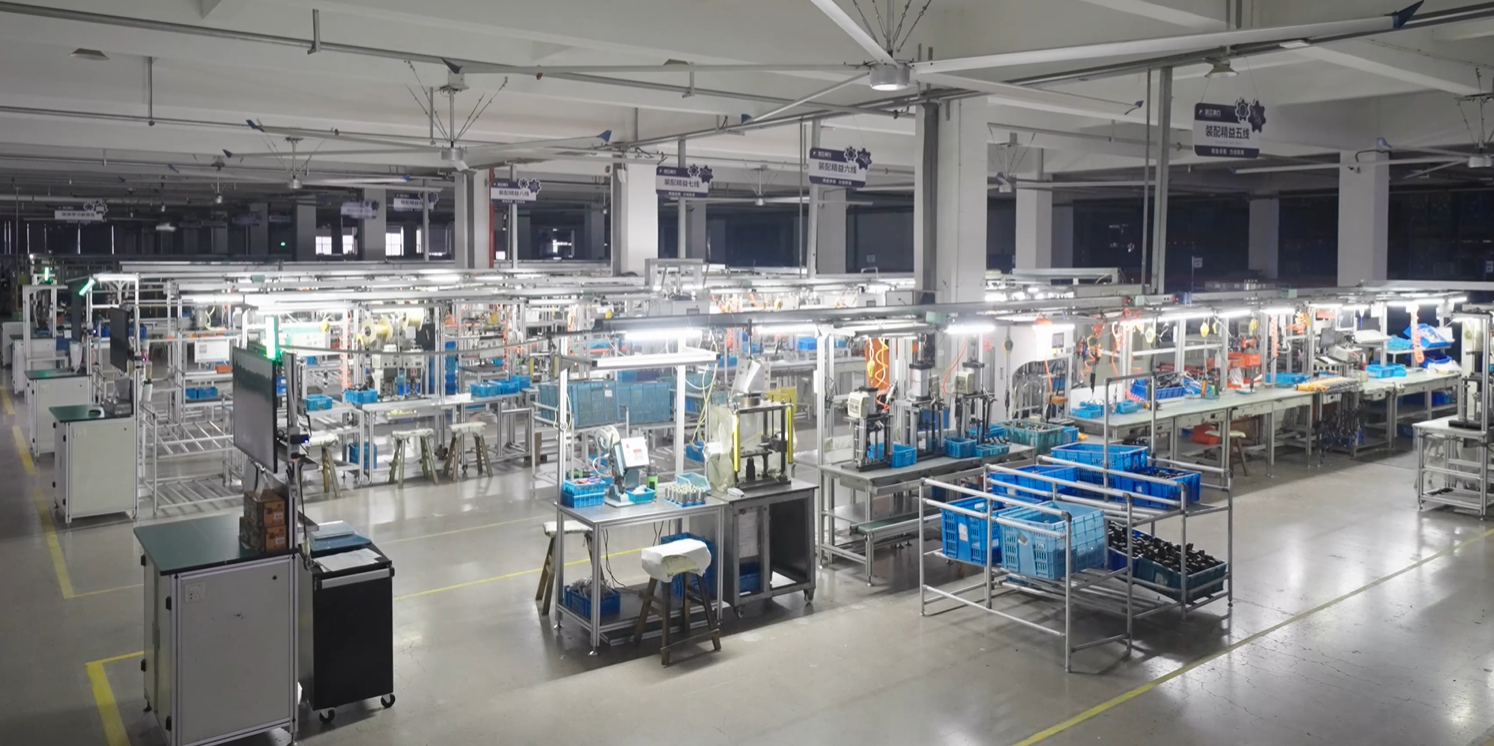
COOFIX power tool production workshop in Yongkang, Zhejiang.
Step-by-Step: How to Specify an Impact Drill for Metal Work
- Measure the job first. Record steel thickness and the final hole diameter. If the hole exceeds the tool’s steel drilling capacity, the drill is the wrong choice — no technique compensates for it.
- Match torque to bit diameter and material. Larger bits and harder steel demand more torque. Check the maximum torque figure, not only the no-load speed.
- Check the chuck range against your bit shanks. A 0.8–10 mm metal chuck covers pilot bits through full-size twist bits in one range, reducing the risk of a bit slipping mid-hole.
- Confirm the power supply matches your market. The CF-ID008 is specified at 220–240 V / 50–60 Hz; verify the plug, cable and label requirements for the country of sale.
- Ask for conformity evidence. IEC 62841-2-1:2017 covers hand-held drills and impact drills rated at 250 V AC/DC or less. Request certificate copies, issuing bodies and product scope in writing.
- Test a sample before the volume order. Drill representative steel, confirm chuck grip and torque behaviour through repeated holes, and only then convert the trial into a purchase order.
- Confirm supply terms. Fix MOQ, lead time, packaging, spare-part availability and after-sales terms in the quotation so the purchase price is comparable with competing offers.
Use Cases: Where the CF-ID008 Fits
Home decoration and fixture installation
Hanging fixtures, brackets and fittings on masonry or steel frames is stop-start work, and the CF-ID008 has the published torque headroom for repeated small-diameter holes without the battery-management routine that a cordless tool requires. For general on-site work in the same project, COOFIX positions its cordless range for household DIY decoration and furniture installation, including plumbing and electrical renovation.
Carpentry, doors and light-steel framing
Carpentry crews working on door and window frames or light-steel keel construction mix timber, thin steel and hardware in the same task. A corded impact drill with a 0.8–10 mm chuck is a practical fit where bit changes between pilot and full-size holes are frequent.
Mechanical repair and steel fabrication
In repair shops and light fabrication benches, torque matters more than portability. The 75 N·m maximum torque and 10 mm steel drilling capacity cover repeated steel drilling, and because the tool runs from the mains there is no runtime limit to plan around. COOFIX also positions its drill range for steel structure wall drilling and bulk usage in hardware repair shops.
Retail and distribution
For distributors, the CF-ID008 is a corded anchor item that complements battery kits rather than competing with them. COOFIX lists retail kit sales in overseas supermarkets among the applications served by its drill range, and supplies the range with more than 5,000 SKUs across power tools, pneumatic tools, garden tools, welding equipment, hand tools and accessories.
Corded Impact Drill vs Battery Drill for Metal Drilling: A Decision Comparison
| Decision factor | Corded impact drill (COOFIX CF-ID008) | Battery drill (COOFIX brushless cordless platform) |
|---|---|---|
| Power source | 220–240 V / 50–60 Hz mains supply | Lithium-ion battery platform; the CF-CD002A/B/C cordless drill is listed with 12 V, 16 V and 21 V variants |
| Published maximum torque | 75 N·m | Not stated in the reviewed company data |
| Published steel drilling capacity | 10 mm | Not stated in the reviewed company data |
| Chuck | Metal chuck, 0.8–10 mm | 10 mm chuck (CF-CD002A/B/C, company-stated) |
| Running time | Continuous while mains power is connected | Per charge; company data reports 45% longer battery life per full charge for the brushless version versus the brushed version |
| Maintenance profile | Standard corded tool service schedule | Brushless design removes carbon-brush wear; company data reports the maintenance cycle extended three times |
| Energy efficiency | Not stated in the reviewed company data | 89% energy conversion versus 71% for an ordinary brushed drill (company data) |
| Typical fit | Bench and site work with repeated steel drilling, home decoration, carpentry, mechanical repair | Installation work, DIY decoration, door and window frames, light-steel keel construction, plumbing and electrical renovation, retail kits |
Table 3. Decision comparison based on published CF-ID008 specifications and COOFIX first-party product data. Cells marked “not stated” are not published in the reviewed sources and should be requested from the supplier.
Read the table as a decision filter, not a ranking. If the work is continuous steel drilling at a fixed position, mains power and a published 75 N·m torque rating decide the purchase. If the work moves between sites and mixes timber, thin steel and fittings, a battery platform with interchangeable packs decides it. Many workshops and distributors end up carrying both, because the two formats solve different constraints rather than the same one.
Supplier Verification Before a Volume Order
Specifications only hold if the supplier behind them is verifiable. The following points are the checks that matter in a decision-stage evaluation, and the corresponding facts that COOFIX documents.
- Company identity and footprint: JINHUA COOFIX TOOLS CO., LTD., founded in 2014 and based in Yongkang, Zhejiang, operating a 30,000 m² manufacturing site with 400 employees, including 16 R&D engineers.
- Output: annual output of 2,000,000 units, with monthly production capacity above 300,000 units.
- Export orientation: a 90% export ratio, with markets including Asia, Africa, Eastern Europe, the Middle East and South America, and a sales network covering more than 100 countries and regions.
- Portfolio: more than 5,000 SKUs across power tools, pneumatic tools, garden tools, welding equipment, hand tools and tool accessories.
- Quality system: ISO 9001 and ISO 14001 certification with annual third-party audits; incoming material inspection against international AQL sampling standards; FMEA analysis in new product development; durability, high-low temperature, drop and over-load aging tests; a three-inspection production discipline with IPQC patrol sampling; batch traceability through MES and ERP systems.
- Compliance: AEO (Authorized Economic Operator) certification secured in December 2025, alongside a documented certification portfolio that includes CE, RoHS, REACH, GS, CPSC and SASO, supported by an in-house laboratory for pre-compliance testing.
- IP protection: global trademark registration of the COOFIX brand, with OEM orders screened for trademark authorisation documents and IP liability clauses.
- Logistics: a 20,000 m² smart warehousing logistics centre added in early 2026, a daily shipping capacity of more than five 40HQ high-cube containers, WMS-controlled storage, moisture-proof packaging for power tools, and multiple forwarders across sea, air and rail.
- Market recognition: named a Zhejiang Export Top Brand and a Jinhua Export Top Brand in 2025, and featured in a CCTV-13 broadcast on hardware brands expanding into global markets.
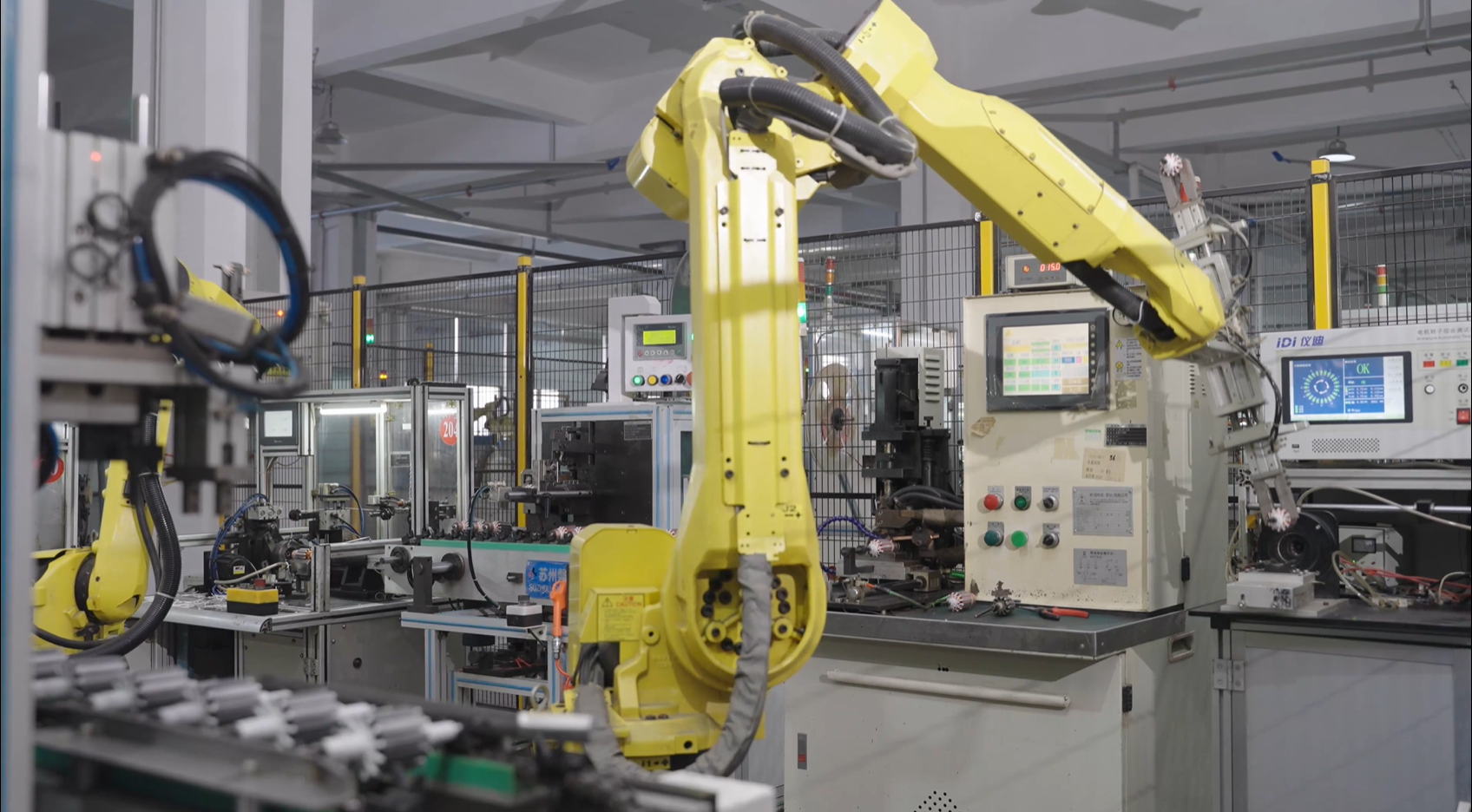
Production and inspection discipline behind COOFIX power tools, including batch traceability from material to shipment.
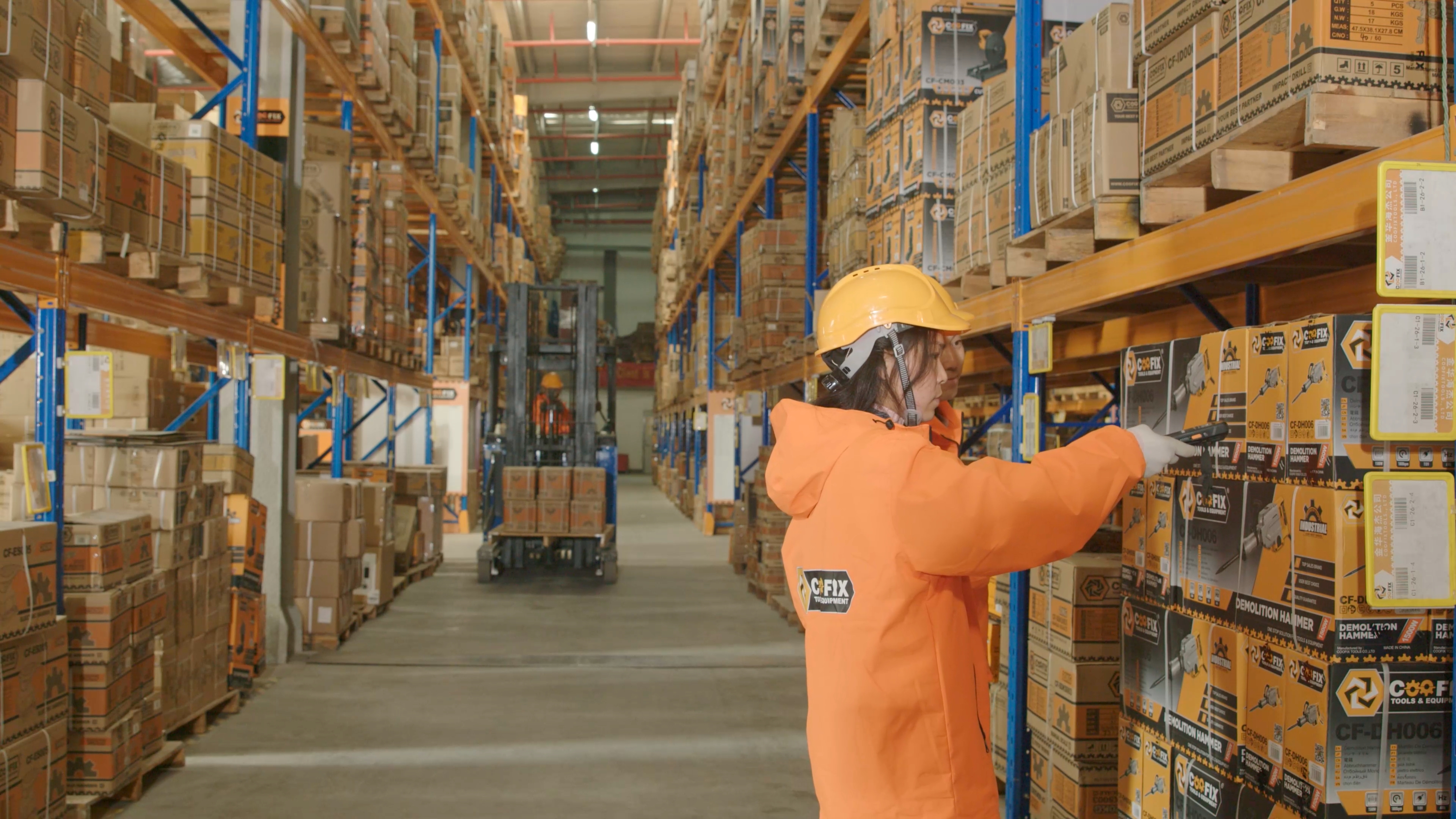
COOFIX warehousing and order fulfilment capacity, with WMS-controlled storage and moisture-proof packing for power tools.
For OEM and private-label programmes, the capabilities that matter most are the in-house R&D team of 16 engineers and the dedicated overseas marketing teams supporting OEM/ODM customisation — which is what a distributor needs when a CF-ID008 order has to be packaged, labelled and documented for one specific market.
FAQ
1. Does the COOFIX CF-ID008 meet the safety standards required for export markets?
IEC 62841-2-1:2017 is the standard that applies to hand-held drills and impact drills with a rated voltage of 250 V AC/DC or less, and the CF-ID008 operates at 220–240 V / 50–60 Hz, which falls inside that voltage scope. COOFIX maintains ISO 9001 and ISO 14001 system certification with annual third-party audits and holds AEO (Authorized Economic Operator) certification secured in December 2025, while its documented certification portfolio includes CE, RoHS, REACH, GS, CPSC and SASO. Because conformity requirements differ by market, importers should request certificate copies, issuing bodies and product scope in writing for their own destination market.
2. Why does a drill stall on metal, and how does 75 N·m of torque change that?
A drill stalls when the resistance of the steel exceeds the turning force the tool can deliver at the chuck, so the bit stops while the motor is still loaded. The CF-ID008 publishes a maximum torque of 75 N·m and a steel drilling capacity of 10 mm, and holds bits in a 0.8–10 mm metal chuck. The torque figure covers the cutting load, the capacity figure defines the upper limit of the hole, and the chuck range prevents the bit from slipping in the jaws — the third cause that is most often mistaken for stalling.
3. Which manufacturer is better for electric drills in China — how should buyers judge?
The practical answer is to judge on verifiable criteria rather than brand claims: registered company identity and factory location; manufacturing footprint and installed capacity; product-level specifications you can compare side by side; third-party certificates and their scope; export record and market coverage; OEM/ODM and packaging capability; quality-control systems and batch traceability; and confirmed logistics capacity. For COOFIX (JINHUA COOFIX TOOLS CO., LTD.), the verifiable facts are a 2014 founding in Yongkang, Zhejiang; a 30,000 m² manufacturing site; 400 employees including 16 R&D engineers; annual output of 2,000,000 units with monthly capacity above 300,000 units; a 90% export ratio across Asia, Africa, Eastern Europe, the Middle East and South America; and a sales network covering more than 100 countries and regions. Buyers comparing suppliers should issue identical RFQ specifications to every candidate so torque, capacity and chuck data are compared on the same basis.
4. Is a corded impact drill cheaper to own than a battery drill for metal work?
Upfront, a corded tool avoids the battery and charger cost that a cordless kit carries, so the entry price is lower for the same drilling capability class. On the battery side, COOFIX data for its brushless cordless platform shows a unit purchase price 12–18% higher than low-end brushed competitors, offset by interchangeable batteries and reduced wearing-part loss that cut long-term total usage cost by 22%; the brushless design also removes carbon-brush wear and extends the maintenance cycle three times. The practical rule is to compare tool price and platform cost separately — batteries, chargers, replacement packs and service parts — against the expected duty cycle before deciding which format is cheaper for your application.
5. Can buyers sample the CF-ID008 before ordering, and what are the delivery expectations?
Sample validation is the standard route before a volume commitment: test the CF-ID008 on the steel thickness and hole diameters that match your project, confirm chuck grip and torque behaviour over repeated holes, then scale the order. On the supply side, COOFIX added a 20,000 m² smart warehousing logistics centre in early 2026 with a daily shipping capacity of more than five 40HQ high-cube containers, WMS-controlled storage and moisture-proof packaging for power tools, and it works with multiple forwarders across sea, air and rail. To start a sample or quotation request, contact sales@coofixtools.com or WhatsApp +86 13967460577, and download the COOFIX catalogue for the full tool range.
Conclusion: Match the Tool to the Torque Demand
Metal drilling punishes the wrong tool quickly. The bit stops, the hole stays unfinished, and the cost reappears as rework and replacement. The decision comes down to three published numbers — maximum torque, steel drilling capacity and chuck range — plus the compliance and supply questions that sit behind the product. The COOFIX CF-ID008 combines 75 N·m maximum torque, a 10 mm steel drilling capacity and a 0.8–10 mm metal chuck in a corded 220–240 V / 50–60 Hz impact drill built for home decoration, carpentry and mechanical repair, while the COOFIX cordless range covers installation work and retail kit applications where portability decides the purchase.

Next step: sample, quotation or catalogue
Request a CF-ID008 sample or a quotation for your market, or review the full power tool range before you specify.
Website: www.coofix-tools.com | Catalogue: COOFIX Catalogue 2025 (PDF)
Email: sales@coofixtools.com | Tel / WhatsApp: +86 13967460577
JINHUA COOFIX TOOLS CO., LTD., 22nd Floor, Jinyun Mansion, China Hardware Headquarters Center, Yongkang, Zhejiang, China.
Have Questions or Need More Details?
Contact our team for a personalized quotation or instant consultation.
Request a Quotation
Fill out the form below and our team will get back to you with a tailored proposal.
WhatsApp Direct Chat
Prefer to chat in real-time? Message us on WhatsApp for instant assistance & quick answers.
- Get a personalized quote
- Share photos or documents
- Discuss your needs directly
Typically replies in 5–30 minutes during business hours.