
Decorative Glass Beads for Pools and Architectural Surfaces: An Application Guide
Decorative glass beads are a graded glass aggregate used to add depth, color and controlled sparkle to swimming pool interiors, terrazzo and exposed-aggregate architectural surfaces. Three variables decide the final look, and they must be fixed together rather than one at a time: bead size (0.5–20 mm), color route (transparent, opaque or mixed) and surface finish (smooth or matte).
This guide is written for pool builders, terrazzo contractors, precast producers and specifiers who already know they want a glass-bead finish and now need to convert that intention into a purchase specification a supplier can quote and a site crew can install without surprises.
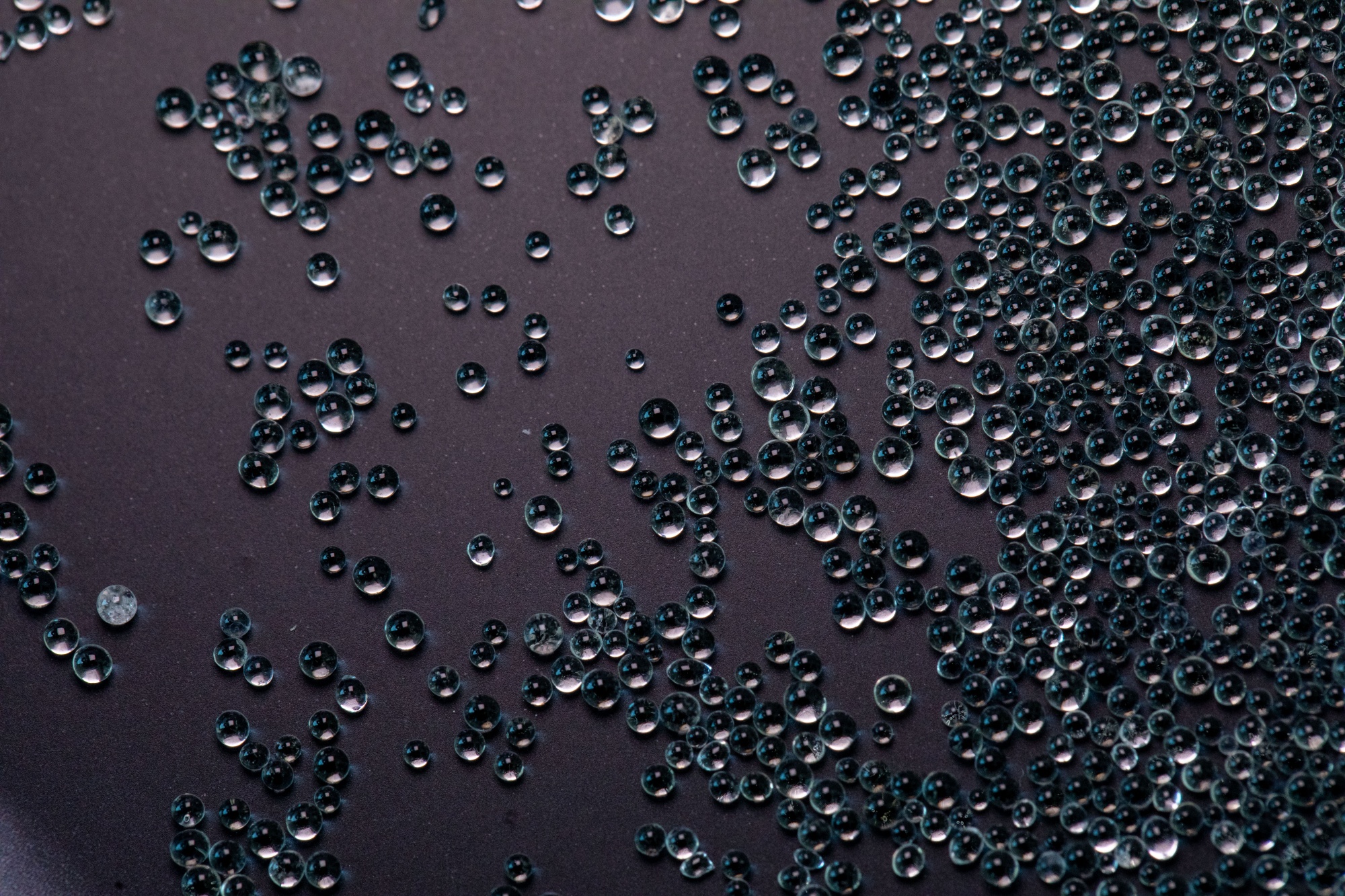
What a decorative glass bead specification actually controls
Decorative glass beads are manufactured and graded for appearance. Reflectivity — the defining property of road-marking beads — is not the control variable in a pool or terrazzo specification. What matters is particle size band, color consistency, surface finish and the cleanliness of the batch.
That distinction matters commercially. Two bead types can come out of similar glass chemistry and still be non-interchangeable, because the language used to buy them is different. Road-marking grades are bought against standards that describe refractive index, grading and retroreflective performance, while decorative grades are bought against appearance and grading consistency. A supplier who answers a decorative enquiry with a road-marking datasheet is answering a question the project did not ask.
Problem definition: why decorative bead projects miss the intended look
Most disappointing decorative bead results are specification failures rather than product failures. Four causes account for the majority of them.
- Size band against exposure depth. A bead that is too fine relative to the finish sinks under the binder and disappears; a bead that is too coarse stands above the surface and reads as grit rather than as a deliberate decorative element.
- Color chosen from a sample spoon instead of a panel. Transparent, opaque and mixed routes behave differently once spread over square meters, and mixed blends can separate visually if they are re-handled on site.
- Finish against binder. A matte bead placed in a system that will be polished, or a smooth bead placed in a surface expected to feel textured underfoot, produces a result that looks like a mistake even when the bead itself is correct.
- Batch split across production runs. Large pool and architectural projects often consume more than one production lot, and a color or grading shift between lots is visible where two lots meet.
Industry background
Glass beads have been a road safety material for decades, and the furnaces, forming equipment and grading lines built for that market also supply the decorative market. Decorative demand comes from a different set of buyers: pool builders and pool plaster contractors, terrazzo contractors, precast producers, and architects specifying exposed-aggregate or decorative concrete surfaces.
The category is frequently described as recycled glass beads because decorative grades are commonly produced from recycled glass cullet rather than from virgin raw material. This is a genuine sourcing advantage for architectural projects that report on material reuse, but it does not replace the specification work. Recycled or not, a bead only performs in the finish if its size band, color consistency and finish match the carrier system it is going into.
Dylan Technology Co., Ltd. (Dylantech) is a Chinese glass bead manufacturer founded in 2004, operating four production bases in Liaoning, Shanxi, Hebei and Henan provinces and supplying glass beads to markets including the EU, the USA, Southeast Asia and the Middle East, with exports accounting for 95% of output. Its product portfolio includes Decorative Glass Beads alongside sandblasting, grinding and road-marking grades, which means a decorative enquiry sits inside the same grading and testing system as the industrial lines.
Detailed solution: the four-part decorative bead specification
1. Size band: 0.5–20 mm and what it changes
Decorative glass beads are available across a 0.5–20 mm range, and the band selected is the single largest driver of how the finish reads. The practical rule is that the bead must be large enough to survive the exposure step of the carrier system and small enough not to dominate the surface.
Narrow bands give a uniform, deliberate look and are the safer choice for large visible areas such as pool interiors, where variation is read as unevenness. Wider or mixed bands give the speckled, terrazzo-like look that suits floors, counters and precast panels. A narrow band is also easier to check at goods-in: a grading certificate matching the ordered band is a simple, objective acceptance test.
2. Color route: transparent, opaque or mixed
Transparent beads work with the substrate instead of over it. They pick up the color of the plaster or matrix beneath and add depth and a wet, glassy highlight, which is why they are the natural choice for pool interiors where the base color is already the design decision. Opaque beads carry their own color and are more forgiving of an uneven substrate, making them the better route for color blocks, borders and architectural surfaces that must match a specified shade. Mixed beads are pre-blended combinations used to create speckle, gradient or a terrazzo-style scatter.
The specification detail that protects a mixed project is the blend itself. A pre-blended batch must be treated as one color reference, and the ratio must be agreed in writing before production, because re-blending two deliveries on site rarely reproduces the approved panel.
3. Surface finish: smooth or matte
Smooth beads return light more directly, producing a clearer sparkle and a surface that wipes clean more easily — both useful in pool interiors. Matte beads diffuse light, look flatter and softer, hide fine scratching better and give a more controlled feel underfoot, which is why they suit floor and paving applications. Finish should be chosen together with the cleaning regime and slip expectations of the surface, not as a last aesthetic decision.
4. Carrier system and exposure depth
The carrier system — pool plaster, a terrazzo matrix, or a cementitious panel washed to expose aggregate — determines how much of each bead will remain visible. Bead size, dose and exposure must therefore be specified as a set. A specification that names a bead grade but leaves exposure to the crew is incomplete, and it is the most common reason two projects using the same bead look different.
Step-by-step breakdown for a pool or architectural project
Step 1 — Define the surface system before the bead
Write down the carrier (pool plaster, terrazzo matrix, exposed aggregate), the intended exposure depth, and whether the surface will be troweled, ground, polished or washed. Every later decision depends on this step.
Step 2 — Select the size band from the exposure
Choose from the 0.5–20 mm range so that a meaningful fraction of each bead stays visible after finishing. Fine bands for tight, troweled interiors; coarser bands where material is removed or washed away to expose the aggregate.
Step 3 — Choose the color route and lock the reference
Decide transparent, opaque or mixed. For mixed blends, record the component ratio and the approved reference sample as part of the order, so subsequent lots can be checked against it.
Step 4 — Choose the finish
Smooth for light return and cleanability in wet interiors; matte for floors, paving and surfaces where diffuse light and a softer feel are wanted.
Step 5 — Run a mock-up panel, not a sample bag
Install a panel using the actual carrier, dose and finishing sequence. For pool work, assess it dry and then submerged, because water changes how transparency and sparkle read. Approve the panel and keep it as the project reference.
Step 6 — Write acceptance criteria into the purchase order
State the size band, color route, finish, dose per unit area, quantity, packaging and the test evidence required at dispatch. A pre-shipment test agreed as the acceptance criterion gives the buyer an objective hold point before freight is booked.
Use cases
Pool plaster and pool interior finishes
In pool interiors the bead is mixed into the plaster finish and troweled, so the working range sits at the fine end of the 0.5–20 mm spectrum. Transparent beads let the plaster color carry the design while adding depth and highlight; mixed beads create the speckled water-color effect associated with a glass-bead pool finish. Smooth finish is the usual choice because it returns light and cleans more readily underwater. The risk to control is uniformity: a narrow band and a single production lot across a large pool shell.
Terrazzo floors, precast and counters
In terrazzo the bead is part of the aggregate blend that is ground and polished, so the finished surface reveals bead cross-sections. Mid-range sizes and mixed blends produce the characteristic chip pattern; opaque beads hold color where the matrix is dark; matte beads suit honed rather than polished finishes. Contrast between matrix and bead is a design variable and should be approved on a cast and ground panel.
Exposed aggregate, precast panels and architectural concrete
Where the surface is washed or retarded to expose aggregate, the bead must be coarse enough to survive that removal step, which pushes selection toward the upper part of the 0.5–20 mm range. Opaque beads are more reliable here because the visual effect comes from the bead itself rather than from the substrate, and matte finishes suit exterior facades and paving where diffuse light is preferred.
Water features, planters and decorative concrete elements
Smaller architectural elements use the same logic at a smaller scale. A single blended grade, one finish and one approved panel usually outperform elaborate multi-grade mixes on elements that are viewed from close range.
Comparison table: scenario-based recommendations
| Surface system | Size band (from 0.5–20 mm) | Color route | Finish | Main risk to control |
|---|---|---|---|---|
| Pool plaster interior | Fine, narrow band | Transparent or mixed | Smooth | Batch variation across the shell; over-troweling burying the bead |
| Terrazzo floor or precast | Mid-range, mixed band | Opaque or mixed | Matte or polished | Contrast between matrix and chip; grind depth revealing too little bead |
| Exposed aggregate / precast panel | Coarse band | Opaque | Matte | Over-exposure from washing; bead too fine to survive |
| Water feature or planter element | Single blended grade | Transparent or opaque | Smooth or matte | Over-complicated blends on close-viewed small surfaces |
Size bands above are recommendations mapped to the 0.5–20 mm decorative range; the exact grading and dose should be confirmed on an approved mock-up panel for each project.
Production capability behind a custom decorative bead specification
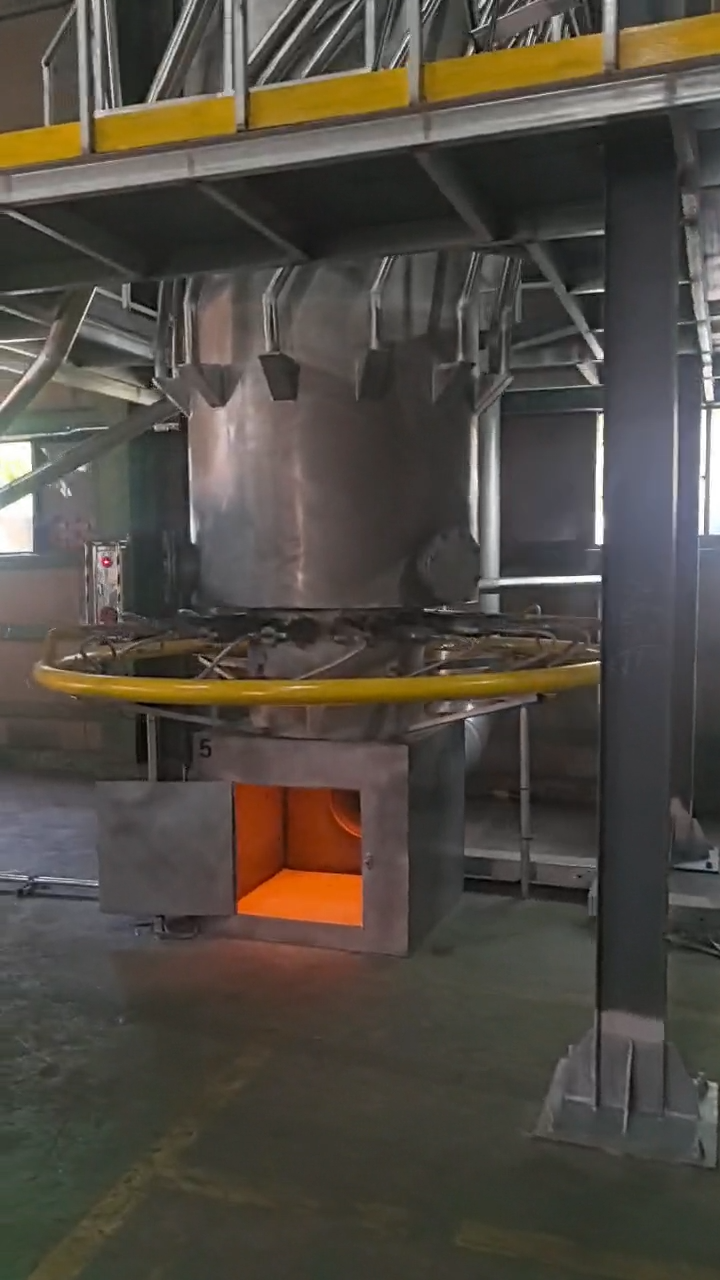
A decorative specification is only useful if a supplier can hit the size band and color reference repeatedly. Dylantech operates more than 15 glass bead production lines across four production bases, with an annual output of 100,000 tons and a monthly capacity of 10,000 tons, a 10,000 m² factory site, 300 employees and an R&D team of 20 engineers. The company provides OEM production services, allowing customers to customize products for their own brand, with a minimum order quantity of 1 ton and a lead time of 45 to 60 days.
Quality control is stated as 100% testing, supported by a laboratory equipped with a CAMSIZER particle size analyser and an X-2600 instrument, used to check particle size, reflectivity and wear resistance through the production process. For a decorative order, the particle size data from that equipment is the most directly relevant evidence, because it verifies the band the project specified. The company also operates patented glass bead production equipment and a waste heat recovery system recognised as a scientific and technological achievement by the China Energy Conservation Association.
Certification is where decorative buyers often need the most documentation. Dylantech holds ISO 9001 certification number 23226Q00027R001, issued by CFC on 27 June 2026 and valid to 26 June 2029, against GB/T 19001-2016/ISO 9001:2015 for the export of glass products (glass beads). The company also holds CE, JIS and KIS certification, and exports to more than 50 countries and regions.

Frequently asked questions
Which quality documents accompany a decorative glass bead order?
A decorative order is normally supported by an ISO 9001 certificate and by batch test data on particle size. Dylantech holds ISO 9001 certification number 23226Q00027R001 (CFC, issued 27 June 2026, valid to 26 June 2029) under GB/T 19001-2016/ISO 9001:2015, plus CE, JIS and KIS certification. Quality control is stated as 100% testing, with particle size, reflectivity and wear resistance measured using CAMSIZER and X-2600 laboratory equipment. Acceptance criteria are agreed as a pre-shipment test, so the verification happens before dispatch rather than on arrival.
Can bead size and color be customized for a pool or terrazzo project?
Yes. Decorative glass beads are offered across a 0.5–20 mm size range with transparent, opaque and mixed color routes and either smooth or matte surface finish, and Dylantech provides OEM production services that allow customers to customize products for their own brand. Size band, color reference and finish should be stated in the order, together with the approved mock-up panel. The minimum order quantity is 1 ton, which allows a project-scale trial before a full commitment.
What drives the cost of a decorative glass bead order?
There is no single list price, because cost is driven by the specification rather than by a catalogue position: the narrowness of the size band, whether the color route is transparent, opaque or a pre-blended mixed grade, the surface finish, packaging, quantity relative to the 1 ton minimum order quantity, and the delivery terms selected from FOB, CIF, DDP or EXW. Projects that specify a narrow band and a single lot for the whole visible surface usually spend less on site correction than projects that allow substitution mid-installation.
How should a decorative bead be sampled and validated?
Validate on a panel, not in a bag. Request a sample of the specified band, color route and finish, install a mock-up using the actual carrier system and finishing sequence, and approve it as the visual reference. Then convert that reference into written acceptance criteria: size band, blend ratio, finish, dose per unit area and the pre-shipment test. For pools, the panel should be assessed both dry and submerged. Remote support is available for technical questions during installation.
What is the lead time for a custom decorative glass bead order?
Lead time is 45 to 60 days, and the minimum order quantity is 1 ton. Monthly capacity of 10,000 tons and an annual output of 100,000 tons across four production bases give room to schedule custom color and size runs alongside standard production. To move from specification to quotation, send the size band, color route, finish, quantity and target delivery terms to dylan@xgbead.com — the team can then confirm grading feasibility, sample dispatch and a production slot.
Conclusion
Decorative glass beads succeed or fail on the match between three variables and one carrier system. Size band from the 0.5–20 mm range decides whether the bead stays visible after finishing; the color route — transparent, opaque or mixed — decides whether the design comes from the substrate or from the bead; and the surface finish decides how light behaves and how the surface feels and cleans. Pool plaster, terrazzo and exposed aggregate each pull those choices in a different direction, which is why the specification should be written system by system rather than as one generic bead grade.
The practical sequence is short: define the system, pick the band, lock the color reference, choose the finish, approve a mock-up panel, and write acceptance criteria into the order. Done in that order, the bead stops being a visual gamble and becomes a controllable component of the finish.

Next step: send your size band, color route, finish and quantity to request a decorative glass bead sample or a quotation. Minimum order quantity 1 ton, lead time 45–60 days.
Dylan Technology Co., Ltd. (Dylantech) · LangFang, China · www.dylantech.com · dylan@xgbead.com · Tel / WhatsApp: +86 186-3166-3616
Download the full range and specification overview: Dylantech Corporate Brochure (PDF)
Have Questions or Need More Details?
Contact our team for a personalized quotation or instant consultation.
Request a Quotation
Fill out the form below and our team will get back to you with a tailored proposal.
WhatsApp Direct Chat
Prefer to chat in real-time? Message us on WhatsApp for instant assistance & quick answers.
- Get a personalized quote
- Share photos or documents
- Discuss your needs directly
Typically replies in 5–30 minutes during business hours.