
Glass Beads 101: Decorative, Sandblasting, Grinding, and Reflective Types Explained
Glass beads are small glass spheres, commonly produced from recycled glass and supplied in a 0.5 mm–20 mm size range, sold as four practical families: decorative, sandblasting, grinding and reflective. All four share the same base material. They differ in size band, colour and surface finish and, for the reflective family, in refractive index and in the standard the project specifies.
Most first-time buyers reach this category with one search term and one question: which type do I actually need? That question is harder than it looks, because the term “glass beads” describes an application label, not a single specification. A pool contractor, a blasting shop and a road-marking manufacturer can all be searching for the same words while needing products that are not interchangeable.
This explainer sets out the four families, the parameters they have in common, the standards that apply to some of them, and a simple procedure for building a first shortlist. It avoids performance claims that are not stated in the published product data, because at the research stage the useful output is not a promise — it is a correct question to put to a supplier.

What Glass Beads Are — A Working Definition
A glass bead is a manufactured glass sphere used as a functional or aesthetic medium rather than as a finished consumer product. It is an input: into road-marking paint, into a blasting machine, into a polishing process, or into a decorative surface. That input role is the reason one material name covers so many purchasing conversations.
Dylantech (Dylan Technology Co., Ltd., a glass bead manufacturer based in LangFang, China) states the same core parameters across its glass bead units: size range 0.5 mm–20 mm, colour options of transparent, opaque or mixed colour, surface finish smooth or matte, and custom colour and size available on request. Material is listed as recycled glass for the sandblasting grade and for several road-marking grades, including TYPE IA, TYPE IIB, AS/NZS TYPE B, AASHTO M247-TYPE 4 and BS6088A; the RI 1.6, RI 1.7 and grinding units are listed simply as glass.
In Spanish-language procurement the same category is frequently searched as microesferas de vidrio, which is a naming difference rather than a different product — a reminder that the label, not the chemistry, is usually what separates these product lines.
Working definition: a glass bead is a glass sphere specified by its size band, its colour and surface finish and, for reflective grades, its refractive index and the standard it must meet.
The Problem: One Material, Four Buying Languages
The first difficulty is that searching for glass beads returns pool finishes, blasting media, road-marking beads and grinding media on the same page. The searcher sees one category; the supply chain sees four.
The second difficulty is that the parameters are not directly comparable across families. A catalogue line reading 0.5 mm–20 mm, a reflective gradation written as 1180–180 µm and a grinding scope of 600–1000 µm are all descriptions of size, but they answer different questions. One defines a portfolio range; the others define a usable working band.
The third difficulty is coverage of standards. Road-marking beads are governed by national and project specifications. Decorative and blasting grades, by contrast, are normally controlled by a supplier datasheet and an approved sample. A buyer who assumes that one certificate covers the whole catalogue will either over-specify decorative beads or, more expensively, under-specify a reflective order.
The practical conclusion is simple: order by type, then size band, then colour and finish, then — only where relevant — refractive index and standard. Ordering by the category name alone effectively orders a material rather than a product.
Industry Background: Why the Reflective Family Carries Most of the Rules
A commercial market study values the global road-marking glass beads market at USD 1.18 billion in 2025, with a forecast period beginning in 2026 (Cognitive Market Research). The same study attributes 54.0% of market value to 1.5 refractive index beads — the class that aligns with conventional road-marking specifications.
The standards landscape explains part of that concentration, and it is worth knowing because it shapes what a supplier will ask you:
- AASHTO M 247-26 is the US standard, current in a 2026 edition. It classifies beads by gradation: Type 0 for a uniform gradation, Type 1 as the standard gradation, and Types 2 to 5 as modified gradations.
- EN 1423 specifies requirements for glass beads, anti-skid aggregates and mixtures of the two when they are applied as drop-on materials on road markings.
- BS EN 1424 is the reference for premixed beads. Hong Kong road-marking guidance maps drop-on beads to BS EN 1423 and premix beads to BS EN 1424, and its sample specification sets class A refractive index at n ≥ 1.5.
- GB/T 24722-2020 is China’s national standard for glass beads for road markings, published on 2020-12-14 and effective from 2021-07-01.
- TxDOT requires beads to conform to DMS-8290, with three gradations tested using Tex-831-B.
Each document is jurisdiction-specific, so the correct question is never “are your beads certified?” in the abstract. It is “which standard does this project cite, and which grade in your catalogue is offered against it?” A supplier working across the EU, the USA, Southeast Asia and the Middle East will normally hold more than one answer.
The industrial families — decorative, sandblasting and grinding — sit largely outside that rulebook. For those, the controlling documents are the datasheet, the sample and the internal specification of the buyer’s own process.
The Four Glass Bead Types Explained
The descriptions below follow the naming used in the Dylantech portfolio, so that a reader comparing this article with a product list can match the entries one to one.
1. Decorative Glass Beads
Decorative glass beads are selected for appearance. They appear in pool finishes and decorative surfaces, where the bead contributes texture, colour and light behaviour to a finished surface rather than performing a mechanical or reflective function in traffic safety.
Because no road-marking style standard governs them, the selection criteria are different from the reflective family. The questions that matter are colour consistency between batches, the size band relative to the finish being built, smooth versus matte surface, and whether an approved sample matches under the project’s actual conditions. Pool work adds one more variable: colour is judged under water, so an approved dry sample is not automatically an approved wet finish.
Portfolio options for decorative work are expressed as transparent, opaque or mixed colour, with smooth or matte finish and custom colour and size available. Before an order, those catalogue statements should be converted into a written specification line, because the approved sample — not a generic grade name — is the control document.
2. Sandblasting Glass Beads
The sandblasting grade is listed in the portfolio as SANDBLASTING glass beads, with recycled glass as the stated material, a 0.5 mm–20 mm size range, transparent, opaque or mixed colour, smooth or matte finish, custom colour and size available, and polishing as the applicable industry.
In use, the bead acts as a blasting medium for surface preparation and finishing. Two selection points follow from the data. First, a 0.5 mm–20 mm catalogue range is a portfolio capability, not an order specification; the order line must name the working band, because the band interacts with nozzle, pressure and the surface being treated. Second, finish and colour options exist in this grade, which matters where blasting residue or surface appearance is visible in the final product.

3. Grinding Glass Beads (GRINDING / GB05)
The grinding family is specified in micron bands rather than in millimetres. The GRINDING unit in the Dylantech catalogue states 600–1000 µm and 800–1200 µm scopes, with GB05 as the portfolio designation for the grinding grade. Colour and finish options and the custom size option are listed in the same way as for the other units.
Grinding beads are a process medium. The size band is chosen against the process step and the equipment, and the useful specification is the band, not the general range. A buyer who writes “grinding glass beads” on an enquiry without a band has described a family and left the actual selection open.
4. Reflective Glass Beads: RI 1.6 and RI 1.7
Reflective glass beads are the road-marking and road-safety family. In the portfolio, GLASS BEADS RI 1.6 carries a 1000–180 µm scope and GLASS BEADS RI 1.7 carries a 1180–180 µm scope. Both are listed under road marking and road safety, and both sit within the same 0.5 mm–20 mm portfolio range with transparent, opaque or mixed colour and smooth or matte finish options.
Refractive index describes how strongly the bead bends and returns light. A bead works by receiving light from a vehicle headlamp and returning it towards the driver, and the index is one of the parameters that determines which specification a grade can be offered against. It is a selection parameter, not a quality score on its own: 1.5 index beads hold the largest share of market value, while higher-index products such as 1.9 index are also commercially offered by established manufacturers (Potters Industries).
The second decision in this family is placement. EN 1423 addresses drop-on materials, while EN 1424 is the reference for premixed beads in the Hong Kong guidance described earlier. Drop-on and pre-mixed beads are two different order lines even when the index is identical.
The third decision is gradation. AASHTO M 247-26 sets gradations from Type 0 to Type 5, and TxDOT works with three gradations under DMS-8290. A reflective grade should therefore be quoted as index plus gradation plus standard, not as “RI 1.7 beads” alone.
Size, Colour and Finish: The Variables Shared by All Four Types
Across the Dylantech glass bead units, five parameters repeat. Reading them correctly is most of the skill involved in a first enquiry.
- Size. The portfolio range is 0.5 mm–20 mm. Individual grades narrow this: RI 1.6 at 1000–180 µm, RI 1.7 at 1180–180 µm, grinding at 600–1000 µm and 800–1200 µm.
- Colour. Transparent, opaque or mixed colour, with custom colour available. Colour is aesthetic in decorative work and functional only where the surface appearance is part of the specification.
- Finish. Smooth or matte. Finish is the parameter buyers most often leave out of an enquiry and most often have to add later.
- Material. Recycled glass is named for the sandblasting grade and several road-marking grades; other units are listed simply as glass.
- Customisation. Custom colour and size are stated as available, which means the catalogue range is a capability statement rather than a fixed list.
Application data adds a further layer for road work. Dylantech’s application entry for road paving describes working conditions as outdoor all-weather at normal temperature and pressure, lists high roundness, stable refractive index and eco-friendly recycled material as special requirements, and matches the product to road marking machines, sand blasting machines and polishing equipment.
Step-by-Step: How to Shortlist the Right Type
- Name the application, not the product. Write down what the bead has to do: return light on a carriageway, clean a surface, grind a batch, or finish a pool interior.
- Check whether a standard governs it. If the work is road marking, identify the standard the project cites — AASHTO M 247-26, EN 1423 or EN 1424, BS 6088 designations, GB/T 24722-2020, or a state specification such as DMS-8290.
- For reflective grades, fix the refractive index. Select the index the specification requires, then confirm the gradation. Do not select by index alone.
- Fix the size band. Convert the portfolio range into a working band that matches the equipment and the process step.
- Decide colour and finish. This step matters most for decorative work and least for pre-mixed road applications, where the bead is largely hidden in the binder.
- Write the order line and request a sample. Type, grade designation, size band, colour, finish, index and standard belong in one sentence, and the sample should be approved against that sentence.

Use Cases: Where Each Type Appears
Road marking
Reflective beads are used in road marking and road safety applications, both as a pre-mixed component and as a drop-on material applied after the marking is laid. The application entry in the Dylantech data links road paving work to road marking machines and to outdoor all-weather service conditions.
Road safety and anti-skid surfaces
EN 1423 covers glass beads, anti-skid aggregates and mixtures of the two as drop-on materials, which is why anti-skid requirements and bead requirements are often written in the same specification section rather than treated as separate purchases.
Sandblasting and surface preparation
The sandblasting grade is matched to sand blasting equipment and used for surface preparation and finishing. Its practical specification is the size band plus the surface result required, with colour and finish available where the treated surface remains visible.
Polishing and grinding
Grinding beads in the 600–1000 µm and 800–1200 µm scopes serve grinding and polishing processes, and polishing is also the applicable industry listed for the sandblasting grade. Both families are equipment-matched rather than standard-matched.
Decorative surfaces and swimming pools
Decorative beads appear in pool finishes and decorative surfaces where colour, finish and consistency matter more than reflectivity. Approval is by sample, and wet-condition viewing is part of that approval for pool work.
Comparison Table: The Four Types Side by Side
| Type | Catalogue designation | Size scope stated | Colour / finish | Typical application | Confirm before ordering |
|---|---|---|---|---|---|
| Decorative | Decorative Glass Beads | Custom size available (portfolio range 0.5–20 mm) | Portfolio colour options; smooth or matte | Pool finishes, decorative surfaces | Approved sample, batch colour consistency |
| Sandblasting | SANDBLASTING | 0.5 mm–20 mm | Transparent / opaque / mixed; smooth or matte | Surface preparation and finishing (listed applicable industry: polishing) | Working size band and equipment match |
| Grinding | GRINDING / GB05 | 600–1000 µm; 800–1200 µm | Transparent / opaque / mixed; smooth or matte | Grinding and polishing media | Media band for the specific process step |
| Reflective | GLASS BEADS RI 1.6 | 1000–180 µm | Transparent / opaque / mixed; smooth or matte | Road marking, road safety | Gradation and the governing standard |
| Reflective | GLASS BEADS RI 1.7 | 1180–180 µm | Transparent / opaque / mixed; smooth or matte | Road marking, road safety | Whether the specification calls for the higher index |
All values above are taken from the stated catalogue parameters for each unit. They describe supplied specifications, not measured project performance.
Behind the Types: How the Beads Are Produced and Checked
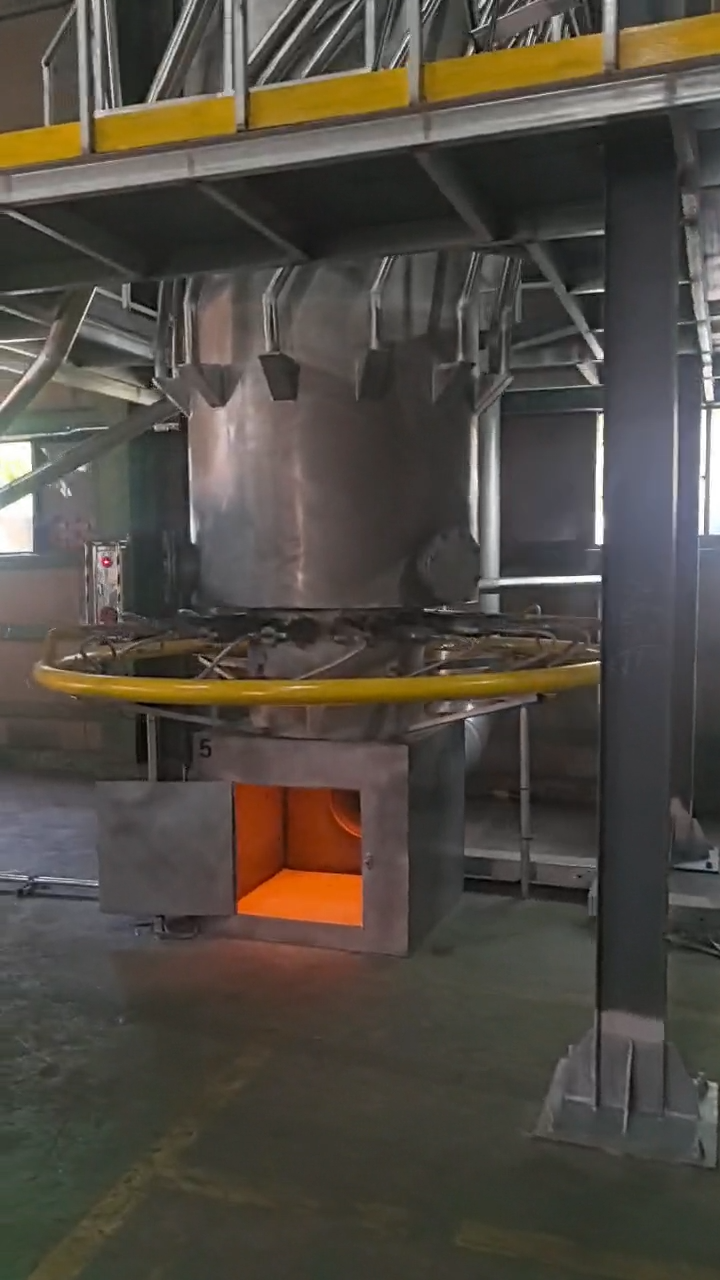
Dylan Technology Co., Ltd. was founded in 2004 and operates four production bases in Liaoning, Shanxi, Hebei and Henan provinces, with more than 15 glass bead production lines and an annual output of 100,000 tons. The company reports a 10,000 m² factory, 300 employees and a 20-engineer R&D team, with 95% of output exported to markets including the EU, the USA, Southeast Asia and the Middle East, and customers in more than 50 countries. Named cooperative partners include ENNIS, Geveko and Swarco.
The laboratory detail is the part worth reading as a buyer. Dylantech states that its laboratory is equipped with a CAMSIZER and an X-2600, used to test particle size, reflectivity and wear resistance through production. Those are the same three properties discussed throughout this article — the size band that must be held, the optical behaviour that the refractive index supports, and the durability that determines how a marking behaves over time. A parameter is only as good as the ability to measure it, which is why the test equipment matters more than the adjective used in a brochure.
The company also holds ISO 9001, CE, JIS and KIS certifications, and has been recognised as a provincial-level high-tech enterprise. For a first-time buyer, the useful reading is procedural: certifications and test equipment define which standards a supplier can be audited against, not which bead is right for a given job.
FAQ: Glass Beads 101 Questions
Which standards apply to reflective glass beads, and does one certificate cover every market?
No single document covers every market. Road-marking beads are governed by jurisdiction-specific rules: AASHTO M 247-26 in the United States, with gradations from Type 0 to Type 5; EN 1423 for drop-on materials and BS EN 1424 for premixed beads in European and Hong Kong-referenced specifications; GB/T 24722-2020 in China, effective from 2021-07-01; and state requirements such as TxDOT DMS-8290 with three gradations tested under Tex-831-B. The project specification decides which one applies, and the supplier should be asked to quote against that specific document.
Can colour, finish and size be customised across the glass bead range?
Dylantech’s catalogue states a 0.5 mm–20 mm size range, colour options of transparent, opaque or mixed colour, surface finish of smooth or matte, and custom colour and size available. Individual grades narrow that range: RI 1.6 is listed at 1000–180 µm, RI 1.7 at 1180–180 µm, and grinding at 600–1000 µm and 800–1200 µm. Customisation is therefore a matter of matching the requested band and finish to the grade being ordered, not a separate product line.
What drives the price difference between glass bead types?
Cost follows specification rather than the category name. The main drivers are the grade and refractive index, the size band and how tightly it must be held, colour and finish customisation, whether the order must be tested against a named standard, the order volume, and packaging and delivery terms. Because these variables change from project to project, quotations are issued against a defined specification line rather than a generic price per tonne.
Can I request a sample before placing an order?
Yes. Sampling is the normal next step after the type, size band, colour, finish and — for reflective grades — index and standard have been agreed. A sample is most useful when it is approved against a written specification line, so that the reference for later batches is the approved sample rather than a description. Sample requests can be sent to dylan@xgbead.com with the grade designation and the intended application.
How is lead time determined for a glass bead order?
Lead time is confirmed per order and depends on whether the item is a standard grade or a custom colour and size, on the quantity, and on the destination market. Production is spread across four bases in Liaoning, Shanxi, Hebei and Henan, which is the structure that supports scheduling across different order profiles. The reliable way to plan is to confirm the specification first and ask for a delivery schedule against that confirmed specification.
Conclusion: Start With the Type, Then the Parameters
Glass beads are one material and four products. Decorative beads are approved by sample and judged on colour and finish. Sandblasting beads are matched to equipment and a working size band. Grinding beads are specified in micron bands. Reflective beads are specified by refractive index, gradation and the standard the project cites — with drop-on and pre-mixed as separate order lines.
A buyer who starts with the type, then narrows the size band, colour, finish and, where relevant, the index and standard, will reach a usable enquiry in four steps. A buyer who starts with the category name will usually be asked the same questions by every supplier in turn. The published parameters and the measurement behind them — particle size, reflectivity and wear resistance checked in a laboratory — are what make those questions answerable.
Next Step
If you are shortlisting a grade for a project, send the application, size band, colour and finish, and the standard the work must meet. Dylantech can respond with the matching catalogue grade and a sample proposal.
Email: dylan@xgbead.com | Tel / WhatsApp: +86 186-3166-3616 | Website: www.dylantech.com
Full product and capability details are in the corporate brochure: download the Dylantech brochure (PDF).
Have Questions or Need More Details?
Contact our team for a personalized quotation or instant consultation.
Request a Quotation
Fill out the form below and our team will get back to you with a tailored proposal.
WhatsApp Direct Chat
Prefer to chat in real-time? Message us on WhatsApp for instant assistance & quick answers.
- Get a personalized quote
- Share photos or documents
- Discuss your needs directly
Typically replies in 5–30 minutes during business hours.