
Glass Beads 101: What TYPE IA, IB, IIA, IIB, and IIC Mean in Road Marking
Grade decoding · Road marking glass beads
TYPE IA, TYPE IB, TYPE IIA, TYPE IIB and TYPE IIC are grade labels, not product names. Each label is a shorthand for four separate properties: optical tier, particle size distribution, surface condition and application method. The shorthand is only valid inside the catalog or standard that issued it — which is why a consignment can match the label and still miss the specification.
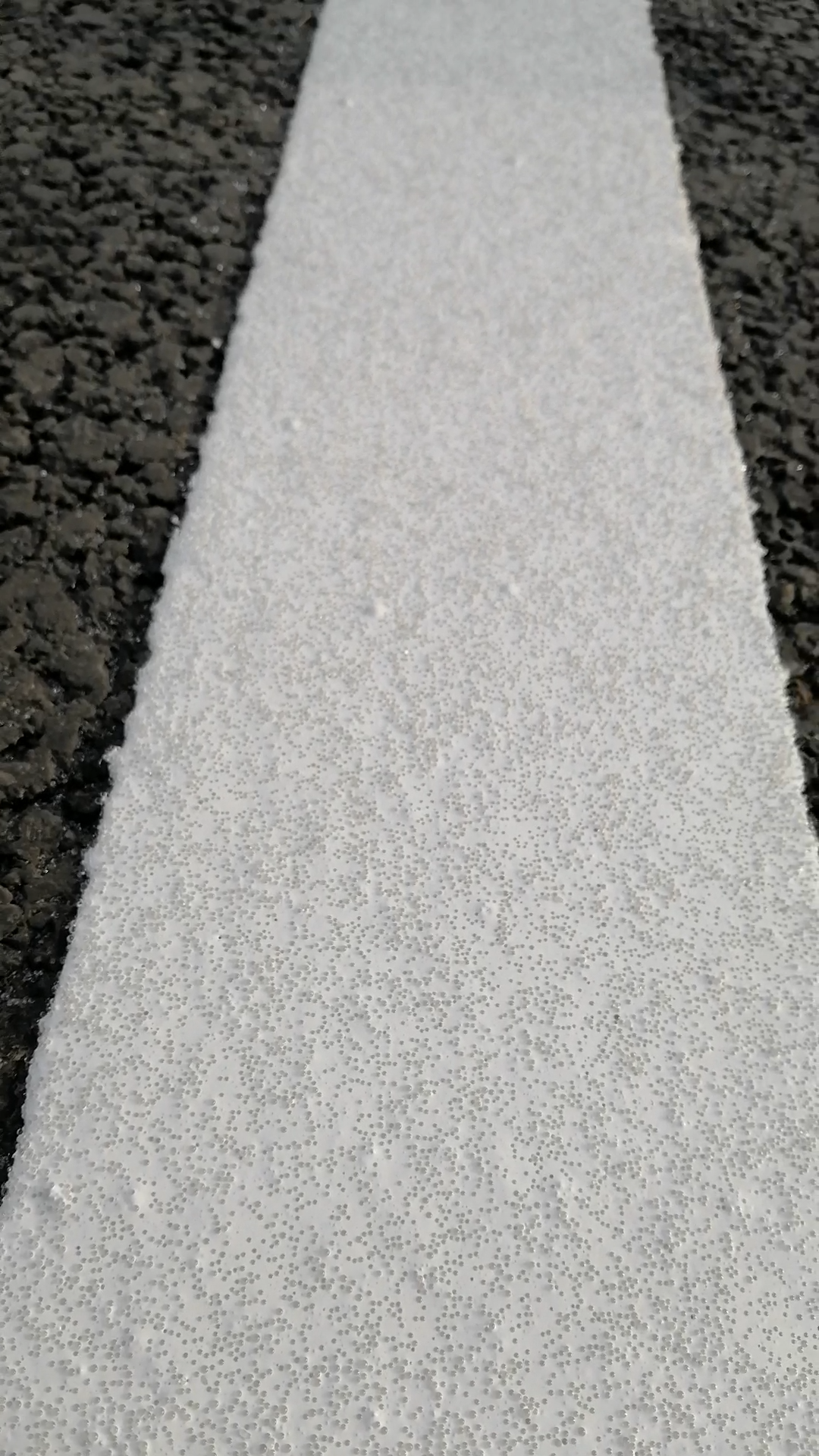
Reflective glass beads in a road marking context: the grade label decides what the applicator can do with the bead.
The Problem: Five Characters Carrying Four Decisions
An order for TYPE IIA beads can arrive fully compliant with the label and still disappoint on the pavement. The reason is structural. Five characters have to carry a refractive index tier, a particle size distribution, a surface condition and an application method at the same time. When buyer and supplier read the same five characters against different references, the label matches and the bead does not.
The mismatch shows up in two measurable places: retroreflected luminance on the finished marking, and the drop behaviour of the applicator. Neither is set by the label itself. A bead that sits too coarse for a drop-on unit will bounce; a bead that sits too fine for a premix formulation will not reach the surface film in sufficient density.
A second problem sits behind the first. Road-marking beads are specified by jurisdiction, and every jurisdiction writes its own vocabulary. AASHTO M 247 glass beads follow a numbered Type series in the United States, EN 1423 and EN 1424 glass beads use European class logic, Australia and New Zealand work with Type B, C and D letters, UK-oriented specifications refer to BS 6088 road marking beads in A and B classes, China publishes GB/T 24722, and state-level documents such as TxDOT DMS-8290 add a further layer. A supplier who answers an inquiry in one vocabulary is not automatically answering the specification written in another.
Industry Background: Why One Product Has Several Naming Systems
Road-marking glass beads are a mature, standardised, high-volume material, and standardisation happened region by region rather than globally. The category's commercial weight explains why so many documents exist: the global road marking glass bead market was valued at USD 1.18 billion in 2025, according to market research published in 2026.
The volume picture is equally clarifying. Beads with a refractive index of 1.5 accounted for 54.0% of global market value in 2026, which means most label confusion in day-to-day procurement concerns standard-index product rather than exotic optical grades. High refractive index glass beads do exist as a distinct family — Potters Industries lists standard 1.5 and high-reflective 1.9 refractive index variants — but they are a smaller, separately labelled segment.
The reference documents themselves have their own timelines. AASHTO M 247-26 is the current 2026 edition of the US standard, effective from 1 July 2026, and it lists Type 0 for uniform gradation, Type 1 as the standard grade and Types 2 to 5 as modified gradations. In Europe, EN 1423 specifies requirements for glass beads, anti-skid aggregates and the mixture of the two when applied as drop-on materials, while premix beads are handled under EN 1424 — a split that Hong Kong road marking guidance reflects directly when it references BS EN 1423 for drop-on beads and BS EN 1424 for premix beads. The same guidance's sample specification sets the refractive index at Class A, n ≥ 1.5.
State and national documents add local detail on top. TxDOT requires beads to conform to DMS-8290 and specifies three bead gradations tested using Tex-831-B. China publishes GB/T 24722-2020, the current national standard for glass beads for road markings, issued on 14 December 2020 and effective from 1 July 2021.
Manufacturing history explains the stability of these vocabularies. SWARCO states that it has manufactured reflective glass beads for road markings since 1969 and holds production facilities in Europe, the United States and Saudi Arabia. When a product has been specified for more than half a century in multiple markets, parallel naming systems are the normal outcome, not an anomaly.
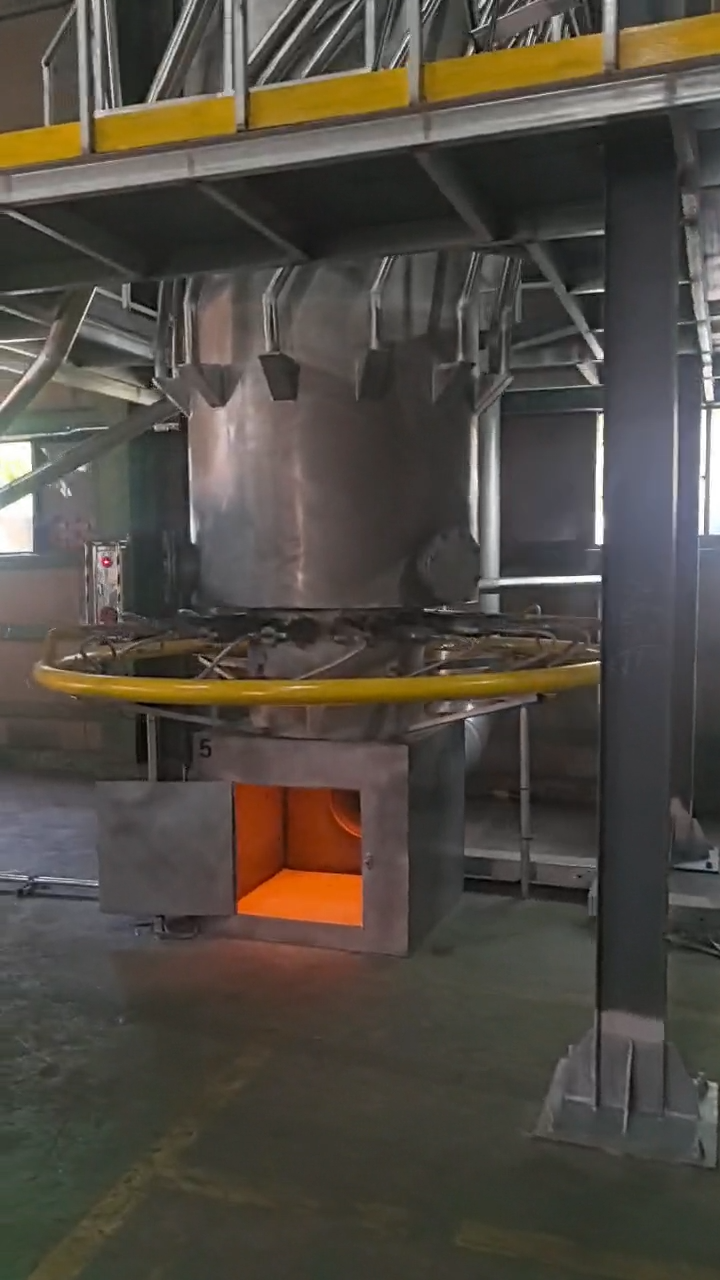
A glass bead production base: grade codes only mean something when the furnace, the grading line and the test report agree.
What TYPE IA, IB, IIA, IIB and IIC Actually Describe
The I/II family is a catalog convention rather than a single published international standard, and that is the first thing to understand about it. The label has to be read in three layers.
Layer one: the roman numeral is an optical tier marker
Within this family, TYPE I and TYPE II sit in different refractive index tiers. A project that specifies one tier cannot be substituted with the other without written approval, because the optical tier drives how much light returns to the driver. The numeral is not a quality rank — TYPE IA is not an inferior version of TYPE IIA. It is a different optical position in the same catalog.
Layer two: the letter is a sub-grade inside the tier
The trailing letter narrows the grade inside the tier, typically through size distribution or surface condition. This is where substitution errors are born. A buyer who approves TYPE IIA in one season and accepts TYPE IIB in the next because "the letters look close" has changed the particle size distribution, and with it the drop rate and the achieved retroreflectivity.
Layer three: the application method, which the label usually does not state
Nothing in the five characters says whether the bead is intended as a drop on glass bead applied at the surface, or as a pre-mixed bead blended into the marking material before application. European practice separates the two explicitly — EN 1423 for drop-on materials, EN 1424 for premix. In the I/II family the distinction has to be confirmed in writing.
The practical rule follows from these three layers: treat the label as an index entry, not as a specification. The numbers behind TYPE IA, IB, IIA, IIB or IIC — refractive index, gradation curve, roundness, coating — have to come from the supplier's datasheet and test report.
Glass Beads as a Category: Material, Size and Finish
Glass beads are small, round glass spheres used wherever light reflection, surface treatment or surface finishing is required. In the grades covered here they are produced from recycled glass, range from 0.5 mm to 20 mm, and are supplied in transparent, opaque or mixed colours with smooth or matte finishes. That range is wide on purpose: a 0.5 mm bead for fine finishing and a 20 mm bead for coarse surface work belong to the same material family but not to the same application.
Dylan Technology Co., Ltd. (Dylantech), founded in 2004 and based in LangFang, China, supplies glass beads for road safety and light-industry applications from four production bases in Liaoning, Shanxi, Hebei and Henan provinces. The company reports more than 15 glass bead production lines, an annual output of 100,000 tons, 300 employees, a 10,000 m² factory and a 20-engineer R&D team; its export ratio is 95%, with main markets in the EU, the USA, Southeast Asia and the Middle East. See dylantech.com for the company profile.
Three production-side facts matter for label decoding. First, roundness and grain size uniformity are what make high roundness glass microspheres behave predictably in an applicator, and Dylantech reports that its self-developed patented production equipment raises sphericity and size uniformity, with reflectivity consistency reported 10% to 15% higher than traditional glass beads. Second, a glass beads production furnace and its heat recovery determine both energy cost and batch stability; Dylantech's waste heat recovery system has been recognised as a scientific and technological achievement by the China Energy Conservation Association. Third, testing capability is what converts a label into a verifiable grade — the company's laboratory uses CAMSIZER and X-2600 instruments to check particle size, reflectivity and wear resistance, and operates under ISO 9001, with CE, JIS and KIS certifications also held.

Certification and test documentation is what turns a grade code into a provable supply commitment.
Step-by-Step: Decoding a Grade Code Before You Order
The procedure below works for any of the label sets discussed here. It takes a grade code in and returns an orderable specification out.
- Ask for the numeric datasheet, not the code. Request refractive index, particle size distribution, roundness and surface treatment in numbers. A supplier who can only repeat the code cannot be audited against it.
- Identify the application method. Confirm whether the bead is a drop on glass bead applied after the marking material, or a pre-mixed glass bead blended in beforehand. Under European logic this is the EN 1423 versus EN 1424 question, and it changes the gradation you can accept.
- Match the code to the governing standard. If the project cites AASHTO M 247 glass beads, you need the Type 0 to Type 5 designation; if it cites EN 1423 glass beads, you need the European class; if it cites AS/NZS Type B/C/D or BS 6088 A/B, you need that text. Write the standard number on the purchase order, not just the catalog code.
- Confirm the optical tier in numeric form. Class A in the Hong Kong sample specification means n ≥ 1.5. High refractive index glass beads are a separate tier and must be quoted separately.
- Confirm the size band and the gradation shape. The category runs from 0.5 mm to 20 mm, but a road-marking specification normally cites a narrow band plus a gradation requirement. Two beads inside the same band can still differ in fine fraction, which changes drop behaviour.
- Confirm surface finish and coating. Smooth versus matte finish, and the presence or absence of a coating, affect flow, moisture resistance and adhesion in the applicator.
- Lock the acceptance criteria. Dylantech states a pre-shipment test as its acceptance criterion and performs 100% testing for quality control, so the report can be tied to the shipment rather than to a reference sample.
- Confirm volume, lead time and terms. Dylantech quotes a minimum order quantity of 1 ton, a typical lead time of 45 to 60 days, monthly production capacity of 10,000 tons, and delivery terms of FOB, CIF, DDP or EXW.
Use Cases: Where Grade Choice Changes the Result
Road marking and traffic safety. This is the application the labels were written for. Drop-on beads sit in the surface film and return light to the driver; premix beads are distributed through the marking material for wear resistance over the service life. AASHTO M 247 glass beads, EN 1423 glass beads and BS 6088 road marking beads all exist because agencies need a grade they can test. Dylantech reports that its beads extend service life by 20% to 30% compared with ordinary reflective materials in high-traffic road conditions, and that the retroreflectivity, sphericity and wear resistance of its grades are comparable to imported standards.
Anti-skid and surface aggregate systems. EN 1423 covers both glass beads and anti-skid aggregates and their mixtures as drop-on materials, which means the bead grade and the aggregate grade are typically specified in the same document. Read them together.
Polishing and finishing. Finer beads in the 0.5 mm end of the range are used for surface finishing work where a smooth, matte or bright result matters, and grade consistency matters more than optical tier.
Sandblasting. Bead grading and roundness drive the finish and the media life in blasting work. A grade approved for road marking is not interchangeable with a blasting grade even when the size band overlaps.
Decorative and swimming pool finishes. Coloured glass beads in transparent, opaque or mixed colours with smooth or matte finishes are used in decorative surfaces and pool finishes, where colour consistency and finish consistency between batches are the main acceptance risks.
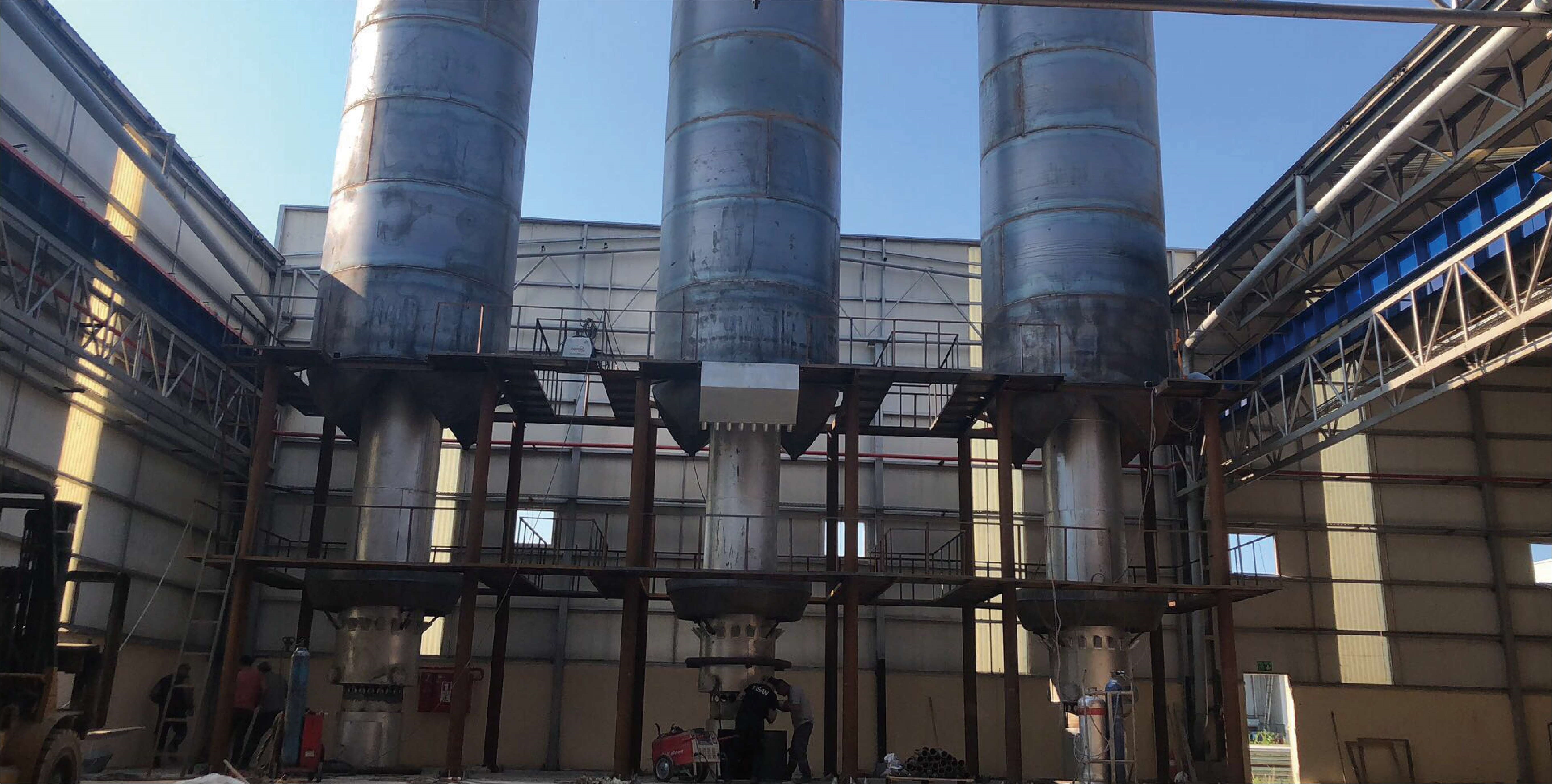
Grading and quality control: the point where a catalog code becomes a measurable batch.
Comparison Table: Reading the Label Systems Side by Side
The table below sets the label families against the documents that define them. It deliberately does not rank them, because they are not versions of one another — they are separate vocabularies used in separate markets.
| Label set | Where it applies | What the label sequence covers | Confirm before ordering |
|---|---|---|---|
| TYPE IA / IB / IIA / IIB / IIC | Supplier catalogs and inquiry documents in the glass bead trade | Roman numeral optical tier plus a letter sub-grade inside that tier | Numeric refractive index, gradation curve, surface finish, and whether the bead is drop-on or premix |
| AASHTO M 247-26 | United States; current edition effective 1 July 2026 | Type 0 uniform gradation; Type 1 standard grade; Types 2 to 5 modified gradations | Which AASHTO Type the project cites, and the sampling and test method named by the agency |
| EN 1423 / EN 1424 | Europe and specifications that adopt the EN texts, including Hong Kong road marking guidance | EN 1423 covers glass beads, anti-skid aggregates and their mixtures as drop-on materials; EN 1424 covers premix beads | Refractive index class — Class A is n ≥ 1.5 in the Hong Kong sample specification — and drop-on versus premix designation |
| AS/NZS Type B / C / D | Australia and New Zealand project specifications | Letter-based type set for road marking beads | Gradation and refractive index behind each letter, since the letters do not carry over from other systems |
| BS 6088 A / B | UK-oriented road marking specifications | Two class labels for road marking beads | The class definition in the standard text, plus a test report from the supplying plant |
| GB/T 24722-2020 | China; issued 14 December 2020, effective 1 July 2021 | National standard for glass beads for road markings | Edition currency and the grade naming the supplier uses against it |
| TxDOT DMS-8290 | Texas, United States | Three bead gradations, tested with Tex-831-B | Which of the three gradations the project requires |
Frequently Asked Questions
Which standard should a TYPE IA or TYPE IIA grade be checked against?
Check the grade against the standard named in the project specification, not against another supplier's catalog. Common references are AASHTO M 247 in the United States — the 2026 edition M 247-26 lists Type 0 for uniform gradation, Type 1 as the standard grade and Types 2 to 5 as modified gradations — EN 1423 for drop-on materials and EN 1424 for premix beads in Europe, AS/NZS Type B/C/D in Australia and New Zealand, BS 6088 A/B in UK-oriented specifications, GB/T 24722-2020 in China, and documents such as TxDOT DMS-8290, which specifies three bead gradations tested with Tex-831-B. Where the codes disagree, the specification governs.
Can one supplier ship several grade codes on the same order?
Yes, if the production base is set up for multi-grade scheduling. Dylan Technology Co., Ltd. (Dylantech) operates more than 15 glass bead production lines across four bases in Liaoning, Shanxi, Hebei and Henan, with an annual output of 100,000 tons and monthly production capacity of 10,000 tons, and offers OEM production services alongside remote support. Multi-grade orders still need a separate acceptance criterion per grade, because particle size distribution and surface condition differ between grades.
How do the optical tiers change the cost of a project?
Standard-index beads carry most of the volume: 1.5 refractive index products held 54.0% of global market value in 2026, while high refractive index glass beads such as 1.9 refractive index variants are sold as a separate product family. Cost differences follow the tier, the coating and the tightness of the gradation rather than the label. Dylantech reports a 5% to 15% cost reduction against imported equivalent products with comparable optical performance and roundness, and raw material and finished product cost comparable to traditional glass beads.
What should be tested on a sample before a grade is approved?
Refractive index, particle size distribution, roundness and surface condition are the four basics. Dylantech performs 100% testing for quality control and runs a laboratory equipped with CAMSIZER and X-2600 instruments to check particle size, reflectivity and wear resistance; the stated acceptance criterion is a pre-shipment test. Ask for the test report to travel with the sample, so the grade label and the measured numbers can be reviewed on the same page.
What are the minimum order, lead time and delivery terms for a first order?
Dylantech quotes a minimum order quantity of 1 ton, a typical lead time of 45 to 60 days, and delivery on FOB, CIF, DDP or EXW terms, with monthly capacity of 10,000 tons behind the schedule. The practical next step is to request a sample of the exact grade you intend to specify and a quotation that states the standard reference on its face, then confirm payment terms with the order. Contact dylan@xgbead.com or +86 186-3166-3616 to start that request.
Conclusion: Read the Number, Not the Letter
TYPE IA, TYPE IB, TYPE IIA, TYPE IIB and TYPE IIC are useful shorthand, and like all shorthand they assume a shared reference. The optical tier, the sub-grade letter and the application method are three separate decisions, and only the first two appear in the code. AASHTO M 247-26, EN 1423 and EN 1424, AS/NZS Type B/C/D, BS 6088 A/B, GB/T 24722-2020 and TxDOT DMS-8290 each define their own vocabulary for the same physical material, so a grade only becomes orderable when it is written next to a standard number and a test report.
The working rule is simple: accept the label as an index, and buy against the numbers. Ask for the refractive index value, the gradation curve, the roundness result and the surface condition, tie them to the specification the project cites, and put the acceptance test in the contract. That is also how a long-term supply relationship stays stable — the grade stays defined even when the sales contact changes.
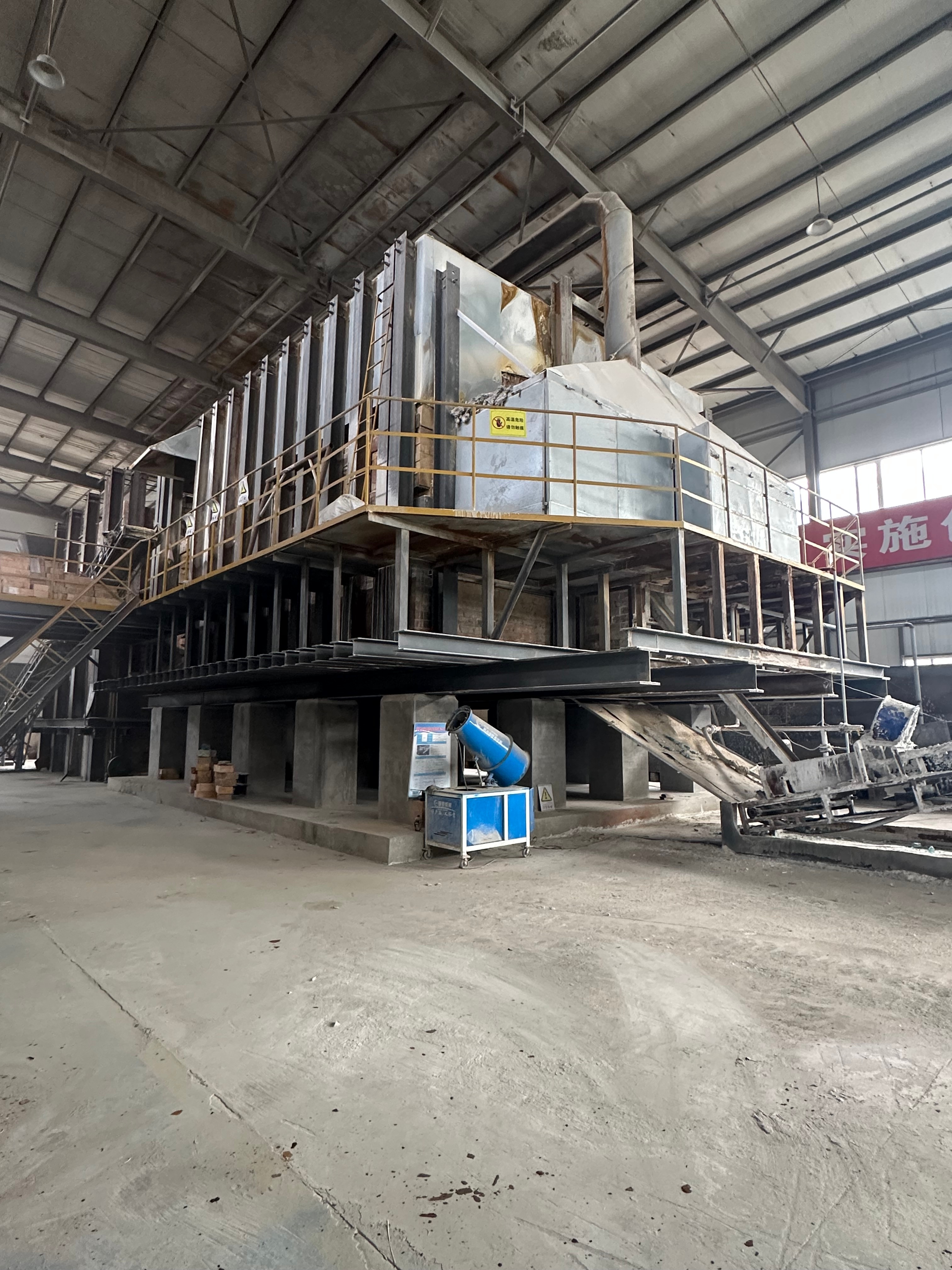
Match a grade label to a real bead
Send the grade code from your specification — TYPE IA, TYPE IIA, AASHTO M 247 Type, EN 1423 class, AS/NZS Type B/C/D or BS 6088 A/B — and Dylantech will return the matching numeric datasheet, a sample for your own testing, and a quotation with the standard reference stated on it.
Sample and quote requests: dylan@xgbead.com · +86 186-3166-3616 · WhatsApp +86 186-3166-3616
Company profile: www.dylantech.com
Download the full product and capability overview: Dylantech Corporate Brochure (PDF)
Have Questions or Need More Details?
Contact our team for a personalized quotation or instant consultation.
Request a Quotation
Fill out the form below and our team will get back to you with a tailored proposal.
WhatsApp Direct Chat
Prefer to chat in real-time? Message us on WhatsApp for instant assistance & quick answers.
- Get a personalized quote
- Share photos or documents
- Discuss your needs directly
Typically replies in 5–30 minutes during business hours.