
Glass Beads Application Guide: Matching Grades to Road Marking, Sandblasting, Polishing & Decor
Glass Beads Application Guide: Matching Grades to Road Marking, Sandblasting, Polishing & Decor
Matching a glass bead grade to an application comes down to four measurable parameters: particle size scope, refractive index, surface finish and colour. A bead screened to 1700–710 µm for heavy drop-on road marking is not interchangeable with an 800–80 µm fine gradation, an all-sizes polishing bead, or a decorative bead used in swimming pool finishes. This guide maps specific, standard-aligned grades — EN 1423, EN 1424, AASHTO M247 Type 1–4, BS 6088A/B, AS/NZS Type B/C/D, TYPE IA/IB/IIA/IIB/IIC, OPSS1750, GB05, RI 1.6, RI 1.7, plus Sandblasting, Grinding and Decorative lines — to the project families that actually consume them.

Problem Definition: Why the Wrong Grade Fails Quietly
Most glass bead failures are invisible on delivery day. They surface months later as a road marking that reads well in dry daylight but loses retro-reflectivity in rain, a blast finish with an uneven surface profile, or a polished component that still shows residual scratches. The cause is usually the same: the grade was selected by availability or by unit price rather than by the parameters that control behaviour.
Particle size scope determines how a bead sits in or on a binder. Too coarse for a thin film, and traffic pushes the bead out; too fine, and it is buried before it can return light to a driver's eye. Refractive index determines how much of the light entering the bead is sent back. Surface finish changes adhesion, flow and handling. Colour decides whether the bead stays visually neutral or becomes part of the design itself.
Because these parameters move independently, a grade that passes one project can fail the next. Treating them as four separate, checkable decisions — rather than one vague quality judgement — is what removes the guesswork from procurement.
Industry Background: Where Glass Bead Demand Is Concentrated
Demand for glass beads is concentrated in road safety, and it is expanding. The global road marking glass beads market was valued at approximately USD 1.42 billion in 2025 and is projected to reach USD 2.31 billion by 2034, according to Dataintelo. Asia Pacific held a 38.7% revenue share in 2025, driven by large-scale highway expansion programmes.
Supply is equally concentrated. China is the world's leading exporter of glass beads, accounting for approximately 57.4% of total global exports in 2024, with an export value of roughly USD 928 million and the UAE and India as top destinations, according to OEC data compiled from UN Comtrade. On the manufacturer side, Potters Industries LLC, Swarco AG and 3M Company are recognised as the top three global leaders in glass beads for road marking.
Two trends shape grade selection today. First, high refractive index beads (RI 1.9+) are increasingly used in all-weather markings to improve visibility during wet night conditions, while RI 1.6 and RI 1.7 grades remain the practical workhorses for standard drop-on and premix work. Second, the same recycled-glass feedstock now feeds industrial and decorative applications, which means a buyer comparing across categories is often comparing screening, finishing and grading yield rather than raw material.
The Four Parameters That Define a Glass Bead Grade
Every grade in a standards-aligned catalogue can be described by the same four fields. Getting these right is what makes a specification unambiguous on a purchase order.
1. Particle Size Scope
Expressed as a range in micrometres (or millimetres), the scope defines the usable fraction after screening. Road marking grades are sold in narrow windows — for example 850–180 µm, 1180–425 µm or 1700–710 µm — because the application method (drop-on, premix or spray) dictates the film thickness and the bead's position within it. Industrial and decorative grades are typically supplied across all sizes, since surface effect rather than optical return is the objective.
2. Refractive Index (RI)
RI is the optical property that governs retro-reflection. Standard road marking beads in this catalogue are supplied at RI 1.6 and RI 1.7. Higher-index products return more light from the same bead, which matters most in wet or low-contrast conditions where the marking film is partially covered by water.
3. Surface Finish
Grades are available with a smooth or matte finish. Smooth beads flow and spread predictably in drop-on equipment; matte finishes change how the bead interacts with the binder and the surrounding surface. The correct choice is an application decision, not a default.
4. Colour
Catalogue grades are available as transparent, opaque or mixed colour, with custom colour and size available on request. Transparent beads are the standard for optical applications; opaque and mixed-colour beads belong where appearance, not return, is the objective.
Shared baseline across catalogue grades: size range 0.5 mm–20 mm, colour options transparent / opaque / mixed colour, surface finish smooth / matte, and custom colour & size available. Individual grades are differentiated by their screened scope, material and refractive index.
Standard-Aligned Grades and the Size Scope Each One Covers
The tables below list the grades currently offered against recognised road marking specifications. Each row is a real, named grade with a fixed screened scope — the fastest way to check whether a shortlisted bead actually fits your specification is to compare the scope column against the tender document.
| Grade / Model | Particle Size Scope | Material | Application |
|---|---|---|---|
| AASHTO M247 Type 1 | 1180–150 µm | Recycled glass | Road marking / road safety |
| AASHTO M247 Type 2 | 1180–180 µm | Recycled glass | Road marking / road safety |
| AASHTO M247 Type 3 | 1700–710 µm | Recycled glass | Road marking / road safety |
| AASHTO M247 Type 4 | 2000–850 µm | Recycled glass | Road marking / road safety |
| EN 1423 | 850–180 µm | Recycled glass | Road marking / road safety |
| EN 1423 | 710–125 µm | Recycled glass | Road marking / road safety |
| EN 1424 | 1400–355 µm | Recycled glass | Road marking / road safety |
| BS 6088A | 1180–425 µm | Recycled glass | Road marking / road safety |
| BS 6088B | 850–180 µm | Recycled glass | Road marking / road safety |
| AS/NZS Type B | 850–75 µm | Recycled glass | Road marking / road safety |
| AS/NZS Type C | 1300–425 µm | Recycled glass | Road marking / road safety |
| AS/NZS Type D | 1700–710 µm | Recycled glass | Road marking / road safety |
| TYPE IA | 850–75 µm | Recycled glass | Road marking / road safety |
| TYPE IB | 300–63 µm | Recycled glass | Road marking / road safety |
| TYPE IIA | 1000–180 µm | Recycled glass | Road marking / road safety |
| TYPE IIB | 600–75 µm | Recycled glass | Road marking / road safety |
| TYPE IIC | 1000–300 µm | Recycled glass | Road marking / road safety |
| OPSS1750 | 850–150 µm | Recycled glass | Road marking / road safety |
| GB05 | 800–80 µm | Recycled glass | Road marking / road safety |
| RI 1.6 | 1000–180 µm | Glass | Road marking / road safety |
| RI 1.7 | 1180–180 µm | Glass | Road marking / road safety |
Industrial and decorative lines are specified differently. Instead of a narrow optical window, they are defined by their end effect on a surface — a blast profile, a polished finish, or a visual texture.
| Grade / Model | Particle Size Scope | Material | Manufacturer-Stated Application |
|---|---|---|---|
| Sandblasting Glass Beads | All sizes | Recycled glass | Polishing |
| Grinding Glass Beads (surface treatment line) | All sizes | Recycled glass | Polishing |
| Grinding Glass Beads (coarse line) | 600–1000 µm / 800–1200 µm | Glass | Road marking / road safety |
| Decorative Glass Beads | All sizes | Recycled glass | Decorative / swimming pool |
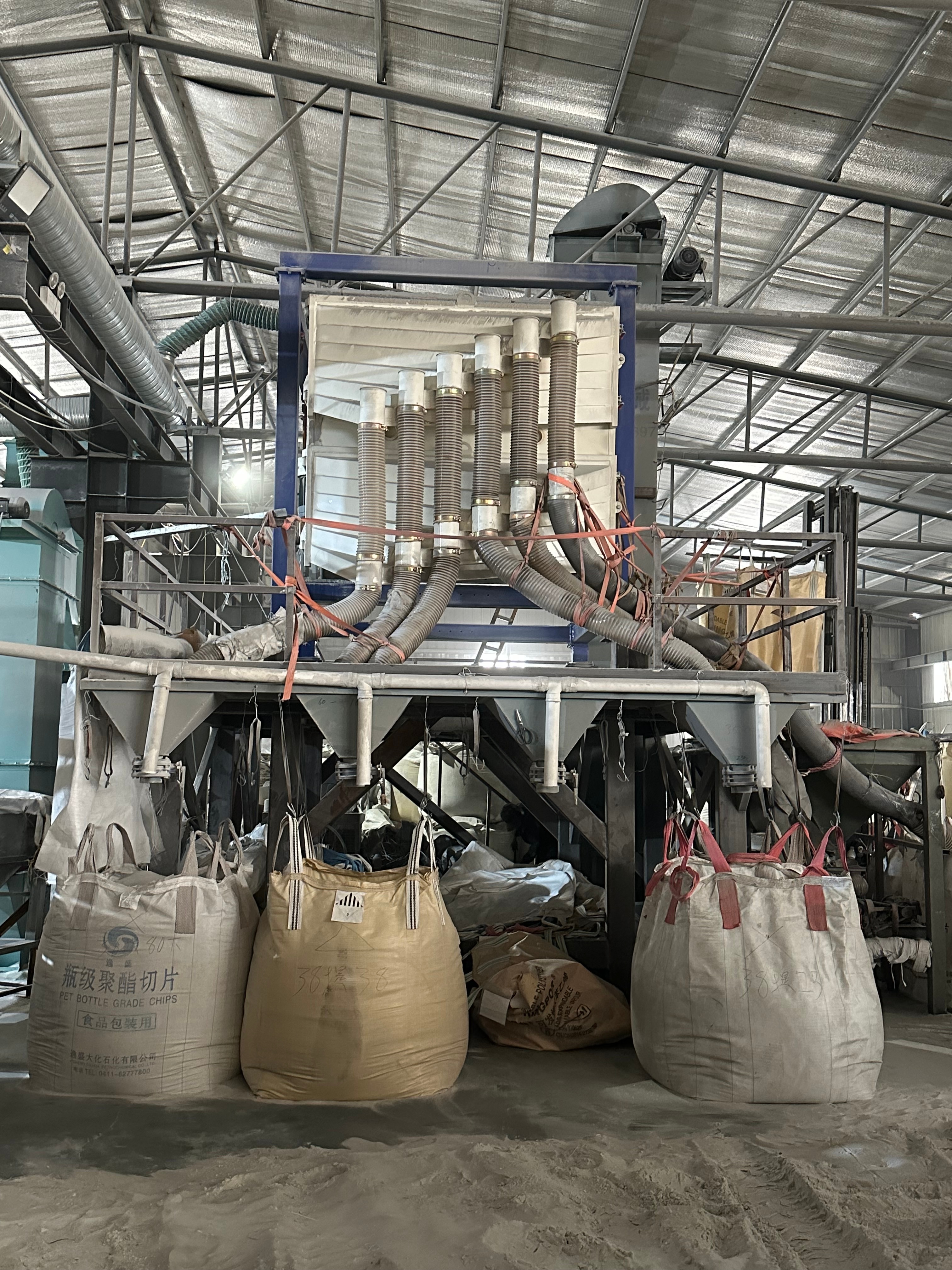
Step-by-Step: Matching a Grade to a Project
The sequence below works for road marking tenders and for industrial finishing orders alike. It is deliberately ordered so that the cheapest filtering steps happen first.
- Fix the governing standard first. Identify which specification the project is written against — EN 1423 or EN 1424 in European drop-on work, AASHTO M247 in US traffic paint applications, BS 6088 for UK grades, AS/NZS for Australia and New Zealand, or a regional specification such as OPSS1750. The standard narrows the acceptable scope before any commercial conversation starts.
- Read the size scope out of the specification, not the marketing page. Convert the tender requirement into a micrometre range and compare it against the scope column above. A grade outside the window is not a cost trade-off; it is a non-compliance risk.
- Decide the optical requirement. Standard drop-on and premix work is served by RI 1.6 and RI 1.7 grades. Where the project must hold visibility in wet night conditions, discuss higher-index options with the supplier and confirm they are actually specified in the tender.
- Set surface finish and colour. Confirm smooth or matte finish, and transparent, opaque or mixed colour. For decorative and swimming pool work, colour consistency across batches matters more than optical return.
- Check the non-optical requirements. Roundness, wear resistance and particle size distribution are typically the metrics that separate batches over a multi-year service life. Ask how these are measured and how often.
- Validate with a trial before scaling. A small trial order confirms that the screened scope and the finish behave as expected in your own application equipment.
Application-by-Application Use Cases
Each application family below consumes glass beads for a different reason. The grade match follows from that reason.
Road Marking: Drop-On and Premix
Drop-on beads are broadcast onto the wet marking film and must partially embed so that the exposed hemisphere can return light. Premix beads are blended into the paint or thermoplastic before application. Both rely on a tight screened window: BS 6088A (1180–425 µm), BS 6088B (850–180 µm), EN 1423 (850–180 µm and 710–125 µm), AASHTO M247 Type 1 through Type 4 (1180–150 µm to 2000–850 µm) and the AS/NZS Type B/C/D range cover the mainstream film thicknesses. In practical terms, the coarser windows suit thicker films and heavier applications, while the finer windows suit thinner films and smoother finished surfaces.
All-Weather and High-Visibility Road Safety
Wet night performance is the hardest requirement in road marking. This is where refractive index becomes the primary selection criterion rather than a secondary one. RI 1.7 (1180–180 µm) and RI 1.6 (1000–180 µm) grades are the standard transparent options in this catalogue, and the wider industry direction is toward even higher indices — RI 1.9+ beads are increasingly used in all-weather markings precisely because they lift visibility when the surface is water-covered.
Sandblasting
Sandblasting beads are not selected for light return. They are selected for a consistent impact profile and for the absence of contamination that would embed in the blasted surface. In this catalogue, Sandblasting Glass Beads are supplied in all sizes from recycled glass, with the manufacturer classifying the line under polishing applications. The practical selection question here is size distribution consistency, not refractive index.
Polishing and Grinding
Grinding and polishing media are supplied in larger nominal windows than road marking grades — the coarse line covers 600–1000 µm and 800–1200 µm, while the surface treatment line is offered across all sizes. The requirement is a predictable, repeatable surface result across the life of the media, which is why low wear rate is the key characteristic to request evidence for.
Decorative and Swimming Pool
Decorative Glass Beads are supplied in all sizes from recycled glass and are listed for decorative and swimming pool applications. Here, the four selection parameters shift emphasis: colour (transparent, opaque or mixed) and surface finish (smooth or matte) dominate, while refractive index is largely irrelevant to the visual result. Custom colour and size are available, which matters when a finish must match a specified design palette across multiple batches.

How Dylantech Supports Grade Matching
LangFang Dylan Technology Co., Ltd. (Dylantech) is a glass bead manufacturer founded in 2004, operating four production bases in Liaoning, Shanxi, Hebei and Henan provinces with a 10,000 m² factory footprint, more than 15 professional glass bead production lines, a 20-engineer R&D team and an annual output of 100,000 tons. The company exports roughly 95% of production to the EU, USA, Southeast Asia and the Middle East, and works with partners in the road safety sector including ENNIS, Geveko and Swarco.
For buyers matching grades to projects, three capability facts are directly relevant:
- Grade range breadth. The catalogue covers standard-aligned road marking grades, high-index grades, and industrial and decorative lines from a single supplier — useful when a project mixes drop-on marking, surface preparation and decorative finishing.
- Testing infrastructure. The company's laboratory uses a CAMSIZER and an X-2600 to measure particle size, reflectivity and wear resistance through production, supporting batch-to-batch consistency in the screened scope. The ISO 9001 certificate (certificate number 23226Q00027R001, issued by CFC on 27 June 2026 and valid to 26 June 2029, covering glass products / glass beads exports under GB/T 19001-2016 / ISO 9001:2015) sits alongside CE, JIS and KIS certifications.
- Field-validated wear behaviour. Glass beads supplied for road marking projects have shown low wear and stable performance over 3 to 4 years of field validation, across project scales from 1 ton to 198 tons, including 20, 56, 72, 108 and 198 ton deliveries. Products have been used by road marking engineering companies and traffic safety manufacturers worldwide.
Commercially, the manufacturing capability unit records an OEM production mode with monthly capacity of 10,000 tons, a minimum order quantity of 1 ton, 100% testing, a lead time of 45–60 days, EU export markets and remote after-sales support.

Frequently Asked Questions
Which standard should I specify — EN 1423, EN 1424, AASHTO M247 or BS 6088?
The standard is set by the destination market and by the application method. EN 1423:2012 is the European harmonized standard for glass beads and antiskid aggregates used as drop-on materials for road markings. AASHTO M247 is the US specification for glass beads used in traffic paints and requires at least 70% roundness. BS 6088 covers the UK grade system, supplied here as BS 6088A (1180–425 µm) and BS 6088B (850–180 µm), and EN 1424 is supplied at a 1400–355 µm scope. Once the governing standard is fixed, the size scope follows from it rather than from a price comparison.
Can one glass bead grade serve both road marking and industrial finishing?
No. Road marking grades are screened to narrow optical windows and, for the RI 1.6 and RI 1.7 lines, are produced from glass. Industrial lines serve a different purpose: Sandblasting Glass Beads, the all-sizes Grinding Glass Beads line and Decorative Glass Beads are all supplied from recycled glass and are defined by surface effect rather than retro-reflection. The four parameters — size scope, refractive index, surface finish and colour — therefore resolve to different values depending on the family.
What drives the cost difference between standard and high-index glass beads?
Cost drivers are structural rather than arbitrary. Higher refractive index grades require different glass chemistry, and narrow screened windows reduce the usable output from every tonne produced, which affects yield. The more useful comparison for a buyer is cost against service life: glass beads supplied for road marking have demonstrated low wear and stable performance over 3 to 4 years in field validation across projects of 20, 56, 72, 108 and 198 tons. A lower-priced bead that fails early in a marking cycle costs more in re-marking labour than the initial saving.
Can I validate a grade before committing to a full order?
Yes. The minimum order quantity is 1 ton, and a 1 ton project supplied for road marking applications has been recorded with stable performance over 3 years. Before scaling, buyers typically confirm the screened scope against their own application equipment, and the supplier provides remote after-sales support. Every batch is 100% tested, with particle size, reflectivity and wear resistance checked using a CAMSIZER and an X-2600.
What is the standard lead time, and how is it structured?
Standard lead time is 45–60 days, supported by a monthly capacity of 10,000 tons and an annual output of 100,000 tons across four production bases in Liaoning, Shanxi, Hebei and Henan provinces. Because the catalogue spans road marking standards (AASHTO M247, EN 1423, EN 1424, BS 6088, AS/NZS, TYPE IA–IIC, OPSS1750, GB05) alongside RI 1.6, RI 1.7, Sandblasting, Grinding and Decorative lines, grade matching can be confirmed at enquiry stage — you can review the full product range in the Dylantech corporate brochure or send your specification to dylan@xgbead.com for a grade recommendation.
Conclusion
Matching glass beads to an application is a four-field decision. Fix the governing standard, read the particle size scope directly out of the specification, decide whether the project needs standard RI 1.6/1.7 performance or a higher-index bead, then lock surface finish and colour. Road marking and road safety work runs on tight screened windows and optical index; sandblasting, polishing and grinding run on size distribution and wear behaviour; decorative and swimming pool work runs on colour and finish consistency.
Getting the sequence right converts a vague quality debate into a set of checkable requirements — and it is the difference between a marking that still performs in year three and a specification that has to be rewritten.

Need help matching a grade to your project?
Send your specification — standard, size scope, refractive index, finish and colour — and Dylantech will confirm the matching grade, MOQ from 1 ton, and a 45–60 day lead time.
www.dylantech.com | dylan@xgbead.com | Download the Corporate Brochure (PDF)