
Grinding Glass Beads by Micron Size: A Technical Guide
Grinding Glass Beads by Micron Size: A Technical Guide
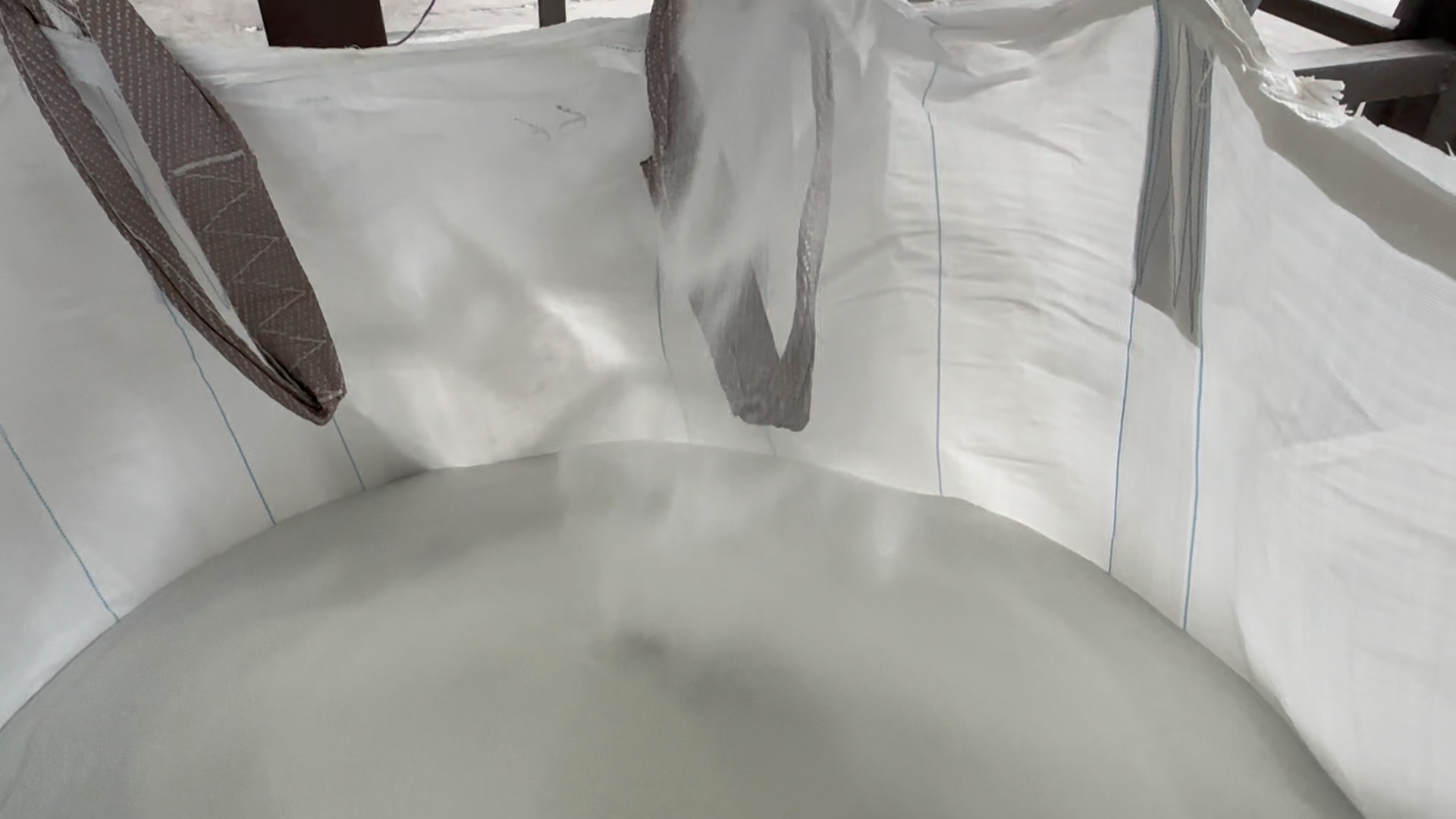
Glass bead production and grading: micron size is controlled at the furnace-to-sieve stage, not at the point of sale.
Grinding glass beads are selected by micron size first and everything else second. In polishing and surface-finishing work, the band you specify decides how much material the media removes, how quickly it removes it, and how smooth the final surface becomes — long before roundness, chemistry or packaging are discussed. For the GB05 grade, the published working scope is 800–80 μm, a single product family that reaches from coarse stock removal down to fine finishing.
This guide is written for buyers and process engineers who already know they need glass beads and now have to choose a size. It explains how the 800–80 μm window is structured, why particle size distribution matters more than the headline number on a quotation, and how to write a specification that stays stable across repeat orders.
Problem Definition: Why “Micron Size” Is Not a Single Number
In glass bead purchasing, micron size describes a distribution rather than a fixed value, and the gap between the specification a buyer believes they ordered and the media that arrives on site is where most polishing problems begin. A supplier can quote “100 micron beads” and still deliver a product whose largest particles are several times the size of its smallest, because the nominal figure says nothing about how wide the accepted band is, how much oversize or undersize material is tolerated, or which method confirms either.
Three consequences follow, and each one costs money in a different place:
- Oversize particles carry more mass per impact, which generally raises removal rate while roughening the surface. The operator compensates by reducing pressure or dwell time, and throughput falls.
- Excess fines reduce cutting action and shift finish quality between batches, which usually appears as rework rather than as a visible defect at delivery.
- Batch-to-batch drift makes a stable process recipe impossible. In a contract finishing shop, a recipe that must be re-tuned for every delivery is a cost that never appears on an invoice.
The practical answer is to treat micron selection as a controlled specification with three parts: a target band, a particle size distribution envelope around that band, and an agreed verification method. Roundness, material, packaging and delivery all support those three, but none of them replaces them.
Industry Background: Where Glass Bead Supply Comes From

Dylantech runs four glass bead production bases in Liaoning, Shanxi, Hebei and Henan provinces, China.
China accounted for approximately 57.4% of global glass bead exports in 2024, according to the Observatory of Economic Complexity, and the country's total glass bead export value reached roughly USD 928 million in the same year, with the UAE and India among the leading destinations. That concentration explains both the depth of available supply and the wide variation in how individual producers define and control particle size.
The largest single application for glass beads remains road marking. That segment was valued at about USD 1.42 billion in 2025 and is projected to reach USD 2.31 billion by 2034, with Asia Pacific holding a 38.7% revenue share in 2025 (Dataintelo). Scale of this kind drives standardisation: in the United States, AASHTO M247 classifies traffic paint beads by type and requires at least 70% roundness, while EN 1423:2012 is the European harmonised standard for glass beads and antiskid aggregates used as drop-on materials.
Supplier structure is concentrated at the top as well. Potters Industries LLC, Swarco AG and 3M Company are identified as the three leading global players in the glass beads for road marking sector (Dataintelo / Mordor Intelligence). Below that tier sits a large group of manufacturers serving regional and application-specific demand — polishing, blasting and decorative media among them — where the specification is normally written by the buyer rather than imposed by a single dominant standard.
LangFang Dylan Technology Co., Ltd. (DYLAN TECHNOLOGY CO., LTD), trading as Dylantech, is one of the manufacturers in that second group. Founded in 2004, the company operates four production bases in Liaoning, Shanxi, Hebei and Henan provinces and runs more than 15 glass bead production lines. Its published company data records an annual output of 100,000 tons, a 10,000 m² facility, 300 employees, a 20-engineer R&D team and an export ratio of 95%, serving the EU, USA, Southeast Asia and the Middle East. The company reports customers in more than 50 countries and cooperative partners including ENNIS, Geveko and Swarco alongside local construction companies and road safety manufacturers.
Detailed Solution: The 800–80 μm Working Range
The GB05 grade is the reference point for selection in this guide. Its defined scope is 800–80 μm, which makes it a wide-range bead rather than a narrow certification band: one product family that can be ordered at the coarse end for aggressive work, at the fine end for finishing, or blended to a defined distribution for a specific process.
| Model | GB05 |
| Micron scope | 800–80 μm |
| Material | Recycled glass |
| Size range (product family) | 0.5 mm–20 mm |
| Color | Transparent / opaque / mixed color |
| Surface finish | Smooth / matte |
| Customization | Custom color and size available |
| Listed application | Road marking / road safety |
Two clarifications matter for buyers arriving from a polishing specification. First, GB05's published scope of 800–80 μm overlaps the range in which most fine grinding and surface finishing takes place, which is why it serves as the sizing reference here. Second, Dylantech maintains a dedicated grinding glass bead line listed for polishing applications, available across all sizes and produced from recycled glass, alongside coarser defined grinding bands of 600–1000 μm and 800–1200 μm produced from glass.
How size behaves inside the range. Within 800–80 μm, bead diameter controls the energy delivered to the surface and the depth of the marks left behind. Larger beads carry more mass per particle, so they generally remove material faster and leave a coarser profile. Smaller beads deliver less energy per impact but a finer, more uniform finish. The practical rule is directional: work from coarse to fine, let the coarsest step do the stock removal, and let the finest step set the final surface.
Particle size distribution, not just the endpoints. A quotation that states only “800–80 μm” leaves the middle of the curve undefined. Two batches can share those endpoints and still differ in where the bulk of the particles sit. For process stability, specify the distribution — the proportion of material above, inside and below the working band — and require it to be confirmed by an instrumented method rather than a sieve description alone.
Roundness and geometry. AASHTO M247's requirement of at least 70% roundness for traffic paint beads is a useful external benchmark for how much angular material the industry tolerates at the low end of a specification. Dylantech states that its self-developed patented glass bead production equipment delivers higher particle sphericity and more uniform grain size than traditional glass beads, with reflectivity consistency improved by 10%–15% and a lower rework rate, while raw material and finished product costs are described as comparable to traditional glass beads. The company's waste heat recovery system has been recognised as a scientific and technological achievement by the China Energy Conservation Association.

Size claims require a lab: ISO9001 quality management, backed by CE, JIS and KIS certification for exported glass beads.
Verification infrastructure. A size claim is only as reliable as the laboratory behind it. Dylantech's laboratory is equipped with CAMSIZER and X-2600 instruments and is used to check particle size, reflectivity and wear resistance throughout production under an ISO9001 quality management system. The company also holds CE, JIS and KIS certification, and performs 100% testing for quality control before shipment.
Step-by-Step Breakdown: Selecting a Micron Size in Six Steps
Step 1 — Define the finish before the media
Write down the required final surface and the incoming condition of the part: scale, burrs, previous coating, geometry. The question “which micron size?” only has a useful answer once the target surface is defined. Broadly, heavier removal points to the coarse end of the range and finish work points to the fine end.
Step 2 — Choose a band inside 800–80 μm
Map the target onto a band. Three practical zones exist inside the range: the upper zone for faster removal and a deeper surface profile, the mid-range for balanced removal and finish, and the lower zone for finish-focused work at a lower removal rate. Multi-stage processes should define one band per stage rather than a single compromise grade.
Step 3 — Write the distribution and the test method into the order
Specify three things on the purchase order: the target band, the tolerated oversize and undersize, and the method used to verify both. Instrument-based particle size analysis, such as testing performed with a CAMSIZER, is the appropriate reference for a micron-level claim; a verbal description of grading is not.
Step 4 — Confirm geometry, material and equipment fit
Check roundness expectations and the declared material source. GB05 is produced from recycled glass, the grinding line for polishing is also recycled glass, and the coarser 600–1000 μm and 800–1200 μm grinding bands are listed as glass. Confirm as well that the selected bead passes the nozzle, chamber or mill clearance in your equipment without bridging or blockage.
Step 5 — Validate with a sample and a pre-shipment test
Run the intended bead on the intended substrate at production parameters before switching over completely. The standard acceptance route documented for these products is a pre-shipment test, and the minimum order quantity for an initial commercial shipment is 1 ton, which keeps a validation run small enough to be practical.
Step 6 — Lock the specification for repeat supply
Once a band works, freeze it: the band, the distribution envelope, the verification method and the packaging. Batch-to-batch stability comes from a supplier that tests 100% of output and reports against the same method every time, because a specification that is re-negotiated at each reorder is not a specification at all.

Repeat supply depends on documentation: a fixed band, a fixed test method and a consistent quality record.
Use Cases: Where Micron Selection Decides the Result
Multi-stage finishing sequences
A coarse stage in the upper part of the 800–80 μm range removes stock and normalises the surface; a mid-range stage consolidates it; a fine stage in the lower part of the range sets the final finish. Buying all stages from one grader keeps the distribution logic consistent between steps — something that is difficult to maintain when each stage comes from a supplier with a different definition of “fine”.
OEM and private-label programs
Distributors and brand owners selling media under their own label need a supplier able to hold a customer-defined band rather than a catalogue grade. GB05 supports custom colour and custom size, and Dylantech provides OEM production services together with remote support, with 100% testing applied to production output.
Continuous production and replacement orders
For contract finishing shops and factories where bead consumption never stops, the selection decision repeats at every reorder. Dylantech reports a monthly production capacity of 10,000 tons and a typical lead time of 45–60 days. Against raw material supply risk, the company cites four production bases and long-term supplier cooperation; against delivery risk, it cites an annual capacity of 100,000 tons across multiple production lines supported by production planning and inventory management.
Applications that need a documented quality route
Where the finished product has to be traceable, the laboratory matters as much as the bead. A facility using CAMSIZER and X-2600 instruments under ISO9001, holding CE, JIS and KIS certification, and applying full-process testing and certification control gives a buyer a paper trail that supports both internal audits and customer-side qualification.
Comparison Tables
| Model / grade | Micron scope | Material | Listed application |
|---|---|---|---|
| GB05 | 800–80 μm | Recycled glass | Road marking / road safety |
| Grinding Glass Beads (GRINDING) | All sizes | Recycled glass | Polishing |
| Grinding Glass Beads (GRINDING) | 600–1000 μm / 800–1200 μm | Glass | Road marking / road safety |
| GLASS BEADS TYPE IA | 850–75 μm | Recycled glass | Road marking / road safety |
| GLASS BEADS TYPE IB | 300–63 μm | Recycled glass | Road marking / road safety |
| GLASS BEADS EN1423 | 850–180 μm | Recycled glass | Road marking / road safety |
Note: scopes are as published in the product data above; other grades and custom bands are available on request.
| Compared with | Key difference | Reported performance gap | Reported cost difference | Best suited to |
|---|---|---|---|---|
| Traditional glass beads | Self-developed patented production equipment; higher particle sphericity and uniform grain size; stable reflective performance batch by batch | Reflectivity consistency +10%–15% | Raw material and finished product cost comparable to traditional glass beads | Road marking |
| Ordinary reflective materials | Higher refractive performance and durability | Service life +20%–30% | 5%–15% lower | High-traffic roads |
| Imported equivalent products | Comparable optical performance and roundness; flexible domestic production and customization capacity | Retroreflectivity, sphericity and wear resistance described as comparable to imported standards | 5%–15% lower | Government and contractor projects |
Note: differences and gaps above are as stated in Dylantech's own comparison data; buyers should validate them against their own acceptance tests.
FAQ
Which standards apply to glass beads, and do they cover grinding media?
AASHTO M247 is the standard specification for glass beads used in traffic paints in the United States, classifying beads by type and requiring at least 70% roundness. EN 1423:2012 is the European harmonised standard for glass beads and antiskid aggregates used as drop-on materials for road markings. Neither standard defines a polishing-media gradation, so grinding and blasting specifications are normally written by the buyer. Where a documented quality route is required, Dylantech holds ISO9001, CE, JIS and KIS certification and performs 100% testing for quality control.
Can grinding glass beads be supplied in a custom micron band?
Yes. The GB05 grade has a defined scope of 800–80 μm, and custom color and custom size are available; Dylantech also offers OEM production services and remote support services. The grinding glass bead line listed for polishing is available across all sizes and is produced from recycled glass, while the coarser 600–1000 μm and 800–1200 μm grinding bands are listed as glass. Production output is 100% tested for quality control before shipment.
What drives the price, and how does it compare?
The main cost drivers are the micron band selected, how tightly the particle size distribution is controlled, order volume and packaging. In Dylantech's published comparison data, raw material and finished product costs are described as comparable to traditional glass beads, while cost against imported equivalent products is reported as 5%–15% lower with comparable optical performance and roundness, and service life is reported as 20%–30% longer than ordinary reflective materials.
How can a micron size be validated before committing to a shipment?
Validate with a small trial first. The minimum order quantity is 1 ton, and the documented acceptance route is a pre-shipment test. Ask for particle size data produced with the laboratory's CAMSIZER or X-2600 instruments, confirm the material declaration — recycled glass for GB05 and the polishing grinding line, glass for the 600–1000 μm and 800–1200 μm grinding bands — and run the trial at the same pressure, feed and dwell parameters as production.
What is the typical lead time and production capacity for repeat orders?
Monthly production capacity is 10,000 tons and the typical production lead time is 45–60 days, with a minimum order quantity of 1 ton. Delivery terms offered are FOB, CIF, DDP and EXW, and documented payment options include TT with the balance against B/L copy, L/C 90 days after B/L date, and TT 100% 30 days from B/L date. Annual output of 100,000 tons across more than 15 production lines supports large-volume and repeat programs. To move from specification to sample, contact Dylantech at dylan@xgbead.com or +86 186-3166-3616, or review the full product range in the corporate brochure.
Conclusion
Selecting grinding glass beads by micron size comes down to three decisions made in sequence. Choose the band inside the 800–80 μm working range that matches the removal rate and finish the process needs. Define the distribution and the verification method so that the band means the same thing at every delivery. Then confirm the supplier can hold that specification over time, with instrumented testing, documented certification and the capacity to re-supply without re-negotiation.
Everything else on a quotation — colour, finish, packaging, delivery terms — is easier to compare once those three decisions are written down. Buyers who lock the specification first tend to spend less time qualifying new grades later, because the specification, not the supplier's catalogue language, becomes the reference point.

Next step: send your target micron band and finish requirement to dylan@xgbead.com or WhatsApp +86 186-3166-3616, and request a sample or quotation. Full specifications are available at www.dylantech.com.