
How to Select the Right Glass Beads Supplier for Road Marking
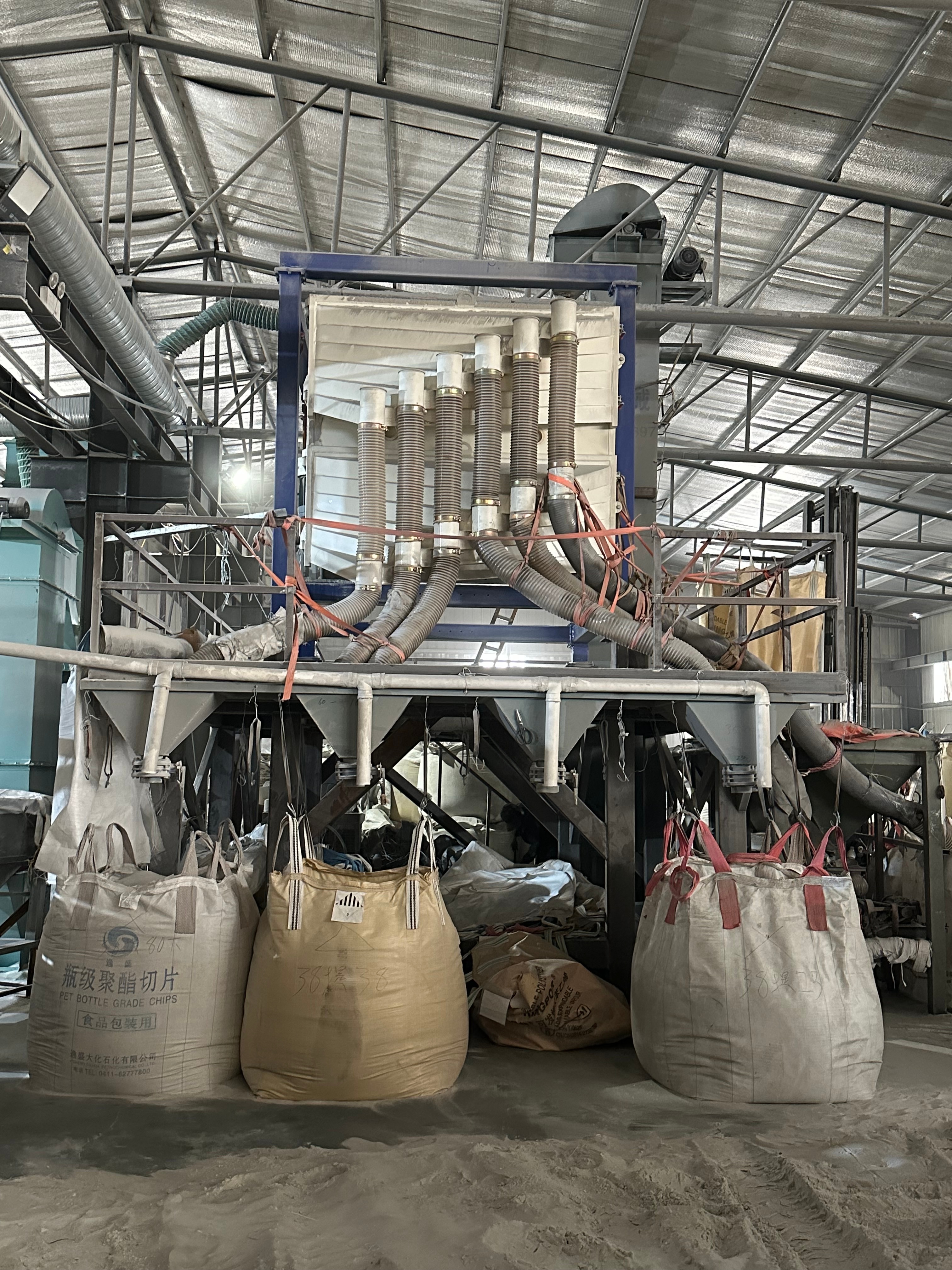
Dylan Technology's modern glass beads manufacturing base – a key factor in supplier evaluation.
How to Select the Right Glass Beads Supplier for Road Marking
Purchasing glass beads for road marking projects is not a simple commodity buy. The performance of reflective glass beads for road marking directly impacts nighttime visibility, road safety, and project longevity. Yet many procurement managers struggle with inconsistent quality, unclear certifications, and supply disruptions. This guide provides a structured framework to evaluate and select a glass beads supplier that meets your technical, commercial, and logistical requirements.
The Problem: Why Finding a Reliable Glass Beads Supplier Is Hard
Road marking contractors, traffic safety manufacturers, and government agencies need traffic marking glass beads that comply with international standards such as AASHTO M247, EN 1423, EN 1424, and BS 6088. However, the market is flooded with suppliers offering products with inconsistent refractive index, poor glass beads roundness, and non-compliant particle size distribution. Common pain points include:
- Quality risk: Low roundness and irregular size lead to poor retroreflectivity and rapid wear.
- Delivery risk: Unreliable lead times cause project delays and penalties.
- Certification risk: Suppliers claim compliance without verifiable certificates.
- Cost unpredictability: Hidden fees for customization or urgent shipping.
The core question is: How do you identify a supplier that can consistently deliver high refractive index glass beads with stable quality, competitive pricing, and reliable logistics?
Industry Background: The Road Marking Glass Beads Market
Glass beads are the most critical component in pavement marking for achieving retroreflectivity. They function by refracting light from vehicle headlights back toward the driver. The key parameters defining performance are:
| Parameter | Importance | Common Standards |
|---|---|---|
| Refractive Index (RI) | Higher RI = brighter reflection at night | RI 1.5 – 1.7 (standard); RI ≥1.7 for high retro-reflective glass beads |
| Sphericity / Roundness | Affects uniformity of light reflection | ≥80% true spheres per AASHTO M247 |
| Particle Size Distribution | Determines application method (drop-on vs pre-mixed) | EN 1423: 850–180 μm; BS 6088: multiple grades |
| Wear Resistance | Determines service life under traffic | Low wear rate (measured by CAMSIZER, X-2600) |
Global demand is driven by infrastructure investment in the EU, USA, Southeast Asia, and the Middle East. A reliable supplier must combine technical expertise, manufacturing scale, and regulatory compliance.
Detailed Solution: A 5-Step Supplier Selection Framework
Step 1: Verify Product Compliance with Your Standard
Before engaging any supplier, confirm they can produce glass beads meeting the specific standard required by your project. For example:
- AASHTO M247 – Types 1, 2, 3, 4 (for US markets)
- EN 1423 / EN 1424 – European norms for drop-on and pre-mixed beads
- BS 6088A / BS 6088B – UK standard for road marking beads
- AS/NZS – Types B, C, D for Australia/New Zealand
A supplier like DYLAN TECHNOLOGY CO.,LTD (brand: dylantech) offers a comprehensive range covering all major standards. Their products include 1.7 high index glass beads (RI 1.7, scope 1180–180 μm), glass beads RI 1.6 (scope 1000–180 μm), and recycled options such as TYPE IA (850–75 μm) and TYPE IIC (1000–300 μm).
Step 2: Assess Manufacturing Capability and Quality Control
Scale matters for volume buyers. A supplier with an annual output of 100,000 tons and multiple production bases (Liaoning, Shanxi, Hebei, Henan) can guarantee supply continuity. Quality control should be backed by in-house testing using instruments like CAMSIZER and X-2600 for particle analysis. Dylan Technology operates a fully equipped laboratory and holds ISO 9001:2015 certification (cert. no. 23226Q00027R001) covering all glass beads exports.
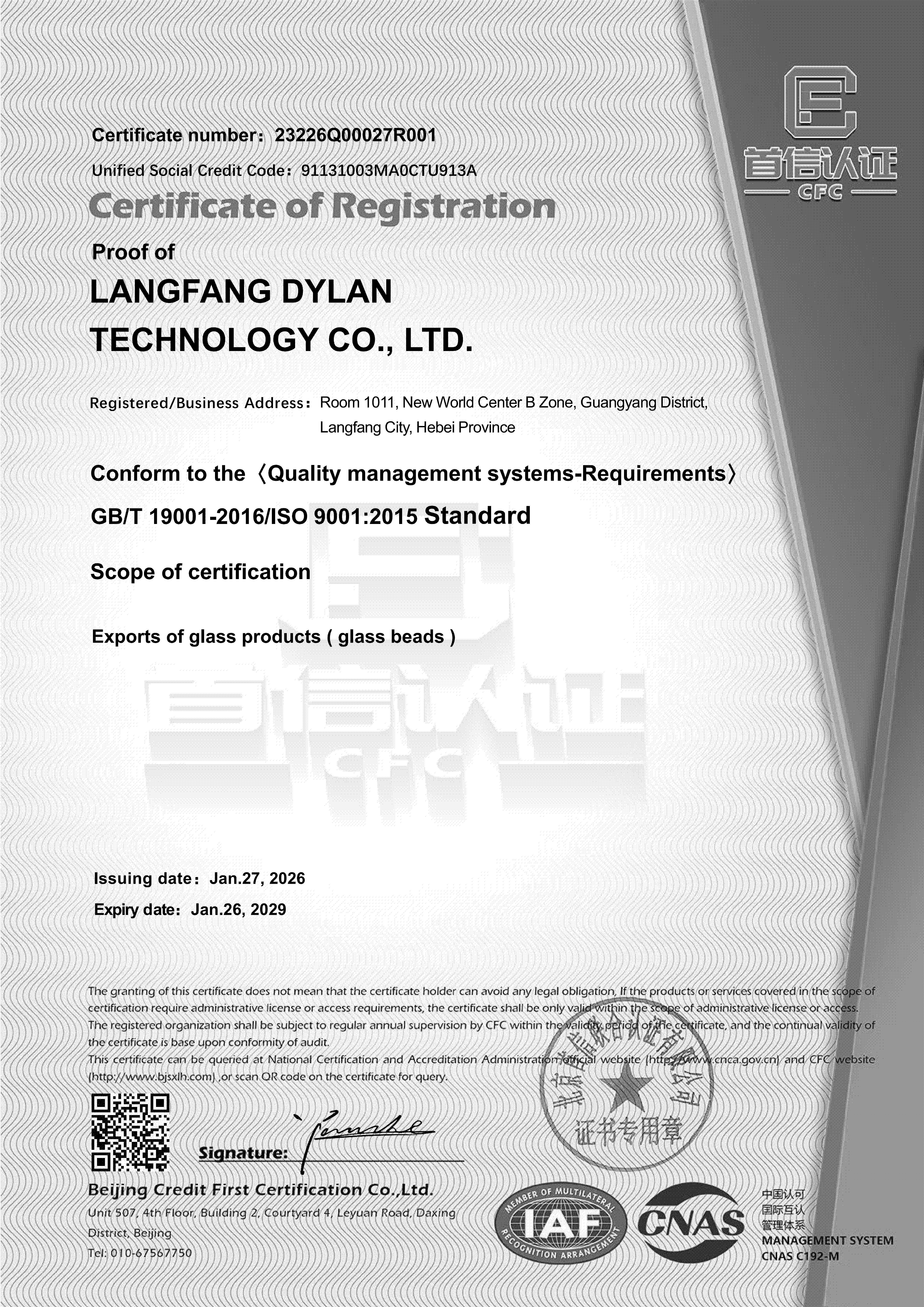
ISO 9001:2015 certification – a key proof of quality management for road marking glass beads suppliers.
Step 3: Evaluate Product Categories and Customization Options
Different road marking methods require different bead types:
| Application | Recommended Product Grade | Key Parameter |
|---|---|---|
| Drop-on (surface applied) | EN 1423, BS 6088B, M247 Type 2 | Coarser grade (850–180 μm) |
| Pre-mixed (in paint/thermoplastic) | EN 1424, M247 Type 1, TYPE IB | Finer grade (300–63 μm) |
| High retroreflective zones | RI 1.7 glass beads | Refractive index ≥1.7 |
| All-weather / wet-night | All weather glass beads with anti-skid surface | Durable coating, low wear |
Customization (color, size, surface finish) is essential for specialized projects. Dylan Technology offers colored glass beads, anti-skid glass beads, and decorative options, all customizable.
Step 4: Compare Cost, Lead Time, and Payment Terms
Based on Dylan Technology's purchase support data, typical terms include:
- MOQ: 1 ton
- Delivery methods: FOB, CIF, DDP, EXW
- Lead time: 45–60 days
- Payment options: T/T 100% 30 days from BL, L/C 90 days after BL, T/T 30% advance + 70% against B/L copy
- Pre-shipment testing: 100% inspection before loading
Compared to imported equivalents, Dylan Technology's glass beads offer cost savings of 5%–15% while delivering the same optical performance and roundness, with flexible customization capabilities.
Step 5: Review Track Record and Client References
Long-term partnerships with global leaders like ENNIS, Geveko, and Swarco indicate proven reliability. Case studies show clients ordering quantities from 1 ton to 198 tons, with consistent performance over 3–4 years. Key outcome: low wear and remarkable night effect – exactly what road safety engineers need.
Use Cases: When Different Glass Bead Types Excel
Use Case 1: Urban Expressway Marking (EU Market)
Requires EN 1423-compliant beads with scope 850–180 μm for hot-applied thermoplastic. Dylan Technology's EN1423 model provides consistent retroreflectivity and low rework rate, reducing lifecycle costs.
Use Case 2: Highway Retrofit in Southeast Asia
High humidity and frequent rain demand all weather glass beads with RI ≥1.7. The RI 1.7 product (scope 1180–180 μm) delivers superior wet-night visibility.
Use Case 3: Airport Runway Marking
Extreme wear resistance required. Glass beads for thermoplastic road marking paint with reinforced durability – Dylan's TYPE IIA or M247 Type 3 with high roundness.
Frequently Asked Questions
What are reflective glass beads for road marking?
Small glass spheres embedded in or applied onto road markings to reflect vehicle headlights, enhancing nighttime visibility. They are typically made from recycled soda-lime glass with a refractive index between 1.5 and 1.7.
How do I choose between drop-on and pre-mixed glass beads?
Drop-on glass beads are applied on top of wet paint and require coarser grades (e.g., 850–180 μm). Pre-mixed glass beads are mixed into the marking material before application and require finer grades (e.g., 300–63 μm) to prevent settling.
Why is the refractive index important?
The refractive index (RI) determines how light bends inside the bead. Higher RI (1.7 vs 1.5) means more light returns to the driver, increasing brightness. For high-traffic or wet-night roads, high refractive index glass beads (RI 1.7) are recommended.
What certifications should I look for?
At minimum, the supplier should have ISO 9001 quality management certification. For specific markets, look for CE marking (EU), JIS (Japan), KIS (Korea), or compliance with AASHTO M247 (US) or BS 6088 (UK). Dylan Technology holds all these.
Can I get samples for testing before bulk order?
Yes, reputable suppliers offer pre-shipment samples. Dylan Technology provides test reports and even arranges third-party lab verification.
Conclusion: Making the Right Choice
Selecting the right glass beads supplier requires more than price comparison. Focus on certification verification, manufacturing scale, product range, customization flexibility, and proven client results. Dylan Technology, with 20+ years of experience, 100,000-ton annual capacity, ISO 9001/CE/JIS/KIS certifications, and partnerships with global leaders like ENNIS, Geveko, and Swarco, exemplifies the qualities a reliable supplier should have.
For a detailed overview of product specifications, compliance documents, and case studies, download the official company brochure:
For immediate inquiries, contact Dylan Technology via email at dylan@xgbead.com or WhatsApp +86 186-3166-3616.