
Road Marking Beads Losing Retroreflectivity? How to Match Bead Type and Size
The Short Answer
Problem Definition: What "Losing Retroreflectivity" Actually Means
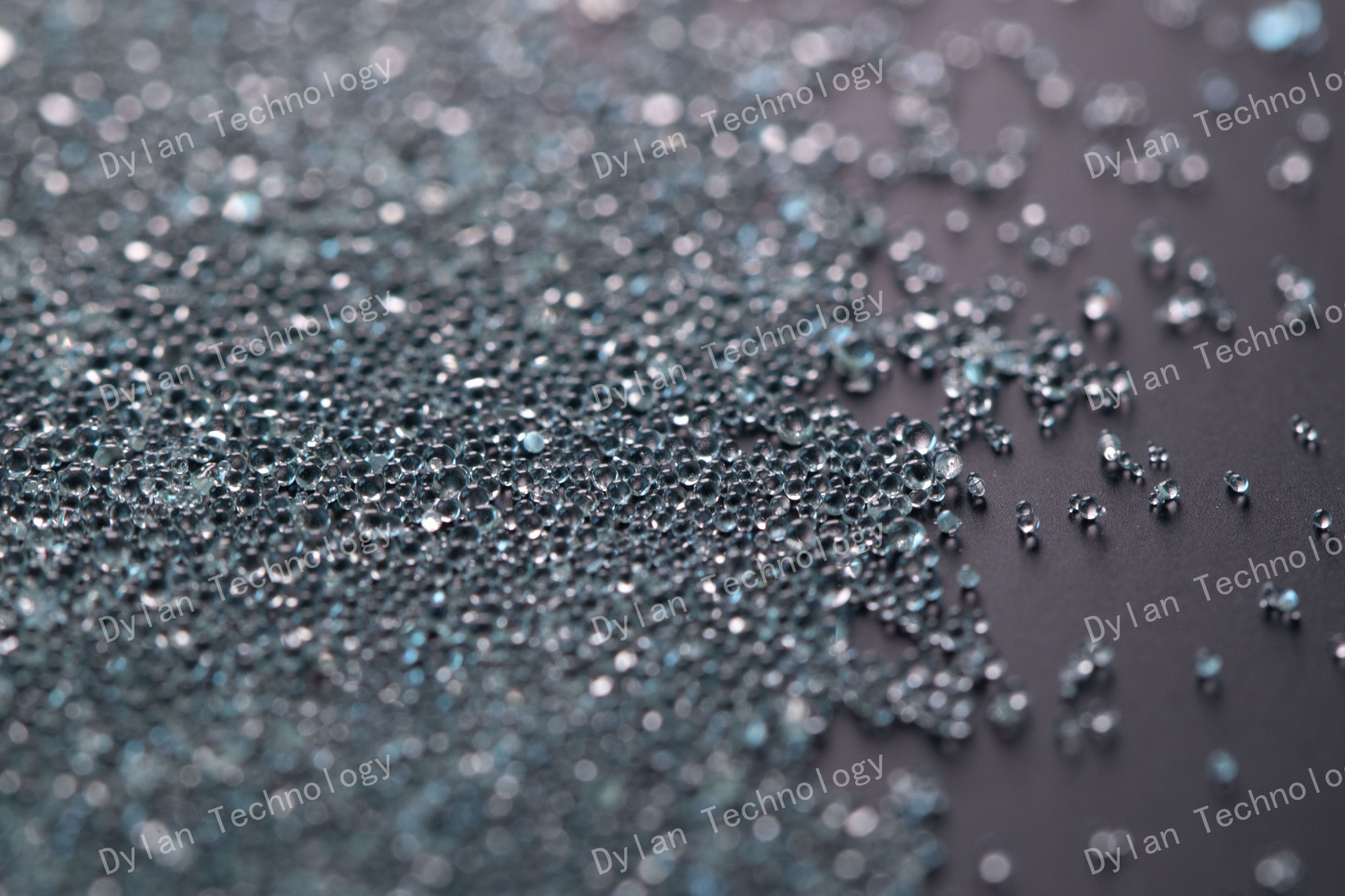
Glass beads work as optical elements. A bead embedded in, or dropped onto, the marking film receives light from a vehicle headlamp and returns a portion of it toward the driver. Retroreflectivity falls when that return path is broken — the bead layer is buried, displaced, contaminated, worn flat, or optically unsuited to the light angle at the site.
Five failure modes account for most complaints. They are not interchangeable, and each points to a different specification lever.
| Field symptom | What it usually indicates | First specification lever to check |
|---|---|---|
| Bright at handover, visibly dull within weeks | Beads buried in the film or displaced by traffic; drop-on rate or bead size mismatched to film thickness | Gradation top size and application method (drop-on vs pre-mixed) |
| Readable in dry weather, disappears in rain | Optical return insufficient at the viewing geometry of a wet night | Refractive index grade |
| Gritty surface, beads sitting proud, swept into the gutter | Gradation too coarse for the film, or over-application of drop-on beads | Gradation band and dosing discipline |
| Marking wears through before it fades | Abrasion of film and beads under channelised traffic | Bead roundness and wear behaviour, plus film integrity |
| Bright centre line, dull edge line on the same road | Application variance, not a bead batch fault | Application audit before any bead change |
Diagnostic sequence matters: a bead change proposed without a field diagnosis usually replaces one mismatch with another.
Industry Background: Why the Same Bead Fails in One Market and Passes in Another
Road marking beads are governed by jurisdiction-specific standards, and those standards do not describe identical things. Some regulate drop-on beads, some regulate pre-mixed beads, some regulate gradations, and some regulate testing methods. A buyer who compares catalogue numbers across markets without reading the standard scope will select the wrong product.
The current landscape, as documented in public standard sources:
- AASHTO M 247-26 is the current US edition, effective from 1 July 2026, and classifies beads from Type 0 through Type 5, with Type 0 defined as a uniform gradation and Types 2 to 5 as modified gradations.
- EN 1423 specifies requirements for glass beads, anti-skid aggregates, and mixtures of the two applied as drop-on materials on road markings.
- BS EN 1424 is the reference used for pre-mixed glass beads in Hong Kong road marking guidance, while drop-on beads are referenced to BS EN 1423; the same guidance sample specification sets a Class A refractive index of at least n ≥ 1.5.
- GB/T 24722-2020 is China's current national standard for glass beads for road markings, effective 1 July 2021.
- Texas (TxDOT) layers DMS-8290 on top of national practice, specifying three bead gradations tested under Tex-831-B.
Market structure explains a second common misdiagnosis. Standard 1.5 refractive index beads accounted for 54.0% of global road marking glass bead market value in 2026, because that index aligns with conventional specifications. The global market itself was valued at USD 1.18 billion in 2025. In practice, most beads on most roads are conventional grades — which means most "the beads failed" complaints trace back to gradation or application, not to index.
Detailed Solution: Matching Bead Type and Size to Each Symptom
Symptom 1 — Bright at handover, dull within weeks
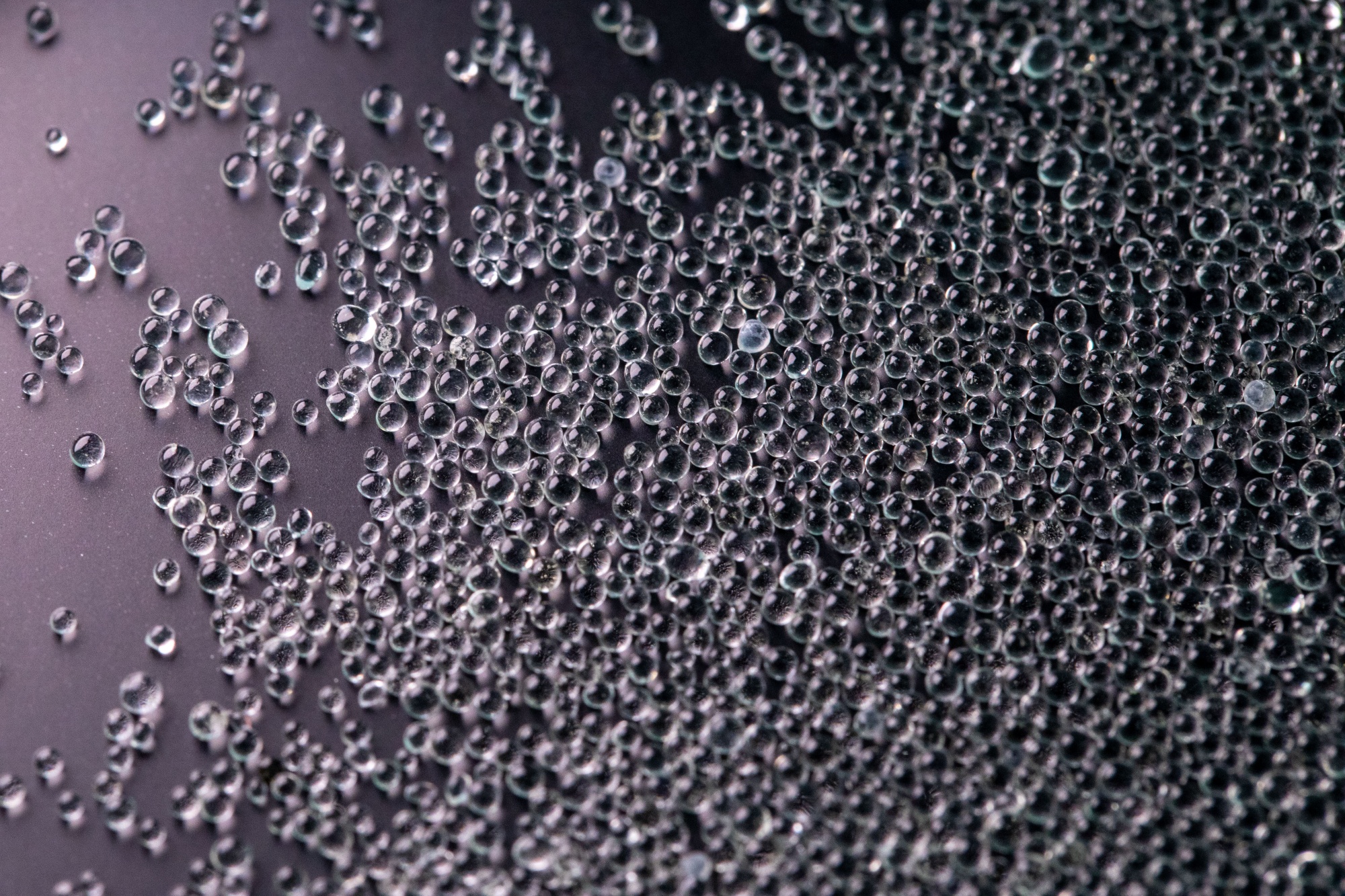
This is the most common failure and the most commonly misattributed. Two specification errors produce it. The first is a bead whose gradation sits too high for the film: beads that protrude excessively are removed by tyre action, while beads that sit too deep never receive light. The second is an application-family error — drop-on beads specified where the process needs pre-mixed beads, or the reverse.
The correction is to step down the top of the gradation band and confirm the application family first. Dylan Technology Co., Ltd. (Dylantech), a glass bead manufacturer based in LangFang, China, lists both families in its road marking range, including EN1423 at a 710–125 μm scope and EN1424 at a 1400–355 μm scope, alongside finer drop-on and pre-mixed options such as TYPE IIB at 600–75 μm and GB05 at 800–80 μm.
Symptom 2 — Invisible on a wet night
Wet-night performance is the one failure mode where refractive index genuinely is the lever. Industry product literature distinguishes standard 1.5 index beads, used for general highway markings, from high-index variants positioned for wet-night and airport visibility; Potters Industries, for example, publicly lists both 1.5 and 1.9 refractive index reflective bead variants. Higher index raises the optical return available at the angles that matter when the road surface is wet and the marking is filmed with water.
Dylantech supplies high refractive index glass beads as separate catalogue grades — GLASS BEADS RI 1.6 and GLASS BEADS RI 1.7 — rather than as a single blended product, which allows a buyer to reserve the higher index for the sections where it is justified. Do not upgrade index to solve a burying or wear problem; the premium is spent and the symptom remains.
Symptom 3 — Gritty, coarse surface; beads displaced into the gutter
A coarse drop-on gradation applied to a thin film leaves beads sitting proud, where they are removed by traffic and contribute nothing after the first weeks. This is a size-band problem, not a quality problem. Coarse bands are legitimate products — AS/NZS TYPE C is listed at 1300–425 μm and AASHTO M247 TYPE 2 at 1180–180 μm — but they belong to applications where the film can accept them.
The correction is a tighter, finer band: EN1423 at 710–125 μm, TYPE IIB at 600–75 μm, or TYPE IIC at 1000–300 μm where a wider band is required by the specification. Matching the band to the film is more effective than increasing dosing rate.
Symptom 4 — The marking wears out before it fades
Where channelised traffic polishes the line, bead geometry matters as much as chemistry. High roundness and low wear are the two attributes that keep an optical element functional under abrasion, and they are explicitly specified in road marking applications: Dylantech's own application data lists high roundness, stable refractive index, and recycled material as the special requirements for road paving and polishing duty with road marking machines, sand blasting machines, and polishing equipment.
The company's field record includes shipments of 198 t, 108 t, 72 t, 56 t, and 20 t to road marking engineering companies and traffic safety manufacturers, with reported results of three to four years of stability and low wear, plus a 1 t trial quantity noted for its night effect.
Symptom 5 — Uneven brightness across the same road
Variance along a single carriageway is almost always an application variable: drop-on timing, gun distance, forward speed, or film thickness variation. Changing bead supplier will not correct it. Audit the application before touching the specification, and use batch test data to confirm whether the bead supply itself is consistent.
Step-by-Step Breakdown: Specifying From the Failure, Not From the Catalogue
- Confirm the failure mode on site. Photograph the line at night under headlamp illumination, record the age of the marking, and separate optical loss from physical loss. A marking that has physically disappeared is a different problem from one that is intact but dark.
- Fix the standard family before the product. Determine whether the tender references drop-on or pre-mixed beads — BS EN 1423 for drop-on, BS EN 1424 for pre-mixed in the Hong Kong guidance model — and match the bead to that family. AASHTO M 247-26 and GB/T 24722-2020 apply in their own jurisdictions.
- Set the gradation band against the film. Choose the micrometre band that the applied film can host. Read the catalogue scope literally: 850–75 μm, 1000–180 μm, 1180–180 μm, 1400–355 μm, and 1300–425 μm describe materially different bead populations.
- Decide refractive index last. Standard index covers conventional specifications and dominates volume for that reason. Reserve RI 1.6 or RI 1.7 grades for wet-night, high-speed, or high-consequence sections where the optical gain is measurable.
- Select surface finish and colour only where they serve a function. Smooth and matte finishes and transparent, opaque, or mixed colour options are available and can be customised, but finish selection should follow the application, not precede it.
- Verify the batch, then trial a section. Request particle size and reflectivity data from the production batch, apply a trial section, and re-measure before committing volume to a full programme.
Use Cases: Four Situations and the Bead Logic Behind Each
Urban intersections and channelised traffic
Where vehicles brake and turn over the same metre of line, the failure mode is wear rather than fading. The specification priority is bead roundness and wear behaviour within a gradation band the film can retain — typically a finer band applied at controlled rate, not a coarser one applied heavily.
High-speed corridors with wet-night exposure
Where the reading distance is long and rain is frequent, the priority is optical return at wet viewing geometry. This is the legitimate use case for RI 1.6 and RI 1.7 grades, applied as a dedicated high-index product rather than blended across the whole network.
Thermoplastic pre-mix plants
Where beads are compounded into the material rather than dropped on, the applicable family is pre-mixed beads under BS EN 1424 in the referenced guidance framework. Dylan Technology lists EN1424 at a 1400–355 μm scope for this duty.
Large resurfacing programmes with thick films
Where the film is thicker by design, a coarser drop-on band is workable — AS/NZS TYPE C at 1300–425 μm and AASHTO M247 TYPE 2 at 1180–180 μm sit at that end of the range. The band must still be confirmed against measured film thickness on the first section.
Comparison Table: Catalogue Gradations and Their Size Scopes
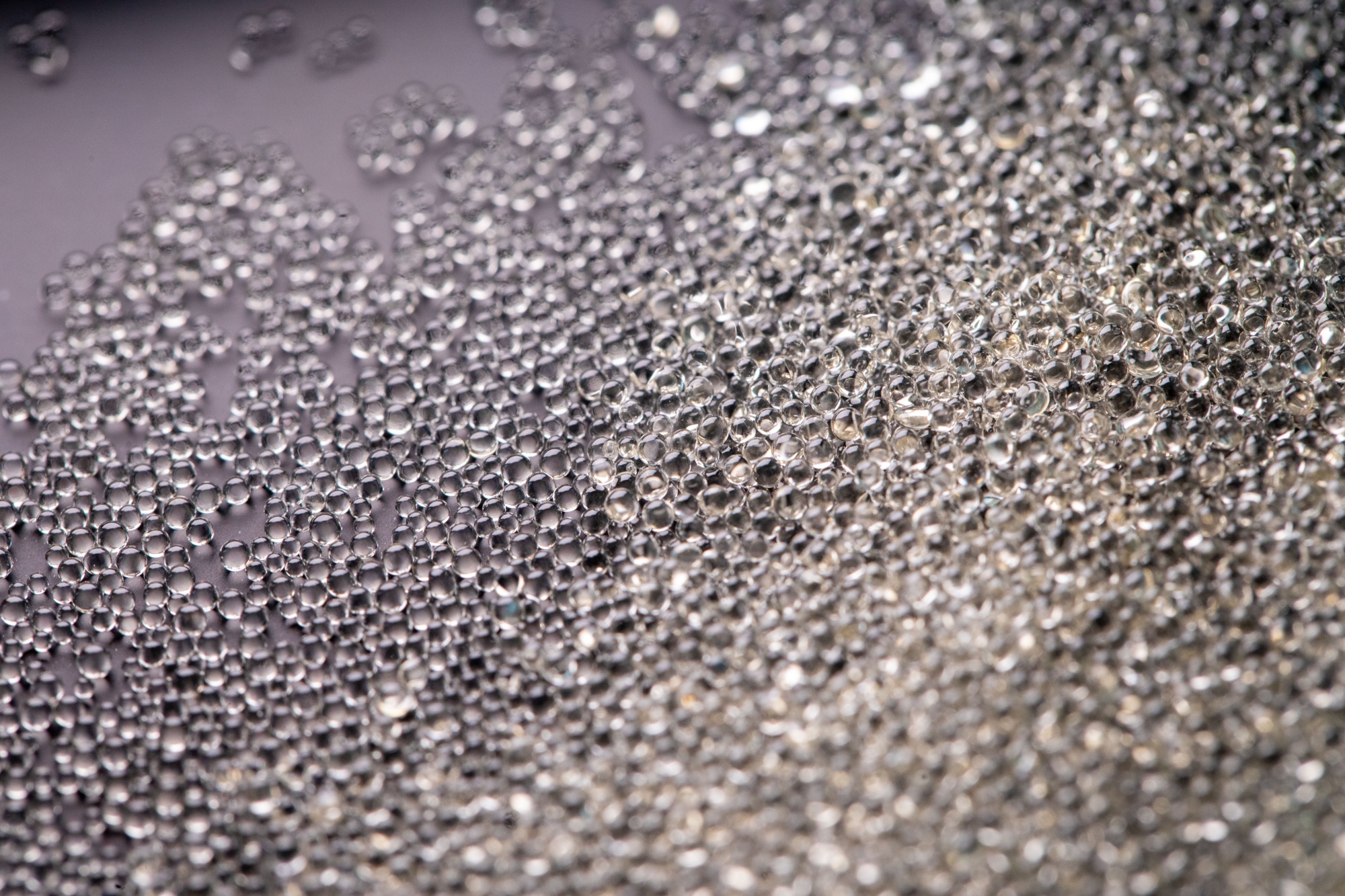
The table below lists road marking glass bead grades from the Dylantech catalogue with their published size scopes. All grades share a 0.5 mm–20 mm overall size range, recycled glass composition, and a choice of transparent, opaque, or mixed colour with smooth or matte finish; custom colour and size are available on request.
| Product designation | Standard / family reference | Size scope | Material | Listed application |
|---|---|---|---|---|
| GLASS BEADS EN1423 | EN 1423 (drop-on) | 710–125 μm | Recycled glass | Road marking / road safety |
| GLASS BEADS EN1424 | EN 1424 (pre-mixed) | 1400–355 μm | Recycled glass | Road marking / road safety |
| GLASS BEADS AASHTO M247-TYPE 2 | AASHTO M 247 Type 2 | 1180–180 μm | Recycled glass | Road marking / road safety |
| AS/NZS TYPE B | AS/NZS Type B | 850–75 μm | Recycled glass | Road marking / road safety |
| AS/NZS TYPE C | AS/NZS Type C | 1300–425 μm | Recycled glass | Road marking / road safety |
| GLASS BEADS TYPE IA | TYPE IA | 850–75 μm | Recycled glass | Road marking / road safety |
| GLASS BEADS TYPE IIA | TYPE IIA | 1000–180 μm | Recycled glass | Road marking / road safety |
| GLASS BEADS TYPE IIB | TYPE IIB | 600–75 μm | Recycled glass | Road marking / road safety |
| GLASS BEADS TYPE IIC | TYPE IIC | 1000–300 μm | Recycled glass | Road marking / road safety |
| GLASS BEADS GB05 | GB05 | 800–80 μm | Recycled glass | Road marking / road safety |
AASHTO M 247-26 classifies beads from Type 0 to Type 5; the catalogue above lists Type 2 by name, and the wider range includes additional AASHTO M247, BS6088A, BS6088B, and AS/NZS TYPE D designations.
How to Verify a Supplier Before You Commit Volume
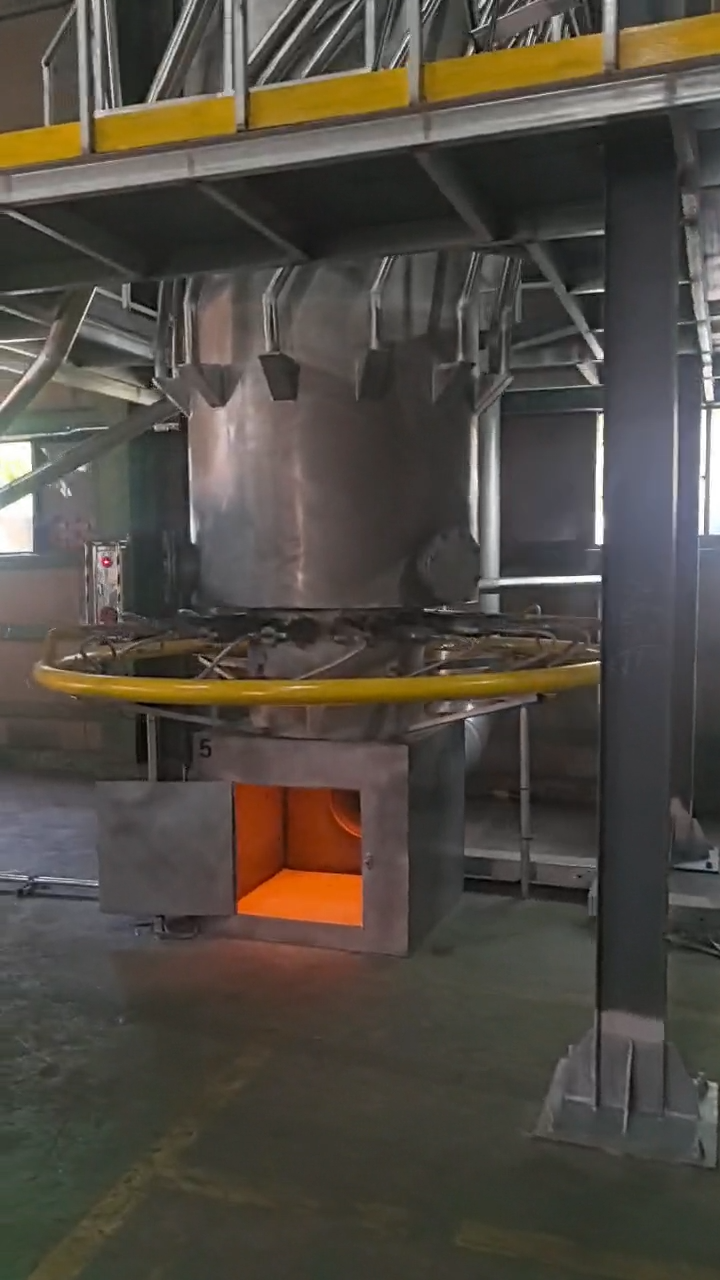
Gradation claims are only as good as the batch control behind them. Dylantech operates four production bases in Liaoning, Shanxi, Hebei, and Henan provinces on a 10,000 m² facility footprint with 300 employees, including 20 engineers, and more than 15 glass bead production lines producing an annual output of 100,000 tons. The company states it developed patented glass bead production equipment and a waste heat recovery system recognised as a scientific and technological achievement by the China Energy Conservation Association.
Testing is the part that matters most when a marking is failing. The in-house laboratory uses a CAMSIZER and X-2600 instruments to check particle size, reflectivity, and wear resistance, and the company reports 100% testing of production. Certification includes ISO 9001 under GB/T 19001-2016/ISO 9001:2015 (certificate 23226Q00027R001, issued by CFC, valid to 26 June 2029 for exports of glass products), plus CE, JIS, and KIS. With 95% of output exported to the EU, USA, Southeast Asia, and the Middle East and customers in more than 50 countries, the company's stated partners include ENNIS, Geveko, and Swarco.

FAQ
Which standard should I write into the specification — AASHTO M247, EN 1423/1424, BS 6088 or AS/NZS?
Start from the jurisdiction and the application method, not from the supplier catalogue. In the United States, AASHTO M 247-26 is the current edition and classifies beads from Type 0 to Type 5. In the BS EN framework referenced by Hong Kong road marking guidance, drop-on beads follow BS EN 1423 and pre-mixed beads follow BS EN 1424, with a Class A refractive index of at least n ≥ 1.5 in the sample specification. China publishes GB/T 24722-2020 for glass beads for road markings, and Texas applies DMS-8290 with three gradations tested by Tex-831-B. BS 6088 and AS/NZS type designations appear in the Dylantech range as product designations alongside AASHTO and EN grades. If a marking fails while the delivered product still meets the tender standard, the cause is normally gradation or application rather than the standard itself.
Can you supply the exact gradation and refractive index needed to correct a failing section?
Yes. The road marking range covers a 0.5 mm–20 mm size range with individual grades published as specific micrometre scopes — for example 710–125 μm, 850–75 μm, 1000–180 μm, 1180–180 μm, 1300–425 μm, and 1400–355 μm. Refractive index options include dedicated RI 1.6 and RI 1.7 grades. Beads are made from recycled glass and are available in transparent, opaque, or mixed colour with smooth or matte finish; custom colour and size are available. Production runs on more than 15 lines with a monthly capacity of 10,000 tons and 100% testing, using CAMSIZER and X-2600 instruments for particle size, reflectivity, and wear resistance.
Do high-index beads or tighter gradations change the cost structure?
They change what you are buying rather than simply raising the price. Cost is driven by refractive index grade, how tight the gradation band is, surface finish and colour customisation, packing, and order volume. Standard 1.5 index beads dominate volume precisely because they align with conventional specifications — they represented 54.0% of global road marking glass bead market value in 2026 — while high-index grades are a smaller, performance-focused segment. The practical budget rule is to buy high index only for the sections where wet-night visibility is the actual failure mode, and to keep conventional grades elsewhere on the network.
Can I test before committing to a full order?
Yes. The minimum order quantity is 1 ton, which is sized for a trial section rather than a full programme. A 1 ton supply to a road marking engineering customer is on record for improving the reflective performance of the road, with the night effect noted as the standout result. Larger reference shipments of 20 t, 56 t, 72 t, 108 t, and 198 t to road marking engineering companies and traffic safety manufacturers report three to four years of stability with low wear. Batch test data covering particle size and reflectivity can be requested with the trial so the section can be measured against a documented baseline.
What lead time should I plan for?
Quoted lead time is 45 to 60 days, supported by a monthly capacity of 10,000 tons across four production bases and an annual output of 100,000 tons. Customisation is offered on an OEM basis for items such as logo, and after-sales support is provided remotely. For programme work, the practical sequence is to place the trial quantity first, confirm the section result, and then schedule the balance of volume against the 45–60 day window rather than assuming stock availability. A full specification summary is available in the Dylantech corporate brochure.
Conclusion
Retroreflectivity loss is diagnosable. Early dimming points to gradation and application family; wet-night blindness points to refractive index; gritty surfaces and gutters full of beads point to an oversized band; premature wear points to bead roundness and film integrity; and uneven brightness along one road points to the applicator rather than the supplier.
The discipline that prevents repeat failures is sequencing: confirm the standard family the jurisdiction requires, read the failure mode, select the gradation band against the actual film, and only then decide whether a high-index grade earns its place. A bead that matches the problem outperforms a bead that merely outranks it on a datasheet.
Match the Bead to the Failure
Send the site photos, the tender standard reference, and the marking type, and the Dylantech team will map the symptom to a bead grade, gradation band, and refractive index option — with batch test data and a 1 ton trial quantity so the fix can be proven on a section before the programme is committed.
Dylan Technology Co., Ltd. (Dylantech)
Website: www.dylantech.com
Email: dylan@xgbead.com
Tel / WhatsApp: +86 186-3166-3616
Address: LangFang, China
Catalogue: Download the corporate brochure

Have Questions or Need More Details?
Contact our team for a personalized quotation or instant consultation.
Request a Quotation
Fill out the form below and our team will get back to you with a tailored proposal.
WhatsApp Direct Chat
Prefer to chat in real-time? Message us on WhatsApp for instant assistance & quick answers.
- Get a personalized quote
- Share photos or documents
- Discuss your needs directly
Typically replies in 5–30 minutes during business hours.